Home Authors Posts by Ian Dormer

Ian Dormer

49 POSTS 0 JOBS
Ian Dormer was born in Zimbabwe and has been in the TV business since the 1980s, having served in various positions a the SABC, M-Net and SuperSport. Ian currently works and resides in New Zealand.

Transcribing the future

SCREEN AFRICA EXCLUSIVE: A while back I was handed a bunch of very long audio files and was tasked with cutting about 60 hours of interviews, sound bites and voice over down to a 30-minute radio piece. Easy I thought, as long as I could get the material transcribed quickly and at reasonable cost…and there my journey of discovery began.

Voice to text transcriptions have long been used in the media, medical and legal industries, traditionally done by human transcription teams. It’s big business, but turn arounds can be slow and files often need a second error check to make sure the content is accurate. The cost of transcription actually wasn’t a factor in my case – it was speed that I needed, I needed a machine to plough through my audio files and spit out a transcript so that I could search for key words and edit my story together.

Trolling the internet, I instantly found a few options and uploaded the same test file to all of them (as part of my free trials) but had really disappointing results ranging from 25 to about 59 per cent accuracy. Simple words and phrases were being interpreted as something completely different, more complex words like Fakarava Atoll came back as expletives! At first I thought that as the majority of interviews were heavy New Zealand accents that might be the problem but a snippet of the best British accented guest gave me similar results.

Through my work in the video world, I am aware that there is a lot of research and development in the transcription arena utilising Artificial Intelligence (AI). Machine learning works best when it is processing large analysable data sets like text. But most of the data being produced in the world right now is not text, it’s the spoken word embedded in video and audio recording and thus the goal for AI developers to produce a reliable voice transcription process has intensified.

Tech companies like Apple, Google, Microsoft and Amazon are all actively involved in this space and have been researching voice recognition since the 90s and that research has only accelerated with the emergence of virtual assistants like Alexa, Cortana, and Google Voice and Siri. However, most people who use Siri or Alexa would agree that, while those tools do a reasonable job of understanding you, most of us wouldn’t trust them with our lives. I asked Alexa where the Fakarava Atoll was and her response was, “I would rather not answer that question.” (Out of interest it is in Tahiti and is not a swear word!)  A voice assistant like Alexa only needs to work out which, of a predetermined list of vocal commands is being asked, whereas a transcription programme needs to listen for and capture all spoken words and this wider variety of possible inputs and outputs makes it a more difficult task for AI.

Whilst stumbling around for my transcription answers I came across an article published by a team of Data Scientists and enthusiastic entrepreneurs, Ashutosh Trivedi and Anup Gosavi, who recently founded a company called Spext. Trivedi, based in Bangalore India, has deep interest and post graduate expertise in AI and has published his research in many IEEE journals. Gosavi is based in San Francisco and specialises in Design Thinking and Information Visualisation.

Spext describes their company name as a fusion of the words speech and text, and from the outset they looked like they could offer me exactly what I wanted and more. The service can best be described as a combined voice transcriber and media editor. You upload your audio files and the system automatically converts voice to text and displays the result in an edit window where it aligns the audio content with the text accurately and that means you can now do some amazing things with the resultant files. Not only do you get a full transcription of your work but you can edit the transcript, like you would on a word processor and then export the result as a new audio file. Obviously you can’t create new sentences but the ability to edit and output the existing data as an audio file is a huge plus. It looks like a normal text editor and has familiar actions like copy-paste, cut-paste and I found editing by transcriptions on the fly extremely easy. When you are done you export your work as a word document, pdf and/or a new mp3 or wave file or even export your project to professional editing tools such as Adobe Audition, and Final Cut Pro for fine tuning.

The most important result is that the files I used to test other systems uploaded into the Spext system quickly and came back blazingly fast with a resultant accuracy of +96 per cent in my case. The system had even correctly punctuated the transcription, coped well with proper nouns like the names of fish species and fishing techniques but…it too also battled with transcribing Fakarava (expletive) but at least recognised the word Atoll. It took no time at all to quickly manually edit any corrections. What could have taken weeks in production will easily get done in a matter of days now, artificial intelligence seems to have finally reached the point where transcription of audio by a machine works efficiently enough to make it viable and as researchers and companies improve and refine their algorithms, it seems evident that transcriptions will become even more accurate and the potential productivity savings of automated transcription will be hard to ignore. Someday soon, we might even be headed towards a world where audio files and text are thought of not as two distinct media types, but as two formats for the same content – as interchangeable – and as convertible  as an .mp3 and a .wav file or a text file and a Word document.

The guys at Spext have used a unique combination of intuitive user experience design, to make it easy for the user, and advanced machine learning that tests the limits of engineering and algorithm design but ultimately creates a product that is easy to use. Their mission is to make voice media intelligent, personalised and conversant, and they are looking ahead to a future where editing, sharing and dissemination of voice content will be as easy and inexpensive as text. So thanks to the power of AI and Machine Learning my job has become so much easier, so much so that I’m going to Fakarava out of here and go fishing!

IBC 2018 – shaping the future

SCREEN AFRICA EXCLUSIVE: In a year that nearly 60 per cent of all new digital video produced was played on mobile devices and as we near the end of a decade where OTT viewing is expected to surpass typical broadcast TV viewing, the IBC 2018 conference programme in September, will no doubt be full of hot topics and debates as industry leaders, global game changers and disruptors in media, entertainment and technology come together yet again to discuss the future of broadcast.

More than ever before, when it comes to content, consumers want it “their way” and thanks to advances in wireless, mobile and video technologies, consumers are now enjoying an abundance of options; options that they want more of to feed their insatiable appetites for high quality, exclusive content. At this year’s IBC Conference, discussions on content creation and new multi-platform technologies will no doubt be high on the agenda with a number of top content creators adding their expertise and experiences to the sessions. Following on from NAB, cyber security solutions will be a major discussion point and the IBC platform is the perfect place to muse over the issues. Theft of content before it is released to the world market is a major concern for the entertainment industry and needs to be addressed in depth. Interestingly, debates on whether Brexit (the UK’s exit from the EU) will break the broadcast industry through restrictions on free movement of creative talent and import and export uncertainties facing technology vendors, are high on the agenda and of much concern to most of the European delegates. Other discussions are likely to include the ever expanding 4K market, HDR production, content delivery and my favourite new topic – eSports, a US$1.4 billion emerging multi-player video game industry that is taking the entertainment and broadcast markets by storm. BBC Radio 1 gaming reporter (yes this job exists), Julia Hardy, chairs a one-on-one with eSports investor Arnd Benninghoff, to delve into the industry that is giving traditional sport a run for its money and discuss what the future holds for eSport partnerships, players and broadcasters.

This year we will see the first ever IBC Next Gen Track with Sky VR Studios’ technical director, Richard Mills, presenting this exclusive insights into recent and new developments in immersive production, innovative kit and creative trans-media breakthroughs in VR, AR, AI and more. There will no doubt be much discussion around 5G technology with post winter Olympic case studies being presented and sessions devoted to the convergence and partnerships between telecoms and the broadcast industry. Not to be missed will be a high-level panel discussion on the pending impact of 5G on fast, reliable remote production, editing, cloud storage and archiving (yay, we can all work from home soon).

This year’s Big Screen Programme, focuses on how innovation in tech is allowing us to bring stories to life like never before. A must see will be ‘The Story of the Edit’ where we will get a chance to listen to Oscar-nominated Maryann Brandon chatting with Avid’s Matt Feury, on her work on the next instalment of the legendary Star Wars franchise. Another goodie is going to be HBO’s Image Study on Drone Photography where you will be able to see the premiere of the second season of HBO’s ground-breaking technology documentary series Image Study which focuses on aerial camera platforms and how HBO has tested them to the limits of their ability to replace traditional camera equipment and techniques. This session will no doubt be really absorbing and interesting.

Every year the IBC Future Zone brings together the very latest ideas, innovations and concept technologies from international industry and academia, and showcases them in a single specially curated exhibition area within the IBC Exhibition. This year, the focus is on showing how new technologies grow from their first inception, progress through research and development projects, to mature into the ground-breaking applications and product standards of the future. I hope that we will have the opportunity to see the Fraunhofer Institute demonstrating their next generation audio format MPEG-H, which they hope might just become the new de facto standard for broadcasters and the creators of virtual reality experiences. MPEG-H allows content creators to create true surround-sound audio experiences as it effectively has no limit to the number of audio sources it can replicate and can even emulate sound in a 3D space by imitating both vertical and horizontal sources. In addition, it can apply audio to individual objects in virtual environments, a significant boon to creators of VR content. Virtual objects can each be assigned a location and the sound emitting from them changes depending on whether they are behind, in front, or to the side of the user. The experience even works while using a normal pair of stereo headphones.

The IBC Future Zone wouldn’t be the same without contribution from NHK, the sole public broadcaster in Japan that has been leading the development of broadcasting technologies for years now. Their stand will showcase the latest 8K technologies, efficient programme production using AI, and the evolution of their bespoke platform integrating broadcasting with the internet. Not to be missed for anything, NHK always deliver technology ideas that make the whole broadcast world think. Not far away from the Future Zone is the IBC Launch Pad which is located in Hall 9. It’s is the place to go to see the latest innovations from IBC’s newest exhibitors. Now a firmly established IBC feature area, the IBC Launch Pad offers the chance to network with emerging companies and witness their ground-breaking technology first-hand.

As always, there is much anticipation as to what’s going to be new at IBC. It’s too soon to speculate on what equipment and gear might be launched or highlighted but If you do the numbers, according to the organisers, over 57 000 people from 170 countries are going to gather in 1 city to listen to 400 speakers and visit 1 700 exhibitors across five busy days to debate and shape the future of the broadcast and entertainment industries, and witness the latest and most innovative technology advances. Amsterdam, 13 to 17 September must therefore be the number one place to visit in 2018.

By Ian Dormer


Faster than fibre!

SCREEN AFRICA EXCLUSIVE: 5G networks are set to roll out commercially around the globe from 2020.

The current world TV market served by satellite, IPTV, cable and terrestrial broadcast service providers is worth an estimated US$500 billion. However, analysts are predicting that 5G network technology will start taking on established TV mediums, with 5G TV being a key component of the service from very early on. With super-fast chip technology allowing up and downlink speeds of up to 20 Gbps, the mobile network will soon provide the ideal environment for TV broadcasts.

In a nutshell, fifth-generation wireless, or 5G, has been engineered to greatly increase the speed and responsiveness of wireless networks, about 100 times faster than 4G. With 5G, data is transmitted over wireless broadband connections at high speed and offers latency of 1 ms or lower for uses that require real-time feedback. 5G vastly increases the amount of data transmitted over wireless systems due to more bandwidth being available and the development of advanced antenna technology. With these advancements and shifts in technology, recent tests have shown that the 5G network will be able to support 1Gbps data throughput rates. This raw speed would provide the ideal environment for TV broadcasts. Added to the increased performance, 5G brings the obvious benefit of mobility. TV content providers will be able to easily transmit to mobile devices without the need for a fixed internet connection.

At 10 gigabits a second, 5G can send a full-length high-definition movie to a device in about four seconds. It also paves the way for the “internet of things,” where devices from light bulbs to traffic lights, fridges to soil moisture testers can talk to each other and react when asked. The technology industry is counting on the new capabilities that 5G is going to offer and will be instrumental in the development of self-driving vehicles , drones, and other machines that transmit massive amounts of data in real-time and use artificial intelligence. The likes of Samsung are working on 5G Fixed Wireless Access (FWA) solutions, which will utilise next-generation network technology to provide faster-than-fibre broadband services to the home. Huawei revealed its WTTx 2.0 wireless broadband solution last year, which similarly provides a home broadband service using mobile network technology.

5G is seen as a next-generation technology for cellular phones, but its potential for delivering camera signals wirelessly cannot be understated. This year’s Winter Olympics in PyeongChang, South Korea, highlighted perhaps the most advanced deployment of 5G seen yet. Intel, Korea Telecom and Toyota installed a commercial 5G network to test the technology needed to carry live video. The system, comprising 22 5G links at 10 different sites, delivered 3 800 terabytes of data during the two-week event. The companies involved built four main test cases to show off the technology, including a system that used hundreds of cameras to capture ice-skating athletes – footage was then broadcast in real-time to virtual reality viewers. Viewers could use the setup to select different locations from which to view the action and could also pause and replay specific parts of the performance. Other test cases used connected Toyota automobiles and transmitted high-resolution pictures of cross-country skiers. Thanks to the extremely low latency (almost zero delay) of 5G, tiny fixed lens cameras were fitted to the front of Olympic bobsleighs to offer a driver’s eye view of the descent down the twisting icy track which was then cut into the live HD production. But perhaps the most visible use of 5G technology during this year’s winter Olympics involved a fleet of 300 Intel drones flying in formation during the event’s opening and closing ceremonies.

Intel has already partnered with Japanese mobile phone operator Docomo and has plans to demonstrate 360-degree, 8K-video streams and smart eHealth equipment that leverages 5G technologies including artificial intelligence that can be used by the athletes for training during the summer Olympics in 2020. Their 5G platforms will be used to demonstrate how 5G will massively transform communications through the next decade.

FOX Sports, the Fox Innovation Lab and partners Ericsson, Intel and AT&T, used 5G technology to stream 4K video over 5G for potential broadcast nationwide at this year’s 118th U.S. Open Championship in June. 5G wireless technology was used for the first time in a top-tier golfing event to transmit 4K HDR images from two FOX Sports cameras positioned on the challenging par-3 seventh hole at Shinnecock Hills Golf Club to the FOX Sports production truck. This ‘test’ was a powerful example of how production companies can reduce live production costs, while enabling ultra-high-definition broadcasting to scale. It also showcased on how the high-speed and low-latency delivered by this trial allowed the cameras to move without being restricted by cables and created a unique filming environment.

The World Cup in Russia saw a huge leap in 5G technology testing when the Morocco vs Iran game was streamed in virtual reality over a 5G real-time stream. The Krestovsky Stadium in Saint Petersburg was fitted with high-definition cameras that broadcast the game over a 5G connection to residents of Moscow, some 600 kilometres away. Built especially for the games, the Russian capital’s 5G zone allowed supporters to switch to different camera views as they watched the match in real-time with virtual reality glasses. Again, the near zero latency transmission tests showed, beyond doubt, that 5G is going to provide sport content producers with a whole new range of options, thanks to its game changing technology.

5G is not only going to enable mobile operators to deliver superior and standardised television services over their networks to a large number of mobile users. It could also potentially enable the broadcasting of high quality TV content to domestic TV receivers as a replacement for traditional broadcast services. There are few areas of innovation that have the power to define the future of our economy and the way we live more than the amazing development and pending roll out of 5G technology. With 10Gbps connections in the field, a one millisecond end-to-end round trip delay and 90 per cent reduction in network energy usage, what’s not to get excited about – let’s hope it’s worth the wait!


New camera, new glass

SCREEN AFRICA EXCLUSIVE:

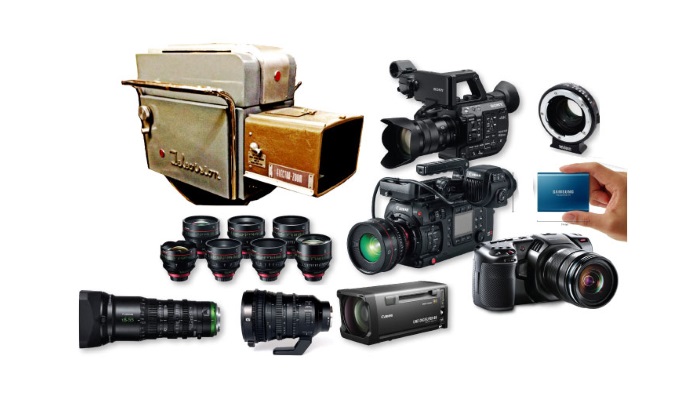
Over the years technical advances and electronic development in manufacture has produced some pretty amazing cameras. From the first three pickup tube colour cameras of the early 1950’s, to today’s high-tech full-frame sensors, the camera is essentially only as good as the glass in front of it. There are thousands of different lenses out there but none has had as bigger impact in the film and television industry than the zoom lens.

Almost 60 years ago, American inventor turned cinematographer Joseph Bailey Walker’s ever active mind developed the Electra-Zoom Lens for RCA, which became standard equipment for TV cameramen the world over back in the 1960’s. Whilst zoom lenses had been used in the cinematic field since the 1920’s, it wasn’t until Walker’s invention hit the scene that zoom lenses became an essential part of television production. His lens, as the name suggests, has a small electric motor that was used to drive two moving components, a front negative element that moved rapidly whilst the rear positive element moved slowly in the opposite direction giving the system a focal length range from 52mm to 152mm at f3. Much has changed over time when you compare Walker’s Electra-Zoom Lens with Canon’s new UHD-DIGISUPER 66, for example, which possesses a focal length range of 9mm to 600mm, and features a built-in 2x extender that allows users to double the zoom range capabilities of the lens – up to 1200mm on the telephoto end.

New lens technology was a big highlight of NAB 2018 and the search for ‘that ideal piece of glass’ was at the top of the list for many of the visiting buyers. There were three standout cameras at NAB, all due for release later in the year. Three different price categories but each one feature-filled and all with amazing lens choices to get the best out of what the cameras are offering.

SONY FS5 Mark II

Sony’s new FS5 Mark II camera (also released at NAB 2018) has the same sensor as the original FS5 but Sony has taken the colour science from the Sony Venice to provide better skin tones and a more cinematic look. You would be spoilt for choice when deciding on a lens suitable for this piece of kit. Starting with Fujinons 18-55mm T2.9, a Cabrio Sony E-Mount Cinema Zoom Lens, it’s a lightweight and compact alternative to other lenses on the market, while still keeping 4K Cabrio quality in an affordable package. The lens is colour matched to other Fujinon lenses such as the HK, ZK, and XK series, which enables smooth intercutting between lenses. The 85mm front enables use with many cine-style matte boxes via use of optional step up rings (rings not included). The lens is lightweight for a cinema zoom that holds focus and aperture throughout the focal length range. It is designed for camera’s with a Sony E-mount, so it has a short flange focal distance, but the lens allows for flange focal distance adjustment so you can fine tune it to the camera you are using the lens on.

Another suitable lens for the FS5 Mark II is the Canon 18-80mm T4.4. Based on Canon’s heritage in optical design and performance, the CN-E18-80mm T4.4 L IS KAS S produces exceptionally high quality images. Those using the lens, such as documentary filmmakers, will benefit from the incredible servo performance which is incorporated on the lens’s body, enabling precise digital zoom operations. Users are able to achieve maximum speed and responsiveness with seamless switching between auto and manual focusing and zoom. For those using a shoulder-style rig or shooting hand-held in demanding positions, the dedicated zoom grip is a perfect accessory – the grip simply attaches to the side of the lens, offering simple integration and zoom management.

Of course many will choose the bespoke lens from Sony itself,  the E PZ 18-110 mm f/4 G OSS Lens. This powered zoom lens delivers optimum performance in Super 35 mm applications, starting at 18 mm wide-angle and extending through an impressive 6.1x zoom range with a constant F4 maximum aperture. The G Lens optical performance delivers image quality that is suitable for 4K throughout the zoom range.

Sony PXW-FS5M2 4K release date is later in the year at a price of US$4749 (body only).

Blackmagic Pocket Cinema Camera 4K

After years of asking for a successor to the original Blackmagic Pocket Cinema Camera, Blackmagic have finally given the fans what they’ve been asking for. The Pocket Cinema Camera 4K looks a lot different to the original (it’s definitely bigger in size) and although it might not fit inside your pocket it is still a compact size. The Aussies over at Blackmagic have clearly been listening to what their customers have been wanting as this camera is packed full of some impressive features. The Pocket Cinema Camera 4K shoots at 60fps in 4K and at 120fps in 1080p and has a dynamic range of 13 stops. Slow motion can be recorded in both 12-bit CineDNG Raw and 10-bit Apple ProRes 422 HQ. Blackmagic have really made a point of focusing on the low light capabilities of this camera with ISO range of 400 – 25,600. Users can load LUTs on to the camera and even plug in a USB-C drive to record directly on to, of note is Samsung’s new T5 USB-C solid state drive, it’s tiny but packs a punch when it comes to speed. Here’s another way Blackmagic’s camera stands out from most interchangeable-lens cameras. When you buy a Nikon, Canon, Sony, Olympus, Panasonic or Pentax camera, you are committed to that company’s lens mount. So, if you buy a Canon camera, you can only use lenses that fit a Canon mount. Likewise for Nikon, Sony and Pentax. Olympus and Panasonic use the same Micro 4/3rds mount, so they’re compatible with each other, but not the others. According to Blackmagic, the Pocket Cinema Camera 4K is compatible with all MFT-mount lenses, which is “extremely flexible and allows for different lens adapters so customers can also use PL, C, EF and other types of lenses from manufacturers such as Canon, Nikon, Pentax, Leica and even Panavision.” In most other cases, a manufacturer introducing a new camera doesn’t say that it’s compatible with other manufacturers’ lenses via an adapter. That’s because such adapters generally come with compromises, such as fewer autofocus options. US manufacturer Metabone have exclusively designed a  Nikon-G/F to Micro-4/3 mount for the Blackmagic Pocket Cinema Camera called the Speed Booster, much to the excitement of many creative directors who love their Nikon lenses.

The new Blackmagic Pocket Cinema Camera is supposed to launch later this year for US$1,295 (body only).

Canon C700 FF

Canon has been in the television and video industry for a long time but hasn’t been able to provide a top-tier offering to match the likes of Sony Venice or Arri Alexa – until now that is. The Canon C700 FF (full frame) is their latest offering with brand new sensor technology built in. The C700FF sensor is a different size to the flagship Canon 5D camera, it isn’t as tall but it is wider (38mm x 20mm). This beast of a camera shoots in 5.9K at 60 frames per second and offers 15 stops of dynamic range. As with some of the other Canon cine cameras, the C700FF also comes with a built in 10-stop ND filter. Canon has greatly expanded their EF Cinema Lens offerings. The lineup—which includes the Prime, Zoom, Compact Zoom, CINE-SERVO and COMPACT-SERVO series of lenses—has become very popular for a wide range of users. With the introduction of the CN-E20mm T1.5 L F lens, the lineup now boasts a total of 21 lens models. This expansive line of lenses provides cinematographers with even more options to choose from, which can support enhanced content creation for a variety of uses and shooting scenarios. The trend with a lot of new cameras that allow internal 4K recording is that they use CF 2.0 cards for storage and that is true for this camera too. The C700 FF embodies a choice of two high-performance codecs for on-board recording –Canon XF-AVC or Apple ProRes. Like other cameras in the 4K Cinema EOS family, the EOS C700 FF uses CFast cards to capture 4K / UHD or 2K / HD. Despite the US$33,000 (body only) price tag, the C700 FF is one of the cheaper full-frame cinema cameras on the market.

No matter how cost effective or expensive the camera, the lens industry has always worked hard to provide us with a wide range of suitable glass fit for any filming requirement, and some credit must go to Joseph Bailey Walker who held no less than 20 patents on various camera-related inventions, including the Double Exposure System, the Duomar Lens for both motion picture and television cameras, and the Electra Zoom Lens. Cheers Mr. Walker!

NAB 2018 report: The year of Artificial Intelligence

SCREEN AFRICA EXCLUSIVE: This year attendance at NAB 2018 was down on previous years but despite the lower visitor numbers the conference content and exhibition produced the buzz and excitement that NAB is synonymous for.

This year’s show had a little bit of everything, but the main trends seem to revolve around RGB lighting, large format cameras, and a game changing codec, whilst the conference sessions followed some interesting threads under the umbrella of next-generation technologies, namely artificial intelligence (AI), immersive media and cyber security.

From production to distribution, artificial intelligence has taken the broadcast and filmmaking industries by storm. The 2018 edition of NAB dedicated time and space to showcase some of the developments in AI with conference sessions like “Machine Intelligence: The Evolution of Content Production Aided by Machine Learning”, “Optimising Production with Neural Networks”, “How Machine Intelligence is Transforming Editorial”, “New Frontiers in Animation and Computer Graphics”, “From Dailies to Master – Machine Intelligence Comes to Video Workflows” and, finally, “The Future of Content with Machine Intelligence”. The series of sessions looked at machine learning, deep learning and artificial intelligence technologies and at how studios, networks and creative service companies can use them to help produce content.

In the Future of Cinema conference sessions, perhaps the most intriguing was one hosted by Annie Chang, VP of Creative Technologies at Universal Pictures entitled “Do Androids Dream of Making Movies?”. Artificial intelligence still sounds very futuristic to most of us and the main questions asked at the session were: Are machines going to take over the creative process? Will we all lose our jobs? Luckily, it was established that we seem to be safe, in the short term at least!

Another highly attended special NAB conference session was on cyber security. IP connectivity and the cloud means that both the intellectual property and the infrastructure of broadcast and media companies is now at risk of cyber-attack and discussion points were expertly handled by industry leaders from media delivery companies like Aspera and Signiant. In general the overall outcome seemed to indicate that the media industry is having to catch up fast as the presence of cyber-threats constantly challenges data integrity, system resilience and intellectual property theft.

Exhibition – truly industry changing

It’s rare for Apple to show their faces at NAB or IBC, so great excitement was generated when they unveiled a new video acquisition codec called ProRes RAW – a development that will make a huge impact on both the production and post sides of the industry. Apple said that creators will be able to use it right away via updates to DJI’s filmmaking drones and Atomos recorders allowing RAW recording for cameras from Panasonic, Sony, Canon and others. Never before has a codec created such a stir within the industry so watch this space, I think it is going to be a game changer in acquisition circles.

Showcasing a new era of VR content, Fraunhofer HHI, Ericsson, Harmonic and Nokia demonstrated a world first ultra-high resolution, live virtual reality and 360-degree video at the NAB Show. Attracting goggle eyed delegates from all corners of the conference centre, the 10K capture and live rendering for high-resolution VR360 video, used the Fraunhofer HHI Omnicam-360 and tile-based live encoding with the Fraunhofer HHI HEVC encoder to great effect. VR is still considered to be part of the future of broadcast television and the exhibition halls were bursting at the seams with newly developed and prototype VR technology.

One of the big drivers for buyers at NAB was LED lighting. The technology just keeps getting better and there were huge numbers of interesting light fixtures to consider. The trend is definitely moving away from multiple, visible, LED diodes and moving towards creating fixtures that produce a soft, single source of light. One of the most impressive fixtures on display was the current versions of ARRI’s SkyPanels which utilise RGB and LEDs, and can do some pretty impressive things. Canadian manufacturers Westcott wowed filmmakers with a prototype of their new 2×1 Flex LED panel lights with new RGBW LED technology. The RGBW Flex Light uses clusters of red, green, blue and white LEDs to output light that’s much more controllable than a simple Kelvin temperature adjustment. Water resistant and flat packable, there’s nothing quite like being able to gaff tape a light fixture to a ceiling or a wall.

As always Blackmagic Design never fails to disappoint at NAB. Their announcement of the release of their new Pocket 4K Cinema Camera, set Las Vegas and the internet buzzing. The 4K Pocket Cinema Camera uses an all new fibre reinforced polycarbonate based body design, it produces a full 4096×2160 resolution picture and your footage is recorded to CFast 2.0 cards or high speed SD. But the winning feature here is the USB port. If you have a USB-C HDD you can simply plug it right in to the camera body and record directly to it. Your footage is then completely NLE ready by plugging it into your editing computer. The Blackmagic Pocket Cinema Camera 4K will be available later in 2018 with a price tag of $1,295 (What! That price is insane!) from authorised resellers around the world.

It’s no real surprise that Sony decided to update their entry level digital cinema camera with the launch of the Sony FS5 MKII. With new competition in the form of the Canon C200, Panasonic EVA-1, and Blackmagic URSA Mini Pro, Sony thought it wise to give the FS5 a makeover. Most of the FS5 II’s improvements are under the hood. The camera uses the same 4K Super 35 EXMOR sensor that features 14 stops of latitude as the original FS5. What is different is when it comes to the image processing and to try and keep in front, Sony has slightly tinkered with the high frame rate options. The FS5 II can internally record 2K (2048×1080) at 240fps (in 8 second bursts), FHD (1920×1080) continuously at 120fps, and 8 seconds of 480fps and 960fps at lower resolutions through a cache to SDXC media. Price? The same as the old FS5 which will now become a little cheaper once the MKII is released in the market place.

There was a lot of excitement over at the Vimeo stand who took the opportunity to use NAB as their platform to announce and introduce their new Over-The-Top custom streaming apps. One of the great things about Vimeo is that it allows anybody to upload their content and make money from it, either through voluntary donations, or from pay-per-view. The new streaming apps allow anybody to create a Netflix style subscription service for their content. This is potentially a huge thing, opening up the possibility for all sorts of niche subjects to be covered by content creators in a very open and transparent way. The fact that Vimeo can be left to deal with the complexities of actual delivery leaves creators free to focus on the quality of their videos and marketing of their subscription service. I think as time goes on we’ll be hearing a lot more about Vimeo OTT Live.

I love NAB, where ground-breaking technology is unveiled, innovative solutions are displayed and game-changing trends are exposed. 2018 didn’t disappoint and luckily for us not everything that happens in Vegas stays in Vegas, I’m off to buy a new camera…and some lights…and…

LED lighting – transforming the game

SCREEN AFRICA EXCLUSIVE: Recent technical specification changes associated with broadcast formats such as 4K and 8K (UHD) have challenged traditional stadium lighting capabilities and therefore live broadcasts from such venues.

Ultra-high-definition cameras require aperture settings that will let in the ideal amount of light. As broadcast resolution increases, so does this required aperture setting. When the ideal amount of light is achieved, the lighting reaches the camera’s digital sensors, optimising the field depth and minimising adjustments required from camera operators. While light quantity is very important for broadcast, light quality is perhaps more so, especially for live sport events. One critical aspect of light is how well it enables the accurate depiction of colours for broadcast.

Back in 2012, the European Broadcasting Union (EBU) devised a new system of assessing colorimetric quality called the ‘Television Lighting Consistency Index’ (TLCI). This was primarily set out to address the shortcomings of the way cameras interpret light, which slightly differs from how a human eye perceives it. The TLCI attempted to provide a more accurate prediction of colour fidelity of light source in broadcast setting especially with LED lighting in the HD and UHD (4K) world. The TLCI has become the preferred measurement for colour lighting accuracy in digital broadcast as it looks at a greater spectrum of light, including that which is captured by digital broadcast cameras, rather than only the light spectrum perceived by the human eye, as in the more traditional colour rendering index (CRI).

The biggest change we have seen in the industry that has impacted on lighting in recent years was the move from film to digital HD. This saw the fastest movie lenses linked to highly sensitive sensors so the overall light level required to get a good picture could be lower. Also, the emphasis for lighting directors moved more towards painting with small strokes rather than large swaths, a process that can be easily achieved with LED fixtures.

Compared to their traditional tungsten counterparts, there are clear advantages in creating lamps out of multiple arrays of LEDs or a single source LED. The fixtures create plenty of light, suitable for modern lenses and digital cinematography, and the highest quality products can be dimmed without colour shift. LED lamps also weigh significantly less than their tungsten equivalents, and consume a lot less power.

While LEDs offer demonstrable cost savings, producers, directors and designers have been reluctant to use them in the past, as some set ups using the technology were seen as either impractical, or did not offer the desired effect. LEDs are now able to project light over long distances and create a consistent colour temperature. Fixtures using LEDs offer a lighting technician full spectrum illumination in both daylight and tungsten colour balance. One of the key benefits for broadcasters is the low power consumption and good thermal dynamic design which combine to produce low heat output. This significantly reduces the air conditioning requirements, which not only brings significant cost and energy savings, it means more comfortable sets and happier talent.

Last year, the BBC carried out a quantitative energy analysis on its production lighting over a representative set of TV studios. This analysis indicated that there was a potential to save between 30 per cent and 50 per cent of production energy lighting costs, as well as reducing CO2 emissions. They calculated that savings could be made on energy use, cooling use and running costs by replacing existing incandescent production and house lighting with more efficient light sources. LED studio lighting recently implemented has knocked a whopping 80 per cent off their energy bills! If studios can save that much imagine the potential for stadiums and large sporting venues.

Towards the end of last year, Spanish soccer team Sevilla FC replaced their 720-spotlight field illumination in their 42,500-seater stadium with 360 x Philips ArenaVision LED lighting fixtures. In a joint press release, neither Philips nor Sevilla FC mentioned anything about energy savings, a prime motivator for most end users to switch from conventional sources to low power consumption LED lighting. Instead they emphasised that the high-quality lighting adhered to the latest broadcasting standards for 4K television – therefore the viewers will be able to see fine detail and watch high-definition super-slow-motion replays, without the flicker commonly associated with older conventional lighting systems. Their transition to LED lighting is giving them high saving returns with the added bonus of noticeable improvements in broadcast quality.

Playing surfaces that are illuminated with LED lights will appear brighter and crisper during a television broadcast. LED lighting improves the broadcast quality of a sports event by providing the playing surface with more uniform illumination, lighting colour temperatures that match the capabilities of broadcast cameras, and colour rendering indices that better replicate natural sunlight. Non-uniformity of illumination over a playing surface is a problem for both athletes and viewers who are watching a broadcast of the event. The first generations of metal halide and high pressure sodium sports arena lighting inevitably created brighter and darker areas on the playing surface. Those areas required athletes to adjust to lighting irregularities and created shadows that obscured athletic action in parts of a field during a broadcast. Unlike those traditional fixtures, LED sports stadium lighting can be configured to better generate uniform lighting over a large playing surface area, even into corners and edges of a field that were previously hidden by shadows.

LED sports lighting has evolved to create a near-perfect balance between warm and cool colour temperatures. Different types of sporting events might call for different colour temperatures (e.g. basketball benefits from warmer lighting, while hockey looks better under cooler colours). LED systems can be tuned to match the requirements of any event to facilitate the best possible conditions to broadcast that event. The LED lighting delivers numerous benefits over conventional lighting. For example, the lights can be turned on and off instantly whereas older metal halide lights have a long restrike period, meaning that mechanical shutters are required to control the lighting. LED installations include a control system that allows operators to switch or dim each floodlight individually. The controls therefor allow the club to present impressive entertainment lighting effects for pre- and post-match shows as an added advantage. The same controls allow the operator to tune the lighting wavelength to assist in grass regrowth when needed.

Television flicker has always been a problem with metal halide systems. Newer LED fixtures employ pulse width modulation, to enable flicker-free slow-motion capture. Some companies are taking this concept further, using a unique, super high-speed phase-shifting technology to enable optimal lighting performance compatible with super slow-motion capture. This technology will support frame rates in excess of 8000 frames per second, with no potential flicker with even the most sophisticated cameras, thereby ensuring compatibility with evolving new broadcast technologies.

The benefits of LED lighting for sport broadcasts have been well documented. Modern LED lighting can be tuned to come closest to natural sunlight without adding any glare or distorting ultraviolet or infrared lighting spectra. Viewers who watch sporting events that are illuminated with LED lights will receive almost the same impression as if those events were played during daylight hours and under natural lighting conditions. Some of the biggest global broadcasters have already made the switch, in their studios, at outside broadcasts and for crews out in the field using LED lighting innovations optimised for all broadcast technologies and enabling the best viewing experience on advanced televisions and beyond… go technology go!

Artificial Intelligence: is it changing the face of MAM?

Media Asset Management (MAM) started out as the platform to manage your media assets, right? As technology and ever changing needs have grown MAM has now evolved into a solution that manages workflows to prepare these assets.

In order to do this efficiently, you need built-in collaboration tools allowing users to access the system from different locations, over secured web clients or mobile applications and built-in notification tools ensuring the system operates with maximum productivity…and to speed up the process maybe a little automation help from a robotic friend!

In its broadest description, a MAM system provides a single repository for storing and managing video and multi-media files. A sub-set of Digital Asset Management (DAM) – with its origins in the television and film industry – Media Asset Management solutions are well suited to the broadcast industry, but increasingly relied upon by a huge variety of sectors from social media groups to e-commerce stores, television programme producers and government agencies, to media institutions and sports rights holders: in fact, anyone building libraries of digital content. As complex as requirements can be, the goal of most remains much the same: the safe, future-proof archiving of video and large media files, with simple, efficient and reliable access.

MAM systems haven’t changed fundamentally over the past decade. At their heart, they are still databases of digital files and associated metadata. The metadata serves two key purposes: it provides information about the files and it enables them to be found in searches. Most of the metadata is entered into provided fields like title, description and keywords, by a user during the upload process or shortly thereafter. Typically, these users look at the images one-by-one and then type the data into fields on a web form. The process is time consuming and sometimes labourious. It’s no surprise then that MAM vendors have been keeping an eye out on the emerging industry of Artificial Intelligence (AI) and visual recognition with keen interest.

When Google released their Google Cloud Vision API just over a year ago, it hinted that AI had come of age at last, at least in how it can be applied to help media asset management? Google Cloud Vision enables developers to understand the content of an image by encapsulating powerful machine learning models in an easy to use REST API. It quickly classifies images into thousands of categories (e.g., “sailboat”, “lion”, “Table mountain”), detects individual objects and faces within images, and finds and reads printed words contained within images. From this data, one can build metadata on their image catalogue, moderate offensive content, or enable new marketing scenarios through image sentiment analysis. What makes AI an attractive offering for media companies is not just its ability to automate tasks, but also its potential to generate automated metadata for enhancing searchability and discoverability of content. This in turn plays a major role in increasing monetisation of assets.

In this new form of thinking AI capabilities in the MAM sector would include:

Visual Analysis:

  • Object recognition: Identifying multiple objects within a video (including humans, cars, animals etc.)
  • Action recognition: Identifying how these objects interact with one another (singing, driving, running etc.)
  • Emotion recognition: Identifying emotions expressed while performing these actions
  • Face recognition: Identifying presence of individuals (including celebrities) in a video based on a library of known faces
  • Logo recognition: Identifying specific companies based on logo/brand imagery in a video

On the audio front MAM systems are looking at the following AI inclusions:

Audio Analysis:

  • Speech-to-text: Converting spoken video recordings into readable text
  • Language Translation: Translating text from one language to another
  • Sentiment Analysis of speech: Determining the attitudes, opinions and emotions expressed

While capabilities in the first two areas exist today with workable accuracy, achieving high levels of accuracy for Sentiment Analysis is a challenge that developers are working on. Also known as opinion mining – sentiment analysis is extremely useful in social media monitoring as it allows us to gain an overview of the wider public opinion behind certain topics. The ability to extract insights from social data is a practice that is being widely adopted by organisations across the world, for example the Obama administration used sentiment analysis to gauge public opinion to policy announcements and campaign messages ahead of 2012 presidential election.

Creating Compelling Content from a MAM AI Archive 

A MAM enriched with AI metadata makes it easy to search through a vast content repository for topics and archival footage related to a particular theme in order to create a riveting story. Such metadata driven research is particularly useful when creating news stories or documentaries from archives that generally have limited levels of tagging. Here, speech-to-text conversion can be undertaken to tag all archival content with AI generated metadata, thus making the repository easily searchable. Additionally, content can be auto tagged using Object Recognition as well as Face/Location Recognition technology to further enrich metadata and build highly relevant stories around specific celebrities/public figures/themes etc. Another example would be for instance, a producer tasked with creating movie promos for a network will want to search for specific, high intensity scenes that depict the villain performing certain actions (shooting, high speed car chase, brawling etc.). An AI-enabled MAM system can help retrieve this information at lightning speed. Moreover, the MAM’s Edit tools can help refine these clips before sending EDLs to the edit suite.

Artificial Intelligence in MAM is only in the early stages

The automation of the image recognition processes is only the beginning for artificial intelligence in media asset management systems. Intelligent algorithms have triggered a trend that leads to new interfaces and fundamental changes to the nature of human-machine interaction. In the future, MAM systems will also process voice commands in real-time thanks to automatic tagging and machine learning.

The possibilities offered by intelligent algorithms are almost infinite but one thing is clear: whilst media asset management is bound to change as artificial intelligence capabilities grow, a degree of human intervention is still needed to fully categorise images; for now at least…I hope says me, a Media Manager (or have I just written myself out of a job)!


NAB 2018 – as rumour has it

The annual National Association of Broadcasters (NAB) convention in Las Vegas brings cinema and media professionals from around the world under one roof to get hands on with the latest cameras, lenses and other technology from industry leaders.

Over the years, the NAB Show has proven to be the place for manufacturers to announce new technology. Along with announcements however, come the inevitable rumours and leaks and whilst some prove to be true, others turn out to just be wishful thinking or clever marketing campaigns. Regardless, the show, which runs 7 to 12 April 2018,  is always a great place to catch up with old acquaintances and make new connections with fellow media, cinema and broadcast professionals.

Rumour has it (no actually, it’s really true) that this year Nikon has booked a rather large booth for the 2018 NAB show right in the middle of the Central Hall and it’s almost as big as other video-heavy-hitters like Arri, Fuji and JVC. So what you ask? Well the fact that Nikon has not been a part of NAB for a number of years maybe just cause for the rumour mill to churn over. Their massive stand has triggered some online speculation that a new Nikon mirrorless camera could well be the reason, along with a range of mirrorless lenses?

Traditionally, Canon takes the lead in online forums and the camera community as far as rumoured new camera releases go. With mirrorless cameras becoming more and more popular, many people are expecting Canon to announce a mirrorless camera to compete head-to-head with the Sony A7R III. Websites are reporting that there will be a new camera announcement outside of the Cinema EOS line, so this may very well be a mirrorless full frame camera with an EF mount that filmmakers have been waiting for. In the Cinema EOS line-up, there are reports of a possible 6K full frame camera to compete with the new Sony Venice. The camera was original thought to be announced as the C900, but now looks to be marketed as a 6K Canon C500 MKII.

It’s no secret by now that Canon has filed an optical formula patent for an anamorphic zoom lens, and the Cinema EOS 37.5-100mm f/3.3 anamorphic lens just might make an appearance at NAB 2018. With most popular anamorphic lenses out of production and only available second hand, Canon looks to be making an entry in this very popular market. With most high-end cinema cameras now offering 4:3 recording formats, anamorphic shooting is gaining momentum once again.

ARRI will likely be showcasing their new ALEXA LF (large format) camera, along with their newly announced fleet of ARRI Signature Prime lenses and new LPL lens mount. The 16-lens collection will cover full frame sensors and feature focal lengths from 12mm to 280mm.

Another recently leaked story is that Fuji appears to be setting their sights on Panasonic and Sony with the X-H1. The Fuji X-H1 appears to be targeting the ever growing “hybrid shooters” market, which has been dominated by the Sony A7SII and the Panasonic GH5. The camera will feature 5-stops of in-camera image stabilisation and internal F-log recording onto SD cards in 4K. At $1,899 (body only), the new mirrorless camera from Fuji will be priced well below the GH5 and A7SII ($2,499).

RED really has set the precedent for releasing new technology whenever they want, and have skipped NAB in the past (last year the most recent) and are currently not on the exhibitor’s list for the 2018 show (although that could change), but you’ll surely find a  plethora of 8K WEAPON cameras with S35 sensors in various booths around the show. Maybe RED will even have a few HYDROGEN holographic Android phones floating around on the NAB show floor?

Rumours aside, the NAB Show’s identity is deeply rooted in convergence and collaboration. It’s the home for media, entertainment and technology professionals looking to further their careers, connect with industry leaders, gain knowledge or cutting-edge training, enhance their business or craft, get hands-on with the latest technology, or simply be awe-inspired. It’s an unrivalled experience where the entire digital ecosystem gathers year after year to leverage new technologies, tools and cross-aisle synergies to propel the content economy forward. NAB paves the way for innovative and creative interaction for all who attend and a must this year would be a visit to the Immersive Storytelling Pavilion, the Post Production Campus and the Futures Park. The Immersive Storytelling Pavilion will highlight the latest equipment and techniques in the virtual, mixed and augmented reality sectors of the industry whilst the Post Production Campus offers a number of great discussions including Real-time content creation, mobile streaming and sessions on drone piloting. The Futures Park is always a popular venue showcasing advanced projects from high-tech media developers from around the world.

In the conference sessions, one to look out for will be “The business of sports entertainment”. It is geared to top-level executives representing media networks, distributors, promoters, agencies as well as leagues, teams, federations and colleges. This forum will bring together the industry’s leading business executives who will examine the best opportunities for engaging and monetising sports fans in today’s marketplace. Sessions will focus on live content, sponsorships, technology and what’s next for sports revenues. The Global UHD conference is also one not to miss – This event brings together the world’s experts on Ultra HD television for a deep dive on the latest in this critical, evolving tech sector. There will be updates on the ATSC 3.0 rollout underway in the Republic of Korea, and a retrospective on UHD production and presentation experience gained at the XXIII Olympic Winter Games in PyeongChang.

The NAB Show is where ground-breaking technology is unveiled, innovative solutions are displayed and game-changing trends are exposed. Prepare to explore aisle after aisle of awesome tech, cool gear, smart software, capable cloud solutions and limitless ideas and inspiration and roll-up your sleeves and be hands-on with the products, services and people driving the future of content.

The world’s most inspiring and celebrated thought leaders assemble to share their stories, solutions, techniques and personal journeys. You’ll get big picture insights and critical details on the latest trends impacting content from creation to consumption. Whether your focus is on the art, the science or the business of content creation or consumption, this is where you refine your skills, get inspired, and make powerful connections that could fundamentally change your business forever, and that’s the truth – no rumours here!


Over the years, the NAB Show has proven to be the place for manufacturers to announce new technology. Along with announcements, however, come the inevitable rumours and leaks and whilst some prove to be true, others turn out to just be wishful thinking or clever marketing campaigns. Regardless, the show, which runs 7 to 12 April 2018,  is always a great place to catch up with old acquaintances and make new connections with fellow media, cinema and broadcast professionals.

Rumour has it (no actually, it’s really true) that this year Nikon has booked a rather large booth for the 2018 NAB show right in the middle of the Central Hall and it’s almost as big as other video-heavy-hitters like Arri, Fuji and JVC. So what you ask? Well, the fact that Nikon has not been a part of NAB for a number of years maybe just cause for the rumour mill to churn over. Their massive stand has triggered some online speculation that a new Nikon mirrorless camera could well be the reason, along with a range of mirrorless lenses?

Traditionally, Canon takes the lead in online forums and the camera community as far as rumoured new camera releases go. With mirrorless cameras becoming more and more popular, many people are expecting Canon to announce a mirrorless camera to compete head-to-head with the Sony A7R III. Websites are reporting that there will be a new camera announcement outside of the Cinema EOS line, so this may very well be a mirrorless full frame camera with an EF mount that filmmakers have been waiting for. In the Cinema EOS line-up, there are reports of a possible 6K full frame camera to compete with the new Sony Venice. The camera was an original thought to be announced as the C900, but now looks to be marketed as a 6K Canon C500 MKII.

It’s no secret by now that Canon has filed an optical formula patent for an anamorphic zoom lens, and the Cinema EOS 37.5-100mm f/3.3 anamorphic lens just might make an appearance at NAB 2018. With most popular anamorphic lenses out of production and only available second hand, Canon looks to be making an entry in this very popular market. With most high-end cinema cameras now offering 4:3 recording formats, anamorphic shooting is gaining momentum once again.

ARRI will likely be showcasing their new ALEXA LF (large format) camera, along with their newly announced fleet of ARRI Signature Prime lenses and new LPL lens mount. The 16-lens collection will cover full frame sensors and feature focal lengths from 12mm to 280mm.

Another recently leaked story is that Fuji appears to be setting their sights on Panasonic and Sony with the X-H1. The Fuji X-H1 appears to be targeting the ever growing “hybrid shooters” market, which has been dominated by the Sony A7SII and the Panasonic GH5. The camera will feature 5-stops of in-camera image stabilisation and internal F-log recording onto SD cards in 4K. At $1,899 (body only), the new mirrorless camera from Fuji will be priced well below the GH5 and A7SII ($2,499).

RED really has set the precedent for releasing new technology whenever they want, and have skipped NAB in the past (last year the most recent) and are currently not on the exhibitor’s list for the 2018 show (although that could change), but you’ll surely find a  plethora of 8K WEAPON cameras with S35 sensors in various booths around the show. Maybe RED will even have a few HYDROGEN holographic Android phones floating around on the NAB show floor?

Rumours aside, the NAB Show’s identity is deeply rooted in convergence and collaboration. It’s the home for media, entertainment and technology professionals looking to further their careers, connect with industry leaders, gain knowledge or cutting-edge training, enhance their business or craft, get hands-on with the latest technology, or simply be awe-inspired. It’s an unrivalled experience where the entire digital ecosystem gathers year after year to leverage new technologies, tools and cross-aisle synergies to propel the content economy forward. NAB paves the way for innovative and creative interaction for all who attend and a must this year would be a visit to the Immersive Storytelling Pavilion, the Post Production Campus and the Futures Park. The Immersive Storytelling Pavilion will highlight the latest equipment and techniques in the virtual, mixed and augmented reality sectors of the industry whilst the Post Production Campus offers a number of great discussions including Real-time content creation, mobile streaming and sessions on drone piloting. The Futures Park is always a popular venue showcasing advanced projects from high-tech media developers from around the world.

In the conference sessions, one to look out for will be “The business of sports entertainment”. It is geared to top-level executives representing media networks, distributors, promoters, agencies as well as leagues, teams, federations and colleges. This forum will bring together the industry’s leading business executives who will examine the best opportunities for engaging and monetising sports fans in today’s marketplace. Sessions will focus on live content, sponsorships, technology and what’s next for sports revenues. The Global UHD conference is also one not to miss – This event brings together the world’s experts on Ultra HD television for a deep dive on the latest in this critical, evolving tech sector. There will be updates on the ATSC 3.0 rollout underway in the Republic of Korea, and a retrospective on UHD production and presentation experience gained at the XXIII Olympic Winter Games in PyeongChang.

The NAB Show is where ground-breaking technology is unveiled, innovative solutions are displayed and game-changing trends are exposed. Prepare to explore aisle after aisle of awesome tech, cool gear, smart software, capable cloud solutions and limitless ideas and inspiration and roll-up your sleeves and be hands-on with the products, services and people driving the future of content.

The world’s most inspiring and celebrated thought leaders assemble to share their stories, solutions, techniques and personal journeys. You’ll get big picture insights and critical details on the latest trends impacting content from creation to consumption. Whether your focus is on the art, the science or the business of content creation or consumption, this is where you refine your skills, get inspired, and make powerful connections that could fundamentally change your business forever, and that’s the truth – no rumours here!

Immersive audio engineering

In terms of post-production development, 2017 belonged to the VR industry. A major breakthrough occurred during the course of last year when audio was finally (despite being totally obvious) recognised as a critical element in VR experiences.

The premise of VR is to create an alternate reality, but without the right audio cues to match the visuals, the brain doesn’t buy into the illusion. Sound isn’t just a cue used to enhance the auditory experience anymore — it’s something that can totally change the VR adventure or even affect the entire storyline. The cinema industry has transitioned to immersive sound, primarily employing the Dolby Atmos, DTS and Barco Auro 3D systems, so is it time to adopt or adapt these systems for television? As we roll into 2018, we might just see a change in the way we mix audio forever…

In today’s audio environment, systems and methods for reproducing audio can broadly be categorised as either channel-based or object-based. In channel-based audio, a soundtrack is created by recording a separate audio track (channel) for each speaker. Common speaker arrangements for channel-based surround sound systems are 5.1 and 7.1, which utilise five and seven surround channels respectively, and one low-frequency channel. A major drawback of channel-based audio is that each soundtrack must be created for a specific speaker configuration.

Object-based audio addresses this drawback by representing a sound scene as multiple separate audio objects, each of which comprises one or more audio signals and each audio object is associated with metadata that defines a location and trajectory of that object in the scene. Object-based renderers provide greater flexibility than channel-based audio systems, in that they can cope with different numbers of speakers creating a greater spatial experience. Spatial audio is key in delivering lifelike VR experiences. Spatialised sound sources have three-dimensional positional data to make listeners feel like sounds are actually coming from those visual locations. In real acoustic spaces like movie theatres for example, the delivery of spherical audio comes from technologies like Dolby Atmos, DTS Neo, and Barco Auro. However, these immersive real-space technologies require loads of speakers and amplifiers, something that he average consumer will never be able to afford, let alone have the space to install them. Developers are aware of this and realise that the primary thrust of 3D audio innovation will occur over headphones. Headphones have the added advantage in that the listener is free to move around a room or environment. Back in the 70’s the British National Research Development Corporation developed Ambisonics, a full-sphere surround sound technique. In audio, sound is normally recorded in the horizontal plane. Ambisonic recording techniques also cover sound sources above and below the listener creating a 3D effect.

Unlike other multi-channel surround formats, its transmission channels do not carry ‘speaker’ signals. Instead, they contain a speaker-independent representation of a sound field called B-format, which is then decoded to the listener’s headphone setup. Immersive sound is enhanced when it is “tracked” with natural head movements. When you turn your head, the virtual sound must react like they would in real sensory space and this is why Ambisonics offers so much for headphone users. Audio specialists Sennheiser, recently brought out a suite of 3D audio technologies called Ambeo, which included a VR microphone that captures ambisonics and an upmix algorithm that converts stereo tracks into a high-quality 9.1 sound experience. Ambisonics B is the accepted audio format for spatial sound on web browsers and therefore the preferred choice for the production of VR audio. Both VR goggles and web browsers include a Binaural Renderer, enabling binaural playback. If Head Tracking is applied, Ambisonics B-format can be spun and dynamic binaural playback is achieved! This means that listeners can freely position themselves within the sound field, with their audio perception changing accordingly.

While plenty of headphones offer surround sound, they don’t really emulate 3D space around you. For example, as soon as you move your head, the sound moves with you, instead of staying relative as it would in an actual space. Ossic X claim to be the world’s first true 3D headphones, capable of recreating sound the same way you hear it in the real world. If the reaction to their Kickstarter campaign is any indication, plenty of people are very excited about what this could mean for the future of headset audio.

The Ossic X automatically calibrate themselves to your head and torso as soon as you put them on, enabling more accurate sound placement. The real difference comes when you move your head. Instead of the sound moving with you, as with most headphones, the sound stays put — turn your head to hear something behind you, and suddenly it’s coming from in front of your face, at least as far as your ears are concerned. The Ossic team has some noteworthy names to its roster, including Dr. Kaushik Sunder, previously of NASA, and industry thought leader Sally Kellaway, who now serves as Creative Director.

Dolby Laboratories have brought binaural and object based audio editing into television post-production suites by introducing Dolby Atmos workflows into Avid’s Pro Tools HD. Until now, mixing in Dolby Atmos required additional software plug-ins and complex routing workflows to accommodate the popular format. Pro Tools HD now features an inclusive suite of Dolby Atmos workflows, enabling audio post professionals to work more fluidly in the multi-channel and object-based audio format especially in the VR environment.

BBC Research and Development are experimenting with Binaural Sound – their version of immersive spatial audio for television. They have been working on 3D sound technology that can bring a theatre type experience to listeners’ headphones. This technology can be applied to traditional programme content but also to new interactive content experiences including virtual and augmented reality. They have already produced content for several of the Planet Earth II 360˚ videos for example and plan to have an open technology standard enabling binaural television broadcasting in the not too distant future.

The next step in VR audio will be exploring exciting new techniques during post-production in order to leverage the full spectrum of possibility in television broadcast and in the VR world. Advances in VR audio are going to be key in perfecting the experience for mainstream consumers and for giving pioneers the tools they need to drive innovative experiences. These developments will go a long way toward achieving both goals and will help shape the industry in the years to come.


The other format war

The introduction of HDR displays (HDR) is as big an advance, for the filmmaking and television industry, as the switch from black and white to colour.

The human eye is an incredible organ – in normal circumstances it has the ability to capture 10 – 14 stops of latitude (from dark to light), but because we have two of them and the eye reacts so quickly, our dynamic range in a single panorama can be as high as 20 – 24 stops.

This wide dynamic range is the reason why nothing can match the visual splendour of an early morning sunrise or moody sunset. Cameras have, for a long time, been able to capture these kinds of dynamic range, the problem is that it hasn’t been possible to display the true captured results – until now that is, thanks to the implementation of HDR (high dynamic range) displays.

Three years ago, 4K resolution video was being touted as the next big advancement in picture quality. All the major TV set manufacturers released new lines of 4K sets and in the following months, Over-The-Top (OTT) services like Netflix began offering 4K titles, sports networks began capturing and producing events in 4K, and pioneering pay-TV service providers began offering 4K selections in their Video-On-Demand (VOD) catalogues.

But 4K resolution is just one piece of a larger, more complex, next generation video standard called Ultra High Definition (UHD). The UHD Alliance is an industry body comprised of software developers, hardware manufacturers, content producers and pay-TV providers, that have defined a set of parameters for UHD that include but ultimately go beyond 4K resolution. Those parameters include high frame rate, wider colour gamut, deeper colour depth, and high dynamic range (HDR). In fact, HDR is the new, next major advancement in picture quality. While the TV set makers jumped in on offering higher resolution sets, content creators are now embracing the benefits of HDR as delivering a truly next generation video experience that in the right conditions is mind blowing. The introduction of HDR displays (HDR) is as big an advance, for the filmmaking and television industry, as the switch from black and white to colour! For the technically minded, a modern camera can capture about 12 stops. On a standard monitor that many stops look flat or clipped. An HDR display at 1 000 nits (nit = a unit of visible-light) intensity has about 14 stops with good contrast and no clipping. A 4 000 nit monitor can show about 20 stops.

Standards

As usual in the broadcast industry, there is a bit of a tussle going on about HDR production standard adoption. The Society of Motion Picture & Television Engineers (SMPTE) published their Perceptual Quantizer (PQ or SMPTE ST2084) standard in 2016. Prior to that the Consumer Technology Association issued the open standard HDR10 Media Profile which was very quickly adopted by a wide variety of companies, which include monitor and TV manufacturers such as Dell, LG, Samsung, Sharp, Sony, as well as Microsoft and Sony Interactive Entertainment, which support HDR10 on their PlayStation 4 and Xbox One S video game console platforms. HDR10 is also being supported by the UHD Alliance for UHD Premium, which apart from the TV and monitor manufacturers, is made up of partners such as DIRECTV, Netflix, Panasonic Corporation, Walt Disney Studios, 20th Century Fox and Warner Bros. Entertainment Premium and is currently leading the race as being the most widely accepted way of mastering, distributing and viewing HDR content.

Earlier this year Samsung and Amazon Video announced the release of HDR10 Plus, an open and royalty free standard that Amazon Video have adopted, offering more accurate frame by frame dynamic range adjustments. BBC and NHK jointly developed Hybrid Log-Gamma (HLG) which was very quickly adopted by YouTube and Freeview Play and is 100 per cent compatible with Standard Dynamic Range (SDR – normal HD and 4k). Technicolor and Philips jointly developed SL-HDR1, a clever algorithm set that allows for HDR rendering on HDR devices, and SDR rendering on SDR devices using a single layer video stream and finally, Dolby Laboratories developed an HDR format called Dolby Vision. Out of the many HDR systems currently available, Dolby Vision is probably the most well-known and perhaps more future proof, but it may not be the HDR standard with the most content. Like all the HDR formats Dolby Vision is a proprietary format and it requires you to have a HDR set that has a built-in Dolby Vision decoder. Dolby Vision supports a 12-bit colour depth (68 billion colours) and its compatible HDR TVs are four times brighter than most other current HDR sets and, is heading up the Ultra HD Blu-ray disc market and many streaming video services.

HDR Production

Creating HDR content relies heavily in the way scenes are lit, with increased contrast, broad range of colour and more importantly the ability to have both details in the depths of the shadows and specular spectral highlights. Capturing the full range of these means you need a camera that has the ability to shoot in a Log format, and record UHD. Many of the top brand camera manufactures have HDR cameras well nested in the market – including Arri’s Alexa and Amira family, the range of Sony CineAlta’s (F5, F55 and F65) as well as their FS range like the FS5, 7 and FS700. Of course, RED’s Epic and Dragon are well into it as is Blackmagic Design with their URSA and Cinema cameras. The sensors in these cameras all claim up to 15 stops of dynamic range which is getting closer to the dynamic range the eye can see.

Dedicated HDR post-production tools have emerged with the likes of Adobe Premier Pro and Avid Media Composer leading the field in consumer post-production.  The latest version of Adobe’s Premiere Pro CC has greater support for HDR video, as well as the Rec. 2020 colour space. There are extra Lumetri Color control panels for handling HDR footage and the application offers a HDR specular colour wheel. Adobe has said that with a supported external HD monitoring system, RAW camera formats alongside the Dolby Vision codec, can be edited and graded with much greater dynamic range than conventional video, by using the HDR controls.

SGO’s Mistika colour grading and post-production system, deployed on films like The Hobbit trilogy, also supports Dolby Vision. DaVinci Resolve from URSA manufacturer Blackmagic Design is another option. Due to its wide native camera file support, users can edit and grade directly from the wide dynamic range camera originals. FilmLight’s range of solutions all deliver HDR content. These include the FLIP image processor for on set checking of HDR camera capture, the Daylight system for dailies and transcoding, the Baselight colour grading system and Baselight Editions, which bring the Baselight toolset directly into the Avid Media Composer, Avid Symphony and Nuke pipelines.

Delivering UHD Premium HDR content to the home is still quite far away. Beyond the infrastructure upgrades needed in filming, mastering, and delivering a UHD HDR video, there’s the problem of legacy HD and UHD TV sets that don’t support HDR. But it is refreshing to find that HDR is one of those technologies and innovations that won’t need any heavy marketing for it to be accepted by the end user. Once you glance at a HDR TV screen you won’t need any convincing that images look much better, fresh and exciting. 3D was an amazing technological but short-lived fad, 4K and 8K definitely make things look crisper with more detail, but HDR images with higher latitude, larger colour gamut and higher contrast create more lifelike images, or put simply, makes things look WOW! The only question is, how long will it take before UHD Premium HDR becomes the norm?

- Advertisement -
- Advertisement -
- Advertisement -

Pin It on Pinterest