Home Authors Posts by Ian Dormer

Ian Dormer

49 POSTS 0 JOBS
Ian Dormer was born in Zimbabwe and has been in the TV business since the 1980s, having served in various positions a the SABC, M-Net and SuperSport. Ian currently works and resides in New Zealand.

No lights – no camera – and action!

The technology used in modern day cameras is a far cry from that of the early tube cameras from years gone by. Every year we get more pixels and bits, higher frame rates, less noise, lower light and camera bodies get smaller…well usually. So far this year we have seen some amazing technical developments but some of the cameras that aren’t really cameras are getting bigger and bigger!

Technology is great! Previously when a manufacturer like Sony developed new designs for cameras, a new model was released rendering the previous one obsolete. Nowdays a simple firmware upgrade transforms your already great piece of kit into an even better one at the press of a button.

So far 2016 has seen the birth of some incredible, almost science fiction type, development on the camera front. We have, for the first time ever, also seen collaborative system integration between manufacturers and third party vendors allowing camera owners to use non-priority products, such as external recorders, using priority formats and codecs.

This year, new camera releases have left many a DOP salivating. Sony’s new HDC-4800, a Super 35mm camera that can shoot up to 480fps in 4K is one of those. New sensor development on Sony’s UMC-S3C now offer users extreme low light capabilities of 409600 ISO – in 4K and Sony have also released the all new PXW-Z150, a UHD camcorder that can shoot 4K and HD up to 120fps. The company also announced firmware updates for the Sony FS5 and FS7 offering RAW outputs (to record RAW files on external recorders) automated spot focus and a true 24fps frame rate. Panasonic, not to be outdone, introduced two new midrange 4K UX camcorders. The AG-UX180 and the AG-UX90 are the first successors to the old HD AVCCAM line. They boast a 1-inch (effective size) MOS sensor, optical 20x zoom and UHD 60p recording capability.

Fancy shooting in the dark? Canon’s new cube-like ME20F-SH Multi-Purpose Camera features a newly designed high sensitivity CMOS sensor helping users shoot crisp, clean high definition full-colour video in extreme low light conditions. The camera’s versatile, rugged, modular design, combined with a 35mm full frame CMOS sensor with an equivalent sensitivity in excess of 4 000 000 ISO, make it ideal for a wide variety of markets. A remarkable example of Canon’s innovative engineering and although limited to HD only, the camera is an incredible tool, although probably out of most people’s price range. You gotta pay for technology sometimes!

Panasonic’s new VariCam LT 4K cine camcorder, capable of handling 4K, UHD, 2K and HD, as well as high dynamic range (HDR) is already selling like hotcakes particularly in the Indie film market. Speaking of Indies, popular manufacturer RED is titillating many with the RED Weapon 8K .The sensor’s 40.96 x 21.60mm size actually measures wider than Full Frame while also being tall, a combination allowing for beautiful imagery capture on its 8,192 x 4,320 pixel (8K) sensor. As if the 8K format isn’t big enough, 2016 has seen the introduction of exciting new BIG technology that is difficult to comprehend.

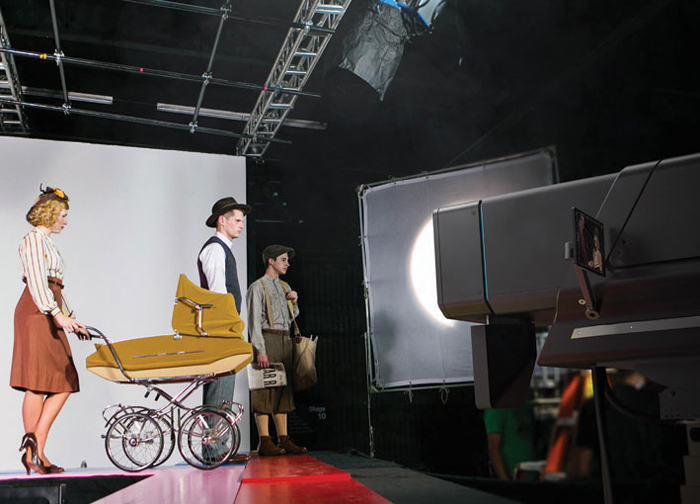
Enter the revolutionary new Cinema Camera by the name of LYTRO. This 755 mega pixel (40K, yes 40K) camera ushers in an era of ‘computational cinematography’ where the camera captures information, not pictures.

In fact, the Lytro isn’t a camera the way most people understand the word. It’s a light field device (LFD), which means it doesn’t capture images, it captures a holographic digital model of the scene, at a sample rate of 300 times per second. Simply put it captures light ‘rays’ instead of 2D pixels. These light rays have millions of ‘data points’ and each data point has a colour, position and direction. In post, the director and DP can choose a plethora of settings to ‘film’ the scene with, such as frame rate, aperture, and lens. Because the ‘lens’ is virtual it can have properties of lenses that would be impossible to manufacture in real life. This gives the director or DOP some powerful new tools, including some previously reserved for computer animation. The position of the camera can be changed, as can focus and depth of field. Because the data includes the depth of everything in the scene, creatives can choose to simply ignore everything past a certain distance from the camera – in effect, doing greenscreen without greenscreens.

Moreover, since the digital model it creates is akin to the three-dimensional digital data created by visual effects and animation studios, it’s actually easier to combine effects and photography.

Currently, the biggest limitation is that the Lytro Cinema Camera and capture system are the size of a small truck. However, Lytro has already said that it is working hard to miniaturise the technology and say it will happen ‘sooner than you think.’ Roll on Lytro!

Codec Confusion

High Efficiency Video Coding (HEVC) aka H.265 has had a tumultuous journey over the past year or two.

Back in January 2015 HEVC looked like a sure thing as industries seemed willing to adopt the codec as a standard replacement for H.264 codecs under a coalition of licensors. Later in July, it was in trouble with differing ideas regarding royalties and the development of the codec was put on hold. In December it was happily resuscitated, but during the in-between months, open source codecs were developed creating industry confusion and it seemed everyone was chaotically moving in different directions. Then, in the rarest of occurrences, most of the original groups involved, reversed course and converged toward a single standard, which almost certainly helped shove HEVC back on its intended path…or did it?

H.264 is an incredibly popular codec that forms the basis of most online video shown today. It was released way back in 2003 and, despite taking a few years to catch on, became the workhorse codec. This leads to an inevitable question: If it’s been working for so long, and is compatible with virtually every device consumers’ own today, why replace it? Simply put HEVC is just more efficient. The less data a codec can use to display an image without degrading its quality, the more efficient it is. If codec X and codec Y both display the same image quality, but the size of X’s file is 20 percent smaller than that of Y, then X is more efficient.

With the rapidly growing interest and demand for Ultra High Definition Television (UHDTV) services both in broadcasting and live streaming, the developments in video compression technologies have key challenges to face. The H.265/HEVC standard is considered as the coding technology of choice due to its enhanced compression efficiency, to help cope with the significantly increased data rates in UHDTV signals.

However, this superior compression performance of HEVC has come at the expense of increased computational requirements, which is estimated at up to four times that of its predecessor H.264/AVC. Therefore the development of real-time H.265/HEVC encoders for UHDTV, particularly the software implementations that can run on general purpose hardware is an ongoing challenge. It is interesting to note that Microsoft’s Windows 10 has H.265 playback, without the need for third party plugins, embedded in its system. Hardware-decode support will become more prevalent, and it’s likely that Intel will add some hardware support as a feature in sixth-generation Core processor. This will entirely solve the potential performance issues facing high-quality, UltraHD and HEVC video.

From a broadcast perspective, the International Telecommunications Union (ITU) has approved the H.265 video standard and the European Broadcasting Union (EBU) has decided to test HEVC encoders and decoders for live content transmission throughout the 2016 motor sports season. Open source developer and UK based start-up video compression firm V-Nova, have finalised the development of their Perseus encoding technology, considered by many as the current gold standard of HEVC.

They recently formed an Open Innovation consortium of over 20 global major industry players including Broadcom, the European Broadcasting Union, Hitachi Data Systems, Intel and Sky Italia. The firm claims to have at least halved the required bitrate for high video quality compared with HEVC and have achieved the same gain in encoding efficiency over its predecessor MPEG4/H.264. But the difference is that while HEVC belongs to the same technology family as H.264/MPEG4 and indeed MPEG2 before that, Perseus is based on radically new methods designed to avoid some of the previous limitations as well as improve performance.

But these are early days and the proof of the pudding will be in the eating. Many broadcasters and operators will want to see further evidence of performance and wait for proof that the technology is robust in the field and really does integrate with existing workflows.

A collaborative effort

Collaborative post-production is increasingly being employed by media organisations, allowing multiple editors, graphic artists and audio engineers to work on complex multi-part projects.

It’s not uncommon to work on a major production with cutting rooms in LA; visual effects houses in New Zealand, Taiwan and India; a producer in New York; and a director in Cape Town. The score may be recorded in London and the final mix scheduled to take place in Berlin. Technology is changing the way we do business, faster internet speeds make it possible to share large files with someone across the world and connect with them to interactively discuss the contents.

A collaborative video production application is a cloud-based software package designed to help people involved in a video production project to communicate in a shared environment during all stages of video production from concept to production, editing, review, completion and distribution. In other words, a collaborative video production platform should let multiple stakeholders join in the creative process as easily as if they were working together in person behind the camera or at the video-editing console.

Apart from software the solutions required to support collaboration in post-production starts with shared storage. But a truly collaborative editorial infrastructure must go beyond shared storage and solve the problems of large groups of contributors working from the same source materials using non-linear workflows. From a broadcast or generic video post-production perspective, there is a set of baseline requirements for a suitable shared storage system: it must for example support high capacity to contain all of the materials that may be needed for currently active projects, and also for completed projects that might be used as sources for current or near-future projects.

Scalability has to be in the extreme, to be able to effectively support new workloads that will be addressed in the immediate or near future. Adequate, sustained, consistent performance (in terms of bandwidth and low latency) is critical for the toolsets used in the workflow. Shared storage for video workflows requires extreme levels of bandwidth that exceed traditional needs and overall, the systems must satisfy access requirements imposed by all the tools and non-linear applications that are used by the collaborative group.

Once the basic source material centralisation requirement is satisfied, more complex management requirements must be addressed. These requirements solve problems that are seldom addressed by the typical post-production solutions in the market. As the industry and supporting IT technologies continue their evolution, companies can now address other group post-production requirements via their technology infrastructure. The additional functional requirements can be satisfied by implementing four discrete management disciplines in an environment already enabled for effective centralised shared storage: asset management, user management, process management and resource management. So how do you provide access to thousands of hours of material and enable collaboration among a wide variety of users without missing a beat?

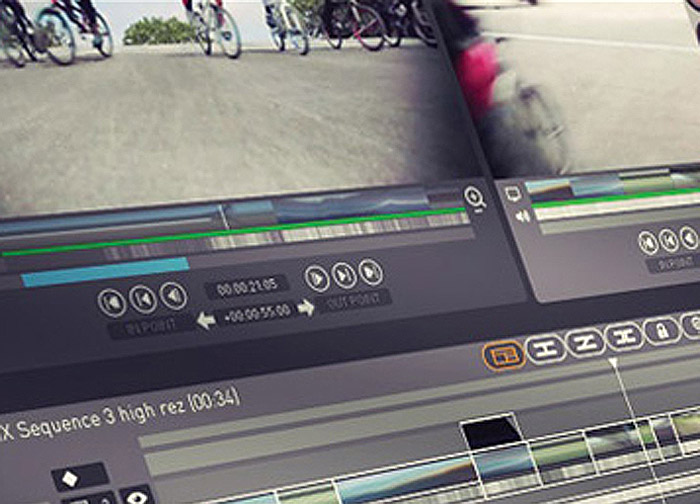
FORscene, for example, is a system created by Forbidden Technologies that enables such collaboration using cloud-based tools for editing and review of large volumes of source material. Footage that is shot in the field can be uploaded, reviewed and logged just as easily by the editor, producer or correspondent in the field. The web interface allows for shared editing and review online by multiple participants. Original footage that is copied to the local server is automatically uploaded to the cloud as proxies. While it offers a fully functional timeline editing system as part of its package, it can also import or export an EDL to or from Avid.

Both Avid and Adobe offer their own solution to this seemingly daunting task:

Avid Interplay Access is a web-based client for Interplay Production, providing access to the Interplay workgroup from any location worldwide. Interplay Access unifies a breadth of capabilities previously available only by running multiple applications, and makes them available anywhere. With Interplay Access, team members distributed around your facility or collaborating around the world can easily work with and add value to any media and any asset, on any connected workgroup.

On the audio front, Avid’s new Cloud Collaboration for Pro Tools platform allows you to connect to a premier network of artists, musicians, producers, engineers and mixers, enabling powerful yet easy collaboration.

Adobe Anywhere takes a slightly different approach to connecting multiple users of Premiere Pro, After Effects and Prelude. Like Avid, Adobe elected to use a centralised asset management and storage system, but they have chosen not to use proxies. Adobe acknowledges the creation of proxies takes up time and additional storage, so to solve this they created a scalable streaming system known as Adobe Mercury Engine.

Depending on the network connection, the server can throttle back the data rate while playing back the native file format. The other core component of this system is the Collaboration Hub, which contains the database of project information and metadata, and resides on a separate server.

It’s a big world out there but collaboratively it’s getting smaller and smaller.

NAB highlights

The National Association of Broadcasters (NAB) Show is over for another year with official attendance figures of 103 012 for the 2016 spectacle.

The exhibition featured 1 874 companies spanning 1 063 380 net square-feet of exhibit space. As usual there were many familiar faces, exhibitors and new products on show in what has undoubtably become the new product testing ground for the broadcast market.

On the camera front Craft Camera made headlines as the impressive modular camera that came out of nowhere. The company had leaked information teasing a production camera leading up to NAB 2016. Being modular, you can attach a 4K Video Element that has a Super 35mm CMOS Sensor with Global Shutter or you can attach an HD Video Element with a Super 16mm CMOS Sensor and Global Shutter. Beautifully crafted, this is one to look out for.

Another surprise was Chinese camera manufacturer Kinefinity who unveiled the new 5K and 6K Terra modular cameras. The cameras record ProRes 422HQ 10 bits. Clips can also be recorded in KineRAW, which can be transcoded into CinemaDNG and ProRres by the company’s own KineStation software.

Each year at NAB, Sony releases a product that pushes the limits of technology. Two years ago it was the a7S. Last year it was the a7R II. This year, it’s the HDC­-4800.This new monstrous high-end machine (I have no other words to describe it!) can record 4K images at up to 480fps when paired with the accompanying BPU-4800 processor. This new ENG camera was being described by many at the show as “the future of live production, a lot of everything – very high frame rate, very high resolution – a new era in modern sports production.”

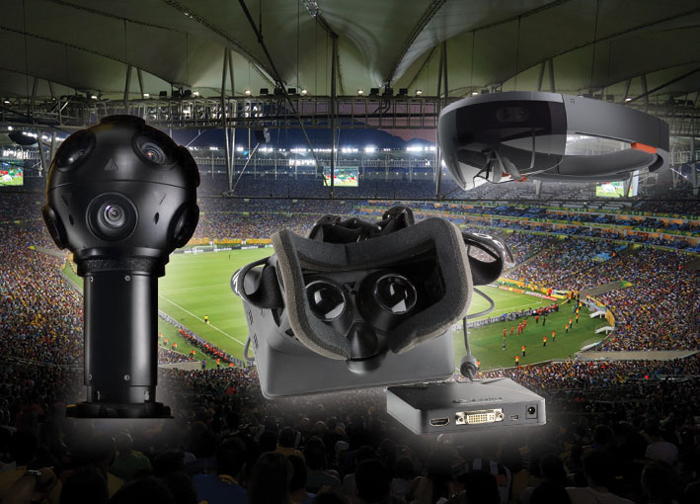
Virtual Reality (VR) was a big part of NAB 2016. Nokia showed off the Ozo, the $60 000 360-degree camera. It’s the first VR camera designed for professional productions – and it has a price point to match. Also on the floor was the new GoPro Omni rig, designed to hold six Hero cameras. The Omni rig won the Best of NAB 2016 product award.

There was no sign of the GoPro Solo drone but competitors DJI featured heavily in the Drone zone and perhaps one of the most impressive drone accessories was their Ronin MX gimbal. At $1 599, this new gimbal from DJI allows for cameras up to 4.5kgs! The gimbal itself is lightweight, and DJI is promoting the ability to easily switch between flight and ground modes, allowing any Ronin MX to get hooked into a drone and fly with relative ease.

Shaking the storage scene was Lacie which is no stranger to Mac workflows big and small as they revealed their 12big Thunderbolt 3 12-Bay Desktop RAID storage solution. Loaded with 12 7200rpm enterprise-class Seagate drives for a record-setting 96TB of desktop storage!

On the audio front some of the more popular new gadgets were accessories for DSLRs. Tascam debuted the DR-10SG, a $199 recorder with built-in microphone that attaches directly to your camera. The DR-10SG also uses a Dual Recording mode with records a secondary track at a lower level, in case you experience any popping or loud bursts of sound from your subject.

Sennheiser announced a new supercardioid microphone designed specifically for DSLR and mirrorless users. The MKE 440 is a stereo pair set up in a new arrangement developed by Sennheiser. The V shaped setup is said to represent the viewpoint of the camera. This allows the microphone to pick up dialogue and ambient noise, offering more sound mapping of the shooting environment.

On the software side, Blackmagic keeps consistent with releasing great new stuff at NAB as they have in years past, and the release of Resolve 12.5 seems to be in line with a great update. Featuring over 1 000 enhancements and 250 new features that give editors and colourists dozens of new editing and trimming tools, incredible new media management and organisation functions. There are new HDR grading tools, vastly improved noise reduction, lens distortion correction, a completely redesigned Deliver page for outputting projects amongst many more!

Adobe wasn’t going to let anyone down on the software side. Premiere users will be delighted to learn about additions to last year’s popular Lumetri Color Panel and Scopes features, support for more native formats (including 6K and 8K files), and even VR workflows. New features in both Premiere Pro and Media Encoder will give more control over the handling of files during the ingest process along with more flexibility when working with very large media. Premiere Pro will also now support 6k and 8k files from RED WEAPON cameras. For those working on more lightweight platforms, you’ll now be able to generate proxies on ingest, automatically associating them with the native full-resolution media. A single click will let you toggle between the two. Pretty neat.

NAB continues to surprise all who visit and I am already looking forward to next year!

Minding your ones and zeros

Screen Africa’s resident technophile Ian Dormer offers support to all those who have run afoul of the seemingly simple, yet often maddening ins, and outs of asset management – from acquisition to archiving.

My name is Ian and I am a… media manager. With a plethora of codecs, quick data transfer for dailies, transcode queues and watch folders, managing media these days has become increasingly tricky and quite often, one feels the need for group support and advice from kinfolk of common suffering.

We no longer shoot projects with just one camera. Low-cost B cameras, action cams and slomo cams have added to the gigabytes of data we film on a daily basis. We are producing multiple versions of each project to accommodate different platform types and almost every project is being re-versioned three or four times for the needs of broadcasters.

While there are a growing number of tools available to make the media management process a whole lot simpler, there are a few components that curators of said media need to deal with… and these are the human (error) component, capacity (limitation) component and technology (failure) component. It’s enough to drive you to drink, but if you follow a simple 3-2-1 backup strategy as a starting point of your own 12-step backup programme, you’ll easily prevent yourself falling off the rails.

As the number of video, audio and graphic assets grow, so has the need to organise this content efficiently. Too often, stakeholders have a hard time finding the content they need – and when they can find it, it’s often not in the right format, or there are multiple versions with no indication of which is the final one approved for publication. Managing media and the subsequent archiving of it has been discussed at length in previous issues and while there is no definitive ‘best overall system’ out there, we all have our favourites for various reasons. Media management in the entertainment industry is so necessary now that many universities around the world are offering specialist MBA degrees in digital media management and associated technology management.

It doesn’t take a degree to realise that following the basic rules of backing up data in any form, be it newly acquired or media ready for archiving, is essential. Most disasters and media loss occurs through simple human error and not backing up. Media is not safe media unless there are three copies of it. IT professionals have long promoted a 3–2–1 backup strategy for secure, redundant backup of your data, and it certainly applies in the entertainment industry. 3 backups of your data, on 2 types of media, 1 of those off-site.

Recent ‘cloud’ developments have introduced exciting options for off-site storage as part of your plan.  Companies like Backblaze and Crashplan allow subscribers to store unlimited amounts of data on their servers. It’s a great way to go and covers the ‘2 types of media’ and ‘1 off-site’ parts of your 3-2-1 strategy. There is a downside though; depending on your broadband speed it could be slow to upload to and retrieve – so beware if you need it in a hurry.

Media management 101

Media management starts in the acquisition phase. Camera generated metadata adds critical information that can be used further down the line in a number of processes in post production.

Silly as it may seem, making sure the camera’s system date and time are correct often proves invaluable when recovering data for a specific shot later down the line. As most RAW formats are not really suited for editing (in general) I always advise people to rename the RAWs per project using a production code (there are numerous software packages around that will do this for you in batches.

Adobe Bridge is a good example and is really intuitive and easy to use). Back them up to secondary hard drives and LTO (safe back up) and then transcode the media to your user-friendly in-house codec for post purposes.

Don’t use the old ‘Final Cut’ way of naming your clips eg: 09 – Day 2 – Cape town International Airport – sunny morning pan left to right, rubbish audio on channel 2 (yes people do this).  Windows does not like this long naming style and most tape back up systems will reject anything too long. This kind of detail should be done in logging within your media asset management programme or your edit software.

I have adopted a simple 10 letter/number code that has to date provided a fool proof method that just works. Using a Random Code Generator (software package) each production is allocated a 4-digit code. For demo purposes I have generated the random code sQR4, which is my production code for a shoot done in the Antarctic recently. There were seven cameras and two audio recorders on the four-day shoot. Each camera and audio device gets a letter of the alphabet associated to it. The shoot days are also allocated a letter of the alphabet. Each clip is renamed with the Shoot Code (sQR4), Device code (eg Alexa = A) and Day Code (eg Day 2 = B) and then a four-digit number sequence starting at 0001 – resulting in a 10 digit string sQR4 AB0001 (Antarctic, Alexa, Day2, Shot 1)

Table 1

The result is that if I need to recover sQR4 FD 2136, I know from my methodology that it was from the Antarctic shoot, Drone camera on Day 4 shot number 2136. This style of naming clips can easily be adapted to edited sequences, output files, finished programmes etc. It is simple but it works and integrates into all MAM software packages where you can log and tag for quick and easy retrieval and track the assets through various stages of production.

Capacity limitations

As technology develops new devices and methods of managing data and archiving data evolve. The traditional spinning hard disk drive (HDD) is slowly being edged out of the storage market– at least in terms of capacity. Eight terabyte (TB) drives are in develoment but, judging by the technology forecast, it is possible that 10TB’s might be the limit for HDD. Solid state drives (SSD’s) are increasingly getting faster and more rugged, however there are minor issues with lifecycles and therfore longevity of the product. SSD or flash capacity is due to surpass that of HDD with tests currently being conducted on a 30TB SSD due for release in around 2018. SSD costs are calculated to drop to around US$0.12 per GB by  then making solid state a more cost effective, faster and potentially more stable option to spinning disk.  Imagine a single 16 bay raid unit housing 480TB of SSD storage! The competition between flash and hard disk-based storage systems will continue to drive developments in both. Flash has the upper hand in performance and benefits from Moore’s Law improvements in cost per bit, but has increasing limitations in lifecycle and long term reliability.

LTO tape is still my preferred choice for more permanent archiving and the launch of LTO 7 has increased both speed and capacity for archiving and retrieval. The LTO product roadmap programme has in fact already included generations 9 and 10.  LTO-9 will offer up to 25 TB of native capacity and LTO-10 will offer 48 TB. Transfer rates are expected to increase at a larger rate than previous generations. LTO-9 and LTO-10 will offer transfer rates of 708 MBps and 1,100 MBps, respectively and new magnetic coating technology on the tape itself means the shelf life will be longer.

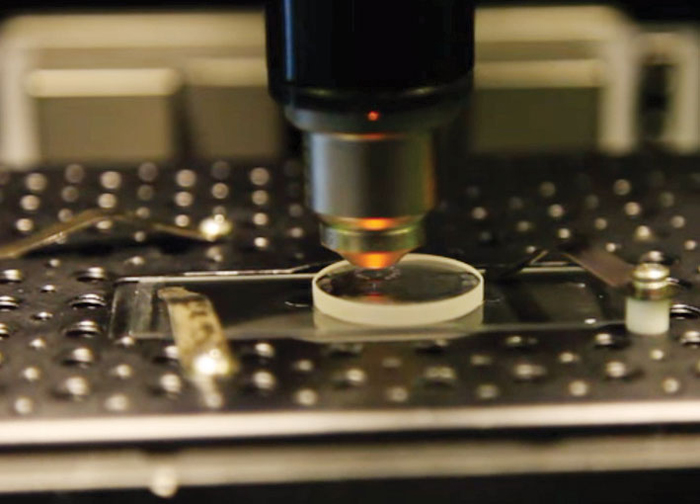
Speaking of longevity, scientists at the University of Southampton have made a major step forward in the development of digital data storage that is capable of surviving for billions of years. Using nanostructured glass, scientists from the University’s Optoelectronics Research Centre (ORC) have developed the recording and retrieval processes of five dimensional (5D) digital data by femtosecond laser writing.

The storage allows unprecedented properties including 360 TB/disc data capacity, thermal stability up to 1,000°C and virtually unlimited lifetime at room temperature  or 13.8 billion years at 190°C, opening a new era of eternal data archiving. 5D data storage obviously has potential as an archival format for museums and galleries, but the scientists involved believe it could be also be commercialised in the not-too distant future.

So the future has been sorted and I am happy – my files are safely transcoded, logged, backed up and archived so I can sit back and relax and I think I’ll have that drink now…cheers!

NABShow 2016

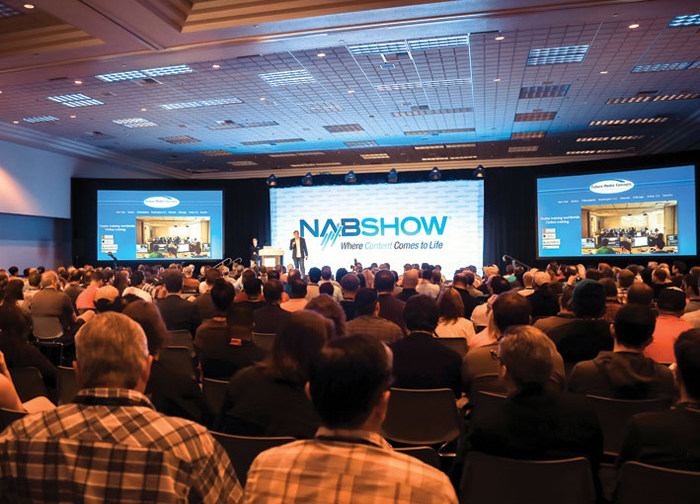
NAB is upon us again and as expected 2016 promises to be another fantastic show with more great reveals of what is coming our way from the technology front in the next year or two. The organisers expect another record attendance with some 104 000 visitors from 160 countries expected to descend on Las Vegas in April.

The NAB Show Conference Programme is the industry’s gold standard, providing visitors with a year’s worth of intelligence-gathering in all areas of expertise, as well as the ultimate learning and networking environment, over the course of a few days.

Apart from the exhibition the conference programme is an important and popular meeting point for many. The Broadcast Engineering Conference covers numerous topics and a few of the more interesting conference sessions include cyber security for broadcast operations in an IP environment and the big debate on UHD and the next generation of video formats.

Of interest to many will be the ‘Future of Cinema’ conference. Today’s cinema creatives face an ever-changing environment of enhanced formats, evolving platforms and brave new experiential technologies. The conference is hosted by numerous industry experts and creatives who will discuss the next 100 years of motion pictures and how content makers work with technology to thrive today – and well into the next century.

Something not to miss is the Virtual Reality Production Summit, billed as ‘Emerging Immersive Worlds’. Virtual Reality is currently climbing the hype cycle. Augmented Reality is almost in a position to begin its own ascent. There are daily stories about hardware advancements, new products from the latest VR startup, or the VR development plans of a gaming house or production studio. Through a mix of keynotes, panel discussions, and audience Q&A sessions, the summit strives to separate what is real from what is vapourware covering the technology and business aspects of this emerging marketplace, which some consider to be a new media type and art form.

Last year, NAB’s floor space expanded to cover some 1 013 544 square feet, accommodating the 1 800 exhibitors for the four-day event. A highlight for many attendees was the Aerial Robotics and Drone Pavilion. When it comes to creating killer content, the sky is the limit – literally! Back again in 2016, the Aerial Robotics and Drone Pavilion includes a fully enclosed ‘flying cage’ that gives you an up-close and personal look at this technology in action. This is no mere fly-by. A panel of industry experts – inclusive of broadcasters and exhibitors – will take you through all aspects of employing aerial technology.

An area of interest for most broadcasters is the Connected Media Pavilion. Situated in the South Hall, this is the solutions destination that explores the underlying technologies enabling audiences to receive, discover and interact with content across any device, anywhere. It’s all about IP-focused technology including IPTV, OTT, mobile, social and cloud. And it’s all about consumer engagement and the rising importance of brand casting – bringing audiences closer to the action and today’s leading brands.  Through exhibits and a full seminar programme, the Connected Media Pavilion will provide you with the tools and knowledge to deliver the ultimate multiscreen audience experience.

Something new this year is the Virtual & Augmented Reality (VR/AR) Pavilion – it will be the place to get your hands on the latest augmented and virtual reality equipment and software. The world, as we know it, is changing. Virtual and augmented reality is impacting all aspects of filmmaking, storytelling, cameras, lighting, sound, production, special effects (VFX), editing, distribution, coding and consumption. The VR/AR Pavilion features the leading content producers and tech companies building the future and changing the way we consume information.

Post|Production World (P|PW) is the world’s leading training event for content creators and designers including TV, film and video editors, producers, directors, graphic artists, motion graphics designers and new media specialists. Produced in partnership with Future Media Concepts, the five-day programme features a robust multi-track schedule focused on production and post-production technologies, trends and workflows. In addition to the general sessions, P|PW offers multi-day, certification-prep and hands-on training that allows attendees to dive deep into platforms such as Adobe After Effects, Adobe Premiere Pro and Apple Final Cut Pro X. New this year, P|PW offers a track dedicated to graduating students to provide them a leg-up in navigating the industry.  Also back are five unique field workshops showcasing the latest tools and techniques impacting the industry.

What can we expect to see from suppliers this year? As always there’s a healthy amount of competition trying to get it right for the consumers on the camera front. It’s exciting to see how quickly these companies are turning around new cameras with the improvements that DOPs and camera operators are asking for. We have heard several times in the past year that Canon is planning to release an 8K camcorder, now it seems that is true. The latest rumors suggest that Canon will announce the new EOS C500 Mark II camcorder at NAB as well as the much anticipated Canon EOS 5D Mark IV. Canon is a bit late for the 4K market, so they don’t want to miss out again in the 6K or 8K market.

RED is gearing up to release their all new RED Raven. This camera packs quite a punch with 240 fps at 2K and 120 fps at 4K raw, this camera is said to provide just as clean of an image as its predecessors, but with a lighter weight body and fully compatible with the RED Weapon.

RED will be offering three different packages: the brain only, the jetpack package and base i/o package.

No newcomer to surprise, rumour has it that Sony is working on an 8K Cine Alta camera which will replace the current top of the line Sony F65 camera. According to some insiders, the sensor will be based on A7r2 backlit CMOS technology and will include a global shutter mode (either mechanical or electronic). It will record 60FPS in 8K resolution, 240FPS in 4K resolution and will feature a16-bit RAW uncompressed and compressed onboard recorder offering ProRes, DNxHD, DNxHR, AVCHD, XAVC, SR, MPEG-2 and H264 formats. Go Sony!

Blackmagic Design are busy testing the URSA Mini 4.6K and it is already being dubbed by some as possibly the hottest camera of NAB 2016. Late last year GoPro announced the imminent release of the Hero 5 and that it had entered the aerial camera market with the Karma drone. While it’s GoPros first venture outside of straight action cameras, it will come of no surprise to many.

Drone operators and enthusiasts alike have been flying GoPros for years; a DJI Phantom and GoPro combo quickly became the go-to package for entry level aerial filmmakers.

DJI has since started the production of its own cameras, which in-turn has taken over what a GoPro package can currently offer; the DJI X5R can record raw video utilising a micro four thirds sensor. Because of DJIs latest offering, a GoPro Hero 4 simply bolted to a same branded drone will not suffice as a market leader. It will be interesting to see where the Karma sits within the industry, my guess is GoPro will target the entry-level market and challenge the Phantom 3 in spec and price, offering a Hero 5 on an affordable gimballed drone; this would fit their mass consumer profile.

There is further speculation that if the GoPro Hero 5 would indeed be designed to be small, portable, and fit into the Karma drone, then this would make it “the most versatile camera to be built.” Rumours about the Karma drone also indicate it to have a waterproof housing, which would allow users to take pictures underwater of up to 60 to 100 metres below water surface level. Therefor, the Hero 5, through the Karma drone, would be able to take pictures on land, in the air, or underwater.

There are some companies we haven’t heard from yet concerning upcoming releases for 2016 – such as Panasonic, Arri and AJA. Does this mean that they are secretly concocting a new camera model to blow your mind? Or have they run short of R&D funds? Whatever the reason, there’s still plenty of time for new and exciting products to emerge at NAB and beyond so keep a look out!

The future of sport

Without broadcast technology, many sports fans around the world would not be able to share in the excitement of their favourite sporting events. Broadcasting technologies have transformed the spectator experience, making the many thrilling performances featured in top-tier sporting events available on multiple platforms and in multiple formats.

As technology develops and new methods of broadcast are devised, the rights holders of major sporting enterprises are also looking at new ways of licensing their product. A lot happened in the world of sport in 2015 but the focus now is on Brazil as the country prepares to take center stage in the sporting universe in the run up to the 2016 Olympic Games in Rio de Janeiro.

SPORTY TECH IN PLAYING FIELD:  4K in the lead, Oculus Rift VR headset and Microsoft HoloLens

2015 was a momentous year in the world of sport; we witnessed some amazing coverage of many great events. Sport is a vital lifeline for traditional TV broadcasters; globally 97% of all sports programming is watched live and the public’s insatiable desire for more keeps fueling the fire. Because of this sport broadcasters are at the forefront of technology and, more importantly, experimenting with new technologies.

4K has to be the big-ticket item driving the industry at the moment. In August last year, BT Sport Ultra HD was launched, giving Europe its first paid 4K channel. BT TV is a subscription IPTV service with, close to 1.4 million subscribers and their decision to go 4K was based on 18 months of research, surveys and test trials. While BT Sport was able take the terrestrial route, this is not feasible for everyone. In the case of 4K, where a significantly large amount of bandwidth is needed to deliver the high quality content for all TV homes, satellite will be a key transmission. This is when the adoption of the new High Efficiency Video Coding (HEVC) standard becomes crucial, as satellite then is able to cost-effectively distribute Ultra-HD content to the largest number of households among all broadcasting infrastructures. In 2015 France Télévisions not only filmed every match on the centre court of Roland Garros in 4K but also broadcast the events via both terrestrial and satellite channels using HEVC codecs, so that any French homes with 4K TVs could receive it. This was a successful test that saw increased sales in 4K TV sets nationally.

American satellite Pay-TV services giant DirecTV launched two new satellites into orbit in the last year for the sake of developing direct 4K video and live content transmission services for subscribers and is now moving ever closer to being a major leader in this growing content landscape. DirecTV has completed the process of testing ultra HD 4K sportscast transmissions via satellite as a run-up to a formal launch of this service at some point in early 2016. DirecTV is already offering a limited OTT service of 4K-entertainment distribution and has been doing so since late 2014 but the existing service is available to only some consumers and comes with a very limited selection of content.

ESPN has long been at the forefront of broadcast technology, and the network has many of the necessary technical assets in place for a 4K migration whenever it chooses to make the move. The studio where SportsCenter is filmed, for example, can support 4K and even 8K broadcasts. Also, ESPN already shoots some content using 4K cameras, although the footage is largely used for zoom-in shots of game-changing plays. The real question for viewers in the US is when will sports network ESPN take the UHD plunge or at the very least, when will viewers have an opportunity to watch games from the American sports franchises in Ultra HD?

ESPN comments that while they have the technical capacity and capability to make the move to UHD broadcasting, “they are looking into it and will make a decision about 4K when the time is right for them”. This attitude is probably because of the failure of 3D TV. After launching a standalone channel with much fanfare in 2010, ESPN quietly folded up its 3D TV experiment in 2013, added to which they feel that much of the US has lacked the necessary infrastructure for widespread 4K video distribution, and there’s still a limited ecosystem for 4K technology. They are watching the BT TV model with much interest as well as Canadian cable operator Rogers Communications Inc. which has been involved in the expansion of the gigabit networks in Canada and announced that they are ready to start broadcasting sport coverage in UHD this year, promising over 100 live events to their subscribers.

OTT broadcasters are at the forefront of native Ultra-HD productions followed by an increasing number of linear broadcasters that are producing in 4K as well. This trend, coupled with the high number of 4K TVs at end-consumer homes, gives us good reasons to believe that adoption of Ultra-HD could go quicker than expected. It may well be that 4K becomes mass market by 2016/2017.

HDR a close second

4K is not the only technology in sport broadcasting to get excited about. Keeping fingers on the technological pulse is in the broadcaster’s DNA… and that’s why most broadcasters are also looking at High Dynamic Range (HDR) to see how this can be incorporated into our 4K delivery, especially in the sport arena.

In recent months Virtual Reality (VR) and 360 degree video, has been a big talking point. Particularly with the release Microsoft’s HoloLens and more recently the new Oculus Rift VR headset, now owned by Facebook. 360-degree video is possibly the next big breakthrough for sport broadcasting and we have seen great examples of its potential from the Red Bull Formula 1 racing team. While 360-degree video is currently not available as a live stream, the amount of investment going into the technology surely means that it is inevitable. Trials are currently being conducted at football stadiums and cricket grounds in Europe and Australia.

Sporting organisations are all too willing to experiment with new technologies. This is evident by the recent virtual reality content filmed for Samsung’s Gear VR at the NBA’s all-star weekend. The National Hockey League (NHL) also experimented with using GoPro cameras for its all-star weekend to give viewers a live point-of-view perspective.

OTT enters the game

While the 2012 London Olympic Games provided one of the most connected global experiences ever, 2016 in Brazil could see some much-anticipated new technology unleashed.

The International Olympic Committee’s broadcast unit has a history of using the Olympic Games as a launch pad for new viewing experiences. In the past, TV networks covering the Olympics delivered only prime-time evening coverage of what happened that day, with taped highlights of various events tightly packaged into several hours of programming. That approach changed dramatically with the 2008 Beijing Olympics when NBC Universal, the provider of Olympics coverage for American audiences, offered not only hours of TV and cable coverage but also thousands of hours of coverage online. Internet online broadcast of sporting events has not only increased the total hours of airtime, but more importantly, the number of viewers at any one time – a great dangling carrot for TV station advertising revenue streams.

While Japanese broadcaster NHK will be conducting transmission tests for 8K broadcasts, the broadcast division of the International Olympic Games has said that, as the entire broadcast ecosystem will be a 4K workflow, there are no plans for TV broadcasting in 4K Ultra HD at Rio 2016, but have shown interest in trials of virtual reality technologies. The technology is maturing quickly. There is real interest in virtual experiences to mobile phones. One VR application that they are exploring is around viewing aspects of the games after the event.

As the methods of sport broadcast delivery diversify, sporting bodies and federations are looking at alternate ways of licensing their wares. The online video market is estimated to be worth US$200 billion to US$400 billion, with YouTube having the largest share. YouTube currently has more than 1 billion users, has more than 300 hours of video uploaded to its site every minute, and is localised in 75 countries and available in 61 languages. It was recently reported that in the US YouTube reached more Americans between the ages of 18 and 34 than any cable channel, including ESPN. There has also been a 50% growth in the amount of time users spend watching videos on YouTube year over year, of which 50% of viewing is via mobile. The live streams on YouTube have the potential to far outweigh the highest audience ratings of most television broadcasters.

It is reasons like this that have attracted Australia’s National Rugby League (NRL) and the Australian Football League (AFL) to enter into discussion with Google to have their games broadcast via YouTube from 2017.

YouTube has made a shift toward professional sports media over the past few years. In 2010 it secured the live-streaming rights of the Indian Premier League (IPL) cricket. Three years later, YouTube began to experiment with major American sports, including Major League Baseball (MLB) and the National Basketball Association (NBA). Is it possible therefore that YouTube has the potential to lead the way in new forms of sports broadcasting?

In the current media environment it seems that it may not replace the current broadcast of sport, but what it will do is allow sporting disciplines like the NFL and AFL to be internationalised by making it available to people outside Australia increasing the viewer and fan base. In addition to providing a liner stream, YouTube could be a potential platform for sporting organisations to experiment further with new broadcast and viewing technologies. Watch this space…

DAWgone that sounds good!

Whether editing audio, recording bands, composing soundtracks, or mixing 50 tracks of an episodic television series, the audio professional has a wide range of digital tools at her/his disposal.

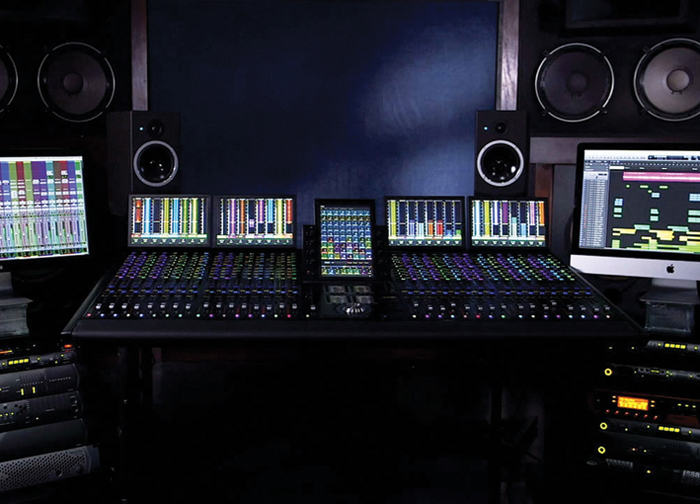
Yet, with the vast number of Digital Audio Workstations (DAW) available, one needs to choose the proper fit to be the most efficient and creative as possible. While each DAW consists of fairly similar features and functions, there are many varying opinions on which DAW is the ’best‘ and it tends to be a fairly subjective choice.

Commercial digital recording was pioneered in Japan by NHK and Nippon Columbia, under the brand name Denon, way back in the 1960s. In 1971 the BBC developed a two-track digital recorder and a few years later 3M released their digital multitrack recorder which was based on the BBC’s technology.

The 1980s saw rapid technology advances with the development of the Compact Disc (CD) and the first hard drive recorder and the release of Digidesign’s Sound Tools and Sound Designer. It wasn’t until the ‘90s that the first workstations saw the light of day. At this time, all DAWs were Apple Mac based (eg. Pro Tools, Studer Dyaxis, Sonic Solutions).

Around 1992, the first Windows based DAWs started to emerge from companies such as IQS Innovative Quality Software (SAWStudio), Soundscape Digital Technology, SADiE, Echo Digital Audio and Spectral Synthesis. All the systems at this point used dedicated hardware for their audio processing.

The 2000s saw technology leap forward and computing power allowed the development of ‘software only’ DAWs and sessions that could only previously be mixed in a studio environment, could now be knocked out in garages and homes.

Globally, there are two ‘standard’ DAWs in the film and television post-production industries that keep topping the list of ‘the top 10 best’. Avid Pro Tools and Steinberg Nuendo have enjoyed the market share for many a year, but that’s not to say that there are not any others to compete with. Some DAWs have a leaning to the post environment and some toward music creation and publishing and some a good blend of the two.

Whichever way, most DAWs can all do similar things and it is most often found that ‘final mix’ environments encompass audio editing as well as music production because the two fit so closely together. The DAWs mentioned here are more diverse samplings of what is available as opposed to a review-based ‘Top 10’. While a post-production environment may require certain hardware devices to operate, we are only looking at the software behind DAW’s features.

Avid Pro Tools is virtually a household name, it is often referred to as the ‘biro’ of the professional recording world and over the years has become something of an industry standard.

With v12 recently released perhaps the most exciting feature is the new set of Cloud Collaboration tools. These tools enable artists to compose, record, edit and mix sessions working with other Pro Tools users in the cloud, as if they are all together in the same studio. They simply invite other artists to collaborate on a session using built-in text/video chat, or find new collaborators through the new Avid Marketplace Artist Community. If the person they want to work with doesn’t already have Pro Tools, then they can simply download the new free Pro Tools | First to start working together immediately.

Avid has also realised that the subscription model for software does work and offers several options as well as a perpetual licence.

Steinberg Nuendo has a familiar design and basic workflow to anyone who uses Cubase and is designed primarily as a tool for post-production audio for picture: sound design, dialogue and mixing for movies and TV. Pro Tools had this market completely sown up a few years ago (some would argue it still does), but Nuendo is one of the only alternatives to have made much of an impact – many top post-production studios and technicians now base their core systems around Nuendo instead. Why? Simply that it’s at least as good as the ‘industry standard’. Nuendo 7 covers every aspect of audio-to-picture work, be it in game audio, TV or film post-production. Functions include direct connection to the Audiokinetic Wise middleware, in-built reconforming solution for audio-to-picture alignment, VCA fader support, advanced project collaboration tools, as well as rendering options for handling large amounts of audio files.

The software also comes with an updated user interface offering improved window handling and a customisable workspace for an intuitive workflow. Additional effect plug-ins and an enhanced overall programme performance round out the feature set.

Adobe Audition – With Audition CS6, Adobe busied itself adding back features that were available to Windows users in Audition 3. The result was a very fine audio editor aimed at sound designers, radio producers, audio and video editors and podcasters. Now with Audition CC 2015, Adobe has largely finished feature restoration and instead focuses on adding new audio restoration and manipulation tools, and tweaking the interface to make the application easier to use. It’s now a better audio editor; however, its target audience may look at alternatives solely because of Adobe’s subscription-only model.

Ableton Live – First appearing in 2001 but really becoming a contender as a serious production solution in the competitive audio software market in the past seven or eight years, Live revolutionised our conception of what we could consider a DAW to be. Blurring the line between studio production tool and live/DJ performance tool, it has caught the more-established DAW manufacturers on the hop – in recent years they’ve mostly caught up again, introducing their own versions of many of Live’s best-loved features, including fast, auto-time-stretching and arrangement workflows that mean we can finally make whole tracks on the fly by jamming with elements in real time. First time users may get frustrated with the layout but once you get the hang of it Ableton Live competes quite nicely with Pro Tools and Nuendo.

Bitwig Studio – The new(ish) kid on the block, Bitwig Studio’s arrival has been causing quite a stir – it’s not often that a completely new DAW enters the fray. Bitwig seems to be a logical progression from the leaps made by Live over the past few years – indeed; it was created by former Ableton developers. While not sharing any actual code DNA with Live, the layout features integrated Clip and Arrange windows that hint at an effort to bridge between Live’s innovative functionality and more traditional sequencing. Try it – you might be surprised!

Image-Line FL Studio –  A firm favourite among aspiring electronic producers, FL Studio has developed hugely from fairly humble origins (the step sequencing Fruity Loops) into a fantastic, fully-featured DAW. Version 11 saw huge interface improvements and a host of new plug-in effects and instruments (Image-Line’s stand-alone plug-ins are always worth checking out). More geared towards the music producer FL Studio has great potential for the novice wanting to enhance their production work for a reasonable price.

Apple Logic Pro X – Another of the longest-serving DAWs available, Logic has been developed beyond recognition from its pure MIDI roots. With X, Logic finally underwent some overdue cosmetic and functionality overhaul, consolidating what it has always been good at and adding a ton of new plug-ins, MIDI effects and feature enhancements. A natural step-up from Garageband for developing producers, but also so much more than that – a truly professional solution with great features for in-house final mix production work.

Steinberg Cubase – Another of the original DAWs, Cubase has been many a muso’s tool as an introduction to music production. Like Logic Pro, it’s done a good job of keeping up with the younger competitors, and has more than a few genuine innovations lurking among its huge feature set. Cubase Pro 8 provides many features to get excited about. Steinberg didn’t give this recording studio software a total facelift – instead it improved upon an already upstanding programme. Steinberg added the necessary pieces to create a better workflow and to help you save time processing your audio so you can stay in the mind-set of producing, recording and mixing.

Sonar Platinum – is a totally revamped version of the previously popular Cakewalk DAW. Its new layout and clean and organised design is an impressive feature and that whether you are working on a single-monitor laptop or a dual-monitor setup, all of the work windows – mixer, file browser and pro-channel – can float or be docked. Sonar is also compatible with a number of different plug-in formats including VST3, VSTI and DXi formats, which means you can expand your plug-in library without running into compatibility issues. The Sonar redesign and interface make this programme ultra-usable and desirable. It is a shame that this programme is only available on PC platforms; otherwise this programme would be ever more sought after. Sonar Platinum is also available on a monthly or an annual basis, much like Adobe Audition Creative Cloud. If you pay for a year of Sonar, you will receive updates and downloads for the year. Don’t mistake this for a subscription – subscriptions run out. If you pay in full and don’t want to renew your yearly payment, you will still have access to Sonar, it just won’t update.

Propellerhead – Reason users are fairly evangelical about their chosen DAW: after all, it does everything, and in a fun and stylish way. Reason 8 has made some great improvements from previous versions of the software – lack of third-party plug-in support and inability to record audio – have now been resolved, making it basically impossible to find significant fault with Reason at all. An entire virtual studio (it even includes the virtual patch cables for hooking everything together) in a single software package: very enticing. It has great virtual instruments and a large loop library, but the plug-ins are only expandable through the Propellerhead rack extension format. Reason is unique among DAWs in look and feel, but this software makes it well worth stepping outside the box.

Conclusion

The sound purists will argue with me and say there are only two proper final mix DAWs available – in fact most will say only one is a true final mix tool. Software and hardware development have created fierce competition in this environment and it all comes down, not to what can be done but how it can be done. A US$99 piece of software has all the potential to compete with a US$20 000 audio suite; it just depends on how it is used and by whom.

Managing your assets effectively

Media asset management – as varied and complex as the requirements may be
– is, in the long run, about solving two challenges: storing various types of
digital content in a reliable, disaster-free and future-proof way and thereafter,
accessing and retrieving what is needed, when it is needed and in the
necessary format. All other aspects of asset management – anywhere from
ingest, indexing, mass access storage in high and low resolution, through to
long-term archives – ultimately serve one or both of these goals.

Our industry is an ever-changing one but what remains a relative constant in
most areas is the continual generation of assets, the workflows that evolve
around their creation and ultimately how these assets are stored and handled.

Broadly speaking, asset management can now be categorised as either digital
asset management (DAM), a term that covers enterprise asset management
across a wide range of media types, including images and documents; media
asset management (MAM), which covers systems that emphasise video and
audio capabilities; and production asset management (PAM), a subset of MAM
systems that targets work in progress rather than long-term archival
capabilities.

A wide range of solutions are available, with entry level pricing from a few
thousand Rand, up through enterprise systems costing well over R10 million.
The systems at the low end of the scale tend to be out-of-the-box solutions
offering quick installation and training, while the larger deployments often
involve a high degree of customisation for a specific site’s requirements, a
project that could take years to implement.

By now, most broadcasters, as well as large and small production companies
alike, should have some kind of asset management in place. The continuing
trend of file-based acquisition, digitising of non-digital assets and subsequent
re-versioning of content for multiple platforms, has made asset management
more important than ever before.

There are about a dozen or so core functions that are important factors in the
body of today’s management systems with ingest, indexing, content
management database, search engine, high resolution storage, low resolution
storage, low resolution browsing and preview, deep archive recovery, streaming
and downloading and invoicing at the top of the list.
Improving capacity for live workflows

In today’s environment, many media asset management systems are strong on
metadata handling and archival workflows, but are less well suited to work in
progress and so we see a trend shifting towards a more live, collaborative
workflow. For instance, one needs to set up, quickly and dynamically, comment
threads around an asset, email (both automatic and manual) alerts as any new
comments are posted, and even send out links for review to new participants
who aren’t ongoing users to make them aware of any new media or changes
within the system hierarchy.

The ever increasing divide and shift from scripted and planned shows to sports
and reality means that more and more production teams have to work away
from the main broadcast facilities equipped with media asset management,
therefore the need for remote access via a common browser through a
collaborative, cloud-based application is needed.

Just as in the broadcast field, the movie industry is also seeing an accelerated
shift to small, cost-effective teams. Simply having a shared storage pool,
searchable metadata for various takes, and the ability for dailies to be reviewed
immediately by producers from a remote location, are big advantages over the
previously much relied on Fedex-based workflow.

Diverse options

There are literally thousands of MAM systems and applications out there, each
one providing a function and role. However, there probably isn’t a perfect
system that ticks all the boxes. Every user has different requirements so
systems that are adaptive sell better than those that are less so.

It is becoming increasingly important for those looking into MAM systems that
you really understand what you are looking for, which includes understanding
their metadata requirements. It sounds simple enough, but, done properly,
requires time and effort. People, processes and policies are important
regardless of which MAM system you use. It is also essential that you think
carefully about the selection of a MAM vendor, making sure they can support the
metadata strategy or at least support several common metadata standards and
specifications.

As in so many management change scenarios, the biggest hurdle is often the
people who will be asked to use and administer a media asset management
system. Generally speaking, before the introduction of a system, they will have
developed their own ad-hoc workflows without the help of an asset
management framework. Most often, these are based on standard folder
structures and internally devised best practices for the folder organisation.
Some MAM and PAM vendors provide approaches so foreign to they fail to get
100% buy-in, resulting in wasted capital investment.

Recent MAM project failures at companies such as the BBC (who spent $150
million on a MAM project that was then shelved due to lack of use) have sent
shock waves through our industry, casting fear into the hearts of technology
leaders with the unenviable task of trying to implement a centralised MAM
system.

A whole new approach to managing media may be required to avoid these
failures in the future, win the hearts of the creative users and ultimately ensure
the success of your business.

- Advertisement -
- Advertisement -
- Advertisement -

Pin It on Pinterest