Home Authors Posts by Ian Dormer

Ian Dormer

49 POSTS 0 JOBS
Ian Dormer was born in Zimbabwe and has been in the TV business since the 1980s, having served in various positions a the SABC, M-Net and SuperSport. Ian currently works and resides in New Zealand.

Celebrating 50 years of IBC

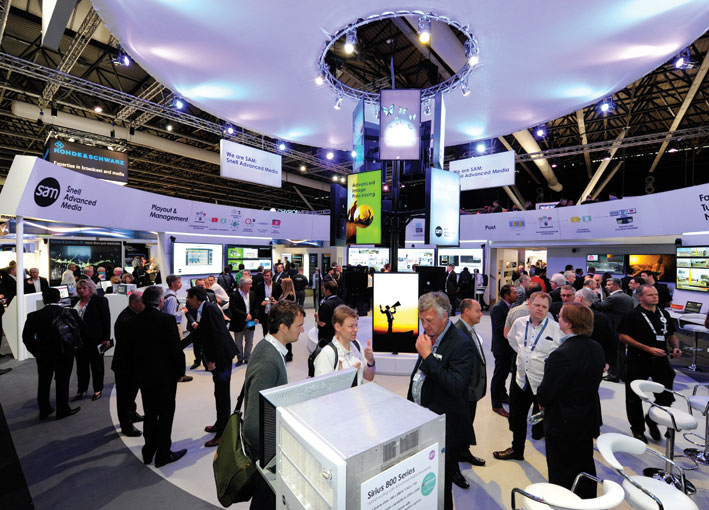
Fifty years ago, a group of broadcast equipment manufacturers in London, decided to organise a unique exhibition – the first of its kind – one run by the industry, for the industry. Lead by John Drew Tucker (EMI), John Etheridge (Rank Cintel) and Tom Mayer (Marconi), 33 other exhibitors joined them in a conference room at the Royal Lancaster Hotel to display their technology wares to a group of about 500 delegates. The year was 1967 and the International Broadcast Convention (IBC) was born.

Broadcasting in the 1960’s was a very different business – colour television was in its infancy, the entire broadcast chain was analogue and there were no desktop computers or cell phones, one wonders if any of those pioneering manufacturers ever imagined a world of touch screens and ultra-high definition video? IBC lasted just one year in the Royal Lancaster Hotel before needing more space. It went to the Grosvenor House hotel on London’s Park Lane for a while, before heading south to the Grand Hotel in Brighton. IBC’s popularity and rapid growth meant that it ended up also filling the next door neighbour Metropole Hotel and Conference Centre as well – one extremely busy year there was even a pavilion on the beach, too!

By 1990, the lack of exhibition and meeting space – and a chronic shortage of hotel rooms had reached crisis point and something had to be done to save the conference from collapse. Under the inspired and visionary leadership of John Wilson, IBC became an independent body, owned by six partner bodies: IABM, IEEE, IET, RTS, SCTE and SMPTE, with a full-time professional staff and IBC moved from the UK to the Netherlands in 1992 to the Amsterdam RAI. The strong association with the six leading trade bodies, and the committee structures for exhibition and conference, ensured that the event was still run by the industry for the industry.  From 1994 IBC became an annual event, and it has remained in Amsterdam ever since.

2017 and IBC celebrates its 50th year, still as the leading event on the global stage for everyone involved in content creation, management and delivery. It is the world’s leading Media, Entertainment and Technology show. Over 55 000 industry professionals from more than 170 countries converge to network, discuss and debate across a broad range of topics including OTT, 4K, HDR, Streaming VOD, Cloud Hosting, Ultra HD, VR and IPTV. Bringing together a visionary conference and dynamic exhibition with unique and carefully curated feature areas, IBC provides a unique combination of meetings, discussions, demonstrations, new product launches, seminars and networking opportunities.

This year’s IBC conference programme will yet again offer the opportunity to network and debate with over 400 of the highest calibre international speakers, visionaries and thought-leaders who are shaping the industry. The overall theme of the IBC2017 Conference is: Truth, Trust & Transformation. The opening keynote, entitled Fans, Friends and the Future of Broadcasting, will highlight the changing ecosystem of the industry as the lines blur between traditional broadcasting and online video and will focus on how the rise of fan and friend power is influencing global viewing decisions. Another one to watch out for is IBC’s Platform Futures, Sports Business and the Consumer conference thread which tackles the big business of fan engagement in sport and will examine the expanding business opportunities surrounding traditional and alternative sports coverage and rights management, with a focus on the crucial topic of fan engagement.

A growing trend and a radically-new business model is innovative post-production providers embracing cloud virtualisation and remote working to deliver services. Cloud-based post has only now become a reality as developments in public cloud technologies, connectivity and industry software tools have coincided, enabling content to be produced wherever and whenever is needed without carrying the capital cost of an expensive facility. Don’t forget to join the delegation at the “Cloud: how far can it go?” conference discussion on Friday, 15 September to gain more insight.

For those wishing to follow the future in depth, the conference keynote presentation on 16 September not to miss looks at the road ahead for Virtual Reality (VR). The What’s Happening in VR, AR and Mixed Reality session will look at the emerging swathe of consumer devices and services as well as showcasing successful VR experiences across platforms, from entertainment to sports content. The VR thread of conference sessions is going to be well worth attending.

A new innovation this year at IBC is the Startup Forum, an initiative that brings together innovative digital media start-ups, media houses and investors for a day of keynote presentations, panel sessions, pitching and networking. Another conference session thread that is bound to be packed to the rafters is the IBC Cyber Security Forum, a series of sessions that will allow businesses to gain the latest insights into the threat posed from cyber-attacks, including the most common risks and how to mitigate them. Delegates will also learn how adopting a good cyber security policy can offer competitive advantages in the marketplace.

As usual, the IBC Exhibition will cover fifteen halls across the whole of the RAI spanning the creation, management and delivery of electronic and media entertainment. IBC is far more than a conference and an exhibition. Over the years they have developed a whole series of events and free-to-attend added value features that enhance your IBC experience. From industry starters, through to the top C-Level executives driving the industry’s agenda; theatres hosting demonstrations, workshops, presentations and briefings; the future of technology and research from leading R&D labs; and even the odd blockbuster on show at their custom built IBC Big Screen!

A definite must-do will be The Future Zone. This year, the focus is on multi-sensory virtual worlds and imagery of the future. You will have the opportunity to step through the Future Zone ‘time tunnel’ into the exciting realms of mixed reality, 3D audio, mind-blowing video displays and holographic projections. This 6m x 2.5m LED tunnel will be displaying some of this year’s most exciting and innovative content. The IBC Future Zone is also home to the IBC Future Reality Theatre. Free to all IBC attendees, the Future Reality Theatre will present a programme of creative, business and technology sessions, which will explore the current and future impact of new technologies and the opportunities, challenges and implications around VR, AR, MXR and beyond. If you have the time it’s worth attending the IBC Awards ceremony in the RAI’s Auditorium. All visitors to IBC are welcome to attend the Awards ceremony on Sunday, 17 September – your ticket to the ceremony will be included in your IBC Exhibition pass!

It’s too soon to speculate on what new equipment and gear might be launched at IBC; the mega-trend toward IP based infrastructure that is transforming the industry at lightning speed is bound to present us with new innovations. I wonder if we will see Samsung’s new monster 10.3m HDR LED cinema screen in action? Who’s going to surprise us in the camera world? You can be guaranteed the exhibitors will deliver the best of the best as they usually do, something well worth celebrating, so ‘Proost’, here’s to the next 50 years, IBC!

Camera illusion

Choosing a camera for production these days is bound to leave many scratching heads for answers to the age-old question, “What is the best camera available?”.

Realistically there is no objectively right or wrong answer here. There is only what’s “right” or “wrong” for you and what you plan to achieve with your camera – all of which have their pros and cons; therefore, there is no such thing as “the best camera.” The most expensive cameras don’t necessarily offer the best images so it’s probably best to look at a camera and a host of accessories that will give you the best look for your application rather than getting lost in the spec sheets.

CAMERAS

ARRI and RED continue to lead the digital revolution in high end videography. Whilst ARRI’s Alexa line-up remains out of reach for many filmmakers, RED lowered the bar to entry with its introduction of a sub-$10K camera, the Red Raven; a 4K camera with a wide dynamic range and impressive frame rates of up to 120fps. With the ability to record in REDCODE RAW (R3D) and Apple ProRes or Avid DNxHD, simultaneously, RED RAVEN supports a wide range of trusted workflow options and has become a favourite with film maker’s world over. As one of the smallest and most lightweight RED cameras yet, RED RAVEN is uniquely suited for hand-held shooting, as well as gimbal and drone applications.

Not content to let RED have all the drone and gimbal fun, ARRI introduced the ALEXA Mini recently, which takes the image quality of the original ALEXA and shoves it all into a much smaller Carbon Fibre package. The camera is capable of up to 200fps 2K ProRes and 30fps 2.8K ArriRAW recording to internal CFast 2.0 cards (60fps at 4:3 and 120fps at 16:9 if you go to a Codex recorder). It can record 4K by upscaling but the quality of the sensor is such that ARRI can get away with it. The coolest thing about the Mini is that nearly everything is controllable from WiFi, including the ND filters, so you can operate the entire device remotely.

Canon and Panasonic have put out a few good offerings, particularly this year, but have generally been outpaced by Sony’s and Blackmagic Design’s rapid rate of innovation.

Released back in 2015 but with a major firmware upgrade boosting it to new heights, the new SONY PXW-FS5 is a great small package that packs a lot of punch. Its Super 35 Exmor CMOS image sensor (the same size as the PXW-FS7) delivers 14 stops of dynamic range and can shoot up to 960 fps in burst mode. It also offers 240 and 480 fps and gives you the ability for 40x slowmo – it’s a really impressive beast.

With a new 4.6K sensor, CinemaDNG raw recording capability, and optional PL mount, it’s hard to imagine a better-value camcorder with more professional features than Blackmagic Design’s Ursa Mini Pro 4.6K. To produce cinematic images, the URSA Mini can record uncompressed raw sensor data in the CinemaDNG format onto CFast 2.0 memory cards. The URSA Mini also records UHD (3840 x 2160) and 1080p video using ready-to-edit ProRes files in many different flavours depending on your workflow and is my pick as camera of the year.

Canon’s EOS C100 Mark II Cinema EOS Camera is so popular in the USA that it’s been sold out of stock twice in the past year. The EOS C100 Mark II uses the same Super 35mm Canon CMOS sensor as its big brother, the C300. With an EF lens mount, the camera is compatible with the full range of Canon EF, EF-S, and EF Cinema lenses. This is particularly useful for DSLR shooters who have already invested in Canon lenses.

Demonstrating why it is a leader in the industry, Sony has released its latest full-frame Alpha a9 Mirrorless Digital Camera. The new sensor and processor system provide an ISO range of 100 – 51200 (expandable to 50 – 204800), ensuring optimal image quality with minimal noise in low light, and at fast speeds. The new camera also supports uncompressed 14-bit RAW. 4K (3840x2160p) video recording across the full width of the full-frame image sensor is supported and, when shooting in this format, the camera uses full pixel readout without pixel binning to produce high-quality 4K footage with exceptional detail and depth.

Incidentally, most DSLRs have a 30-minute video recording limit which is actually the result of an EU spec that defines a video camera as opposed to a still camera. There are higher tariffs in the EU for video cameras so the still camera manufacturers have implemented this time limit in their firmware to hold down costs to the consumer.

LENSES

Lens manufacturers Tokina have added new 18mm and 25mm cine prime additions to their exciting Vista prime lens line-up as well as a new revamped Cinema 16-28mm T3.0 Mark II wide angle zoom. The new Tokina 16-28mm has been re-engineered to use the optical formula of the award winning still lenses and is also is par focal. The new Tokina 16-28mm T3 II is available in PL, Canon EF, MFT, Sony E, Nikon F mounts.

Professional video creators and filmmakers have been eagerly anticipating the release of a wide-angle G Master lens. The Sony 16-35mm F/2.8 GM promises sharpness across the zoom range and throughout apertures, with Sony promoting the extreme aspherical (XA) element to achieve the greatest resolution and lowest image distortion. Weighing in at only 680g, the lens is lighter than the Canon equivalent, but a little more expensive.

New from Canon is the COMPACT-SERVO 70-200mm Telephoto Zoom Lens, a cinema-style lens that includes a servo drive unit as a standard feature. Additionally, the lens incorporates Image Stabilization, Autofocus, and Auto Iris functionality – three extremely useful features not commonly found in cinema lenses, but popular in EF lenses. The lens also provides high image quality that supports 4K image productions and was designed to be utilised in a variety of shooting styles including, hand-held, shoulder mounted, and tripod mounted and is compatible with EF-mount Super 35mm large-format cameras.

ON CAMERA MONITORS

There’s a wide range of decent on-camera monitors to choose from, and now there’s one more candidate: the new Marshall V-LCD70W-SH. It’s a 7”{ HDMI and SDI LCD monitor with a detachable sun hood that’s also foldable, HDMI and SDI inputs and a resolution of 1920 x 1200 pixels but for great value for money and technical innovation you just can’t beat Blackmagic Designs Video Assist which works with everything from DSLR’s to SDI camcorders.

There are two models available – the 5” Video Assist features a 1920 x 1080 screen and an HD recorder. The other model is the Blackmagic Design Video Assist 4K featuring a 7” high resolution screen, two high speed recorders for non-stop Ultra HD recording, XLR mic inputs, a built-in speaker and more!

MUST HAVE ACCESSORIES

This is a great device and those who own it wonder how they ever managed without it. The NEXTO DI NCB-20 Card Batcher allows you to copy up to eight memory cards at once to either one or two external drives connected via USB 3.0, all without the need for a computer. It has a single-button operation design, and a simple 2,4” LCD display to monitor the copying process. The device is capable of carrying out automatic labelling, a feature that will sort the files on the HDD according to slots and create organised folders. It is also possible to assign a camera to a certain card slot on the device, which will copy all the files into a folder according to shooting date, slot number and a text field, such as the camera operator’s name, for example. There are 7 variants for SD/SDHC/SDXC/MicroSD (UHS1) cards, CFast cards, XQD cards, SXS cards, P2 and Express P2 cards and RED MINIMAG cards

BATTERIES

Though our cameras and production accessories continue to get smaller and more portable, battery manufacturers have been working to develop better and longer lasting batteries, which in a strange way is a problem. Recently the International Air Transport Association (IATA) tightened its regulations for battery transport. The regulations that state that Li-ion batteries transported as cargo must be charged to no more than 30 % of their rated capacity. Those with Anton/Bauer batteries will be pleased with the Anton/Bauer LPD Discharger that can discharge up to four Li-ion batteries simultaneously and works with either Gold Mount or V-Mount batteries. As a dedicated battery discharge unit, the LPD requires no external power; rather, it uses energy from the batteries it is discharging. This allows for travel-friendly operation and ensures that the discharging process does not damage the batteries.

IT’S A WRAP

Realistically, at the end of the day we all know that a great looking image isn’t judged by its dynamic range, resolution, f-stop or anything else technical. Specs do matter, but what matters most is the person behind the camera and the ability to utilise the resources you have at your disposal.

NAB 2017… the best of

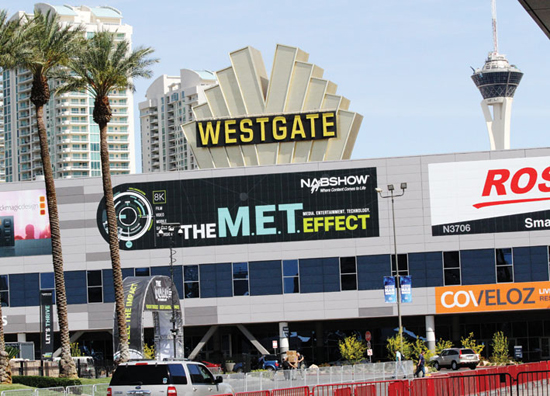
In Elvis Presley’s ode to Las Vegas he chanted: “Bright light city gonna set my soul on fire, got a whole lot of money that’s ready to burn, so get those stakes up higher.” The stakes were indeed high at NAB 2017 and 103 433 visitors packed the 1 million square metre exhibition space, which has become familiar territory for those attending the world’s largest event focused on the intersection of technology, media and entertainment.

The overall theme of NAB 2017 was The M.E.T. Effect – the result of three once distinct fields of media, entertainment and technology, converging and becoming something far greater than the sum of their parts. The Exhibits and Education Programme at the 2017 NAB Show was specifically tailored to showcase all aspects of The M.E.T. Effect and its impact on the Media and Entertainment industries with great success. This year’s conference sessions revealed no real surprises, but the content always generates some excitement especially in the ‘Super Sessions’.

In the first-ever live 4K video stream from space during the Super Session: Reaching for the Stars: Connecting to the Future with NASA and Hollywood, NASA astronaut and International Space Station (ISS) commander Dr. Peggy Whitson and NASA astronaut Jack Fischer conversed live from the ISS. The event utilised a RED Epic Dragon camera and a UHD-capable video encoder opening up a whole new chapter in live broadcasting from the space station, providing a powerful new tool to support science and research.

In the past few years at NAB, Ultra HD was the featured video technology. At this year’s show, high dynamic range (HDR) moved to centre stage. From production, to streaming, to the television, the industry is working to fill the holes in the value chain of delivery. Though there are many HDR standards, the conversation at NAB seemed to focus on just two: HDR10 and Dolby Vision. There couldn’t have been a better example of the future of HDR with Sony’s display of their new hi-tech display monitor – the Canvas.

The impressive 8K by 2K, 9m x 3m Canvas uses surface-mounted light sources that Sony is calling Ultrafine LEDs, to drive large the high-contrast and HDR-ready display. The picture quality was amazing and this kind of technology could well replace the digital projector in cinemas sooner than we think.

The over-the-top video (OTT) trend has been gaining momentum for years, as Netflix, Amazon, Hulu and other companies demonstrate the demand for streaming video. But the trend took on a new dimension this year as internet giants like Google and Facebook used the show to highlight their own work in the broadcasting industry. The growth of social video has had content creators, media brands, and marketers rethinking production and distribution. Facebook has emerged as one of the most impactful players in this space – and the platform continues to evolve as publishers learn how to better leverage it.

The 2017 NAB Facebook Boot Camp featured presentations from Facebook staff, as well as creators who have found success on the platform. There were hundreds of practical tips, insightful data and best practices discussed to help publishers make the most out of this new and exciting global broadcast platform. Google hosted a number of sessions at NAB to discuss its virtual reality video efforts as well as its web video production and advertising technologies. Is this the future of television unfolding before us?

2017 is shaping up to be a real turning point for media-over-IP standards and practices, with the SMPTE ST 2100 standard inching closer to completion and a growing number of media facilities building real-time IP production into their infrastructures. A number of major North American and European broadcast companies have indicated that they will commence real-time IP production infrastructure projects this year.

With over 1 800 companies exhibiting their wares in the vast halls and corridors of the Las Vegas Convention Centre, it was a tough task getting to see everything over four days. There is a lot of new innovation out there, far too much to mention in a single sitting so I have chosen but a few of the items that caught my eye this year.

CAMERAS

This is a little beauty. Sony’s new UMC-S3C 4K camera offers an astonishing 0.004lx, expandable to ISO 50-409600 range on its full-frame 35mm Exmor sensor. The camera is compatible with E-mount lenses and can capture smooth 4K/29.97P/25P colour video in almost pitch-black conditions, from night-time starlight to poorly lit rooms. It’s extremely compact size and on-board recording capability make the camera ideal for remote PoV (Point of View), documentaries, wildlife and live action shooting, plus challenging environments where cabling or space are limited.

HDR

A great addition to the monitor market from Australian innovators Atmos. They have continued their push into HDR monitoring with the super-sized 19-inch Sumo monitor-recorder, rated as a 1200-nit 10+ stop panel on a box offering 4K 12-bit raw or 10-bit ProRes or DNxHR recording. And because of its size, the Sumo is being promoted as a solution for on-set workflow as well as an HDR grading monitor.

360/VIRTUAL REALITY

Everyone’s favourite action camera company GoPro were showing off Fusion, a 5.2K 30 fps spherical camera. Aimed for virtual reality environments, the Fusion features a new OverCapture creative solution that gives content creators the flexibility to produce conventional non-VR video and photos in HD quality.

360° video has been on the rise of late, with more and more 360° camera rigs from established companies entering the space. Vimeo’s new 360° service launched at NAB does not simply introduce new features for videos on the site, but it also now supports the new content type. With 360° file sizes commonly four times larger than “flat” video, Vimeo’s support of uploads up to 8K and is the no-brainer destination for 360° creators.

LIGHTING

There weren’t too many products that stopped me in my tracks at NAB, but this one from a burgeoning start-up company got me intrigued: Illuminati’s wireless, smartphone-connected light and colour ambient and strobe meter. The meter takes an ambient reading of your location and sends stats straight to your phone. Unlike traditional light meters, however, it’s not just taking exposure readings; it also measures the colour temperature and even chromaticity of your ambient so you can correct magenta/green shifts. Pretty cool!

DRONES

Content creators are always looking for fresh perspectives and new angles to propel their projects to new heights. The NAB Aerial Robotics and Drone Pavilion always delivers. Whist GoPro was pushing the reborn Karma in a desperate attempt to save face following its earlier model that kept crashing, it was DJI who stole the show with their drone innovation and their first 100-megapixel integrated drone imaging platform. The DJI M600 Pro drone, the ultra-smooth Ronin-MX gimbal and the Hasselblad H6D-100c camera was demoed as an unprecedented tool for precise, detailed and accurate aerial imaging. You will need to win the lotto to get this one but is just goes to show how the drone industry is changing and there are already murmurs of US news channels replacing their live ‘news copters’ for drones.

DJI is improving that smooth silky look for ground images too. The latest from DJI, the Ronin 2, is a 3-axis camera stabiliser based on the company’s transformative gimbal technology, providing more power and torque to carry larger cameras. With an enlarged camera cage and 50mm extendable arms, its versatility can support everything from DSLRs to full cinematic camera and lenses up to 30 lbs.

AUDIO

Sennheiser released its MKE 2 microphone for GoPro. The microphone is completely waterproof up to 1-metre and the included windjammer has been tested at speeds up to 100 kph to help reduce any unwanted ambient noise. It’s quick to install and perfect for HERO4 cameras, a version for the HERO5 is in the making, great for those surfing videos.

Tiny package, big punch! If you’re a sound recordist, you already know what radio frequency (RF) interference can do to a production track. The ZAXCOM ZFR400 is a standalone device that records professional Broadcast Wave Format (BWF) or MP3 files directly to an internal micro-SD card. Measuring just 55.8mm x 40.6mm x 14mm and weighing 62g with the battery, it’s ideal for wiring talent when wireless transmission is unfavourable or when distance is an issue. The included rechargeable battery provides up to ten hours of runtime. This is a truly innovative device that you need in your sound kit.

Whenever I walked past, there were queues of enthusiasts at the Sound Devices stand eyeing out their new MixPre-3 and MixPre-6 multi-function audio devices. The MixPre series give you a mixer, a recorder, and a computer audio interface, all in one rugged box that will fit under your camera at a really reasonable price point and quality that is just unmatched. I’ve never seen a product generate such interest, everybody wanted one!

STUDIO

Blackmagic wowed the crowds with its first of a kind ATEM Television Studio Pro HD. It’s a hardware control panel with the controls on it, and the inputs on the back of the unit so it’s more of a traditional, table top-type design. It has eight 1920x1080p60 HD-SDI inputs, and four of them can be switched to HDMI. Also, if you’re using Blackmagic cameras, you have controls for secondary colour correction. It also has tally and talkback. Well done Blackmagic Design for another innovative product.

POST-PRODUCTION

On the software front, there were three industry role players who had big announcements at NAB this year.

Blackmagic’s mission has been to make DaVinci Resolve a one-stop-shop for colour grading, editing and audio – what, did I hear you correctly…audio! Oh yes indeed, DaVinci Resolve 14 now features a powerful post-production audio tool for film and broadcast. Basic features include sound editing, mixing and routing, professional bussing and multi-format mastering to 3D audio formats like 5.1, 7.1 Dolby and 22.2. Not only that—Blackmagic is dropping the price of the software from $999 to a $299 license and doing away with dongles. I have to make mention too of Blackmagic’s DaVinci Resolve Micro Panel – a high quality, portable low profile panel that features three high resolution trackballs and 12 precision machined control knobs for accessing all essential primary colour correction tools, perfect for independent editors and colourists that need a truly portable solution.

Avid announced the release of Avid Media Composer®. First, a free version of the industry-standard video editing system. It’s powered by the Avid MediaCentral® Platform, so “First” users can also easily connect and collaborate with other aspiring creative and media professionals through the Avid Artist Community. The free version is limited however with four video tracks, eight audio tracks, and a host of built-in visual effects, transitions, colour correction presets and titling templates.

Not to be upstaged Adobe Systems released a major update for video in Adobe Creative Cloud delivering new features for graphics and titling, animation, polishing audio and sharing assets; support for the latest video formats, such as HDR, VR and 4K; new integrations with Adobe Stock; and advanced artificial intelligence capabilities powered by Adobe Sensei. From what I have seen this huge upgrade puts Adobe (who are also celebrating their 25th anniversary) into a league of their own.

UNTIL NEXT TIME

The NAB organisers wrapped it up perfectly, “Technology is evolving faster than humankind itself and we’re living in a world of our own invention. Behaviour and business have merged to redefine content, workflows and revenue streams, fuelled by hybrid solutions and boundless connectivity that’s changing the very nature of how we live, work and play.” NAB is an exciting platform that offers an insight to the ways our industry is growing, adapting and transforming in an ever-changing world. In the words of the King himself’ “Viva Las Vegas!”

Outside broadcast: Then and now

Over the years, television outside broadcasts, have brought live pictures from as many locations as producers could have imagined. It’s pushed the ingenuity of designers, engineers and technical gurus to the limit and spawned new technologies that give us truly magnificent content that amaze and inspire us. Live outside broadcast television, particularly sport, is like a lubricant, keeping the gears and cogs of the media industry turning and it’s incredible to think that it all began in London exactly 80 years ago. 

They come by many a name – in the States a ‘Production Control Room’ or a ‘Production Truck’, in the UK it is known as a ‘Scanner’ or ‘Remote Truck’, elsewhere it’s a ‘Live Truck’, ‘Mobile Unit’ or ‘Live Eye’. More familiar to most of us is the term ‘OB or Outside Broadcast van’, a vehicle used to produce television and radio programming from remote locations.

The first all–electronic, ‘high definition’, 405-line outside broadcast unit was built for the BBC some eighty years ago, back in 1937. The unit consisted of three large vans, was equipped by the Marconi EMI Company and cost roughly £14 000 – which in those pre-war days was big budget. One van contained all the control apparatus, which included two vision monitors, four microphone inputs and three Emitron iconoscope cameras to supply the pictures. A second vehicle carried the 1kW VHF link transmitter and the third contained a diesel generator to provide power to the control van and transmitter van. On 12 May 1937 this unit televised part of the Coronation procession of King George VI. It was hailed as the broadcast that established an audience for television, and importantly, sold large numbers of TV sets. It’s interesting to note that at this time the technology of linking television signals was very much in its infancy. The main vision link was by landline with a standby vision link operating at 1kW on 60Mhz over a 6-mile path, which had to be line of sight with the studio.

Later that year the United Kingdom saw the first live sport broadcast, 21 June – the BBC broadcasts television coverage of the Wimbledon Tennis Championships for the first time, followed by a specially arranged football match, between Arsenal and Arsenal Reserves on 16 September 1937. By the end of the 1930’s, OB television cameras were shooting anything that came to hand from zoo trips to life on a farm, arrivals at airports to fashion events. Live television was cheaper to produce because recording technology for delayed broadcast was still in its infancy. But two years later, after an exciting start for television broadcasting, it suddenly stopped as war was declared on Germany.

The outside broadcast trucks would not be used for the BBC again until after the war. In the meantime they served as vehicles for the war efforts, stripped of their electrical equipment. World War 2 saw the temporary end of any live television production; a complete halt in the manufacture of television sets and the engineers who had been developing television technology put their expertise toward designing radar and communications systems for the military.

By the 1950s the BBC was experimenting again, more with outside broadcast locations, and in August 1950 plans were made for the first outside broadcast abroad, in France for the Centenary of the first message sent by submarine telegraph from England to France. It was the first time in history that a programme was transmitted across the Channel when viewers saw the town of Calais “en fete”, with a torch lit procession, dancing in the square and a firework display. It took almost two months to plan and five portable radio-link stations, designed to receive and send microwave signals, were set up temporarily along the 153 km route from Calais to London. Previously the working range for outside broadcast units was just 40km.

The 1950s was a very significant decade in the development of broadcast television, especially with regard to outside broadcasts. Whilst such broadcasts had been a reality since before the war, it was the prospect of the Coronation of Queen Elizabeth II in 1953, which really made the whole idea a big success and really launched television for the masses in the UK. At least 20 million people in Britain and another 200 million people around the world viewed the Queen’s Coronation across the planet, (via live relays and tele-recordings), not a bad number considering there were no satellites back then.

1958 also saw a Tokyo based company Tsushin Kogyo which was founded in the 40’s, change its name to Sony, a company that in later years would prove to be a major role player in the OB market. It’s not clear when and where the first OB was commissioned in Africa, it could have been French Algeria but was most probably Nigeria when television began broadcasting on 31 October 1959 under the name Western Nigerian Government Broadcasting Corporation.

The swinging sixties provided many a moment of excitement for the television viewer. 1963 proved to be a watershed year in the broadcast field. Six seconds of time on 22 November changed the way media worked for decades to come. The assassination and funeral of President Kennedy was a transformative live, global TV news event. It swept an industry without a guidebook for covering a breaking story of such magnitude and utterly changed how people would receive their news, much of it thanks to the 400 odd mobile units out in the field during the 71 hours of coverage.

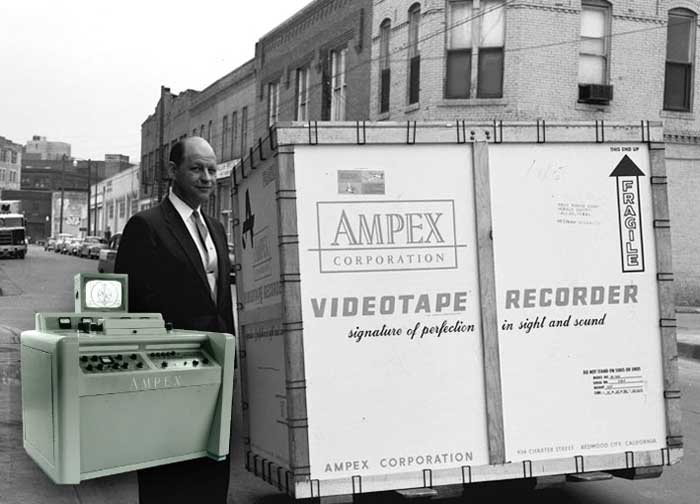
A few weeks later CBS rolled out a technological innovation that would change sport broadcasts forever. On 7 December 1963, US Army and Navy football teams squared off in their annual game in Philadelphia. In the fourth quarter, Army quarterback Carl Stichweh faked a handoff and ran into the end zone for a touchdown. Army fans watching at home were ecstatic. But then something strange happened. Stichweh again faked a handoff and ran into the end zone for a touchdown. The event was so disorienting that Lindsey Nelson, the commentator for the broadcast, had to explain to the audience at home that what they had seen wasn’t live. “Ladies and gentlemen, Army did not score again,” he said. Tony Verena, a young CBS producer, with a 580kg Ampex videotape machine perched on a seat in the van, using an untested method of recording tone to mark an event, on a re-used I Love Lucy tape, performed the first ever live instant replay. This was the beginning of a technology revolution that would continue through the 70’s and 80’s leading to bigger and better things.

The 70’s saw most of the world’s broadcasters migrate to colour. The 1972 Olympic Games were the first to be broadcast to all five continents using 19 colour capable OB vans. It was here we also saw the introduction of computer graphics in the world of television and CBS Sports were among the many that made use of the new technology developed by Computer Image Corporation (CIC). It was in the 80’s that Sony has delivered their first OB van. Sony has since delivered over 250 Outside Broadcast Vehicles (OB Vans) worldwide. In South Africa, Sony has been a major role player in the supply of vans to both SABC and Supersport and with the proliferation of sport throughout Africa the outside broadcast industry continues to grow with the latest technology to accommodate the need.

The majority of OB vans today are HD and UHD4k and size is certainly no limit. Broadcast Solutions GmbH recently delivered a whopping 31 camera, 29 crew van to Al Kass sports channel in Qatar.

With nine EVS XT-3 servers (12 channels each), 68 monitors and 240 multiviewer screens, this is one of the biggest vans produced so far and is unique in its design to handle the 50°C outside temperatures. In total contrast is Scandinavian economy Den lille OB-vogn (The Tiny OB Van), housed in a Piaggio three-wheeler moped. It can handle up to eight cameras, all powered by a single household power connector. It can live stream in Full HD using 3G, 4G or LAN, while a director switches using a 46in. LED multiviewer using an ATEM 1 M/E Production Panel.

This year, FOX SPORTS, Australia’s sports specialists have developed what they believe is the outside broadcast production model of the future, and it doesn’t involve vans. ‘Hubs’ built in Sydney and Melbourne allow for ‘remote production’ of FOX SPORTS’ tier one sports. This means cameras and microphones will be located at the venue, and the majority of the production team based back at the hubs many, sometimes hundreds, of kilometres away. The central control facilities accommodate up to six simultaneous events, connecting with venues via high capacity/low latency countrywide fibre network. The new hubs will mean better working conditions and opportunities for staff, increased scope for creativity, flexibility and consistency across our productions as well as providing significant savings and future-proofing FOX SPORTS for decades to come.

It will be interesting to see if the rest of the world will follow and will this become the new standard for sports television outside broadcasts globally?

End of an Era – Goodbye VHS

In July this year, Japan-based Funai Electronics Co. stopped producing VHS recorders, marking the end of the road for the venerable videotape standard. The Video Home System (VHS) videocassette recorder (VCR) revolutionised home entertainment in the 80s and 90s. The VCR’s demise may come as a shock, mostly because we all thought it was already dead! Incredibly last year 750 000 units were sold by Funai – the year before 1.5 million but it wasn’t low demand that has seen it’s demise; difficulty obtaining parts is the main reason the manufacturer has stopped making VHS machines.

Helical scan recording was the technology behind the worldwide consumer video revolution. The technique was invented by Ampex. Alexander M. Poniatoff founded Ampex in 1944, primarily to manufacture small motors and generators for military applications. When WWII ended, the military contracts dropped off, and Alex had to search for a new line of business to continue his company’s existence. He and his small group of engineers heard a demonstration of a Magnetophon, a German magnetic tape recorder used by Hitler during WWII. The demonstration quickly convinced Alex to redirect his company and soon it was designing and manufacturing professional-quality magnetic tape recorders. The company grew quickly and, within a short time, dominated the magnetic tape recorder market in radio, television, the record industry, and industrial and military markets for instrumentation recorders.

During the early 1950s, the broadcast industry used film to record replay programming for later broadcast. In a process called kinescope, a cameraman would aim a film camera at a video monitor to record a TV programme. This kinescope process proved to be time consuming and expensive. Ampex introduced videotape technology in 1956 at a National Association of Broadcasters meeting. Within a week of the launch of the Model VR-1000 recorder, 75 orders had been placed. With a price tag of US$45 000 per machine, it was clear that Poniatoff was onto a winner with the broadcasters queuing at the door for more. The three national US networks essentially stopped using the kinescope method of recording television programmes overnight. It is interesting to note that one of the people working on the initial project was a young student and part time employee called Ray Dolby, who, years after his service with Ampex became the founder of the now world famous Dolby Laboratories.

In 1963 Sony took the idea that Ampex created and began to expand on the technology and developed the first reel-to-reel video recorder, the 2” PV-100, which was intended for business, medical, airline and educational use. This was innovative and the technology helped to make the machines less expensive for consumers, but they were still out of reach for the majority of households. Then in 1965, Sony fine-tuned their reel-to-reel technology and created the CV -2000 one of the world first consumer video tape recorders. It recorded television programmes in black and white using the skip field process, which produced a maximum 200-lines resolution. The tape moved at a speed of 7.5 inches per second and each reel of videotape cost about US$40 and could record one hour of video. In the following years, Sony continued to work on their technology and eventually created the Sony U-Matic in 1971. This was the first videocassette model and first commercially marketed format designed for consumers to use. It was capable of recording 90 minutes worth of footage, but they were generally too expensive for average consumers added to which it’s design only allowed playback of a recording via a special monitor, rather than a television. A year later Philips released their entry into the videocassette market – the N1500 VCR complete with built in TV tuner and an analogue clock timer, perhaps the first truly domestic, consumer videocassette recorder.

The 1970s was an innovative decade and a period when major improvements were made to video tape recorders, resulting in the eventual creation of the VHS standard.  However, during this time several other companies also made attempts to produce a television recording device, hoping the majority of the world would embrace their product. For the videocassette recorders to become a popular appliance, it needed to be affordable for people to buy and easy for them to operate.  As a result two Japanese companies, Sony and JVC (Japanese Victor Company) developed rival VCR formats in the early 1970s, which would later evolved into the Betamax /VHS Format Wars.  The first VCR to use VHS standard was the Victor HR-3300, and was introduced in 1976. Throughout the 1970s VHS and Sony battled each other for dominance in the video recording market. By the mid 1980s VHS had achieved a supreme dominance.  Philips abandoned its latest VCR model, the Video 2000 in 1985 and Sony folded to consumer demand by finally producing VHS VCR’s of it’s own.

Once considered luxury items, VHS machine prices plummeted in the late 1990s mainly in an effort to keep the tape market alive as DVD technology was being developed. Panasonic even developed and released the PV-HD1000, a D-VHS digital VCR designed for recording HDTV but the format failed in favour of disc technology. There is no doubt that VHS will forever remain historically important because it marked the first time that the public could obtain almost any film release old or new and take it home to watch. The video rental culture transformed movie watching, and gave many titles that failed in theaters a new lease on life, indeed some of them becoming cult movies. If it wasn’t for VHS we may never have seen the likes of true classics like I Was A Teenage Werewolf (1957), Vandemonium Plus (1987) and A Fistful of Fingers (1995) a few of the hundreds of titles that were only ever released in that format.

Although the VHS VCR is gone, its legacy cannot be forgotten. We should all bow our heads in remembrance of the VCR for popularising the concept of file sharing, binge-watching and time-shifting habits that have become a norm in our home entertainment habits today.

Drone on

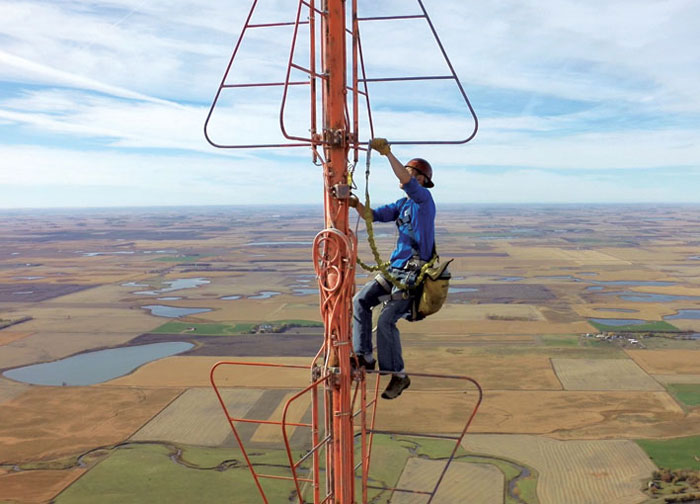
If you are up to watching something really different, do yourself a favour and get onto YouTube and check out 1500 Feet TV Tower. It’s a short two-minute viral piece showing an engineer changing a light bulb at the top of an immensely tall steel structure in the prairies of the USA – subject matter that most might think is incredibly boring but visually this is stunning and beautifully executed.

The film is a classic illustration of how the field of aerial videography has changed dramatically over the past few years, encompassing three main points I see as major factors affecting the industry today: Increased safety, significantly reduced costs, and the scope for innovation… all thanks to the drone.

The film industry is undoubtedly the best place to nurture innovation in new technology, it combines two opposite elements: the technical sector and a community of creatives. Drones are the latest proof of the fast-moving and ever-evolving industry as production companies begin to recognise the vast creative opportunities presented by pilotless aerial cameras. Traditionally, helicopters have been used for wide landscape and pretty aerial shots. However, they have always had high risks in terms of safety. In the US market it is estimated that up to 40 people are killed or seriously injured every year during film productions – most of which are attributed to aerial accidents involving helicopters. A helicopter has a typically limited – expensive – flight time, whereas a tag-team of a couple of drones will enable shorter between-shot delays and no hideous fuel costs. The same shot can be taken over and over again without additional air clearance, saving time and money. Drones are also particularly handy for their size: a helicopter can’t drop into canyons for that adrenaline-boosting sweeping shot. The shadow footprint of a drone is of course also far smaller, so there’s less need for crafty shots or post-production edits to remove a helicopter shadow in the background.

You can’t fit a helicopter indoors. Drones are flexible, can fly high or low, and all the levels in-between. Being able to operate indoors and outdoors means it’s completely possible for complex indoor/outdoor shots to be executed – ideas which until recently haven’t been feasible for any production company no matter their budget. And of course, let’s not forget the environment, the drone is much friendlier to mother Earth. Using fast-charge batteries, there is no burning of fossil fuels in the flight process, making the carbon footprint tiny in comparison.

The growing use of drones is changing the way that movies and TV shows are made, giving consumers a new perspective on the action. Film industry experts say they will open up new possibilities of filmmaking in much the same way that lightweight cameras did in the 1960s and the Steadicam did in the 1970s. In February this year BBC announced that Sir David Attenborough would host the upcoming new factual natural history blue chip production of Planet Earth II. It’s being shot in UHD and the epic scale of this series is said to be second to none and the BBC production team report that this is going to be a visual treat of note thanks to the latest camera stabilisation, remote recording and aerial drone technology that has transformed the way that they do their filming.

Until recently in the US, the Federal Aviation Administration (FAA) allowed only public agencies such as fire departments to use drones for such things as tracking wildfires. The agency effectively banned their use for commercial purposes because they were viewed as potential aviation safety hazards and threats to national security. Prodded by the Motion Picture Association of America, the FAA took the first step toward allowing Hollywood to use drones when it granted a waiver requested last year by seven aerial photography companies. Drone proponents hailed the decision, saying it would put the U.S. on a more even footing with other countries where they are legal and used on films such as the James Bond movie Skyfall and Transformers: Age of Extinction. Filmmakers contend that drones create more distinctive shots because they can go where manned aircraft can’t – dropping down into narrow spaces such as alleyways and even flying through windows. Under the new FAA rules, drones can be used only on sets that are closed to the public and cannot be operated at night, unlike in South Africa, where Drone Crew have approval for such film operations.

Operators in SA must hold a Remote Pilots Licence, Air Services Licence and a Remote Operator Certificate; keep the drones within an unobstructed line of sight and below an altitude of 400 feet. At least two people are required to operate the drones: one to pilot the craft with a controller and a second who operates the camera and acts as spotter to watch the drone in flight.

Out of interest, the vertigo inducing footage, mentioned earlier, of the engineer changing the light bulb, was filmed by Prairie Aerial videography, using a DJI Phantom 2 modified for higher performance with Antigravity motors and balanced carbon-fibre props. The camera was a GoPro 3+Black also modified with a 5.4mm rectilinear flat lens with IR filter. The gimbal was a Zenmuse H3-3D and piloted by Joseph and Todd Thorin. I asked Todd how he got away with the FAA 400 feet altitude rule with this project: “Yes, at the time there was an altitude limit, although I was not fully aware of it. I work as a safety officer for a tower construction and maintenance company and we were actually testing the possibility of using drones for tower safety and inspection,” said Thorin. “I consulted with a licensed fixed wing pilot to see what his no-fly zone around a tower is and then I claimed that space for my drone flight. As the video gained views I was contacted by the FAA and instructed that this was not allowed. With the new FAA Drone regulations taking effect from 1 September here in the US it will now be allowable for a commercial drone to fly to any altitude if within 500’ of a structure” Thorin concluded, “I’m a bit of a rebel. I say, if the regulations are ambiguous or there is a common sense avenue to operate on the frontier go for it and see what happens. I was not too far off on this one because the new regulations now allow what I did. Somebody has to break the trail. I am now a member of a very small group of citizens who has actually received written notice from the FAA to cease commercial operations. They did admit that the video was really cool though!”

At the time of writing the film had racked up 6 952 606 views on YouTube and was a finalist in the inaugural Drone Up International Film Festival in Plovdiv, Bulgaria held in late August 2016.

Virtual Animation… Really

Google’s experimental filmmaking lab, Spotlight Stories, recently produced a short animated film called Pearl. The story is set completely in and around a car and produced using Virtual Reality animation. It’s the latest of a growing number of animated films using virtual reality as a production technique and already the industry buzz is that VR animations could well be contenders for Academy Awards next year.

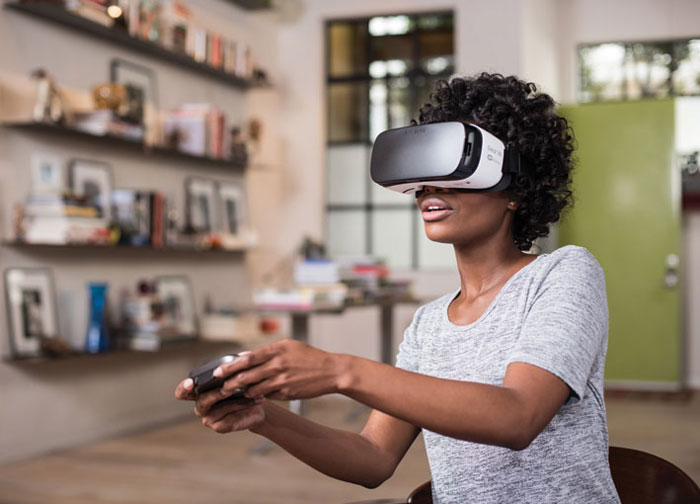
Watching Pearl is an interesting experience; the whole concept of Virtual Reality (VR) is an immersive journey that draws your body into the surreal world around you. VR has the potential to transform storytelling into a more interactive experience for filmmaker and viewer alike. And nearly everyone from content providers to techies to animators and academics alike, agree that the rules of narrative engagement are definitely going to change, not to mention social interaction as VR develops. Virtual reality video is still finding its footing, but some of the most high-profile work has been Pixar-style animated efforts — particularly Oculus Story Studio’s short film Henry. Recently, Baobab Studios put itself forward as a contender. Co-founded by former Zynga VP of games Maureen Fan and Antz and Madagascar co-director Eric Darnell, Baobab released its first film called Invasion! on Samsung’s Milk VR video service.

Invasion!, which premiered earlier this year, is an animated short. Most VR films top out at around 10 minutes and Baobab didn’t deviate from this formula. “From a technology viewpoint, tech changes so quickly that by the time we could finish a full length film, the tech would be obsolete,” says Fan. “From an audience perspective, you may not want to put that headset on your head for long periods of time.” Fan says there’s a full slate of VR films on the table that will appear on as many platforms as possible, not just the Gear VR. The company is also working with HTC, which manufactures the Vive VR headset and participated in the funding round, to distribute its work. Besides Oculus Story Studio, there are already a handful of well-known VR film companies, including award-winning studio Vrse and Felix & Paul, which signed a partnership with Oculus earlier this year. Baobab’s $6 million in funding is far from the only money flowing into VR. Virtual reality camera and filmmaking company Jaunt has raised $65 million, and live streaming app NextVR got $30 million in a deal with Comcast Ventures.

Virtual Reality is definitely real and here now that the tech has arrived, the investments are pouring in and the entertainment industry is jumping in. VR was the hot topic at the 20th FMX International Conference on Animation, Effects, Games and Transmedia held in Stuttgart, Germany recently. In a snap survey the consensus of young filmmakers who were attending was that they were more interested in the development of VR than in the movies. At the conference it was interesting to hear that Warner and DC are developing Batman: The Animated Series as a Batcave VR experience. Weta Digital, New Zealand’s animation and VFX giant, have agreed to let Epic Games make a real-time demo of its Hobbit assets called A Thief in the Shadows, in which you try to steal Smaug’s Arkenstone from the gold chamber before the dragon kills you.

SIGGRAPH is an annual computer graphics show held in the US in July and this year was primarily focused on VR, augmented reality (AR) and the gaming market. This year saw the introduction of the VR Storylab, a workshop area dedicated to blending narrative-driven, 360-degree, VR content in a physical lab environment with a crazy mix of art, entertainment, academic, scientific, and experiential VR where the attendees could explore the future of immersive adventures. SIGGRAPH is also the traditional launching ground of new software packages and whilst the most significant release was that of MAYA 2017, there were a phenomenal number of upgrades to numerous packages offering VR capabilities and support for the Oculus Rift and HTC Vive.

A question asked at the SIGGRAPH conference opened an interesting discussion thread around the demand for VR content and who was willing to pay for it. There is an interesting trend happening in the Chinese market than probably answers the question. In China, one of the most popular ways to consume electronic entertainment is by visiting an iCafé, or Net Café. These are places where patrons physically stop by to meet others and play games to get absorbed in VR and AR experiences. Some locations charges are based on time, while others are based on the content of the experience, but they all provide an outlet for people to escape into a game or experience of their choosing. One company that’s playing a big role is Shunwang Technology, which operates over 70 000 of the Net Cafés across the country. Most gamers in China cannot afford to pay significant amounts of money to buy games consoles and content. Added to that, most Chinese don’t have the physical room in their cramped houses to set up a gaming area. Until just two years ago, video game consoles like the PlayStation or Xbox were banned in China, but when the ban was lifted the market also introduced VR technology, which has taken favour over the games boxes and the PC environment.

According to recent reports, the VR industry in China is currently worth over US$8 billion. Some companies are even investing in entire theme parks based on VR experiences and Shunwang Technology is at the center of it all, buying as much VR content as they can get their hands on.

Virtual Reality is not only providing new possibilities for filmmakers, animators, VFX artists and game developers. The technology is already being used in machining factories with operators virtually controlling dangerous equipment from another room, medical staff examining the inner regions of your colon with a virtual walk through your insides, to Microsoft announcing the imminent release of Windows Holographic on Windows 10 early next year. According to the advertising hype it makes your desktop browsing experience inherently social and collaborative letting you surround yourself in applications from all sides, from within a VR headset. What next? Who knows?

Cutting cords is in the news

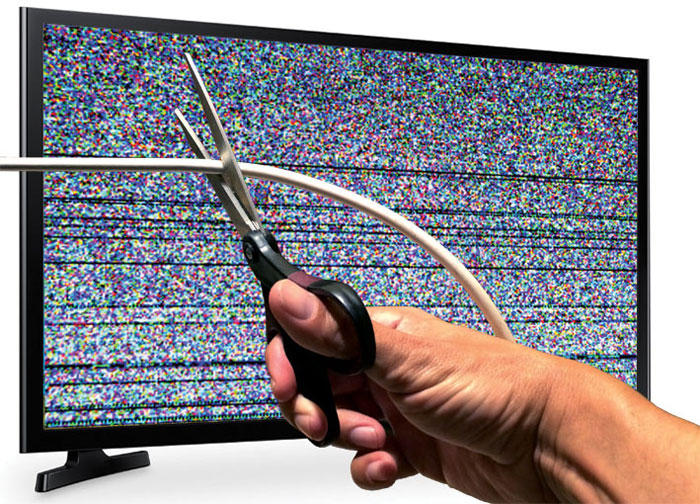
In mid-2016 cable sporting giant ESPN lost 492 000 subscribers; Comcast and Time Warner Cable have lost 2 per cent of their subscriber base since January. The list goes on and it’s plain to see that pay and cable services are struggling to adjust to the growing trend of cord cutting. Fed up with high prices and programming packages with hundreds of channels viewers just don’t want, cable and satellite customers across the world are booting out their service providers by cutting the cord and sourcing their TV programming via internet services. Nearly a third of all households in the US, for example, subscribe to a streaming TV service, like Netflix, Amazon Prime Video, and Hulu for example and with a growing number of apps available on consols like PS4 and Xbox 360, Blu-ray players, home theatre systems and smart TVs, cord cutters have all the technology available to access for what they want to watch and more importantly when.

One of the problems with cutting the cord today is losing access to the variety of news channels on offer. There are very few resources in the streaming world that can take their place. A company working to address this problem is Haystack TV, offering a personalised news service aimed specifically at cord cutters. Haystack TV is built around technology that gathers news stories from a variety of sources, analyses the information and then personalises the content  based on criteria setup by the end user. Haystack TVs main feature is covering important trending news of the day and draws content from over 150 news organisations like CNN, Fox, BBC, Associated Press and the likes and covers a variety of sectors from world news to business news, technology and science through to entertainment news.

The idea for Haystack came from co-founders Daniel Barreto, previously the chief software architect at Wyse and a teacher at Stanford, along with Ish Harshawat, formerly the mobile architect at Cellfire. Combined, the two have launched products over the years which have reached millions of users on mobile and elsewhere, but what prompted them to begin working on Haystack TV in the first place was a personal frustration. As new cord cutters themselves, they found themselves lacking in options for watching TV news online in a way that mirrored the lean-back experience they were used to from their cable TV days.

Haystack then collects key information from social media commentators on Twitter, YouTube and Facebook for example and the software learns to understand what the content is about and who in their subscriber database would be interested in the story. The user initially trains the product by selecting their favourite categories and topics, and as it is used, the service adapts by learning what stories are being watched and which ones are being skipped. At the moment, all the content is selected by algorithms run by servers, not a human in sight to make any choices or decisions – is this a sign of the way our future viewing habits will be decided?

What’s happening at IBC 2016?

The IBC conference theme for 2016 is ‘Transformation in the Digital Era’, very apt for the many challenges facing the electronic media and entertainment industry at the moment.

The IBC Conference and Exhibition, held annually in Amsterdam, Netherlands, is the place to be for discussion and debate around any issues the industry as a whole is experiencing. With an impressive list of speakers and contributors, this gathering is always at the forefront of industry innovation and provides unrivalled networking opportunities for role players from all fronts.

Virtual Reality

Virtual Reality (VR) is a subject high on the agenda of both the conference sessions and the exhibition floor. Alex Mahon, ex-CEO of Shine Group and now CEO of the Foundry, will give a presentation on her journey from traditional TV to the new world of VR and special effects, and discuss some of the most exciting products of her new company, while Solomon Rogers, founder and CEO of Rewind, will host a Masterclass panel discussion on VR as part of the content and production stream of the conference.

While VR can be considered to be in the ‘early stage’ of development it is predicted to have a disruptive effect on everything from full feature entertainment right through to journalism in the next few years. While many see the rise in interest in VR content simply as ‘another 3D’ experiment destined to fail, many sectors in the industry are investing seriously in VR technology. Movie studios and filmmakers are extending their ambitions from short marketing promos to longer form stories. Disney has invested $65m in a 360-video camera business and Google has started development in a cinema-style VR camera with IMAX, to name a few.

Aside from VR, IP will be high on the agenda with many companies showcasing their latest innovations in IP-based system architectures and new workflows for media and broadcast organisations alike. Sony will host a business transformation themed conference session to ask whether IT and IP are ready to replace the entire broadcast chain.

HDR

High Dynamic range (HDR) will be as popular a subject as last year with many exhibitors showing their wares in a fiercely competitive market from acquisition through production and transmission via fibre link.

Hitachi will showcase their HDR-capable UHD cameras first previewed at NAB. This year, for the first time, the Big Screen Experience features High Dynamic Range projection in conjunction with the Dolby Atmos immersive audio system. The Big Screen Experience conference stream will focus on the wide gamut of key developments that affect the art, science and business of the motion-picture sector from production through to exhibition. Look out for the session on Light Field Cameras with Jon Karafin from Lytro, developers of the much raved about Lytro Cinema camera.

The world’s media is in an evolving state of change and the rules are constantly shifting. Internet players are coming to TV and TV is moving to the web, and while traditional broadcast and pay TV models are constantly under pressure from cord cutters, the best tactic may be to break convention and innovate a way to prepare for the future.

Hackfest, Future Zone and Rising Stars

Introduced last year and gaining momentum this year, the IBC Hackfest is a crazy 48-hour brainstorm session of over 100 talented developers, designers and entrepreneurs presenting their ideas and solutions to three chosen areas of interest – this year it’s classroom education using VR as a tool, the future living room and the future of sport viewing – all involving the VR and Augmented Reality development thread.

Closely related is the IBC Future Zone – a portal to view the future of the entertainment and broadcast industry with cutting edge projects and prototypes on display from the world’s leading R&D labs and universities.

IBC Rising Stars is a free-to-attend workshop that allows young professionals and entrepreneurs to develop essential skills and knowledge that will help them get ahead in the competitive electronic media and entertainment industry. This year’s programme covers discussions on how the accelerating power of technology is driving the media industry, as well as an in-depth session with Alexandre Jenny from GoPro and Michael Ford, a producer from 360VR on the subject of Virtual Reality and its future.

Camera tech and storage

From an equipment point of view, camera technology will be of prime focus with IP connectivity the next ‘new thing’. I would imagine that 360 VR camera setups will be hot items in the exhibition halls as well as a few mystery cameras like Panasonics 8K DXL and possibly a new Super 35 camera from Canon.

Storage is bound to be a big feature – with all the new data that is currently generated we need bigger, better, faster systems. Quantum’s new Xcellis Shared Storage technology will be on show featuring demonstrations of content transcoding and delivery with object storage, the use of hybrid flash and disk storage combining to enable frame-based animation creation and stream-based editing on a single storage system, and embedded applications that run natively on high-performance workflow storage.

As always, LTO technology will display – along with numerous vendors – to highlight its recent rapid development with the release of LTO 7. Plus keep an eye out for the developers of Digital Optical Technology Systems (DOTS) – a failsafe archival system that stores data in microscopic layers for a claimed shelf life of 1 000 years!

The IBC Exhibition covers 15 halls and hosts more than 1 600 exhibitors spanning the creation, management and delivery of electronic and media entertainment. It is far more than an exhibition and conference, it provides visitors with unrivalled networking opportunities and there is something for everyone, whether creative, technical, old or new – you can explore all that IBC has to offer across six days of groundbreaking insight and innovation.

IBC2016 – Amsterdam from 8 to 13 September.

Stream on

Video over IP (Internet Protocol) comes in many forms and the technology used to stream video over IP has in fact been around for more than 20 years. In the world of broadcast and production, video over IP is an alternative way to transfer file-based media on networked computers. This method of pushing high bit-rate media signals over Ethernet is now a solid replacement for a seemingly dated serial digital interface (SDI). But not all IP standards are equal, it seems. Many industry professionals are joining the debate over which has greater merit.

There are multiple options for utilising video over IP, and one that is increasingly used among content producers and vendors is SMPTE 2022-6, which was ratified in 2012. However, a newer, open source protocol released recently is expected to be the widest adopted IP standard on the market by the end of this year.

Video over IP offers numerous advantages due, in no small part, to the fact that video can be processed on a computer, while on the production side there are countless software-enabled solutions. There are many advantages to IP transmission, including cost savings and greater operational flexibility but the issue of discussion is always on selecting the best path forward. It is no longer a question of whether video over IP will happen but when.

Hundreds of broadcasters and facilities have already switched to a total IP environment while many discuss all the options. The SMPTE 2022 standard was first introduced in 2007 and has expanded to cover more types of IP video transport – positioning video over IP as a replacement for SDI. SMPTE 2022-6 offers a number of advantages as it was designed specifically to handle up to 1080p video, and what makes it so attractive is that it offers the ability to use a single standard for high-bitrate, uncompressed signals.

The main downside to SMPTE 2022-6 is that it isn’t exactly future proof. While it could be seen as a building block that allows video to be sent over Ethernet, the standard is considered to be a transition and can’t handle 4K/UHD raw uncompressed video easily—as SMPTE 2022-6’s pipe supports 10 GB while UHD is about 12 GB. Compression solutions for UHD over 2202 are already in the works however, and one option touted by some in the industry is TICO, a patent-pending, visually lossless, light-weight compression that specifically has been designed for the industry to move 4K content over active 3G-SDI and IP networks. TICO, which is simply an acronym for ‘tiny codec’, is gaining traction, with big names in the industry seeing this as a way for SMPTE 2022 to support 4K/UHD. TICO is just one of several codecs, but these are still essentially stop-gap measures as the industry determines how to best handle UHD video over IP.

In late 2015, there were announcements from two organisations promoting video over IP. One is called AIMS (Alliance for IP Media Solutions) and the other is called ASPEN (Adaptive Sample Picture Encapsulation).While both organisations support the idea that the future of video transport will use IP-like protocols for switching and delivery, they differ in how they manage the important requirement of video synchronisation.

Will these two approaches eventually be interoperable? Clever solutions should evolve that can enable the interchange between AIMS and ASPEN encapsulated video and audio signals without breaking the bank or experimenting with partially deployed competing SMPTE 2022 10GBit protocols like AIMS and ASPEN. But there is uncertainty regarding the use of commercial, off-the-shelf IP switches for transport of live video and audio signals. Which IP switches will support which protocol and more importantly, at what cost?

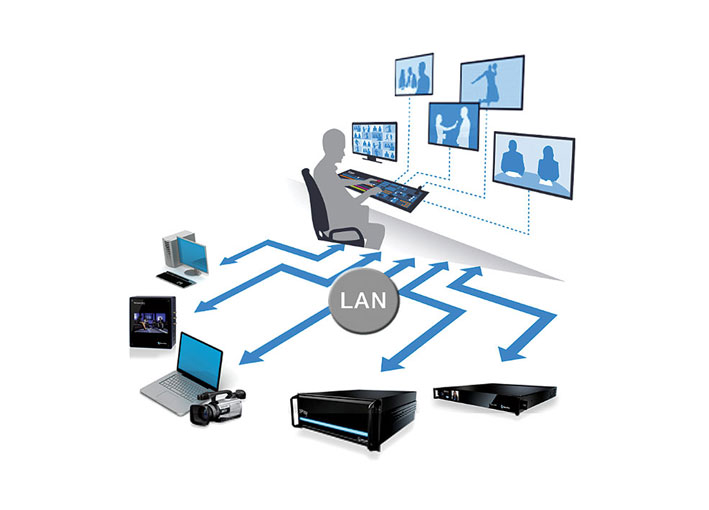
Another approach, and becoming increasingly popular in the industry, is one developed by NewTek, called NDI (Network Device Interface) technology. NDI makes it easy to send high quality video over any qualifying network, new or existing, and make any video source available to any video destination at an affordable low cost. Of course normal network rules apply – it has to be a fast enough network, and not clogged up by other users, but with a bit of planning, this is easily possible these days. NDI is bidirectional, allowing devices to communicate with one another, but more importantly it makes it easy for a production facility to move into video-over-IP without having to make a large capital investment in a high bandwidth network switches or having to replace SDI devices.

NDI makes the entire video infrastructure virtual. Which means that once you have connected your video source or destination to the network, everything else is software controlled. If you have multiple video devices with an NDI driver, all you have to do is plug it into the network for it to become visible to every other device as a source or your device as a destination for other devices. To get a camera’s output onto the network, you can either plug it into a video interface that is connected to the network (this could be one of many well-known capture cards that are available now – like ones from Blackmagic Designs for example), or any other device with an input that can ‘talk’ NDI. In other words NDI provides a fabric that connects video devices together.

The NDI Software Developer Kit (SDK) provides the tools and resources for developers and manufacturers to integrate NDI into their systems and workflows to enable or accelerate their transition to IP. The SDK supports finding, sending, and receiving any number of video streams over IP, with the encoding algorithm supporting all video resolutions and frame rates up to 4K and beyond, as well as 16 channels of audio and beyond. It also includes tools to implement video access and grouping, bi-directional metadata, and IP commands.

There is no doubt that the broadcast industry hysteria over IP video has rapidly produced remarkable technology and solid building blocks to allow video to be sent over Ethernet, what remains to be seen is how long the entire process will take?

- Advertisement -
- Advertisement -
- Advertisement -

Pin It on Pinterest