


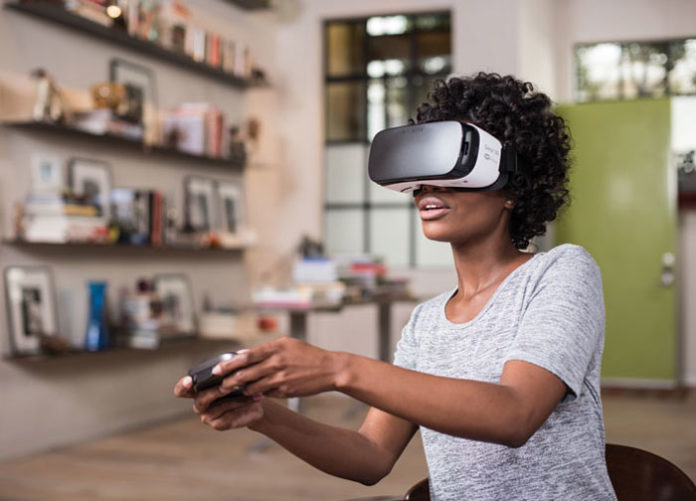
Google’s experimental filmmaking lab, Spotlight Stories, recently produced a short animated film called Pearl. The story is set completely in and around a car and produced using Virtual Reality animation. It’s the latest of a growing number of animated films using virtual reality as a production technique and already the industry buzz is that VR animations could well be contenders for Academy Awards next year.
Watching Pearl is an interesting experience; the whole concept of Virtual Reality (VR) is an immersive journey that draws your body into the surreal world around you. VR has the potential to transform storytelling into a more interactive experience for filmmaker and viewer alike. And nearly everyone from content providers to techies to animators and academics alike, agree that the rules of narrative engagement are definitely going to change, not to mention social interaction as VR develops. Virtual reality video is still finding its footing, but some of the most high-profile work has been Pixar-style animated efforts — particularly Oculus Story Studio’s short film Henry. Recently, Baobab Studios put itself forward as a contender. Co-founded by former Zynga VP of games Maureen Fan and Antz and Madagascar co-director Eric Darnell, Baobab released its first film called Invasion! on Samsung’s Milk VR video service.
Invasion!, which premiered earlier this year, is an animated short. Most VR films top out at around 10 minutes and Baobab didn’t deviate from this formula. “From a technology viewpoint, tech changes so quickly that by the time we could finish a full length film, the tech would be obsolete,” says Fan. “From an audience perspective, you may not want to put that headset on your head for long periods of time.” Fan says there’s a full slate of VR films on the table that will appear on as many platforms as possible, not just the Gear VR. The company is also working with HTC, which manufactures the Vive VR headset and participated in the funding round, to distribute its work. Besides Oculus Story Studio, there are already a handful of well-known VR film companies, including award-winning studio Vrse and Felix & Paul, which signed a partnership with Oculus earlier this year. Baobab’s $6 million in funding is far from the only money flowing into VR. Virtual reality camera and filmmaking company Jaunt has raised $65 million, and live streaming app NextVR got $30 million in a deal with Comcast Ventures.
Virtual Reality is definitely real and here now that the tech has arrived, the investments are pouring in and the entertainment industry is jumping in. VR was the hot topic at the 20th FMX International Conference on Animation, Effects, Games and Transmedia held in Stuttgart, Germany recently. In a snap survey the consensus of young filmmakers who were attending was that they were more interested in the development of VR than in the movies. At the conference it was interesting to hear that Warner and DC are developing Batman: The Animated Series as a Batcave VR experience. Weta Digital, New Zealand’s animation and VFX giant, have agreed to let Epic Games make a real-time demo of its Hobbit assets called A Thief in the Shadows, in which you try to steal Smaug’s Arkenstone from the gold chamber before the dragon kills you.
SIGGRAPH is an annual computer graphics show held in the US in July and this year was primarily focused on VR, augmented reality (AR) and the gaming market. This year saw the introduction of the VR Storylab, a workshop area dedicated to blending narrative-driven, 360-degree, VR content in a physical lab environment with a crazy mix of art, entertainment, academic, scientific, and experiential VR where the attendees could explore the future of immersive adventures. SIGGRAPH is also the traditional launching ground of new software packages and whilst the most significant release was that of MAYA 2017, there were a phenomenal number of upgrades to numerous packages offering VR capabilities and support for the Oculus Rift and HTC Vive.
A question asked at the SIGGRAPH conference opened an interesting discussion thread around the demand for VR content and who was willing to pay for it. There is an interesting trend happening in the Chinese market than probably answers the question. In China, one of the most popular ways to consume electronic entertainment is by visiting an iCafé, or Net Café. These are places where patrons physically stop by to meet others and play games to get absorbed in VR and AR experiences. Some locations charges are based on time, while others are based on the content of the experience, but they all provide an outlet for people to escape into a game or experience of their choosing. One company that’s playing a big role is Shunwang Technology, which operates over 70 000 of the Net Cafés across the country. Most gamers in China cannot afford to pay significant amounts of money to buy games consoles and content. Added to that, most Chinese don’t have the physical room in their cramped houses to set up a gaming area. Until just two years ago, video game consoles like the PlayStation or Xbox were banned in China, but when the ban was lifted the market also introduced VR technology, which has taken favour over the games boxes and the PC environment.
According to recent reports, the VR industry in China is currently worth over US$8 billion. Some companies are even investing in entire theme parks based on VR experiences and Shunwang Technology is at the center of it all, buying as much VR content as they can get their hands on.
Virtual Reality is not only providing new possibilities for filmmakers, animators, VFX artists and game developers. The technology is already being used in machining factories with operators virtually controlling dangerous equipment from another room, medical staff examining the inner regions of your colon with a virtual walk through your insides, to Microsoft announcing the imminent release of Windows Holographic on Windows 10 early next year. According to the advertising hype it makes your desktop browsing experience inherently social and collaborative letting you surround yourself in applications from all sides, from within a VR headset. What next? Who knows?


