Home Authors Posts by Lara Utian-Preston

Lara Utian-Preston

76 POSTS 0 JOBS
Lara Utian-Preston is a passionately committed marketer and strategist with a focus on promoting African content and events. Two decades of working across Africa have provided her with insights and experience that she puts to work for the projects she manages. In 2006, Lara founded, and still personally manages, Red Flag Content Relations, a full service below-the-line agency that also focuses on African entertainment and lifestyle brand marketing, strategy, and publicity.

The Ladima Foundation at ZIFF & DISCOP Zanzibar

Established as a mechanism to support worthy women filmmakers from across Africa in order to contribute to correcting the major imbalances within the industry; The Ladima Foundation, in partnership with ZIFF, DISCOP Zanzibar and Africa in Motion Film Festival (AiM), will present a variety of programmes in Zanzibar from 7 to 15 July 2018.

In order to further its aim of supporting women in a variety of roles within filmmaking, video production and related content development through a range of projects and interventions, The Ladima Foundation will once again present its flagship project – the Adiaha Award for Best Documentary by an African Woman Filmmaker, presented annually at the Zanzibar International Film Festival.

The Award carries with it a cash prize and in its second year will now also provide the winning film with the opportunity to be screened at the Africa in Motion Film Festival in Scotland.

The Africa in Motion Film Festival’s founder, Lizelle Bisschoff will also be in attendance at ZIFF to present, alongside well-known academic and writer Stefanie Van de Peer, a workshop and selected film screenings on the theme of ‘Africa’s Lost Classics: Histories of African Women in Film.’

This half-day event will see the screening for the first time in Africa of two lost classics that have been subtitled in English, restored and digitised by AiM.  Mossane (Safi Faye, Senegal, 1996), and Fatma 75 (Selma Baccar, Tunisia, 1976) have hardly been seen or screened publically. Mossane is the last feature film by pioneering Senegalese filmmaker Safi Faye, and Fatma 75 was the first non-fiction film by a female Tunisian filmmaker, a feminist essay film documenting strong female figures in the history of the country.

The Ladima Foundation will also be presenting a programme at the inaugural DISCOP Zanzibar that will take place from 11 to 13 July at the Hotel Verde.  The Ladima Foundation will present the ‘Women of Influence Conversation’, which will bring together the most creative, iconic and culturally relevant women in Africa’s entertainment and media industry.

Additionally, Ladima will be sponsoring five young women in the industry who are from East Africa to attend DISCOP Zanzibar 2018.

The Ladima Foundation is also working with the US Embassy in Dar es Salaam on the ‘She Directs’ workshop series that will see a selection of young East African women filmmakers having the opportunity to hone their craft.

These projects reflect the core mission of the Ladima Foundation and its stated key interventions, which include: professional training, educational support, recognition, and networking and community. For more information visit the Ladima, ZIFF or DISCOP websites.

The Africa Channel to present inaugural Zanzibar TV Series Festival 2018

The Zanzibar International Film Festival (ZIFF) and DISCOP Zanzibar have announced The Africa Channel, the largest broadcaster of Africa-themed content in North America, as the official sponsor of the inaugural TV Series Festival 2018.

ZIFF festival director Fabrizio Colombo said: “As the lines between TV, film and digital content blur, it is becoming more and more essential to recognise and promote the amazing work being done by TV producers and directors across Africa. Broadcast TV in Africa is still a rapidly expanding environment, and with the rest of the world eagerly looking to Africa for fresh and original content, platforms like The Africa Channel are ideally poised to share this content globally.”

With some of Africa and the world’s best known content producers and distributors on hand for ZIFF, taking place from the 7 to 15 July, and DISCOP Zanzibar, from 11 to 13 July, The Zanzibar TV Series Festival presented by The Africa Channel will be the official showcase for TV shows selected in competition for ZIFF.

Two days of competition screenings selected by ZIFF will screen from 12 to 13 July, and will be followed by a showcase day of screenings on 14 July where platforms such as The Africa Channel will highlight some of the their newest and most exciting content.

Open to the public as well as industry guests, The Zanzibar TV Series Festival will strive to create a stage on which the foremost creators in the world of TV series come together, where tomorrow’s talents are showcased and a prestigious international competition for a wide range of genres and for series of all shapes and forms is presented.

ZIFF’s Colombo has spearheaded this vision of celebrating the TV content genre within the traditional film festival format. “Across the world TV content is now acknowledged for its quality production and importance for the industry,” he said. “Here in Africa especially, many producers and directors get their start in TV production and it is a critical growth driver for the next generation of filmmakers. ZIFF is always innovating and looking to find ways to support the growth of the industry in Africa, and we are excited to partner with DISCOP and The Africa Channel in the important TV space.”

Narendra Reddy, executive vice president and general manager of The Africa Channel, said, “We are so proud to be the official sponsor of the inaugural Zanzibar TV Series Festival at this year’s ZIFF event. The Africa Channel has been privileged to present content from and about Africa to North American audiences for over 10 years. Through our production arm TAC Studios, we have worked with amazing producers and talent from across Africa to help them create globally accessible content. This festival calls the world’s attention to the incredible film and TV content coming out of Africa and is a fabulous opportunity for content creators from the continent to showcase their fine work and be recognised for their efforts.”

During this year’s ZIFF, the category for Best African TV Series will be open to any African produced or co-produced and broadcast within the last two years. Three episodes would need to be submitted for consideration via the on-line application process as below.

Deadline for submission has been EXTENDED to 18 April  2018.

Submission procedures:
  • All submission must be done through the ZIFF platform on www.festhome.com
  • A signed and fully completed application must be submitted by e-mail at filmdept@ziff.or.tz
  • Freight costs of any film will be borne by the producer.
  • Selection results will be available from 15 May on the ZIFF website.
  • No DVDs will be returned. They will be kept at ZIFF for archival purposes.

DISCOP Markets at the KALASHA International TV & Film Market

In 2017, DISCOP in partnership with ONGEA! Africa, announced the launch of a new sidebar programme – DISCORE; set to commence in DISCOP Abidjan (29 to 31 May 2018), followed by DISCOP Zanzibar (11 to 13 July 2018).

DISCORE is a programme that will specifically target the music industry across Africa, with a focus on music production and supervision for content, licensing, synchronisation and all the related implications.

DISCORE will provide a unique opportunity to learn from the pros and build relationships with international music supervisors; as well as with film, television, digital content producers seeking original songs and scores that can accompany entertainment content destined for global audiences.

Ahead of the first full DISCORE programme in Abidjan, DISCOP Markets and ONGEA! Africa will present a panel discussion at the KALASHA International TV & Film Market, titled: Opportunities for Music from Africa in Film & Television – a DISCORE Perspective.

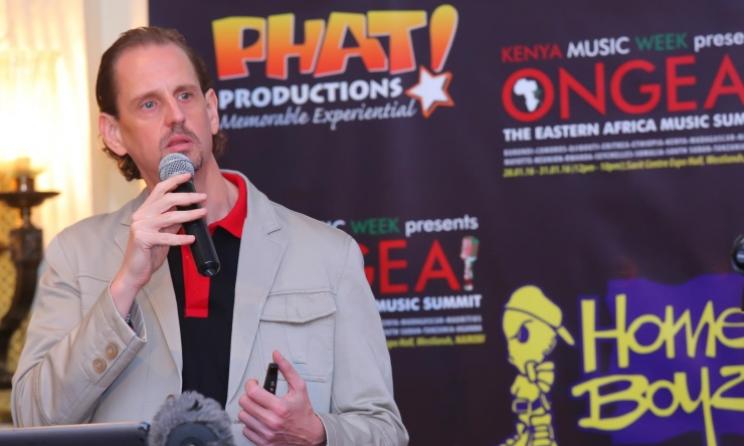
The panel will be moderated by Mike Strano, the founding director of PHAT! Music & Entertainment in Nairobi – Kenya. Strano has been in the African music industry for 19 years, and is also the founder of ONGEA! – The Eastern Africa Music Summit. ONGEA! Africa is PHAT!’s social enterprise, helping to further develop an industry that is professional, transparent and profitable for all.

Panellists for this session include:

Appie Matere – executive producer at Zamaradi Productions, who is the prolific producer behind KONA – a 260-episode telenovela that was aired for audiences across Africa on Africa Magic Entertainment. Additionally, she is the executive producer for 71 x 60 minute movies, as Africa Magic Original Films (AMOF), which also air on Africa Magic Entertainment.

Tim “Timwork” Rimbui – composer, music producer & owner-director at Ennovator Music, has work that has been seen and heard around the world via projects by: Warner Brothers, Universal Music Group, BBC, MTV, Endemol, Coke Studio Africa and Ogilvy Africa; as well as producing several major Kenyan acts, such as: Sauti Sol, Wangechi, King Kaka, Khaligraph, Phy, Eric Wainaina, Atemi, Mercy Myra and more. Inspired by the runaway success of Black Panther, as the biggest movie ever in Africa, Rimbui has deconstructed the opportunities that it has created for African music globally.

Likarion Wainaina – the director of the famed new Kenyan film Supa Modo, will take us through the role and importance of music in his film.

Designed as a knowledge-transfer and matchmaking programme, DISCORE will continue to engage such African-based creative, production and technical experts, from within the expanding African music, television and film industries.


Latest documentaries on #AfriDocsAnytime

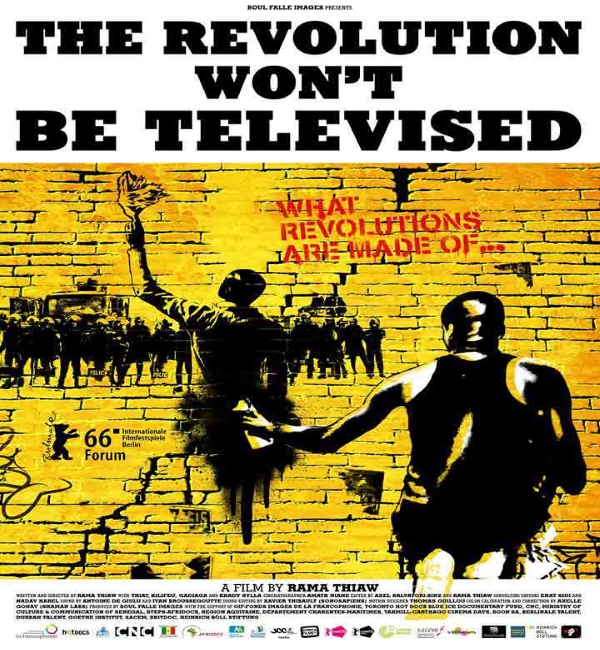
Powerful and iconic documentaries now available to stream on #AfriDocsAnytime, and include the story of the Marikana women in Strike a Rock, and the blow-by-blow account of the youth movement against President Wade in Senegal, in The Revolution Won’t be Televised. Visit the AfriDocs website to watch these and other films:


The Revolution Won’t be Televised | Rama Thiaw | 2016 | 110 min

Thiat and Kilifeu, Senegalese activists and underground hip-hop singers, lead this one-year revolution against President Wade, until his fall in 2012. But what is beyond a revolution? Will the two friends succeed in their 17-year long quest for recognition as musicians? By highlighting an emerging African urban youth movement, the revolution won’t be televised, but it will be documented.

Strike A Rock | Aliki Saragas | South Africa | 2017 | 87 min

After a massacre shakes the foundations of their poverty-stricken mining community in Marikana, two grandmothers rise up out of their homes and lead their community in a fight against seemingly insurmountable odds for justice and dignity. From fighting on-the-ground to the corridors of power, how will they make their voices heard?

The moving documentary has won the 2017 Durban Amnesty International Award for Human Rights, the 2017 Encounters Audience Award, and the Best South African Documentary, at the 2017 Durban International Film Festival. Watch the film HERE.

Aji Bi,Under the Clock Tower |Raja Saddiki | Morocco | 2015 | 66 min

The film follows the small community of Senegalese women who are living and working in Casablanca, in limbo between “regularisation” in Morocco, or attempting to “cross” to Europe. With humour and sensitivity, the film documents their daily life, as well as their struggles – trying to organise themselves and survive in a Moroccan society that is at the same time generous and hostile. Watch it HERE.

 Jalanan  | Daniel Ziv | Indonesia | 2013 | 108 min

Boni, Ho & Titi are three gifted, charismatic street musicians in Jakarta. Jalanan follows these young marginaliSed musicians and their never before seen sub-culture, while also painting a striking, moody and intimate portrait of Indonesia’s frenzied capital city.

AfriDocs is Africa’s only free platform where anyone on the continent can stream a range of world-class documentaries at any time. For more information visit their Facebook page and YouTube channel.


From a moment to a movement

A number of organisations, some that have been around for a while and some new, are promising, not just to fight for the most basic of workplace justice, but also to support women in the industry and put their stories centre stage in 2018.

Although it is clearly the responsibility of everyone, especially men, in these industries to stamp out any form of sexual and gender-based assault, harassment and intimidation, there is also the need for women in the industry to support each other and share valuable skills and resources.

Skills and resource sharing from those who have, with those who have not, will be an integral tool in developing women throughout these industries. This kind of training, support and development will transform this #MeToo moment from a reaction to abuse, to a movement for change.

So in the spirit of full disclosure and accountability, I intend to be part of this solution, and to that end, along with some colleagues, have embarked on a project, The Ladima Foundation, that aims to join the ranks of similar organisations across Africa working to promote women in the film, TV, and related production industries.

The Ladima Foundation aims to support women in a variety of roles within filmmaking, video production and related content development through a range of projects and interventions.

The Foundation’s flagship project is the Ladima Award for African Women Documentary Filmmakers presented annually at the Zanzibar International Film Festival. The Award carries with it a cash prize and the winner will also see her filmed screened at the Africa in Motion (AIM) Festival in Glasgow and Edinburgh.

Justine Atkinson and Lizelle Bischoff from AIM will be in attendance at ZIFF and Lizelle, along with researcher and fellow academic, Stefanie van de Peer will also present a talk based on their up-coming monograph entitled, “Women in African Cinema.”

AIM and Ladima will also screen Mossane (Safi Faye, Senegal, 1996), and Fatma 75 (Selma Baccar, Tunisia, 1976). These films have hardly been seen or screened publicly before we created English subtitles, restored and digitised them as part of The Lost African Classics project at AIM.

Additionally, Ladima will develop training, networking and related opportunities for women filmmakers who demonstrate their seriousness and commitment to their craft.  Already the foundation has partnered with DISCOP Zanzibar and will be sponsoring five women to attend and presenting a keynote panel discussion on women in the world of production.

The Ladima Foundation enters into a space where other organisations are also making waves and promoting the role of women in the industry.

Recently, at the Berlinale in Germany, the South African based Sisters Working in Film and Television (SWIFT) announced a campaign to fight gender inequality in the industry.

Their campaign #ThatsNotOK will also develop an industry-wide code of conduct that has already garnered the support of government institutions, trade groups and broadcasters, as well as a series of PSAs.

Other organisations and events, such as Women Filmmakers of Zimbabwe, the recently staged Women Film Africa Festival in Dakar, Senegal, the Mzansi Women’s Film Festival in South Africa, and The Centre for the Research of African Women in Cinema, all need to start collaborating on pan-African initiatives that promote the rights of women in the industry and work to redress the rampant inequality within it.

To find out more about The Ladima Foundation visit www.ladima.africa.  

International markets: A perspective for African content producers

As we head into 2018 a full calendar of film festivals and content markets await. It can be both exhilarating and overwhelming; and the reality of attending these events needs to be understood.

For any content producer looking to sell outside of their home country, attending markets is essential to understanding the global content market. Producers must learn what kinds of markets are out there and what buyers are looking for to service those markets.

Content producers who want to make the most of these opportunities need to do their homework and understand the competitive and global nature of the industry in which they operate. Having worked at and with festivals and markets for over six years, as well as having worked closely with buyers, sellers, organisers, producers and distributors, I have spent a lot of time discussing the actual benefits of these events, and have gained much wisdom from those more experienced than I.

Thanks to people like Pascal Schmitz and Mayenzeke Baza who, during their time running the Association for Transformation in Film and Television (ATFT), took over 100 companies/producers to market; Don Edkins, founder and director of STEPS and AfriDocs; and Patrick Zuchowicki, founder and general manager of DISCOP, there is a wealth of knowledge that can be shared.

So before leaping into the market and festival frenzy of 2018 – consider the advice the experts have to give. Make sure you talk to as many people as possible BEFORE you go to market, and make sure you do your research to understand which markets you should attend and why.

Which markets?

First and foremost, producers must understand the nuances and functions of specific international markets and how these can benefit their specific content and business objectives. There is no point taking a TV series to a film market and doing so is not just a waste of time and money, but will also damage one’s reputation within the industry.

It is therefore critical to research the various markets, to understand how they function, and then make an educated business-focussed decision on which to attend.

There are basically three categories of markets, all with very different aims and business imperatives:

  • Film markets: Film markets, often (but not always) associated with a film festival focus exclusively on feature films. The largest and most well-known of these markets are Cannes Marche du Film, the European Film Market, and the American Film Market. These markets attract serious buyers from all over the world. Unfortunately, the Durban Film Market (DFM) does not have the same level of international business success at this stage, as does these other markets. Markets are all about deals. That is not to say that there are no other benefits in attending, but if your aim is to sell your film internationally, you need to make sure the buyers for your type of content are going to be in attendance.

It’s also important to remember that ANYONE can show/sell their film at a market, there is no badge of credibility that comes from appearing at the Cannes Marche du Film, as opposed to actually being selected at the festival. Some festivals, such as the Toronto Film Festival for instance, don’t have a market per se, but the festival itself is so well-known that it attracts dozens of buyers and can still serve the same function as attending a market.

These markets however are generally focused on big films and big names. The chance of an unknown producer selling a film with no star power is very limited unless it is truly something special.

  • Documentary markets:  These markets are similar to feature film markets and are often linked also to festivals, such as the largest of its kind, The International Documentary Film Festival of Amsterdam (IDFA). Other markets include Hot Docs Canadian International Documentary Festival, Sunny Side of the Doc, and the Sheffield Doc/Fest. If you are not selling a documentary FILM – don’t bother going to these markets.


  • Television markets: Television markets are the most all-encompassing markets where you can sell anything and everything – films, documentaries, TV and digital series, genre categories etc. These markets are much more deal-focussed as the demand is greater. Ever-increasing content consumption means opportunities for producers and the types of content being sourced are more diverse than at film markets. The pinnacle of these markets are MIPCOM and MIPTV internationally and DISCOP within Africa.

In addition to broadcasters from across the globe, these events are also attended by many VOD players (apart from Netflix and Amazon however, who tend to rather only buy films and produce their own TV content).

TV markets are probably the best place to start as the scale and opportunity are much greater than at more niched film markets.

African content and the world

Whilst there are a lot of positive indicators for the future of African content (that is content produced in Africa for African audiences), there are also harsh realities awaiting producers in this space.

The good news is that the appetite across Africa and the world for African content is growing. Patrick Zuchowicki, founder and general manager of DISCOP Markets is so confident in the growth of this sector that two more DISCOP markets are being added, Zanzibar in 2018 and Lagos in 2019. He explains further, “With revenue from Africa’s pay-TV sitting at $4.4 billion and expected to exceed $6 billion by 2021, the time is now to continue the momentum of content producion as a significant economic booster for African economies. Movies and TV programmes have always been part of the fabric of the countries we cover with DISCOP. What is changing is the ability for broadcasters, pay-TV platforms, mobile operators and on-demand video services to monetise the consumption of entertainment content, and for local producers to feed an immense appetite for home-grown entertainment. These countries will represent in the next five years 35 per cent of global wholesale licensing revenues derived primarily from intra-regional trade. By then and with five DISCOP markets a year, we expect to draw 6 000 delegates, three times more than we do now.”

Within this growth environment however, the experience for many producers on the ground is still one of difficulty in recouping costs for African content. There are essentially four potential markets for content “made in Africa,” each with their own distinct characteristics and potential pay-offs.

These are:

  • Domestic market: African content made by Africans is by far the largest market in terms of eyeballs however, conversely to international norms, it is the smallest market in terms of monetary value for producers. Sadly, for African content – value increases as it leaves the continent. This is due mainly to the fact that African broadcasters (and even more so for cinema distributers), simply do not have the same resources to spend on content. Even more disturbing is the fact that many local and regional broadcasters still use content illegally – not bothering to pay licensing or royalty fees. There are hardly any (apart from M-Net, Kwesé and a few others) Pan-African platforms, so deals have to be done regionally or locally, making them harder to do, harder to enforce, and often less profitable.

Even African-focussed VOD platforms do not pay very well, with iflix and Showmax leading the way – but yet still not paying enough for most producers to recoup their budgets.

  • African diaspora: A smaller, yet more profitable market for African content is the African diaspora. With millions of Africans living across the globe, platforms like the US-based Africa Channel are finding a lucrative market and are offering more opportunities for African producers who want to produce stories for Africans. Keep in mind however, that these markets are often still looking for content in English, French or other international languages.


  • African-American/Urban market:  The African American – or Urban market in the US alone is worth more than the entire African domestic market. Interest in content – Black-focussed content – like Black Panther is growing, especially in the genre formats. Pascal Schmitz and his team were able to sell the South African film Happiness is 4 Letter Word into this market due to its cross-over appeal.

In order for content (whether for cinema or broadcast), to appeal to this market it must have this kind of broad appeal; most likely in genres such as romantic comedies or action, and must understand the aspirational and urban lifestyles of this American market. Co-productions with established American stars or directors are also a way to enter into this lucrative market.

  • World Cinema: The last category for African films is that of World Cinema – a category similar to World Music in its market and appeal. These are generally feature films, or to a lesser degree documentaries, that speak to a global “elite” of cinema goers, festival attendees, and cinephiles. Generally, these feature films are dramas and can’t really be RomComs, fantasy or action films. These highbrow films will often receive limited theatrical releases in Europe, like The Wound, will be selected and receive awards at festivals, and are critically acclaimed films. Often filmmakers can recoup their production costs via this alternative circuit – but it is only open to very specific types of content.

The reality of attending markets

With all of the above in mind, attending any market can be daunting, and especially for African producers attending international markets in North America or Europe, the cost alone can be discouraging. However, there are ways to make these trips feasible and also worthwhile. In order to do this, producers must understand how these markets work and what can realistically be expected as outcomes. Unrealistic expectations, being unprepared or uninformed, and not understanding the business of the business – will inevitably lead to disappointment.

As follows are some guidelines to what producers can expect to get out of attending these events, as well as how to best engage while there.

  • The global perspective: For any content producer looking to sell outside of their home country, attending markets is essential to understanding the global content market. Producers must learn what kinds of markets are out there and what buyers are looking for to service those markets. Clearly, for anyone making content, it’s advantageous to think globally as it makes for better access to more markets. This kind of market research can and should influence the development of your content.

If you’re going to market with content you’ve already developed, you may find that you have created product with no demand. Not understanding what the market globally is looking for will lead to failure.

Pascal Schmitz of the ATFT experienced this first hand with many of the producers that he accompanied to market as a sales agent. Feedback around issues such as language, subtitles, location of stories and related issues often made sales of content impossible.

  • Networking: The content business is a people’s business – you have to know people and people have to know you. The reality is that if you don’t know people – you don’t have a business. Attending markets is one of the BEST ways to establish your network and your name. If you go to market understanding that you most likely won’t achieve all your goals – financing, production, distribution – but that you might just make the right contacts to do so, you have the right idea.

Networks and real relationships take work though – it’s not just about taking someone’s business card and leaving it at that. You will probably even have to attend a market more than once; in fact, many in the industry advise that it would be better to go to the same market two to three times in a row than to go to different ones around the world. Consistency and building relationships will be essential to developing an international career. Eventually you will develop real relationships with buyers and distributors who will be honest with you in regards to what they are looking for and in their feedback to you. It takes work.

  • Pre-empt the market:  Those who have been to market will agree – it is probably not in your best interest to take your finished product to market the first time around. Rather, pre-sell or get interest in writing for your concept, if you can go to market with tangible interest from financiers or distributers and a concept-in-progress, you will still have the flexibility to adapt to the needs of the market. And keep in mind, things said at a market have no value – it has to be in writing. Many buyers will express enthusiastic interest in your content while at your stand – only to never contact you again. If the interest is real – they will put it in writing.


  • Get a sales agent: The above point goes to one of the most critical points for any producer.  Many African producers do not understand that SELLING is NOT your job. While it is important to attend these events in order to manage your sales manager and ensure they are doing their job, your job is to network, market and promote. You need a sales agent to represent you in the same way you would need an estate agent to sell your house.

Buyers simply do not have the time to meet with dozens of producers – each only selling their one product – they would rather meet with respected and well-known sales agents who understand their needs and can present relevant content. A good sales agent will not only be able to represent your content well, but they will also know which buyers are legit and which are not. They should know what is a good deal and what isn’t and all the relevant legal essentials when signing a deal.

By all means however, producers should go to the market and monitor the sales agent – if you are there as the producer, the sales agent is much more likely to push your product. If you are not there you have no way of knowing if they are pushing your content or not. Go check the stand, make sure your branding is there, and remember that the sales agent is there to work for you.

The Cape Town International Film Market and Festival elevates local and international film

The inaugural edition of the Cape Town International Film Market and Festival marks a milestone for the industry in the Mother City. Long without a flagship festival event, Cape Town’s industry can truly benefit from this event if the various elements within the industry can work together to further develop and expand its reach.

The industry in the Cape, despite being a multi-million rand a year business, is still extremely fractured and not quite sure of its place within the country, continent and globally. Long known as a destination for foreign productions, it is only more recently that local stories and productions are taking their rightful place.

The CTIFM&F has stated its key aim as collaboration, and this will be increasingly necessary in order to grow the event and its appeal to the industry as well as to the public at large. One of the roles the festival will also need to play is one of education – many people both in and out of the industry still have a lot to learn in terms of what an international festival entails, how films are selected, judged and awarded.

Additionally, the various elements of “the business” of film and content are not always understood even by role-players within the industry. The importance of networking and creating a strong base of production companies and allied services is critical to building Cape Town’s film industry. While this kind of business networking may not be as sexy as mingling with international buyers, it is the cornerstone of creating a long-term sustainable industry.

The CTIFM&F’s first annual expo in this regard was, therefore, a difficult sell to many who were expecting the typical buyer-seller market such as those at Durban International Film Festival and DISCOP. However, having started discussions with DISCOP earlier this year for collaborations and co-marketing support, it was clear that the CTIFM&F needed to establish its own niche that would benefit the industry without trying to replicate other models.

The expo, however, was just one element of the event that was highlighted by an incredible schedule of industry events and discussions. The 10 days of the event this past October was probably most successful in terms of this programme that created a space for dialogue, networking, and learning amongst industry professionals across spheres.

A diverse and very strategic schedule of master-classes, workshops and discussions put top experts on display to share local and international best practice. A stellar line-up included Oscar-winning Aron Warner (Shrek), Sharlto Copley, the Snake Nation collective from the USA, local animators Hilton Treves and Stuart Forrest and many many others.

Almost every session; from the hands-on session on Bitcoin that opened the festival to the final heated Couch Conversation discussion about sexual harassment in Hollywood and beyond, was well attended and produced amazing opportunities to learn and share.

Particularly encouraging was that students and young filmmakers were in attendance in abundance at these sessions. While a host of well known and more established professionals in the industry, were also around during the 10 days, it was really the younger generation of filmmakers that dominated the events and the discussions. Hence, the popularity in particular of the Snake Nation sessions. This collective of inspired creative and rebels is based in Atlanta, Georgia and Cape Town, and their insights into the future of content and collaboration where a highlight of the programme.

On the film side, the festival was a feast of international film. Billed as an international festival, the CTIFM&F succeeded in most areas, however, an area for significant improvement is the inclusion of films from across the continent. The festival had a major selection of films from the Nordic regions, and whilst many of these were powerful and beautiful films, the film line-up would have benefitted from more films from across Africa, with hardly any included in the line-up.

Encouraging in this regard is the initial commitment for collaboration between the CTIFM&F and the Zanzibar International Film Festival (ZIFF) from 2018 that will see some of ZIFF’s award-winning African films screened at the festival.

South Africa was very well represented however with over a dozen feature and documentary films from SA, many of which had their World or African premieres at the festival. Some of the South African films were, in fact, the most popular and well-attended screenings, with packed houses for both Kagiso Lediga’s films, Catching Feelings (winner of the festival’s Best South African Feature Film), and Matwetwe.

Extremely powerful was also the hosting of the World Premiere of District Six: Rising from the Dust, a truly Cape Town story from director Weaam Willams. The inclusion of a host of films from Cape Town-based producers was also especially encouraging for the promotion of the local industry.

The CTIFM&F has vowed to increase its outreach to the various elements within the industry across Cape Town and South Africa – with their signing of partnerships with the Limpopo Film Commission held as an example of the kind of cross-provincial collaboration required to grow the entire industry.

The expansion of the expo to truly include all of the industry support and allied industries, as well as an increased focus on South African and African films, will be important elements for the growth and success of the festival.

Already a lot of these pieces are in place to develop a festival that is representative of the multitude of voices that make up Cape Town’s film industry, and although one event can never adequately represent the local industry in its entirety, the CTIFM&F is starting a journey that can, in the long run, be a powerful and beneficial one for the entire industry.

A record-breaking sixth edition of DISCOP Johannesburg

DISCOP Johannesburg 2017 had an air of business about it this year. With an increased focus on meetings and networking, the event was somehow more focused and serious than in previous editions, less glitz and glamour – but definitely more deal-making and demand.

With over 1 500 delegates in attendance (the highest so far) and a condensed layout, buyers and sellers seemed more intent on one-to-one meetings, particularly around African content.

In fact, DISCOP Johannesburg 2017 saw a 50 per cent jump in the number companies selling content “Made In Africa” in comparison to last year, with many companies from the continent (IROKO_AFOREVO_RTI_DIFFA ) confirming significant deals.

In previous years DISCOP Johannesburg has boasted cocktail lounges, informal networking spaces, and a host of rooms dedicated to side-bar programmes. This year, all elements were hosted within the main exhibition floor of the Sandton Convention Centre, giving the event a focused and more streamlined feeling.

An expanded space for smaller meeting tables meant more opportunities for smaller players to get maximum benefit from the event. Talking to many attendees, the atmosphere at this year’s event was definitely one of seriousness and intent.

Over the past two years, DISCOP has been making a concerted effort to reach out to independent producers, offering more affordable ticketing and meeting table opportunities so that the event is not just a showcase for the major international players. This outreach seems to be paying off, as this year there were over 300 independent African producers in attendance, all intent on selling their content.

As Sheryl Navarro, DISCOP’s head of Customers Relations explains further, “During these three days, all signs pointed to intensifying competition between distribution platforms hungry for content. For the first time, sellers had more leverage and ended up with better deals. Competition is also growing between global entertainment brands who dominated the marketplace until now, and homegrown content rapidly catching up on quality and cross-border potential.”

While the major international brands were all there this year with massive and impressive stands, somehow it was the producers who were the stars of the show. With focuses on technology, co-productions, and building bridges across Africa, independent producers and international distributors alike all realise that central to the future of the industry is quality and accessible content.

Patrick Zuchowicki, founder of DISCOP Markets puts it this way, “Until recently, the Sub-Saharan African entertainment content marketplace was dominated by one or two players, and thus negatively impacted by minimal income opportunities and chronic lack of funding for independent producers. Today, competition is intensifying, with massive investments in internet connectivity, a steady migration to digital terrestrial television and significant smartphone adoption, mobile, digital and online content distribution platforms are challenging the dominance of previously dominant operators.”

To this end, various pitching opportunities included the Mahala.tv Pitch Marathon, as well as the competition from Animation South Africa (ASA), that earlier this month partnered with Turner, the Annecy International Animated Film Festival, Animation Magazine and others to host the first ever Animation Lounge at DISCOP Africa’s Johannesburg event.

The Mahala.tv Theatre had dozens of delegates buzzing with its comprehensive digital solution for producers to distribute, monetise, and fund content, while other major players such as Cote Ouest are putting a focus building bridges across Africa through multi-language co-productions. These initiatives see opportunities for producers expanding exponentially, with examples including the partnership between French production and distribution group Lagardère Studios is partnering with South Africa’s Urban Brew Studios to produce a telenovela that will be in both French and English.

Just this month, Canal Plus International secured Agent, a glitzy series set in the glamorous world of African soccer, a co-production with Mauritius’ Cinebar Studios and Collective Dream Studios, it features cast and crew from Mauritius, South Africa, Nigeria, the U.K. and France—a clear sign of the show’s ambitions to appeal to both English- and French-speaking markets.

DISCOP has also shown its ability to stay relevant and on top of industry trends with an increased focus this year on technology; from augmented and virtual reality to a strong focus on digital, OTT and VOD platforms, the make up of the exhibitors and programming is evolving with the times.

Additionally, DISCOP has identified other areas of growth within the industry, specifically that of synch deals, licensing, and music composition for content. In partnership with East Africa’s ONGEA! AFRICA, this year saw the launch of DISCORE – what will become a stand-alone programme aimed at bridging the gap between the music and entertainment sectors.

The press conference and panel for DISCORE took place on Friday afternoon, in previous years this would have meant empty seats, however, this year saw the exhibition floor full until late on Friday, and the DISCORE Panel discussion was filled to capacity with an engaged and very enthusiastic audience, many from the music industry who had never previously attended a DISCOP event.

The feedback on the launch of DISCORE was overwhelmingly positive and it appears that going forward this will be one of the highlights of the expanded DISCOP programme that will also see the launch of DISCOMICS aimed at the animation and video game industries.

The collaborative and open platform creates the ideal space to build bridges both economically and culturally. Even in the age of technology, there is something very powerful in being able to sit down face-to-face with colleagues from across Africa and the world. This kind of personal discussion is what leads to partnerships between events like the Zanzibar International Film Festival and the Cape Town International Film Market and Festival, the details of which will be announced soon.

DISCOP Johannesburg was an exhausting and exciting three days for anyone serious about content in Africa. The expansion of DISCOP Markets into East Africa, with DISCOP Zanzibar taking place from 11 to 13 July 2018, and DISCOP Lagos scheduled for 2018, means that these face-to-face powerful opportunities will now be accessible to even more producers and creatives than before – and that can only be a positive thing.


ZIFF at 20 – at the crossroads

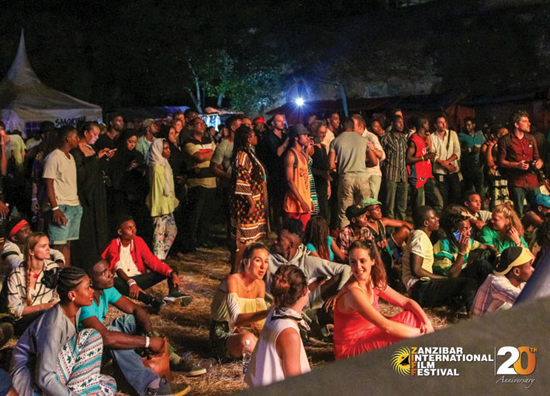
As the Zanzibar International Film Festival (ZIFF) reached its 20th year milestone this year, the festival took major strides towards further cementing its place as one of East Africa’s major cultural and industry events. More than just a cultural celebration of the Dhow Countries and of African (and international film), perhaps for the first time, the festival has also become a recognised destination for the business of film.

ZIFF at 20 is therefore at crossroads, having to straddle the line between being simply a local cultural event and being a major pan-African industry opportunity. This crossroads comes with challenges that were highlighted at this year’s event, but that will also provide ZIFF with the opportunity to grow into a more sustainable and influential event.

As a cultural happening, ZIFF has always been uniquely and proudly Zanzibari, and this strong heritage is the heart and soul of a festival that truly celebrates the culture of the region of the Dhow countries. Local films, filmmakers, music, art and politics are always at the centre of the event and the opportunities for the local and regional creative industries are therefore immense.

Locals proudly and rightly claim ownership of this event, but after 20 years, it has grown bigger and more international in focus, outgrowing its previous incarnation as only a local event. This outward focus needs to be delicately balanced with the festival’s Zanzibari heritage in order to ensure it can grow and effectively contribute to both the cultural and economic prosperity of the region.

This year, the festival hosted its first official market, SOKO FILAM, along with the China-Africa Film and Television Cooperation Forum, attracting international delegates all looking to do business. This growth in terms of ZIFF as an industry event has not gone unnoticed, with the announcement just before the start of the festival of DISCOP Zanzibar, to take place during ZIFF in 2018.

The growth in the reputation and stature of ZIFF means more and more filmmakers and industry players are attending every year, sometimes stretching the under-resourced infrastructure of the festival, and even of Stone Town, to its limits.

ZIFF in 2017 included more programmes, workshops and events than any previous festival. With 15 different workshop streams that hosted nearly 200 people, the festival also welcomed over 50 filmmakers, over 60 media, a host of juries, and approximately 100 SOKO FILAM delegates.

With venues across Stone Town and beyond, ZIFF is growing, and in order to sustain this growth in a manageable way that continues to respect its local heritage, but still cater to its growing international reputation, change is needed.

Mostly run by part-time volunteers (full disclosure – I am one of them), ZIFF is now at a pivotal point in its history and more than ever needs the support of both government and the private sector to provide the funds for the necessary transition to a year-round fully staffed operation.

This year saw the inclusion of many new partners including Trace Mziki, Showmax, The US Embassy, Hennessy, and The Milele Zanzibar Foundation amongst others, joining long time partners such as the Danish Film Institute, Danida, Goethe Institute, ACRA, GIZ, and a host of other embassies.

The support of these partners and others will be essential going forward to ensure that ZIFF lives up to its full potential as a unique and truly African event – one that both honours its unique flavour whilst providing opportunities for all that attend.

This year’s event can be hailed as a success, with its diversity of programming that attracted more international visitors, the festival also attracted larger local crowds than ever before. Despite a few hiccups, the festival was a wonderful demonstration of how culture and commerce can cooperate for the benefit of all involved.

In this way, ZIFF can truly celebrate the heritage if the island of Zanzibar by continuing its legacy of trade, open exchange and sharing.

New tool for cooperation and collaboration in the African film  industry: mahala.tv

Anyone who has worked in the film industry in Africa for any length of time knows the importance of cooperation and collaboration. Perhaps more than in other regions around the world, Africa presents many challenges to emerging filmmakers and content producers. However, the sheer vastness of the continent, the expense of internal travel, the difficulties in transferring money, and even language barriers make cooperation and collaboration extremely difficult. Most importantly, the challenge of raising funds to produce films is extremely difficult for just about all African filmmakers, especially those in less developed markets.

Traditional means of raising funds have proven to be unsuccessful at scale – meaning that although there are sporadic and anecdotal successes, no model has yet to truly transform the industry across Africa, combining into one system a way to fund, distribute and then further monetise filmed content.

Traditional models of funding are failing in that although they may provide support on the funding side, there is no link or seamless thread through to the distribution and promotion of the film. Whilst in countries like South Africa there are bodies like the National Film and Video Foundation, and other funding entities, the process is gruelling and funds are extremely limited. Most other African countries don’t even have such funding entities and very few have tax incentives for investors within the sector.

It is also virtually impossible for filmmakers to access commercial loans as the banking sector views the industry as high-risk with little chance of return, which, based on the current fragmented systems of distribution, is not an incorrect assessment.

The new model of crowdfunding for film production budgets has proven moderately successful on a small scale, and at least incorporates in its model elements of promotion and marketing, alerting potential markets that the film is being produced, it is still, on its own, not a viable model for the industry at scale across Africa.

What is needed is a model that bypasses the obstacles to the industry, which actually includes government departments, NGOs, banks, and even broadcasters. The African movie industry needs a way to connect producers, advertisers (funders) and consumers in a seamless loop.

A new digital community that is about to launch will do just that. Mahala.tv is a digital platform that will create a virtual community for filmmakers, designed for content producers as a simple way to distribute and monetise content, as well as providing opportunities for pitching, crowd-support, and funding for productions.

A seamless digital model that bypasses both broadcasters and cinema chains makes perfect sense on a continent that is seeing exponential increases in mobile phone and device penetration, and broadband access.

Mahala.tv will be an enabler for content producers as well as the many new VOD platforms appearing on the continent. The platform is basically a back-end tool that will enable content producers as well as aggregators and distributors to easily distribute and monetise their existing platforms, be it websites or social media pages.

Unlike existing models such as YouTube and others, mahala.tv enables content producers to share their content via any digital platform (no player required), and to self-monetise content through a variety of subscription and advertising models.

The platform therefore enables content producers to create and own their own communities, and to share content on any social media platforms or their own websites or even via bespoke white-labelled apps.

The platform creates opportunities for content producers and aggregators to advertise within videos, to set up subscription or pay-per-view models, and provides the most advanced and effective way to secure product placement. Viewers can instantly buy any product seen in a video with a simple process supported by a free and secure digital exchange.

This digital exchange also enables real-time payments to producers for content downloads, streams or related purchases from anywhere in the world.

With all this functionality, content producers can instantly create their own Facebook shops and add e-commerce elements to their websites. All content views and downloads, along with payments, can be tracked in real time.

Members of the community can also pitch projects to receive funding via the revenue pool created from a percentage of advertising, or via crowdfunding platforms from within the group. The cooperative banking model that underpins the system creates opportunities for filmmakers to secure loans and gather crowdfunding from within the digital community.

This seamless functionality creates a cooperative community where the processes of funding, distributing, promoting and monetising video content are available to any and all producers across Africa in one digital solution.

Once launched, the platform will be open to all content producers who will then be able to easily break down barriers in terms of distribution, advertising, payment, and even bandwidth and data costs.

One of the major challenges to the digital consumption of content across Africa is the cost of data and bandwidth. Whilst the desire for the product is there, and with smartphones and devices more and more becoming the viewing mechanisms of choice, it is only these prohibitive costs that are preventing the market from exploding.

In order to systematically address this issue, mahala.tv is already in discussions with key mobile network operators across Africa to ensure that viewer’s data consumption costs will be zero-rated across the platforms. Data costs would be fully subsidised by the advertising revenue raised from the platform – meaning more people can watch more content more often.

This win-win solution, based on mahala.tv’s advanced advertising and cooperative banking model, will see consumers able to watch content at little or no cost and producers able to secure revenue and produce even more content.

By addressing this fundamental challenge on the ‘demand’ side of the digital distribution equation, the platform will be a game-changer for the industry, enabling the increase of consumption and creation in an upward and exponential spiral.

The CEO of mahala.tv is well known and respected South African director and producer Gerard Mostert, who, in the next few months will be taking the platform to various events to engage directly with filmmakers and content producers.

Mahala.tv is the sponsor of the inaugural SOKO FILAM Film and TV Content Market taking place at the Zanzibar International Film Festival from 12 to 14 July. Here, the mahala.tv team will be meeting with producers, distributors, and digital start-ups, finding further creative ways to assist filmmakers in getting their content distributed across Africa through a secure and sustainable platform.

Mahala.tv is also sponsoring the Pitching Competition and Screening Lounge at DISCOP Johannesburg 2017, taking place from 25 to 27 October. This year the pitching competition will be based on various categories within the shorts format – enabling a focus on digital distribution.

Mostert has this to say of these partnerships: “To celebrate the launch of mahala.tv, and to start sharing the innovation with producers, we are proud to sponsor the first SOKO FILAM content market at the Zanzibar International Film Festival. We see this market as an opportunity to meet one-on-one with producers, aggregators, and other industry players from East Africa. Mahala.tv has also partnered with DISCOP Johannesburg to put out a call for short format content that will be showcased at the three-day industry gathering. Mahala.tv is especially excited to be hosting the pitching competition and will be offering funding support to winners, as well as welcoming all independents to become part of a new global community of producers that will enable them to create, share, and monetise content.”

Mahala.tv’s presence at DISCOP will be significant; in addition to the competition that is open to producers from across Africa to pitch their short content ideas from documentaries to animation, short content producers are also invited to submit their content for screening at the mahala.tv Screening Lounge that will be hosted within the main exhibition area.

Selected producers whose content and pitches are accepted will be provided with free accreditation to DISCOP Johannesburg where they can enjoy all the networking and business opportunities afforded by Africa’s largest content market.

The time is right for a solution like mahala.tv to revolutionise the emerging film industry in Africa. With literally millions of stories waiting to be told, and tens of millions of potential consumers, the power to transform the industry into one that is both profitable and culturally relevant will now be in the hands of the content producers themselves. And it’s about time.

The platform will be fully operational in October 2017.

- Advertisement -
- Advertisement -
- Advertisement -

Pin It on Pinterest