Home Authors Posts by Lara Utian-Preston

Lara Utian-Preston

76 POSTS 0 JOBS
Lara Utian-Preston is a passionately committed marketer and strategist with a focus on promoting African content and events. Two decades of working across Africa have provided her with insights and experience that she puts to work for the projects she manages. In 2006, Lara founded, and still personally manages, Red Flag Content Relations, a full service below-the-line agency that also focuses on African entertainment and lifestyle brand marketing, strategy, and publicity.

It’s about the numbers

SCREEN AFRICA EXCLUSIVE:

Sometimes it feels like there might be something in the water. By that, I refer to the experience when you find yourself obsessing over a topic, only to find that many others are looking at the exact same issue.

At the moment, the burning issue in my mind, and that of many others, concerns film industry data and numbers – especially in relation to women.

Over the course of last year, in various contexts – including during workshop trainings I have conducted on funding applications, in various meetings and countless conversations – I have been asked to come up with statistics about the space(s) occupied by women in the film industry in Africa.

These numbers just do not exist – mainly because the numbers relating to the film industry in general across Africa do not exist. Apart from some research and data from South Africa, I have not come across any comprehensive survey as to either the number of people working, or even the amount of titles (film and TV) released in key African territories, including Nigeria, Ghana, Kenya, or Rwanda – let alone any other sub-Saharan African countries.

During a recent trip to Berlin for the European Film Market, the focus on numbers was also top of my mind. There have been a host of research reports and articles released recently that look at the gender split within the film industry in Hollywood and Europe, including Rewrite Her Story, supported by the Geena Davis Foundation; a report from the European Audiovisual Observatory, Female Directors in European Cinema; UNESCO’s 2018 Global Report, Re|Shaping Cultural Policies; Where are the Women Directors in European Films – the 2014 gender equality report on Female Directors from the European Network for Women in the Film Industry (EWA); and even a briefing document from the European Parliament entitled, The Place of Women in European Film Productions Fighting the Celluloid Ceiling.

The results of these multiple surveys show that the numbers actually matter. For years, even in Europe, there was anecdotal evidence and everyone just “knew” that women were under-represented within key roles within the film industry – but no one actually understood the whole picture.

At a recent Pro Quote event in Berlin, some of these statistics were presented and the reality is much worse than many had thought. Now that the research has actually been done for a period of years up until 2018, the true extent of the problem is finally evident, and organisations such as Pro Quote, Women in Film and Television International (WIFTI) and the EWA are now able to lobby both government and private institutions for equity based on specific facts and data.

Some of the results shared from Rewrite Her Story show that amongst a sample of the most successful movies globally, not a single one was directed by a woman; moreover, only one in four films had a female producer involved, while only 1 in 10 scripts was written by a female screenwriter.

The EWA report shows that in 2014 women comprised 44 percent of film director graduates from film schools, but only 26 percent were working in the film space, and only 16 percent of public film funding went to women.

The point of referring to these statistics is not to rehash the issues of gender inequality in the film industry, but to show just some of the depth of research that is coming out of Europe about the film industry as a whole.

Some of the most important information of this kind looks at public funding and support of projects and how much of this money goes to support women, as well as the relationship between what happens on-screen with what is happening behind the camera.

However, despite the critical importance of this kind of research and data, there simply is no comparable data for the film industry in Africa – Anglophone or Francophone. We simply do not know how many African films and TV series are produced in any given year, let alone how many of those had women directors, producers, cinematographers or writers.

With commercial investment so desperately required for the film industry to really thrive in key African markets, and with local and international funders and donors asking questions about the industry in terms of ROI, diversity, and gender inclusivity, this lack of information is one of the issues holding back the growth of the industry.

Whether it’s an investor looking to build cinemas, or a donor hoping to support women in film, everyone is asking the same questions – ones for which there are not sufficient answers.

Numbers matter – they matter when it comes to dollars, pounds, naira, shillings, rand and any other currency you can think of. Understanding the actual outputs of Africa’s key film industries, and understanding the diversity in terms of the range of categories describing who is producing that content, matters.

Academics, funders, commercial investors and those working in the industry will all benefit from this information and therefore all need to be part of supporting the research that will provide it.

An exciting development in the space was the launch at Berlin of Carla 2020 – an event specifically focused on “connecting the film ecosystem with current research, best practice, and ground-breaking initiatives” to ensure gender parity beyond 2020. Carla 2020 will take place from 21 to 23 August in Karlskrona, Sweden, hosted by Women in Film and Television International (WIFTI).  

This event will be a major milestone in centering data as integral to the diversity conversation.

The process of starting to gather this data and to develop some key baseline data sets is daunting, but, I believe, it is an essential requirement not just to promote the role of women in the industry, but also to support the African film and TV industries as a whole.

2020 – the year ahead

SCREEN AFRICA EXCLUSIVE:

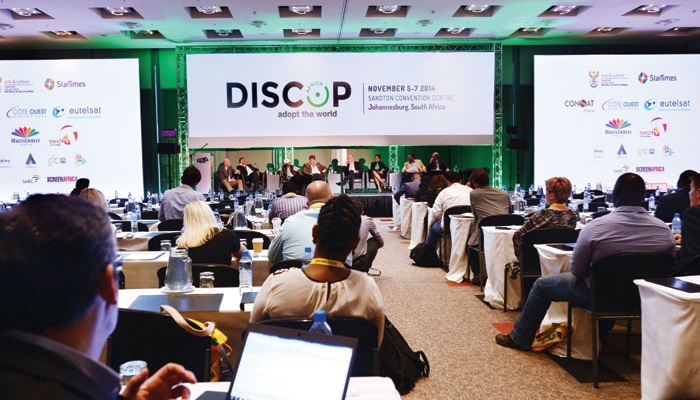
If anything was clear from the end of 2019, it is that people are realising it’s time to get down to business. As the Africa International Film Festival, DISCOP Johannesburg and the Joburg Film Festival all wrapped, the talk was about getting back to basics and a focus on the fundamentals that keep the industry going.

And while predicting the future is a perilous endeavour and I certainly do not have a crystal ball, I do think there are some trends to look out for within the industry as we head into a new year.

Women Take Their Space

It is 2020, and 50/50 by 2020 is no longer a future goal but a reality that must be aggressively pursued wherever possible and viable.

At the panel discussion hosted by the Ladima Foundation at DISCOP Johannesburg last November, the topic of quotas was heatedly debated. And while it is clear that some markets like Ethiopia – as was pointed out by Kana TV’s Rehima Awol – may not yet be ready for such a step, markets such as Kenya, South Africa, Nigeria, Rwanda and others could, in fact, sustain 50% women representation in major decision-making roles within key industry bodies, as well as 50% representation of content on TV and in festivals.

The topic of how women are represented on screen, and its relation to how many and where women can be found behind the scenes, is now openly addressed at just about every industry gathering and event.

These conversations are empowering individual women and organisations to ensure that the talking is translated into action.  Both the Durban and Cairo International Film Festivals have adopted the 50/50 pledge, and many other African festivals are working towards the goal.

The seats at the board room tables, and in the key production roles (directing, writing, etc.) are also being aggressively pursued. In 2020 women will not be waiting to be asked to take their seat at the table, we will be setting our own tables, budgets and agendas.

African Animation

Everyone is talking about animation. At the recent AfricaCom event, MultiChoice’s Yolisa Phahle called animation, “The perfect intersection of technology and content creation, which presents infinite scope for us to develop a local industry that can surprise and delight local and international audiences alike.”

The world’s largest animation festival, Annecy in France, has announced that its focus region for 2020 is Africa. Annecy, in partnership with the African Animation Network, has for years been cultivating and incubating African animation talent through the Animation du Monde pitching competition.

In 2017, Annecy’s International Animation Film Market (MIFA) partnered with the African Animation Network (AAN) and the DISCOP content market to launch the first pan-African pitching competition for animators, with two winners selected each year to compete with eight other projects at Animation du Monde.

At DISCOP Joburg 2019, the Annecy team was on hand to announce the Africa Pavilion and also to award the winners of this year’s Animation Du Monde African pitch competition, who will attend MIFA.

African animation producers such as Triggerfish in South Africa and Ubongo from Kenya are also reaching global audiences and winning awards at major events.  Ubongo has recently opened offices in South Africa in order to expand their distribution reach as the demand for African animated content increases.

While animation is still a time-consuming and expensive process, the interest from players such as Cartoon Network and Netflix in African-created animation will encourage more and more fresh content from the continent.

The Rise of the Series

TV in Africa – both free-to-air and pay-TV models – is the lifeblood of the industry. While feature-length films may get short theatrical runs (see below), both film and series-driven content live and die in Africa based on the support of broadcasters – and now also of streamers.

While both broadcasters and OTT/streaming platforms still license and (very rarely) commission feature-length films, it is the shorter, episodic material that drives viewer loyalty – whether from tuning in each week or binge-watching the latest episodes.

Series, from the high and low-end telenovelas, to dramatic international productions (such as the recent Trackers from M-Net or Queen Sono from Netflix,), local comedies and unscripted reality TV, are still dominant and will only become more so in 2020.

The quest for series that will hook viewers in and keep them watching in numbers is the holy grail of the industry. SABC’s Uzalo has gained over 10 million weekly viewers, an unmatched number but one that other broadcasters (and streamers) would love to achieve.

While festivals feature the best in film from Africa, I do wish we could have a more inclusive approach, as was taken by the Zanzibar International Film Festival in 2018. There, with the support of The Africa Channel, and based on their partnership with DISCOP, we decided to include a web and TV series “festival within a festival” to acknowledge and celebrate episodic content.

In 2020 we should strive to further celebrate the best in this genre to encourage the amazing diversity and improve the quality within this space.

African Movies at Cinemas

While the last few years have seen a roller-coaster ride for cinemas, there are signs that African-made releases can drive growth in key markets. Many predicted the death of cinema, but despite some highs and lows, cinemas are still surviving, and local content is becoming more and more popular with cinema-goers.

Nigeria is once again leading the way in this space, with new cinemas opening regularly and Nigerian (Nollywood) content making up an ever-growing share of the market.

A report from PwC on the future of cinema predicts that by 2021, Nigeria’s box office revenues will top 140 million USD, and Nigerian content will account for a significant portion of this.

In the first half of 2019, according to FilmOne’s Q2 Digest report, Nollywood films made up 22% of total box office revenue.  According the Nigerian Cinema Exhibitor Association, in November, of the top box office films for the month, there were at least three Nollywood films in the Top 10 each week.

With 45 cinemas in Nigeria (as of May 31st and according to the BBC), Nigerian box office revenue for the first half of 2019 has already exceeded the whole of 2017 (Business Insider/ Pulse.ng).

In South Africa, the overall news is not as good, according to the statistics for the first half of 2019 from the NFVF, as South Africa’s total box office earnings in the first half of the year amounted to the sum total of R590 million – 8% less than in the first half of 2018 (which was a total of R631 million).

However, the good news is that the market share of SA-produced films for the first half of 2019, while still only at 7% (the total amount being R42 million), has sizably increased from the same period in 2018, that of R17 million and a market share of only 3%. 

Also interesting to note, for locally-produced films comedy was the top-earning genre (grossing R22 million), followed by drama (R9 million) and a combination of comedy/drama following with earnings of R7 million.

According to Pwc’s Entertainment and Media Report, South Africa’s theatrical attendance figures are not expected to grow significantly and increased revenue is based on increases in admission costs. However, the continuing rise of the market share of South African content remains good news for the industry.

MTN Bushfire presents Short Film Festival 2020

As one of Africa’s largest and most inclusive music and arts events, MTN Bushfire has earned its global reputation as a distinctly African, yet globally-infused world-class festival experience.

This distinctly African, yet globally-infused festival consciously celebrates inclusivity and magnifies diversity through creative activism and artistic expression in the scenic and peaceful Malkerns Valley of Eswatini from Friday, 29 May – Sunday, 31 May 2020.

The MTN Bushfire Short Film Celebration will take place at The Barn on the mornings of 30 and 31 May 2020 and applications for film submissions are now open via Film Freeway

The screenings will be of short films that focus on African music, musicians or similar topics  while the Sunday screenings will focus on short films that reflect the values of MTN Bushfire’s social mandate; diversity, inclusion and tolerance. These films will highlight uplifting and impactful stories from across Africa in the areas of gender rights (LGBTQ), environmentalism and sustainability, social development and justice.

These engaging African films will be the ideal accompaniment to the diverse and exciting live performances that take place across the various MTN Bushfire stages throughout the 3 day festival.

The MTN Bushfire Short Film Celebration is being curated by Lara Utian-Preston and Edima Otuokon, both of whom have extensive film festival and industry experience. Lara and Edima were both involved over many years with the Zanzibar International Film Festival. Additionally, through their work with the Ladima Foundation, a pan-African not for profit organisation that supports women in film, they work closely with a host of film festivals, filmmakers, and film related events across Africa.

Lara Utian-Preston describes the aims of the mini-festival, “We are so excited to bring the film medium into the MTN Bushfire space in 2020. The film festival categories focused on music and social justice have been designed to complement the vision and mission of MTN Bushfire. While this year the festival will take place over just two morning sessions, we hope to grow it in scope and impact in order to promote African filmmakers, social justice advocates and musicians alike.”

MTN Bushfire festival director Jiggs Thorne explains the rationale for adding in the new and exciting component to the festival: “At MTN Bushfire we are always looking for new ways to activate our themes and social mandate as expressed through Bring Your Fire. In the last few years we have added a visual arts zone and included live theatre and dance within the festival. It makes absolute sense for us to also start supporting and promoting the burgeoning African film industry. We are excited to host our first film festival and expect the event to grow over time.”

Please note the following submission criteria:

  • Films must have been made after 2016
  • Only short films under 30 minutes will be accepted 
  • At least 50% of the core film team (director, producer) must be from Africa 
  • Films must focus on category themes 
  • Films should have a message that upholds the values of MTN Bushfire: inclusion, diversity and tolerance.

Film submissions are now open until 31 March 2020.

LADIMA FOUNDATION: Call for applications – Intro to Basic Animation short course

The Ladima Foundation has announced a partnership with the DW Akademie that sees the launch of the Ladima Film Academy in Lagos, Nigeria, with two short courses taking place in January 2020.

Applications are now open for short courses taking place from 28 January – 1 February 2020 in Animation and Documentary filmmaking to take place at the Ladima Film Academy in Lagos, Nigeria at the Nigeria Film Corporation premises.

Both these courses are entry level courses aimed at those looking to learn the basics as they enter their professional careers.

Let Your Voices Roar!

The 5 day animation workshop run by internationally respected and acclaimed Ghanaian animator Comfort Arthur will explore the theme of home and belonging, and how animation can be used to help one’s voice be heard within and beyond the borders of their communities. Participants will work in groups of four to produce 30-second to 1-minute short films.

The course will include an overview of the history of animation and as well as of the different types of animation styles that participants can explore with their final film.

Using basic materials the course will demonstrate basic level animation that everyone can do even without access to high end computers and software. The fundamentals of drawing and story-telling will be at the heart of this course that focuses on traditional animation techniques as opposed to any particular digital animation software.

The final films will be shot using smartphones, once again focusing on accessible technologies and tools.

Participants should be WOMEN between the ages of 18 – 28 who have some experience in drawing.

The course is facilitated by Comfort Arthur – British Ghanaian Animator, Illustrator, Editor, Writer and Actress. Winner of Best Animation at the GMA 2016 and AMAA nominee 2016. She is best known for Black Barbie and The Peculiar Life of a Spider.

This short course, along with another course in documentary filmmaking are presented as a partnership between the Ladima Foundation and DW Akademie.

DW Akademie is Deutsche Welle’s centre for international media development. As a strategic partner of the Federal Ministry for Economic Cooperation and Development (BMZ), DW Akademie carries out media development projects that strengthen the human right to freedom of opinion and promote free access to information. DW Akademie also works on projects funded by the German Foreign Office and the European Union – in approximately 50 developing and emerging countries. 

Application Procedure and Details

The course is ONLY open to women between the ages of 18 – 28 and applicants MUST be able to attend all five days in FULL from 28 January – 1 February 2020.

Those wanting to apply should email edima@ladima.africa with the following information:

  • Name
  • Age
  • Contact phone number
  • Short professional CV
  • 1-2 paragraphs about why they should be selected for the course

The course will run daily from 9am – 5pm at the Ladima Academy campus on the Nigeria Film Corporation premises in Ikoyi. Participants will need to pay for their own travel and accommodation.

Deadline for applications is 8 January 2020.

There is no cost to attend the course but participants will need to have a smart phone that they can use to film and may be asked to bring basic drawing and related supplies.

2019 Highlights from the African Film and Television Industry

SCREEN AFRICA EXCLUSIVE:

As we wrap up 2019, it’s always worthwhile to reflect back on the year and celebrate some of the highlights and successes from within the African film and TV sectors. We often forget to acknowledge the successes of our colleagues and 2019 was a bumper year, with many talented people worthy of recognition.

In no particular order, here are only some of the notable highlights and successes that have taken place over the past year.

Joel Karekezi: Mercy of the Jungle

Rwandan filmmaker Joel Karekezi has had an amazing year with his film, Mercy of the Jungle, which has won a number of top awards. Most recently the film picked up four awards from its eight nominations at the African Movie Awards, for Best Film, Best Lead Actor, Best Costume Design and Best Make Up. Earlier in the year, the film took home the top prize at FESPACO, followed by wins at The Rwanda Film Festival (Best Feature), the Audience Award at Afrika Film Festival Köln in Cologne, The Grand Prize Ecran d’Or in Cameroon and the The Youth Jury Prize at the F5C 5 Continents 2019 Film Festival.

This powerful film about the Rwandan genocide also screened at the Seattle International Film Festival and the New York African Film Festival, and has also been picked up Canal+.

This massive haul of awards is the recognition of many years of hard work from this amazing filmmaker.

Wanuri Kahiu: Rafiki

The courage it took director Wanuri Kahiu not only to make this film, but also challenge the powers that be to enable its screening in Kenya, should not be overlooked. The intolerance around homosexuality and LGBTQ issues in East Africa is only growing, with Uganda once again looking to install the death penalty for homosexuals.

Apart from being a beautiful film, Rafiki was a brave statement from an African woman who is not afraid to embrace difficult topics and yet still do so in a sensitive and moving manner. The film has been recognised across Africa and around the world with screenings at over 120 festivals in more than 20 countries. The film has won numerous awards and secured positive reviews in The New York Times, The Washington Post, The Guardian and a host of other international publications.

Perhaps most importantly, though, the film gave a voice to many in Kenya and East Africa who have felt marginalised and victimised. It has brought into the mainstream conversation that which was considered taboo. While much of this drama played out late in 2018, the film’s impact has still been immense in 2019, as it was the first Kenyan film to screen at Cannes.

Mati Diop: Atlantics

It may seem hard to believe, but 2019 was the first time a black woman director has ever featured in the Cannes Film Festival’s main competition. French-Senagalise director Mati Diop went on to win the Grand Prix for Atlantics, which is also Senegal’s official entry for the Academy Awards.

The breaking down of the barriers of “firsts” for Africans, and especially for African women, is important, especially since it reminds us all of just how un-inclusive many of these so-called “international” film events actually are. The film was Diop’s first stint as a feature director and has also been screened at The Toronto International Film Festival, The BFI in London and at the New York Film Festival. Netflix has also scooped up the international rights to the film.

2019 African Oscar Submissions

This year sees the highest number of African entries to the Academy Awards than ever before, with 10 films up for awards (the previous record was eight).

For the first time Nigeria and Ghana have submitted films and are part of the following list of submissions:

  • Algeria: Papicha, Mounia Meddour, director
  • Egypt: Poisonous Roses, Ahmed Fawzi Saleh, director
  • Ethiopia: Running Against the Wind, Jan Philipp Weyl, director
  • Ghana: Azali, Kwabena Gyansah, director
  • Kenya: Subira, Ravneet Singh Chadha, director
  • Morocco: Adam, Maryam Touzani, director
  • Nigeria: Lionheart, Genevieve Nnaji, director
  • Senegal: Atlantics, Mati Diop, director
  • South Africa: Knuckle City, Jahmil X.T. Qubeka, director
  • Tunisia: Dear Son, Mohamed Ben Attia, director

The last time a film from an African country was nominated for an Oscar was Abderrahmane Sissako’s Timbuktu, which was Mauritania’s submission for the 87th Academy Awards in 2014. Meanwhile, the last time an African film won was in 2006, with Gavin Hood’s Tsotsi from South Africa.

While many believe that Mati Diop’s Atlantics has a strong chance this year, there is stiff competition with a total of 92 countries submitting films.

Uzalo reaches over 10 million viewers

While South Africa’s South African Broadcasting Company (SABC) stumbles from one crisis to another, there has been a spark of hope with the massive success of the soapie Uzalo. Having breached the 10 million viewers mark and consistently remaining there, the show broke through the 10.2 million viewers mark in October.

The previous South African viewing record was on 11 June 2010 for the opening match of the FIFA World Cup between South Africa and Mexico – and that was aired across both SABC 1 and SuperSport.

The show is produced by Stained Glass Productions, and even though the SABC has struggled to pay the team, and production was briefly shut down, it has managed to become a phenomenal success within the South African TV space.

African festivals sign 50/50 by 2020

The 5050×2020 gender equality charter was launched at the Cannes Film Festival in 2018 and has been signed by many major film festivals across the globe.

Most recently, The Cairo International Film Festival (CIFF) has become the first Arab film festival, and the second African festival, to sign the pledge. The first African festival to sign was the Durban International Film Festival in July this year.

Some other 60 international film festivals have already signed the charter. These include: Berlin, Locarno, Venice, Toronto, San Sebastian, London, Sarajevo, Los Angeles, Rome and New York, as well as the Annecy animation and Clermont-Ferrand shorts festivals. 

Zee Global Content Sales announces slate of variety content for DISCOP Johannesburg

Zee Global Content Sales, a licensing and syndication arm of ZEE Entertainment Enterprises Limited (ZEEL), announced a content showcase at Discop Johannesburg 2019. ZEE Global Content Sales currently houses one of the largest libraries of creative and broadcasting entertainment content in the world.

Commenting on the upcoming participation at Discop Johannesburg 2019, Vibha Chopra, Business Head – Global Syndication & International Film Distribution, said “Over the past years, we have enjoyed immense popularity and advance demand for our content in Africa. Last year we partnered with Nigerian agency MACE, Royal Media from Kenya and Ghana based, Broadcaster-Multimedia Group for the co-production of our popular Drama Series – Deceptive Measures for African audience and look forward to its launch later this year. We are hopeful that the series will continue to draw much fanfare in this region”, she further added, “It is our pleasure to keep bringing new and fresh content to this region and enjoy all the appreciation we receive for our content as well as talent, we are hoping to win more such deals for our content during Discop Johannesburg 2019”.

The full slate from the stables of Zee Global Content Sales, presents four family dramas that have garnered dream runs with highest television ratings – daily drama series, Kundali Bhagya (Destined Love), which recorded a winning debut with largest weekday television audience rating in the first week and continues to be one of the top rated shows in India. Another family drama, Yeh Teri Galiyaan (The Bylanes of Love) was ranked amongst top 4 shows in its timeslot catering to family audience at large. The third drama series, Khwabon ke Darmiyaan (In The Midst Of A Dream) emerged as the top-ranking TV show among South Asians in the UAE for two consecutive months in its launch phase and topped its own highest rating in the second year run. The costume Drama, Swarajyarakjshak Sambhaji (The Protector), is the new first run English dubbed show and is based on the life of one of most fiercest kings & greatest warriors of all times who proved his mettle during the complete course of his short span of life. Lastly, the slate offers Deceptive Measures, aremake of popular Indian series Pavitra Rishta, one of the most successful ever Indian drama series that has travelled across more than 20 countries and enjoys fandom amongst both Indian and international audience.  

Zee Global Content Sales will also showcase two renowned Health & Wellness shows – Altar’d, that presents the transformation of the bride and groom with a rigorous training and determination to lose weight prior to their big day, the wedding! And in Finding Fido, canine expert Seth Casteel helps an enthusiastic ‘dog owner-to-be’ find the perfect companion for his or her lifestyle. For the discerning audience, there is a spectacular feature Documentary and Travelogue series, The Life of Earth from Space that delivers a cinematic, blue-chip view of the entire life history of our planet.

Moreover, for all the movie buffs, Zee Global Content Sales will bring number of celebrated films to DISCOP this year. The movie collection includes one title that made to India’s Oscar selection List: Article 15 and other critically acclaimed titles, Dream Girl, URI and Parmanu – The story of Pokhran.

The Adiaha Women’s Documentary Award at Encounters 2020

The Ladima Foundation will be awarding its Adiaha Prize for Best Documentary by an African woman filmmaker at the 22nd Encounters Documentary Film Festival taking place in Johannesburg and Cape Town, South Africa from 4 – 14 June 2020.

The Adiaha Award has, in the past, been awarded twice at the Zanzibar International Film Festival in 2017 and 2018. The 2018 winner, Phillipa Ndisi-Herrmann’s New Moon went on to win Best Documentary at the Durban International Film Festival.

The Adiaha Award includes a $2000 cash component to be used on the director’s next film, as well as an invitation to attend the International Women’s Film Festival Dortmund/ Colgone (Internationales Frauenfilmfestival Dortmund | Köln) in February 2021.

The Award is just one of the initiatives of the Ladima Foundation in its work to promote and support African women filmmakers.

Women documentary filmmakers from across Africa are encouraged to submit their films to Encounters, which is one of Africa’s longest running and most respected documentary film festivals. The Adiaha Award will be added to the existing award categories at the festival and will be announced on the closing night of the event.

Encounters has always had a strong Pan-African mandate, and ahead of the 2020 festival is further reaching out across the continent to encourage filmmakers, especially women, to submit their films.

Encounters festival director Mandisa Zitha has this to say of hosting the Adiaha Award in 2020: “Its very special for Encounters to host the Adiaha Award at the 22nd edition. To be able to welcome African filmmakers to the Festival over the years has been a privilege, and the Award is a wonderful partnership to strengthen collaboration amongst African documentary filmmakers. “

Film submissions are NOW open and can be done via the following links:

SA/African Entries: https://www.encounters.co.za/submit-african-documentary/

African film submissions are exempt from the submission fee.

International submissions: https://www.encounters.co.za/submit-international-documentary/

A nominal submission fee of USD15 is charged for International entries

The Ladima Foundation announces ambassador: Archbishop Thabo Makgoba

The Ladima Foundation recently announced the appointment of the Anglican Church Archbishop of Cape Town, Dr Thabo Makgoba, as an official Ladima Foundation ambassador.

The Archbishop is an ideal ambassador for the Ladima Foundation based on his strong commitment to women’s issues as well as his proudly Pan-African perspective. In his regular blog, Archbishop Makgoba has repeatedly expressed his views on value based leadership, good governance, tolerance and inclusion, and issues around women and gender. The Arch, as he is affectionately known, also has PhD in Business Administration | HDip in Ed Science (PG) | M Ed in Educational Psychology and will lend his considerable talents in support of the Ladima Foundation.

The Archbishop has this to say of the appointment: “I feel very honoured to be associated with Ladima Foundation – an organisation that seeks to empower and support women in the film space. Similarly, the Archbishop Thabo Makgoba Development Trust (ATMDT) support and mentor women in their development. When I learnt of the amazing work of Ladima Foundation, I could not hesitate but to accept the invitation to be an ambassador.”

As an official ambassador for the Ladima Foundation, Archbishop Makgoba will be a global advocate for the foundation and its key programs including the soon-to-be-launched Ladima Film Academy in Lagos Nigeria, and the Ladima Foundation Network of African Women Film Festivals. The Archbishop will represent the Ladima Foundation at key events around the world and assist in outreach and networking.

Co-Founder and Director of Progammes of the Ladima Foundation Edima Otuokon explains the role of the ambassador further, “We were thrilled when the Archbishop agreed to support the work we are doing as the Ladima Foundation. It is so important to have a diversity of allies, all aligned with a similar vision. The Archbishop Thabo Makgoba, through his work, has proven to be true supporter of women’s rights and we look forward to a long and mutually beneficial relationship.”

The announcement of the newly appointed Ladima Ambassador comes shortly after appointment of the high-profile Advisory Board made up of a host of well-respected film and TV industry professionals from across the globe. The Advisory Board of the Ladima Foundation will provide critical guidance on the policy, direction, and priorities of the organization and lend their reputational and network support in order to ensure the success of the organization. 

DISCOP Johannesburg presents The Africa Channel masterclasses

Africa’s largest content-focused event, DISCOP Johannesburg, taking place from 20 to 22 November, will put a strong emphasis on African television projects in development, partnerships with South Africa, and the booming animation sector.

A newly revamped and focused DISCOP Johannesburg programme will see a scope that goes beyond content buying and selling and that will include a strong sidebar programme of panel discussions and master classes.

This DISCOPRO programme will see more than 50 speakers, including many intrepid disrupters, on stage for panel discussions headlined by a series of masterclasses and a panel discussion led by experts from around the world sponsored by The Africa Channel.

These sessions will specifically address how independent producers can export their content and best adapt to the fast-paced world of multicultural television. Four sessions will provide a rapid course of study on what makes a project aimed at multicultural audiences actually sell in today’s challenging environment.

DISCOPRO programme director Andrew Boozer discusses this programme further,  “Given the growth predictions of content produced in Africa, this years’ programme will address how producers, writers, directors can best adapt in this fast-paced multiscreen and cross-border world and highlight how Africa can play an influential role in tomorrow’s global content production and distribution industry.”

The DISCOPRO speaker line-up includes experts from broadcasters from across Africa such as Ethiopia’s Kana TV, the SABC, Royal Media from Kenya, and others. International companies such as -Côte Ouest, Warner Media, Turner Africa and Fox studios will also be represented in the DISCOPRO line-up.

Narendra Reddy, EVP and General Manager, The Africa Channel, added, “ We are proud to partner with the DISCOPRO conference programme, which presents both an educational opportunity and an information exchange to accelerate growth in the Africa entertainment and media sector. The global technology shifts in content consumption and distribution presents a significant opportunity for producers on the continent to access new markets and the breadth of speakers and the panelists will seek to address any perceived barriers to entry.”

The practical and outcomes driven sessions include the following:

#1. Panel discussions around seven key pillars needed to facilitate unfettered growth in Africa’s fast-moving entertainment and media marketplace:

1.     Exporting Content Produced in Africa – Inside and Outside Africa.

2.     The Content Monetisation Challenge

3.     Empowering Women in the Entertainment Industry

4.     Stop Fake News

5.     The United World of Animation

6.     Bringing Video Gaming Competitions to the Screen

7.     Why Dubbed Content is Important

#2. A Masterclass Programme comprised of real world case  studies emphasizing practical solutions to issues:

1.     The Critical Importance of the Development Phase

2.     The Value of Copyright

3.     Music as a Cross-Border Accelerator

4.     Win-Win Distribution Strategies

5.     How to Shoot a Film Under $10,000 and sell it to Showmax

#3. A Tutorial Track focused on Co-production Opportunities with South Africa.

In addition to proper targeting, original themes, and international distribution, multi-party co-production is increasingly becoming an important factor for success. South Africa – with a rapidly developing content production and distribution sector, competitive advantages and many co-production treaties already in place – is becoming an important supplier of talent, stories and production services to the global community. This tutorial track will put under the spotlight projects that can benefit from existing co-production treaties between South Africa and France, the UK, Canada and Australia.

#4. A Pitching Programme showcasing original Animation Projects.

For the third year running, DISCOPRO – in partnership with the African Animation Network (AAN) and the Annecy Animation Festival and Market (MIFA) – will host the grand finale of the Pan-African Animation du Monde 2020 Pitching Competition. This program also includes an additional Pitching Showcase organised under the DISCOMICS banner and in partnership with the AAN. With the world looking to the continent as a growth center, Africa is expected to play a role in the expansion of the global animation industry and Africa will be the focus territory for 2020 at the MIFA gathering.

 #5. The First Look Series of Innovative Ideas.

Intertwined in the general agenda, the First Look Series will feature a line-up of inspiring presentations from experts, entrepreneurs, key players and great speakers who have the edge on how independent producers and storytellers can improve their crafts, generate more revenue and expand their reach. 

Ladima Foundation partners with Dortmund I Cologne International Women’s Film Festival

The Ladima Foundation welcomes The Dortmund I Cologne International Women’s Film Festival as a Mentor Festival member in the recently established Ladima Women’s Film Festival Network.

The inclusion of this well-established and respected Germany-based international women’s film festival within the Ladima Film Festival Network, will lead to increased training and networking opportunities for the African festivals, as well as for women filmmakers on the continent.

This partnership with the Ladima Foundation will lead to collaboration between the festival in regards to programming and even possibly the sending of volunteers to assist with the smooth implementation of the festivals in the network.

The Dortmund I Cologne International Women’s Film Festival has also committed, as part of the relationship, to focus on securing more films from African women filmmakers and the Ladima Foundation will assist in this outreach.

Festival director Maxa Zoller has this to say of the partnership, “Becoming a Mentor Festival for Ladima Foundation means a lot to us. For over thirty years the Dortmund I Cologne  International Women’s Film Festival has been making space for women directors and their fantastic films, but it is now time to establish long-term international ties. In a world that seems to spin in the wrong direction female (and feminist) filmmakers, producer and cinephiles across the globe are again coming together to make images that move all of us, and not just a selected few. We are excited about this unique opportunity to be part of the Ladima network, to get to know new film festivals and to share with them our passion for cinema.”

“All African women filmmakers are encouraged to submit films in the competition categories of Debut Fiction Film and Children and Young Adult Film. We also look for formally innovative Experimental and Documentary Film and Queer Film (out of competition).”

The Ladima Film Festival Network of women-focused, and managed, film and cultural festivals from across Africa – that includes the Udada International Film Festival in Nairobi Kenya, The Celebrating Womanhood Festival and Conference in Uganda, and Festival International des Films de Femmes de Cotonou (Cotonou International Women’s Film Festival Benin) – was announced earlier this year and has seen a number of milestones and successes to date.

An initial training and mentoring session took place in March in Kampala Uganda at the Celebrating Womanhood Festival, part of the Native Voices International event. Edima Otuokon, co-founder of the Ladima Foundation hosted a workshop for female filmmakers invited to the festival on the power of film to empower and uplift women across Africa.

An intensive follow up residency training programme for these festivals was held in August in Kigali, Rwanda that focused on strategic planning, curation, and the promotion and marketing of these up-and-coming festivals.

Soon after the training, the highly successful inaugural edition of the FIFF Cotonou took place to rave reviews in Benin. The Ladima Foundation is proud to have been part of the planning of this event and congratulates Festival director Cornelia Glele for the major success of the event.

- Advertisement -
- Advertisement -
- Advertisement -

Pin It on Pinterest