


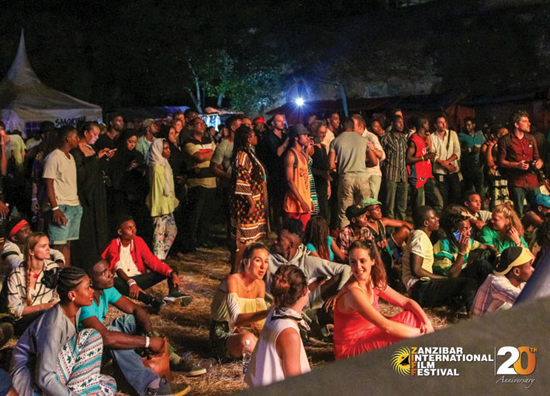
As the Zanzibar International Film Festival (ZIFF) reached its 20th year milestone this year, the festival took major strides towards further cementing its place as one of East Africa’s major cultural and industry events. More than just a cultural celebration of the Dhow Countries and of African (and international film), perhaps for the first time, the festival has also become a recognised destination for the business of film.
ZIFF at 20 is therefore at crossroads, having to straddle the line between being simply a local cultural event and being a major pan-African industry opportunity. This crossroads comes with challenges that were highlighted at this year’s event, but that will also provide ZIFF with the opportunity to grow into a more sustainable and influential event.
As a cultural happening, ZIFF has always been uniquely and proudly Zanzibari, and this strong heritage is the heart and soul of a festival that truly celebrates the culture of the region of the Dhow countries. Local films, filmmakers, music, art and politics are always at the centre of the event and the opportunities for the local and regional creative industries are therefore immense.
Locals proudly and rightly claim ownership of this event, but after 20 years, it has grown bigger and more international in focus, outgrowing its previous incarnation as only a local event. This outward focus needs to be delicately balanced with the festival’s Zanzibari heritage in order to ensure it can grow and effectively contribute to both the cultural and economic prosperity of the region.
This year, the festival hosted its first official market, SOKO FILAM, along with the China-Africa Film and Television Cooperation Forum, attracting international delegates all looking to do business. This growth in terms of ZIFF as an industry event has not gone unnoticed, with the announcement just before the start of the festival of DISCOP Zanzibar, to take place during ZIFF in 2018.
The growth in the reputation and stature of ZIFF means more and more filmmakers and industry players are attending every year, sometimes stretching the under-resourced infrastructure of the festival, and even of Stone Town, to its limits.
ZIFF in 2017 included more programmes, workshops and events than any previous festival. With 15 different workshop streams that hosted nearly 200 people, the festival also welcomed over 50 filmmakers, over 60 media, a host of juries, and approximately 100 SOKO FILAM delegates.
With venues across Stone Town and beyond, ZIFF is growing, and in order to sustain this growth in a manageable way that continues to respect its local heritage, but still cater to its growing international reputation, change is needed.
Mostly run by part-time volunteers (full disclosure – I am one of them), ZIFF is now at a pivotal point in its history and more than ever needs the support of both government and the private sector to provide the funds for the necessary transition to a year-round fully staffed operation.
This year saw the inclusion of many new partners including Trace Mziki, Showmax, The US Embassy, Hennessy, and The Milele Zanzibar Foundation amongst others, joining long time partners such as the Danish Film Institute, Danida, Goethe Institute, ACRA, GIZ, and a host of other embassies.
The support of these partners and others will be essential going forward to ensure that ZIFF lives up to its full potential as a unique and truly African event – one that both honours its unique flavour whilst providing opportunities for all that attend.
This year’s event can be hailed as a success, with its diversity of programming that attracted more international visitors, the festival also attracted larger local crowds than ever before. Despite a few hiccups, the festival was a wonderful demonstration of how culture and commerce can cooperate for the benefit of all involved.
In this way, ZIFF can truly celebrate the heritage if the island of Zanzibar by continuing its legacy of trade, open exchange and sharing.
