Home Authors Posts by Lara Utian-Preston

Lara Utian-Preston

76 POSTS 0 JOBS
Lara Utian-Preston is a passionately committed marketer and strategist with a focus on promoting African content and events. Two decades of working across Africa have provided her with insights and experience that she puts to work for the projects she manages. In 2006, Lara founded, and still personally manages, Red Flag Content Relations, a full service below-the-line agency that also focuses on African entertainment and lifestyle brand marketing, strategy, and publicity.

CTIFMF’s Jehad Kasu in China to further partnership and collaboration

Jehad Kasu, Marketing & Communications director of the Cape Town International Film Market & Festival was recently invited to the 2018 Shanghai International Film Festival (SIFF), where he spoke about the continuing partnership between the CTIFMF and China’s Global Max Media Group.

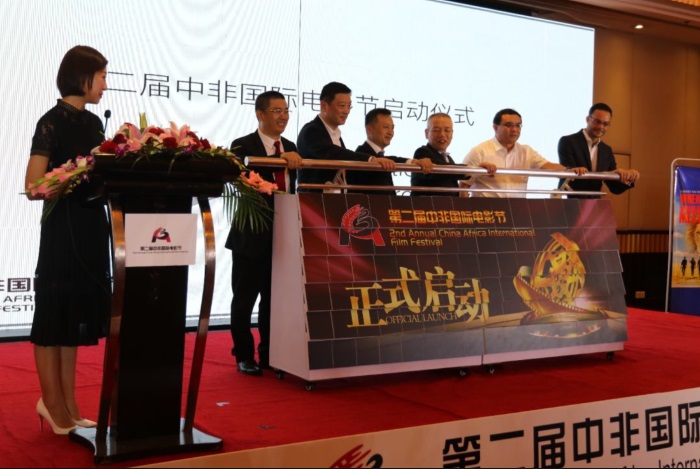
Last year the Cape Town International Film Market and Festival (CTIFMF) announced its collaboration with the China-Africa International Film Festival (CAIFF) that aims to strengthen the exchange of learning culture between China and Africa, through film.

The partnership will not only continue to introduce Chinese cinema to South Africa and vice versa, it is hoped that the two festivals will encourage cooperation in the film sector, making Chinese and African films more available in one another’s regions.

Last year the CTIFMF hosted Chinese dignitaries including Mr Cao Li, acting consul general of the Chinese Consulate-General in Cape Town; Mr Zhang Jian, deputy chairman of Academy Council of Beijing Film Academy; Mr Luo Xubing, deputy director of Overseas Promotion at China Radio International; Ms Wan Minfang, producer of the Chinese film When Africa Meets You; Mr Miles Nan, president of GMMG; and Ms Tao Hong, 2017 Image Ambassador of China Africa International Film Festival.

Kasu was invited this year to speak at the Shanghai International Film Festival about this continuing partnership. His presence at the festival represents the commitment of the CTIFMF to lead the way for South Africa in collaborating not only across Africa, but globally.

As Kasu explained in his speech at SIFF, this partnership is pivoted on the People to People Exchange Mechanism entered into between South Africa and China during 2017 via their respective departments of Arts & Culture, in an effort to exchange knowledge in the fields of inter-alia, tourism, education and culture.

He continued to explain further, “The time has now come for intentions to be converted into action. As such, we call on our respective governments to formalise and expedite an official co-production treaty between South Africa and China. While we understand and appreciate that there are many diplomatic, policy and other considerations that are tangled up in red tape, due diligence and administrative processes, more and more clear evidence demonstrates that the film industry is an underrated catalyst for job creation and economic growth.”

Kasu also reiterated the call that was made at last year’s CTIFMF for the private sector to partner with film promotion agencies, commissions and platforms such as the CTIFMF and SIFF and pledge real resources to a severely underfunded industry in order to fast-track the extraction of sustainable economic, social and cultural value for our respective countries.

The NFVF and the Beijing Film Academy recently entered into a five-year Student Exchange programme and the CTIFMF would like these kinds of collaborative efforts to serve as the training ground for the development of inter-cultural content created between China and South Africa.

To this end, the CTIFMF invites all Chinese film and television stakeholders to visit the CTIFMF between 9 and 19 October 2018, to explore collaborative opportunities with African film industries.

Entries are still open for high quality Chinese films with subtitles to enter the CTIFMF film competition. Last year the festival received more than 800 film competition applications from more than 85 different countries. But very few came from China. At the same time, South African producers are encouraged to submit their works and projects to all future SIFF’s.

The race to premiere: The folly of film festivals

SCREEN AFRICA EXCLUSIVE: As we approach film festival season in South Africa, festivals including the Durban International Film Festival, The Cape Town International Film Market and Festival, Encounters, The Jozi Film Festival, and others will all start to announce their programming selections – and in the process try to best position themselves to secure whatever world or African film premieres that they can.

Within the global network of festivals, a hierarchy exists among high-profile events, especially those in Europe or North America, and the currency of status for many of these events is premieres and celebrity. The more world premieres they can host and the more celebrities that walk the red carpet, the more attention, and subsequently the more funding and sponsors these festivals can secure.

More and more festivals in Africa are buying into this globalised strategy, equating premieres and stars with status and funding, however, there is an inherent folly in this approach, especially when dealing with African produced films.

It is still the case that the majority of high-profile African films premiere in Europe or North America, not at any African festival. The sheer economic and marketing benefits of a major international festival premiere outside of Africa simply outweigh the desire of a filmmaker to premiere the film in their home country.

So film festivals across Africa are vying for the second-place spot of an African premiere – and with only so many high profile African films released each year, the competition to secure the first African screening grows every year.

I have heard many film festival programmers state that they won’t accept certain films into competition if they do not receive the African premiere, putting filmmakers in the awkward position of having to choose amongst an array of equally placed festivals across the continent. There is yet to be one film festival in Africa that can guarantee exponentially more media and economic returns than another, so how is a filmmaker to choose?

This narrow-minded approach, I believe, is detrimental to both filmmakers and film festivals in Africa, whose mandate should be more than just to be the most high-profile festival on the continent. The filmmaking and film-viewing cultures in Africa are widely divergent, and even more so in relation to their Western counterparts. Across most of Africa, and for many people, film festivals are one of the only ways where people are able to gather to watch films together, and with the possibility of the filmmaker in attendance.

Film festivals globally have become alternative distribution mechanisms for many types of independent films, and within Africa, film festivals have long played this role, due to the lack of comprehensive cinema networks across Africa. Even in countries whose urban centres do have cinemas and multiplexes, for the most part – with the exception of Ethiopia and a handful of other locations – African films never make it to these screens, or if they do it is for exceptionally limited runs.

With this context in mind, film festivals in Africa often talk of audience development alongside any mandate to support and promote filmmakers. In fact, audience development is a key role of film festivals across the continent, and one of the best ways to grow audiences and to support filmmakers is to screen African-produced stories and content.

Often, the film festival is the only place for audiences to experience African stories, and certainly, the only place where they can often meet and engage with the filmmaker. It is therefore imperative, in my view, for film festivals in Africa to feature as many quality African films as possible.

Whether a film has had its world premiere in Europe, and/or its African premiere elsewhere, film festivals in Africa should actively and enthusiastically promote quality content that can resonate with local audiences, and in doing so, help to promote the filmmakers and to drive the development of audiences.

In fact, I would argue further, that instead of competing with each other for the premiere of films, and for a perceived status within the festival network hierarchy, film festivals across South Africa, and across the continent should cooperate and support each other.

While this might seem a naïve point of view given the scarce resources available for film festivals, I do believe that in certain areas, and specifically in programming African content, that film festivals can and should do everything possible collectively to support the industry and provide local audiences with as much quality African content as possible.

Let’s see how this plays out in festivals throughout the year…. Watch this space.

CTIFMF 2018: Create. Collaborate. Celebrate

The Cape Town International Film Market and Festival will take place from 9 to 19 October 2018 at venues across the V & A Waterfront as well as in select sites across the city of Cape Town.

The CTIFMF 2018 is a film industry platform to create, collaborate, and celebrate the exciting and often untapped potential of this eclectic industry. Guided by the festival’s core vision of transforming the African film industry through these the pillars of creation, collaboration, and celebration, the CTIFMF will be incorporating a host of key initiatives and projects aimed at the local and Pan-African film industries, film lovers across the city, as well as emerging and new audiences from across Africa and beyond.

CTIFMF executive chairman Rafiq Samsodien has the following to say of this year’s festival; “We are leading the charge to re-build this industry from the bottom up. This year will see the birth of an entirely new way of collaborating and working towards a common goal for a sustainable industry.  So let’s start by building meaningful partnerships that enable and empower the spirit of filmmaking and the filmmakers.”

Create

Creation within the film industry is not limited to content, but extends to relationships too. For filmmakers, the creation of both content and relationships is essential. However, with mounting business, financial, and logistical challenges faced by filmmakers, it is harder than ever for them to focus on their core creative function.

The CTIFMF is in-and-of-itself a platform created to converge the African film industry at a single point at which these stakeholders will have unfettered access to create new business, personal and strategic relationships as well as opportunities.

Core programmess at the CTIFMF 2018 will focus on supporting filmmakers in specific areas including the hosting a gathering of the Emerging Talent Labs from across Africa. The aim of this is to foster the launch of an African Film Institute, a partnership between Ouaga Film Lab (West), Maisha Film Lab (East), Carthage Pro (North) and Realness & Electric South (South), that will have a sizable footprint, real credibility, and extensive access to talent in all corners of the continent.

CTIFMF marketing director Jehad Kasu explains further: “Innovation is the cornerstone of the team’s endeavours to transform the landscape of the African film industry at the levels of ownership as well as industry stature. While some of what we are doing may have been done at other festivals before, the manner in which we are doing it within our platform is remarkably different. It is this difference in innovation that we trust will steadily build the CTIFMF to establish itself as Africa’s leading film industry platform.”

 Collaborate

The African film industry needs collaboration. Supporting colleagues, promoting our own stories, and finding innovative solutions together in the face of adversity must be the hallmark of our industries. However, the South African film industry is largely very fractured and the emergence of a Pan-African industry is more dream than reality.

While competition is healthy, industry events and businesses that solely compete with one another, rather than complementing each other, makes for a situation that threatens the industry’s sustainability – let alone growth.

Collaboration means local collaboration with filmmakers, film schools, government, business, and other allied industry bodies such as tourism authorities, investors, and community organisations. Collaboration means a sharing of skills, an amplification of resources, and a support of people and organisations amongst the emerging filmmaker community.

To embody the spirit of collaboration, the CTIFMF is inviting the festival directors of some of Africa’s top film festivals to join together in a day of discussions, practical networking amongst filmmakers, and a sharing of awardwinning films.

This collaborative effort strives to enhance connectivity between South Africa and its African counterparts, to unlock co-production opportunities, identify synergies and provide traction to projects in the making.

Celebrate

The CTIFMF believes that celebrating our industry’s best and brightest is essential. Celebration is the best way to reward hard work and perseverance. Celebrating achievers is a way to highlight our stories and inspiring and motivating new talent.

This year the CTIFMF will celebrate local content from South Africa and Africa in public spaces through a series of public screenings that will be presented at the V&A Waterfront’s amphitheatre and beyond.  Red carpet premieres and a host of related public events will ensure that the African narrative is celebrated throughout the year, and not just during the CTIFMF. “We are excited about making a landmark announcement on this component of our programme in coming weeks,”adds Kasu.

The City of Cape Town’s mayoral committee member for Safety and Security, Alderman JP Smith has this to say of this initiative: “The City of Cape Town is proud to be associated with the CTIFMF’s plan to revive the local film industry. Off the back of our successes, let us collaborate and build on these and tell our African stories, loudly and proudly. It is time to be up there on the global stage amid the big names of the world. The City will fully support the initiatives of the industry.”

Throughout this year’s CTIFMF the film industry, those hoping to enter the industry, and those who just love the movies will all have something to celebrate.

Visit the CTIFMF website for updates as the festival approaches.

New titles to stream for free on AfriDocs

This month catch a range of new titles now available to stream for free, anytime, anywhere via AfriDocs.  Many of these films have never been available to stream before and reflect a range of stories from across Africa and beyond. The new film, Ethiopiques is a highlight available now and is a powerful film about the rise, fall and redemption of a group of spectacular Ethiopian Jazz musicians who in the swinging 60’s ignited an explosive cultural revolution in Addis Ababa.

AfriDocs is the only place to find Africa’s best documentaries available to stream for free, with a library of over 50 titles always available and always free.

Ethiopiques – Revolt of the Soul | Maciej Bochniak | Ethiopia | 2017 | 70 min

A film about the rise, fall and redemption of a group of spectacular Ethiopian Jazz musicians who in the swinging 60’s ignited an explosive cultural revolution in Addis Ababa. Their music was sublime but this golden era was brought to an end by the military regime that took over the country and forced the musicians into exile and jail. Now, after many years, they are back on a world stage, making up for lost time and still swinging. The film follows the inspirational figures whose amazing life stories illustrate music’s power of redemption in the face of war and heartbreak. Watch the film, HERE.

Punishment Island | Laura Cini | Uganda | 2017 | 56 mins

In remote South-Western Uganda, women who broke the taboo of premarital sex were abandoned on a tiny island to die. About to submerge beneath the waters of surrounding lake Bunyonyi, the island’s last wish is to find survivors before “her” story becomes but a myth. Watch the film, HERE.


Ladies Turn | Hélène Harder | Senegal | 2012 | 52 min

In 2009, in Senegal, where “football is king,” a women’s football street tournament is organised for the first time by the association Ladies’ Turn. Despite the passionate commitment of Seyni, the former captain of the women’s national team, and of the women and men that fight at her side, the game is far from won.  Defying taboos and prejudices, the girls play on the fields for a growing audience. Will they be allowed to go all the way and play the game they love? Watch the film, HERE.


Light Fly, Fly High | Beathe Hofseth, Susann Østigaard | India | 2013 | 80 min

Thulasi is a young Indian girl who is literally willing to fight for the right to be herself. Coming from a poor background, Thulasi’s life is in many ways pre-determined. Her family wants her to get married, her chances of getting a decent job are slim and being an untouchable, she has to accept her position at the very bottom of the social ladder. But Thulasi is different. She wants to be in control of her own destiny and live life her own way. She wants to be someone. She wants to be a boxer. Watch the film, HERE.

Scarred: The Anatomy of a Massacre | Judy Kibinge | Kenya | 2015 | 60 mins

In 1984, Kenyan Security forces rounded up 5000 men in a remote part of Northern Kenya, herded them onto a deserted airstrip. Over four days, they were tortured, maimed and killed. Three decades later, scarred survivors narrate the story of their ordeal the country’s first Truth and Justice and Reconciliation Commission travelling all the way to the capital city of Nairobi to see the government administrators they hold responsible also standing to testify. Will justice be served to a community that’s waited three decades long for it? Watch the film, HERE.

Cape Town International Film Market and Festival  2018 call for entries

The 2018 Cape Town International Film Market and Festival (CTIFMF) will take place from 9 to 19 October 2018. This year’s edition will build significantly on the successes of last year with an increased focus on collaboration and the celebration of the local, regional, pan-African, and international film industries.

Through various collaborations we will be supporting colleagues, promoting our own stories, and finding innovative solutions together, creating an enabling environment for growth and development for filmmakers across Africa.

The CTIFMF through a variety of programmes that will be announced in the upcoming months will be the pivot on which we will endeavour to exponentially grow the distribution of African content across the world.

Having set itself the goal of leading the transformation of the film industry in Africa, the CTIFMF is excited to announce the first and most fundamental stepping stone to achieving this goal: the official opening of the call for film submissions for the CTIFMF 2018.

Filmmakers from all over the world are invited to submit their films in the following categories:  feature films, documentary, animation and short films. We especially encourage producers, directors and scriptwriters from South Africa and Africa who are creating local/African content to submit high-quality entries into the competition.

This year’s CTIFMF will present an exciting and diverse array of quality films that showcase the immense talent of filmmakers from Africa and the rest of the world.

Only films completed not more than 18 months prior to the Call for Entries of the Cape Town International Film Market & Festival will be considered for competition purposes.

Films completed before this time will be eligible for screening in the Panorama Section but not considered for the competition section. Awards in the competition section are as follows:

Film Awards
Grand Prix
Best Director
Best New Director
Best Actor
Best Actress
Best Script
Best Cinematography
Best Editing
Best Documentary Feature
Best Short Film
Best Animation Short Film
Best South African Feature Film
Best South African Short Film
Audience Award for Best Film at the Festival

Deadlines

  • 1 May 2018 – Opening Date
  • 10 July 2018 – Regular Deadline
  • 31 July 2018 – Final Deadline
  • 7 August 2018 – Notification Date

For the entry form, rules and regulations, visit CTIFMF FILMFREEWAY.

For more information concerning the CTIFMF,  contact the festival director and festival manager at info@filmfest.capetown.

The Ladima Foundation set to present at ZIFF and DISCOP Zanzibar

The Ladima Foundation – established as a mechanism to support women filmmakers from across the African continent and in an attempt to further gender equality within the industry – will present a variety of programmes in Zanzibar from 7 to 15 July, in partnership with the Zanzibar International Film Festival (ZIFF), DISCOP Zanzibar and the Africa in Motion Film Festival (AiM).

In order to further its objective of supporting women in a variety of roles within filmmaking, video production and related content development avenues through a range of projects and interventions, the Ladima Foundation will once again present its flagship project, the Adiaha Award for Best Documentary by an African Woman Filmmaker –  presented annually at ZIFF.

The Adiaha Award consists of a cash prize and this year the winning film will additionally be awarded the opportunity to be screened at the Africa in Motion Film Festival in Scotland.

Lizelle Bisschoff, the Africa in Motion Film Festival founder, alongside well-known academic and writer Stefanie Van de Peer will be in attendance at ZIFF to present a workshop and selected film screenings under the theme of Africa’s Lost Classics: Histories of African Women in Film. This half-day event will see the screening of two lost classics – for the first time in Africa – that have been subtitled in English, restored and digitised by AiM. The films, Mossane (Safi Faye, Senegal, 1996) and Fatma 75 (Selma Baccar, Tunisia, 1976) have hardly been seen or screened publically. Mossane is the last feature film by pioneering Senegalese filmmaker Safi Faye, and Fatma 75 was the first non-fiction film by a female Tunisian filmmaker – a feminist essay film documenting strong female figures in the history of the country.

“After a highly successful run of screenings of ‘Lost African Film Classics’ across the UK during 2017, we are delighted to extend this to screenings in Africa, and specifically at ZIFF, one of the continent’s best and most high profile film festivals, as part of our partnership with the Ladima Foundation. The two films we are presenting at ZIFF, Tunisian director Selma Baccar’s Fatma 75 and Senegalese director Safi Faye’s Mossane, are both hugely important films by pioneering female directors which have not been seen or screened widely at all. We know that female and black directors are underrepresented in film industries across the world, which makes it all the more crucial that the artistic labour of these filmmakers are recognised, celebrated and preserved. Persuasive and impassioned campaigns such as #OscarsSoWhite, Time’s Up and the work of South Africa’s SWIFT (Sisters Working in Film and Television) have irrevocably demonstrated the need for prioritising diversity and marginalised voices within the film industries. Celebrating the work of female African directors does exactly that,” comments Bisschoff

The Ladima Foundation will also be presenting a programme at the inaugural DISCOP Zanzibar that will take place from 11 to 13 July at the Hotel Verde. The Ladima Foundation will present the Women of Influence Conversation, which will bring together some of the most creative, iconic and culturally relevant women in Africa’s entertainment and media industry.

Additionally, Ladima will be sponsoring five young women in the industry – from East Africa – to attend DISCOP Zanzibar 2018. The Ladima Foundation is also working with the US Embassy in Dar es Salaam on the She Directs workshop series that will see a selection of young East African women filmmakers having the opportunity to hone their craft. These projects reflect the core mission of the Ladima Foundation and its stated key interventions, which include: professional training, educational support, recognition, and networking and community.

Lara Preston, co-founder of the Ladima Foundation comments: “The Ladima Foundation’s programme taking place in July in Zanzibar, in partnership with AIM, ZIFF and DISCOP Zanzibar, is a reflection of our commitment to key areas of intervention including professional development, recognition, mentoring and networking. Our Women of Influence programme at DISCOP Zanzibar will continue at all DISCOP Markets across Africa, creating a pan-African dialogue and community. These programmes are just the start of the many projects and partnerships that we will be initiating across Africa. As we work to actively and sustainably address some of the key issues that are barriers to entry for women in the content production industries, we will ensure that all of our projects have long-term and tangible outcomes.”

By Chanelle Ellaya

Film schools in Africa: The future of the industry

SCREEN AFRICA EXCLUSIVE: How do we ensure that the next generation of filmmakers in Africa have the skills and tools necessary to compete in the global environment? Are there enough film schools across the continent to provide the training and resources that are needed? What bodies and organisations are working towards supporting and developing film and content production skills in various countries?

These are just some of the questions I have been asking myself and others in the last few weeks.  Working towards putting together the second annual Film School Programme for this year’s Zanzibar International Film Festival (ZIFF), has gotten me almost obsessed with the state of film and related training in the region. It has been unexpectedly challenging to develop this year’s programme in terms of finding partners and sponsors willing to “put their money where their mouth is” in support of young people and their future.

The Film School Programme at ZIFF started last year and the festival was overwhelmed with the response from young people, educators and facilitators. Over 80 young people travelled for two days across Kenya and Tanzania to attend two days’ worth of workshops and events. However, attempting to expand the programme this year with the support of related brands and organisations has proven virtually impossible.

The demand and hunger for these skills continues to grow, and one can pretty clearly correlate the size and growth of a national film industry to the amount of film schools that exist. Africa’s leading countries in terms of film production (albeit original films or servicing international productions) are South Africa, Nigeria and Kenya, so not surprisingly one finds these countries also have the most opportunities for film related education.

Of course in South Africa there is a wide array of film schools and programmes to choose from; AFDA, Big Fish, City Varsity, University of Cape Town (UCT), SAE Institute, University of the Witwatersrand (WITS), just to name a few. In fact, the Wits School of Arts was even named as one of the top 15 film schools in the world by The Hollywood Reporter in 2016 and a cursory search can find at least 50 different institutions or programmes across the country.

There are also festivals such as Behind the Blazer Film Festival, presented in association with the National Film and Video Foundation (NFVF). The Behind the Blazer Film Festival is an event that showcases films made by South African high school students from townships, developing cities and rural areas.

Nigeria also has over 50 film schools across the country, and not just in the major urban centres.  The film school landscape in Nigeria is not just quantitatively large, but also diverse in approaches and programmes. The schools include well-known ones like the National Film Institute, Jos; African Film and Media College, Lagos; Cifraz Film Institute, Bauchi; Disciples Film and Television Institute, Lagos.

Many of these schools are also creating international partnerships, for example, in the last few years the Asian Academy of Film and Television has partnered with the National Film Institute, Jos to present the International Student’s Film Festival at Jos, Plateau State, Nigeria.

It was also just announced in March 2018 that the French, German and Japanese Embassies in Nigeria are collaborating on setting up film schools in the country, according to Denys Gauer, French Ambassador to Nigeria.

Kenya is also really gearing up in terms of film and related education and training, with the government even considering the inclusion of visual and performing arts within its new school curriculum. There are about five public institutions offering degrees and a host of other smaller private academies and institutions offering both short and long courses.

In fact, most of the young people who attended last year’s ZIFF Film School Workshops came through two Kenyan based programmes – both of which provide technical content production training in high schools and primary schools. Re-tuning Cinema in Africa is a programme headed by Mark Wambui that teaches filmmaking in a host of schools in Nariobi, while the University of Nairobi has a project that reaches into dozens of high schools and primary schools across the country.

The number of film schools in a country however is not always an indicator of the quality of the education or the outcomes being produced. The quality of degrees available across the continent varies, and also the ability of many young people to pay for this kind of education is another major stumbling block.

As with most educational needs in Africa, the only way to really ensure that enough students are able to attend quality institutions is to create partnerships between the schools, government and the private sector. Projects such as the Film School Programme at ZIFF is but one of these initiatives that needs support from the East African region. This year’s programme may only take place in a very limited format unless sufficient funds and partners can be found. Anyone interested in getting involved can email workshops@ziff.or.tz.


CTIFMF announces new market director

Preparations are already well underway for The Cape Town International Film Market and Festival (CTIFMF) 2018. Building on both the successes and learnings of the inaugural event in 2017, the CTIFMF has announced the appointment of a new market director, Elias Ribiero.

Ribeiro is well known and respected across the industry as a producer and will bring his strong and extensive worldwide network, skills range in international co-productions, financing, content distribution and 13 years of experience in the film business to the CTIFMF directing team.

Ribeiro, through his production company Urucu Media, in partnership with Cait Pansegrouw, has produced numerous shorts, a feature documentary and five award winning feature films in just five years. The work they have produced is often audacious and challenging of the status quo. They have also become known for having a great eye for talent, with both of the first-time feature directors from the last two productions going on to sign with CAA in Los Angeles. 

Urucu’s break was Necktie Youth (South Africa/Holland) by Sibs Shongwe LaMer, followed by The Wound (South Africa/France/Germany/Holland)) by John Trengove and The Train of Salt and Sugar (Mozambique/South Africa/Brazil/Portugal/France) by Licinio Azevedo; both were selected as their country’s official entry to the Academy Awards, with The Wound making it to the December shortlist of nine out of a record entry of 92 foreign language films. The Wound also won 26 prizes internationally, including the Sutherland Award at the London BFI for best first feature and six SAFTAS. 

They have licensed content to Netflix, HBO, ARTE, ZDF, SABC and M-Net. Urucu’s films have competed at Sundance, Berlinale, Tribecca, Toronto, Locarno and Venice among others and have sold to more than 50 territories worldwide.

Ribeiro is excited to engage with the various industry stakeholders to ensure that this year’s event is collaborative, representative and valuable. With this wealth of experience, Ribeiro understands the need of the industry from a global perspective. He is the ideal person to lead the business-oriented side of the event in its goal to re-create the African film industry from the bottom up.

This audacious yet essential aim is at the core of the planning for this year’s market and festival and Ribeiro has this to say of his plans for the year, “I am thrilled to spend the next few months talking to people both locally and internationally to seek guidance and get feedback in order to develop a market that truly meets the needs of the African film industry.”

Ribeiro is committed to transforming the market in 2018 by spending the next few weeks researching and discussing the needs of the African industry from multiple perspectives. For those interested in taking part in this process, contact elias@filmfest.capetown.

The Cape Town International Film Market and Festival will take place from 10 to 19 October.

Documentaries: A shining light from the African continent

SCREEN AFRICA EXCLUSIVE: Documentaries, and historically African documentaries, must be one of the most underrated of film genres across the globe. Commercially overlooked and often relegated to the margins of festivals and commercial broadcast (streaming) platforms, documentaries are most often labours of love made by dedicated directors and producers.

There are however, some encouraging beacons of light for the genre, as documentary filmmakers across Africa forge ahead with innovative stories and production methods, and with more and more festivals and awards being devoted to this genre.

Thankfully, long gone are the days of so-called “donor films,” heavy handed and often moralistic driven films funded and hinged on donor organisation agendas.

Especially across Africa, documentary filmmakers are finding creative and innovative ways to tell their stories, pushing the boundaries of what may even be considered documentary filmmaking, and blazing trails along the way. Not only are the topics of many of the recently produced documentaries moving away from the African stereotypes, but the ways in which these stories are being told reflect the innovative spirit of a fresh generation of filmmakers.

Imfura, as an example, is a Rwandan short that won the Berlinale Shorts: Silver Bear Jury Prize just recently. The film is a hybrid – a fusion of documentary and staged material, according to the Berlin programme.

Out of This World is a Vice i-D production that tells the stories of queer South African artists. Narrated by New York based rapper, performance artist, and activist Mykki Blanco, the film follows a host of young South Africans whose courage and creativity are putting them at the forefront of a cultural revolution.

Ghana’s Arthur Musah’s latest film, One Day I Too Go Fly, is a unique real-time, four-year study of four African youths’ journeys to becoming engineers at the Massachusetts Institute of Technology (MIT). The film follows the lives of Nigerian, Philip Abel; Zimbabwean, Fidelis Chimombe; Tanzanian, Sante Nyambo; and Rwandan, Billy Ndengeyingoma in school, MIT and in their home countries. Mensah uses the term “new cinematic narratives” to describe his films as they are based on stories not seen before.

Even wildlife documentaries are getting a makeover, utilising the latest technology trends such as VR and 360 degree cameras. South African company Deep VR, beat some of the best funded international filmmakers to secure funding for the landmark project, Exodus: The Great Migration. The film will be one of the world’s first Virtual Reality (VR) documentaries of what has been described as one of the greatest natural phenomena on Earth.

Documentary filmmakers are also getting wise to alternative distribution platforms and methods, with many filmmakers opting for streaming platforms and even YouTube as a preferred way to show their films.

The recent YouTube series, The Confused African examines Ugandan society through the explorations of two of the country’s musicians, artist and TV personality Ken Daniels and rapper Navio. Directed by Jonny Von Wallström the series offers a Ugandan perspective on issues such as immigration, corruption and music.

With the rise of this diverse and exciting selection of documentaries, a host of festivals also continue to push their support for African documentary film.

This year, the Zanzibar International Film Festival (ZIFF) has just announced an exciting new partnership with STEPS and the Bosch Foundation in Germany for the prize for Best Documentary Film. The winner of the Golden Dhow will also receive either a fellowship to the Film Academy in Ludwigsburg, or if the filmmaker is more experienced, then an alternative award such as an invitation to attend the Berlinale with costs covered will be presented.

STEPS will also offer the winner a licensing deal for the AfriDocs platform, the first and only free streaming platform for the best in African documentaries. Anyone in Africa can stream these films anytime at www.afridocs.net.

For the second year now, the Ladima Foundation will also present at ZIFF the Adiaha Award for the best Female Documentary Filmmaker.

The 11th annual Africa World Documentary Film Festival in St. Louis Missouri took place in February, screening 50 excellent documentaries out of the 185+ submitted by filmmakers from countries including Cape Verde, Central Africa Republic, China, Cuba, Democratic Republic of Congo, Denmark, Egypt, Ethiopia, Ghana, Italy, Jordan, Liberia, Nigeria, Sierra Leone, South Africa, and South Sudan.

The Mashariki African Film Festival in Rwanda took place from 25 to 31 March in Kigali with over a dozen African documentaries in competition. The festival is a showcase of Rwanda’s flourishing film industry with a special focus on young filmmakers in the region.

March also saw Lagos host the 2018 edition of the yearly I-Rep International Documentary Film Festival. Produced by the Foundation for the Development of Documentary Film Festival in Africa, this year marked the eighth edition of the yearly feast of documentary films, which began in 2010. The 2018 festival explored the theme: ARCHIVING AFRICA II: Frontiers and New Narratives.

Cuba is also honouring its roots by offering solidarity with the African continent this year during its 16th annual International Documentary Festival. This year’s festival focuses on African portrayal, analysing documentaries by Latin American and African artists, past and present. Among the main films are Jose Massip’s Miriam Makeba, which tells the story of the life of the South African singer, and Nova Sinfonia by Santiago Alvarez, dedicated to the former Mozambique military commander Samora Machel.

South Africa’s annual Encounters Documentary Film Festival is also coming up, taking place from 31 May to 10 June.

With the production value and creativity of documentary filmmaking rising rapidly across Africa, and the global opportunities to showcase these films increasing, it is clear that African documentaries will soon be taking their rightful place as equals to the much celebrated feature film genre. We can’t wait to see them.


AfriDocs and Channel24 bring free streaming of Oliver Tambo doccie

In honour of Freedom Day 2018, AfriDocs will make available for free streaming via Channel24, the moving and powerful biopic: Oliver Tambo: Have You Heard from Johannesburg.

Through this unique newly released film, viewers are given the rare opportunity for insights into the life, ethos and politics of Oliver Tambo, the leader of the ANC that was instrumental in bringing an end to apartheid.

The streaming of the film that was only completed at the end of 2017 celebrates the 100th year of Oliver Tambo’s birth and could not come at a more opportune moment, with the entire southern African region focused on political upheaval and the toppling of established leaders and norms.

Albie Sachs, the executive producer of the film has this to say of the film, “This is a spirited, lively and eminently watchable film that brings Oliver Tambo to life on-screen, with moving and poignant interviews from Chris Hani, Kenneth Kaunda and members of the Tambo family. The film shows not the politics of the man, but also shines a light a life lived on principles of ethics, compassion, inclusion and social justice and equality. We hope this film is seen by as many people as possible and we are actively supporting efforts to make it as accessible as possible.”

The film will be available to stream for free here, from 27 April and for one week only.

Oliver Tambo: Have You Heard from Johannesburg | Connie Field | South Africa | 2017 | 90 min
Political comrades and law partners, Mandela and Tambo shared a political destiny. Nelson Mandela is a household name. Oliver Tambo is virtually unknown. Banned in South Africa, Tambo led the liberation struggle in exile from 1960 to 1990 while Nelson Mandela was imprisoned on Robben Island. During those 30 years, he not only kept the African National Congress (ANC) unified, led his movement both inside and outside South Africa in a successful battle against apartheid, his calls to the international community to isolate and sanction the South African regime created the most globalised human rights struggle of the 20th century. In the end, his actions released Nelson Mandela and laid the foundation for a new South Africa. Suffering a stroke on the eve of success, OR would not live to see his lifelong friend become the first black president of a democratic South Africa.

- Advertisement -
- Advertisement -
- Advertisement -

Pin It on Pinterest