Home Authors Posts by Sony Press

Sony Press

98 POSTS 0 JOBS
Sony is a leading manufacturer of audio, video, communications, and information technology products for the consumer and professional markets. Its motion picture, television, computer entertainment, music and online businesses make Sony one of the most comprehensive entertainment and technology companies in the world.

Sony FS7 selected for iNumber Number the series

iNumber Number, the film which brought Sdumo Mtshali, winner of talent search competition Class Act, his film break will soon be taking over the small screen as a drama series by production company Quizzical Pictures.

Set in the township of Alexandra, Johannesburg and its urban juxtaposing settings in Yeoville and Houghton, “The series is a mixture of gritty and sumptuous – because of the story and where it is set,” explains executive producer Harriet Gavshon.

The series promises to be action-packed with all the drama and suspense, guns, squibs, car chases and shoot-outs that one can expect from a crime-thriller TV series. With this in mind, two Sony FS7 cameras were selected to shoot the series: “They handle handheld very well and can shoot up to 4K which we needed for the action sequences.”

Gavshon expands: “The series is being shot on two cameras with easy rigs – so it has a handheld feel, like the original movie, to give it a sense of immediacy. But it is not as stylised as the movie – we adapted the style to appeal to a television audience and for the small screen. It’s a different proposition but hopefully as exciting and tense as the original movie.”

Mzansi Magic viewers can expect to see the first episode of iNumber Number the series on 9 July 2017.

Sony focuses on archive solutions and live production

Sony will be exhibiting at Mediatech Africa 2017 on stand F25 with a strong focus on archiving and live production solutions. Advanced products and solutions on display will include:

Revolutionising data storage solutions with the new Sony Optical Disc Archive

With the increase in data consumption and greater demands to store and protect data, Sony transformed data storage knowledge with a new solution – the Sony Optical Disc Archive. This is a storage technology that provides exceptional data archiving and asset management, mainly assisting in managing, protecting, and accessing data archives. It is capable of maintaining large volumes of data and data integrity in “green environments” with limited environment controls.

The Sony Optical Disc Archive has the ability to provide safe, long-term storage whilst maintaining low cost of ownership. It’s open and non-proprietary format involves the use of multiple bare discs contained within a robust cartridge and a dedicated disc drive unit with an associated software driver that is able to manipulate the discs individually whilst providing seamless read/write capability making it ideal for both warm and cold storage.

Furthermore, the Sony Optical Disc Archive is environment-friendly and saves archiving costs because each device has a life expectancy of 100 years and does not need to be replaced. It offers accessibility, high speed, and is tailored to fit the users’ needs which can begin with minimal data, and later develop into a vast archive as the data accumulates.

Provided it is an optical disc, it is more resilient and durable than hard-disk storage systems or magnetic tape data storage. Sony Optical Disc Archives is a truly reliable system that is designed to benefit in the long-run, and acts as a catalyst in increasing reliability and protection, thus reducing the points of failure for many businesses.

Preserve your content assets with Memnon archive management services

Whether it’s a speech by an important historical figure, a recording by an unforgettable singer or a memorable event, some of the most valuable parts of our shared cultural heritage are contained in audio and video recordings. These audio visual documents are fragile and it’s important to preserve it for the long-term. These records are our cultural legacy.

Memnon from Sony is a trusted provider of a range of services to digitise, restore, preserve and provide access to these recordings. We help digitise all analogue formats from magnetic tape to vinyl record, as well as offering long-term storage of your precious audio visual assets.

Memnon has been supporting the owners of audio-visual collections – from broadcasters, cultural institutions to libraries and universities by providing the right conditions and the most suitable solutions.

Low cost solution for high quality live production

Live production does not necessarily mean unaffordable costs and investment. The affordable live production solution from Sony is the perfect partner for houses of worship, corporate, education and other medium sized events. This compact and cost effective kit can combine up to three camcorders, a multi-camera live producer and a remote controller that gives you the super power to make your event a hit.

At Mediatech this year Sony will showcase the HXR-NX5R, PXW-FS5, PXW-Z150 full-HD and 4K camcorders working together with MCX-500 – the affordable and user-friendly production switcher that makes it simple for a single operator or small team to produce a broadcast quality live event. The lightweight RM-30BP remote controller allows you to control all the key features of suitable camcorders while sitting at your control desk. It also allows tally signals to be sent to connected camcorders, so a camera operator knows when each camcorder is on-air. Work faster, more efficiently with MCX-500’s advanced workflow.

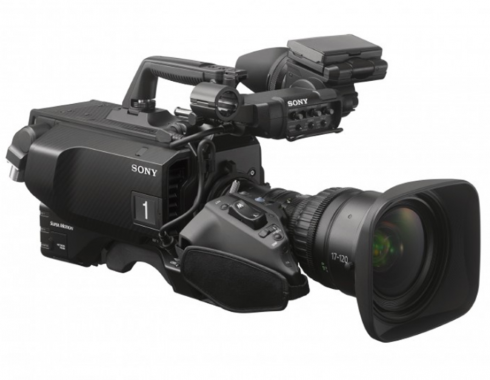
Sony FS7: The operator’s camera

I was sitting alone in a pensive state some time ago, dealing with the fact that our make-up artist appeared to be spending an inordinate amount of time trying to affect miracles with a troublesome client’s face. Admittedly, my thoughts were less about her and markedly more focussed on my early days in the local television industry; more particularly, my close association with that gracious old video camera workhorse – the Sony DXC6000.

For those of you imagining that you’d never even heard of a camera sporting that combination of letters and numerals; let me assure you that during the eighties, when many of you were still floating about with intent in the great ether – many of us were shooting at a dizzying pace – using three tube cathode-ray cameras tethered to High-Band U-Matic recorders, via a thick black six-foot umbilical cord that displayed the uncanny ability for entanglement.

Chuckle at the antiquity of it all if you must but I am among early operators who consider themselves fortunate enough to have endured myriad rigors of video production work way back then. That’s because every day offered new learning experiences. I am less grateful for the legacy of persistent shoulder pain with which I now have to contend.

My association with Sony cameras has quite contentedly endured for over three decades – longer than some marriages. I later happily segued unannounced into the Betacam era and accepted the probability that all future cameras would weigh the equivalent of a small child.

That was until the advent of the new millennium, a time filled with angst at the distinct possibility that humankind would experience unprecedented computer mayhem – that the world would be plunged into anarchy and unimaginable horror. The Japanese – who quite thankfully really had more of a grasp of keypads, motherboards and flashy lights than almost anyone else on the planet – opted to ignore the hype and boldly went where no man had been before. Their ultimate solution; lightweight, formidable and affordable video cameras. Canon boldly introduced us to their XL1 range of digital video cameras and personally speaking – there was no turning back!

The halcyon age of video camera practicality was inevitably short-lived. Some overworked technician somewhere experienced an epiphany one evening and imagined a time where cameras would all be reduced in size and functional ability. Very rapidly, the virus spread – and soon the dreaded ‘Prosumer’ cameras were born.

Brick-sized, plastic hand-held bread-bins with tiny, completely useless (in my view) rear-mounted eyepieces – inconveniently located at the back of the camera. This ill-considered design rendered controlled panning and tilting almost impossible, unless you were prepared to elicit stares every time you shot outdoors in polite society. People watched operators intentionally collapsing one leg – almost ballet-like, bending sideways at alarming angles to the camera, desperately trying to exercise some control over the shot while tilting. Panning offered other distractions and mirth. Some hapless camera operator would perform a sideways crab-like stepping motion to avoid the tripod’s legs, whenever a car or some-such subject moved across the field of view. Consequently, there would be a tell-tale bump or lag in the footage. We’ve all seen examples.

Cameras universally sported small flip-out screens with pictures no-one could really see in broad daylight, requiring the camera to be wielded in an assortment of prone positions – quite similar to what an orang-utan would do whilst inspecting the underside of a bunch of bananas. Evidently, very few operators would confidently shoot a subject unless the camera was angled upwards towards an unsuspecting subject’s nostrils or looming ominously overhead like an inquisitive fly. This was all accomplished hand held – naturally.

The ubiquitous, unsteadily floating, out-of-focus, wobbly-shot series of camera movements were born – and quite liberally employed during the shooting of music videos. I realise I’m ranting of course, but I firmly believe the average person would quite happily avoid watching material that looks as though it was shot by an operator sitting crouched inside an operational tumble-dryer.

Just in case you thought Sony were in any danger of escaping this diatribe, they’re not. Unless one was intent on disposing of inordinately large amounts of hard-earned cash, there were few choices available to shooters who were intent on finding anything resembling an ergonomically professional camera at a fair price to work with.

That, in the most roundabout of ways is what eventually brings me to the Sony FS7. What a marvel. I can confidently reveal that I charged headlong towards using the FS7 soon after it was released locally. I had been trawling the net following the camera’s development and launch date for months – hanging on every word uttered by Sony’s product manager, Juan Martinez. Finally, a camera that hearkened back to the good old days of the shoulder-mount was to be unveiled. A camera that sported a side-mounted eyepiece and looked as though it had been conceived and designed with operators in mind.

After an eighteen month period of using the camera, I have learned to overlook and sometimes ignore some of its inherent quirks. Primary amongst these is the dreadfully cheap and nasty plastic eyepiece.

Why, oh why must Sony insist on utilising eyepieces that look like they had been designed as an afterthought by a committee of accountants? This is also not a singular achievement folks. No, these indiscretions go way, way back. The good ol’ DXC 6000 I alluded to at the beginning of this piece sported a similar eyepiece to the FS7. That version featured a kind of small plastic cabinet containing a tiny screen that would slide up and down like a trap door. The whole nasty contraption swung around on a single rod sticking out at a perpendicular angle from the camera body – with the connector cable winding around the rod – ultimately until it pulled out.

It was additionally, (theoretically at least) held fast by a nut that would never screw tight no matter the degree of force applied to it.

Overlooking numerous other ergonomic indiscretions, vis-a-vis the slow menu function, it is truly the dream instrument camera operators have been waiting for. The FS7 has naturally been upgraded in the interim – and the new Mk2 is still a highly cost-effective 4K and HD capture platform, offering a plethora of professional options that have rendered its big brother, the F55, almost obsolete. Primarily, it is the Sony XAVC-I codec that really stands out here. Recording 4K RAW still requires an off-board recorder like the Atomos Shogun, but for true REC709 colour – you get awesome results from the sensor at 10 bit depth, 4:2:2. Arguably, one of the cameras most attractive features is the ability for one to under – or over-crank at will rather easily using the S&Q button, ideally located at the operator’s side of the camera.

This is accomplished using a preselected frame rate of as little as one frame, to a gorgeous 180 fps in HD mode. Now, for those of you intent on shooting 4K internally, you’ll still get a commendable 60fps should you make the decision to do so, but you are likely to end up wading through 64GB XQD cards like gambling chips. Should you elect to use an off-board recorder however, you’ll find loads of additional room on-board the FS7 to attach assorted magic arms and spigots.

The camera we have been working with has a cheese-plate which surrounds the front of the camera (around the lens), as well as a padded shoulder mount with rails to support a 4” swing-away matte box. Hand-held work is simplified using an old-school ARRI shoulder mount, as the FS7 tends to be somewhat front heavy. My favourite feature is the dial-able selector switch, which allows the operator to choose between a standard range of ND filters. Other programmable selectors such as the ISO settings and white balance can be found where they have always been.

It proved to be what was promised by Sony. An ergonomic masterpiece that would etch an indelible mark in the annals of history. Since then, the camera has been used on corporates, television work for broadcasters here and abroad, as well as for long form work. We use the native 28mm to 135mm zoom lens as a standard for ENG shoots, with a Polaroid filter that also protects the glass. This is not, in my opinion, the finest lens available for ENG work as it lacks the wider end other lenses offer at around 18mm to 20mm.

We frequently use Sony primes (35mm, 50mm, 85mm), employing a PL to e-mount adapter with a lens support. The lens mount has been strengthened on the Mk2. Using the primes on the super-35 sensor provides glorious Bokeh – the kind we film-types search for with vigour and intent on every shoot we do.

Naturally, the Sony primes are rated at T2, which is some way off the f4 rating of the native zoom lens, although the camera’s low-light capacity is commendable. I have not had to shoot at an ISO beyond the native 800 default setting – and the pictures are really awesome. When shooting in S-Log 3 the camera is capable of 14 stops of dynamic range and that folks, edges towards Arri Alexa capability. For a camera that costs substantially less than the Arri or RED products – this is a really remarkable achievement on Sony’s part. With LUTS and camera-matching software widely available, content delivery standards have shot skywards in recent times, which is really heartening when considering the fact that this was neigh impossible in the past. More filmmakers have the ability to create highly professional content at a fraction of costs historically. This enhances creative expansion and freedom – and that grows the industry.

Interestingly, I sometimes get to use a vintage Angenieux 25mm to 250mm lens when shooting. Weighing substantially more than a small Bovine, it is rated at T4.5, but the tobacco-coloured flares one gets within the late afternoon ‘golden hour’ are the stuff of legend. I absolutely adore using it. When South African-born cinematographer Dan Mindel SASC, ASC, BSC visited us last year as part of his Silwerskermfees duties in Cape Town; I was fortunate enough to accompany him on a leisure trip to a local game reserve for a few days. Fellow SASC cinematographer Charles Bengis and I were his hosts on the safari – but seeing as though both of us had witnessed more antelope and zebra in our time than possibly even David Attenborough – we were more intent on picking his brain about the art of cinematography. Dan Mindel worked as D.O.P. with JJ Abrams on Star Trek Into Darkness and also shot Star Wars: The Force Awakens, The Amazing Spiderman 2 and Pacific Rim 2 amongst others!

Dan mentioned casually that given the choice, he would stick to good old 1920X1080 as a digital standard for capture. You could have felled me with a pan handle. These words proffered by a man who has worked on the kinds of films many of us could only dream of shooting, was possibly the last thing I imagined hearing from him. How could I ever argue such sage advice? I guess it all relates to those of us who have grown up as it were, with 35mm film. I felt a warm glow envelope me as I began to imagine the possibilities. Perhaps it was just the campfire.

With the advent of 8K, VR and heaven knows what else awaits us as filmmakers and shooters. We are faced with myriad options when it comes to the art of capturing moving images. All considered, it percolates down to bang-for-buck, methinks. How best to get the job done across various platforms at a price advantage that allows for creative freedom. Whatever your decision, the Sony FS7 offers us the operator’s camera package. A shoulder mount, side mounted viewfinder, solid magnesium body with all of the requisite bits to get the job done efficiently, professionally and in good time – and with an altogether sexy look that says; ‘The pro has arrived’!

By Paul Nel, SASC

Africa’s first medical thriller – Bypass

0

A healthy human body has the capacity to save up to seven lives. According to the Organ Donor Foundation (ODF) the heart, liver and pancreas can save three lives, while the kidneys and lungs can help up to four people.

However in a country like South Africa where sadly less than 2 per cent of the population are organ donors; the long waiting period for a possible donor – who must also be a perfect match – can be a helpless race against time left for one’s survival. So as a parent would you bypass the system to save your child’s life?

The movie, Bypass brings awareness to the underworld of organ trafficking, which preys on the desperation of the wealthy whilst also taking advantage of the vulnerable and poor.

The film prides itself on being the first African medical thriller. Bypass draws inspiration from international films like Panic Room and Disturbia, as well as from Participant Media who are known for creating films with social impact. “I have always been inspired by Participant Media and their approach to using films as a medium for social change and in Bypass you see how desperation drives a mother to turn to the illegal organ trade in order to save the life of her son,” explains director Shane Vermooten.

The storyline follows the plight of cardiac surgeon, Dr. Lisa Cooper, who works at St. Lukes hospital operating and saving the lives of her patients. However when her only son is in need of a liver transplant, the chances of him receiving a donor seem to be stacked against him. An opportunity to save her son then presents itself but the doctor has to bypass ethical medical codes that she has held onto throughout her career. “A decision that leads her right into the heart of conspiracy, danger and an international organ trafficking syndicate,” shares Vermooten.

The movie takes place in two distinctive worlds; the first place being at St. Lukes, which was shot in the abandoned building which once used to house Woodstock Hospital. Veermooten confirms that while Woodstock was perfect for most hospital scenes, the theatre scenes were impractical and the team was stuck until they found an Intercare Day Hospital which was willing to let them shoot at their theatres. Lieschen Koch of Lieko Studios was the film’s make-up and prosthetics artist who did incredibly realistic and genuine work in showing the bloody and gory images of a real-life medical situation. “She did an incredible job with bringing the medical scenes to life which allowed us to shoot beautiful close-ups of the operation as opposed to having to hide what we were seeing and fake it with camera angles,” Vermooten remarks.

At the hospital scene we meet the top cardiac surgeon, Dr. Cooper played by actress Natalie Becker, who happens to be the only female surgeon and a proud mother. “In the world of Bypass, our main protagonist needed to be the top cardiac surgeon in the country and so we saw this as a great opportunity to challenge the stereotypes of what a top surgeon in South Africa can look like in 2017. So we were very intentional when we made the decision to cast that role as a woman of colour,” Vermooten says.

Dr. Cooper is accompanied by a leading cast of male doctors and well-known actors including Haken Ke-Kazim (Dr. Chris Moanda), Dean Lotz (Dr. Wright), and Greg Kriek (Martin Fisher) as well as a young boy who appears to be a new face to the big screen, nine-year-old Joel Brown (Sam Cooper). “When working with Joel I was very intentional to never give him the full story, so every day on set we would create the story together, and that helped him give an authentic performance,” Vermooten says.

Joel plays the sickly son to Dr. Cooper, his mother then confides in one of her colleagues, Dr. Moanda, who offers her hope in the illegal organ trade market of East Africa.

Dr. Cooper heads to East Africa and leads us to the second part of the film, in a dingy and dark part of Jalloh, where the doctor finds herself out of her depth. “I wanted it to look more like a dungeon and less like a standard prison, we filmed at the old Rhodes Memorial Zoo which is on the side of Table Mountain and so it was a big challenge to bring in everything we needed but the team pulled it off beautifully and it takes the film to another level,” he said.

Vermooten expands: “Each of these worlds came with their own very specific stylistic choices. The first act was shot on heads and legs, to enhance the stability and control Lisa (Dr. Cooper) has. From the start of act two we ditched the legs and spent the rest of the film with the easy rig and steadicam to show the instability and insecurity Lisa felt in the unfamiliar world she entered. Our colour palette was also filled with a lot of medical blues and greens which we pulled through both worlds in the wardrobe, production design and grade. The only time red was used was when blood was in the scene.”

The film was shot in just 24 days using the Sony FS7. “We choose the FS7 because it allowed us to shoot internal 4K and its light-weight and versatility allowed us to move fast often having to shoot 35 to 40 set ups per day,” says Vermooten.

As with any thriller movie, the use of sound design was quite selective and instrumental in giving the viewer the cold chill down their spine. “Sound design plays a huge role in any thriller and one of my favourite parts of post-production is sound design. In Bypass we were meticulous with the sound design and it definitely heightens the tension and is one of the most impactful elements in the movie,” he says.

Other work on post-production was handled by Chris van der Burgh who did the offline edit at Media Village Productions, while Matthys Pretorius did the grading at Refinery Cape Town. The final mix was done by Nic Turton at Triplane.

Bypass had its international break at the Cannes Film Festival last year as part of the NFVF’s film catalogue where Vemooten also got to sign with an international sales agent. The film was also screened at the Marche Du Film at the 2017 Cannes Film Festival.

The film then had a local release in early May with sold out screenings across the country. While Vermooten hopes that more viewers get to watch and enjoy his movie, he also intends on imparting knowledge and creating change, which is why he decided to partner with ODF. “As we were looking into the issue of organ trafficking we realised that part of the solution was having more legal organs available because with a sufficient supply people would not be forced to turn to the black market. With this in mind we always knew that we wanted to add an action step so that people could respond to the movie,” he says.

Outside the screenings Vermooten had volunteers from ODF talking about the process of being a legal organ donor and encouraging South Africans to sign up and become donors, alternatively people could also log on to the film’s website and sign up there. The initiative has already seen a remarkable 40 per cent spike in organ donations. “We are very excited about this,” says Vermooten, adding that he hopes that the awareness campaign could reach not only the people watching his movie but also their families and friends.  – Gezzy S Sibisi

KEY CREW:

Executive Producer: Graham Vermooten
Producer/Writer: Diane Vermooten
Director / Writer: Shane Vermooten
Producer/Writer: Bianca Schmitz
Line Producer: Cherise Vermeulen
Production Assistant: Louise Schoemann
Director of Photography: Jorrie vd Walt
1st Assistant Director: Jacobus Kriel
Editor: Chris van der Burgh
Sound Designer: Nic Turton
Online Editor: Dani Nel

NAB 2017… the best of

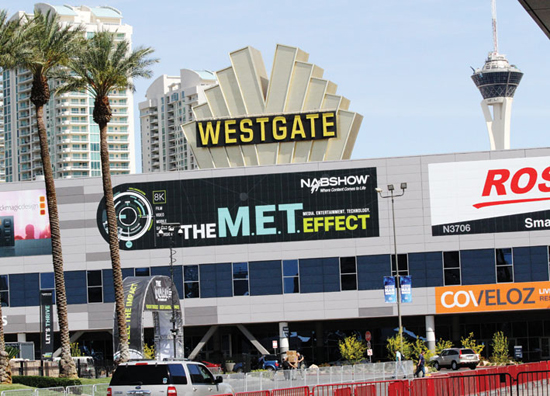
In Elvis Presley’s ode to Las Vegas he chanted: “Bright light city gonna set my soul on fire, got a whole lot of money that’s ready to burn, so get those stakes up higher.” The stakes were indeed high at NAB 2017 and 103 433 visitors packed the 1 million square metre exhibition space, which has become familiar territory for those attending the world’s largest event focused on the intersection of technology, media and entertainment.

The overall theme of NAB 2017 was The M.E.T. Effect – the result of three once distinct fields of media, entertainment and technology, converging and becoming something far greater than the sum of their parts. The Exhibits and Education Programme at the 2017 NAB Show was specifically tailored to showcase all aspects of The M.E.T. Effect and its impact on the Media and Entertainment industries with great success. This year’s conference sessions revealed no real surprises, but the content always generates some excitement especially in the ‘Super Sessions’.

In the first-ever live 4K video stream from space during the Super Session: Reaching for the Stars: Connecting to the Future with NASA and Hollywood, NASA astronaut and International Space Station (ISS) commander Dr. Peggy Whitson and NASA astronaut Jack Fischer conversed live from the ISS. The event utilised a RED Epic Dragon camera and a UHD-capable video encoder opening up a whole new chapter in live broadcasting from the space station, providing a powerful new tool to support science and research.

In the past few years at NAB, Ultra HD was the featured video technology. At this year’s show, high dynamic range (HDR) moved to centre stage. From production, to streaming, to the television, the industry is working to fill the holes in the value chain of delivery. Though there are many HDR standards, the conversation at NAB seemed to focus on just two: HDR10 and Dolby Vision. There couldn’t have been a better example of the future of HDR with Sony’s display of their new hi-tech display monitor – the Canvas.

The impressive 8K by 2K, 9m x 3m Canvas uses surface-mounted light sources that Sony is calling Ultrafine LEDs, to drive large the high-contrast and HDR-ready display. The picture quality was amazing and this kind of technology could well replace the digital projector in cinemas sooner than we think.

The over-the-top video (OTT) trend has been gaining momentum for years, as Netflix, Amazon, Hulu and other companies demonstrate the demand for streaming video. But the trend took on a new dimension this year as internet giants like Google and Facebook used the show to highlight their own work in the broadcasting industry. The growth of social video has had content creators, media brands, and marketers rethinking production and distribution. Facebook has emerged as one of the most impactful players in this space – and the platform continues to evolve as publishers learn how to better leverage it.

The 2017 NAB Facebook Boot Camp featured presentations from Facebook staff, as well as creators who have found success on the platform. There were hundreds of practical tips, insightful data and best practices discussed to help publishers make the most out of this new and exciting global broadcast platform. Google hosted a number of sessions at NAB to discuss its virtual reality video efforts as well as its web video production and advertising technologies. Is this the future of television unfolding before us?

2017 is shaping up to be a real turning point for media-over-IP standards and practices, with the SMPTE ST 2100 standard inching closer to completion and a growing number of media facilities building real-time IP production into their infrastructures. A number of major North American and European broadcast companies have indicated that they will commence real-time IP production infrastructure projects this year.

With over 1 800 companies exhibiting their wares in the vast halls and corridors of the Las Vegas Convention Centre, it was a tough task getting to see everything over four days. There is a lot of new innovation out there, far too much to mention in a single sitting so I have chosen but a few of the items that caught my eye this year.

CAMERAS

This is a little beauty. Sony’s new UMC-S3C 4K camera offers an astonishing 0.004lx, expandable to ISO 50-409600 range on its full-frame 35mm Exmor sensor. The camera is compatible with E-mount lenses and can capture smooth 4K/29.97P/25P colour video in almost pitch-black conditions, from night-time starlight to poorly lit rooms. It’s extremely compact size and on-board recording capability make the camera ideal for remote PoV (Point of View), documentaries, wildlife and live action shooting, plus challenging environments where cabling or space are limited.

HDR

A great addition to the monitor market from Australian innovators Atmos. They have continued their push into HDR monitoring with the super-sized 19-inch Sumo monitor-recorder, rated as a 1200-nit 10+ stop panel on a box offering 4K 12-bit raw or 10-bit ProRes or DNxHR recording. And because of its size, the Sumo is being promoted as a solution for on-set workflow as well as an HDR grading monitor.

360/VIRTUAL REALITY

Everyone’s favourite action camera company GoPro were showing off Fusion, a 5.2K 30 fps spherical camera. Aimed for virtual reality environments, the Fusion features a new OverCapture creative solution that gives content creators the flexibility to produce conventional non-VR video and photos in HD quality.

360° video has been on the rise of late, with more and more 360° camera rigs from established companies entering the space. Vimeo’s new 360° service launched at NAB does not simply introduce new features for videos on the site, but it also now supports the new content type. With 360° file sizes commonly four times larger than “flat” video, Vimeo’s support of uploads up to 8K and is the no-brainer destination for 360° creators.

LIGHTING

There weren’t too many products that stopped me in my tracks at NAB, but this one from a burgeoning start-up company got me intrigued: Illuminati’s wireless, smartphone-connected light and colour ambient and strobe meter. The meter takes an ambient reading of your location and sends stats straight to your phone. Unlike traditional light meters, however, it’s not just taking exposure readings; it also measures the colour temperature and even chromaticity of your ambient so you can correct magenta/green shifts. Pretty cool!

DRONES

Content creators are always looking for fresh perspectives and new angles to propel their projects to new heights. The NAB Aerial Robotics and Drone Pavilion always delivers. Whist GoPro was pushing the reborn Karma in a desperate attempt to save face following its earlier model that kept crashing, it was DJI who stole the show with their drone innovation and their first 100-megapixel integrated drone imaging platform. The DJI M600 Pro drone, the ultra-smooth Ronin-MX gimbal and the Hasselblad H6D-100c camera was demoed as an unprecedented tool for precise, detailed and accurate aerial imaging. You will need to win the lotto to get this one but is just goes to show how the drone industry is changing and there are already murmurs of US news channels replacing their live ‘news copters’ for drones.

DJI is improving that smooth silky look for ground images too. The latest from DJI, the Ronin 2, is a 3-axis camera stabiliser based on the company’s transformative gimbal technology, providing more power and torque to carry larger cameras. With an enlarged camera cage and 50mm extendable arms, its versatility can support everything from DSLRs to full cinematic camera and lenses up to 30 lbs.

AUDIO

Sennheiser released its MKE 2 microphone for GoPro. The microphone is completely waterproof up to 1-metre and the included windjammer has been tested at speeds up to 100 kph to help reduce any unwanted ambient noise. It’s quick to install and perfect for HERO4 cameras, a version for the HERO5 is in the making, great for those surfing videos.

Tiny package, big punch! If you’re a sound recordist, you already know what radio frequency (RF) interference can do to a production track. The ZAXCOM ZFR400 is a standalone device that records professional Broadcast Wave Format (BWF) or MP3 files directly to an internal micro-SD card. Measuring just 55.8mm x 40.6mm x 14mm and weighing 62g with the battery, it’s ideal for wiring talent when wireless transmission is unfavourable or when distance is an issue. The included rechargeable battery provides up to ten hours of runtime. This is a truly innovative device that you need in your sound kit.

Whenever I walked past, there were queues of enthusiasts at the Sound Devices stand eyeing out their new MixPre-3 and MixPre-6 multi-function audio devices. The MixPre series give you a mixer, a recorder, and a computer audio interface, all in one rugged box that will fit under your camera at a really reasonable price point and quality that is just unmatched. I’ve never seen a product generate such interest, everybody wanted one!

STUDIO

Blackmagic wowed the crowds with its first of a kind ATEM Television Studio Pro HD. It’s a hardware control panel with the controls on it, and the inputs on the back of the unit so it’s more of a traditional, table top-type design. It has eight 1920x1080p60 HD-SDI inputs, and four of them can be switched to HDMI. Also, if you’re using Blackmagic cameras, you have controls for secondary colour correction. It also has tally and talkback. Well done Blackmagic Design for another innovative product.

POST-PRODUCTION

On the software front, there were three industry role players who had big announcements at NAB this year.

Blackmagic’s mission has been to make DaVinci Resolve a one-stop-shop for colour grading, editing and audio – what, did I hear you correctly…audio! Oh yes indeed, DaVinci Resolve 14 now features a powerful post-production audio tool for film and broadcast. Basic features include sound editing, mixing and routing, professional bussing and multi-format mastering to 3D audio formats like 5.1, 7.1 Dolby and 22.2. Not only that—Blackmagic is dropping the price of the software from $999 to a $299 license and doing away with dongles. I have to make mention too of Blackmagic’s DaVinci Resolve Micro Panel – a high quality, portable low profile panel that features three high resolution trackballs and 12 precision machined control knobs for accessing all essential primary colour correction tools, perfect for independent editors and colourists that need a truly portable solution.

Avid announced the release of Avid Media Composer®. First, a free version of the industry-standard video editing system. It’s powered by the Avid MediaCentral® Platform, so “First” users can also easily connect and collaborate with other aspiring creative and media professionals through the Avid Artist Community. The free version is limited however with four video tracks, eight audio tracks, and a host of built-in visual effects, transitions, colour correction presets and titling templates.

Not to be upstaged Adobe Systems released a major update for video in Adobe Creative Cloud delivering new features for graphics and titling, animation, polishing audio and sharing assets; support for the latest video formats, such as HDR, VR and 4K; new integrations with Adobe Stock; and advanced artificial intelligence capabilities powered by Adobe Sensei. From what I have seen this huge upgrade puts Adobe (who are also celebrating their 25th anniversary) into a league of their own.

UNTIL NEXT TIME

The NAB organisers wrapped it up perfectly, “Technology is evolving faster than humankind itself and we’re living in a world of our own invention. Behaviour and business have merged to redefine content, workflows and revenue streams, fuelled by hybrid solutions and boundless connectivity that’s changing the very nature of how we live, work and play.” NAB is an exciting platform that offers an insight to the ways our industry is growing, adapting and transforming in an ever-changing world. In the words of the King himself’ “Viva Las Vegas!”

Sony announces new technical capabilities and interoperability achievements

Sony introduced a series of new IP Live functions, interoperability milestones and customer success stories on the first day of NAB 2017. Broadcasters around the world are increasingly embracing IP for its proven ability to deliver quality live 4K video, audio, synchronisation signals and control data through a single network cable. At NAB, Sony joined with customers, partners and competitors alike to demonstrate how its IP Live solution is truly “ready today, open for tomorrow’.

Sony announced several new capabilities within its IP Live Production System, which further expand the entire IP-based ecosystem:

• New functionality has also been added to the IP Live System Manager capable of integrating with an Ember+ protocol based system such as VSM (Virtual Studio Manager) from LAWO, one of the industry’s leading control and monitoring systems, giving broadcasters greater flexibility to configure the IP system how they want it
• The new version 2.3 of Sony’s XVS-8000 multi-format production switcher introduces resource sharing capabilities as standard. This means that one processor can run dual swither functions virtually enabling to construct for example 4K/HD simultaneous production
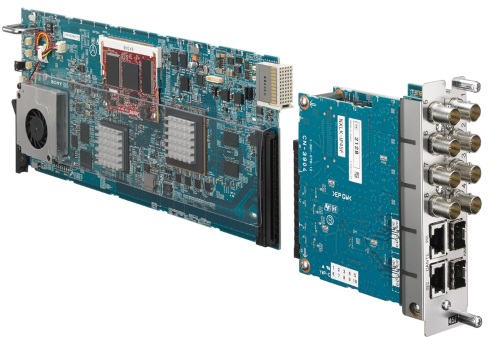
• The new NXLK-IP45F AV Multiplexer/Demultiplexer Board, available later this month, adds the ability to multiplex and de-multiplex video and audio over IP signals, ensuring both systems can be managed across the IP network
• The new NXL-IP4F SDI-IP Converter Unit, also available later this month, makes it easy to integrate any 4K or HD standalone source or destination with an IP-based production system

Live broadcasters of all sizes are implementing Live Production over IP to enjoy increased efficiency, reliability and scalability, with reduced system costs. At NAB Sony is sharing details of how it is delivering 4K over IP for a range of customers including:

• BBC Studioworks (UK): Sony is delivering 4K over IP in the BBC’s refurbished Television Centre studios in London
• TV Globo (Brazil): broadcasted live “Carnival in Rio’ with Sony 4K IP OB truck. 4K HDR and HD SDR simultaneous production was successfully operated by “SR Live for HDR’ solution.
• Sky Perfect JSAT Corporation (Japan): 4K IP routing system is at work to transmit and monitor 4K videos for broadcast in IP
• China Central Television (CCTV) (China): Sony will deliver all core components of IP live system to CCTV’s first 4K IP OB truck in June, 2017 for its technological researches and gaining experiences of UHD TV production.
• Zhejiang Radio & TV Group (China): has selected a Sony to build a 4K IP OB truck for live broadcast in 4K and HDR. The signing ceremony held in March, 2018
• China Digital Culture Group (China): has purchased a Sony 4K IP OB Truck that will hit the road in August, 2017 and it is used for live theatrical play and entertainment event broadcast.
• 4K Garden (China): the major 4K content services platform has purchased 4K IP OB Truck in China from Sony to deliver exciting live contents in 4K. The truck will be ready before August 2017.

“The past year since NAB 2016 has been hallmarked by three things: cooperation and open innovation between vendors across the Live over IP; an industry-wide push to undertake training and adopt skills readiness for IP; and the commitment of major broadcasters to invest in IP as they look to the next generation of live content experiences,’ says Norbert Paquet, strategic marketing manager at Sony Professional Solutions Europe. “We’re proud to be an active party within a number of standards bodies all working to ensure a range of compatible cameras, switchers, servers, computer graphics, display devices and backbones are ready for broadcasters today as they invest in the open, innovative production facilities of tomorrow.’

For more information on Sony’s IP Live Production System please visit the Sony website.

Sony expands HDR production capabilities for its professional products

Sony is expanding the HDR capabilities of many of its professional products, to meet the growing requirements for HDR content in every production application. The new enhancements deliver HD HDR Live broadcasting and Instant HDR workflow in products ranging from live camera system, servers to monitors to camcorders with updating software or firmware accordingly. High Dynamic Range adds increased realism to moving images and makes the viewing experience significantly more immersive. Broadcasters, live event producers and online content creators all have specific HDR production requirements, and the expansion of Sony’s HDR production capabilities offers a wide range of benefits.

HD HDR Live broadcasting
Sony has already offered full range of 4K HDR production system from movies and TV drama where reality and details are priorities, to also for live broadcasting where Sony has already established SR Live for HDR workflow, a straightforward system enabling an efficient workflow for simultaneous production of 4K HDR and HD SDR.

In July 2016, the International Telecommunication Union published ITU-R HDR-TV Recommendation, BT.2100-0. The HDR broadcast standard presents two options for producing HDR image – Perceptual Quantization (PQ) and Hybrid Log-Gamma (HLG) – and opens the way towards wider adoption of HDR broadcasting.

With the momentum, Sony hear lots of customer voices demanding for capabilities to do HDR production in HD especially from areas where migration from HD to 4K may still need some time.
Sony now provides HD HDR capable solution for broadcasters in the areas of:

Workflow
SR Live for HDR can support HD HDR- based simultaneous production of HD HDR and HD SDR in the same method as for 4K HDR. In the SR Live for HDR workflow, the camera’s output signal is converted into [S-Log3, BT.2020, HD HDR] as an intermediate format for production processes.

Once the image has been produced, Sony’s HDRC-4000, HDR production converter unit is required to convert it to an appropriate HDR-capable transmission format, such as standardised HLG or PQ. The HDRC-4000 utilises original algorithms, including built-in AIR Matching (AIR refers to Artistic Intent Rendering), to accurately reproduce the image quality and colouring determined during S-Log3 production – regardless of the transmission format used.

The SR Live for HDR production environment can include a multiplicity of subject types, devices, formats, and vendors. The system is capable of delivering high-quality content since images are produced using the S-Log3 format and converted into desired broadcast and other distribution formats.

Acquisition
The following system cameras will all support S-Log3 and BT.2020 for SR Live for HDR and will add HD HDR capability by firmware upgrade:
• HDC-4800 camera system
• HDC-4300 camera system
• HDC-P43 camera system

For HDC-2500, HKCU-2040, 4K HDR processor board provides 4K and HD HDR capability on the HD image sensor equipped the camera.

Recording and replay
PWS-4500, 4K live server – supports HD S-Log3, HD HLG and 4K/HD PQ with software update v2.3.

Monitoring
The BVM-E171, HD OLED master monitor will support HDR through a new HDR monitoring license, BVML-HE171. The license gives users an option for implementing HDR according to their production needs and budget limits. Sony’s BVM-X300 and PVM-X550 are already HDR-ready for any resolution up to 4K, and now the addition of HDR to the BVM-E171 brings HD HDR monitoring capabilities to new users including OB vans where space is limited.

Instant HDR Workflow
As the expanding HDR needs, internet video platforms or professionals producing corporate video or event content are paying attention to added-value of HDR. Those production prioritise less time to delivery, however no compromise for imaging expression and quality of contents. To meet the demand, Sony now offers HDR capability on entry-level handheld XDCAM camcorders, PXW-FS5 and PXW-Z150 supporting HLG recording function for easy and instant file-based workflows but achieving quality of HDR. This workflow is very simple enabling shooting, editing and viewing HDR contents in HLG, without the need of colour grading.

Camcorders
Sony’s PXW-FS5 and PXW-Z150 will also receive expanded HDR capabilities through software update. For the FS5, HLG will be supported, in addition to S-Log3. HLG mode can be quickly set-up through an option newly added on picture profile. On the PXW-Z150, HLG will also be supported.

Viewing tool
Catalyst Browse – Sony’s viewing and logging tool offering streamlined media management will now also support HLG, allowing viewers to view HDR content easily.

Sony continues to enhance HDR solution in every production by innovative ideas and technology with deep expertise.
*¹PXW-FS5, PXW-Z150 ; 4K: XAVC 4:2:0 8-bits, HD: XAVC 4:2:2 10-bits

HD HDR Live Broadcasting
• HDC-4800 camera system firmware upgrade for HD HDR capability will be available in summer 2017.
• HDC-4300 camera system firmware upgrade for HD HDR capability will be available in spring 2017.
• HDC-P43 camera system firmware upgrade for HD HDR capability will be available in spring 2017.
• PXW-4500 software update V2.3 will be available in June 2017.
• BVML-HE171, HDR monitoring license for BVM-E171 and software update 1.1 on BVM-E171 to support HD HDR capability will be available in August 2017.
Instant HDR Workflow
• PXW-FS5 software update V4.0 will be available in July 2017.
• PXW-Z150 software update V2.0 will be available in July 2017.
• Catalyst Browse HLG support is now available.

For more information visit the Sony website.

Sony FS7 for NBC Universal campaign

GIANT Films’ Karien Cherry recently directed NBC Universal’s new campaign for the South African market. Made up of four standalone 60 second spots, each featuring an ordinary South African’s extraordinary story, the campaign is held together by the tagline ‘100% Character Uncovered.’

The campaign offers an authentic glimpse into characters that have managed to (re)write their own stories, hence the tagline which precedes every spot/story in bold lettering: 100% Character Uncovered. With NBC Universal utilising their in-house advertising agency, and this particular brief originating from their London headquarters, this meant that the majority of the job had to be facilitated remotely between South Africa and the UK.

While the concept itself originated within the agency, the execution was a hugely collaborative process. Cherry spent time with each character, alongside them in their daily lives where she interviewed them and thereafter transcribed the interviews, editing together the voiceover scripts using their own words. “I then presented the scripts with accompanying visual scenes and mood boards to the agency, and went from there,” she expands.

With each spot realised through a documentary approach, the campaign exhibits an honest feel throughout, “balancing spontaneous, real-life sensibility with beautifully composed, cinematic visuals,” explains Cherry. “It was clear that a documentary approach would allow our characters the space and time to reveal themselves to us. We worked around our characters’ schedules and the dramas of their real lives, and accessed spaces they were familiar with,” comments Cherry. In order to enhance the desired realistic and spontaneous feel, the campaign was shot handheld and relied on mostly natural lighting, “which allowed us to move quickly and have a less intrusive presence,” Cherry explains. “I go into a shoot of this nature knowing that, if I’m lucky, a part of our day will turn out completely differently to what I had planned. Being willing and able to embrace a spontaneous moment on set could offer up the truth of that moment in a way that could never have been scripted – and that’s the magic of cinema. Both you and your gear need to be flexible enough to change course at the drop of a hat.”

Apart from the underwater footage featured in one of the spots, which was shot on the Red Dragon, DOP Pierre De Villiers shot the campaign on the Sony FS7 using a set of Zeiss Super Speed primes that enabled shooting in low light conditions. “The FS7 offers great ergonomics, allowing long hours of handheld work, and is a good size for documentary shooting where you often need to access small spaces. Combined with its image quality and low light capabilities, it offers a huge amount of value in this budget range,” says Cherry.

Sony Professional at Cabsat 2017

AT CABSAT 2017, Sony Professional Solutions will showcase a range of next generation media and broadcast solutions through their exhibiting partners – AMT, FABT and UBMS. The company aims to demonstrate a variety of solutions to redefine content production, delivery and overall workflow in an ever-demanding broadcast industry.

CABSAT visitors will have the opportunity to engage with the Sony HDC-4800 and Sony HDC-4300 cameras renowned for their incredible 4K, HD as well as Ultra-Slow Motion and Super-Slow motion capabilities. Furthermore, they will also get to experience the Sony PXW-Z450 – the world’s first 4K shoulder-mount XDCAM camcorder engineered for exceptional weight balance and low power consumption alongside exceptional networking features.

For media and broadcast professionals looking for a low-cost production unit without compromising on quality, the Full HD handheld camcorder HXR-NX5R, the multi-camera live producer MCX-500 and remote controller RM-30BP will all be on display at the event working together to illustrate the elite production quality that can be generated from three inter-connected devices.

“Our primary goal is to engineer the absolute best media and broadcast solutions for our partners and customers given the demands of the market,’ said Peter Kyriakos, head of Marketing, Sony Professional Solutions. “With the rising consumption patterns across the region combined with a consumer’s desire for content of the highest quality, it is evident that the solutions we provide to media and broadcast industry need to focus not just on the quality of video and imaging, but the entire workflow process be it recorded or live. Furthermore, one of our mandates is to provide solutions that lower production costs without compromising quality of the final output.’

Among the solutions showcased with partners, a key product highlight from Sony Professional Solutions is its next-generation media asset management solution – Media Backbone NavigatorX. It provides fast, intuitive access to assets in any format, any location, on any device and works seamlessly with today’s leading non-linear editors, allowing direct access to key assets from within the applications and an easy, no-hassle way to archive finished projects.

Furthermore, visitors will also have the unique opportunity to experience the highly reliable Optical Disc Archive System.

Hero solutions at CABSAT 2017:

Sony HDC 4800
4K 8x Super Motion Camera System with Replay Server Function, built for sports live production. The Sony HDC-4800 camera system combines 4K resolution with 8x Ultra Slo mo capabilities. This power is combined with dynamic cut-out and zoom capabilities for live sports and event production. Furthermore, this camera is complemented by the BPU-4800 combination baseband processor unit/replay server that enables continuous recording of Ultra High Frame rate 4K (8x super motion) content up to 4 hours.

Sony HDC 4300
The HDC-4300 4K/HD camera system is aimed at broadcasters who want a solid option that combines everyday HD requirements with future-proof 4K acquisition. To that end, the camera can output HD and 4K simultaneously, and it features the ability to create HD cut-outs from a larger 4K image in real time. The Sony HDC-4300 has a 2/3-inch camera mount that works directly with B4 lenses. The B4-mount supports both HD and 4K lenses enabling the user to capture sports scenes with a deep depth of field.

Sony PXW-Z450
The Sony PXW-Z450 is the world’s first 4K XDCAM shoulder camcorder with 2/3-type image sensor. Capable of capturing superb 4K (3840 x 2160) picture quality from new 2/3-type Exmor R™ CMOS sensor, the camcorder possesses exceptional weight balance and low power consumption alongside excellent networking features. The camcorder also supports multi-format recording for a variety of applications, allowing users to shoot at robust 1080p HD or 4K when needed.

Sony Optical Disc Archive
Optical Disc Archive system adopts a new, high-capacity optical media. Rated with a 100 year shelf life, the Sony Optical Disc doubles the capacity of a single cartridge. It also introduces an 8-channel optical drive unit doubling read/write speeds over the previous generation, accommodating 4K video in real time and provides backward compatibility.

Sony HXR-NX5R / MCX-500/ RM-30 BP Live Production Solution
The HXR-NX5R / MCX-500/ RM-30BP Live Production Solution is designed to make it easy for a single camera operator to offer customers a high quality, multi-camera live production service, including live streaming and recording. This innovative, affordable new switcher is easy to learn, simple to operate and yet fully featured with all the functions and input/outputs required by small to medium live productions.

Media Navigator X
The Media Backbone Navigator X, the scalable, flexible and affordable asset management solution, offering new features to deliver easier, quicker and more efficient asset and workflow management. It offers support for virtually any file format, connects with all major non¬linear editing systems (NLEs), and exports media to the cloud, social media or any location on your network or local machine. Users will be able to manage content assets in a range of formats, with flexible feature options for production, archiving and workflow automation.

Sony expands FS series with new FS7 II camcorder

Sony is expanding its FS series super 35mm professional family with the addition of the new FS7 II camcorder. The new model builds on the original FS7’s strengths by adding advanced features including Electronic Variable ND technology, a lever lock type E-mount, and a new mechanical design for faster and easier set-up. The new FS7 II camcorder also supports Sony’s α Mount System, which includes more than 70 lenses.

Since its introduction in 2014, the FS7 has become one of the most widely used cameras in a range of production applications, and the original model remains in the Sony line-up. The new FS7 II now gives creative professionals a broader range of creative tools, with new features all based on end user feedback.

The new FS7 II camcorder is designed for long-form shooting and production applications, especially documentaries and independent filmmaking.

Electronic Variable ND Technology

The camcorder’s Electronic Variable ND Filter system, combined with its large sensor, delivers greater exposure control, with the option of preset or variable operation modes. Variable ND mode (clear + 2~7 stop range, in seamless transition steps up to 1/128) allows the user to vary the density of the ND filter during shooting and to transition seamlessly between steps.

The camera’s expanded ND operations also enables fine exposure adjustment by relegating iris to set depth of field, prevents soft focus caused by diffraction, and prevents color shift caused by stacking multiple external ND filters.

The camera can compensate for exposure fluctuation caused by iris control while adjusting the depth of field. Users can adjust exposure while keeping the same bokeh in changing shooting or lighting environments.

Preset mode lets users assign three ND settings to the filter turret, useful in selecting the most appropriate filtration range for changing light conditions, for example. Auto ND mode is also available allowing exposure to stay at a fixed level while adjusting the depth of field with iris control.

E-mount (Lever Lock type) for professional shooting

The FS7 II’s new E-mount (lever lock type) gives users the ability to change lenses by rotating the locking collar rather than the lens itself, which means that in most cases lens support rigs don’t need to be removed, saves time during a production.

Mechanical Design Enhancements

Like its counterparts in the FS Series family; the FS7 and FS5 models – the new FS7 II features several design and ergonomic updates for comfortable and functional use in the field.

The FS7 II’s “tool-less’ mechanical design lets users make on-the-fly changes to the camera’s set-up and operation. For example, no tools are required to adjust the Smart Grip or viewfinder positions.

The viewfinder eyepiece provides a third stabilizing contact point when shooting handheld. Durable square section rods and lever-clamps on the LCD and camera body provide simple and precise front-to-back VF adjustment while retaining level positioning.

New Sony 18-110mm Sony G lens

Sony is also introducing a new E-mount, Super 35mm lens specifically designed for documentary and motion picture production.

The new lens, model E PZ 18-110mm F4 G OSS, covers Super35mm and APSC sensors. Compact and lightweight – 2.4 lbs (1.1Kg) — with an 18 to 110 focal range (6x zoom) it uses a new fully mechanical/servo zoom switchable system, capable of snap zooms and entirely devoid of lag. The focal range is optimized for Super 35 and APS-C sensors.

The lens is compatible with Sony Mount System cameras, including the α7 series interchangeable-lens cameras and professional Super 35mm 4K camcorders like Sony’s FS7 or FS5. Although perfectly suited for still image taking, filmmakers will fully appreciate the lens’ extended creative capabilities for shooting motion images.

The lens benefits from Sony’s Smooth Motion Optics (SMO) design, which is developed to optimize performance during motion image capture. This lens design eliminates undesirable characteristics and artifacts that do not affect still image taking, but can severely limit a lens’ usefulness for motion shooting, such as:

• Ramping: F stop gradually diminishes when zooming tight.
• Not holding focus while zooming.
• Breathing (angle of view variation while focusing).
• Optical axis shift (image moves in the frame while zooming).

*Due to a change in the SELP18110G specifications it is no longer compatible with the SEL14TC and SEL20TC teleconverters.

XQD Cards

The FS7 II supports the XQD memory card format, designed for capturing and transferring high-bandwidth, high resolution files. Sony’s newest XQD card, QD-G256E – with an industry first 256 GB capacity – enables recording time of approximately 45 minutes at 4K 60P and 3.5 hours at 2K 30P. Combined with a read speed of 440MB/s and write speed 400MB/s, users can shoot for longer without needing to change media cards.

The FS7 II is planned to be available in January 2017. For more information visit the product page on the Sony website.

- Advertisement -
- Advertisement -
- Advertisement -

Pin It on Pinterest