Home Authors Posts by Sony Press

Sony Press

98 POSTS 0 JOBS
Sony is a leading manufacturer of audio, video, communications, and information technology products for the consumer and professional markets. Its motion picture, television, computer entertainment, music and online businesses make Sony one of the most comprehensive entertainment and technology companies in the world.

SXSW 2018: Showcasing new experiences enabled by Sony’s cutting-edge technologies

Beginning on Saturday, March 10 at the SXSW Interactive Festival, which centers around new technologies and creative business ideas, Sony will introduce various ongoing projects, incorporating cutting-edge technologies and its latest prototypes. At this exhibit, titled the “WOW Studio”, visitors are invited to enjoy and experience Sony’s playful and interactive exhibits. Sony is committed to developing products and technologies that exist at the closest point of contact with its customers around the world and delivering kando (experiences that resonate at an emotional level) by combining those products and technologies with content.

Visitors to the festival will be able to try out a variety of Sony’s ongoing projects, incorporating its cutting-edge technologies and latest prototypes, alongside the latest in Sony’s entertainment content. Exhibits include but are not limited to the following: https://www.sony.net/brand/event/sxsw/

・A(i)R Hockey
Enjoy a new AR (Augmented Reality) experience that combines Sony’s high-speed vision sensors (IMX382) (https://www.sony.net/SonyInfo/News/Press/201705/17-051E/index.html), which boasts blazing 1,000 frames-per-second high-speed tracking of objects, unique predictive algorithms, and haptics technology. This exhibit is an air hockey game that tracks a quick-moving puck and paddle in real-time as guests play and project various images onto them.

・Hero Generator
Participants can experience Sony’s unique Free-Viewpoint Visual Technology in a space equipped with multiple cameras set up in 360 degrees around them. With this technology, images of the spaces between cameras are automatically synthesized, creating a moving 3D avatar of each visitor that can be viewed from all directions. At SXSW, guests will be able to create avatars of themselves and star as the protagonist of their own short film. These movies can be rendered and shared to a smartphone for later viewing. Guests will feel as if they have been transported to a real-life VR movie shoot.

・Interactive CUBE
Interactive CUBE is an entertainment experience that invigorates the senses by incorporating projected images, sounds, lights, and vibrations onto a giant cube. By forming two screens, one of which is transparent, into the shape of a cube and projecting images onto them, guests inside the cube will feel as if the images are floating in midair. Multiple cubes have been set up for this display, and layouts will be periodically changed to allow visitors to enjoy a variety of interactive games. Furthermore, through a collaboration with the creative agency SIX, messages in music will be visualized and manipulated by a DJ for a musical wordplay experience guests will be sure to enjoy.

・VR Soccer
Jointly developed by Sony Music Communications Inc. and the VR content producer Hashilus, this attraction showcases a new type of interactive VR soccer.

The demo on display will have a player assume the role of a legendary striker facing off versus a goalie in a penalty kick shootout. If the player’s shot is timed just right, it will unleash a strike that travels up to 50 times faster than normal. Visitors can enjoy outsmarting the goalie in this ultimate soccer experience, only made possible by utilizing VR technologies. Sensors reproduce the ball’s direction and speed in the VR space for an experience that is truly immersive.

・Superception   https://www.sonycsl.co.jp/tokyo/4759/
Superception (Super + perception) is a research framework that uses computer technologies to intervene in the process of human perception and to connect multiple senses together in order to alter and expand the limits of perception. Continuing on from last year’s event, this year’s exhibit will feature the “Head Light” system, which sees the visitor exploring the sensory world of a non-human creature through personal projection mapping.

An introduction to Superception: https://www.sonycsl.co.jp/tokyo/3918/

・3D Creator
Sony Mobile’s 3D Creator on Xperia™ smartphones brings the thrill of 3D creation to each visitor. A robotic arm wielding an Xperia XZ1 creates a complete 3D model of the guest’s head.

Guests will receive a video they can view and share on their smartphones to commemorate the experience.

・Acoustic Vessel “Odyssey”
Acoustic Vessel “Odyssey” allows visitors to immerse themselves in music, enabled by a one-of-a-kind combination of music and Sony’s spatial audio technology that creates a space where sounds are free to move around. Using 576 speakers controlled by Sony’s sound field synthesis technology, visitors will be taken on an unforgettable audio voyage through time and space. Enveloped in a dynamic wave of sound, guests will undertake an epic journey spanning cityscapes and lush forests, the depths of the ocean, and even the outer reaches of the solar system. The audio is accompanied by a pioneering light installation.

In addition to the above, Sony will also showcase its efforts in the field of AI x Robotics, such as the entertainment robot “aibo,” the communication robot “Xperia Hello!” and the Sony Innovation Fund.

 

Buitenkant (The Outside) was shot on the Sony FS-7 camera

The subject of homelessness is explored in Buitenkant (The Outside) in a raw feel, moving footage shooting style using the Sony FS-7 camera, shares filmmaker William Nicholson.

“The Sony FS-7 camera is a pretty versatile affordable camera that works for a doccie-type look and feel. We put some primes on there but nothing fancy – just DSLR ones,” Nicholson says.

Nicholson and his team worked swiftly to complete most of the shots on the first day, with only a few additional shots taken the following day. “Pierre De Villiers (the cinematographer) and I designed the film to be something we could shoot with a roaming handheld camera and only natural light. So we had only two people – Pierre and his assistant Fuad Casker – handling the whole camera, lighting and grips department! We played to the strengths of this, going for a look and feel that is raw, immediate and immersive.”

The 11-minute film has often been mistaken for a documentary, which Nicholson credits to the stripped down, immersive approach to the story and character. “It was very scary! We committed creatively to having virtually no dialogue, no music, as well as an almost-real-time approach to editing.”

Chris Bornman was responsible for the sound, while grading and online was done by the Priest Post team (Francesca Verveckken, Amelia Cohen and Jessica Cash).


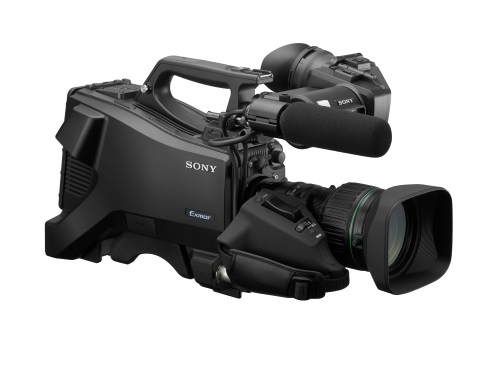
Sony enhances entry range of Full HD camera system supporting 4K and HDR production

Sony is introducing an accessible entry level camera system for 4K and HDR-ready
studio and live production with the combination of the latest HXC-FB80 portable
camera and HXCU-FB80 camera control unit (CCU). Based on a 3G-SDI platform with
1080/50p capabilities, the new system is well-suited for applications in the broadcast,
sports, conferences, events, faith, education and government sectors, where
production professionals need high-quality HD solution with migration path to 4K and
HDR productions.

Since its debut in 2015, the current HXC series has been adopted worldwide for major
broadcast stations, OB vans and educational institutes. With inputs from these
customer experiences, Sony enhances its full HD system camera to support 4K
upscale and HD HDR production in order to widen its applications. The HXC-FB80 has
the same choice of configurations as its predecessors – the HXC-FB80H (camera body
only), HXC-FB80K (with 2/3′ HD Lens, Portable viewfinder and Microphone) and HXC-
FB80S (with 2/3′ HD Lens, Large viewfinder).

The HXC-FB80 expands Sony’s HXC product line-up and shares many common
features with the current HXC-FB75. The new camera continues to provide signal-to-
noise ratio at -60dB with high sensitivity of F13 at 50Hz – ideal for low-light shooting –
and a variety of camera painting and processing capabilities.

The CCU upscales HD content to 4K (3840×2160) and provides a 12G-SDI output in
addition to a quad-Link 3G-SDI. An HD HDR output supporting Hybrid Log-Gamma
(HLG) will be available in 2018 summer through a firmware upgrade.

The camera has three 2/3-inch type CMOS Exmor image sensors and provides 50Hz
progressive operation at 1080×1920 between the camera head and CCU using a 3G
Platform. The camera also supports 23.98PsF shooting for productions requiring a
film-look, including interviews and news-magazine-type programmes along with 25PsF
shooting.

Further, the ND filter can be remotely controlled by the newly adopted filter servo
motor in the camera head in addition to the electrical CC filter.

Notably, the potential distance between the camera head and CCU is extended up to
600m, while keeping the 10km extension by single mode fibre cable with local power
supply. Together with the HXC-P70, the cable length can be extended up to 1,000m
with the supplied power from the new CCU. In addition to a Neutrik connector
interface, a LEMO connector interface is also available for the camera head and CCU.

The HXC-FB80 system can be controlled not only by the CCU front panel operation,
but also RCP remote operation including PC-RCP (HZC-RCP5) and Master Setup Unit
(MSU) system for multi-camera application, which ensures scalability of its system.

The HXC-FB80 camera and HXCU-FB80 camera control unit are planned to be
available in January 2018.

Sony continues to invest in interoperability with new IP Live SMPTE ST 2110 compliant products

Sony has reinforced its commitment to IP Live interoperability by announcing it will support two key industry standards: one regarding SMPTE ST 2110 media transport over IP, and a second regarding AMWA NMOS Device Discovery and Registration. The first compliant products, which form part of the complete Sony IP Live Production System, were on show at IBC 2017 and will be available to customers from April 2018. The SMPTE ST 2110 standard is currently in final draft.

“Broadcasters around the world are increasingly embracing IP for its proven flexibility. Sony is dedicated to contributing to and promoting standardisation to make sure our customers can be confident all the technology in their IP Live workflows will work seamlessly together,’ said Norbert Paquet, head of Product Management at Sony Professional Europe. “That’s why we’re announcing that we already have SMPTE ST 2110 compliant products in the pipeline, and are working closely with AMWA to support the NMOS IS-04 Device Discovery and Registration API, and NMOS-IS-05 Connection Management API. This all means our customers can truly build systems that are ready today and open for tomorrow.”

A technological exhibition of Audio Intercom for a brand new Camera Control Unit (CCU) currently under development was demonstrated for the first time at IBC 2017. This exhibition will support SMPTE ST 2110 in HD with IP video transmission and return. The new CCU will be compatible with HDC and HSC camera series. It will support a wide range of formats, including 1080P, and a versatile selection of legacy inputs and outputs including 3G-SDI and 1.5G –SDI. The CCU is highly compact, with a 1.5 rack mount size, making it ideal for space-limited production areas. This new CCU is being developed with a target of being available from April 2018.

The Sony XVS-8000, XVS-7000 and XVS-6000 4K/IP Ready video switchers that sit at the heart of IP Live production operations will support SMPTE ST 2110 in HD with a v2.6 firmware update. The XVS series switchers deliver flexibility with a mix of SDI and IP, and highly configurable control panels to suit different types of operation. Combined with the resource-sharing capabilities of the XVS series, this will enable customers to build more flexible production architectures. The firmware update will be available to customers from April 2018.

Sony enhances professional monitors to support 4K and HDR production

At IBC 2017, Sony announced new firmware updates to its professional monitors. The
new updates achieve wider dynamic range and a wider colour gamut, ensuring that
they are ready for 4K and High Dynamic Range (HDR) productions.

Drawing on decades of broadcast and live production expertise, Sony’s range of
professional monitors is designed to assist professional content creatives to work
more efficiently and realise maximum returns on any production budget. With the
rapid increase in 4K and HDR cinematography and broadcast, the urgent need for
equivalent picture evaluation equipment drives Sony to enhance its leading
professional monitors to meet these industry demands.

The latest firmware updates applies to High Brightness Mode of PVM-X550 4K
TRIMASTER EL™ OLED picture monitor, and to version 2.0 for PVM-A series
TRIMASTER EL™ OLED Full HD picture monitor (PVM-A250, PVM-A170) and LMD-A
series LCD Full HD picture monitors (LMD-A240, LMD-A220, LMD-A170). With the
enhancement, the monitors are capable of achieving superb colour reproduction
utilizing as a reference monitor for Sony’s award-winning 4K TRIMASTER EL™ OLED
master monitor, BVM-X300.

High Brightness Mode for PVM-X550

Since its debut in 2016, the PVM-X550 delivers the reliable image reproduction and
picture quality, making it an ideal choice for motion picture and live productions in 4K.
The new firmware provides existing PVM-X550 users with the High Brightness Mode
that delivers wider dynamic range in order to reproduce more realistic colours.
Optimised for 4K colour grading, the new mode achieves over 180% in HDR Peak
Luminance as compared to the current PVM-X550. Notably, the accuracy of brightness
and saturation is carefully controlled by the in-built signal processing that provides a
12-bit output signal, specifically designed by Sony for OLED and used in its BVM series
and the PVM-X550, ensuring stunning black reproduction. High Brightness Mode also
applies to the unique quad view mode. It enables customised individual settings of
Electro-Optical Transfer Functions (EOTF), colour gamut with the wider HDR
brightness on each quadrant.

Version 2.0 Firmware Update for PVM-A and LMD-A series

Slim, lightweight and robust, the PVM-A and LMD-A series are cost-efficient and are
ideal for a variety of applications including 4K production, shopping channels, field and
graphics applications, as well as OB trucks.

The Version 2.0 firmware update equips the high-grade picture monitors with a wider
colour gamut for accurate colour reproduction for the constantly evolving demands in
4K, cinematography and graphics applications. The update supports the ITU-R
BT.2020 colour space and accepts one of Quad-link 2SI 3G-SDI signals. It also offers
DCI-P3, S-Gamut3 / S-Gamut3.cine and Adobe RGB settings to utilise its wide colour
gamut alongside proper EOTFs such as 2.6 gamma alongside S-Log3 (SDR) and S-
Log2 (SDR).

In addition, the Version 2.0 update enhanced field application features with four new
camera shooting/live events support functions. They include the sync-free side-by-
side where users can monitor two pictures without synchronisation; false colour that
checks the exposure level of a camera at a glance from a distance; audio muting that
assist users to start shooting quickly; and flexible area markers anywhere on the
screen for unique screen layout such as instantly differentiate between a product and
its commercial data for shopping channels.

The firmware updates will be available from the following dates:

• High Brightness Mode for PVM-X550 First quarter of 2018 onwards
• Version 2.0 for PVM-A and LMD-A series September 2017 onwards

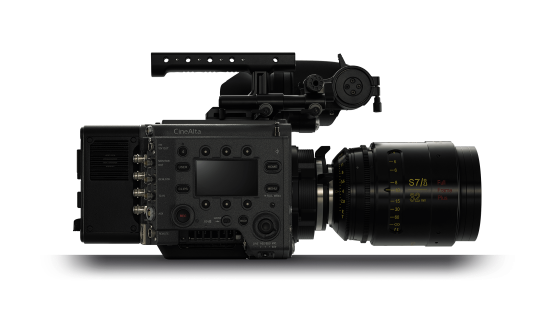
Sony Professional unveils VENICE

Sony Professional has introduced VENICE – its first full-frame digital motion picture camera system. VENICE is the next generation of Sony’s CineAlta camera system, designed to expand the filmmaker’s creative freedom through large-format, full frame image capture of filmic imagery with natural skin tones and expressive dark areas.

VENICE was designed through close collaboration and careful research with the creative community, fulfilling the various requirements from filmmakers and production professionals.

Full frame sensor and wide range of lens compatibility to visualise the image
of filmmakers

The camera combines a newly developed 36x24mm full frame sensor and compatibility with a wide range of lenses, including anamorphic, Super 35mm and full frame PL mount for a greater range of expressive freedom with shallow depth of field. The lens mount can also be changed to handle E-mount lenses for shooting situations that require smaller, lighter, wider and more characteristic lenses. User-selectable areas of the image sensor allow shooting in Super 35 mm 4 – perf. Future firmware upgrades are planned to allow the camera to handle 36mm wide 6K resolution. Fast image scan technology minimizes “Jello’ effects.

New colour management system and established workflow for flexible post-production

A new colour management system and wide colour gamut gives users more control and greater freedom to work with images during grading and post-production. VENICE also has more than 15 stops of latitude to handle challenging lighting situations from low-light to harsh sunlight.

VENICE achieves high quality and efficient file-based production through Sony’s established 16-bit RAW/X-OCN and XAVC workflows using the portable memory recorder AXS-R7. VENICE is also compatible with current and upcoming hardware accessories for CineAlta cameras (DVF-EL200 Full HD OLED Viewfinder, AXS-R7 recorder, AXS-CR1 and AR1 card reader, AXS and SxS memory cards).

Intuitive design and refined functionality to support smooth on-site
operation

VENICE has a fully modular and intuitive design with refined functionality to support smooth and efficient on-site operation. It is the film industry’s first camera with a built-in 8-stage glass ND filter system, enabling to reduce the replacement work of the external ND filter and make shooting progress efficient. The camera is designed for easy operation with an intuitive control panel placed on the left and right sides of the cameras. A 24 V power supply input/output and Lemo connector allow use of many standard camera accessories and make use in harsh environments easier.

License options for individual production requirements
With VENICE, Sony is giving users the option to customise their camera by enabling the features needed, matched to their individual production requirements. Optional licenses will be available in permanent, monthly and weekly durations to expand the camera’s capabilities with new features including 4K anamorphic and full frame, each sold separately.

The VENICE CineAlta digital motion picture camera system is scheduled to be available in February 2018.

The other format war

The introduction of HDR displays (HDR) is as big an advance, for the filmmaking and television industry, as the switch from black and white to colour.

The human eye is an incredible organ – in normal circumstances it has the ability to capture 10 – 14 stops of latitude (from dark to light), but because we have two of them and the eye reacts so quickly, our dynamic range in a single panorama can be as high as 20 – 24 stops.

This wide dynamic range is the reason why nothing can match the visual splendour of an early morning sunrise or moody sunset. Cameras have, for a long time, been able to capture these kinds of dynamic range, the problem is that it hasn’t been possible to display the true captured results – until now that is, thanks to the implementation of HDR (high dynamic range) displays.

Three years ago, 4K resolution video was being touted as the next big advancement in picture quality. All the major TV set manufacturers released new lines of 4K sets and in the following months, Over-The-Top (OTT) services like Netflix began offering 4K titles, sports networks began capturing and producing events in 4K, and pioneering pay-TV service providers began offering 4K selections in their Video-On-Demand (VOD) catalogues.

But 4K resolution is just one piece of a larger, more complex, next generation video standard called Ultra High Definition (UHD). The UHD Alliance is an industry body comprised of software developers, hardware manufacturers, content producers and pay-TV providers, that have defined a set of parameters for UHD that include but ultimately go beyond 4K resolution. Those parameters include high frame rate, wider colour gamut, deeper colour depth, and high dynamic range (HDR). In fact, HDR is the new, next major advancement in picture quality. While the TV set makers jumped in on offering higher resolution sets, content creators are now embracing the benefits of HDR as delivering a truly next generation video experience that in the right conditions is mind blowing. The introduction of HDR displays (HDR) is as big an advance, for the filmmaking and television industry, as the switch from black and white to colour! For the technically minded, a modern camera can capture about 12 stops. On a standard monitor that many stops look flat or clipped. An HDR display at 1 000 nits (nit = a unit of visible-light) intensity has about 14 stops with good contrast and no clipping. A 4 000 nit monitor can show about 20 stops.

Standards

As usual in the broadcast industry, there is a bit of a tussle going on about HDR production standard adoption. The Society of Motion Picture & Television Engineers (SMPTE) published their Perceptual Quantizer (PQ or SMPTE ST2084) standard in 2016. Prior to that the Consumer Technology Association issued the open standard HDR10 Media Profile which was very quickly adopted by a wide variety of companies, which include monitor and TV manufacturers such as Dell, LG, Samsung, Sharp, Sony, as well as Microsoft and Sony Interactive Entertainment, which support HDR10 on their PlayStation 4 and Xbox One S video game console platforms. HDR10 is also being supported by the UHD Alliance for UHD Premium, which apart from the TV and monitor manufacturers, is made up of partners such as DIRECTV, Netflix, Panasonic Corporation, Walt Disney Studios, 20th Century Fox and Warner Bros. Entertainment Premium and is currently leading the race as being the most widely accepted way of mastering, distributing and viewing HDR content.

Earlier this year Samsung and Amazon Video announced the release of HDR10 Plus, an open and royalty free standard that Amazon Video have adopted, offering more accurate frame by frame dynamic range adjustments. BBC and NHK jointly developed Hybrid Log-Gamma (HLG) which was very quickly adopted by YouTube and Freeview Play and is 100 per cent compatible with Standard Dynamic Range (SDR – normal HD and 4k). Technicolor and Philips jointly developed SL-HDR1, a clever algorithm set that allows for HDR rendering on HDR devices, and SDR rendering on SDR devices using a single layer video stream and finally, Dolby Laboratories developed an HDR format called Dolby Vision. Out of the many HDR systems currently available, Dolby Vision is probably the most well-known and perhaps more future proof, but it may not be the HDR standard with the most content. Like all the HDR formats Dolby Vision is a proprietary format and it requires you to have a HDR set that has a built-in Dolby Vision decoder. Dolby Vision supports a 12-bit colour depth (68 billion colours) and its compatible HDR TVs are four times brighter than most other current HDR sets and, is heading up the Ultra HD Blu-ray disc market and many streaming video services.

HDR Production

Creating HDR content relies heavily in the way scenes are lit, with increased contrast, broad range of colour and more importantly the ability to have both details in the depths of the shadows and specular spectral highlights. Capturing the full range of these means you need a camera that has the ability to shoot in a Log format, and record UHD. Many of the top brand camera manufactures have HDR cameras well nested in the market – including Arri’s Alexa and Amira family, the range of Sony CineAlta’s (F5, F55 and F65) as well as their FS range like the FS5, 7 and FS700. Of course, RED’s Epic and Dragon are well into it as is Blackmagic Design with their URSA and Cinema cameras. The sensors in these cameras all claim up to 15 stops of dynamic range which is getting closer to the dynamic range the eye can see.

Dedicated HDR post-production tools have emerged with the likes of Adobe Premier Pro and Avid Media Composer leading the field in consumer post-production.  The latest version of Adobe’s Premiere Pro CC has greater support for HDR video, as well as the Rec. 2020 colour space. There are extra Lumetri Color control panels for handling HDR footage and the application offers a HDR specular colour wheel. Adobe has said that with a supported external HD monitoring system, RAW camera formats alongside the Dolby Vision codec, can be edited and graded with much greater dynamic range than conventional video, by using the HDR controls.

SGO’s Mistika colour grading and post-production system, deployed on films like The Hobbit trilogy, also supports Dolby Vision. DaVinci Resolve from URSA manufacturer Blackmagic Design is another option. Due to its wide native camera file support, users can edit and grade directly from the wide dynamic range camera originals. FilmLight’s range of solutions all deliver HDR content. These include the FLIP image processor for on set checking of HDR camera capture, the Daylight system for dailies and transcoding, the Baselight colour grading system and Baselight Editions, which bring the Baselight toolset directly into the Avid Media Composer, Avid Symphony and Nuke pipelines.

Delivering UHD Premium HDR content to the home is still quite far away. Beyond the infrastructure upgrades needed in filming, mastering, and delivering a UHD HDR video, there’s the problem of legacy HD and UHD TV sets that don’t support HDR. But it is refreshing to find that HDR is one of those technologies and innovations that won’t need any heavy marketing for it to be accepted by the end user. Once you glance at a HDR TV screen you won’t need any convincing that images look much better, fresh and exciting. 3D was an amazing technological but short-lived fad, 4K and 8K definitely make things look crisper with more detail, but HDR images with higher latitude, larger colour gamut and higher contrast create more lifelike images, or put simply, makes things look WOW! The only question is, how long will it take before UHD Premium HDR becomes the norm?

Award-winning Potato Potahto shot on the Sony FS7

Director Shirley Frimpong-Manso is an award-winning Ghanaian director and CEO of Sparrow Productions alongside Ken Attoh. Their latest offering, Potato Potahto, is a vibrant, African romantic-comedy featuring Nigerian film actor, OC Ukeje (Tony) and Ghanaian actress, Joselyn Dumas (Lulu).

The film is set in Ghana which Frimpong-Manso says informed her choices in look and feel as well as cinematography: “I wanted a happy setting – colourful and alive – the costumes, music, locations, lighting and cinematography all embodied this look and feel,” she says.

Potato Potahto was shot in just two weeks on the Sony FS7 camera, which Frimpong-Manso says was selected for its high resolution images with good colour renditions. “We shot in 4k. This was important because I wanted the pictures crisp and enduring. Lighting, sound and the general tone had to be the same. Even though the topic of the film is divorce, I was determined the look and feel would have the opposite effect. So I went in for a yellowish hue depicting sunshine and promise. The set itself had to be alive so we chose one that had a story to tell on its own.”

Potato Potahto is a collaborative project between Swedish, French, British, Nigerian and Ghanaian film producers, with the aim of establishing global markets. “There is strength in numbers. You get different expertise coming together to work on one project which gives it legs for other opportunities,” affirms Frimpong-Manso.

Sony affirms their commitment to the South African market

In January 2015, the Sony Corporation announced that they would be closing down their local South Africa offices, opting for a distributor-based business model to service the South African market moving forward.

In an interview at Mediatech Africa 2017, managing director of Sony Middle East and Africa (MEA) Rob Sherman, explained the company’s decision to shut down its local office, stating that: “The consumer division – which is by far the larger business – felt that the market in the region was shrinking to a point where the cost of running a full-scale local operation could no longer be justified.”

Sherman opines that while he feels that the company’s decision was the correct move under the circumstances, the manner in which it was communicated created uncertainty regarding Sony Professional’s continued presence and availability in South Africa, which is a perception that he wishes to challenge moving forward.

“The South African market has always been important to Sony Professional because it is one of the more developed markets in the African region – particularly in the broadcast and AV areas,” Sharman states. As such, while the consumer division has committed themselves to a solely distributor-based business model that is centrally managed from Dubai, Sony Professional has retained certain key personnel in the country to provide customers with on-going support and customer care. “Sony Professional has not left the country,” Sherman emphatically states.

The MCX-500 multi-camera live producer 

Sony Professional decided to use Mediatech Africa 2017 to showcase the MCX-500 multi-camera live producer. The MCX-500 is an affordable, uniquely user-friendly and flexible production switcher that makes it simple for a single operator or small team to produce a broadcast quality live event. Multiple video inputs include professional 3G-SDI, HDMI, Composite Video, as well as dedicated DSK, which means that you can mix and match kit as needed for each production. The MCX-500 is ideal for a wide range of live and recorded applications from music concerts, private functions, educational seminars, corporate presentations, and at houses of worship.

The MCX-500 multi-camera live producer has all the specifications necessary to enable a professional producer to achieve optimal results, however, in the interests of servicing the end user, Sony has developed a mobile application, launched at Mediatech Africa 2017 as a world-first, which makes the technology accessible to a novice user. “With a 30-second demonstration of the application, you can turn anybody into a switcher expert” Sherman explains.

The nett result is that a user – be it a small to medium enterprise, a large corporation, religious organisation or institution of learning – can produce multi-camera productions that can be streamed live, recorded and or distributed, without needing to hire a professional crew.

“Moving forward, Sony South Africa will be a different company, one that will focus on services and that will be a part of the market rather than just being a supplier to the market.” Sherman concludes.

By Nicole Barnes

Sony in collaboration with IBM Research develops magnetic tape storage technology

Sony Corporation has announced that it has developed, in collaboration with IBM Research, located in Zurich, Switzerland, a magnetic tape storage technology with the industry’s highest*1 recording areal density for tape storage media, at 201 Gb/in2 (gigabits per square inch). This achievement was made possible by bringing together Sony’s new magnetic tape technology employing lubricant with IBM Research – Zurich’s newly developed write/read heads, advanced servo control technologies and innovative signal-processing algorithms. The recording areal density of 201 Gb/in2 is approximately 20x greater than conventional*2 magnetic tape storage media (9.6 Gb/in2). The resulting technology can support high-capacity storage of approximately 330 terabytes (TB)*3 per data cartridge, whereas conventional technology can only handle 15 TB per data cartridge.

These development results were jointly announced with IBM Research – Zurich on Wednesday, 2 August 2017 at The 28th Magnetic Recording Conference (TMRC 2017) at the Tsukuba International Conference Center in Tsukuba, Japan.

In recent years, developments in the Internet of Things, the popularisation of cloud services, and the leveraging of big data have helped to create new markets, resulting in increased demand for high-capacity data storage media. Moreover, the importance of data storage is being reaffirmed in terms of ensuring reliable recovery of data in information systems such as databases and servers, as well as safe management of information. It is against this background that magnetic tape shows great potential as a storage media thanks to its various strengths, including its capacity for storing data over long periods of time, low power consumption, low cost, and space saving capabilities.

Closing the gap (spacing) between the magnetic tape and magnetic head is critical to achieving high-density recording capabilities for tape storage media. Reduced spacing entails increased friction at contact points between the tape surface and magnetic head, however, friction must be reduced and the tape surface must smoothly run along the magnetic head to enable high-capacity writing and reading at a high speed. Upon establishing this new magnetic tape technology, Sony developed a lubricant that is applied between the tape surface and magnetic head. This low-friction lubricant not only reduces friction between the tape surface and magnetic head, but also features a highly durable bond between the lubricant and magnetic layer of the tape.

Furthermore, this new technology made it possible to create a nano-grained magnetic layer*4 with microscopic magnetic particles in extended tape length. Conventionally, a common problem is non-uniform crystalline orientation and disparities in grain sizes due to impurity gas generated from the surface of equipment during magnetic layer formation. A newly developed processing technology that reduces impurity gas is used in conjunction with sputter deposition,*5 a method of forming a nano-grained magnetic layer with an average grain size of 7 nm, thereby resulting in extended tape length. With these advancements in processing technology, the foundation has been laid for production of tape storage cartridges that can hold more than 1000 metres of tape.

Combining this magnetic tape technology together with IBM Research Zurich’s write and read heads, advanced servo control technologies and innovative signal-processing algorithms, Sony has achieved the industry’s highest*1 recording areal density of 201 Gb/in2 — about 20x greater than the current*2 mainstream coated magnetic tape media for data storage.

Sony will build on this new development to forge ahead with development of magnetic tape technologies, aiming to commercialise next-generation tape storage media capable of high-capacity data recording and achieve even higher recording density.

*1 On magnetic tapes. As of announcement on 2 August 2017.
*2 When compared with the IBM TS1155 tape drive, JD cartridge (non-compressed), the newest enterprise-class tape system.
*3 Assuming the same format overheads as the TS1155 format and taking into account the 6.4 per cent increase in tape length enabled by the thinner demo tape. A TS1155 JD cartridge, can hold 15 TB of uncompressed data in a 4.29 in. x 4.92 in. x 0.96 in. (109.0 mm x 125 mm x 24.5 mm) form factor.
*4 Nano-grained magnetic layer: Sony original thin layer tape formation technology which forms a layer of uniform, nanometer-scale magnetic particles on the substrate. The technology features optimised sputter conditions which minimise surface unevenness on the substrate, resulting in a uniform deposition of microscopic magnetic particles.
*5 Sputter deposition: A thin layer formation method where electrostatic discharge is used to force argon (Ar) ions to collide with the source material (target), and the sputtered material forms a deposition on the substrate to create a thin layer.

- Advertisement -
- Advertisement -
- Advertisement -

Pin It on Pinterest