Home Authors Posts by Sony Press

Sony Press

98 POSTS 0 JOBS
Sony is a leading manufacturer of audio, video, communications, and information technology products for the consumer and professional markets. Its motion picture, television, computer entertainment, music and online businesses make Sony one of the most comprehensive entertainment and technology companies in the world.

New camera, new glass

SCREEN AFRICA EXCLUSIVE:

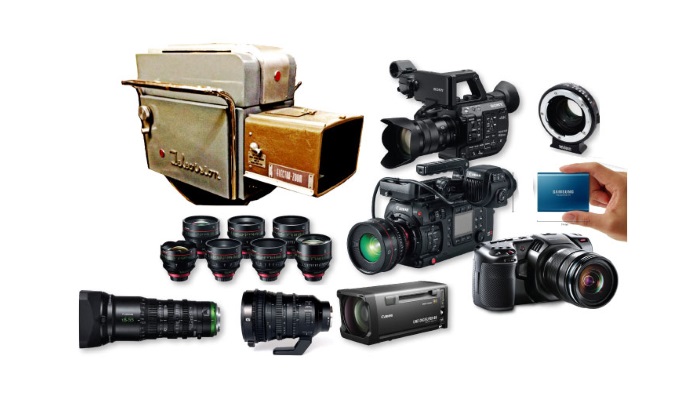
Over the years technical advances and electronic development in manufacture has produced some pretty amazing cameras. From the first three pickup tube colour cameras of the early 1950’s, to today’s high-tech full-frame sensors, the camera is essentially only as good as the glass in front of it. There are thousands of different lenses out there but none has had as bigger impact in the film and television industry than the zoom lens.

Almost 60 years ago, American inventor turned cinematographer Joseph Bailey Walker’s ever active mind developed the Electra-Zoom Lens for RCA, which became standard equipment for TV cameramen the world over back in the 1960’s. Whilst zoom lenses had been used in the cinematic field since the 1920’s, it wasn’t until Walker’s invention hit the scene that zoom lenses became an essential part of television production. His lens, as the name suggests, has a small electric motor that was used to drive two moving components, a front negative element that moved rapidly whilst the rear positive element moved slowly in the opposite direction giving the system a focal length range from 52mm to 152mm at f3. Much has changed over time when you compare Walker’s Electra-Zoom Lens with Canon’s new UHD-DIGISUPER 66, for example, which possesses a focal length range of 9mm to 600mm, and features a built-in 2x extender that allows users to double the zoom range capabilities of the lens – up to 1200mm on the telephoto end.

New lens technology was a big highlight of NAB 2018 and the search for ‘that ideal piece of glass’ was at the top of the list for many of the visiting buyers. There were three standout cameras at NAB, all due for release later in the year. Three different price categories but each one feature-filled and all with amazing lens choices to get the best out of what the cameras are offering.

SONY FS5 Mark II

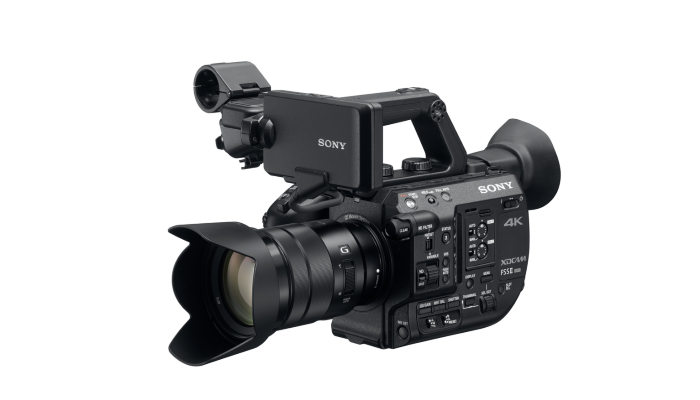
Sony’s new FS5 Mark II camera (also released at NAB 2018) has the same sensor as the original FS5 but Sony has taken the colour science from the Sony Venice to provide better skin tones and a more cinematic look. You would be spoilt for choice when deciding on a lens suitable for this piece of kit. Starting with Fujinons 18-55mm T2.9, a Cabrio Sony E-Mount Cinema Zoom Lens, it’s a lightweight and compact alternative to other lenses on the market, while still keeping 4K Cabrio quality in an affordable package. The lens is colour matched to other Fujinon lenses such as the HK, ZK, and XK series, which enables smooth intercutting between lenses. The 85mm front enables use with many cine-style matte boxes via use of optional step up rings (rings not included). The lens is lightweight for a cinema zoom that holds focus and aperture throughout the focal length range. It is designed for camera’s with a Sony E-mount, so it has a short flange focal distance, but the lens allows for flange focal distance adjustment so you can fine tune it to the camera you are using the lens on.

Another suitable lens for the FS5 Mark II is the Canon 18-80mm T4.4. Based on Canon’s heritage in optical design and performance, the CN-E18-80mm T4.4 L IS KAS S produces exceptionally high quality images. Those using the lens, such as documentary filmmakers, will benefit from the incredible servo performance which is incorporated on the lens’s body, enabling precise digital zoom operations. Users are able to achieve maximum speed and responsiveness with seamless switching between auto and manual focusing and zoom. For those using a shoulder-style rig or shooting hand-held in demanding positions, the dedicated zoom grip is a perfect accessory – the grip simply attaches to the side of the lens, offering simple integration and zoom management.

Of course many will choose the bespoke lens from Sony itself,  the E PZ 18-110 mm f/4 G OSS Lens. This powered zoom lens delivers optimum performance in Super 35 mm applications, starting at 18 mm wide-angle and extending through an impressive 6.1x zoom range with a constant F4 maximum aperture. The G Lens optical performance delivers image quality that is suitable for 4K throughout the zoom range.

Sony PXW-FS5M2 4K release date is later in the year at a price of US$4749 (body only).

Blackmagic Pocket Cinema Camera 4K

After years of asking for a successor to the original Blackmagic Pocket Cinema Camera, Blackmagic have finally given the fans what they’ve been asking for. The Pocket Cinema Camera 4K looks a lot different to the original (it’s definitely bigger in size) and although it might not fit inside your pocket it is still a compact size. The Aussies over at Blackmagic have clearly been listening to what their customers have been wanting as this camera is packed full of some impressive features. The Pocket Cinema Camera 4K shoots at 60fps in 4K and at 120fps in 1080p and has a dynamic range of 13 stops. Slow motion can be recorded in both 12-bit CineDNG Raw and 10-bit Apple ProRes 422 HQ. Blackmagic have really made a point of focusing on the low light capabilities of this camera with ISO range of 400 – 25,600. Users can load LUTs on to the camera and even plug in a USB-C drive to record directly on to, of note is Samsung’s new T5 USB-C solid state drive, it’s tiny but packs a punch when it comes to speed. Here’s another way Blackmagic’s camera stands out from most interchangeable-lens cameras. When you buy a Nikon, Canon, Sony, Olympus, Panasonic or Pentax camera, you are committed to that company’s lens mount. So, if you buy a Canon camera, you can only use lenses that fit a Canon mount. Likewise for Nikon, Sony and Pentax. Olympus and Panasonic use the same Micro 4/3rds mount, so they’re compatible with each other, but not the others. According to Blackmagic, the Pocket Cinema Camera 4K is compatible with all MFT-mount lenses, which is “extremely flexible and allows for different lens adapters so customers can also use PL, C, EF and other types of lenses from manufacturers such as Canon, Nikon, Pentax, Leica and even Panavision.” In most other cases, a manufacturer introducing a new camera doesn’t say that it’s compatible with other manufacturers’ lenses via an adapter. That’s because such adapters generally come with compromises, such as fewer autofocus options. US manufacturer Metabone have exclusively designed a  Nikon-G/F to Micro-4/3 mount for the Blackmagic Pocket Cinema Camera called the Speed Booster, much to the excitement of many creative directors who love their Nikon lenses.

The new Blackmagic Pocket Cinema Camera is supposed to launch later this year for US$1,295 (body only).

Canon C700 FF

Canon has been in the television and video industry for a long time but hasn’t been able to provide a top-tier offering to match the likes of Sony Venice or Arri Alexa – until now that is. The Canon C700 FF (full frame) is their latest offering with brand new sensor technology built in. The C700FF sensor is a different size to the flagship Canon 5D camera, it isn’t as tall but it is wider (38mm x 20mm). This beast of a camera shoots in 5.9K at 60 frames per second and offers 15 stops of dynamic range. As with some of the other Canon cine cameras, the C700FF also comes with a built in 10-stop ND filter. Canon has greatly expanded their EF Cinema Lens offerings. The lineup—which includes the Prime, Zoom, Compact Zoom, CINE-SERVO and COMPACT-SERVO series of lenses—has become very popular for a wide range of users. With the introduction of the CN-E20mm T1.5 L F lens, the lineup now boasts a total of 21 lens models. This expansive line of lenses provides cinematographers with even more options to choose from, which can support enhanced content creation for a variety of uses and shooting scenarios. The trend with a lot of new cameras that allow internal 4K recording is that they use CF 2.0 cards for storage and that is true for this camera too. The C700 FF embodies a choice of two high-performance codecs for on-board recording –Canon XF-AVC or Apple ProRes. Like other cameras in the 4K Cinema EOS family, the EOS C700 FF uses CFast cards to capture 4K / UHD or 2K / HD. Despite the US$33,000 (body only) price tag, the C700 FF is one of the cheaper full-frame cinema cameras on the market.

No matter how cost effective or expensive the camera, the lens industry has always worked hard to provide us with a wide range of suitable glass fit for any filming requirement, and some credit must go to Joseph Bailey Walker who held no less than 20 patents on various camera-related inventions, including the Double Exposure System, the Duomar Lens for both motion picture and television cameras, and the Electra Zoom Lens. Cheers Mr. Walker!

James Cameron to shoot Avatar sequels on Sony’s VENICE camera

James Cameron’s Lightstorm Entertainment will use Sony’s new VENICE motion picture camera system for principal photography on the upcoming Avatar sequels.

The first Avatar movie, released in 2009 and also shot on Sony professional cameras, shattered box-office records with its compelling story, immersive 3D and stunning visuals. These newest entries in the franchise will up the visual ante significantly with enhanced special effects, more elaborate production requirements and challenging live action sequences.

According to Lightstorm, the Sony VENICE camera system was the right choice to continue the Avatar storyline and give audiences an entirely new experience.

“The VENICE camera delivers the most astonishing image I’ve ever seen,” said director James Cameron, “The blacks are rich, deep and velvety, the highlights and source lights are amazingly bright. For the first time, we truly appreciate what the term High Dynamic Range means.”

While principal photography on the Avatar sequels using VENICE is expected to begin first quarter of 2019, performance capture is underway now. The process is supported by a variety of additional Sony imaging technologies including multiple Alpha mirrorless interchangeable lens cameras, PXW-Z450 and PXW-320 camcorders and the compact RX0 camera. The production is also using Sony’s F55 and Alpha cameras to record behind-the-scenes footage and stills.

“I’ve enjoyed shooting with Sony CineAlta cameras for 19 years, but I’m really looking forward to shooting Avatar 2 and 3 with the new VENICE camera,” Cameron added.

Sony worked closely with Lightstorm to customise VENICE for its specific needs, with regular meetings taking place between Cameron, his production teams and Sony’s engineering group.

“Our goal in this ongoing co-development collaboration is to enable Lightstorm to execute their vision and deliver their unique approach to storytelling,” said Neal Manowitz, vice president of Digital Imaging at Sony Electronics. “For Avatar, VENICE will be put to use in very demanding environments. The camera’s Full-Frame sensor gives them complete flexibility and freedom to choose aspect ratios, various bokeh and lenses that match their shooting requirements.”

The Sony-Lightstorm collaboration began in 1999, resulting in the development of a unique extension system allowing the camera body to detach from the actual image sensor block.  A similar approach has been adopted for VENICE, with each sensor and camera body connected by a cable at distances of up to 20 feet with no degradation in image quality. For the upcoming Avatar sequels, multiple VENICE cameras will be paired in various 3D stereoscopic rigs. Using the new Sony cabling system, the only part of the VENICE carried on the rig will be the image sensor optical blocks, significantly reducing on-board camera weight to about three pounds per sensor block. By lowering the weight and improving ergonomics, Cameron and the Lightstorm team will have the ability to shoot with greater flexibility and freedom.

“This new extension system is a perfect example of listening to our customers, gathering strong and consistent feedback, and then building that input into our product development,” added Peter Crithary, marketing manager, motion picture cameras, at Sony. “The Avatar sequels will be among the first feature films to use the new VENICE Extension, but it also has tremendous potential for wider use with handheld Steadicams, drones and gimbals, and remote mounting in confined places.”

Click here for more information on the Sony VENICE camera system.

Sony adds to its IP Live Production ecosystem

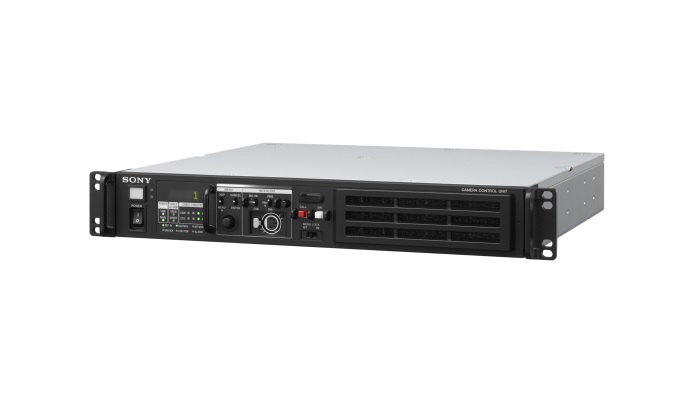
Sony is expanding the offering of its IP Live Production system with the introduction of a new camera control unit, the HDCU-3100. Meeting growing industry demand for IP, the 1.5U size of the compact fibre camera control unit brings IP capabilities to Sony’s system cameras, from the flagship 4K HDC-4300 with BPU-4000 series, including the new BPU-4500A, through to the HDC-2000 series and HSC fibre system cameras.  Combined with a new HKCU-SFP30 option board, the HDCU-3100 is able to support SMPTE ST 2110 Professional Media over a managed IP Network suite of standards. The essential functionalities required for live production including tally, intercom and return video can all be provided through IP.  The support of NMOS IS-04/05 is in the future scope.

As broadcast productions increasingly embrace IP for its proven ability to deliver live HD and 4K video, audio and synchronisation signals with efficiency, flexibility and scalability, today’s announcement reinforces Sony’s commitment to streamlining the transition to IP through continued investment in interoperability and open standards.

“IP is fast establishing itself as a cornerstone of modern production infrastructures and we’re at a substantial migration where big projects, studios, trucks and applications are making use of IP, or have IP at their core,” commented Norbert Paquet, head of Product Management, Sony Professional. “Expanding our offering on IP Live Production ecosystems, will offer to our customers more choices, while keeping compatibility with existing cameras, which enables them to easily migrate in a cost effective manner to the benefits of an IP infrastructure.”

The HDCU-3100 is further equipped with maximum eight built-in SDI outputs, including four 3G-SDI outputs. Support of 12G-SDI will also be available for HDCU-3100 in future updates with combination of HKCU-UHD30, 4K/HDR Processor Board and HDC-2000 series system cameras. An LED colour indicator shows the status of optical transmission on the front panel with different LED colours to optimise operability.

The HDCU-3100 is currently available, with the complementary HKCU-SFP30 ST-2110 option board available from July 2018. Additional HKCU-UHD30 4K/HDR Processor Board and HKCU-SDI30 12G-SDI interface options will arrive later in the year.

Sony further enhances Optical Disc Archive with stable production and new addition of product line

Sony has announced its continuous enhancement of Optical Disc Archive System with strong support from partner companies. Mitsubishi Chemical Media Co., Ltd. (MCM) has recently signed a License Agreement with Sony to produce Optical Disc Archive cartridges. In addition, Qualstar Corporation (Qualstar) also entered into a Product Development Agreement for Enterprise Class Optical Disc Library with Sony in November 2017.

“We are excited to partner with Mitsubishi Chemical media and Qualstar. Their decision to be involved in the Optical Disc Archive business indicates the expansion of the technology in the industry,” said Mikio Kita, senior general manager, Sony Imaging Products and Solutions Inc. “Sony will provide a stable supply of Optical Disc Archive cartridges with Mitsubishi Chemical Media – a leading manufacturer of recordable optical discs under their global brand Verbatim. On another front, Sony will offer Enterprise Class Optical Disc Archive Library that targets larger capacity around 27PB with second generation 3.3TB cartridge. This will be co-developed with Qualstar, a designer and manufacturer of data storage solutions. We believe our partners’ support is definitely advantageous and will further benefit our valued customers.”

The Optical Disc Archive is a high-capacity, future-proofed media storage that acts as an on-site backup and asset management solution. Widely used by broadcasters, sports organisations and production companies, the solution is gaining traction in other fields where data archive is key, including corporations, schools and financial organisations. It delivers reliable long-term storage and robust operations with eco-friendly power consumption. The second generation of Optical Disc Archive system adopts optical media developed jointly by Sony and Panasonic. The second generation doubles the capacity of a single cartridge to 3.3TB with a reduced price.

With over 20 years of technical know-how and production, MCM is a leading manufacturer of optical discs that has a large market share of recordable optical discs including CD, DVD and Blu-ray Disc. MCM is also an official licensee to produce XDCAM professional disc since 2014. “We are glad to have the opportunity to work with Sony, an industry leader in the professional field, and are convinced that we can contribute to the growth of Optical Disc Archive System with the supply of high quality media and cartridges,” said Masahiro Taguchi, president of MCM.

Qualstar, with more than 30 years of expertise specialising in data storage, possesses the depth and breadth of expertise in the areas of LTO library development. Sony is confident that Qualstar’s mechanical and robotics technology is definitely beneficial to the development of Enterprise Class Optical Disc Library. “We are delighted by Sony’s confidence in our technology and proficiency in the areas of data storage solution,” said Steven N. Bronson, CEO, Qualstar. “Demand for large capacity data storage is rapidly accelerating in every industry with business owners looking for the best suited archive solutions for their business needs. The Optical Disc Archive system is one of the optimum choices. We are extremely thrilled to work with Sony to design and develop the Enterprise Class Optical Disc Archive Library.”

Click here for more information.

Sony PXW-Z190 XDCAM delivers 4K 50p/60p imagery with three 1/3-type Exmor R CMOS image sensors

The new Sony PXW-Z190 is a 4K compact camcorder with enhanced usability to achieve various video expressions, making it ideal for independent shooters in applications such as corporate, event production and education. The camcorder’s newly developed three 1/3-type Exmor R CMOS image sensors capture RGB light independently and deliver 4K 50p/60p imagery with high resolution and a wide range of gradation. 4:2:2 10-bit ensures vivid and rich colour content in HD.

The new model incorporates a 25x optical zoom lens to cover a wide focal range for multiple shooing requirements, with three independent lens rings to support intuitive operation. Using optical zoom lens with Digital Extender in an HD mode, a 50x zoom equivalent image without any picture degradation can be captured thanks to its 4K resolution sensor. Advanced Face Detection Autofocus (AF) include the “Face Priority AF” and newly added “Face Only AF”. Combining with registration of the face, it helps to ensure a specific person within a group automatically stay in pin-sharp focus, especially helpful in shooting interview or lecture.

Sony’s Electronic Variable ND filter ensures greater exposure control by smoothly varying the density of the ND filter during shooting while maintaining resolution and depth of field.

The PXW-Z190 combines advanced usability and network solutions for enhanced workflow efficiency. The PXW-Z190 is HLG compatible to support Sony’s Instant HDR workflow, delivering the beautiful HDR content quickly without the need for additional colour grading. In addition, “Content Browser Mobile” software allows the camera to be operated remotely via smartphone. With an optional license, the camcorder can be used with Sony’s cloud-based ENG service, “XDCAM air”. The new camcorder uses Sony’s Quality of Service (QoS) for live distribution of high-quality broadcast content using a Dual Link connection multiplexing two cellular networks. File transfer and streaming is also possible using a wired or wireless LAN or LTE modem connection, enabling immediate editing and live monitoring.

Dual MI shoe enables the use of a wireless microphone and video light at the same time to achieve further flexibility. When using Sony’s UWP-D series wireless microphone, audio signals can be delivered without cabling – eliminating the risk of accidental disconnection and battery loss of the wireless audio receiver. Enhanced 4-channel audio recording is supported by a combination of 2 XLR inputs and audio input via an MI shoe.

The camera records to widely available SD memory card, with dual card slots allowing simultaneous, relay and back-up recording.

The PXW-Z190 covers a wide range of main formats including XAVC-Long, DVCAM. In addition to these formats, MPEG HD 422 and MPEG HD are available with an optional license. Proxy 1080i up to 9Mbps can be utilised for 4K and HD simultaneous recording. Other features include 3G-SDI output and a remote terminal for compact multi-camera operation using Sony’s MCX-500 production switcher and RM-30BP controller.

The new PXW-Z190 camcorder is planned to be available in September 2018.

*Microphone is optional.

Sony launches the new FS5 II camera

Sony has expanded its Large Format Sensor category with the launch of the new XDCAM handheld camcorder FS5 II (Body:PXW-FS5M2, Lens Kit: PXW-FS5M2K). Complete with 4K*¹ HDR and 120fps*² performance and RAW capabilities, the new Super 35 mm camcorder combines outstanding image quality with an ergonomic modular frame, offering content creators ultimate creative flexibility.

In addition to S-Log 2/3, the FS5 II offers Instant HDR Workflow*³ to produce HDR content for quick post-production without the need of grading.*⁴

The FS5 II is a great E-mount camcorder for interchangeable lens camera users, offering boundless creative options for web commercial, music video production, dramas, corporate/event videos and documentaries.

Ultimate handheld creative camcorder

Tuned to meet the requirements of today’s content creators, the FS5 II features an all-new look with a refined picture tone to capture natural highlights, subtle, alluring and well-rendered facial tones and a softer tonal look emphasising portrayal of a person. Using the accumulated expertise of Sony’s digital cinematography camera VENICE, it promises a fresh and vivid look while still retaining plenty of creative options in post-production thanks to its high performance 4K Super 35 Exmor CMOS sensor.

Claus Pfeifer, head of Technical Sales – Media Solutions, Sony Professional Solutions Europe explains: “When Sony develops new camera technologies we gather feedback from all ends of the production chain – from DOPs through to post production around the workflow. This camera was no exception. We’ve evolved and developed our hugely popular FS5 with default shooting capabilities and the FS5II is now a powerful addition to the Large Format Sensor line-up which promises even more flexibility and creative choices.”

High Frame Rate shooting including 4K*¹ 120fps*² RAW output and HDR features

The FS5 II builds on Sony’s heritage for image quality, delivering exceptional High Frame rate shots supporting four seconds of 120fps*² in 4K*¹ and continuous 240fps*⁵ in 2K*⁶ RAW output when used in partnership with a compatible external recorder. Of course, continuous 4K 60fps*⁷ RAW output is fully supported.

On the other hand, on to an internal SD card, the camcorder also offers High Frame Rate (HFR) recording at Full HD 10bit 4:2:2 image quality and a frame rate of up to 240 fps of 8-second cache recording, allowing up to 10 x slow motion⁸. Continuous recording of 120fps in Full HD is also supported.

With an Instant HDR Workflow*³ users can now reduce time in post-production and produce high-quality HDR content quickly without the need of grading. Whilst for productions of longer lead-times, S-Log 2/3 allows the HDR image to be fine-tuned via colour grading.

Grab and Shoot Capabilities

Lightweight but robust, theFS5 II’s well balanced 0.8kg body, adaptability and creative features make it a perfect fit for movie shooting, whilst its modular design makes it easy to reconfigure for any application including mounting on a gimbal or drone. Sony’s unique Electronic Variable ND filter with Auto ND function covers a wide range of exposure adjustment as well as creating a wide range of shallow Depth of Field control.

Now with ten Picture Profile settings the FS5 II allows users to instantly and easily configure the camera for different shooting styles, such as cinematic content creation and online content. The FS5 II will begin shipping in May.

*¹ 4096 x 2160, *² at 60Hz mode, 100fps at 50Hz mode *³ Shooting in HLG/BT.2020 mode, *4 HLG/BT. 2020 compatible display required for viewing *5at 60Hz mode, 200fps at 50Hz mode, *6 2048×1080. *7 59.94p. 50fps at 50Hz mode *8Captures 239.76fps at HD or 2K, and playback at 23.98p

Sony PXW-Z280: World’s first 4K 3-chip camcorder

Sony is expanding its XDCAM line of professional camcorders with its new flagship handheld PXW-Z280. The new model boasts three 1/2-type Exmor R CMOS sensors, delivering high sensitivity of F12 (59.94p), long zoom ratio and deep depth of field, ideal for news gathering. In addition, 3-chip sensors and 4K 4:2:2 10-bit adds vivid imagery and delicate colour gradation. Enhanced network features, versatile formats and interfaces enable direct-to-air workflows, making this model ideal for broadcasters, production companies and documentary creation.

The PXW-Z280 is designed for easy use, with features such as the advanced Face Detection Autofocus (AF) function. Users can select “Face Priority AF”, convenient for shooting the scene including human objects and newly introduced “Face Only AF”. This feature is important especially in more demanding 4K shooting applications, such as recording interviews or lectures, helping a specific person automatically stay in pin-sharp focus by using together with registration function of the face. A 17x zoom lens and three independent control rings with end-stop allow manual control of focus, zoom, and iris for quick and precise adjustment.

Sony’s unique Electronic Variable ND filter allows greater exposure control by varying the density of the ND filter during shooting while maintaining resolution and depth of the fields. The camera also supports S-Log3 allowing users to create beautiful imagery and Sony’s Instant HDR workflow, eliminating the need for color grading.

The PXW-Z280 features advanced network features to enable a secure, seamless wireless Electric News Gathering (ENG) workflow.

Based on the technology developed for Sony’s cloud-based ENG service, “XDCAM air,” the new camcorder uses Sony’s Quality of Service (QoS) for live distribution of high-quality broadcast content using a Dual Link connection multiplexing two cellular networks, assigning Planning Metadata and browsing and getting clips in the recording media on camcorders from a distant broadcast station via the cloud. In addition, an integrated Wi-Fi module and Ethernet connector enable hybrid Wireless/Wired data transfer, remote control and monitoring from devices such as a smartphone, tablet or PC, giving users more flexibility in production.

A range of formats including XAVC Intra/Long, MPEG HD422, MPEG HD and DVCAM are available to support established workflows. PXW-Z280 also has various interfaces to fulfill the need of professional users. SxS card and SD card with optional adapter can be used as recording media, giving flexible choice for users. Four-channel audio recording with independent volume dials enables precise control of external input audio and an attached MI shoe microphone. Dual MI shoes provide cable-less connection with Sony’s UWP-D series wireless microphone receiver and use of a video light at the same time. 12G-SDI enables 4K 50p / 60p transfer between long distance using only one BNC cable.

The PXW-Z280 camcorder is planned to be available in July 2018.

*Microphone is optional.

Sony continues to invest in fully interoperable IP Live Production solutions

Sony continues to invest in fully interoperable IP Live Production solutions by expanding its High-end Live Production solutions portfolio and offering compatibility with both SMPTE ST 2110 Media Transport standard and NMOS IS-04/05 devices discovery and management protocols on top of the development of Networked Media Interface. Furthering its commitment to support open standards, Sony is adding to its range of live production system solutions. System cameras, multi-format switchers and production servers will support both IP and 12G-SDI interfaces to deliver ultimate flexibility. The Live Production solutions are also growing with the addition of new Remote Control Panels and a System Controller License.

New devices to accelerate the transition to IP Live Production

As the industry transition to IP continues to gather pace, Sony is introducing a new flagship Video Switcher, the XVS-9000, which will support both IP (SMPTE ST 2110) and 12G-SDI in 4K as well as a hybrid system of both, for large sporting and entertainment events. Offering up to 80 inputs and 40 outputs in 4K, and up to 160 inputs and 80 outputs in HD*, the XVS-9000 addresses the demands of advanced 4K and HD productions and the rise of High Dynamic Range (HDR) content with the choice of the latest interfaces.

*The number of I/O will differ according to the interface.

The new HDCU-3100 Camera Control Unit will also support SMPTE ST 2110 in HD and offers IP capability to a wide range of system cameras, from HDC-4300 with BPU-4000 series including new BPU-4500A Baseband Processor Unit, all the way to HDC-2000 series and the HSC Fiber System cameras. This new CCU features tally, intercom and audio and video returns support all over IP on top of the regular CCU features.

Sony further supports SMPTE ST 2110 in HD for current XVS-Multi format Switchers family, while the HDCU-4300 Camera Control Unit will be supported from 2019 onwards.

Sony is also developing further SMPTE ST 2110 4K compliant products to meet growing demand for 4K Live content production. Its new BPU-4500A Baseband Processor Unit builds upon the features and specifications complete within the BPU-4500, with the addition of having an optional slot to accommodate either SMPTE ST 2110 or Networked Media Interface option boards. This provides customers with the flexibility to use either interface, depending on the system requirements.

Furthering the upgrades across its IP Live Production solutions, Sony is also enhancing its IP Live System Manager, a software that rationalises the control and configuration of the networked production devices but also the management of the network itself to meet the severe requirements of Professional Live Production over IP Networks.

The system now also supports NS-BUS, an open Routing Control protocol to communicate with other equipment and systems. This IP-based management protocol allows cross-point switching, source names and tally support from an external management system making it easy to monitor multiple streams while they are transmitted over the network at any location.

Additionally, three new control panels will be on display at the Sony stand. The MKS-R3210, MKS-R1620 and MKS-R1630, which are all controlled through IP Live System Manager and support new NS-BUS. This turns the production system into a turn-key solution for routing video and audio streams while operating in a traditional manner.

An agile and future- proof solution

Sony’s vision to pioneer interoperable solutions that meet both present and future needs of broadcasters, whilst offering customer choice, has driven its dual investment in IP and SDI technologies.

Offering greater flexibility and wider choice to customers, Sony is expanding its 12G-SDI compliant products. In 2018, the 12G-SDI interface will be available for the XVS-9000, XVS-8000, XVS-7000, XVS-6000, Multi format Switchers as well as the BPU-4500A, BPU-4000 Baseband Processor Units, the HDCU-4300 camera control unit for HDC-4300 camera, and the PWS-4500 Multi-format AV storage unit.

“We remain fiercely committed to offering our customers choice, which is why we are continuing to promote new architecture opportunities offered by IP, whilst also recognising the importance of 12G-SDI. Being able to integrate both IP and SDI interfaces provides customers with the ultimate flexibility to design modern live production facilities and utilise the solutions best-suited to their needs, rather than purely based on the interfaces they’re compatible with,” commented Norbert Paquet, head of Product Management, Sony Professional Solutions. “We’re empowering our customers to build more agile, flexible and cost-effective systems that can really rip the benefits of these state-of-the-art technologies.”

Ensuring and contributing to interoperability

As the founder of the IP Live Alliance, which now boasts over 70 manufacturers, a founding member of the Advanced Media Workflow Association (AMWA) and a SMPTE member, Sony has played an active role in contributing to the development, adoption, standardisation and refinement of standards and protocols for live production over IP. The company is continuing to work with AMWA to support NMOS IS-04 and NMOS IS-05 specifications and other future enhancements.

IP Live Production system is continuously adopted globally

  • NEP Australia: has decided to install HDCU-3100 with HDC-4300 and Baseband Processor Unit in their IP OB Van. NEP is using HDC-4300 cameras in four IP OB vans and these are connecting back to a central hub in Sydney and Melbourne containing XVS switchers. NEP has been using this equipment multiple times a week for regular broadcasts that are produced then delivered to the broadcaster also via SMPTE ST 2110.
  • Taiwan Public Television Service Foundation (PTS): PTS understands that the key to success is having an efficient workflow alongside reliable equipment that delivers the best, in order to satisfy the growing and ever-changing demands of the industry. As such, PTS has selected Sony as its partner for its 4K/IP OB truck and studio, with Sony’s IP Live at the heart of the workflow. The equipment line-up includes HDC-4300 cameras, XVS-8000/7000/6000 switchers, PWS-4500 servers, BVM-X300 OLED monitors, NXL series converter as well as IP Live System Manager (LSM).
  • Korea Creative Content Agency (KOCCA): has adopted IP-based live production in their 4K studio, expecting an enhancement in workflow efficiency from live video to nonlinear editing. KOCCA succeeded to build a system that can produce both HD and 4K, by adopting Sony’s HDC-4300 cameras, an XVS-7000 switcher, PWS-4500 server, HDRC4000 HDR converter, BVM-X300 OLED master monitors, NXL series converter, and IP Live System Manager (LSM).
  • Touch Video Live Broadcast (TVLB) China: TVLB, a production house in Beijing, has purchased two sets of Sony 4K/IP OB Van that will be delivered in August 2018. Each OB Van is fully equipped with 24 sets of HDC-4300, 4K/HD system cameras capable of HDR. Maximum 48 cameras of 4K HDR production can be broadcasted by two OB Vans working together, expected to be used for big sporting and entertainment events.
  • Shangdong TV China: In Feb. 2018, Sony has delivered IP Remote Production (REMI) studio capable of 4K HDR production to Shangdong TV. A large, 1200 square metre studio is equipped with eight HDC-4300 system cameras and six HDC-2570 HD system cameras have just successfully finished the first production on Air.

Sony is “Powering Today and Transforming Tomorrow” for media professionals at NAB 2018

At NAB 2018, Sony focused on new workflows for new types of customers. The company is showcasing technologies and products for HD, 4K, 8K, High Dynamic Range and IP, enabling more creative options and greater flexibility for professionals.

Taking center-stage on the stand is Sony’s ultimate big-screen bezel-less Crystal LED display system, delivering huge 8K x 4K visual images with stunning picture quality. Ultra-real contents including unprecedented 8K 120fps video shot by 8K system camera UHC-8300 with 1.25-inch three 8K sensors are replayed to impress visitors.  Sony’s exhibit will also feature new models and updates to solutions and services proposing the right mix for professionals’ needs to achieve their long-term success.

A combination of changing consumer viewing habits, unexampled industry consolidation and new business models has created a “sea change” in the media industry, according to Katsunori Yamanouchi, president of Sony’s Professional Solutions Americas group.

“Media customers need to deliver content anytime to any platform, in a range of different formats, and in high quality,” Yamanouchi said. “Often they need to do all this with fewer resources. Sony is continually adapting to meet our customers’ changing needs, helping them develop practical workflows to help them meet their technical and financial goals.”

Yamanouchi added that increasing acceptance of cloud technology has seen more companies move content and their operations into the cloud. Additionally, media companies need to maximise and monetise the global distribution of their content, while also balancing capital and operating expenses.

Sony’s Media Solutions Division

Sony’s Media Solutions Division formed in December last year is harnessing the power of cloud collaboration and automation to develop and bring to market customised technologies for content owners/creators, distributors and platforms. The group combines many of Sony’s technology resources designed to drive efficiencies at every stage of the media production lifecycle – from content acquisition to distribution to archive. Sony is continually expanding its professional solutions offerings, enhancing and developing options for real-time and non-real-time production such as XDCAM air, Media Backbone Hive, Media Backbone NavigatorX, Memnon digitisation and the Ci cloud platform. Ven.ue strengthens OTT and cloud-based content distribution and management capabilities. Sony acquired Crispin Corporation in April in 2017, adding master control automation and asset management.

Sony’s NAB 2018 New Products

At NAB 2018, Sony is highlighting its comprehensive and growing line of cameras and camcorders, with 4K and support for High Dynamic Range (HDR) available at every level.

Cameras and camcorders

Sony is expanding its XDCAM line of professional camcorders with its new flagship handheld PXW-Z280 and a 4K compact camcorder PXW-Z190.

PXW-Z280 equips the world’s first 4K three 1/2-type Exmor R CMOS image sensors, delivering high sensitivity of F12 (59.94p), long zoom ratio and deep depth of field, ideal for news gathering. In addition, 4K 4:2:2 10-bit adds vivid imagery and delicate colour gradation. The PXW-Z280 also supports 4K 50p/60p recording capability and 12G-SDI output, good for live event production. The enhanced network enables direct-to-air workflow featuring Sony’s Quality of Service (QoS) for live distribution of high-quality broadcast content using a Dual Link connection multiplexing two cellular networks. Versatile formats and interfaces also support the workflow. A 17x zoom lens and three independent control rings with end-stop allow manual control of focus, zoom, and iris for quick and precise adjustment.

PXW-Z190 carries newly developed three 1/3-type Exmor R CMOS image sensors capture RGB light independently and deliver 4K 50p/60p imagery with high resolution and a wide range of gradation. 4:2:2 10-bit ensures vivid and rich colour content in HD. The new model incorporates a 25x optical zoom lens to cover a wide focal range for multiple shooing requirements, with three independent lens rings to support intuitive operation.

Both models have Advanced Face Detection Autofocus (AF) including “Face Priority AF” and newly added “Face Only AF,” and Sony’s Electronic Variable ND filter ensures greater exposure control by smoothly varying the density of the ND filter during shooting while maintaining resolution and depth of field.

Sony is expanding its Large Format Sensor category with the new XDCAM handheld camcorder FS5 II. Complete with 4K HDR and 120fps performance and RAW capabilities, the new Super 35 mm camcorder combines outstanding image quality with an ergonomic modular frame. In addition to S-Log 2/3, the FS5 II supports Sony’s Instant HDR Workflow to produce HDR content for quick post-production without the need of grading. The FS5 II features an all-new look with a refined picture tone to capture natural highlights, subtle, alluring and well rendered facial tones and a softer tonal look emphasising portrayal of a person.

IP Live Production Solution

Sony’s IP Live production solution offers an alternative to the separate infrastructures of SDI for live production and IP for file-based production; creating a single, unified IP network. It lowers equipment costs and lays out a logical upgrade path to 4K, HFR, 8K and beyond. Broadcasters worldwide are embracing IP. Sony is a pioneer in this area with its Networked Media Interface. Sony is also investing in the future of IP Live interoperability with industry standards such as SMPTE ST 2110.

Sony is building SMPTE ST 2110 into its legacy and new products, making it among the first manufacturers to bring its entire portfolio of IP products into ST 2110 compliance. In addition to collaboration with many IP switch manufacturers, Sony and Cisco have announced a new global collaboration to create IP networking technologies for 4K/HD live production applications in the broadcast, media and entertainment industries. The agreement between the two companies will give customers worldwide an expanded range of flexible, proven and reliable IP systems.

Sony is expanding its IP Live Production system with a new camera control unit, the HDCU-3100. The 1.5U size of the compact fibre camera control unit brings IP capabilities to Sony’s system cameras, from the flagship 4K HDC-4300 with BPU-4000 series, including the new BPU-4500A, through to the HDC-2000 series and HSC fibre system cameras.  Combined with a new HKCU-SFP30 option board, the HDCU-3100 is able to support SMPTE ST 2110 Professional Media over a managed IP Network suite of standards. The essential functionalities required for live production including tally, intercom and return video can all be provided through IP.  Support for NMOS IS-04/05 is in future scope.

Sony’s new live production switcher, the XVS-9000, is designed to address the demands of advanced 4K and HD productions in the rise of High Dynamic Range (HDR) content. The XVS-9000 offers up to 80 inputs and 40 outputs in 4K and up to 160 inputs and 80 outputs in HD adopting the latest interfaces for both IP (SMPTE ST 2110) and 12G-SDI in 4K as well as hybrid system of both, for large sporting and entertainment events.

Archive and Storage Solution

Sony is unveiling the newest generation of its Optical Disc Archive System and announcing new agreements with partner companies. Qualstar Corporation entered into a Product Development Agreement with Sony to develop an Enterprise Class Optical Disc Library, and Mitsubishi Chemical Media Co., Ltd. has signed a License Agreement with Sony to produce Optical Disc Archive cartridges. Sony further enhances Optical Disc Archive with stable production and new addition of product line. Sony is also embracing an open platform approach for broad compatibility, providing technologies and support to encourage other manufacturers to develop complementary products for the technology.

Monitoring Solutions

Responding to voice of customers who are heading to 4K and High Dynamic Range (HDR) production, Sony releases firmware updates for BVM-X300 master monitor and PVM-X550 picture monitor. The common feature upgrades are, Flexible Area Marker enabling two flexible area markers freely set on one 4K screen, Time Code Display capable to display LTC and VITC time code at the top or the bottom of the 4K screen, and New Input Setting to simplify a flow of settings into one integrated assignable button, and the number of assignable settings are increased from 4 to 8. Moreover, High Brightness Mode is to be added to PVM-X550 delivering wider dynamic range to reproduce more realistic colours and to optimise 4K colour grading with over 180 per cent in HDR Peak Luminance as compared to the current PVM-X550.

Technology and Product Upgrades

Sony is helping customers extend the life of their current Sony technologies by continually introducing new upgrades, enabling new features and performance. These include:

VENICE full-frame motion picture camera – Sony’s next-gen CineAlta system began shipping two months ago, and it’s already well accepted by the market. At NAB, Sony is previewing upcoming VENICE features including variable frame rate and a newly developed dual base ISO 2500 mode.

UHC-8300 – Sony’s first 8K camera is showcased in US for the first time. 8K (7680 x 4320) 120p capturing format delivers well balanced high-resolution footage with an impressive deep depth of field and wide dynamic range, making it suitable for HDR footage. It can be used not only for 8K production, but also for 4K, generating 8K, 4K and HD signal outputs simultaneously. The camera gives complete choice to customers.

PXW-Z450 – this versatile 4K production camcorder is now even more flexible through a recent firmware upgrade for HDR support including high-quality S-Log3 shooting and recording, ITU-R BT.2020 colour gamut support, as well as HLG live output.

HXC-FB80 – This accessible entry into 4K- and HDR-ready studio and live production is based on a 3G-SDI platform with 1080/59.94p capabilities. The new system fits a range of commercial applications where professionals need high-quality HD with a “future-proof” path to 4K and HDR production.

Alpha camera connected to XDCAM air (Technological Exhibition) – Responding to the market expectation of the full frame mirrorless digital camera for the professional news gathering, Alpha is showcased with connection to the XDCAM air as a future possibility.

DWX Digital Wireless Microphone System – Sony Corporation collaborated with Blue Note Media Group to open “Sony Hall,” a new music venue in New York City March 2018. The hall presents world renowned performing artists across all music genres. Sony Hall is equipped with DWX Series digital wireless microphone system, provides high sound quality with reliable operation to deliver enhanced entertainment experiences to audiences.

For more information on Sony’s professional technologies at NAB 2018, visit the Sony website.

Sony expands full-frame mirrorless lineup with introduction of new α7 III camera

0

Sony’s unmatched innovation within the image sensor space is at the forefront of the new α7 III, as it features a brand new 24.2MP back-illuminated Exmor R CMOS image sensor with increased sensitivity, outstanding resolution and an impressive 15 stops of dynamic range at low sensitivities. By combining this sensor with a variety of impressive features including extreme AF coverage of 93%, fast shooting at up to 10 fps with either mechanical shutter or silent shooting, diverse 4K video capabilities and more, Sony has created a new tool that gives all types of creators – from enthusiast to professional – the ability to capture content in new and different ways than they ever have before.

“We are continually pushing to deliver more for our customers – more versatility, more functionality and most importantly, more innovation,” said Neal Manowitz, vice president of Digital Imaging for Sony Electronics. “With the new α7 III, we’ve taken many of our newest and most advanced imaging technologies from the acclaimed α9 and α7R III models and paired them with an all-new 24.2 MP back-illuminated sensor to deliver the ultimate full-frame camera for enthusiasts, hobbyists and professionals alike. It’s a camera that punches far above its weight class in every capacity. Combined with our impressive selection of 26 native full-frame E-mount lenses, it provides a level of performance that is simply unmatched in the industry.”

Spectacular Full-frame Image Quality

The newly developed 24.2MPi back-illuminated Exmor R CMOS image sensor is paired with a front-end LSI that effectively doubles the readout speed of the image sensor, as well as an updated BIONZ X™ processing-engine that boosts processing speed by approximately 1.8 times compared to the α7 II.  These powerful components work together to allow the camera to shoot at faster speeds while also enabling its impressive ISO range of 100 – 51200 (expandable to ISO 50 – 204800 for still images) and an overall 1.5 stop improvement in image quality. The camera also features a massive 15-stop dynamic range at low sensitivity settings, ensuring outstanding overall performance at all settings and in all shooting conditions, with significant advancements in accurate color reproductions of skin tones and the vibrant colours of nature.

This new full-frame model can also output 14 bit RAW format even in silent and continuous shooting modes, and is equipped with a 5-axis optical image stabilisation system that results in a 5.0 step shutter speed advantage.

Significant Advances in AF Speed and Performance

The innovative new α7 III full-frame mirrorless camera features a level of AF performance that has been largely improved over the α7 II, including the addition of 4D FOCUS™ capabilities. The new camera has 425 contrast AF points that work with a 693-point focal-plane phase-detection AF system inherited from the acclaimed α9 model. This innovative AF system covers approximately 93% of the frame, ensuring reliable focusing and tracking for even the most difficult to capture subjects.

AF response and tracking has also been greatly improved in the new camera, with almost 2x the focusing speed in low-light condition and 2x the tracking speed compared to the previous model as a result of the faster image sensor readout. This allows complex and unpredictable motion to be captured with far greater precision and accuracy.

The acclaimed Eye AF feature is also available in the new camera, even in AF-C mode, which is extremely useful for situations where the subject is turning around, looking down or otherwise obstructed. It also works when the α7 III is being used with Sony’s A-mount lenses with an optional LA-EA3 adaptor. Additional improvements in focusing flexibility include the addition of a multi-selector or ‘joystick’ for moving focusing points quickly, the addition of touch focusing capability, AF availability in Focus Magnifier mode, an ‘AF On’ button and much more.

Speed to Capture Every Decisive Moment

The new α7 III is equipped with an updated image processing system that allows it to shoot full resolution images at up to 10 fps with continuous, accurate AF/AE tracking for up to 177 Standard JPEG images, 89 compressed RAW images or 40 uncompressed RAW images. This high speed mode is available with either a mechanical shutter or a completely silent shooting, adding to the immense flexibility of the camera.  The camera can also shoot continuously at up to 8 fps in live view mode with minimal lag in the viewfinder or LCD screen.

For added convenience, while large groups of burst images are being written to the memory card, many of the cameras key functions are operable, including access to the ‘Fn’ (Function) and ‘Menu’ buttons, image playback and several other menus and parameters including image rating and other functions that facilitate on-location image sorting.

Additionally, if there is fluorescent or artificial lighting present in a shooting environment, users can activate the Anti-flicker function to allow the α7 III to automatically detect frequency of the lighting and time the shutter to minimise its effect on images being captured. This minimises any exposure or color anomalies that can sometimes occur at the top and bottom of images shot at high shutter speeds.

High Quality 4K Video

The new α7 III is an outstanding video camera as well, offering 4K (3840×2160 pixels) video recording across the full width of the full-frame image sensor. In video mode, the camera uses full pixel readout without pixel binning to collect about 2.4x the amount of data required for 4K movies, and then oversamples it to produce high quality 4K footage with exceptional detail and depth.

An HLG (Hybrid Log-Gamma) picture profile is available on the α7 III as well, which supports an Instant HDR workflow, allowing HDR (HLG) compatible TV’s to playback beautiful, true-to-life 4K HDR imagery. Further, both S-Log2 and S-Log3 are available for increased colour grading flexibility, as well as Zebra functionality, Gamma Display assist and proxy recording. The camera can also record Full HD at 120 fps at up to 100 Mbps, allowing footage to be reviewed and eventually edited into 4x or 5x slow motion video files in Full HD resolution with AF tracking.

Upgraded Build, Design and Customization

Sony’s newest full-frame camera is equipped with a variety of enhanced capabilities that were first implemented in the α9 and then again in the α7R III. These include dual media slots, with support in one slot for UHS-II type SD memory cards. Users have a variety of options for storing their content in each of the cards, including separate JPEG / RAW recording, separate still image / movie recording, relay recording and more. Battery life has been greatly extended as well – with a CIPA measurement of up to 710 shots per charge, it offers the world’s longest battery life of any Mirrorless camera, as the new camera utilises Sony’s Z series battery NP-FZ100 that have approximately 2.2 times the capacity of the W series battery NP-FW50 utilised in the α7 II.

The new camera features “My Menu” functionality which allows up to 30 menu items to be registered for instant recall when needed. Users can also apply star ratings to their still images through the camera controls for easier image playback and review, and edit the first three characters of all still image files. Additionally, there is a total of 81 functions that are assignable to 11 custom buttons, and the camera is both dust and moisture resistant.

The α7 III features high-resolution, high-contrast, fast-start XGA OLED Tru-Finder™ with approximately 2.3 million dots for extremely accurate, true-to-life detail reproduction.  “Standard” or “High” display quality settings are also available for both the viewfinder and monitor as well.  It also is capable of seamlessly transferring files to a smartphone, tablet, computer or FTP server via Wi-Fi®, while also offering a SuperSpeed USB (USB 3.1 Gen 1) USB Type-C™ Terminal for increased flexibility in power supply and faster image transfer speed during tethered shooting.

The α7 III model also comes with Sony’s new software suite “Imaging Edge”, which extends the creative capabilities of the entire shooting process – from pre-processing to post-processing. “Imaging Edge” provides three PC applications called ‘Remote’, ‘Viewer’ and ‘Edit’, available for free download, which support live-view PC remote shooting and RAW development.  In the latest Version 1.1, several improvements have been implemented including about 10% faster data transfer speed for remote shooting from PC (PC tether shooting) and about 65% improvement in the response speed for RAW image editing.  For more information, please visit Imaging Edge support page. www.sony.net/disoft/d/.

The camera is also compatible with a wide variety of Sony E-mount accessories including the BC-QZ1 Battery Charger, VG-C3EM Vertical Grip.

- Advertisement -
- Advertisement -
- Advertisement -

Pin It on Pinterest