Home Authors Posts by Sony Press

Sony Press

98 POSTS 0 JOBS
Sony is a leading manufacturer of audio, video, communications, and information technology products for the consumer and professional markets. Its motion picture, television, computer entertainment, music and online businesses make Sony one of the most comprehensive entertainment and technology companies in the world.

NEP expands 4K capabilities with Sony

Sony Australia has welcomed NEP Australia’s significant expansion of its 4K inventory, equipment and services in partnership with Sony Professional Solutions Australia.

The Sony products will be used for all NEP’s sports productions in Australia across its mobile fleet and at its world-leading all-IP Andrews Hubs, starting with NEP’s live ultra-high definition (UHD-4K) cricket coverage for FOX SPORTS on 4 November 2018.

“From November, Australian cricket fans will be able to view live matches in greater clarity than ever before on Foxtel’s new dedicated 4K channel, which will broadcast selected cricket matches in ultra high definition for the first time,” said Marc Segar, director of Technology for NEP Australia. “We are working closely with Sony to deploy this new 4K infrastructure in time for the FOX SPORTS’ first live UHD-4K cricket match.”

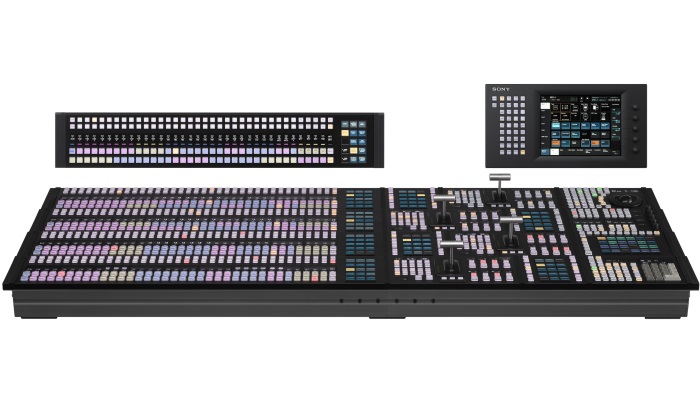
As part of this new 4K project, NEP has purchased multiple Sony XVS-9000 high-end switchers (the first delivered in any market internationally), XVS-8000 switchers with significant upgrades to 100Gb and IP, HDC-4300 camera chains, HDC-P43 box camera chains, BRC-X1000 remote PTZ cameras, HDC-4800 super slo-mo cameras, BVM-X300 OLED monitors, BVM-E171 OLED critical reference monitors, additional HDCU-4300 CCU in 4K IP configuration for NEP’s IP trucks, and 4K software upgrades for existing cameras.

“We have a high degree of confidence in Sony, having worked closely together on technology for NEP’s all-IP Andrews Hubs – both in deployment and product development. The results are testament to what’s possible when partnering with a true technology leader such as Sony,” Segar added.

“This purchase of 4K equipment yet again demonstrates NEP’s forward-thinking innovation, and their commitment to producing the very best quality productions and images,” said Anthony Kable, Content Creation Group manager of Sony Australia. “Sony Australia has had a long and successful partnership with NEP, most recently collaborating to bring the incredible Andrews Hubs to fruition. We look forward to continuing our partnership for many years to come.”

NEP Australia will begin taking delivery of the new Sony 4K equipment in October 2018.

Sony introduces new handheld NXCAM camcorder, HXR-NX200

0

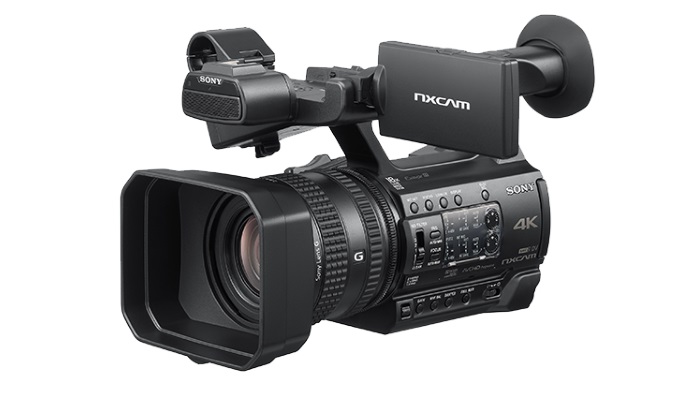
Sony recently announced a new introduction to its NXCAM handheld camcorder line-up, the HXR-NX200. Targeting at professional videographers and content creators, the latest camcorder, capable of delivering stunning 4K* images in beautiful colour achieved by the newly refined colour science. It is a cost-effective choice offering all the professional features one needs in a robust yet compact chassis.

“When Sony develops new camera technologies, our top consideration is to gather the voices of our customers. The HXR-NX200 is no exception,” said Hany Bartella, head of Media Sales for Middle East at Sony Professional Solutions MEA. “The latest addition to our NXCAM family is a versatile camcorder that is perfect for on-the-go shootings with its stunning picture quality and long battery life, allowing content creators and videographers to focus on what they do best, with minimal hassle.”

*3840 x 2160 pixels

High Quality Picture in 4K/HD

Positioned as an optimal choice for users venturing into 4K productions, the HXR-NX200 is capable of capturing 4K high resolution images, in addition to its excellent HD capabilities. This is possible with Sony’s 1.0-type Exmor R CMOS image sensor with effective 14.2 megapixel that achieves high sensitivity and delivers superb image quality in 4K. Further, thanks to the large high-resolution sensor, superior image quality when shooting in HD is achieved effortlessly. In addition, the latest NXCAM camcorder offers users the flexibility to shoot in 4K and cut out in HD during post production.

Beautiful Colour Reproduction

The compact and lightweight HXR-NX200 delivers stunning lifelike images beautifully with the newly developed refined colour science. Developed based on the voice of customers, this major advancement allows the camcorder to express more vivid, deep, rich variation of colours and natural skin tones regardless of exposure condition. The well-balanced and true-to-life colour reproduction is ideal for applications including live events, weddings and other festivities, as well in houses of worship, education and seminars.

Range of features to support professional shooting and workflow

To capture even the most expansive scenes with outstanding clarity, the HXR-NX200 is equipped with a 29mm wide-angle G Lens alongside three independent manual lens rings, enabling manual control of focus, zoom and iris, for quick and precise adjustment. A 12x optical zoom is dramatically enhanced with Sony’s unique By Pixel Super Resolution Technology, Clear Image Zoom, at 24x in HD and 18x in 4K. With the built-in 4 Step ND Filters, the HXR-NX200 is able to adjust quickly to capture quality content in a multitude of environments, producing sharp, clear images without losing the details anytime, anywhere.
The HXR-NX200 NXCAM camcorder enables users to stream live events in HD effortlessly through a simple and affordable production ecosystem when paired with the MCX-500 multi-camera live producer and the RM-30BP remote commander.
Extending the recording format of Sony’s NXCAM family, the HXR-NX200 is capable of recording 4K XAVC S 100Mbps for superb picture quality with less noise due to higher bitrate. Further, the latest camcorder features dual media slots, realising extended recording time and workflow flexibility through relay and simultaneous back-up recording.
The HXR-NX200 will be available in select countries from October 2018 onwards.

Sony unveils new generation of live production system cameras

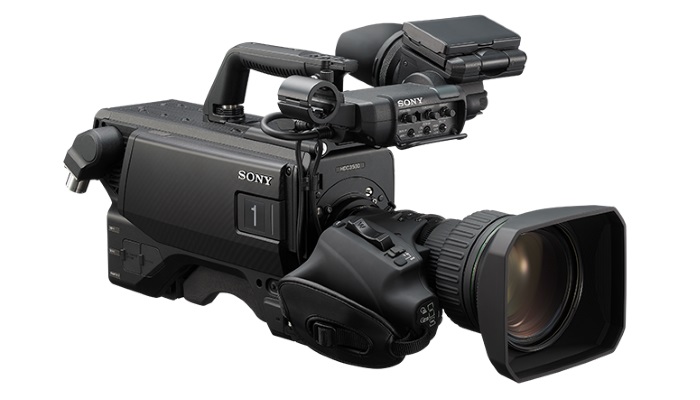
At IBC 2018, Sony has unveiled four new live production system cameras, further expanding and evolving the Sony HDC family well acclaimed by broadcasters and media companies across the globe. The next generation of system cameras (HDC-P50, HDC-3500) feature the world’s first* 2/3-inch 4K global shutter three CMOS sensor system, and the newly developed HD HDR optical block (HDC-3100/HDC-3170). The new cameras offer content creators unprecedented flexibility and reliability, in addition to the uncompromised, premium 4K/HD HDR picture quality they have come to expect from Sony solutions.

*As of September 2018, according to Sony research

The new family of system cameras are the HDC-P50 Point of View (POV) system camera, the portable system camera HDC-3500, as well as the affordable Fibre and Triax system cameras HDC-3100 and HDC-3170. Additionally, Sony has introduced a new Triax Camera Control Unit (CCU), the HDCU-3170, which inherits all the capabilities of the HDCU-3100 launched earlier this year.

“With the launch of our new family of live system cameras, we are providing superb image quality by new optical system, high mobility by new POV camera and efficient operation with rich selection of options at the same time to further sustain mainstream HD and 4K live production. Based on customer feedback, we have strengthened our HDC range for HD, 4K and HDR production at multiple production cost, and with choices of infrastructure.” explained Hany Bartella, head of Media Sales for Middle East at Sony Professional Solutions MEA. “We also have in mind our wider customer audience and ensure full backward compatibility with previous generations, whilst bringing new capabilities such as IP transmission technology, SMPTE ST 2110, 4K and HDR, to their toolsets for content creation and more efficient infrastructure.”

The full line up of new system cameras and solutions includes:

  • HDC-P50 – A compact, lightweight, POV system camera, boasting the world’s first 2/3-inch 4K global shutter three CMOS sensor system, delivering a wider dynamic range. Using ultra-high precision alignment technology, it includes three 4K sensors on its newly-developed prism, which achieves ITU-R BT.2020 broadcast standard widened colour space. As a result, the HDC-P50 offers stunning, high-quality images for even the most demanding of premium 4K HDR live productions. The new system camera outputs clear and crisp 4K/HD HDR signal directly from its camera body, allowing live images to be delivered at various shooting applications, such as in combination with a camera stabiliser, in handheld mode, during wireless shooting and even while filming aerial shots from a helicopter.
  • HDC-3500 – The portable system cameras HDC-3500 expand on the capabilities of the current HDC-2000 series with the addition of a new 2/3-inch 4K global shutter three CMOS sensor system. The HDC-3500 offers high modulation of depth for HD & 4K production as well as wider dynamic range. The system camera supports HD, HDR and 4K, as well as IP capabilities. The HDC-3500 has exchangeable transmission side panel. Users can choose any of Sony’s three optional side panels, depending on their operational needs: Triax, Fibre or wireless transmission. All can easily be switched using Sony’s unique and simple side panel interface.
  • HDC-3100 and HDC-3170 – Sony’s new affordable Fibre (HDC-3100) and Triax (HDC-3170) system cameras with 2/3-inch HD global shutter three CMOS sensor system are ideal for productions working primarily in HD, with the occasional need for 4K. Both systems are capable of HDR and SMPTE ST2110. The HDC-3170 supports 3rd generation digital Triax technology and is capable of connecting over distances up to 1800m.
  • HDCU-3170 – The new Camera Control Unit HDCU-3170 is compatible with the new 3rd generation digital Triax system cameras and can be fitted with already-available option boards for HDCU-3100 (Fibre). The CCU supports various interfaces such as 3G-SDI and SMPTE ST2110*, and can provide outputs of HD, HDR* and SDR. The HDCU-3170 is recommended for Triax users, but can also host an extra Fibre interface (SMPTE* or Single Mode*). It will greatly benefit production companies doing live production in different venues requiring different transmission systems.

*Require option board or license

All new system cameras also provide “SR Live for HDR” workflow to enable single production of HDR and SDR simultaneously with just one production team. These new fibre systems are also backwards compatible with the current HDC-2000 series of system cameras, which will allow users to easily add new models alongside their current cameras and CCUs.

Additional Features

The new systems announced also strengthen and improve customers’ operations, keeping Sony’s leading reputation & philosophy:

  • HDC series Operability and Robustness
    • Users can seamlessly blend new system cameras with existing HDC series system cameras.
    • The same magnesium alloy used for HDC-2500 is used for new cameras to create a camera body which is both robust and light.
  • Electronic Paper Display for camera number (HDC-3500 only)
    • An assigned number for each camera is indicated by Electronic Paper Display on the camera body and, if preferred, graphics can also be used. Information can automatically be updated when system settings change.
  • Focus position meter
  • It can indicate both pre-registered focus points and current focus points graphically, with three colours of RGB on the view finder, helping camera operators to precisely focus in any shooting conditions
  • Wider space handle grip
    • Handle grip space is made wider than existing live system cameras, making it easier to grip, carry and place.
  • HDLA docking (HDC-3500 only)
    • With an HDLA-1500 series lens adaptor, a high magnification large lens can be easily attached in simple steps without any complex mechanical adjustments required.

All HDC-3000 series will be available from October 2018, the HDC-P50 POV system camera being available from February 2019.

Sony unveils new 4K HDR reference monitor and launches TRIMASTER HX brand

At IBC 2018, Sony announced a new 31-inch Grade 1 reference monitor, the BVM-HX310, which offers accurate colour reproduction and high-contrast performance to provide professional content creators the assurance in critical picture decisions. The launch of the new reference monitor also marks the introduction of Sony’s new technology brand TRIMASTER HX.

The BVM-HX310 has been created in response to the industry’s desire to overcome the challenge of accurate picture evaluation especially in the black reproducibility. It is able to accurately reproduce images down to individual pixels thanks to a combination of the Sony specified and dedicated panel and its newly developed display processing technology. It is also fully capable of reproducing 4K and High Dynamic Range (HDR) content, supports industry standard brightness of up to 1,000 nits in full-screen and a 1,000,000:1 contrast ratio for HDR productions.

“Drawing on decades of post-production and live production expertise, the BVM-HX310 has been designed to provide professionals with images they can trust, helping them to work more efficiently and achieve better creative focus, whether on location or in a studio,” explained Hany Bartella, Head of Media sales for Middle East at Sony Professional Solutions MEA. “At Sony, we continuously work with our customers to offer solutions that help them overcome the challenges they face daily. The result of this process is that, together, we create innovative solutions like our new reference monitor.”

Sony also introduced its new technology brand, TRIMASTER HX. HX represents the combination of both HDR (‘H’) and Liquid Crystal (Xtal) Display (‘X’) technologies. Any monitors of this range offer the accuracy, consistency and quality of colour reproduction.

“When content professionals choose a reference monitor from Sony, they expect our solutions to offer trustful image quality,” adds Hany. “TRIMASTER HX is the new umbrella brand that incorporate the Sony specified million contrast LCD panel and its unique panel controlling technology to deliver consistent picture quality, accurate colour reproduction with the deepest blacks, and provide high-contrast performance consistent with our current reference monitor, the BVM-X300.”

The BVM-HX310 hosts all major HDR EOTF and, for the first time in Sony professional monitors, 12G-SDI is supported, enabling simple 4K transmission with a single SDI cable. It handles ITU-R BT.2020 colour space and HDR images with Hybrid Log Gamma, SMPTE ST2084 and 2.4 (HDR) gamma alongside S-Log2, S-Log3 and S-Log3 Live HDR for SR Live Workflow.

Additionally, the BVM-HX310’s User LUT function will allow user to load pre-defined Look Up Tables based on their viewing requirements Onset or in Post Production. The existence of multiple EOTF in 4K/UHD, in addition to multiple colour spaces and RGB ranges, gives rise to potential complexities in source identification.

The BVM-HX310 incorporates Video Payload ID (VPID) which identifies signal information embedded in the SDI interface to help switch to appropriate display settings automatically – minimising the potential for a human error.

It also offers a Quad View mode, allowing professionals to view up to four customised individual display settings across the monitor in HD (including EOTF, colour space, transfer matrix and colour temperature), previously introduced on the PVM-X550. This quad view mode newly supports User LUT from the BVM-HX310.


Hot products from Sony at IBC 2018

0

New from Sony at IBC 2018:

HDC-3000 series 4K/HD system cameras

The HDC-3500 captures premium 4K/HD HDR pictures with impressive sensitivity and low noise, thanks to the world’s first 2/3-inch 4K CMOS sensor with global shutter technology plus a specially developed LSI Digital Signal Processor. The HDC-P50 Point of View (POV) camera offers similar imaging performance in a light, space-saving form factor that’s ideal for a wide range of live applications.

The cost effective HDC-3100 and HDC-3170 series of system cameras and accessories brings new levels of image quality with new high sensitive CMOS sensor, portability and creative flexibility to live production environments.

BVM-HX310 Master Monitor

Our family of professional monitors is joined by the BVM-HX310 31-inch 4K TRIMASTER HX™ master monitor. Offering unrivalled 4K HDR picture quality, accuracy and consistency, it’s ideal for demanding on-set, studio and post production applications including 4K digital cinematography, CG and colour grading. It’s showcased at IBC 2018 alongside the BVM-X300 V2 30-inch 4K TRIMASTER EL™ reference monitor and PVM-X550 55-inch 4K TRIMASTER EL™ high grade monitor.

HXR-NX200 camcorder

The HXR-NX200 NXCAM handheld camcorder elevates the quality of event productions with stunning 4K high resolution content and lifelike colour. It offers all the professional features videographers need in a compact, robust and appealingly cost-effective package. Extra flexibility is offered by the ability to shoot in 4K and cut out content in HD during post production. With sparkling picture quality and long battery life, it’s ideal for on-the-go shooting – allowing content creators and videographers to focus on their craft with minimal hassle.

VENICE

Created for top-flight cinema and drama productions, Sony’s full-frame VENICE CineAlta motion picture camera system adds exciting new creative capabilities. Available in February 2019, the CBK-3610XS Extension System allows the camera body to detach from the image sensor block by up to 9m with no degradation in image quality. This lightweight system (1.9kg with PL mount, 1.4kg with E-mount) enhances operability when filming with gimbals, handheld stabilisers, underwater housings, 3D/VR rigs, or in vehicles and confined spaces. Version 3 firmware(also available February 2019) adds a new X-OCN XT recording mode – enabling highest quality capture with the AXS-R7 portable memory recorder while reducing file size for efficient, affordable workflow.

PXW-Z280 and PXW-Z190 camcorders

The PXW-Z280 is the world’s first 4K XDCAM handheld camcorder featuring a 1/2 inch-type Exmor™ 3CMOS image sensor. It’s partnered by the PXW-Z190 with specially developed 1/3-type 3CMOS sensor, 25x zoom lens and advanced Face Detection autofocus.

Both camcorders benefit from a free firmware update (Version 2.0) that’s based on XDCAM air technology. This expands the capabilities of both models to include dual link QoS streaming, HEVC streaming, network intercom and remote control.

XVS Series switchers

Leading the highly successful XVS family of production switchers, the XVS-9000 addresses growing demand for advanced 4K, HD and High Dynamic Range (HDR) productions. 4K capacity is expanded with up to 80 inputs and 40 assignable outputs, together with powerful 4K 3D DME capabilities. Compatible with the entire XVS switcher line-up, 100G IP interface boards support SMPTE ST2110, while new 12G-based SDI boards enable IP/SDI hybrid operation. Also shown at IBC, the ICP-X7000 X-Panel is a flexible, assignable modular control panel for XVS Series and MVS-X Series switchers.

Wireless microphones and professional audio

Appealing equally to broadcast, theatre, and tour sound applications, our latest generation DWX3 digital wireless system sounds, handles and performs better than ever. An expanded choice of codecs, short audio latency and stable RF transmission give production crews even more flexibility.

Ideal for large-scale events, the DWR-R03D digital wireless receiver supports up to 21 channels per 8MHz TV band. Dante® support streamlined networked multi-channel operation, while compatibility with our Sony Wireless Studio control software for even more flexible remote operation.

Complementing the DWT-B03R digital belt-pack wireless transmitter, the new ECM-90 Series electret condenser microphone features a dual-diaphragm design that ensures high sensitivity plus low inherent noise characteristics. The ECM-90LM offers a 3-pin Lemo connection to the DWT-B03R, while the ECM-90BC is intended for use with the DWT-B01N transmitter.


Sony empowers content creators to Go Make Tomorrow at IBC 2018

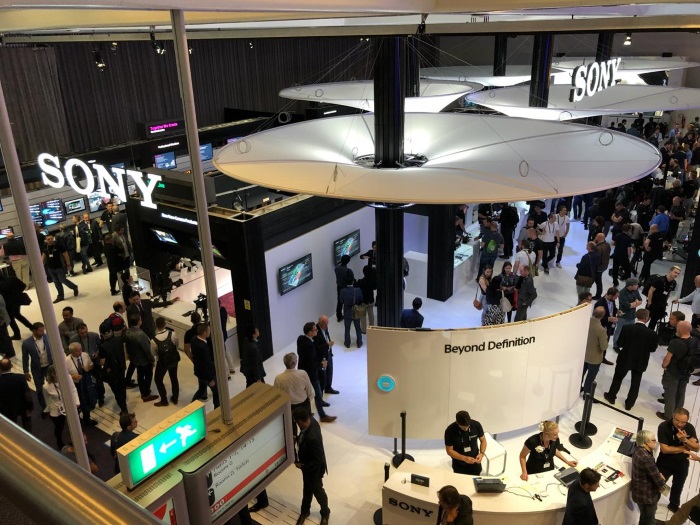
At IBC 2018, Sony unveils its latest line-up of innovative solutions that will allow media companies to capture, edit and share engaging content in 4K and HDR with audiences around the world.

Visitors to stand 13.A10 will be able to discover Sony’s latest innovations, including a new generation of 4K/HD HDR live system cameras; HDC-P50, HDC-3500, HDC-3100, HDC-3170 and a new Camera Control Unit HDCU-3170, a new handheld camcorder HXR-NX200, and a new 4K HDR reference monitor BVM-HX310 as well as updates to many existing solutions such as the state-of-the-art motion picture camera VENICE, Sony’s portfolio of IP live solutions and more. The centrepiece of the booth is Sony’s stunning 5K x 2K Crystal LED display system, showcasing breath-taking imagery with exceptional picture quality.

“Each year at IBC, we unveil innovative new solutions that give media companies the best possible tools to capture stunning content and share it with their audiences – and this year is no different,” says Hany Bartella, head of Media Sales for Middle East at Sony Professional Solutions MEA. “At Sony, we listen and work collaboratively with our customers to create solutions that actively address the challenges media companies face today and provide them with the technologies they need to go and make tomorrow a reality.”

Limitless Potential

Modern audiences consume content across a multitude of devices whenever and wherever it best suits them. To support content creators in meeting these ever-changing audience expectations, Sony is launching Intelligent Media Services, a range of services and micro-services designed to transform traditional media supply chains, unlock more value from content for deeper audience engagement and provide OTT subscription services. Sony provides solutions according to customer’s needs, helping them to create, control, connect and deliver content anytime, anywhere, to an unprecedented range of distribution platforms. Sony’s Intelligent Media Services portfolio includes:

  • New Media Solutions – A fully managed digital supply chain service, offering content distribution solutions in a variety of models depending on customer needs.
  • Virtual Production – A subscription-based, on-demand solution hosted in the cloud that provides a complete production toolset for simultaneous, multi-platform professional streaming and requires no infrastructure or upfront investment. Red Bull has recently taken advantage of Virtual Production to capture and stream in live its Alpenbrevet motorcycle race, which took place in a remote location in the Swiss Alps.

Cloud-based Production Services – XDCAM air, an ENG subscription service, and Media Backbone Hive, a multi-platform news production system, are both cloud-based solutions that support content creators to ingest, edit and view footage before distributing it across various platforms and OTT services in file and by streaming in live.

Sony’s PXW-Z280 and PXW-Z190 XDCAM handheld camcorders will also receive a firmware update (version 2.0)* based on the technology of XDCAM air. This update will expand the capabilities of both camcorders to include dual link QoS streaming, HEVC streaming, network intercom and remote control.

*CBKZ-SLNW1 (optional) is required for PXW-Z190.

  • Safe Asset Solution –Optical Disc Archive and Memnon ensure valuable assets safe and accessible from anywhere in the world with flexible system set-up from advanced cloud storage to on-premise storage with ultra-rugged physical media maintaining a pristine, organized and secure online repository of assets.

Moreover, powerful and affordable content management and workflow solution, Media Backbone NavigatorX is also showcased at Sony booth.

The Art of Live

Sony has unveiled four new live production system cameras further expanding and evolving Sony HDC family well acclaimed by broadcasters and media companies across the globe. HDC-P50, a 4K HDR Point of View (POV) system camera and HDC-3500 portable system camera boast the world’s first 2/3-inch 4K global shutter three CMOS sensors. The new portable system cameras HDC-3100 (Fibre) and HDC-3170 (Triax) also make their debut at IBC 2018. The next generation of system cameras will offer content creators unprecedented flexibility and mobility in addition to the premium 4K/HD HDR picture quality and IP capability they have come to expect from Sony solutions.  Additionally, Sony has also introduced a new Triax Camera Control Unit (CCU), the HDCU-3170, to work in conjunction with the new system cameras.

Another major trend across the industry is the rapid adoption of IP live solutions to reduce infrastructure cost and streamline workflows. Broadening the SMPTE ST 2110 compatibility of its Live Production portfolio, Sony is today introducing new option / interface boards for its XVS series of multi-format video switchers and for its camera control unit.

As the market gears up for an IP-driven future, Sony has seen rapid global customer adoption of its IP live solutions and continues to support media companies on their journey to IP, including private broadcaster SIC and France Galop in Europe, Mie Television Broadcasting Co Ltd and NARA TELEVISION Co Ltd in Japan, Topcool media and Zhejiang Broadcast & TV Group in China, as well as broadcasters in the US.

To overcome the common challenge of black reproducibility, provide accurate colour reproduction and high-contrast performance, Sony is introducing its new 4K HDR reference monitor, the BVM-HX310. The monitor carries the Sony specified million contrast LCD panel, is fully capable of reproducing 4K and High Dynamic Range (HDR) content and supports industry standard brightness of up to 1,000 nits in full-screen and a 1,000,000:1 contrast ratio for HDR productions. The launch of the new reference monitor also marks the introduction of Sony’s new technology brand TRIMASTER HX.

Emotion in every frame

For cinema and drama productions, Sony is expanding the creative capabilities of its flagship CineAlta Motion Picture Camera VENICE through Version 3.0 firmware upgrade and a new extension system. The new extension system is

lightweight as 1.9kg with PL mount and 1.4kg with E-mount allows the camera body to detach from the image sensor block with no degradation in image quality.  It greatly enhances the mobility and operability of the VENICE when filming with gimbals, handheld stabilizers, underwater and helicopter housings, and 3D/VR rigs, as well as in tight and unconventional spaces, such as in vehicles, on cranes or Russian arms. Version 3.0 firmware will add a new recording format profile X-OCN XT, enabling to capture the highest quality imagery with AXS-R7 portable memory recorder while maintaining exceptionally economical file sizes comparable to Sony F55RAW, making the workflow affordable and efficient.  Both firmware upgrade and the extension system will be available in February 2019.

Together we create

For event productions, Sony is introducing its new NXCAM handheld camcorder, the HXR-NX200, capable of capturing stunning 4K high resolution content and beautiful, life-like colour reproduction. The HXR-NX200 is a cost-effective solution boasting all the professional features videographers need in a robust yet compact chassis with long battery life. 1.0-type Exmor R™ CMOS image sensor with 14.2 megapixel makes it possible to achieve high sensitivity and deliver superb image quality in 4K. Furthermore, thanks to the large high-resolution sensor, content creators can effortlessly achieve superior image quality when shooting in HD. The latest addition to Sony’s NXCAM family is  perfect for on-the-go shoots and allows content creators and videographers to focus on what they do best, with minimal hassle.

Sony’s DWR-R03D DWX digital wireless receiver will also be showcased in conjunction with Yamaha’s QL series digital mixer. As part of the upcoming firmware updates for both DWR-R03D (version 1.10) and the CL and QL series (Version 5.10), the DWR-R03D can be monitored and controlled directly from the mixing console, via expanded Dante device support. Moreover, the DWR-R03D can also be patched on the Yamaha mixer without the Dante Controller. This collaboration will further expand the operability of the DWX digital wireless system. The new firmware for the receiver will be available around November and it will be free of charge.

Sony’s Venice motion picture camera provides unprecedented flexibility for filmmakers

Sony’s VENICE motion picture camera, which has been embraced by the production community, will enhance its usability and flexibility with the VENICE Extension System and Version 3.0 firmware updates in February 2019.  The lightweight 1.9 Kg with PL mount and 1.4 Kg with E-mount), easy to use tethered extension system allows the camera body to detach from the image sensor block with no degradation in image quality, from 2.7m or 5.5m feet apart, offering a highly configurable and portable method of operation. The new Extension System is compatible with existing and new VENICE cameras. A user can quickly configure and freely use only VENICE’s image sensor block to capture uncompromising imagery on site, customizing the camera for specific scenarios.

As shooting environments and capabilities become more advanced and demanding, VENICE users can expect the same image quality and integrity when using the robust Extension System, which enables VENICE to become highly mobile and discreet for many mounting setups and filming scenarios including use with gimbals, handheld stabilizers, underwater and helicopter housings, and 3D/VR rigs, as well as in tight and unconventional spaces, such as in vehicles, on cranes or Russian arms.

After detailed discussions and further collaboration with James Cameron’s Lightstorm Entertainment, a prototype of the VENICE Extension System was engineered to meet their rigorous needs as they begin shooting the AVATAR sequels.  Since this hardware was first demonstrated at Cine Gear 2018, additional refinements have been made in response to industry requests.  Several productions have already sought out the ergonomics, small footprint and agile form factor the Extension System offers, while taking advantage of VENICE’s built-in features including built-in 8-step mechanical ND filter system and Dual Base ISO (ISO500/2500).

The VENICE Extension System (CBK-3610XS), which consists of a front panel cover, image sensor block case with a 9-foot cable and a 9-foot extension cable, is compatible with existing VENICE cameras with Version 3.0 firmware installed.  The addition of the Extension System adds an HD-SDI output, a 12V or 24V output for powering accessories such as lens servo motors and monitoring. CBK-3610XS also comes with multiple screw holes on all surfaces to enable various rigs and accessories attachment.  It is planned to be available in February 2019 at Sony authorized VENICE resellers.

Also available in February 2019 will be the free VENICE Version 3.0 firmware upgrade, which further augments VENICE’s capabilities, incorporating feedback from filmmakers and protecting customers’ investment by allowing the camera to grow with the user.  Version 3.0 firmware will add a recording profile within the X-OCN (extended tonal range Original Camera Negative). This new profile, called X-OCN XT, captures the highest quality imagery with AXS-R7 portable memory recorder. For demanding visual effects work and productions requiring the utmost, uncompromising image quality from VENICE, the new X-OCN XT profile maintains exceptionally economical file sizes comparable to Sony F55RAW file size, making the workflow affordable and efficient.

Other highlights include:

  • New imager modes, including 6K 2.39:1 and 5.7K 16:9 for greater shooting flexibility
  • Additional de-squeezed ratios for various anamorphic lenses (x1.25, x1.3, x1.5, x1.8), as requested by filmmakers
  • Cache REC for a maximum 30 sec in X-OCN 4K 17:9 AXS Memory / HD MPEG 50 SxS memory, so you don’t miss a shot
  • 6G/12G-SDI switchable output enabling 4K SDI output
  • Wireless Remote Control with CBK-WA02 for wirelessly controlling and changing key functions and menu settings for increased flexibility.

The latest roadmap of VENICE firmware update is available here.

The true story behind Kenyan medical thriller 18 Hours

0

SCREEN AFRICA EXCLUSIVE: In 2015 Alex Madaga, a labourer from Nairobi in Kenya, was a victim of a hit and run accident. Madaga was fortunate to survive the incident itself, only to pass away just 18 hours later when the ambulance carrying him was turned away at five different hospitals because he lacked the funds needed to be admitted and treated.

The tragic events that led to Madaga’s death and saw Brian Ochieng Odhiambo spend 18 hours in an ambulance attempting to save his life, made news headlines.

“I read the story on the daily newspaper back in 2015 when the story of the late Alex Madaga hit the news. My first impression was, how can this happen in Kenya’s capital city? How can an accident victim be denied admission on the basis of lack of money? It felt like a story that needed to be told, to serve as a reminder that such a situation occurred, and it should never occur again. It felt like holding up a mirror for our society and pointing out that there are avenues for change, many opportunities to make things right.” expresses Kenyan award-winning filmmaker, Kevin Njue.

Njue was inspired to pen down a film based on the brave paramedic’s ordeal, in an effort to inspire debate and seek change in the regulation of Kenya’s health system.

Odhiambo, the heroic paramedic, worked as a consultant to Njue during the development stage of the filmmaking process, offering invaluable insight into the life of a paramedic. Additionally, Odhiambo provided intricate detail on the events that cost Madaga his life on that fateful day.

In the film – aptly titled 18 Hours – Zach, played by Nick Ndeda, works for Raven Paramedics Services. While on duty, he receives an emergency call from a witness about an accident that happened along a highway; a pedestrian has been involved in a high-speed hit and run while on his way home from work. Zach then sets out on a rescue mission with his driver Mark, played by Brian Ogola.

Zach and Mark find the injured man bleeding profusely from his head and not moving – they manage to get him into the ambulance. The two men are later joined by the victim’s wife Sabina, played by Sue Wanjiru. Together they set out to different hospitals in a race against time to save the victim’s life.

Rejected by those who are meant to assist them, Zack makes every effort to keep the man alive. After spending 18 hours in the ambulance attempting to save the man’s life, he is finally admitted to a hospital but dies shortly thereafter.

18 Hours – written and directed by Njue – was shot on the Sony A7s, in and around Nairobi and Machakos in Kenya in just 12 days. “We filmed on the Sony A7s mainly because of its performance in low light. The camera is tiny compared to others which was a bonus for our handheld style,” says Njue. “We wanted to achieve an ‘out of body’ experience with the feel of the film through our handheld documentary style,” he adds. Production and post-production were handled by Rocque Pictures.

18 Hours made its debut in Kenya late last year, which included a marketing campaign with Kenyan athlete, David Rudisha to advocate for better emergency response in the country. The film was also instrumental in pushing for the Kenya Health Act of 2018 which states that health facilities should administer necessary immediate health care to prevent death or worsening of a medical situation.

“The highlight of the film so far has been the reception it gets from the audience wherever we have screened. More so, the impact it has had on the health policy push in the country,” Njue comments.

The film will kickstart its festival run with the upcoming Zanzibar International Film Festival, which takes place from 7 to 15 July 2018. “Zanzibar is the first festival screening. We had to start here because it was where we first screened our first short film back in 2014. It is our second home. As for other festivals, there are several lined up within the year,” Njue concluded.

TECH CHECK 

EQUIPMENT

  • Camera: Sony A7

KEY CREW:

  • Writer/Director: Kevin Njue
  • Producer: Phoebe Ruguru.
  • Editor: Mark Maina
  • Sound: Ronald Mugambi


Eclipse Innovations supplies Phumelela with the first Sony FB80 and BRC series cameras for sporting in SA

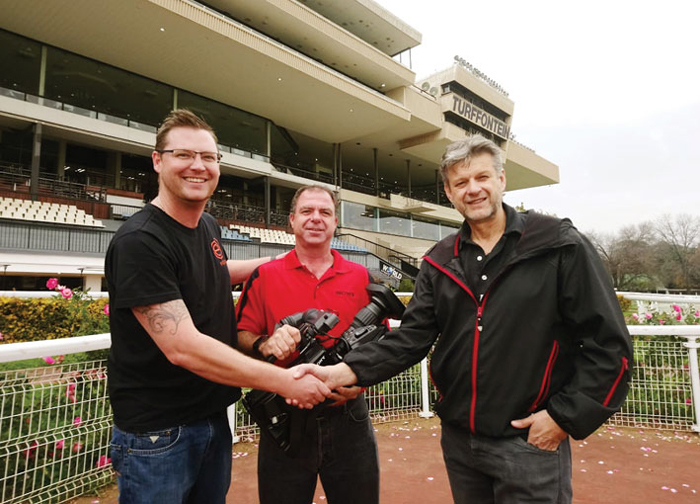
SCREEN AFRICA EXCLUSIVE: Phumelela Gaming and Leisure have recently acquired the new Sony HXC-FB80 and BRC-X1000 cameras. Delivered through Johannesburg-based broadcast and media production company, Eclipse Innovations, the purchase by Phumelela marks the very first sale of the HXC-FB80 and BRC-X1000 cameras for sporting in South Africa.

Phumelela Gaming and Leisure is responsible for all contribution feeds of horse racing from Turffontein, Vaal, Fairview and Kimberley Race Courses in South Afirca. These pictures are distributed around the world daily. “Phumelela are always updating their systems to keep in line with global trends and broadcast standards. The Sony HXC-FB80 and BRC-X1000 cameras will be installed in our OB van and used to cover daily horse race meetings and monthly boxing tournaments,” comments a representative from Phumelela who praises the price point, flexibility and performance of the cameras.

The Sony HXC-FB80 is a full HD studio camera system with 4K upscale and HD HDR capability. Sony dubs the camera as an ideal solution for 4K/HD live production, delivering efficient operation and expanding applications in the business and industry market, in addition to the content creation applications for broadcast and production. Sony’s first 4K remote camera, the BRC-X1000 is a 4K pan tilt zoom camera with 1.0-type Exmor R CMOS sensor that remotely captures broadcast quality 4K images with smooth, silent PTZ and excellent low-light sensitivity.

When the discussions to procure new HD cameras for the race course began, Eclipse Innovations knew that the Sony HXC-FB80 HD/4K camera chains would be the best fit for the race track. “This FB80 camera is the latest HD/4K offering from Sony and in our view one of the best available to the market at the moment,” explains James Garden, MD of Eclipse Innovations. “When we needed to look at the remote camera requirement, we used the BRC-X1000 IP camera. This will be operated over fibre and fully controlled in the OB vehicle. With this system being IP-based we can scale it up to 100 remote cameras, future proofing this capital expenditure as and when the need arises. When it comes to budgets in the broadcast market it is always something we need to keep in mind as suppliers, as well as to look at final costs for customers in order to get them the most bang for their buck, and the Sony FB80 proved to be the option that best suited the application and budgets. In so many cases clients experience open wallet surgery when doing technical upgrades and it is our aim to best service our customers not only in terms of service levels but also with the most suited products.”

Paul Martin, business head for Broadcast and Media sales in Africa at Sony Professional Solutions MEA comments: “We are very pleased that Phumelela have chosen Sony cameras to capture the excitement and action of horse racing and boxing. These camera systems will help future proof their content for viewers to enjoy on the fast-growing choice of High Dynamic Range TV sets and display devices.”

ARRI, RED, Sony? Local industry pros pick their favourite cameras

SCREEN AFRICA EXCLUSIVE: The common consensus is that the production values of South African films have developed significantly in recent years. We’re seeing a wider variety of shots in a more diverse array of settings, greater experimentation with low-light shooting and a consistent output of great-looking films.

But what specific cameras are driving this success? A quick look at the equipment employed by this year’s Oscar-nominated films reveals a heavy bias towards ARRI cameras, and in particular the Alexa series (The Shape of Water, Get Out, Mudbound, Blade Runner 2049, The Darkest Hour), with only Paul Thomas Anderson’s The Phantom Thread (Panavision Panaflex) and Christopher Nolan’s Dunkirk (IMAX MKIV) bucking this trend.

Does this preference also hold true for South African filmmakers?

When discussing his favourite pieces of equipment, Bruce McLaren-Lyall, senior editor (3D and Post) at The Ergo Company, is passionate about the role of the camera in the process of filmmaking:

“When you think about it, the camera is like an actor on set; arguably, the most important actor. And just like if a lead turns in a dud performance, if the camera is not doing its job, it doesn’t matter how great the script is, or how much potential the film might have had. It won’t connect with the audience.”

McLaren-Lyall goes on to explain that, from his position behind the editing desk, the job of evaluating cameras based on the raw footage he receives comes down to a “complex chain of three factors. Lighting and lenses, the camera body and the operator. You can get a sense of the lenses they’ve used and the lighting setup from the footage itself, and I work with footage coming in from different operators from all over the world. It’s a very delicate chemistry between those three factors, but – from my point of view – you tend to see certain camera bodies outperforming the others on a consistent basis.”

He is definitive in his appraisal. “The ARRI Alexas are unbeatable. On a consistent basis, the whole series – the XT, the Mini, especially when paired with Panavision lenses – gives beautiful depth, and incredible colour range in all kinds of lighting situations. You look at the raw footage and you immediately see potential in the grade; you don’t see problems. Other cameras I’ve worked with in post – like the Sony F65s and F55s, and the RED Dragons and the RED Scarlets – produce wonderful images, of course, but we go back to that chemistry between lighting, body and operator, and people just don’t seem to be able to get it as right as often. Maybe that means the ARRIs are more forgiving cameras, are more user-friendly,” he says. “But you can’t argue with the consistency and the quality of the images they produce.”

Meanwhile, Warrick Le Seur, one of the founders of Bounceboard Productions and a South African Society of Cinematographers award-nominated DoP, says, “I find that I always have a tendency to drift towards the RED range of cameras when given the choice. I think it’s the lightweight, compact bodies and easily-navigated touch screen menu that appeal to me. Although, there is also the ARRI Mini, which is an amazing camera – providing the user with ARRI’s incomparable colour science in a compact body – but I think by the time it came out I was already deep into my love for the REDs. I prefer to work on a lighter camera that won’t break my back at the end of the day but can still give me the image quality I desire, and this is where the RED brains excel for me. My ideal camera needs to be able to fit into every corner I find myself shoved into, as well as to easily switch from tripod, to gimbal, to crane or even to drone.”

Le Seur goes on to say that, “Resolution is also an important aspect for me. I feel that so much is done in post these days, allowing that extra resolution for some play in the post-production room can help a lot, especially during VFX. This is where the 6K capabilities of the RED Dragon, or the 8K of the Helium and Monstro sensors, really stand out from the rest.”

Amy Jephta – a director whose short film Soldaat won the 2017 KykNET Silwerskerm Award, and whose debut feature, Ellen, will hit South African theatres later this year – explains that although she is not particularly “technically minded”, when it comes to selecting equipment, she “likes for film to look like film. There’s something about the material nature of film that works with the style I enjoy: stark naturalism, an almost documentary feel, an organic grain that feels looser and more tactile. Like if you reached out and touched the picture, there would be texture to it. I don’t personally feel that the kind of work I want to make (intimate, close, emotional) is served by the edge and tight grain of digital. But although every filmmaker would love to, it’s not always possible to shoot on film, so I’m interested in how a cinematographer can achieve the same equivalent look and feel, toning down the sharpness of digital. My short film was shot on an ARRI Alexa Classic fitted with Zeiss Super Speeds, and that got very close to what I wanted to achieve.”

With some exciting rumours circulating about camera developments in the second half of 2018 – including new models from Sony and Blackmagic, as well as the release of the RED Hydrogen (a cellphone which promises to display “4V Holographic Video” content, and which will allow users to control RED cameras wirelessly) – it will be interesting to see which cameras remain at the vanguard of South African film production.


- Advertisement -
- Advertisement -
- Advertisement -

Pin It on Pinterest