Home Authors Posts by Gezzy S Sibisi

Gezzy S Sibisi

129 POSTS 0 JOBS
Gezzy S. Sibisi is a senior journalist at Screen Africa. She is experienced in print, broadcast and digital media. Her portfolio of work includes working as a lifestyle reporter as well as contributing business and education articles to The Times, Sowetan, and Daily Dispatch publications. As a freelancer, she has worked on content development for corporate newsletters, community newspapers, blogs and educational websites.

Behind the scenes of FCB’s new Coke Phonetic Can campaign

SCREEN AFRICA EXCLUSIVE:

Though twenty-five years have passed since Apartheid, its effects are still apparent in South Africa today. During the Apartheid era, when black South Africans possessed names that were deemed too difficult to pronounce, they were often given common western names.

Creative director at FCB Joburg, Suhana Gordhan, expands: “Imagine that your name was Bonganiokuhlekwamadlamane. Now imagine that you grew up at the height of segregation in Apartheid South Africa. Your name was a problem, and so was your native language. The government decided it was easier to just call you ‘John’. This was the struggle with identity that generations of South Africans faced under an oppressive system. Twenty-five years later, the effects still linger and language still divides us.”

FCB Joburg won the Coca-Cola South Africa account in 2011, and kick-started their partnership with the soft drink by printing South African names on cans in the global Share a Coke campaign.

Share a Coke with Bobby was the 2013 TV commercial and campaign that saw Coca-Cola swap its brand name to feature 600 of the country’s most popular names. Additionally, Coke ran a consumer-led activation campaign which allowed ordinary South Africans the opportunity to have their proudly-African names printed on a can. In the midst of its success, a can was found with a profane Tsonga word written on it. The profanity slip prompted discontinuation of the consumer-led element of the Share a Coke campaign.

“The ‘slip’ was a very unfortunate incident whereby one individual took it upon themselves to abuse the ability to put one’s name on a Coke product. This resulted in hundreds of thousands of South Africans losing out on the opportunity to enjoy receiving their name on a Coca-Cola. There will always be individuals who deliberately try to deviate from the norm, but the joy brought to the larger population is far greater and more beneficial for the brand than the negative ripple that these acts create in small circles,” comments FCB Joburg Business Unit director, Struan Bourquin.

Now back with an added educational element, the agency presents the Coke Phonetic Can campaign. “For me, this was a very special campaign because I think the subject matter is especially unique to South Africa,” comments Gordhan on the new campaign. “I love that a big brand like Coca-Cola can commit to using their real estate on packs to help solve a social problem. In the past, Coca-Cola has placed people’s names on cans. However, The Phonetic Can took it further by adding the pronunciation to people’s names.”

To execute the campaign, Gordhan had an equally dedicated and passionate team working by her side, namely senior art director Jonathan Wolberg, senior copywriter Paul Frade, as well as art directors Jeremy Miller and Yaseen Mahomed.

“Our vision was to introduce South Africa to South Africa, by putting the phonetics of each name from all the different languages and cultures on Coca-Cola packs, effectively teaching South Africans to greet each other, by name, correctly,” Gordhan shares. “At its core, Coca-Cola aims to bring people together, regardless of their differences. So, this campaign felt like a perfect fit to do just that in the realm of Share a Coke.”

The FCB team worked with the Department of Home Affairs to gather names from every part of the country. The list comprised the most popular South African names in all eleven languages and across all nine provinces.

“We started with a list of over 12 000 unique names and ended up with a list of 1 000 names to go on packs, which would give us a high enough coverage of the population,” comments Bourquin.

When undertaking the phonetics challenge, the agency consulted with linguistic professors from multiple universities as well as professional writers who spoke the eleven official languages. Together with these language specialists, the team worked to develop a simple, non-academic phonetic system to help South Africans pronounce each other’s names better.

“The big idea or concept was that by adding the pronunciation to people’s names, the Coca-Cola packaging became much more than an acknowledgement of identity – it became a teacher, a change-maker. Wherever there was a Coke can, there was an opportunity to learn, or at the very least, to just try. The can became an invitation to say a name without fear. It became a way to bridge language divides, an educational tool and a symbol of cultural pride,” says FCB Joburg chief creative officer, Jonathan Deeb.

The Coke Phonetic Can campaign commenced in November 2018 with just the name and pronunciation initiative, but by the first quarter of 2019, it expanded with countrywide activations on TV, radio, cinema, billboards and social media platforms. And, excitingly, the vending machine model that was introduced with the original Share a Coke campaign made a comeback, allowing many South Africans the opportunity to get their hands on a personalised can. “The response was overwhelmingly positive,” remarks Bourquin. “It has shown us that South Africans really embrace truly South African stories and executions.”

Produced by Johannesburg-based Bioscope Films, under the direction of Fausto Becatti with DoP Fabian Vettiger, ordinary South Africans were featured in over 30 pieces of TV and online content sharing the story behind their unique names. “The brief from FCB was to focus on finding real people, with real names, and to tell genuine and entertaining stories with the knowledge that South Africa has such a diverse and interesting populace. A big part of my treatment was to put an emphasis on the heartfelt or more meaningful stories to balance out the funny ones, having had a personal history with a name that is almost always mispronounced,” Becatti shares.

The stories were shot using three cameras: the Sony Venice as the A-cam; the Arri Amira as the B-cam; and the Canon 8mm camera as the C-cam. “The Venice was chosen because of its full-frame sensor with the intention of shooting wide open, and giving us a sense of a medium-format portrait look and feel,” explains Becatti. “We kept it very simple in the set-up as our master shot, without too much movement, to act as the most basic shot of documenting a story.

“The Arri as a B-cam would capture a bit more movement and alternative angles to keep the edit interesting, and also to capture more of the character’s mannerisms or quirks both in their way of talking or their homes or rooms,” he continues. “The C-cam was simple but an incredibly important choice in the mix because it acted as the purest form of capturing our characters’ spirits. The 8mm film, not only rich with a sense of nostalgia but also loose and gritty, meant that we got cutaways that were the most raw and pure versions of the people.”

The Coca-Cola YouTube channel created a teaching series titled Share a Sound to teach complex sounds such as the ‘q’ and ‘x’ click sound commonly found in Zulu and Xhosa names. The series has since gained much attraction from viewers, including a school teacher who has requested the use of the series in the classroom.

Bourquin expands: “We received a message on our YouTube channel from a school teacher asking if she could use the content as a learning tool. This is, of course, exactly the intention of the campaign and led us to create specific sound boxes which could be used to further help learners understand how to pronounce our names.”

Radio station hosts such as 702’s Bongani Bingwa shared their support of the campaign with their listeners. Other national radio stations went as far as changing their names and jingles for the day to the most difficult names in South Africa.

In addition, out-of-home activations were strategically implemented in different regions with deliberately mismatched languages broadcast to introduce communities to other native languages besides the ones spoken in that area.

“People who were featured on billboards even shared pictures of themselves standing under their billboards. These were shared to social media. I think it meant something for these young people to be represented by the brand in such a personal way,” says Gordhan.

The project was one of the largest integrated campaigns ever tackled by FCB Joburg and has been awarded internally amongst FCB’s global creative executive committees. “Navigating the sheer volume of content that we created for the campaign to ensure diversity and inclusion was probably the biggest challenge. This was one of those liquid ideas that continues to allow us to expand our content arsenal,” highlights Bourquin.

The campaign received two shortlists at Cannes Lion this year, and Coca-Cola’s No Sugar offering, which featured across all content during the campaign, has experienced an increase in sales.

“I believe that this campaign is relevant to our times – a time in South Africa when social cohesion is more necessary now than ever before,” concludes Gordhan.

KEY CREW:

Senior art director: Jonathan Wolberg

Senior copywriter: Paul Frade

Art directors: Jeremy Miller and Yaseen Mahomed

Director and photography: Fausto Becatti

DOP: Fabian Vettiger

Editors: Daniel Mitchell, Tumi Ditshego, Joe de Ornelas, Keno Naidoo, Jarryd Du Toit, Mohammed Chopdat
Nite Jogger campaign from adidas celebrates the creative awakening of the night

SCREEN AFRICA EXCLUSIVE:

adidas recently launched a new, reflective training shoe collection for the “night time creator.” The trendy sneaker, aptly called Nite Jogger, is inspired by a 1970s shoe of the same name.

“The youth of today burns into the early hours of the morning, expressing themselves creatively without the boundaries of what their mundane day to day provides. Whether its work or school or making ends meet during the day, the night time is when the magic takes place and this is where we wanted to play – at night, in the heartbeat of this creative awakening,” says Martin Magner, creative director of Andpeople.

Andpeople – a creative agency of youth engagement specialists – has been working with adidas Originals South Africa for over seven years now. Their partnership is inspired by their shared vision of creating value in youth culture through creative empowerment.

“The brief was to establish the adidas Nite Jogger’s unique proposition within the market and the creative process took place within our dynamic team. We are all actively part of this creative awakening – between us we throw nightlife events, teach yoga and make music all on top of our 9 to 5s,” Magner comments.

With the campaign tagline, ‘What you are in the day is not what you are at night’, the team at Andpeople fittingly chose to play with music and dance as the central themes. Magner expands: “’What you are in the day is not what you are at night’ guided us into the music and dance space. When looking at South Africa, the most accessible form of creative expression is dance. Dance allows us to communicate without words and express who we are – something that every one of us can relate to, and experience on every corner, club or household when the sun goes down.”

Durban’s gqom music sensation, DJ Lag, and sultry singer and songwriter, Shekinah, were brought together to create a song and subsequent music video for the campaign. Using the phrase ‘Creative Awakening of the Night’ as inspiration, they were tasked to develop a catchy tune that resonates with young people and encourages dance expression. “Pairing DJ Lag’s nation-moving gqom sound with Shekinah’s hearty, smooth as honey vocals felt like a no-brainer. I’m the biggest fan of an unexpected collaboration, and the collision of these two is something I never knew we needed. Shekinah and Lag both have their unique audiences and together they’re a force,” says Magner about the unique pairing.

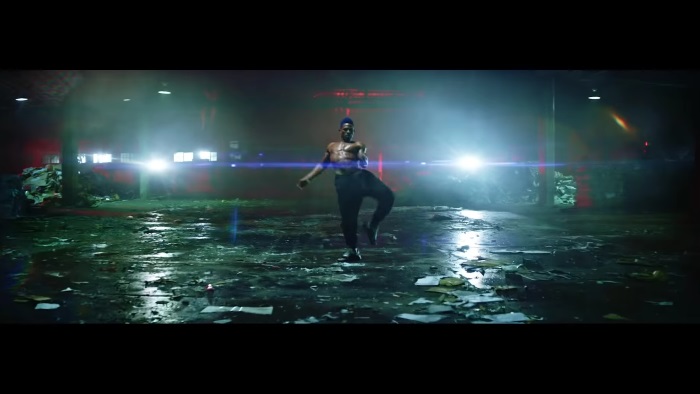
The vibey track and accompanying music video – directed by award-winning director Kyle Lewis and shot by Devin Tosselli – is titled Anywhere We Go. The video features dancer Thami Njoko, wearing the adidas Nite Jogger sneaker while expressing himself through dance after dark.

“From the very beginning we wanted the focus to be on the expression of dance as well as the track itself – the integration of the artists is nuanced but present, never overshadowing the dance performance,” comments Lewis. “I wanted to focus on those who are inspired by the music and the emotions behind it rather than do the traditional artists-feature. Both Lag and Shekinah were on the same page as me: it was like after they contributed their creativity, they wanted to pass it on to someone else.”

Lewis says that the brief was open and collaborative, and everyone was given respect regarding their creative process and input in the project: “It was a fantastic process… they allowed me to conceptualise and create the visuals and trusted me completely, which can be rare in this field. It’s always a blessing to be allowed to create in this way as a director.”

Lewis sought the assistance of producer Vjorn du Toit to find a gifted dancer that could execute his vision. After a brief search, the pair found their guy while doing a random search on YouTube. “His control of his body and his knowledge of various different genres of dance was awe-inspiring. He really captivates you and draws you in, which is exactly what I was looking for,” comments Lewis.

Anywhere We Go was shot on the ARRI Alexa and Phantom cameras, paired with Panavision C Series Anamorphic Prime lenses. The shoot took place at night, at a paper recycling plant in Epping, Cape Town. Njoko glistens as he performs, bare-chested and wearing only Adidas track pants paired with Nite Jogger sneakers.

“I wanted to explore dance and how it can express inner emotions without words. I wanted to use sci-fi as a notion of not feeling like you belong,” shares Lewis, who took a creative risk by incorporating the use of VFX to complement the performance. “I am a big fan of in-camera, but for this piece, I wanted to explore more VFX, especially with the sci-fi tone. It was a departure for me but my incredible FX artist and long-time collaborator, Blake Prinsloo, put me at ease.” The pair started the process by doing a full 3D scan of the dancer. More effort was placed on 3D and compositing to achieve the desired look. Post-production was handled by Stephen du Plessis from 2+3 Post Productions in Cape Town.

Shekinah makes brief appearances in the video as television noise captured in an old black and white TV, while DJ Lag appears in the form of a silhouette on the wall, with the lyrics of the song running across him. “With Lag, I wanted him present but in an interesting way. It was inspired by the adidas aesthetic as well as the lyrics of the track,” Lewis shares.

The video was released on multiple digital streaming platforms on 24 May 2019. DJ Lag, who has been working with adidas for two years now, shared about how the brand has been a strong supporter of his music and dedicated the track to all creatives chasing their dreams, saying: “This is for all creatives that never sleep on calling the dream.”

  • Gezzy S Sibisi

KEY CREW

Producer: Vjorn du Toit

Director: Kyle Lewis

DoP: Devin Tosselli

Editor: Stephen du Plessis

Music: DJ Lag and Shekinah

The making of musical documentary The Sound of Masks

SCREEN AFRICA EXCLUSIVE:

Mozambique was under Portugal’s control for over four centuries before gaining independence in 1975. Since then, many stories have been told about the country’s past and post-colonial state, but none as visually entrancing as Sara Gouveia’s musical documentary film, The Sound of Masks. Screen Africa spoke to Gouveia about what went into the making of the film…

Gouveia spent most of her early years living in Portugal. As a creative and curious young girl, she enjoyed expressing herself through visual and performing arts. However, it was only later in life – while pursuing her studies in visual arts – that her interest in filmmaking surfaced.

“When I was 18 I moved to the UK to study visual arts and that’s when I started experimenting with photography and video. I instantly fell in love with both mediums… In 2007 I was invited to study for an MA in Photojournalism and Documentary Photography, so I took that opportunity, which took me to China for a year. In 2008, I moved to South Africa and I worked on a documentary film with Angela Ramirez and Calum MacNaughton called Mama Goema: The Cape Town Beat in Five Movements (2011). I would say it was after we finished that film that I decided I wanted to pursue filmmaking as a career and I haven’t looked back since,” Gouveia shares.

In 2013, Gouveia and some of her industry peers decided to open their own film and video production company – Lionfish Productions – in Cape Town.

Lionfish has produced a variety of projects over the past six years but the documentary film, The Sound of Masks, has been their biggest undertaking thus far. The idea for the film came about in 2011 after one of Gouveia’s many trips to Mozambique. “I was interested in working on a project that looked at colonial history, since I grew up in Portugal, so there was that historical connection,” she says. “I felt we had been told a narrative in Portugal that didn’t seem to reflect what I had seen in southern Africa or how people in Mozambique perceived the Portuguese, so I started to question that Euro-centric version of history.

“When I met Atanásio and his dance group they spoke of that history through their work, so it seemed fitting to make a film with them,” she explains. Atanásio Nyusi is a legendary Mapiko dancer, a compelling storyteller, a father and a librarian who Gouveia was first introduced to when Nyusi’s dance group, Massacre de Mueda, performed at the Out of the Box Festival in Cape Town in 2011.

“I was intrigued by their performance, which was a mix of traditional and contemporary dance, music and theatre, and I was particularly captivated by the way Atanásio directly addressed the audience, asking uncomfortable questions, kind of like saying, ‘Let’s not forget’,” expresses Gouveia.

In The Sound of Masks, Nyusi performs the enchanting Mapiko dance – the traditional masked dance of the Makonde that originates from the north of Mozambique and Tanzania. “The masks can represent anything the sculptor feels inspired to create, such as men, women or even animals and the lipiko (dancer) represents a spirit,” Gouveia expands.

The Mapiko dance has evolved with each generation. Nowadays it is used as a catalyst for social commentary and is also performed during initiation rites of passage, as well as in various celebration ceremonies.

In the film, Gouveia delves into Nyusi’s life behind the masks, revealing his beliefs, fears and aspirations as a father and a custodian of the Mapiko tradition.

“Atanásio’s journey is emotional. He’s trying to leave a legacy as an artist and his plight in promoting Mapiko in a contemporary context is inspiring, but he has also realised that he has perhaps failed to pass this knowledge down in his own home. That becomes clear when he says he feels indebtedness towards his son. This is the moment he realises the growing distance between the two of them and all the stories he could have shared with him; sometimes we don’t notice things until it’s too late. These aspects of Atanásio’s life converge to comment on the tension between past and present, tradition and modernity, in a radically shifting country.”

Through Nyusi’s journey, the film explores significant events in Mozambican history and what remains today. These stories are told by ex-combatants that Nyusi spends time with in the Zona Militar in Maputo – an old military neighbourhood.

“The neighbourhood was initially an area of Portuguese military headquarters and during the war it was occupied by Mozambican combatants. This was a central area of the city with access to hospitals, schools, supermarkets and other facilities that made life easier for soldiers. The group of Makonde combatants in the area made a point of keeping their traditions alive and, these days, one can still find Mapiko being performed under the large mango tree, usually during specific national commemorations or during the initiation rites, when the place comes alive,” Gouveia shares.

The area is also where Nyusi and his group hold their dance rehearses. Most of these dancers are descendants of the ex-combatants and use the dance to teach the newer generation to keep their heritage alive.

Production

In 2013, Gouveia and her small team from South Africa commenced production on the film. She says that she imagined the film having two story-worlds: “the first was the vérité-world, where we see Atanásio in his day-to-day life, and the other was the oral storytelling world, where his art, memories and traditions come together to tell mythological stories that also teach.”

However, the team soon realised that the dances on location didn’t translate well on camera and opted for a studio set-up for the dance scenes. “Once that space had been established we could then have the dance sequences on location and it was easier for the audience to take meaning from the stories being told. Intercutting archive with the dance sequences allowed us to highlight the meaning behind some of the masks,” says Gouveia.

The archival material used in the film was obtained from different sources including INAC (Instituto Nacional de Audio-Visual e Cinema), ZIMMEDIA, Moving into Dance Mophatong, RTP and Notícia, as well as from the personal archive of both Atanásio Cosme Nuysi and Paolo Israel.

The film was shot on the Sony FS7 camera with some sequences shot in 4K. “(It) offered us great slow-motion options, which for the dance sequences was a must. You can also record sound into the camera, which is wonderful,” says Gouveia.

The studio sequences were filmed in Cape Town at the Höerskool DF Malan. The rest of the film was shot periodically on various trips to different parts of Mozambique. Additional scenes were shot on the Unity Bridge across the Ruvuma River, on the border between Mozambique and Tanzania.

In 2017, Gouveia partnered with a Portuguese production company named Ukbar Filmes: “I showed them a very rough cut of the film then and they saw the potential and jumped on board… They managed to find finishing funds in Portugal, which allowed us to wrap the film in November 2018, just ahead of its premiere at IDFA (International Documentary Film Festival Amsterdam).”

In terms of post-production duties, Khalid Shamis handled the offline edit: “I wanted to work with him for two reasons: firstly because he is a really talented storyteller, and secondly because he is familiar with Mozambique and I thought it would be beneficial to have someone who knows the energy of the place in the edit room,” says Gouveia.

Tiago Correia-Paulo, a Mozambican musician and songwriter, created the soundtrack for the film. Online was done in South Africa and Portugal by the respective production companies.

Festivals

The Sound of Masks had its world premiere at IDFA and its African premiere at the 2018 Marrakech International Film Festival.

The film is screening at the Durban International Film Festival (DIFF) – currently running until 28 July – where it is competing in the Documentary Film section, and all this after making its first appearance at the Durban FilmMart in July 2014, where it was awarded the Most Promising Documentary Pitch.

Most noteworthy, The Sound of Masks will make its way to Mozambique for the Maputo Fast Forward Festival happening in October later this year.

“The film really comes down to connecting past, present and future: knowing the past, to understand the present and to imagine the future,” concludes Gouveia.

KEY CREW

Director and DOP: Sara CF de Gouveia

Editor: Khalid Shamis

Sound: Pedro Góis

BBC StoryWorks develops uplifting pan-African campaign for Emirates

SCREEN AFRICA EXCLUSIVE:

Dubai-based airline Emirates has long been in the business of connecting Africans with the rest of the world.

In its latest campaign, the airline called on its existing partnership with BBC Global News, which saw the account handed over to BBC StoryWorks.

“BBC StoryWorks is the commercial content team within the advertising sales division of BBC Global News,” says Richard Pattinson from BBC StoryWorks. “So if there’s a campaign beyond a media buy that involves the creation of branded content, or sponsorship of one of our great BBC editorial series, then we get involved.”

Pattinson and his team were provided with a campaign brief which asked them to increase awareness of Emirates across Africa. “To do this, we worked closely with Emirates’ creative agency, Leo Burnett, to develop a creative campaign consisting entirely of authentic African stories that would resonate with local audiences,” says Pattinson.

The creative team selected fashion, art, literature and music as the central themes to drive their African stories. Three creatives from across the African continent were chosen to be featured as cultural ambassadors and pioneers who celebrate and embody the spirit of Africa.

“At the heart of it, we wanted to produce a snapshot of modern, urban Africa that would resonate with a young and vibrant African audience. This meant it was really important for us to stay true to the stories presented in the films, and to avoid any clichés or worn out narratives. By focusing the campaign on the inspirational talent from across the continent, it allowed their stories to shine through and takes Emirates closer to the heart of their audience in a way that is authentic,” shares Pattinson.

With the aim to showcase Africa as a vibrant, revitalised continent where talent and creativity thrive, the campaign unfolds as a series of commercials or short films that present the inspirational stories behind each creative.

Africa Dreams with Shanelle

Shanelle Nyasiase is a 21-year-old South Sudanese model who was born in Ethiopia and raised in Kenya. Her short film titled Africa Dreams with Shanelle, shows how being an internationally recognised supermodel takes Shanelle to different corners of the world, but it’s her home, Nairobi, that gave her the wings to fly.

The ad is shot at a vibrant street market, dense with colourful African fabrics and garments. Through the ad, Nyasiase recounts how she had dreams of travelling the world as part of a cabin crew from a young age. However, her travelling dreams turned out better than she ever imagined.

Africa Soars with Abiola

Africa Soars with Abiola features Abiola Oke who left New York and a budding career on Wall Street to return to his hometown in Lagos, Nigeria where he started his own media company, OkayAfrica.

Oke shares how creative talents in Africa are reclaiming the narrative of the region and how his company, OkayAfrica has grown to be the leading digital media platform that connects a global audience to African music, film, culture and entertainment.

Africa Moves with Blinky Bill

Kenyan musician, producer and deejay, Blinky Bill Sellanga’s musical identity stems from Africa but transcends to the rest of the world. The performer collaborates with artists from Africa, Europe and other parts of the world.

In Africa Moves with Blinky Bill, the artist explains how his Nairobian roots have inspired his creative talents. Emirates also worked with Sellanga to create the anthem for the pan-African campaign that includes a music video with snippets from all parts of the series.

The music video and song is meant to act as a hero piece for the campaign while the profile films let viewers delve deeper into each creative’s story.

Speaking more about Sellanga’s involvement in the project, Pattinson said: “We worked with Kenyan musician, Blinky Bill, who was also profiled in one of the films to create the music for the campaign. He’s a real talent and was able to translate the original brief into an incredible piece of work. It was always going to be a challenge to create a piece of music that is truly ‘pan-African’ given the sheer number of different musical styles, influences and languages across the continent, but we hope we managed to produce a piece of music that made people feel good and want to get up and dance!”

The campaign roll-out began in February with the short films airing on the BBC World News television channel. The digital launch took place a few weeks later on BBC Reel – the curated global home of BBC’s rich video archive.

“We’ve had a really positive reception so far to the campaign. We share the same view as Emirates in that, it’s impossible to ignore the energy and talent coming out of Africa today – in music, fashion, sport and art – and we wanted them to join the conversation and celebrate amazing, inspiring stories of people constantly pushing boundaries and challenging African stereotypes,” Pattinson says.

“Hopefully we’ve managed to produce something that makes Africans feel a sense of pride, and also something that continues to drive forward the modern positive narrative around the continent and the supreme wealth of incredible talent coming to the fore at the moment,” Pattinson concluded.


South African short film Lace screens at Cannes

SCREEN AFRICA EXCLUSIVE:

The short film Lace follows Garvey, a man hopelessly in love and planning to pop the question to his girlfriend Vida. However, on the night that he is to propose, tragedy strikes and his world is turned upside down. Unable to move on, Garvey uses technology to replay his last moments with Vida over and over again.

The film stars Enhle Mbali Maphumulo as Vida and Richard Lukunku as Garvey. Lesang Tshoke and Adam Lindberg also feature in the short film.

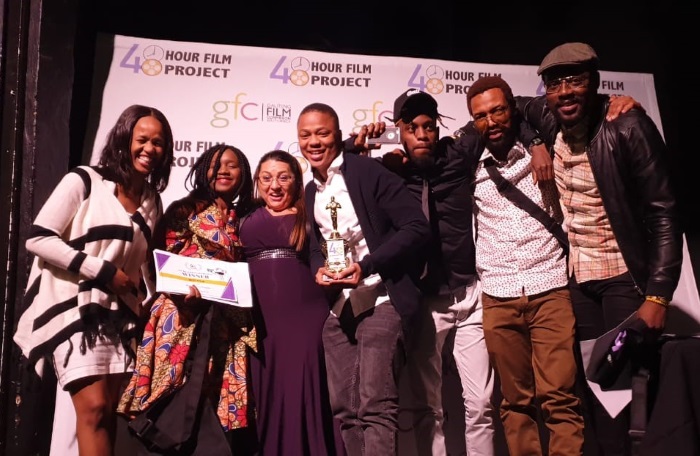
The result of a 48 Hour Film Project (48 HFP) challenge, Lace is the debut film from Johannesburg-based production company, VIVA Pictures.

Producer Neo Ntlatleng comments: “When we formed VIVA Pictures, we were looking to produce narrative projects, and director, Kgosi [Choene] told me that he would like to enter the 48 Hour Film Project. We felt that making a film in 48 hours would be a great way to get our first film – as a company – under our belt. The success of the film is attributed to the talented cast and crew that offered their weekend and time to make Lace.”

VIVA Pictures was among sixty teams participating in the Johannesburg edition of the contest last year. The challenge was to write, shoot and edit a movie in just two days – over the weekend of 22 to 23 September 2018.

The annual competition takes place in various cities across the world. Participating teams are assigned a genre, a character, a prop and a line of dialogue, and are to use all four elements to create a film in just 48 hours.

“Just before kick-off time for the 48 Hour Film Project, each crew was given two genres to choose from. We were given sci-fi and film noir, and we decided to go with sci-fi,” shares Ntlatleng. “With Lace, we wanted to showcase the breadth and depth of African cinema. Through the growth of film styles like sci-fi and horror, African cinema is becoming more marketable and bankable from an international perspective,” he added.

Aiming to stay true to their genre and achieve maximum emotional impact, the VIVA Pictures team managed to produce a relatable sci-fi film. Their unique approach paid off when the short film won several awards at the contest including Best Writing, Best Directing, Best Special Effects and Best Actor.

The film went on to represent South Africa at the 2019 Filmapalooza International Film Festival in March this year, which sees the winners of the Best Film award from each city around the world compete on a global stage.

At Filmapalooza, Lace scooped the Best Actress award for Enhle Mbali Maphumulo’s performance as Vida, Best Writing for Kgosi Choene and the writing team, and the film came in second overall in the Best Film category.

“Lace was received exceptionally well at Filmapalooza. Out of the 5000 short films that were produced globally for the 48 Hour Film Project in 2018, 130 ‘Best Film’ city winners competed in this year’s festival,” shares Ntlatleng.

Prior to the 48 HFP, director Kgosi Choene had worked with VIVA Pictures on a TV show which won them a SAFTA award. So when he was approached to be part of their team for the 2-day project, he gladly accepted the challenge. “It was an enthralling experience as all of our collective skills as filmmakers were put to the test. The most rewarding aspect was being able to produce a story from scratch in such a short space of time,” shares Choene.

The film was shot on the RED One camera by DOP, Diego Ollivier. “We used the RED One camera for a smooth, clean, futuristic aesthetic and we shot with a steady cam rig to give a handheld vibe to make the story more visceral and intimate,” Choene informs.

Lace is an intimate film that shows viewers the deep connection and playful relationship shared by Garvey and his partner. However, everything takes a surreal turn when the viewer later realises that the story is not projecting real-time events, but is instead a replay of the protagonist’s thoughts.

Choene expands: “Our greatest achievement aesthetically was managing to get the audience to feel as though all of what was happening was in real time and all through the perspective of the protagonist. So, we shot it all in one take and added glitches in post-production to give the desired effect.”

Visual effects were done by Tshwanelo Modise. Editing was handled by Kudakwashe Mpambawashe and sound design was carried out by Leroy Zokufa with the film score composed by Zethu Mashika.

“Because we were working with a science fiction story, we wanted it to seem as though the environment in which the characters are in seemed as ordinary as possible until we find out that it’s a different time in the future. We drew inspiration from Black Mirror which demonstrates the dangers technology can have on normal individuals,” shares Choene.

Lace has been celebrated for bringing a new wave of African storytelling to the fore. The film is currently travelling on the international festival circuit having recently played at the Cannes Film Festival. Lace will also be released online later this year.

“I believe the film will be accepted well, not only due to its take on the sci-fi genre, but also because it has universal themes that include love and loss. South Africa has proven time and again, that it can produce quality films that are of international standards and this was just a showcase of that,” Ntlatleng concludes.

KEY CREW

Writers: Kgosi Choene, Richard Lukunku, Neo Ntlatleng, Kudakwashe Mpambawashe

Directors: Kgosi Choene and Linda Radebe

Producers: Sekgametsi Mokoena and Neo Ntlatleng

DOP: Diego Olivier

Editor: Kudakwashe Mpambawashe

Music composer: Zethu Mashika

Red & Yellow presents the second annual Digital Agency Showcase

SCREEN AFRICA EXCLUSIVE:

What drives South Africa’s leading agencies to make successful campaigns? How do they come up with award-winning concepts? And how can one improve their digital skills for marketing success?

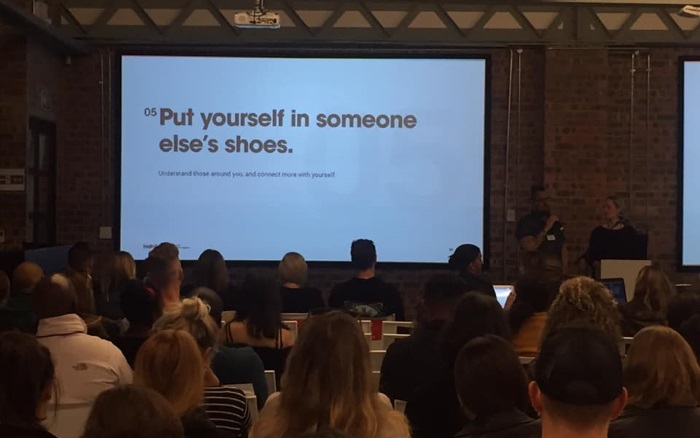
The second Digital Agency Showcase, presented by Red & Yellow Creative School of Business, unpacked these questions, providing attendees with key tools needed to improve their marketing skills for the digital world.

Held on 16 May 2019, the event saw the Red & Yellow Creative School of Business, in partnership with IAB SA, bring six of South Africa’s leading agencies, as well as marketing and advertising students, under one roof at their Cape Town campus in Salt River.

Heléne Lindsay, head of Customer at Red & Yellow School comments: “For 25 years, Red & Yellow has always been driven by the purpose to provide education that is highly industry-relevant and future-focused…We launched the Digital Agency Showcase in 2018 as a means to bring six of SA’s top digital agencies together, in one room, for one day – to share their learnings, insights and revelations … basically, the components that contribute to their amazing success.”

The event commenced with a speech by Paula Hulley, CEO of IAB SA, who expressed IAB’s dedication to the media and marketing industry by ensuring its continuous partnership with Red & Yellow to bring the annual showcase to life.

Hulley shared: “The IAB empowers the Media and Marketing Industry to thrive in a digital economy. We do this through our connected culture and access to experts and expertise to drive our industry forward. Today’s Digital Agency Showcase and continuous partnership with The Red & Yellow School is exactly this – an energised, accessible, industry-driven event, where leaders and future leaders gather under one roof to share learnings and smart, actionable and motivating insights to make better digital decisions.”

“The agencies today are part of the IAB family and top performers at the IAB Bookmark Awards. We look forward to hearing their insights on what it takes to thrive in the digital economy today,” Hulley added.

Agencies taking part in this year’s showcase included King James Group, VML, Ogilvy, TBWA Hunt Lascaris, Publicis Machine and Hellocomputer.  Each agency presented for 45-minutes, with a Q&A session following the presentation. Presentations included some of the agency’s recent award-winning works as well as key insights to each campaign’s success.

Culture is where our brands live

Digital creative director of TBWA Hunt Lascaris, Johann Schwella presented a session on how brands should adapt to the world we live in. In his presentation, Schwella portrayed how culture plays a huge role in the brands they work with and that conforming to what is happening in culture is what makes TBWA brands stand out.

Schwella referenced the agency’s work on the Breaking Ballet ad campaign for Joburg Ballet.

Instead of focusing on the obvious choice, Swan Lake, which has been redone numerous times on the world stage, TBWA briefed the dancers to identify current news stories and create #BiteSizedBallet dance pieces on them.

Schwella shared how brands need to play within a culture context to stay relevant and presented a clip of the ballet dancers interpreting the immensely popular boxing match between Floyd Mayweather and Conor McGregor.

Schwella also stressed the importance of having a “reactive budget” in order to react to what is trending right now and things that attach to culture.

“Content needs to speak to a community and react to culture,” Schwella enthused.

Relevance + Talkability

Ogilvy’s Evan Milton, who is head of digital strategy at the agency, as well as data and analytics, highlighted how the agency made brands matter. The focus on relevance and talkability was emphasised throughout this presentation.

Milton advised the importance of picking the right content to go to the right channels so that it resonates with the audience in the right manner. An example he used was how KFC went viral after an ad in which the fast-food chain mocked Brazilian football star Neymar’s famous rolling by creating their own version of a footballer rolling all the way to KFC to grab a meal.

Other noteworthy spots presented by the agency included the #ShaveToRemember campaign which celebrated 100 years of Nelson Mandela, and the #NoExcuse movement by beer brand, Black Label that took a stand against women abuse.

Co-speaker and creative director at Ogilvy, Melissa Attree, also shared how agencies can get it right by using what she calls “the key channels to navigate modern marketing”. These include using email and personalisation. Agencies need to do less but better, she said, and this can be done by planning effectively.

Attree said creatives should ask themselves the questions: “What is the point of it all?” and “what does success look like for the client and for me?”

“The key objective is to achieve creativity and effectiveness all at once,” she concluded.

Attendees were also treated to exciting prizes throughout the day that included course vouchers worth R5 000, R10 000 and R20 000 respectively. IAB SA also gave two lucky audiences tickets to the IAB Summit19 valued at over R4 000.

The making of Kenyan-German co-production Country Queen

SCREEN AFRICA EXCLUSIVE:

The African continent is rich in minerals. Unfortunately, large mining corporations have exploited these resources for many decades now. This often comes at a high price for those who live in these communities and has detrimental effects on the environment.

Kenyan television series Country Queen highlights these harsh realities faced by many rural villages in Africa.

In 2017, with the assistance of German-based Good Karma Fiction, Country Queen was created in a writers’ room comprising 10 Kenyan creatives with diverse experience in visual storytelling.

Co-founders of Good Karma Fiction and executive producers of Country Queen, Waltraud Ehrhardt, Peter Obrist and Ravi Karmalker, spoke to Screen Africa about bringing the production to life.

“Our first creative writing workshop was in 2017 and lasted for ten weeks. In the end, we had the character manual and a rough third draft of the pilot episode… Our second workshop started around nine months after the first had ended. We had the task to critically revise what we had done and polish the third draft to become the shooting script. This process took around two more months,” explains Ehrhardt.

Brazilian-Scottish storyteller James McSill and Brazilian television director Carla Bohler helped facilitate this storytelling process and visual interpretation of the show.

“Apart from that, we had different experts in our workshops whom we bombarded with our questions. Among others, Dr. Linda A. Oucho and human rights lawyer Edwin Adoga Ottichilo,” Ehrhardt shares.

Kenya’s Oscar-nominated filmmaker Wanjeri Gakuru later penned the series together with Oprah Oyugi, Lydia Matata, Shirleen Wangari, Ian Kithinji and Kimani Waweru, with Kamau Wa Ndung’u acting as the series producer.

Story and Casting

When Eco-Rock, a prominent mining firm descends upon the quiet village of Tsilanga with its eye on the village’s vast gold reserves, it causes uproar in the community. Despite the villager’s scorn, cold-hearted mining mogul Vivienne, played by Nini Wacera, stops at nothing to get what she wants. When Nairobi IT girl Akisa (Melissa Kiplagat) returns to Tsilanga when her father falls ill, she takes on Vivienne in a fight for the land and the truth.

An elaborate casting process took place in October last year at the Nairobi National Theatre, with over 150 well-known actors and emerging talents auditioning to be part of the first Kenyan-German TV series production. “Akisa, our lead, played by Melissa Kiplagat, was called back twice to assure us that our gut feeling was right. Melissa had only played in a web series so far. Once we had the Country Queen ensemble together, we did a two-week camera acting workshop, which added some extra intensity and preparation for the shooting,” says Karmalker.

Production

Country Queen is produced by Good Karma Fiction in partnership with the Kenyan production company, Tililiz Pictures. The pilot episode was shot by DOP Andrew Mungai, under the direction of Vincent Mbaya, and took place from 7 to 25 January 2019.

While the pilot of the series is still in its post-production stage, the pilot trailer has captured the interest of Kenyan and global viewers.

“It had over 6,000 viewings on YouTube within just a couple of days without anything specific done by us and we received a load of feedback on social media, of which 99 per cent ranged from very positive to euphoric. Most of the people are thinking it will be a Kenyan movie and they are ready to pay for the ticket. Indeed we are creating a series with a truly cinematic look,” says Obrist.

“As executive producers and showrunners, we want to create a thrilling, dramatic and yet highly emotional series that breathes Kenya and Kenyan life and authenticity in every single moment,” adds Ehrhardt. “This became possible by the input of ten young Kenyan creatives from different backgrounds that worked on the pilot episode. Right from the beginning, we decided on original sets for the shooting to make the story even more real and tactile for the audience.”

While Country Queen was first envisioned as a telenovela, the team later thought a high-end drama TV series would be a better fit.

“High-end TV series today tend to go hand-in-hand with a cinematic look and in order to be able to comply with the technical requirements of international SVOD services you have to shoot in 4K,” says Karmalker. “We shot on two Canon EOS C200 cameras with Canon Cinema Prime Lenses, filming in Cinema RAW Light,” she adds.

For the pilot, editing was done by Kenyan editors Mercy Mkaiwawi and Aleks Kamau. However, for the title sequence and the trailer, Franki Ashiruka from the Africa Post Office handled the editing.

Financing

The development of the narrative and the pilot of Country Queen has been funded by the Federal German Ministry for Economic Cooperation and Development, and the projects have also been supported by the Deutsche Welle Akademie.

In late March, Good Karma Fiction marketed the series at the Kalasha Market in Nairobi, as well as at Series Mania in Lille, France. The organisation is still looking for more financiers for season one of Country Queen.

“We hope to have secured funding until the end of the year and can start preparing shooting immediately in 2020,” says Karmalker.

Through the universal storyline, the team behind Country Queen hopes to create awareness and affect positive change in African communities facing similar problems.

“Selling out and leaving your land to so-called great opportunities like gold mining is a short-sighted, destructive perspective for humankind and nature, and it doesn’t pay off. Instead, for example, organic farming can be a constructive and sustainable path to make a decent living. Country Queen will show viewers how to be courageous, fight for your land and your future rather than giving up and migrating to the cities,” Obrist concludes.

KEY CREW

Director: Vincent Mbaya

DOP: Dru Mungai

Editors: Mercy Mkaiwawi, Aleks Kamau, Franki Ashiruka

Sound: Alex Chege

Inside the making of South African Netflix Original series, Shadow

SCREEN AFRICA EXCLUSIVE:

Last year, American entertainment streaming service, Netflix, announced that it will be investing in original African content. The year 2018 saw the release of its first African original series, Queen Sono, executive-produced by Kagiso Lediga (Catching Feelings, Matwetwe). On 8 March 2019, a second original South African series – the action-drama Shadow – was launched on the global streaming service.

“The African continent presents opportunities both for Netflix and filmmakers and we are actively searching for fresh differentiated stories from the African continent. We are committed to giving passionate local content creators a worldwide platform to share their vision, and offering consumers around the world unique and diverse stories they can discover and enjoy anywhere, anytime and at the same time. This is just the beginning of our investment in Africa,” said Netflix in a statement.

Shot in Johannesburg, Shadow is a proudly South African production, written by Gareth Crocker, and co-directed by Crocker and Fred Wolmarans. The eight-part action-drama series follows a crime-fighting, supernatural vigilante named Shadrach ‘Shadow’ Khumalo, played by rising South African star Pallance Dladla (Isibaya, Hard to Get). In addition to Dladla, the show’s cast includes Amanda Du-Pont, Khathu Ramabulana and Tumie Ngumla. The series is the latest production from Johannesburg-based independent film and television studio Motion Story.

“Shadow is inspired by the sense of helplessness we all feel when faced with injustice in our lives. While we may not be able to defend the vulnerable or take on the criminals that plague our communities, Shadow can. He’s a kind of avatar for our primal brains. Someone unafraid to take action regardless of the consequences,” says Crocker.

The series follows Shadow, a former task force specialist and detective. Having been struck by lightning as a child, Shadow is now, as a result, resistant to physical pain. Initially he uses his condition to his advantage, in order to thrive in his career. However, after a devastating personal tragedy, Shadow takes on the darker role, as he travels deep into the underworld of killers and mercenaries. In this dark world he is forced to face his past, and soon discovers that feeling no pain is the most painful thing of all.

“In so many respects, Pallance’s character is the person we all wish we could be. He doesn’t stand on ceremony, cares little of what others think and has the courage to do what is right – regardless of the ramifications. And yet, even though his character seems cold and reckless on the surface, beneath that veneer is someone who cares intensely about his country, his friends and his family,” shares Crocker.

The series was cast and shot in Johannesburg last year with at least 80 per cent of the show filmed on location. “From the roofs of buildings, basements and bars to places like the Soweto Cooling Towers, penthouses and street scenes, we took great care in trying to move our characters through the city as much as possible. Johannesburg is, in fact, one of the show’s main characters,” comments Crocker.

Writing and pre-production of the series spanned roughly six months each, while post-production took almost an entire year. “My partners Chris and Colleen Lawrance, Phillip and Fred Wolmarans and Nick Keulemans are all equally responsible for Shadow. We’re very fortunate in that by and large our studio handles all aspects of the show: from breaking the story, writing and pre-production, right through to filming, post-production and final material delivery – virtually everything is done in-house,” says Crocker.

Shadow was shot on the Sony FS7 camera with Sigma cinema lenses. Most of the series was shot using a shoulder rig and gimbal stabiliser, with select scenes shot with camera cranes and dollies and very little work based on the tripod. Drones were also used for aerial shots throughout the production.

Crocker expands: “Camera choices and lighting were made according to the pacing of the scene and its dramatic needs. For scenes that required a voyeuristic or dream-like feeling, the camera would be mounted on a three-axle gimbal stabiliser, and for the more visceral fight scenes it would be mounted on a shoulder rig and harness. Various drone shots of the city were critical to establish and ground the show in Johannesburg.”

He adds, “From cross-cuts and fades to J-cuts and L-cuts, all editing decisions were always made in service of the story, its mood and tone and the pacing of the scene in question. There were several creative montages and a number of visual effects used to help heighten the tension.”

On Key Sound Studios was responsible for the sound of the series, a job which Crocker says “went way beyond clean audio, music and Foley effects. Much of the sound is designed around emotion and character headspace. What you see on screen and what you hear are not often the same thing, but the audio elements and the visuals combine together to build an emotional experience for the audience.”

In terms of special effects, the series made use of rotoscoping and compositing as well as match-moving and green-screening. Stunt sequences consisted of live stunt-action and various clean-plate effects.

Crocker says that budget constraints did limit the production; however, he hopes that the series punches above its weight in the international arena. “We hope that audiences will be moved by Shadow and inspired by what we’ve tried to create. Not just in terms of the show itself, but from a business perspective, as well. We’ve proven that with desire, belief and hard work, it’s possible for an independent production to be picked up by a major global player like Netflix.”

KEY CREW:

Producer: Phillip Wolmarans

Writer: Gareth Crocker

Director: Gareth Crocker and Fred Wolmarans

DOP/head of special effects: Nick Keulemans

Editor/technical director: Fred Wolmarans

Inside Ogilvy’s social media performance division, Social.Lab SA

SCREEN AFRICA EXCLUSIVE:

In 2013, award-winning advertising, marketing, and public relations agency, Ogilvy, envisioned the promising future of social media marketing – and as a result, bought an 80% stake in social media agency Social.Lab. Social.Lab operates in numerous major cities around the world including New York, London, Paris, Amsterdam, Brussels, Singapore, Dubai and Amsterdam.

Since then, Social.Lab has become the fastest-growing company in Ogilvy’s international network. With Social.Lab’s focused approach to the strategic use of social media as a business tool, Ogilvy has been able to enhance its offering to further support clients in their digital transformations.

“There have been many highlights in the partnership between Ogilvy and Social.Lab over the past few years,” says managing director of Social.Lab SA, Christophe Chantraine. “Perhaps some of the most memorable are the global account wins that have been achieved with Social.Lab. Some of these include the Nespresso global social account as well as the BMW global social work. Another key milestone has been the set-up of the Real Time Marketing Centre for Philips, which is a unique internal social performance marketing centre in the Philips headquarters in Amsterdam.

“More recently, the developments of new propositions around e-commerce and influencer marketing have been very exciting. These are initiatives we soon hope to bring to South Africa,” Chantraine adds.

On 22 February 2019, Ogilvy’s Social.Lab established its very first African office in South Africa: a social media performance division specifically focused on helping African businesses make the most of the digital revolution.

The launch of Social.Lab SA was held in conjunction with a two-hour conference at the Ogilvy offices in Bryanston, titled ‘How social media is fuelling the e-commerce economy.’

“We observed globally that social platforms are delivering double the volume to e-commerce sites compared to what they did two years ago, and that they accounted for 76 per cent of direct and indirect (influenced) online sales,” says Chantraine.

Speakers at the conference expanded on how social platforms, like Facebook and Instagram, have capitalised on this substantial increase in online viewership and social selling by rolling out advertising formats that encourage online commerce conversion.

According to Chantraine, South Africa’s online spend is predicted to reach R60 billion by the end of this year, with a projected annual growth rate of 15% by 2021. “This represents only a fraction of the value of the country’s retail sector as a whole, and indicates immense potential for growth and opportunity.”

Chantraine says that the launch of Social.Lab SA has been on the cards for quite some time. Just last year, Ogilvy SA sent several of its staff members to train at the Social.Lab head offices in Brussels. These staff members now form part of the eighteen social-media experts – composed of SEO and SEA, programmatic and display experts – working under Chantraine for Social.Lab SA.

Chantraine, who previously had led the social media team at Social.Lab’s Brussels headquarters, now heads up Social.Lab SA.

As a result, he has spent ample time familiarising himself with the African market and its online potential. He shared some of his findings on Africa’s digital status:

e-Commerce is on the rise

According to Chantraine, social-media platforms are becoming leading marketing tools in South Africa – and as a result, they are increasingly being employed to build brands and drive sales.

“From Facebook or Instagram with their Collection and Dynamic ads, to Snapchat and its recent Amazon partnership, or even Pinterest’s ‘Shop the Look’ feature, social selling is slowly taking over and it’s here to stay.”

Africa versus the rest of the world

While high data prices still remain a challenge to South Africa’s online trade, millennials are finding creative ways to help solve these connectivity hurdles, says Chantraine.

‘Journeys to Connectivity’, a Facebook-commissioned study done by D3 Systems which looked into the online patterns of young people in Kenya, Nigeria and South Africa, identified these as some of the creative workarounds used to stay online and continue to make use of the social market:

  • Unreliable network: Over 86% of users have complained about experiencing spotty network coverage – as a result, 38% combat this problem by having multiple SIM cards;
  • Load-shedding: About 31% of users have reported unreliable electricity supply – this has motivated over 34% of mobile users to turn their phone off until it is needed;
  • High data cost: High data costs have led to more than 67% of users needing to recharge each week – to save on data, consumers have opted to turn off their mobile data connection off until it is needed.

Content + Social Media Expertise = Campaign Success

With Social.Lab being a social-first marketing organisation powered by Ogilvy’s strategic and creative muscles, the new social performance division will help Ogilvy SA combine top-drawer creative content with extensive paid-social media expertise.

“Launching Social.Lab in South Africa answers a need for agencies to consolidate advertising, activations, direct marketing, digital, PR and social media. We bring these capabilities together – fittingly per client and brief – to develop integrated, dynamic content strategies that make brands, sales and customer value grow. Our conviction is that social has a transformative power for business when you combine creative content and sophisticated distribution,” Chantraine concludes.


The making of coming-of-age musical war drama, Kanarie

SCREEN AFRICA EXCLUSIVE:

On 9 June 1967, the Defence Amendment Bill – which made military service compulsory for all white males – came into effect in South Africa. During the apartheid regime, this became a kind of rite of passage for many male youths, some of whom were as young as 17 years of age.

Charl-Johan Lingenfelder undertook this journey as a young man when he was recruited by the South African Defence Force (SADF). While struggling with the gruelling military training, he found a safe space serving in the SADF’s church choir and concert group, also known as the Kanaries (‘Canaries’). His story is now being told in the award-winning film Kanarie, produced by Marche Media.

“Kanarie began when co-writer, Charl-Johan Lingenfelder, told director Christiaan Olwagen his personal story one day, on their way back from the Klein Karoo Nasionale Kunstefees in Oudtshoorn. Christiaan was so intrigued by the concept of the Kanaries that it haunted him for a long time after that. Months later, after presenting a different project to channel, Christiaan retold Charl-Johan’s story and had the whole room in tears. At the end of that meeting, they told him that Kanarie will be made,” explains Jaco Nothnagel, marketing manager at Marche Media as well as 2nd AD and casting director of the film.

Olwagen shared the news with Lingenfelder, who happily agreed to come on board as co-writer and musical director of the film. Olwagen helped turn Lingenfelder’s tales into the film script.

Roelof Storm and Jaco Smit co-produced the film, with Smit additionally acting as first assistant director. The production team also included line producer Elmarie Botha, production manager Verene van der Heyden and Annemarie du Plessis, who acted as the production coordinator.

“It was a small team, with a limited budget, but we all knew from the start that we were part of something special. It was an extremely ambitious film – with big musical numbers, numerous locations and logistics to take care of. But the team was perfect for the job at hand. We couldn’t imagine doing it with anyone else,” says Nothnagel.

Casting

Schalk Bezuidenhout plays the lead character in the film, delivering a compelling performance as 18-year-old Johan Niemand (a character based on Charl-Johan Lingenfelder) from the small town of Villiersdorp.

Nothnagel says that Bezuidenhout was their first choice for the role of Johan Niemand: “We saw him do stand-up a few months before casting started, where he actually joked about being in the school choir. There were quite a few physical resemblances to Charl-Johan at that age, so we asked him to come and audition for the role, and he blew us away.

“He threw himself into the role… There were piano lessons and choreography sessions that he had to endure, but he always just wanted to give more and make sure that he was doing the story justice,” adds Nothnagel.

Additionally, the film features an array of local talent including Anna-Mart van der Merwe, Dawid Minnaar, Tinarie van Wyk-Loots, Johan and Lida Botha, Albert Maritz and Martelize Kolver.

Casting for the choir group proved to be more challenging than expected, says Nothnagel. “Initially we were to only cast the eight ‘lead’ characters. We soon realised that it would be a bit more complicated than that, for a few reasons. Firstly, we had to find actors that were experienced but would look the part. These boys were 17 or 18 when they were conscripted. Then, once we found the lead, we needed to be sure that, relative to each other, they will still look the part in terms of age. We went through about 13 rounds of auditions and call-backs until our ‘Bungalow 8’ were cast. Wolfgang (the love interest) was the last character to be cast.”

The Story

Kanarie tells the story of Johan Niemand, a young man with an emerging interest in creative performance and a love for British New Wave music. His unique interests don’t sit well with his male peers, which makes him a constant target for bullies at school.

In 1986, at 17 years of age, Johan, like many others before him, gets conscripted for military service. While serving, he auditions for the South African Defence Choir and gets accepted by the Kanaries.

Although the Kanaries are not called to the border, they undergo the same training as the rest of their military group, while also rehearsing a performance programme that they later tour the country with.

While on tour, members of the Kanaries are constantly reminded of their role in serving the country and representing the church. However, when Johan develops feelings for a fellow choir member, he begins questioning everything he knows about himself, including his sexuality, religion, and his role and purpose in a world of oppressive political structures.

“Marginalisation, identity, acceptance, oppression; Kanarie offers a different perspective set against a very problematic background in our country’s history. The film asks questions about toxic masculinity and the origin thereof in our society today. Many conscripts came back from the army changed, but never discussed it. On the flipside, the camaraderie in the army is something that you don’t find in any institution today. Finding your true self and being unapologetic about it probably stands central in the film,” says Nothnagel.

The Production

Kanarie was shot within five weeks at various locations in and around Cape Town, including Villiersdorp, where Charl-Johan Lingenfelder actually grew up. Budget constraints resulted in the team shooting their border scenes at Kaalbaskraal on the N7, instead of at the actual barracks in Valhalla, Pretoria.

DOP Chris Vermaak shot the film on the Arri Amira with Cooke lenses to enhance the 80s look and feel of the film. “It’s a lighter camera, and because it was all shot with Steadicam, it was the best choice, and also the best quality for what our budget allowed,” says Nothnagel.

Sound and Motion handled the sound design and final mix, while Madoc Post and AfterDark Post Production worked on online and grading, respectively.

The Accolades

The film won the Best LGBTQI film at the Cape Town International Film Market & Festival. Internationally, it was honoured with the Best International Film, Best Narrative Feature, and Best Director awards at the 31st Out On Film Festival in Atlanta, USA. Kanarie will continue its festival circuit run in 2019 at the QueerScreen Mardi Gras Film Festival in Sydney in February.

“All of the awards were really astounding. We are beyond proud of what the film has achieved. It proves that we are telling an important story and that the film might have a long life after local release,” comments Nothnagel.

Kanarie had its local release on 19 October at Ster-Kinekor cinemas across South Africa. An agreement to sell the film in various territories, excluding Africa, has been signed with Breaking Glass Pictures, who will be officially distributing Kanarie in North America from June this year.

“We are very excited about the possibility of the film being shown in these territories, especially the USA,” says Nothnagel.

“I think the army-element resonates with the Americans, but as I said, the fact that the story has so much heart, and that it tells such a personal, yet universal story, adds to the success of the film and how it has performed overseas,” he concludes.

KEY CREW

Director: Christiaan Olwagen

Producers: Roelof Storm and Jaco Smit

Writer: Charl-Johan Lingenfelder

DOP: Chris Vermaak

Editor: Eva Du Preez

Sound: Charl-Johan Lingenfelder

- Advertisement -
- Advertisement -
- Advertisement -

Pin It on Pinterest