Home Authors Posts by Durban International Film Festival Press

Durban International Film Festival Press

74 POSTS 0 JOBS
Arguably the continent’s biggest film event, which attracts both film-lovers and industry representatives from across Africa and beyond, the DIFF is a ten day celebration of world class cinema.

Durban International Film Festival announces films in competition

The 39th Durban International Film Festival (DIFF), which takes place from 19 to 29 July, has announced its films and jury members for this year’s competition.

Award categories are Best Feature Film, Best South African Feature Film, Best Documentary, Best SA Documentary, Best Short Film, Best African Short Film, Best South African Short Film, Best Actor Award, Best Actress, Best Direction, Best Cinematography, Best Screenplay, Best Editing, Artistic Bravery, Audience Choice Award, Wavescape Audience Choice Award and the Amnesty International Durban Human Rights Award.

Fiction section jurors are Bongiwe Selane, the award-winning SA producer with a string of credits behind her including her debut SA block buster feature Happiness is a Four-Letter- Word; Hakeem Kae Kazim, the well-known British-Nigerian actor who has  gained international acclaim for his performance in the Oscar-nominated film Hotel Rwanda. He has countless credits in major international films such as The Triangle with Sam Neill, Pirates of the Caribbean III, X-Men Origins: Wolverine with Hugh Jackman and many more. Nse Ikpe-Etim Nigerian is a multiple award-winning actress who DIFF audiences will remember from her role in the celebrated Meg Rickards’ film Tess.

The documentary film jury includes Uzanenkosi one of the SA’s busiest and most prolific producers, who created InterSEXions the award-winning first of its kind, world over drama series that won an unprecedented 11 SAFTA awards. Nakai Matema, a veteran Zimbabwean producer who has produced several ground-breaking documentaries including Rehad, Desai’s My Land, My Life and Leo Phiri’s A Fighting Spirit from the STEPS for the Future series. Nigerian filmmaker Mahmood Ali-Balogun who has directed numerous films including multiple award-winning film Tango With Me, and has been on the juries of numerous festivals such as Cairo International Film Festival, Toronto International Film Festival, Abuja International Film Festival and African International Film Festival (AFRIFF). Dorothee Wenner is a Berlin-based freelance filmmaker, writer and curator who has been on the selection committee of Berlin’s International Forum since 1990 and serves as the Berlinale’s delegate for India and sub-Saharan Africa.

The Shorts Jury includes Alicia Price, head of the Film Department at SAE Cape Town and Leon Van Der Merwe, a founding member, chief operating officer, board member and director of the Cape Town International Film Market and Festival (CTIFMF).

The Amnesty International Durban jury is convened by its chair Coral Vinsen with members professor Margaret Daymond, Lazola Kati, Betty Rawheath and Nelvia Rawheath.

Feature films in competition are Clint (India) directed by Harikumar Ramakrishna Pilla; Farewell Ella Bella (SA) directed by Lwazi Mvusi; The Foolish Bird (Ben Niao) (China) directed by Ji Huang and Otsuka Ryuji; High Fantasy (SA) directed by Jenna Bass; Mayfair (SA) directed by Sara Blecher; The Movie Of My Life (O Filme Da Minha Vida) (Brazil) directed by Selton Mello; Pororoca (Romania, France) directed by Constantin Popescu; Rafiki (Kenya, South Africa) directed by Wanuri Kahiu; The Recce (SA) directed by Ferdinand Van Zyl; The Reports on Sarah and Saleem (Palestine, Netherlands, Germany, Mexico) directed by Muayad Muayad; Supa Modo (Germany, Kenya) directed by Likarion Wainaina; The Tale (USA) directed by Jennifer Fox; A Trip To The Moon (Un Viaje A La Luna) (Argentina) directed by Joaquín Cambre.

Documentary films in competition are We Could Be Heroes (Denmark, Morocco, Tunisa, Brazil) directed by Hind Bensari; Silas (Canada/South Africa/Kenya) directed by Anjali Nayar and Hawa Essuman; Whispering Truth To Power (South Africa/Netherlands) directed by Shameela Seedat; New Moon directed by Philippa Ndisi-Herrmann; Kinshasa Makambo (Democratic Republic Of The Congo/France/Switzerland/Germany/Norway) directed by Dieudo Hamadi; Amal (Egypt/Lebanon/Germany) directed by Mohamed Siam; Spell Reel (Germany/Portugal/France/Guinea-Bissau) directed by Filipa César; Shakedown (Usa) directed by Leilah Weinraub; The Silk and the Flame (Fei’e Pu Huo) (United States) directed by Jordan Schiele; The State Against Nelson Mandela and the Others (France) directed by Nicolas Champeaux and Gilles Porte.

All SA documentaries and features are also eligible for the SA Best Documentary and SA Best Feature awards.

DIFF is organised by the University of KwaZulu-Natal’s Centre for Creative Arts in partnership with the eThekwini Municipality, KwaZulu-Natal Film Commission, National Film and Video Foundation, Durban Film Office and other valuable partners.

The festival also features the Isiphethu industry programme, outreach activities, the Durban FilmMart, a co-production market in partnership with Ethekwini Municipality’s Durban Film Office, Talents Durban, in cooperation with the Berlinale Talent Campus and the Wavescape Surf Film Festival.


The 14th annual Wavescape Surf Film Festival at DIFF 2018

The 14th iteration of the Wavescape Surf Film Festival takes place at the Durban International Film Festival, headlined by the African premiere of smash-hit feature documentary Heavy Water, by California-based South African Michael Oblowitz on 22 July.

Heavy Water: The Life and Times of Nathan Fletcher will open Wavescape at the Bay of Plenty outdoor screening on Sunday, 22 July. The film is one of 22 films Wavescape brings to Durban this year, including features and shorts from Sierra Leone, Namibia, South Africa, Morocco, Sri Lanka, Australia, Hawaii, New Zealand, the United Kingdom, and Canada, among others.

Wavescape director Steve Pike, aka Spike, says that the lineup for DIFF was one of the most exciting in years. “We’re honoured to have several other African premieres, such as the incredible story of Bethany Hamilton, who lost an arm to a shark; and the gritty documentary Secrets of Desert Point, a piece of pioneering surf history.”

Heavy Water promises an entertaining night out at the Bay of Plenty. “It’s a feature documentary, but views like an exciting action film. About the wild antic of big wave legend Nathan Fletcher, it also chronicles his relationships with the colourful, gritty characters of Hawaii’s North Shore. One highlight is when Fletcher enacts a dream to jump out of a helicopter with a surfboard right onto a giant wave, and surf it.”

Oblowitz has said about that moment, “In this movie, Nathan’s dream comes true. He’s the only guys that’s been able to successfully do it – and he pulls it off. It’s mind blowing.”

From Monday, 23 to Friday, 27 July, Wavescape moves to Arena 5, Village Walk, uShaka Marine World for five 18h00 screenings, which are free. The screenings at uShaka open with a lineup of three short films and two features, the soulful Perilous Sea and Church of the Open Sky, a master piece of surf filmmaking by Australian director Nathan Oldfield.

Wavescape closes with Bethany Hamilton: Unstoppable, the untold story of Hamilton’s journey from childhood to motherhood and how she lost an arm to a tiger shark as a child. However, her relentless determination turns her into one of surfing’s great pro surfers and big wave riders, despite her disability. Bethany rewrites the phrase “Surfs Like a Girl”.

The midweek highlight is the documentary Secrets Of Desert Point, an excellent piece of historical story telling by director Ira Opper, who chronicles the story of how a young Californian and his friends stumble across a perfect wave in the early 1980s from leaky boats among the remote islands of Indonesia, but it was fraught with dangers, from drugs to pirates and deadly coral reefs.

Spike says there are also excellent films about travel – the quest for reach for something precious, like the soulful travels of a Moroccan who brings clean water to the poor communities of Africa while working his way towards the infamous waves of Skeleton Bay in Namibia. The Seawolf is pure surf soul as we follow “eight surfers on a two-year journey to remote places to find the most dangerous waves on terrifyingly shallow rock slabs. Filmed in high definition 4k on Red Cameras, this is a enriching viewing experience”.

Several films tackle the emotional side of the human condition, such as Finding Purpose, a short film about Durban big wave surfer Tammy-Lee Smith who finds purpose riding big waves after pain and loss. A Million Waves tells the story of Kadiatu Kamara, 19, who is left to face the Ebola epidemic in Sierra Leone alone after her dad dies. She finds hope surfing in the waves.

In Visit, we travel with a shy, former street kid from Durban on his trip to England to visit the land of the funders who saved him from disappearing down a dark and dangerous rabbit hole. There is Adam, an award-winning short film about a Cape Town surfer diagnosed with a chronic form of cancer; or Awen, in which we see the uncomfortable reality of a young Chinese man who clashes with his mother because she wants him to become a fisherman like his ancestors, but he just wants to go surfing.

However, beyond the pain of being human come films to celebrate the visual poetry of the natural world, and the spiritual enrichment that the act of surfing and being in the ocean brings. Sea Lone eulogises some of the world’s top women longboarders on a surf trip to Sri Lanka.

Shape Qui Rit is a cute short about a two year old girl who “shapes” her dream surfboard; Night Rose sees an elderly lady in England transported by a vision into the ocean for a night surf; Black Rain catches a session in the tropics that cracks with the sea surface chatter of a thunderstorm, while The Edge Of North follows top British surfers to Scotland for a refreshing surf trip on the doorstep of their home.

All Wavescape Surf Film Festival films at DIFF are free. Opening 22 July at Bay of Plenty at 19h00. Then from 23 to 27 July at 18h00 at Village Walk, uShaka Marine World.


Durban International Film Festival announces its 2018 programme

This year, the Durban International Film Festival, the leading event of its kind on the African continent, is once again bringing film lovers and filmmakers from across the globe to the shores of Durban for a feast of the latest and best that cinema has to offer from 19 to 29 July.

In 2018, ahead of a 40th bumper anniversary next year, the festival offers a focused fare of 180 features films, documentaries and shorts, along with an insightful industry programme that includes Isisphethu for emerging and micro-budget filmmakers, the 11th Talents Durban in partnership with Berlinale Talents, for pre-selected and semi-established filmmakers, as well as the co-production and finance forum the 9th Durban FilmMart, the festival’s partner programme with the Durban Film Office.

Opening the festival is the first feature film from South African director Jerome Pikwane, the horror flick The Tokoloshe. The LGBTI love-story Rafiki, directed by Kenyan Wanuri Kahiu, will close the festival.

Manager of DIFF Chipo Zhou, explains the choice of these two diverse films that have women as their focus. “We wanted to book-end DIFF with films that tell stories about women, their strength and their resilience. We also want to showcase the fact that there are many ways to tell these stories from a cinematic point of view,” said Zhou.

“We are in a time of diversity, where women, racial minorities and LGBTI communities who have traditionally been underrepresented in film are having their voices brought to the fore,” says Zhou. “Referencing this global narrative, the films in this year’s festival will reflect these new voices as much as possible.”

Among the features in competition this year are South African films Farewell Ella Bella directed by Lwazi Mvusi, which follows a young woman on a journey to bury her father; High Fantasy directed by Jenna Bass, in which a group of young South Africans have to navigate a personal-political labyrinth when they wake up to discover they have swapped bodies; Sara Blecher’s Mayfair, a gangster film about a father and son; and The Recce by Ferdinand van Zyl, which explores the pain and suffering families endured during and after South Africa’s 20-year border war.

International features in competition include The Tale (USA) directed by Jennifer Fox, which chronicles one woman’s powerful investigation into her own childhood memories as she is forced to re-examine her first sexual experience; Clint (India) by Hari Kumar, which tells the story of prodigious artist child who died before his seventh birthday, leaving behind 25000 pictures; and the closing film Rafiki (Kenya), directed by Wanuri Kahiu, which is set in Nairobi and tells the touching tale of two very different girls who fall in love.

Competition titles in the documentary section include the South African film Silas, a global tale directed by Anjali Nayar and Hawa Essuman which warns of the power of politics and celebrates the capacity of individuals to fight back, and Whispering Truth to Power, directed by human rights lawyer Shameela Seedat, which tracks Thuli Madonsela, South Africa’s first female Public Protector, as she builds her second case against President Jacob Zuma.

International documentaries in competition include New Moon (Kenya), directed by Phillippa Ndisi-Herrmann, who explores her journey to Sufi Islam; Amal (Lebanon, Egypt, France, Germany, Norway, Denmark), directed by Mohamed Siam, which follows a teenager as she comes to terms with her identity and sexuality in a post-revolutionary police state; Shakedown (USA) directed by Leilah Weinraub, which chronicles explicit performances in an underground queer club in Los Angeles; and The State Against Nelson Mandela and the Others (France) by Nicolas Champeaux and Gilles Porte, which offers archival recordings that include Mandela’s co-accused at the Rivonia Treason Trial hearings, and which transports the audience back into the courtroom battles.

Other South African films on the billing include Durban filmmaker Michael Cross’ award-winning The Fun’s Not Over, about the life of musician James Philips, and Eubulus Timothy’s warm, coming-of-age surf love story Deepend. Sisters of the Wilderness is Karin Slater’s inspiring film which is set in the iMfolozi Wilderness and follows five young Zulu women on a journey of self-discovery. Then there is Oscar-nominated director Darrel Roodt’s horror Siembamba,Stephina Zwane’s comedy Baby Mamas, which revolves around the daily lives and loves of four women and their own real-life baby mama drama, Leli Maki’s comedy Table Manners, in which  a wife and mother finds solace and hope in cooking, learning that all she needs is life’s three courses – family, food and love.

Prior to each screening, public service announcements will be shown. These are themed around an industry campaign #thatsnotok created by SWIFT (Sisters Working in Film and Television), the SA-based non-profit that works to protect and advance the cause of women in the industry.

In 2018 DIFF continues its endeavours to grow cinema audiences and this year free community-based screenings will take place at Solomon Mahlangu Hall (New Germany/Clermont), KwaMashu Fan Park, Umlazi W Section Library and The Workshop Amphitheatre. Other screenings take place at Community ZA (formerly Artspace Gallery in Umgeni) and KZNSA Gallery, Musgrave Ster Kinekor, Suncoast Cine Centre and Elizabeth Sneddon Theatre, as well as Ushaka Marine World, where the popular free ocean-focused film festival Wavescapes will take place in the public area.

“With about 400 film-makers in attendance, the public can look forward to a feast of film and some fascinating insights into the world of cinema,” concludes Zhou.

The DIFF is organised by the University of KwaZulu-Natal’s Centre for Creative Arts in partnership with the eThekwini Municipality, KwaZulu-Natal Film Commission, National Film and Video Foundation, Durban Film Office and other valuable partners.

DIFF opens at The Playhouse on 19 July and runs until 29 July. The closing film will be screened on 28 July, after the competition awards.

For more information visit the DIFF website or any one of DIFF’s social media pages.

Durban International Film Festival 2018 announces opening and closing films

A thriller/horror film and a LGTBI love-story have been selected respectively as the opening and closing films of the 39th Durban International Film Festival (DIFF), which takes place from 19 to 29 July 2018.

In a bold move to shift perceptions of how African stories can be told cinematically across genres, the DIFF has selected a South African debut thriller/horror feature The Tokoloshe, directed by Jerome Pikwane, for opening night and Kenyan director, Wanuri Kahiu’s tender story of lesbian love, Rafiki as its closing film.

“With the current global focus on giving women a voice in a world dominated by masculinity and systemic misogyny, we wanted to book-end the festival with films that tell stories about women, their strength and their survival. We also want to showcase, from a cinematic point of view, that there are many ways to tell these stories,” says manager of DIFF, Chipo Zhou.

The Tokoloshe is directed by Jerome Pikwane, co-written with novelist Richard Kunzmann, and produced by Dumi Gumbi and Cati Weinek of The Ergo Company.

In The Tokoloshe, which stars Petronella Tshuma, Dawid Minnaar, Kwande Nkosi, Harriet Manamela and Yule Masiteng, a young woman, crippled by suppressed emotions, must find the courage to face an insatiable demon, wrought in her own childhood, when she tries to save the life of a girl-child abandoned in a rundown Johannesburg hospital.

“Using the horror genre I wanted to investigate how we suppress trauma, and what happens when the trauma comes to the surface. In effect, the Tokoloshe in South African mythology has become a foil for abuse that is ingrained in our society,” says director Jerome Pikwane. “And the characters, their journey, their relationships are the focus and not the beautiful shots nor the CGI, although we have that too.”

“The film is not quite what one expects from its title, so I dare audiences to see beneath the surface,” says Zhou. “It is a horror film, crafted so intricately, unveiling the menace that is our everyday burden as women in this country. But the film depicts the story of a survivor, not a victim. It is a chilling story, one that needs to be told now and is particularly relevant as it gives voice to the voiceless.”

Closing film Rafiki, directed by Wanuri Kahiu, produced by Steven Markovitz and starring Samantha Mugatsia and Sheila Munyiva, is a touching tale of two very different girls living in Nairobi, who fall in love. Co-written with Jenna Bass, the film was the first Kenyan feature film to be invited to Cannes Film Festival 2018 as part of the Official Un Certain Regard selection, and was a project in the 2012 Durban FilmMart.

“Over the years of developing this film, we have seen worrying developments in the anti-LGBTI climate in East Africa,” says director Wanuri Kahiu. “Local films and international TV shows have been banned because of LGBTI content. This has muffled conversations about LGBTI rights and narrowed the parameters of freedom of speech. My hope is that the film is viewed as an ode to love, whose course is never smooth, and as a message of love and support to the ones among us who are asked to choose between love and safety. May this film shout where voices have been silenced.”

“We are delighted to be able to screen Rafiki at DIFF,” says Zhou. “The film speaks to the issues of patriarchy that has led the film to be banned in its own country, and closes the festival with a programme packed with films dealing with a host of current challenges that those marginalised in our society, and especially women, are ‘loudly’ grappling with.”

Alongside the DIFF is the Durban FilmMart, a co-production market in partnership with Ethekwini Municipality’s Durban Film Office, Talents Durban, in cooperation with the Berlinale Talent Campus and the Wavescape Surf Film Festival.


Durban FilmMart announces 2018 programme

One of Africa’s premier film industry events, the Durban FilmMart (DFM), a joint programme of the eThekwini Municipality’s Durban Film Office (DFO) and the Durban International Film Festival (DIFF) has ramped up its offerings to delegates for its 9th edition, which takes place from 20 to 23 July 2018.

“The 2018 Edition of Durban FilmMart offers some exciting opportunities through a diverse programme of master classes, seminars and events for African filmmakers to build business networks, explore collaborations, develop content, benchmark their creative and production work in line with international trends, and look for investment and business opportunities,” says Toni Monty, head of the Durban Film Office. “But what underpins the DFM, is the focus on developing the industry in Africa, whilst drawing on local African and international expertise.”

“There are a number of lead speakers presenting at this year’s DFM,” says Russel Hlongwane, curator of the DFM and DIFF industry programme. “This year’s programme promises to stretch the mindsets of industry players, providing them with innovation and new thinking, coupled with opportunities to engage with successful and respected thought-leaders that include, amongst others, Dayo Ogunyemi (Nigeria), Stephen Follows (UK) and Peter Russell (USA).”

Dayo Ogunyemi is a Lagos-based creative entrepreneur, investor and founder of 234 Media, which makes principal and private investments in the media, entertainment and technology sectors in Africa. He offers an insightful presentation entitled Africa through the Lens that foregrounds African markets as lucrative territories. His presentation gives context and the state of regional film industries and economies across sub-Saharan Africa.

Stephen Follows will present a high level session entitled A Bird’s Eyeview of Global Industry Trends, which unpacks key shifts and trends shaping the market from an international perspective.  Follows is a leading trainer and thought-leader in how storytelling can be used to change hearts and minds, and data researcher in the film industry, whose work has been featured in the global major publications such as The New York Times.

LA-based Peter Russell is a screenwriter and story doctor in Hollywood whose clients include Imagine, HBO, Participant, Viacom and CBS Television. Peter will present a session entitled The Secrets of TV Mini-Series and Serial Stories & How Filmmakers Can Evolve Into TV Storytellers in which he will share the secrets of how film storytelling can be adapted into the red hot television storytelling market – both in TV mini-series and the serial TV form.

Panel discussions this year include Aesthetics of African Cinema which looks to explore the aesthetical and fundamental values that will define films from the African continent; Financing Films in Africa – providing insights into ways filmmakers can source and work the often hard and tricky world of financing structures on the African continent; Breaking through the Business of the Business will look at how to shift from being a “project based”  filmmaker towards a more “entrepreneurial approach” without compromising creative content; Distribution – Debunking the Myths; and Getting to the heart of your documentary features a diverse panel of continental and international professionals, discussing documentaries that set themselves apart from the rest and the success factors behind this.

Speaking to current issues, the South African Screen Federation will lead a discussion entitled, Are there any Sacred Cows in Filmmaking?, following the recent public debates around handling of sensitive social and cultural issues within film, and Sisters Working in Film and Television (SWIFT) will lead discussions on issues of sexual harassment, race and transformation in the industry. Other important discussions taking place include The practicalities and importance of Co-Production Treaties and Copyright vs Copyleft – where to from here? The National Film and Video Foundation will also present a series of workshops and discussions on policies and local industry trends.

Additional insightful sessions will include the Department of Trade and Industry’s launch of the Industries Film Incentives Guidelines and Emerging Black Filmmakers’ Fund Guidelines. The programme will include a set of discussions, led by the Department of Arts and Culture, on current and future collaborations within the BRICS member countries. Filmmakers will have the opportunity to network with member country filmmaker delegations in attendance.

The official pitching forums will include representatives from sixteen pre-selected African film projects that will be pitching film projects to leading financiers, broadcasters and other potential funders and investors at the DFM’s finance forum.

Running parallel to the DFM, and supported by the experts and visiting speakers, is the Durban International Film Festival’s open industry programme, Isiphethu, aimed at introducing entry level, emerging filmmakers, micro-budget filmmakers as well as interested members of the public to the inner-workings of the world of cinema.

Manager of the DIFF, Chipo Zhou says, “Our strategy for Isiphethu, in terms of industry growth, is to support filmmakers in developing content. But it is also about supporting the development of the quality of content, which may ordinarily be impacted on by the smaller budgets they may be working with. We want to be able to offer these filmmakers opportunities to incubate projects, be mentored by experts, network with seasoned and experienced peers, and be included in the overall vision of the DIFF and DFM, to grow quality African content. In short to include this sector of the industry into the greater industry fold.”

“Central to the objectives of the Durban FilmMart to encourage African filmmakers to look within to collaborate, finance and develop content,” says Toni Monty,. “We are very excited to see so many DFM alumni projects that have come to fruition, doing very well on local and international festival and cinema circuits and many with good distribution deals: these include films like Rafiki, Inxeba: The Wound and, Five Fingers for Marseilles to name a few. This is exactly the strategy created by the DFO and DIFF nine years ago, and it is heartening to see the long-term value it provides for the African film industry. This year’s programme is rich in diversity and complexity, and we are looking forward to seeing Durban come alive with a real buzz of the business of filmmaking.”

The 9th Durban FilmMart takes place in Durban, at the Tsogo Sun Elangeni from 20 to 23 July 2018, during the 39th edition of the Durban International Film Festival (19 to 29 July 2018).

Registration closes on 13 July 2018. For more information on the Durban FilmMart and to register as a delegate visit www.durbanfilmmart.com or for Durban International Film Festival www.durbanfilmfest.co.za


Sisters of the Wilderness set to premiere at Encounters

Sisters of the Wilderness, a new South African social impact feature documentary, directed by award-winning filmmaker, Karin Slater, will have its world premiere at the Encounters South African International Documentary Festival in Cape Town and Johannesburg in June; with further festival screenings at the Durban International Film Festival and at the Nature, Environment, Wildlife Filmmakers (NEWF) Congress in Durban in July, and at the Mzansi Women’s Film Festival in Johannesburg in August.

Set in the iMfolozi wilderness, South Africa, in the oldest game park in Africa, the iconic Hluhluwe-iMfolozi park, where the White Rhino was saved from extinction, Sisters of the Wilderness tells the story of five young Zulu women venturing into the wilderness for the first time on a journey of self-discovery, reminding them that we are all intimately linked to nature.

The film follows the women as they walk in big game country and camp under the stars, totally surrounded by wild animals. Exposed to the elements and carrying on their backs all they need for the journey, they face emotional and physical challenges, and learn what it takes to survive in the wild.

“We want to ‘transfer’ the audience to an ancient place where no barriers separate human and nature,” says creator/producer, Ronit Shapiro, of One Nature Films, whose experience in the iMfolozi wilderness and a meeting with South Africa’s legendary conservationist, the late Dr Ian Player, inspired her to make this film. “A journey into wilderness is an intense experience where one can expect to undergo a personal transformation and build leadership.”

Director Karin Slater says, “I was born in Empangeni and spent my early years, close to the iMfolozi wilderness. I have a deep love and connection to this area. I know what the wilderness has done for me over the years.”

Sisters of the Wilderness serves as a foundation for an outreach programme that will use multiple platforms to re-connect global audiences with nature.

The film also explores the plight of this wilderness area threatened by an open-cast coal mine on its border, as well as the severe poaching that is decimating the rhino population here.

Shapiro has engaged London-based, Evolutionary Films, as the film’s international sales agency.

Screenings at Encounters in Cape Town are on 2, 6 and 7 June and in Johannesburg on 10 June.

Talents Durban announces 2018 participants

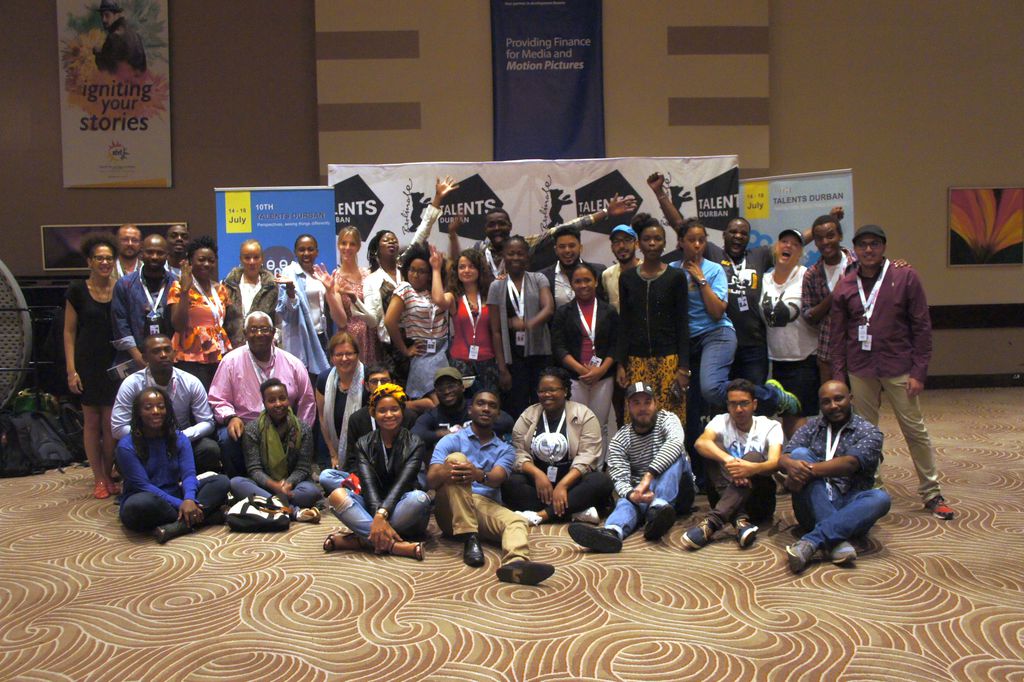
The Durban International Film Festival (DIFF) will welcome 19 filmmakers from 13 African countries to the 11th edition of Talents Durban, which takes place from 20 to 24 July during the festival.

This five-day development programme presented in cooperation with Berlinale Talents, an initiative of the Berlin International Film Festival, is made up of workshops, masterclasses and seminars for African filmmakers, delivered by film industry professionals and academics.

Talents Durban attracted over 250 applications from 30 countries throughout the African continent. Participants were carefully selected by an independent, international, womxn-led Talents Durban alumnae selection committee, with four animation directors, six directors and six screenwriters chosen, and a further three film critics chosen for the Talent Press porgramme.

The Talent Press, which is a programme to mentor and develop reviewing skills of emerging film critics, is presented in cooperation with Fipresci, an association of national organizations of professional film critics and film journalists from around the world, which lobbies for the promotion and development of film culture.

The filmmakers participating in this year’s Talents Durban are Aliki Saragas (South Africa), Amjad Abu Alala (Sudan), Brian Gitahi (Kenya), Comfort Arthur (Ghana), Desiree Kahikopo (Namibia), Emamodeviefe Edosio (Nigeria), Glele-aboucha Cornélia (Benin), Howard Mashilo Nthite (South Africa), Jessie Zinn (South Africa), Mandimbijaona Andriamaharo Razafimanantsoa (Madagascar), Matamba Kombila (Gabon), Mlingane Dube (South Africa), Nildo Essa (Mozambique), Oluyomi Tolulope Ososanya (Nigeria), Oualid Khelifi (Algeria), Sade Adeniran (Nigeria), Sejang Otumile Tumi Sejoe (Botswana), Tafadzwa Tarumbwa (Zimbabwe) and Tokoloho Masemene (South Africa).

Participants will interact with over 600 delegates from the DIFF and Durban FilmMart, the co-production and finance forum that takes place from 20 to 23 July during the festival. The Talents will also participate in several project-oriented, hands-on skills development programmes. These practical development programmes within Talents Durban include Story Junction, masterclasses, and one-on-one mentorships.

The participants will be able to further develop their film projects through mentorships and expert-guided Project Labs. Sixteen projects will have the opportunity to join Durban FilmMart for a two-day preparatory workshop, followed by two days of public pitching, round tables, and individual meetings.

Story Junction is a platform showcasing projects linked to the festival. Talents will present their project at Story Junction to peers and industry delegates. Delegates will be able to request meetings with participants whose projects they wish to engage with further.

Participants will have access to film screenings, industry masterclasses, panel discussions, festival functions and events of the Durban FilmMart.

“We are very pleased to have such a diverse range of Talents for our 2018 edition,” says Chipo Zhou, manager of DIFF. “This is a brilliant programme for the development of film-makers, which the many alumni across the globe can attest to. Here, not only are they able to learn and gather knowledge through the formal programme, but it is a great place to connect with film-makers from other countries, network and share ideas. The value of this for continued and future collaboration is immeasurable.”

For more information visit the DIFF website.

Delegate registration now open for DFM 2018

Early Bird delegate registration for Africa’s premier film finance and co-production market, the Durban FilmMart (DFM), is now open.

The DFM will take place from 20 to 23 July, forming an integral part of the Durban International Film Festival (DIFF) which takes place from 19 to 29 July.

Now in its 9th edition, the DFM programme includes masterclasses, seminars, workshops, labs and networking opportunities for African and international filmmakers to collaborate, share knowledge and benchmark themselves and their work within a global and continental context.

Focus areas this year will include discussions and presentations on the evolution of digital distribution structures and development and finance trends shaping the industry. The programme will also explore the future of virtual reality filmmaking and emerging themes and genres.

As South Africa prepares to host the BRICS summit in 2018, the Durban FilmMart programme will take a look at co-production with the BRICS countries as well as the impacts of policy on filmmaking and creative expression. Other topics will include financing opportunities in the respective countries and the general state of film across the BRICS cluster.

The changing role of women in front and behind the camera will be challenged over the four days. This focus is fuelled by the global #MeToo campaign, but in SA begun with the creation almost two years ago of SWIFT – Sisters Working in Film and Television – now a formidable organisation making important changes in the industry.  As part of its important work of lobbying and advocacy for fair representation and equal access of women to the film industry, SWIFT will lead a critical, yet constructive discussion centred on systemic patriarchal systems that perpetuate inequality and the marginalisation of women.

A core component of the DFM is the finance forum in which 16 pre-selected projects from various countries will pitch in sessions with the intention of finding potential sponsors, funders or partners to aid the making of their films. Of these projects, eight are documentaries and eight are fiction features.

Two lab programmes are included in the DFM: Jumpstart, is a programme supported by Produire au Sud of Festival des 3 Continents, France for selected emerging filmmakers who will have an opportunity to hone their pitching skills. Cine-FAM-Africa, is an incubator programme led by CaribbeanTales vice-president Nicole Brooks, aimed at South African women producers and African women producers living in South Africa with serialised television projects.

Early bird registration is open until 4 June 2018. Early bird fees are R1250  (ZAR) for the four-day programme, which includes four day’s access to the DFM Industry Programme, access to DFM producers lounge and DFM networking events, 10 tickets to Durban International Film Festival screenings and company information published in the industry manual. After 4 June fees are R1550 for the full programme while daily passes are R450 each (the daily pass does not include tickets to DIFF screenings or access into the opening and closing events).  All tickets exclude meals.

To register go to the Durban FilmMart website.

Talents Durban 2018 call for entries

The 39th Durban International Film Festival (DIFF), hosted by the Centre for Creative Arts, University of KwaZulu-Natal, with support from Berlinale Talents, is proud to announce the opening of applications for the 11th Talents Durban taking place from 20 to 24 July 2018.

Talents Durban opens entries to African screenwriters and directors with animation, fiction, documentary and hybrid projects in development. The programme will again welcome projects of all media formats such as film, television series, web series and content for mobile platforms. The five-day event consists of workshops, discussions, screenings, and specialised programmes for specific disciplines including directing, scriptwriting and reviewing films for print and TV.

Talents Press will once again host mentorship and hands-on training for emerging film critics. The Talent Press programme is a co-operation with FIPRESCI and the Goethe-Institute.

Talents Durban offers Talents focused mentorships, industry-specific expert masterclasses, workshops, and a creative platform for self-expression and networking. Additionally, Talents Durban will also cover participant’s accommodation, airfare and festival accreditation.

The programme also ensures direct access to the DIFF screenings, masterclasses, networking sessions and other activities with experts and industry roleplayers from around the world. Talents will gain a new understanding of not only their discipline but of others in an effort to increase collaboration and diversification.

2018 Focus and Theme

Africa’s animation industry is still very much in its infancy. It is a vibrant and exciting space with a lot of talent and growth, but there is still a lot of structure and development that has to happen for the industry to mature.

Talents Durban aims to remain the fertile soil for aspiring film professionals. The programme intends on bringing together highly-skilled professionals to develop the animation industry and discover hidden gems. In this regard, the programme will focus on animation, with the aim to stimulate conversation and inspire filmmakers into the world of animation.

This year’s theme – Breaking Rules is a culmination of current topical issues on the African continent. The idea of breaking forth, expressing one’s individuality and creativity is difficult and somewhat near impossible in a

continent filled with rules and boundaries. We live and breathe in a society of rules! Rules should not be broken at any given time. Too often we spend our time following rules without thinking twice. Some of these rules are spoken, but many of them are unspoken. We follow them because it’s simply easier to do.

For the longest time, we’ve been boxed in with boundaries placed on creativity levels and ways of expression. We need to break free from the dull and mundane rules of society. Break forth and embrace our diversity, our inimitable footprint and become masters of our own destinies.

Selection process

Talents Durban attracts over 500 applications from emerging and already established film professionals across the African continent. This coming edition, Talents Durban will invite 15 Talents, carefully selected by an international selection committee. Prospective Talents are required to complete their application online provided they have a recognised sample of past work and an ongoing project.

How to apply?

Applications are now open and can be found here. For more information email Sinethemba Makrwalana on talentsdurban@gmail.com.

Deadline for submissions is 6 April 2018.

SWIFT and DTI send first all-female delegation to Berlin Film Festival

Sisters Working in Film and Television (SWIFT) and the Department of Trade and Industry (DTI) are sending an all-female delegation to attend the Berlin International Film Festival from 15 to 25 February 2018.

The twenty women who come from all over South Africa have been selected to attend the Berlinale and do business in Germany. They will be actively showcasing, networking, and selling their films which are in various stages of production.

Filmmakers, Meg Rickards (TESS), Sara Blecher (Ek is Anna) and Aliki Saragus (Strike a Rock) will form part of the delegation.

Writer-director Meg Rickards directed the multi award-winning feature drama TESS in 2016, and co-directed the feature documentary 1994: The Bloody Miracle in 2014. She wrote and directed the television mini-series Land of Thirst and has scripted and directed a number of short films.

Sara Blecher runs CINGA, a boutique South African based production company that makes features, documentaries and drama series. She is also the chairperson of the woman’s films organisation SWIFT and is currently in production on her fourth film Mayfair. Her first film Otelo Burning was named by CNN as one of the top ten African films of the decade.

Aliki Saragas is a South African documentary filmmaker and photographer based in Johannesburg. She is the owner of her own award-winning documentary production company, Elafos Productions, which champions women’s stories. Aliki’s first documentary feature film, Strike A Rock, has won numerous local and international awards including twice winning Best South African Documentary 2017.

SWIFT was launched last year as part of the Durban International Film Festival’s (DIFF) initiative to improve gender representation and opportunities for women in the film industry.


- Advertisement -
- Advertisement -
- Advertisement -

Pin It on Pinterest