Home Authors Posts by Cera-Jane Catton

Cera-Jane Catton

316 POSTS 0 JOBS
Cera-Jane Catton is a writer and journalist with years of experience in community newspapers, blogging and freelance journalism. She has worked in a cache of capacities, often finding herself behind or in front of the cameras, intentionally and less so. She has been a stunt double in two Bollywood movies, has worked in various capacities on a number of natural history documentaries, and other international productions shot in South Africa. Cera is a former Screen Africa journalist.

Finding meaning in the mundane

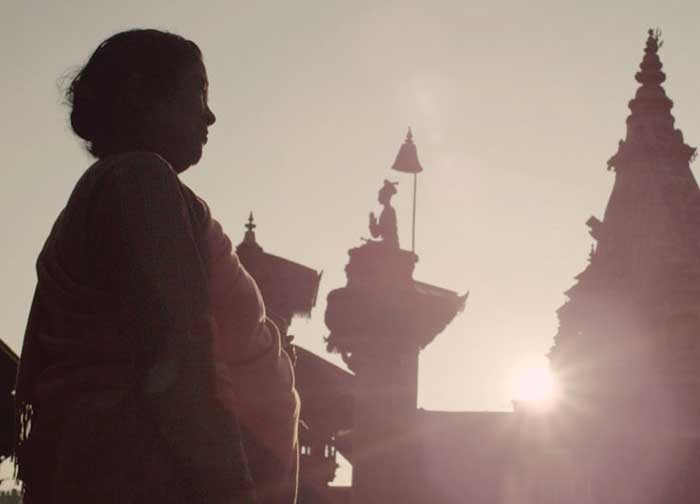
How does one find inspiration while stuck in traffic rushing to get a job that steals the day, how does one seek beauty in a city littered with cynicism? Unwritten: A Visual Journey of Nepal is a graceful documentary of The Fort CEO and Rainmakers Journal founder Shukri Toefy’s journey to Nepal. As told from the pages of his journal, it gently seeks answers to those questions.

Avoiding North Face peppered tourists trailing with K-Way in the Kathmandu Valley as a gateway to conquer Everest, this film explores the cultures of this ancient city and searches for its wisdom beneath the mountain. “Nepal is like a museum without walls,” says Toefy of the choice of Nepal as the destination in his and The Fort CCO Amr Singh’s search for enlightenment. They say it was Nepal’s old world wisdom and mystique that attracted them. A passion project for all involved, it began as a search for adventure, says Singh.

Inspired by the idea that the greatest gift anyone can give is knowledge gained from experience, Unwritten is a journey of self-enlightenment that, despite racking up awards wherever it is screened, will remain as part of an outreach programme to be used to inspire youth to start journaling and to travel and get out of their comfort zones. The film is a visual meditation on the beauty of the world in which we live, no matter where we are.

“We see ourselves as storytellers, but as brand storytellers,” shares Toefy of the build-up to making this film. “This is not what we do every day; this was a creative expression piece that we just wanted to do.” He says the project is an interesting juxtaposition as normal indie filmmakers that come from the commercial ad world. The story starts more than a decade ago when Toefy and Singh were at UCT and started The Fort advertising agency. Toefy at the time worked as a cab driver and started keeping a journal.

“A journal changes the frequency of things, keeping a journal has been one of the most powerful tools for me as an entrepreneur,” says Toefy. “A fascination with the everyday person’s knowledge was the real genesis around this film project,” he adds. This is what started the Rainmakers Journal, a thought leadership platform encouraging people to keep journals. “The seeds of your success lie within you and you must journal and write them down,” says Toefy. They wanted to experience this in a land they had never been to and decided to take a camera and just go.

Armed with a RED MX borrowed from Panavision, together with a set of Zeiss Super Speed lenses and a single LED light, Toefy and Singh got on a plane and went to Nepal at the end of 2014 to document a journal over ten days. Filmed in 4K high definition, all camera equipment was from Panavision, camera, glass, and full kit.

With a few exceptions, Singh chose to shoot using only natural light and also made use of a number of creative innovations, such as shooting through broken glass, to create the film’s look and feel. “We were relying on the time of day and it lent itself well to the aesthetic we wanted,” he says.

“The crew on the ground in Nepal were really good,” says Toefy. “There is this universal film language; no one spoke English. This one guy looked about 12 and he was pulling focus like a genius, no marks but hitting the mark every time,” he adds. On arriving in Kathmandu they had one contact on the ground, and he hooked them up with anyone they needed. “The sound guy was a gamer who burns DVDs. Some interviews had crackling and many issues, but it was an interesting learning process and we will release a behind-the-scenes because it was really funny,” says Toefy.

Despite ten days of less than three hours sleep per night, they say the process was nothing short of fun. “It was a very organic process, and the whole project was a cathartic experience, and the film is an art piece,” says Toefy.

“The final scene was at the holiest place in the world for Hindus and we had to smuggle the camera in there and had to split up,” says Singh. “We tried to make it cinematic and peaceful but filming some of those scenes was really stressful.” He says it is a “Feather in the cap of the old RED MX because we were using all natural light with Zeiss Super Speed lenses, which helped because they are very sensitive to light,” he adds. “Wide landscape using natural light, time of day was vital, but in Kathmandu it is so beautiful, you just point in any direction and it is the most beautiful thing you have ever shot,” says Singh.

After their return home to South Africa the footage of the journey slept for nine months. “Traditionally we can tell a three-act narrative, but after we came back, life is not a three act narrative, it is a fluid poetic accident and that is half reflected in the film,” says Toefy. “So while we tried to create that structure we kept it as loose as possible. It sat for nine months because we knew it would be difficult.” Between work and family they edited between 12h00 and 4h00 each morning. The film was in post for three months offline and two weeks online.

It was edited in Adobe Premier Pro and coloured at Blade/Pudding, while final mix was done at Hey Papa Legend (HPL) with music from Audio Network, outside of the original pieces captured in Nepal. The music was heavily curated, with Toefy and Singh spending more than 100 hours going through music and then mixing it with HPL. “Editor Tshepo Dladla really made this film,” adds Toefy.

“We didn’t make it for a festival piece,” says Singh. “What attracted us to it was the adventure and the process of making it. Part of it was, can we get on a plane and make a film by wandering into Kathmandu?”

They thought they would get there, find knowledge, take it and bring it home. “How privileged am I flying across the world and expecting to get answers? In the edit we realised that was the story we needed to tell,” says Toefy. Unlike MacDonald’s, you can’t just order wisdom, explains the film, in which we see a student crush paint for a whole year as an apprentice before his teacher imparts wisdom, “and then I come along with a camera and want some quick insight.”

“In a quiet Alchemist way, the beauty lies in everyday things all around you and hopefully people will come out of it knowing they don’t have to go all the way to Nepal, they can take time to have a cup of tea and unlock the beauty around you.”

The making of the film has helped The Fort CEO and CCO be less restless, “Two years ago we felt like sell-outs and felt like we needed to use our skills to do something authentic but now we see we employ 40 people and that is our contribution to society,” says Toefy. “Our own lens through which we see ourselves has changed and allows us to feel good about ourselves.”

He adds: “Since then we can now trust our ability to shoot an ad in Ivory Coast with an Alexa on our back and a polyboard. We have shot big budget commercials based on this principle, we know we can achieve this aesthetic with one camera and natural lighting. It has made us better filmmakers.”

Toefy attended the Hollywood International Independent Documentary Awards in September to receive the award for Best Cultural Short Documentary. The film received a standing ovation. It has received Official Selections at the Roma Cinema Doc, Largo Film Awards and the Bali International Film Festival, and won the Van Gogh Award for World Cinema: Documentary Feature at the 2016 Amsterdam Film Festival.

“It is cool to see people appreciate it from all over, saying it felt like a visual poem, and now we realise we can tell an interesting story and ask, what other stories can we tell?”

Celebrating the father of African cinema

In addition to being known as the father of African cinema, Ousmane Sembène is similarly one of the key figures of world cinema. “Though Sembène is one of the most important artists of the last 50 years, his legacy is not yet secure, and his works – which are more relevant and powerful than ever – are not being seen,” says Jason Silverman, co-writer, director and producer of the documentary Sembène!

Nothing describes the impact Sembène has had on Africa and the world more than the opening line of the film: “I grew up in a small village in Senegal, with no TV, no newspapers, no radio. All I had were stories told by my grandmother. By the time I was 14, I dreamed of becoming French, like the characters in the books I read in high school. When I was 17, I discovered the stories of Ousmane Sembène, the father of African cinema. Suddenly, I did not want to be French anymore. I wanted to be African.” This is a line by the film’s co-writer, director and producer, Professor Samba Gadjigo.

The film poignantly explores the life of Sembène, a dockworker from Senegal, expelled from school in the sixth grade who, when he discovered literature and the movies at 14, dreamed of becoming a storyteller for a new Africa. From Senegal to Dakar to the French Army, he published his first poem in 1956 before returning to Africa in 1960 where he published three successful novels. Sembène was among the first filmmakers to indigenise cinema, disseminating African narrative structures, and creating his own production company. This revolutionary artist created under impossible circumstances using limited resources, and yet Sembène’s works have won awards at festivals in Venice, Moscow, Los Angeles and Karlovy Vary. All of his feature films have been translated into English, French, German, Japanese and Chinese. “Africa is my audience,” he said, “while the West is my market.” Sembène’s introduction of genuinely African film aesthetics transformed cinematic practice both in Africa and around the world, offering inspiration for other marginalised societies, whose members began to pick up cameras and tell their own stories.

Sembène! is told through the experiences of a man who knew him well, his colleague and official biographer Gadjigo, using rare archival footage and more than 100 hours of exclusive material. It was in 2009, the year of Sembène’s passing, when this passion project began. It took more than a year of legal exchanges before Gadjigo and Silverman were granted access to his home and his archives.

“Africa becomes alienated and too often Africans know more about London and Paris than they do about Africa,” says Gadjigo. At 17 he discovered Sembène’s novel, God’s Bits of Wood, and says it was a mind shattering experience. “I had been lied to for years and years through my education,” he says. He went on to read everything that had been published but was disturbed that it was not readily available in Senegal and it wasn’t until he lived in the US that it became clear that he would dedicate all his work and teachings to Sembène.

Without funding for the film and needing to cross the world to make it happen, Silverman and Gadjigo poured their life savings into realising their vision. Further challenged by trying to convince American firms to finance an African documentary, the pair turned to Kickstarter and gained worldwide support. “Family, friends and strangers came together,” says Gadjigo. “This is an opportunity to let other people know there is always a dialogue to the world and the best way is through art and culture.”

The labour of love was seven years in the making and has since been screened in more than 35 countries. “We spent seven years researching, collecting material, shooting interviews and editing, and have now spent about 18 months getting the film out into the world. We have another eight months or so of plans in terms of disseminating the film,” says Silverman. The film had been in edit for two years with Hollywood freelance editors but it was not coming together. It wasn’t until Gadjigo, riding a bus in Utah, met Ricardo Acosta, an exiled Cuban living in Toronto, who happened to be an editor. He then took less than nine months to “break the code and gather all our building blocks and use his magic fingers to music: everything was poetry for him,” says Gadjigo. “We wanted the story to create magic, and it did.”

2017 marks the 10th anniversary of Sembène’s passing and they are applying for grants to show the doccie to every single African country. “A film which should be shared with the world,” Gadjigo adds. “They say it takes a village to raise a child, it takes a planet to make a movie.”

“The opportunity to tell his story was a true gift, and the response to our documentary, which includes the launch of a restoration project for all of his films, has made all of the work worthwhile,” says Silverman.  He explains that they collected 180 hours of archival materials, which came in every format imaginable, and shot on a variety of cameras, including, at first, standard def Sony cameras, and by the end (as the technology shifted) HD Panasonic and Sony cameras. “The difference in cameras was due to the fact that we worked with African cinematographers when in Africa, European cinematographers when in Europe, New York cinematographers on the American East Coast, and Los Angeles cinematographers on the American West Coast,” explains Silverman. They edited on Avid, which he says was at the time the best system for a complex project that had multiple editing collaborators.

The biggest challenge was acquiring the materials, which came from dozens of different sources, and in many cases had technical problems. Silverman adds, “Few facilities in Senegal have climate controlled storage, and some materials were too degraded to use.”

Silverman says that weaving Gadjigo’s story with Sembène’s story took them a year of editing to work out how to do that. “Samba is not a traditional narrator; he himself had his life’s path irrevocably altered by his encounters with Sembène – first with Sembène’s work, and then with the man himself. But striking the right balance between the two interlocking stories was challenging,” says Silverman. He adds that working with Gadjigo was the most gratifying and deepest experience of his professional life. “We travelled to Africa together, discussed every element of the story and its contexts and then pushed each other to find the real heart and soul of this very important story. Sembène is a true hero to me, but the work I did was equally motivated by my desire to have Samba’s story recognised.”

The soundtrack includes selections from Baaba Maal, Youssou Ndour and from the album Águas da Amazonia, a collaboration between Phillip Glass and the indigenous Brazilian ensemble Uakti, which uses instrumentation that they create. Canadian composer Ken Myhr wrote original music.

Sembène! was released theatrically across cinemas in the UK alongside one-off screenings of three of Sembène’s other works mentioned in the film: Xala, Moolaade and Black Girl. More than 70 screenings in cinemas across the UK, made possible by Aya Distribution being awarded a BFI Programme Development Fund to present, Rebel with a Camera: The Cinema of Ousmane Sembène that will tour through more than 20 cities until the end of December.

Gadjigo and Silverman will be in the UK in October to take part in Q&As and discussions following selected screenings across the country. Aya Distribution project director, Justine Atkinson, says:“Through rare archive footage and personal anecdotes, interweaved with beautiful animation and led by a personal voice-over by Gadigo, the film captures the essence of Sembène’s work, providing an honest portryal of the father of African cinema. We are therefore extremely pleased to bring this documentary to UK screens this autumn along with Sembène’s films.”

Gadjigo explains that more than a filmmaker, Sembène was one of Africa’s most prolific and recognised writers, with seven of his ten published literary works translated into English and included in the curricula of high schools and universities throughout Africa. Sembène is considered as perhaps the most important cultural figures of 20th-century Africa, an artist whose 50 years of creative output led the way for generations of African, African-American and African-European writers, filmmakers and scholars. “We will never be Arabs or Europeans,” Sembène said. “We are Africans.”

Into the wire and through the lens

MultiChoice is on a roadshow throughout South Africa, bringing DStv to malls across the country where visitors can experience an immersive and interactive VR video that explores the inner workings of the satellite pay-tv operator.

“Inspired by the film Lord of War’s intro sequence, ‘The Life of a Bullet,’ we wanted to take the viewer on a journey through the eyes of the media equipment used to create the local and international content that MultiChoice broadcasts,” explains technical creative director Keno Naidoo of Left Post Productions. The VR film starts with the camera being switched on within SuperSport Studio 6 and from there it moves through the SSD card to the DIT’s workstation, the travel drive, the offline and online edit suites, the broadcast control room, satellite transmission into space and then back down through a home satellite dish into the television it’s being viewed on. “Through the entire process, the viewer is motivated (by both picture and spatial audio) to look around them, seeing the inner workings of the television,” adds Naidoo.

The brief was given to create a mobile VR application that functioned with the Samsung Gear VR headset and Samsung S7 mobile devices. “The application would need to allow the user to view the VR content with as little instruction on how to use the Gear VR setup as possible,” explains producer James Gaydon of Dondoo Studios. “Meaning the user would need to be able to use the app without ever having seen or used VR technology before. Moreover the application would need to house a VR video that incorporated spatial audio.”

Oxyg3n Media conceptualised and produced the VR piece. FC Hamman Films built and operated the specially designed drone to carry the VR rig.  Left Post Productions was responsible for the offline and online edit, as well as the Visual Effects. Dondoo Studios created the app that hosted the VR piece on the S7 phones, did the final spatial studio arrangement and loaded everything onto the phones. Audio Militia was responsible for sound design, composed the music, and mixed all separate audio stems for spatial audio arrangement.

The video was filmed at MultiChoice’s head office in Randburg, where exterior drone shots were taken, and interior at SuperSport Studio 6, MultiChoice City and the broadcast control room. Filming was also done at Left Post’s facilities and various other interior and exterior suburban locations.

“We tried to keep the look slick and high-end, finishing in a commercial online suite,” explains Naidoo.  “We also tried to incorporate the MultiChoice blue within most of the frames. The vibe is quirky and informative with a pace that leaves you wanting more,” he adds.

The promo was shot on a specially modified 360 GoPro rig with 220˚ lenses that were imported, as well as a 3D printed housing, designed in house by Naidoo. “We also made use of the Samsung Gear VR camera for the tight squeezes like the card-reader shot and so too when the travel drive gets placed into an envelope,” says director Cremer van Dango of Oxyg3n Media. He explains that for the shots going into space they used a combination of live action and CG. FC Hamman Films built a specially modified drone that could house the VR rig on a poled gimbal to ensure that the cameras did not moved and shift on their own, allowing for a relatively easy stitch of the footage.

“A rough sketch with measurements of the environment for each shot was done so that we could build a blocked out 3D representation of each set. This formed part of the spatial audio preparation,” explains van Dango. “Due to the availability and questionable localisation quality of an ambi-sonic microphone, we opted to go with lapel mics on set to capture mono sounds at their points of origin and generate the specialisation in engine.”

Vallerie Groenewald built housings to simulate being inside the monitors and television sets, as well as the customised  card reader slot, that was built to fit the SSD drive with attached Samsung Gear VR camera mounted on top.

The promo was filmed between June and July 2016, with days off in between for art department requirements, location restrictions and testing.

“Developing VR applications is proving to be a lot of fun and every project brings rise to new challenges,” says Gaydon. “The media can be very demanding on the hardware. VR footage can be very large and when you incorporate positional audio you have to find a happy medium to ensure the app runs smoothly on a mobile device and the user has the best experience without too much lag on loading times.”

Gaydon says it was also a lot of fun working on new workflows with the audio team to ensure they received usable files for development in Unity (game engine). “It was a challenge ensuring a smooth stitching line, which meant we had to specially block all movement to ensure that no people or objects were cut-off within the stitching line,” explains van Dango. “We’ve done a lot of R&D with both the GoPro rig we’ve built as well as the Samsung Gear VR camera leading up to the shoot and identified the perfect action filming distances on both,” he adds.

The video was edited in Adobe Premiere Pro CC 2015 with Mettle plugin for VR footage editing. MultiChoice roadshow kicked off in in August in Cape Town and will continue through to December 2016 in Pretoria.

Key Crew 

Oxyg3n Media:

  • Executive Producer: Rebecca Fuller-Campbell
  • Director and camera: Cremer Van Dango
  • Art Department: Vallerie Groenewald
  • Sound: Musa Radebe & Henry Prentice


Left Post Productions:

  • Executive Producer: Jacqui Pearson
  • Producer: Vicki Kotze
  • Editor: Tumi Ditshego
  • Visual Effects/Text elements/Online & Grade: Keno Naidoo


Dondoo Studios:

  • Technical Director and lead programmer: Divesh Naidoo
  • Producer: James Gaydon
  • UI design: Jeremy Van Reenen


FC Hamman Films:

  • Specialised Drone build: Carl Nicholl & Timothy Hamman
  • Drone Pilot: Carl Nicholl
  • Drone Camera Operator: Timothy Hamman


Audio Militia:

  • Executive Producer: Nick Argyros
  • Producer: Jade McKinon
  • Head Engineer: Craig Hawkins
  • Engineer / Sound Design: Richard Staub

Students and industry meet on BDtv

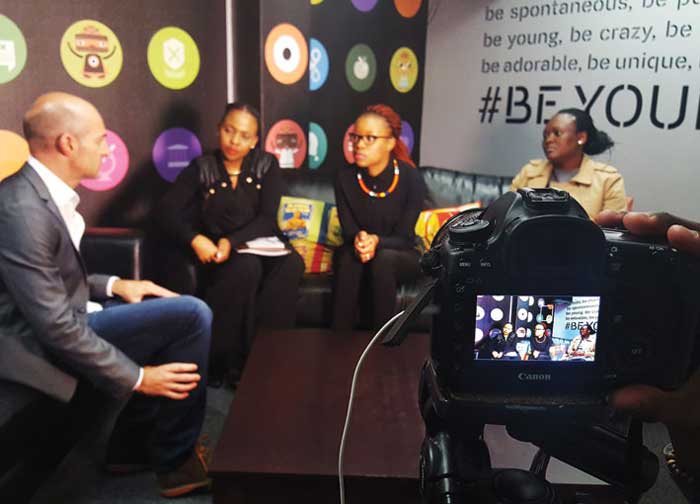
Student Village and Business Day TV (BDtv) have joined forces to create Career Connect, a conversational show that hosts discussions between industry experts and students to determine ways in which the aspirant graduates can best position themselves for employment after school. The show is aimed at creating dialogue between SA youth and employers to learn from one another and to better equip young career starters.

Student Village produces the show from its head office in Houghton and BDtv is involved in the visual production and broadcasting.

The show offers advice on various related topics, from how to make your résumé stand out to what recruiters look for, to how to narrow the Afrillennial (African millennial) skills gap in the workplace, explains Samantha Van Zyl from Student Village, content creation manager of the show.

Van Zyl says one of her biggest challenges has been condensing information on broader topics to fit into a single episode. “The youth are hungry for more information, on topics like job interviews or internships, than can fit in an episode but what makes this challenge great is that it makes the programming evergreen. We can cover several angles on a certain direction we’ve taken and have content emerging from that for the future.”

Outside of content it was a big challenge for the company to take on filming their very first TV programme. “The whole process has been new to us and we’ve learnt so much already,” says Van Zyl.  They film once a month where the studio is set up in the boardroom which is transformed for two days.

“We want to showcase career and advancement opportunities on the show, as more businesses join our conversation and keep growing a positive narrative in the youth media space with regards to providing helpful and constructive content that can actually help our viewers.”

They are currently shooting on a three camera interview setup with the purpose of getting shots from three different angles, explains Mogomotsi Diale, DOP at Student Village. “Two Panasonic broadcast cameras that are supplied by BDtv and our own Canon 5D Mark 3 DSLR.”

They are using one LED light since they already have lighting within the room they shoot in, describes Diale, who says they use three lapel mics to the two broadcast cameras, one for the main camera that’s focused on the presenter and the other two mics run through to the second camera, which is focused on the guests.

In post-production edit in Adobe Premiere, After Effects, Photoshop CS6 and Final Cut Pro 10 (FCPX). “The reason for using two different suites is because we have a freelancer that we are working with on the show who is familiar with FCPX and Adobe is used for both editing and designing of graphic features that are incorporated in the show,” explains Diale.

“Student Village has spent the past 15 years being the trusted expert to both employers and students. We are excited to partner with BDtv to assist young people to navigate their future options and to become work ready,” says Ronen Aires, Career Connect host and CEO of Student Village. BDtv has identified Career Connect as a niche opportunity to roll out the show as part of its newly launched weekend content.

“The synergy between what we wanted to create and Student Village’s ability to connect brands and youth in the workplace enabled us to bring this vision to life,” says Semeyi Zake, head of programming at BDtv. “It couldn’t have come at a more critical time as our country’s youth are in desperate need of a platform that can offer them guidance and context in terms of getting the best head start.”

Career Connect airs on Business Day TV’s weekend platform SME Zone on DStv channel 412 on the weekend.

It seeks to empower youth for the job market, Zake adds “this partnership allows us to expose students and graduates to the world of entrepreneurship, which in itself is an alternative career path.”

Student Short film competition judged by SA Hollywood cinematographer

Internationally acclaimed, South African-born cinematographer Dan Mindel was back to his roots for the Silwerskermfees in Cape Town. The renowned director of photography, whose work includes JJ Abrams’ Star Wars and Star Trek films, was invited to the festival as part of an M-Net initiative in association with kykNET to facilitate conversations between South African filmmakers and international experts.

Part of the initiative included a competition where student filmmakers from AFDA, Big Fish and Umuzi Academy were required to submit a short film. More than 75 film entries were received and reviewed. Mindel and a team from the South African Society of Cinematographers (SASC) then selected the winner.

“South Africa will always hold a special place in my heart,” says Mindel. “To return, and be able to step into conversation with South African filmmakers has been a privilege.”

The winner of the competition was Nondumiso Buthelezi, with her documentary film Oswenka. The film looks at the flamboyant tradition started by Zulu migrant workers in the 1950s, which saw them competing for the title of best dressed man.

“Oswenka hit a nerve; it’s interesting, genuine and raw. I was most impressed by its contrasting colour palette and its texture,” explains Mindel, adding that he sees a bright future for this young director. The prize included R30 000, a mini master class with kykNET’s content team, and the opportunity to showcase their work at the 2017 kykNET Silwerskermfees. Beaming after the win, Buthelezi said: “This makes people notice you, this is a great boost for my career.”

She explains that the ‘oswenka’ tradition was invented as a solution to the hard times men were going through. “This film highlights the dignity of these Zulu men who come from respected homes to hostels in Johannesburg, where they are reduced to almost nothing.” So while the film is lighthearted it addresses the underlying pain, she explains. The film has been screened at festivals around world, including the Luxor African Film Festival in Egypt, where it won best artistic director of a student film, and in October it will be viewed at Silicon Valley in California.

“It has travelled in a way I didn’t think was possible,” says Buthelezi. She advises aspiring film makers that “whatever story you want to tell, tell it, no matter how crazy the idea sounds. There is so much red tape, but you will find a way.”

Mindel explains the challenge in the judging process, “As a technician it is hard not to be judgmental on the workmanship and everything about it. So to approach it in an unbiased manner is a hard thing to do but that is the way I try to look at it.” He says that when you look at student films, “they normally take a bigger bite out of whatever it is that they think they are going to do and it ends up being a compromise, because it can’t be done with the money or the skillset that they have.”

Mindel was fascinated by the age group of the people making the films, saying that what they are thinking and expressing through their films tells him what is going on in this country. He notes that the Americanisation of everything is very noticeable and says he was looking for something indigenous in each film. “My friends from the SASC and I sat and worked out a way of separating all the films from each other based on the way they were shot, what was going on story wise and how they felt,” explains Mindel. “I was glad that all of them weren’t violent horror stories from inner Johannesburg or the townships. I would have been devastated if they had all been like that.” He says the winning film had everything he was hoping he would see: “style, humour and sensitive direction.”

Mindel describes the two kinds of films they saw: the ones that had really great equipment and the ones that didn’t. “It is not about what the equipment is or the technical specifications. I think that the methodology is how well the story is told and that is all we can look at. The technology – quite frankly anyone can use it, you don’t need a degree to do that, so I think that even if none of them know how the equipment works, the story is the main thing.”

Advising aspiring filmmakers Mindel says, “Move in a direction of exploration in order to learn what you want to achieve in the end. Without a point to focus on you’ve got nowhere to go, whether you want to be a director, cinematographer, writer or editor, focus on that point and just keep going.”

Nobody’s Died Laughing was shot on the Sony FS7 and Canon 5D

Nobody’s Died Laughing is a theatrical documentary revealing the life and work of performing artist and activist Pieter-Dirk Uys. Uncovering the man behind the prominent persona, a film crew tries to keep up with Uys as he tours SA, the world and on to his home in Darling, Western Cape.

Filmmaker Willem Oelofsen explains his vision for A Journey with Pieter-Dirk Uys: “This film captures a man and a lifetime commitment to a country by using satire to affect change. I believe audiences will be intrigued to experience more about the man who refuses to be silenced while using the arts as his weapon against discrimination and confronting intolerance.”

The film was shot mostly on the Sony FS7 and Canon 5D for gimble and CableCam shots. “When we used multiple cameras we brought in another Sony FS7, the main consideration for using Sony FS7 was mobility, navigating back-stage and following Pieter-Dirk Uys through diverse locations,” explains Oelofsen. He says the DOP Nic van der Westhuizen used a variety of lenses on the Sony to create a rich cinematic look for the film. Due to an intense travel schedule they kept kit to a minimum, even renting while overseas and keeping it simple with two LED key lights and a cosmo lighting set.

For sound during interviews they used a lapel mic on guest speakers and a boom and shotgun mic. “For most of the interviews I also wore a lapel microphone just in case we needed to use the question in the film to establish context, but luckily we only ended up having to use my questions twice in the final cut of the film,” says Oelofsen.


Project submissions for DFM 2017 now open

Submissions of projects for the 8th edition of The Durban FilmMart (DFM), which takes place in Durban, South Africa from 14 to 17 July 2017 opened on 12 October 2016.

The DFM is a joint project of Durban Film Office, the City’s industry development unit, and the Durban International Film Festival (DIFF), and aims to raise the profile and visibility of African cinema, encourage increased production in Africa, and stimulate collaboration across borders between African filmmakers.
The DFM, which takes place over four days during the Durban International Film Festival (13 to 23 July 2017), is a significant global player in providing a springboard for filmmakers with projects in conceptual stages in the African film industry. Since it began in 2010 the DFM has supported the promotion of more than 150 African co-production projects, many of which have been developed into viable film products with cinema and festival release.

Ten documentary and ten fiction feature length film projects will be selected from the submissions, and these projects will undergo a two-day packaging and mentoring programme followed by two days of one-on-one meetings with a panel of film financiers, buyers and distributors from across the globe. Besides the project mentorships and pitching sessions, the DFM also offers project- and general delegates with an opportunity to network, and attend workshops and seminars conducted by film industry experts.

The DFM is open to full length feature and documentary films projects with Africans in the major creative roles (writers, directors and producers) that are looking for co-producers, financiers, sales agents and funders. All film projects submitted are reviewed by a selection committee for consideration. All projects must have both a producer and director attached to them, and must be submitted by 12 December 2016.

“The success of the DFM is seen in the number of films we have seen go from concept stage to the big screen, so we appeal to African film-makers to take full advantage of the opportunity provided by the DFM by making their submissions.’ says Durban Film Office’s Toni Monty. “The opportunities at the DFM to network with global and continental industry players have proved to be invaluable for film-makers. It is truly inspiring to see many DFM alumnus secure further funding grants for their films at other markets and to see their works screened at cinemas and festivals around the globe.’

For more about the DFM 2017, project submission criteria and how to submit your project, visit the DFM website.

Shure releases updated Wireless Workbench System Control Software

Shure released the latest version of its Wireless Workbench® System Control Software-Version 6.12. The update is designed to put maximum power and flexibility into the user’s hands. The addition of several new features will help wireless users better manage and monitor wireless system performance over the network, from pre-show planning through post-performance analysis.

Shure has created Timeline – a new logging utility designed to capture essential channel status information over time. Information recorded includes RF level, antenna status, audio level, interference, ShowLink® Remote Control status, and battery level. With optimized data storage, Timeline can record data from all networked channels for an indefinite amount of time, given sufficient system resources. Capturing and viewing the recorded data enables users to troubleshoot wireless system operation and determine the source of issues, should any arise. Wireless Workbench provides ultimate control over displayed information, enabling complete customization of the visualized data to best suit user needs.

Version 6.12 also includes a new set of frequency coordination enhancements, designed to provide more flexibility and power to users coordinating solutions with high-channel counts, including:

• Scan Peak Management to process and classify peaks more accurately in scan data
• Ignore IMDs to manually ignore the Intermod (or IMD) spacing parameters associated with a given set of frequencies, enabling increased counts of calculated frequencies
• Customizable Coordination Order to adjust the order in which frequencies are coordinated by dragging and dropping groups of frequencies in the Coordination Workspace.

Connecting to devices from a remote location will now be supported with version 6.12. With this update, Wireless Workbench 6 can connect to devices outside of a local network. Ideal for environments where devices are managed in separate subnets-separate VLANs, floors of an office building, venues in a park-the feature extends monitoring and control functionality beyond the local network for significantly increased flexibility and control.

To accompany the extended reach of control that Wireless Workbench now exhibits across subnets, version 6.12 will also introduce support for Access Control – a new feature that will be added to select Shure networked devices. Access Control enables users to specify PINs for networked devices that protect the device from being manipulated by any Shure control software that have not authenticated. This protection lets a team of users benefit from the monitoring aspects of Wireless Workbench without incurring the risk of potentially changing the operational status of wireless systems.

“At its core, the enhanced features in Wireless Workbench 6.12 are dedicated to putting increased flexibility and added control into the hands of users who need it most,” said Sam Drazin, Product Manager at Shure. “By adding Timeline, select frequency coordination enhancements, and Remote Device Connection, we’re addressing the complex challenges that come with enterprise-level networks and high-tier frequency solutions.”

Wireless Workbench Version 6.12 is available for download at the Shure website.

Mandela’s Gun to open Joburg Film Festival

Mandela’s Gun will have its world premiere as the opening night film at the inaugural Joburg Film Festival on 28 October 2016.

A unique hybrid of spy thriller and documentary, Mandela’s Gun tells the story of the Makarov pistol Ethiopian Emperor Haile Selassie gave Nelson Mandela as the ANC shifted strategy towards armed resistance.

Tumisho Masha plays a young Mandela, the revolutionary who co-founded uMkhonto we Sizwe in the aftermath of the Sharpeville massacre.

Tasked with building an army before he had even fired a gun, Mandela left South Africa for military training in Algeria and Ethiopia. Traveling on false passports, he became known as the Black Pimpernel as he evaded capture and assassination attempts during his African odyssey, which also took him to Botswana and Tanzania.

He was South Africa’s “most wanted man’ but Mandela’s Gun is a reminder that he was also considered a threat in Washington as “the most dangerous communist leader operating outside Russia.’ Mandela’s Gun explores the CIA’s role in Mandela’s arrest and imprisonment, with exclusive testimony from a CIA agent who claims responsibility.

“This is one of the last great untold stories of the struggle,’ says the film’s producer Moroba Nkawe. “It’s the story of the first weapon of the armed struggle against Apartheid, and of a Mandela who has more in common with the angry youth behind #feesmustfall than the icon of reconciliation he later became.”

As Denis Goldberg says in the film, “There comes a time in the history of a people, where you live forever on your knees or you die standing.’

SAFTA winner Masha is sensational as the first South African to play Mandela as a lead role in a major film; his nuanced performance will make you wonder why it’s taken 22 years since democracy before a local actor was trusted with the iconic role.

The impressive all-local cast also includes SAFTA nominee Zethu Dlomo as WinnieMandela; SAFTA winners Nick Boraine and Meren Reddy as Cecil Williams and Ahmed Kathrada respectively; and multi-award-winner Desmond Dube as Govan Mbeki.

Director John Irvin is known for the BAFTA-winning TV series Tinker Tailor Soldier Spy, with Alec Guinness, and war films like The Dogs of War, with Christopher Walken, and Hamburger Hill, with Don Cheadle and Dylan McDermott.

Co-written by Malcolm Purkey and Athos Kyriakides, Mandela’s Gun is set in the early 1960s. Irvin has shot the docu-drama like a spy film from that period, with Lance Gewer (Tsotsi) lensing in stylish black and white and Abdullah Ibrahim especially composing distinctive African-jazz for the soundtrack.

Mandela’s Gun was filmed on location in Cape Town, Johannesburg, and London, as well as Algeria, Botswana, Ethiopia, and Tanzania – a reminder of how Mandela was shaped by the surging African Liberation Movements of the early 1960s.

Dramatised historical re-enactments are intercut with interviews with the giants of the Struggle, like Dikgang Moseneke, Dennis Goldberg and Tokyo Sexwale, who weigh in with eye-witness accounts and their perspectives on the merits of armed resistance, reminding viewers of the ANC at its best and all it once stood for.

“South Africans think they know the story of Nelson Mandela,’ says Nkawe. “But Mandela’s Gun is going to leave audiences rethinking their view of him, more aware of South Africa’s debt to the rest of Africa, and less trusting of America, who not only refused to even meet the ANC after they were banned, let alone intervene, but kept Mandela on their terror list until 2008.’

DearHeart Productions (UK), Delimanzi Films (South Africa), and Agence Algerienne pour le Rayonnement Culture (AARC) produced Mandela’s Gun over a five-year period as the first ever British, South African and Algerian co-production.

Mandela’s Gun premieres on 28 October 2016 at The Zone at Rosebank with a second screening at Maponya Mall in in Soweto on 29 October.

SA to switch off analogue TV this month in SKA area

The analogue TV signals will be switched off by the end of this month, October 2016, in South Africa by Faith Muthambi, the minister of communications. The switch off will take place in the region of North Cape, at the analogue signal Square Kilometre Array (SKA) area.

According to the government: “Over 3 700 households in the towns of Carnavon, Vanwyksvlei, Brandvlei, Vosburg and Williston have fully migrated to the much-awaited digital platform, a clear indication that the old-fashioned analogue transmitters in the core of the SKA area are ready to be switched off.’

The distribution process of set-top boxes has been ongoing in other communities of Limpopo, Free State and Mpumalanga and those with a salary of 3 200 ZAR (221 USD) or less, should be subsidised with STB and should be registered.

The government thus declared that: “Registrations will open in the North West, Eastern Cape, Kwa-Zulu Natal, Western Cape and Gauteng at a later stage. Priority is given to the provinces along South African borders in order to minimise the prospects of signal interference with neighbouring countries who are ready to deploy mobile communication services in the spectrum currently used by analogue television transmissions.’

“While the countdown to the end of the analogue era has begun, what is needed now is to continue with the public information campaign to ensure that TV viewers are ready for the change,’ the government further revealed.

Source: Next TV News Africa

- Advertisement -
- Advertisement -
- Advertisement -

Pin It on Pinterest