Home Authors Posts by Cera-Jane Catton

Cera-Jane Catton

316 POSTS 0 JOBS
Cera-Jane Catton is a writer and journalist with years of experience in community newspapers, blogging and freelance journalism. She has worked in a cache of capacities, often finding herself behind or in front of the cameras, intentionally and less so. She has been a stunt double in two Bollywood movies, has worked in various capacities on a number of natural history documentaries, and other international productions shot in South Africa. Cera is a former Screen Africa journalist.

Inaugural Blazer Film Festival to showcase films made by SA high school students

The Behind the Blazer Film Festival is an event that showcases the films made by South African high school students form the vibrant Townships, developed cities and not so distant rural areas. They are non-profit organisation dedicated to enriching young minds through local cultures, supporting the industry in driving the story telling throughout the country, through different communities, and reaching new audience.

The first Official Behind the Blazer Film Festival, taking place on 19 November 2016, will highlight the very best of filmmaking form different high schools with different background and experiences, exploring a broad range of topics that effect students in schools, communities and at home and stir their heart and minds.
The festival will also offer Q&A session with these young filmmakers.

The Behind the Blazer Film Festival is dedicated to the discovery of new films and talents around the country.

Celebrating creativity, independence and risk, the Behind the Blazer Film Festival plays a role in identifying, nurturing, skills transfer and talent scouting at high school level and connecting them with audience and industry in South Africa.

Behind the Blazer Film Festival showcases a selection of films with a running time of 10 to 20 minutes, these films are eligible for jury prizes and audience awards.

The culmination of the Behind the Blazer Film Festival is the Awards Ceremony. The competition jury comprises of six individuals from the worldwide film community with an original and diverse point of view, these films from different genres receive a range of awards. Dedicated by festivalgoers’ ballots, Audience Awards are bestowed upon each film.

‎Venue: Buhlebemfundo Secondary School (KwaThema)
Time: 10h00 – 16h00
Date: 19 November 2016

Corporate Support has made the festival possible, including the NFVF, Nemisa, Big Fish Film School, Just You Artist, Anamazing and the National Arts Council.

Let the adventure begin… on your couch

A short film marathon made by adventurers around the globe is an ambitious way to motivate even the most devoted couch potato. As the year fizzles out and the silly season starts with the laying of tinsel across mall entrances, it will be no time at all before we arrive at that dreaded day which requires us to make remorse-riddled resolutions made after a continual cheery binge. If you missed the BANFF Mountain Film Festival World Tour at SA Ster-Kinekor cinemas through October then you might be short of inspiration.

Courtesy of Cape Union Mart, the annual festival, now in its eleventh year, kicked off with the SA winning submission from this year’s Cape Union Mart Adventure Film Challenge. Mowbray to Mowbray Ridge was a short by young Cape Town filmmaker Ziyaad Solomon.

“Every year, local filmmakers are invited to submit a five-minute short film on South African outdoor culture. With this initiative, we wish to provide aspiring South African filmmakers with a platform to celebrate their love for the outdoors, as celebrating the outdoors is what we’re all about,” says Odile Hufkie, marketing manager at Cape Union Mart. Speaking of the winning film, he says: “This film not only celebrates trail running and the beautiful locations it takes you to, but speaks to the much more relevant social challenge of unhealthy lifestyles, and more importantly, making the decision to get off the couch, get fit and explore.”

Solomon aims to do just that, get people off the couch. He attended the Banff festival in 2015, had a pastime of filmmaking and was an outdoor guy who was motivated to making something worthwhile. “While watching the movies I got the urge to just grab my camera and get out there to shoot an adventure movie. And then the perfect opportunity presented itself.” With a passion for running, filmmaking and the outdoors, he decided to combine all three passions to tell the story of Mowbray to Mowbray Ridge.

Solomon explains that the urban parts of the film were shot in Observatory and Mowbray, and the trail running sections on the slopes of Devil’s Peak, the route leading up to Mowbray Ridge and around the block house. “It took about two days to shoot and two to three weeks to edit. And, as is so often the case, it was completed the night before the deadline,” Solomon says.

Solomon was challenged by funding limitations, borrowing wherever possible, but then he won and furthermore says he fell in love with trail running. “I’m so excited to have won the challenge. I had my doubts about entering at first, but I felt really passionate about the story and the concept behind the video. Whether it won or not, I wanted to make this film and share it with the world. It’s a dream come true,” he beams. Since the competition Solomon has started his own company, Long Street Life, an online and video content creative agency

So, is it enough to get you off the couch? The competition will be held again next year, and all you need is a five minute short of your outdoors, your adventure, your fun in the world around you, and you could win the grand prize and have your short screen at the 2017 Banff Film Festival in SA.

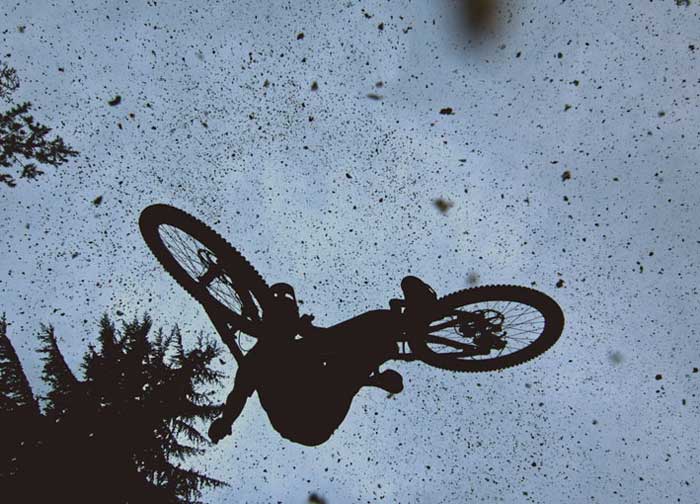
Speaking of, after the screening of the SA challenge winner the Banff festival commences with a series of shorts. The adventure starts with 55 Hours in Mexico, where a group of friends fly from the States to Veracruz to climb the third-highest peak in North America and the continent’s highest volcano. They ski down it all in a weekend. Next was an artful mountain bike track in the Builder, a poetic tour of building trails through the forest and seeing tricks on a bike. From the mountain the festival flows straight to the sea, stopping at Living Rivers, where high in the mountain peaks of Montana, Wyoming and Idaho, surfers are finding standing waves that never end, and riding them all the way, showing that surfers are not limited to the sea.

From the gorgeous graphics of the rivers we see Women’s Speed Ascent, a succesful attempt to achieve the women’s speed record for the ascent of the Nose on El Cap in the Yosemite National Park. Ascending further we went into Balloonskiing – Heimschnee where we watch a team abseil off a hot air balloon, don skis and jump off onto the white trail of untouched snow. From up in the air to the Isle of Man where Will Sutton: Homefree makes parkour look like child’s play and you will likely attempt to flickflack to get tissues which you will need when you watch Denali, a beautiful tribute to a man’s best friend. While you might shed a tear you will be left with a desire to hit the surf. We are then  lead on to Curiosity, enough to inspire ultra-marathoners as we watch teams  prepare for the Ultra-Trail du Mont Blanc, and witness some complete and others do their best. In Pretty Faces we head back to the slopes this time airlifted to the Alaskan peaks for one woman’s dream come true. After skiing down we see a mountain bike take on every terrain in Unreal. The festival wraps up with Reel Rock 10: A Line Across the Sky, two mates successfully climb the Fitz Traverse in Patagonia, which is gruelling, challenging and inspiring.

If you find yourself enthused to film your own adventure, there is no time like the present to get going on your own five minute short to enter into next year’s competition. May the adventures of others inspire you to make adventures of your own, and capture them to further inspire.

Elephant impasse

An elephant is killed every 15 minutes. Therefore 30 000 elephants are killed annually. A team of women took it upon themselves to do something about this peril. In August ten avid patrons set off on the Elephant Ignite Expedition to travel a distance of 10 000 kilometres through 10 southern African countries to shine a light on the plight of the world’s largest land animal. Earth Touch joins them as their official film production partner. Starting in South Africa they moved north, through Swaziland, Mozambique, Zimbabwe, Botswana, Malawi, Zambia, Tanzania, and will be finishing off in Kenya.

“The team is also traveling to bring awareness to the people on the ground working to save this iconic species,” explains Sarah Lustig, online producer at Earth Touch. “As of today, they have just entered their last country on the road, Kenya. Earth Touch had the privilege of joining them for the South African leg of the trip and we’ll be joining them again shortly to document the last two weeks of the trip in Kenya.”

Earth Touch has a long standing relationship with the expedition leader, Carla Geyser. “When she told us of her ambitious plans to set up this extraordinary journey, we were eager to get involved,” says Lustig. She further explains how Earth Touch prides itself on creating a community of like-minded greenies across the globe who are passionate and intent on understanding and protecting the planet’s wildlife and wild spaces. “Elephant Ignite was the perfect project with which to further this goal. We care about conservation and it was important for us to get involved in this amazing project in order to give the initiative and the projects on the ground as much exposure as possible,” adds Lustig.

“Africa’s elephants are in trouble, we can’t just sit around and do nothing about it,” says Geyser. “Elephants are facing a number of threats, including a severe shortage of funds that are needed for projects on the ground that could possibly be the line between saving them, or losing them as a species.”

This news documentary will follow the travels and work of this dedicated team of female pioneers on their journey across Africa to raise funds for elephant protection. “Earth Touch News Network will be documenting all the team’s work with the aim of raising as much awareness as possible for the various organisations working on the ground to save Africa’s elephants from the poaching scourge that has recently escalated across Africa,” adds Lustig. Emphasising that there are many remarkable people fighting for Earth’s wildlife and Earth Touch hopes to showcase their determination and passion.

Not only is Earth Touch focusing on the story of these women on a mission, they are ensuring that through their various online platforms, organisations on the ground receive as much awareness as possible. “The Elephant Ignite team is also dedicated to enriching the lives of local people with a specific focus on minimising human-animal conflict. Awareness and money has been raised for projects dedicated to ensuring that such conflicts are resolved and Earth Touch aims to document these stories,” explains Lustig.

Earth Touch will be producing individual short form video news stories for their online platforms, reporting on the tireless work of conservation and community outreach across Africa. “Using the powerful story-telling medium of film, to inspire people to take action and create awareness of the poaching crisis in order to ensure that Africa’s elephants, one of the continent’s most iconic animals, are here to stay for generations to come,” says Lustig.

She says the team consists of a colourful bunch of women who are fiercely passionate and dedicated to the conservation of all wildlife. “They are all great on camera, providing us with excellent commentary on the day-to-day expedition life. They all have this inherent wanderlust: every experience, new place, new elephant encounter is just as amazing as the next one. There is this enthusiasm for nature and wildlife that translates beautifully on camera. They are all such great filming subjects,” describes Lustig.

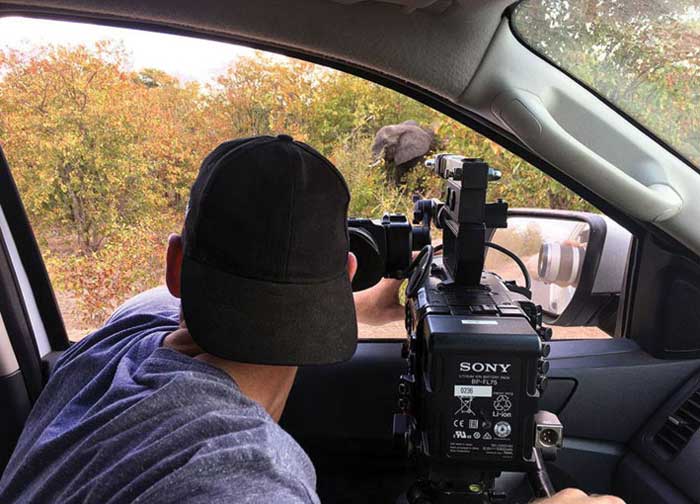
They are filming using the Sony F series line (F5 and the FS7 predominantly) and are shooting the entire piece on 4K. Lustig explains they are using a lot of Canon DSLR glass lenses with Metabones adaptors. Lustig and cameraman Tyrone Marcus both find the best results for this style of documentary are achieved by letting the subjects be themselves and by not hindering their experiences with a setup shooting style, therefore getting the most natural and honest reactions and responses from the people they are filming.

Lustig says they will be taking a GoPro OMNI 360 rig with to Kenya. “It’s a great opportunity to provide our audience with a completely immersive VR experience,” adds Lustig.

Earth Touch was on expedition with the team for the first two weeks in August and will be joining them again for the last two weeks of the expedition. Armed with handy cams and iPhones, the expedition crew have been filming their adventures in between professional filming dates. “We’ll have a release of the full length piece towards the end of the year but keep an eye on our website for updates on the team’s amazing adventures and short form features about some of the organisations we filmed at as well as snippets from the team’s cameras,” says Lustig.

One of the biggest challenges for Earth Touch has been the time where they could not be on the expedition. “We solved this by giving the team a very quick filming crash course on their iPhones and handy cams with implicit instructions to not film vertically,” explains Lustig. “I’ve had a look at the first set of footage and it’s great. Having the team film each other was a great way of getting some very intimate and heart-felt interviews,” she adds.

Music will be sourced from Audio Network and editing will be done using Premiere and Pro Tools to do the final mix.

Filming wildlife comes with its own set of challenges. It’s unpredictable with no guarantees, yet it is imperative to speak up for the life that suffers while greed consumes. As the expedition team’s journey comes to an end with the close of 2016, may it inspire more people to take action for what they care about, and may the African elephant find peace on their land.

Disney enchants with Ugandan biopic

Disney has made its first African story, Queen of Katwe. It flows like a fairy tale yet it’s the true life story of Phiona Mutesi, a Ugandan chess prodigy from Katwe who, with loving guidance, defies the borders of the slums to follow her dreams.

Mutesi’s life story was the subject of Tim Crothers’ book The Queen of Katwe: A Story of Life, Chess, and One Extraordinary Girl’s Dream of Becoming a Grandmaster. Published by ESPN in 2012, it was optioned that same year by Walt Disney Pictures. “It’s a classic underdog story,” says Crothers, who first went to Katwe in 2010. “For Phiona to have done what she has done is against the grain in so many ways. I think that’s what makes her story so extraordinary. She has no business being an elite chess player, and there’s no word for chess in her native language,” he says. “At nine, when she discovered the chess programme, she could not read or write and was basically homeless. She turned her life around from that to becoming a really good chess player and an incredible person, a leader of the women’s movement in her own country.”

It was the article by Crothers in ESPN Magazine that first introduced producer John Carls to the work of Sports Outreach and its cinematic potential. Carls was especially interested in the work of Robert Katende. Mutesi’s chess coach, who began as a soccer coach for Sports Outreach in Katwe. Katende was a civil engineer searching for a job that would financially support his wife and two children when his compassion led him to the development of his chess programme. It was there that he met Mutesi, a girl whom he took to when he saw the fight in her. She ended up making one of the greatest moves in chess, where the pawn becomes the queen. “That is one of the most powerful messages in the film,” says Carls. “That, no matter where you start from, you can still accomplish the greatest of things.”

Presented in association with ESPN Films, Queen of Katwe stars Golden Globe® nominee David Oyelowo, Oscar® winner Lupita Nyong’o and introduces Madina Nalwanga az Mutesi. The remarkable biography was made into a screenplay by William Wheeler.

While developing the project, Tendo Nagenda, Disney’s executive vice president of production and of Ugandan descent, immediately thought of Mira Nair. An Oscar® nominated director and the founder of Maisha Film Lab, a film school for East Africans, and a production company Mirabai Films in New York.

“It was quite ironic,” Nair remembers, “As one of my mantras is that if we don’t tell our stories, no one else will, and here was a story that was so local yet came from Hollywood.”

Nair says she had Nyong’o in mind for the role of Harriet, Mutesi’s mother who had her first child at 14. “I called it the Lupita draft,” she says.

Nyong’o won an Academy Award for Best Supporting Actress in 2014, concluding her acceptance speech by saying, “May it remind me and every little child that no matter where you are from, your dreams are valid.” This is a seemly statement for this story, which demonstrates how any dream can change the world.

A child of east Africa, an alumnus of Maisha Film Lab and an intern at Mirabai, Nyong’o fell in love with the script by the tenth page. “For me what is so poignant about this film is that it is told with humanity and humanity does not have a nationality, it doesn’t have an ethnicity and Mira tells this story with the specificity of Katwe but she also tells it with the universality of humanity, a small girl with a big dream who achieves it,” says Nyong’o. “That is the power of this kind of storytelling.”

Principal photography took place from April to June of 2015 in and around Katwe and Kibuli in Kampala, Uganda, as well as in Johannesburg, South Africa, employing local crews and extras in both countries.

Production in South Africa made use of the Department of Trade and Industry’s (dti) tax rebate, which subsidises 20 per cent of the budget, as long as 50 per cent of the film is shot in SA – an initiative that has attracted a great deal of local and foreign production in the country. “This is what I was trying to tell the Ugandan government 12 years ago,” says Nair, who has had a home in Kampala for the past 27 years. She says most of the scenes of Katwe, the informal settlement in Kampala where Mutesi spent her childhood, were shot, not in Kampala but in Johannesburg, together with all the chess championship sequences, the scenes of Sudan, Russia and the floods. “We rebuilt Katwe in Danville, outside Pretoria, for the flood scenes and poured in gallons of water. It would have been a bit tough to do that in Kampala,” she adds.

Nyong’o says the Joburg winter was her biggest challenge. “We were shooting an equatorial movie where it is hot every day and it was the dead of winter in SA. The challenge of all challenges. It was about three degrees and we were wet for four days straight and between each take we would run to the hot tub they had set up and just sit in our clothes until they were ready for us again.”

She adds that working with an SA crew both in SA and in Uganda was an excellent experience. “There is obviously an infrastructure here that Uganda can’t compete with,” Nyong’o says. “With that comes personnel and staff that are very experienced and they brought their experience to the film, they were integral,” she adds.

Nair says the most difficult part of making the movie was filming chess in an interesting way. “The humour, the drama, the style, that’s what I do but to make chess emotional and dramatic and visual and propulsive, to propel the story and yet be truthful to it,” she says was the greatest challenge. “It is absolutely correct, and these are moves that Phiona is famous for, we didn’t invent any of them,” she explains. All 15 of the games in the film are genuine games. Katenda was their chess consultant, the call sheet for every day’s shooting included the chess design, and all the children were taught chess by Katende. “It was an interesting visual challenge, how do I make chess vital,” Nair adds.

“Chess is inherently a cerebral, static game that does not necessarily translate well in cinema,” says DOP Sean Bobbitt. Speaking of Bobbitt Nair says, “He has this amazing poetry with his hand-held work that takes us right into the heart of the scenes we’re shooting.”

“Katwe is the visual heart of the film,” explains Bobbitt. “As a news and documentary cameraman, I’ve been faced with drab poverty in slums all over the world, but Katwe is different. There is vibrancy there, a density of colour and a unique pallet. The contrast of the red earth with the yellows and blues they use to paint the buildings, the density of humanity, the bright elements of clothing, the constant movement. Everywhere we pointed the camera, there was something of beauty.”

Bobbitt shot the film with the widest lenses possible to create larger-than-life images, using two Arriflex XT cameras supplied by Media Film Service Johannesburg. “These cameras have a wonderful sensor which handles the extremes of the African sun and shadow. They are robust and well suited to outdoor/indoor work needs,” explains cameraman Miles Goodall. He says they used a full set of T2 Cooke S4 series lenses as well as two Alura Zoom lenses with a range from 15mm to 250mm. “The sun was the primary source of light,” says Goodall. “Reflected and controlled depending on the scene. Electrical light was used for interiors and night scenes,” he adds. “We did quite a bit of handheld and loose camera rigs for freedom of movement.  We had two cameras on main unit operated by Bobbit and myself. Mira wanted two varied angles on the actors, especially the kids. She wanted a blend of classic and gritty. I was second camera DP and we roamed around shooting street-life and scenery while waiting for the set-ups to be ready.” The film was edited in Avid.

The film has an original score by Alex Heffes and it features an Afrobeat soundtrack curated by the Ugandan rapper Young Cardamom, the co-music supervisor, who took inspiration from the Katwe streets to engage the audience in the modern sound of today’s Kampala. The songs on the soundtrack stem from various African countries, from Uganda to Nigeria, and include an original by Alicia Keys.

Speaking of the impact of the film Nair says “It is not just a showcase; this is an anthem for all of us.” She says that film crews in SA are something that the country has to be proud of. She has made movies in SA since 1993 and is still working with colleagues she met then, “the greatest collaborators and artists.” She adds: “SA is top class. The key is we have to tell our own stories. We are servicing the whole world here with our crews but it is our own stories we have to tell and to tell them beautifully and I believe SA has the infrastructure and the talent to do that.”

FILM DIRECTORS SPEAK: PHI aka Jonathan Parkinson Nicole Ackermann

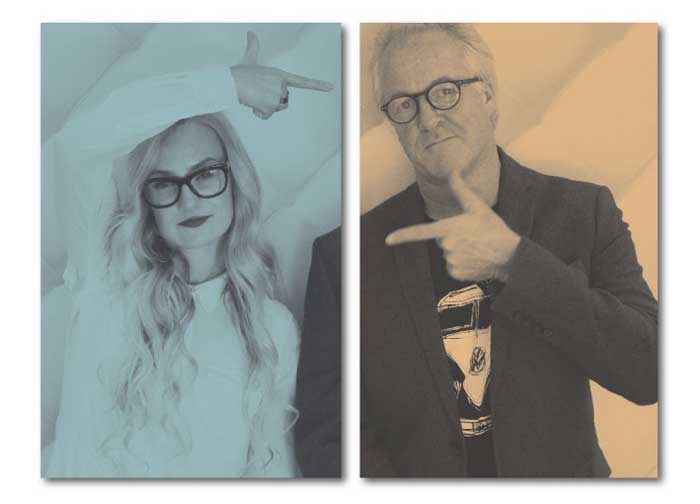
Joining forces to mix a little bit of retro with a little avant-garde. JP and Nicole have been working together as a co-directing team since March 2015 and in August 2016 they joined Star Films. This collaboration brings 35 years of technical and VFX experience both in camera and post production. They lean on each other’s combined strengths to make for a very strong partnership in the highly competitive world of TV and online advertising.

WHAT IS YOUR BACKGROUND AND HOW HAS THIS SHAPED YOU AS DIRECTORS?

JP has pretty much been doing this for as long as Nicole has been alive – so it’s safe to say that he has a strong background in filmmaking. Nicole studied film and television, and a whole lot of other irrelevant stuff like international relations. She also spent a few years as a creative researcher

DESCRIBE THE MOMENT WHEN YOU DECIDED YOU WANTED TO BECOME A DIRECTOR.

JP walked onto a set as a photographer and saw the director – and said to himself – I want to do what he’s doing. Nicole’s passion for directing began at a very young age when she started writing and directing plays at school.

HOW DID YOU BECAME A PAIR KNOWN AS PHI, WHAT DOES PHI STAND FOR?

JP has had this idea brewing for a while – he’s very into the universe and energy and quantum physics and other things that boil Nicole’s brain.  So here’s the science, Phi is 1:1.618 (the golden ratio) and it occurs everywhere you look in nature, it is often replicated in art to create something beautiful to the eye in terms of ratio and balance. We think this is amazing – it is the ability to see order out of chaos, beauty in the unexpected.

WHERE DO YOU FIND INSPIRATION?

At the bottom of a good cup of coffee.

As much as it sounds like a pay-off line for an ad (in fact we are sure it is) “inspiration is everywhere.”

Nicole was walking around Sea Point the other night and saw a homeless man lying on the floor reading a book called Serial Killers. True story.

JP often comes out of a meditation with a killer idea.

We are also always on the lookout for what’s happening on the international circuit, ads, photography, fashion, music, film etc.

DO YOU HAVE ANY MENTORS?

In a funny kind of way we mentor each other – JP has a lot of experience, and is very strong with performance and VFX, Nicole is conceptual and highly visual. We are always teaching and pushing each other.

We do have one mentor, but we can’t tell you who he is, we’d have to kill you.

WHAT ARE YOUR PERSONAL CAREER MILESTONES?

We just want to make amazing work. Work that moves people, pushes boundaries, changes the way we look at things, even just a little. We feel that each piece of work we do is a career milestone as we always look at a piece of work and ask ourselves – how do we make this stand out?

WHICH PROJECTS ARE YOU CURRENTLY INVOLVED IN?

Can’t say – will have to kill you again. We’ve just finished a piece for MNet 101 – about a little girl who goes around kissing everything in preparation for finding her prince. Otherwise we are pitching on some exciting stuff.

WHAT KIND OF CONTENT DO YOU ENJOY CREATING?

Amazing content – we are not limited by the subject matter.

So often we’ll get a script, and we can feel that the team are feeling a bit defeated, it’s been worried to death by the big C…  But if we can find an element of human truth to it – if we can breathe life back into it, then that’s content that we want to create.

WHAT HAS BEEN YOUR PROUDEST MOMENT AS A DIRECTOR?

For JP winning a Silver Lion at Cannes. It may seem obvious but often that kind of recognition against such heavy competition makes you feel that you are on the right path. For Nicole – it’s seeing the reactions of people who watch our work – knowing that you have touched them. I remember showing our short film for Sun Resorts to the voice over artist – and she was moved to tears.

IF YOU COULD PRODUCE AN AFRICAN VERSION OF A HOLLYWOOD CLASSIC, WHAT WOULD IT BE?

Game of Thrones

 WHAT ARE YOUR LEAST FAVOURITE PARTS OF THE JOB?

Putting everything into a pitch, seeing the job so clearly, and then losing it… but hey that’s the animal.

WHO WOULD YOU CAST AS YOURSELF IN A TV SERIES?

JP would be Iron Man – because he flies, has an irreverent sense of humour, and has great gadgets.

Nicole would be Khaleesi – queen of dragons (a strong, powerful, feminine woman, and she likes her hair).

WHAT OR WHERE IS YOUR HAPPY PLACE?

For Nicole Cape Town or anywhere on a yoga mat – For JP it’s the sea, on a surfboard or a bicycle… and on a film set we’re pretty stoked when we’re on a film set.

IF YOU COULD HAVE ANY FILMMAKER SUPERPOWER, WHAT WOULD IT BE?

The ability to look into people’s hearts understand what they are really feeling, what moves them, changes them… Oh and the ability to add a zero onto any budget.

WHEN YOU’RE NOT DIRECTING, YOU’RE…?

Nicole: probably watching other people’s ads, stalking a famous director on Instagram, or on an aeroplane going somewhere.

JP: with family, chilling or on a surfboard or bicycle.

First 4DX campaign flights in Joburg

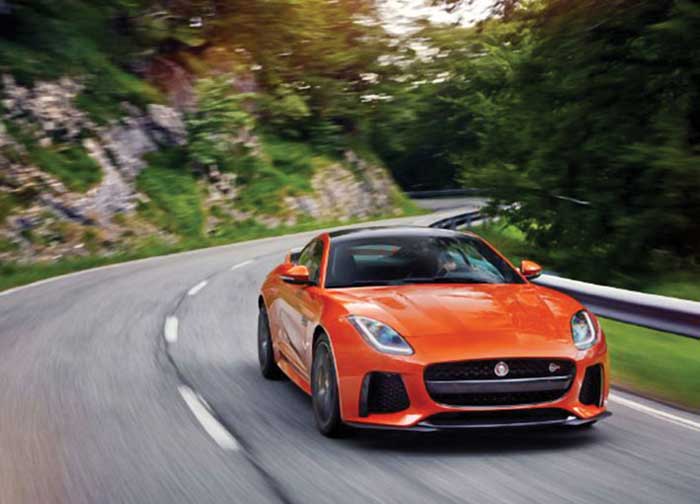
Whether 4DX is the future of cinema is up for debate, but for now it has arrived and is shaking things up. The first commercial to air in this format was for the new Jaguar F-TYPE SVR vehicle. The ad screened across South Africa as the first 4DX campaign, accompanying the launch of Nu Metro’s 4DX cinemas at the V&A Waterfront in Cape Town, The Pavilion in Durban and at the opening of the first 4DX cinema at Hyde Park in Johannesburg at the end of September. 4DX is the extreme of sensory stimulation using motion, vibration, water, wind, lightning, scents, and gimmicks to accompany the movie experience. No longer leaving cinema as a feast for the eyes you will be able to smell the coffee and feel the chase.

Nu Metro’s head of technical, Johan van Staden, was trained in Seoul, the home of CJ 4Dplex, the company that holds the rights to 4DX internationally. Van Staden was certified to manage the installation of 4DX technology locally. The content screened in 4DX is projected in HD (2D and Digital 3D) on a silver curved wall-to-wall screen. Its audio system has been upgraded to a Dolby CP750 with 7.1 full surround sound. The Barco projector used in the cinema also uses an upgraded lamp for brighter picture in both 2D and 3D.

“We had to install a complete new steel floor structure in the 4DX cinema to be able to handle the 0.3G-force the unit moves with, as well as water, air and scent lines. The complete system uses 24 computers (one in each of the 21 seats, motion PC, monitor PC and screen server). The force utilises Servo motors and transducers, and not hydraulics, making the movement much smoother and more active.” explains van Staden.

Popcorn Cinema Advertising offers brands the opportunity to add the 4DX dimension to their campaigns in cinemas. Justin Inglis, national sales manager for Cinevation and Popcorn Cinema Advertising explains that Popcorn Cinema Advertising is the media owner who sells cinema advertising airtime prior to the movie on big screens. “Popcorn Cinema Advertising pitched a 4DX campaign idea to Jaguar. Jaguar then briefed Popcorn on the Jaguar F-Type SVR campaign once the car was ready to be launched,” says Inglis.

Jaguar had the perfect campaign and car launch ready to be flighted. Once the advertising campaign was concluded, Popcorn Cinema Advertising then facilitated in sending storyboards to Jaguar which indicated which elements of the commercial would be used in the 4DX cinemas.

Inglis explains that once a suitable commercial has been identified, it is sent to CJ 4DPlex in Seoul which then encodes the commercial. Once Popcorn receives the completed commercial from CJ 4DPlex, it is uploaded to the various sites and slotted into the correct position on the ad reel. The software is owned and used by CJ 4DPlex. “They supplied the equipment for the 4DX Cinema as well as encoding the Jaguar commercial into 4DX.”

This campaign offer was on the table but Inglis says that the industry that seems most interested is the motor vehicle industry. “4DX gives the manufacturers the opportunity to drive interest in the brand by providing the cinemagoer with a simulated test drive, which is one of the primary ways to drive car sales. We look forward to getting more advertisers on Popcorn Cinema Advertising’s exclusive 4DX platform.”

Inglis says that the concept of 4DX is that of a fully immersive cinema experience whereby the cinema technology makes use of all of one’s senses. “This is a great opportunity for advertisers to engage with views on a completely new level,” he adds.

The companies involved in South Africa’s first 4DX campaign included Mindshare, Jaguar, Popcorn Cinema Advertising, Nu Metro and CJ D4Plex. All companies are based in Johannesburg, except CJ 4DPlex which is based in South Korea.

A smart app is painting the town red

South Africa, brace yourselves for an app that could finally see that illegal dumping site outside your house cleaned up.

Smart Citizen is the brainchild of Intervate, a South African software development company who have devised a tool that allows city officials and the public to interact in a meaningful way. Craig Heckrath, head of Products at Intervate explains the app, and the making of its teaser trailer.

“I love my city, but I dream of making it better,” says voice over artist Thuli Mdletshe in the online video. “I dream of a city that’s interconnected, a city that talks to me about things that affect my block, my street, my home. I dream of a city that senses and fixes problems, a city without bureaucracy but rather accountability. A city that cares about my time and saves me money. I love my city, and I’m going to make it better.”

This is the premise behind Smart Citizen, which enables bi-directional engagement between city service providers and citizens. “Smart Citizen uses the singular most ubiquitous piece of technology that most citizens have – a smart phone, to connect people with their city and the city to its people to help improve the environment, service levels and customer satisfaction,” explains Heckrath.

Intervate kept most of the making of the video internally. On the one hand, this was a result of budget and time constraints but also because the team had a clear vision, which is eloquently expressed in the ad’s voiceover, as spoken by Mdletshe and written by Heckrath. All video editing and animation was done by Rozanne Day, UX Designer at Intervate. Day and Heckrath conceptualised the ad with storyboard and copy.Flash Forward Productions was responsible for the shooting of the Smart Citizen App teaser trailer. “The client opted to go for our budget option,” explains Ryan Peimer, director and producer at Flash Forward. “Therefore we used a Sony NX5 HD Camera Kit as they were putting most of their time and money into post production which they were doing in house. Hence, as a SAMA award winning director, I decided to shoot and direct it myself with the limitations at hand, in order to get the highest possible production value out of a minuscule budget.”

The exceptions were the city skyline shots, which are stock footage and the field agent scene that was shot by Heckrath and Day. In this scene, the actor, Xolani, is an Intervate programmer. Developing an app to connect the city with its dwellers is work Intervate knows well, creating a commercial is something new. “Making the video was a challenge,” says Heckrath. “We have never made a video like that, internally from storyboard to completion.” They drew on internal expertise of Day’s design, Heckrath’s experience with sound editing and Marc Fletcher’s marketing intuition.

The ad was shot in Sandton and Midrand on 9 September 2016. The music was purchased and edited to pulse with the video. The audio was recorded using Logix ProX with the Izotope Alloy (EQ and Compression) and Perception 120 condenser microphone.

It was then edited in Adobe Illustrator, aftereffects and Premier Pro. It was aired on YouTube on 7 October and is available on the Smart Citizen website. The app is being rolled out city by city, with Joburg and Eskom currently in progress. The first city app will be available for the public in early 2017. Intervate is currently creating a subtitled version, which will be shown in airports across South Africa.

An African experience virtually as smooth as Amarula

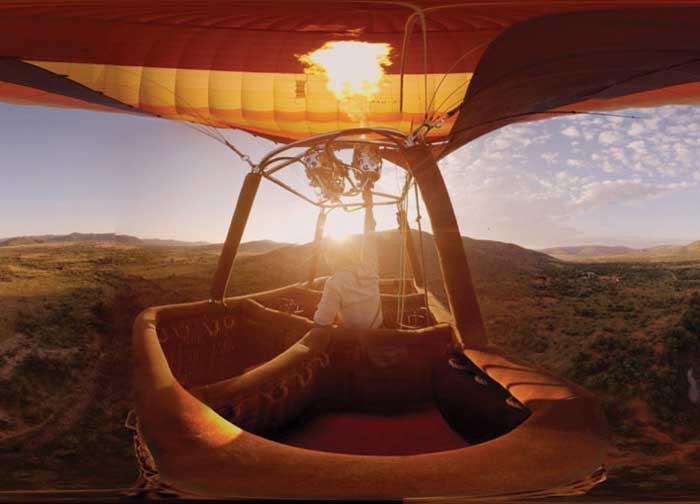
Distell’s Amarula have created a 360 degree virtual reality (VR) safari through Africa that explores the continent’s incredible beauty in their latest commercial. With VR making waves in the industry, the brand’s Global Marketing Manager, Mncedisi Junior Jekwa says: “Africa has always been rooted in the brand’s DNA. This exciting technology allows us to bring the Amarula story to life in a more visceral manner.”

As Amarula reinforces its motto, Made From Africa, VR presented an opportunity to bring to life the African continent when viewed from anywhere in the world. FCB Cape Town executive creative director, Mike Barnwell, says VR was chosen as the medium ahead of traditional channels as it was the perfect fit and vehicle for such an immersive experience.

“The technology itself was the creative treatment,” Barnwell adds. The commercial flows like a holiday experience with a 360 degree view of Africa, flowing over the marula trees in the wild, to the maturation houses and eventual pouring over ice experience.

“Through the technology, Amarula is able to transport consumers to the African veld and immerse them in an experience that brings the Amarula brand story to life. From the vast plains of the African savannah, to the watering holes where graceful elephants gather – the technology allows the consumer an opportunity not just to see the Made From Africa story, but to feel it and understand it in a very real and inspiring way,” says Dylan Davies, senior art director.

The scenes were filmed in the Waterberg and Pilanesberg National Park in South Africa as well as in the Okavango Delta in Botswana.

“It was our intent to fully immerse and inspire the viewer with the colour, atmosphere, energy and majesty of Africa. True to Amarula brand values of being real and authentic, great effort was made to capture the scenes as they are in nature – unlit and undoctored,” explains Davies. “From the elephants at their morning watering hole to the quietness of the Baines’s Baobabs on the Nxai Pan – each scene was crafted true to its surrounding and its part in an authentic story.”

Deep VR designed and manufactured the specific housing rig used for the VR experience. In total, the rig comprised 14 GoPro 4K cameras. “We designed a stereoscopic 360 camera rig based on human anatomy,” says Ulrico Grech-Cumbo, managing director at Deep VR. “We revised the design four times, reviewing the quality of depth we were achieving, until we got to the design which we used on the Amarula project,” he adds. Explaining his choice of camera he advises that GoPros are highly modifiable, and gave the highest quality-to-size ratio possible at the time of design.

Little to almost no supplementary lighting was used throughout the scenes, only natural lighting was used. Grech-Cumbo says this involved timing each shot so as to achieve the perfect lighting conditions for the lens and for the camera. “We used special 195 degree wide-angle lenses,” he says.

Editing was done using a combination of APV, FCPX, PhotoShop, After Effects, DaVinci Resolve and Nuke for the video production and Logic Pro for the Audio. These all included specialised plugins and effects to work with 360° VR specifically.

The ad was shot for 10 days in two different countries and had 11 scenes, across five locations.

“Embracing a new and unfamiliar technology is both unnerving and exciting,” explains Davies. “Over time we have become accustomed to viewing images in 2D. VR records in full 360 degrees so thinking in 360 was a new challenge in both how you need to think about a scene and how you go about recording it.” Davies explains that stepping out of the traditional film production approach in favour of a looser, more nimble production model afforded them the opportunity to setup the camera and record scenes that would otherwise never have been possible to film on such a tight production schedule. “16 hours on a dirt road for a single shot. We do truly love what we do,” adds Davies.

“What’s interesting about filming in VR is the fact that scenes have to play out like theatre,” explains Grech-Cumbo. “There are no cuts, breaks, framed shots and splicing. A re-take means a complete retake of the scene from the beginning. This proved especially difficult with elephants, which feature in two scenes.”

Grech-Cumbo says that further technical challenges included post-production stabilising as the footage is in a full sphere. “What made it challenging is that a 360 video is moving relative to a canoe in complex ways, which itself is moving relative to the water in complex ways,” he says. “One of the other technical things is that, because the camera is sort of like the all-seeing eye of Sauron, the tripod is visible. So it had to be painted out in every shot.”

Grech-Cumbo explains the challenges of stitching. “Each camera picks up a certain angle, which has to be mated to an adjacent camera. Due to unavoidable lens distortion on each camera, when these areas join up you often experience what’s known as a parallax issue – where subject matter appears to distort, disappear or ghost when passing a stitch line. The process of fine stitching is a true art in itself, which minimises or eliminates this effect.”

The three minutes 45 seconds, 3D, 360-degree experience will be rolled out using Samsung Gear VR headsets and Oculus Rift units around the world in travel retail, focusing on duty free shops in major airports.

Key companies and crew:

  • Creative agency: FCB Cape Town
  • Executive Creative Director: Mike Barnwell
  • Creative Director FCB: Aaron Harris
  • Group Head and Senior Art Director: Dylan Davies
  • Radio and TV Producer: Ashleigh Jarratt
  • Group Account Director: Stephanie Binns
  • Virtual reality agency: Deep VR
  • CEO: Ulrico Grech-Cumbo
  • Director of Photography: Telmo dos Reis
  • Audio specialist: Samukelo Mahlalela

A micro-budget seeking a big audience

Local filmmakers too often face a stalemate when it comes to the funding of their films, yet this hasn’t deterred a great number of films, but are these films being noticed, are they capable of competing in a billion dollar industry?

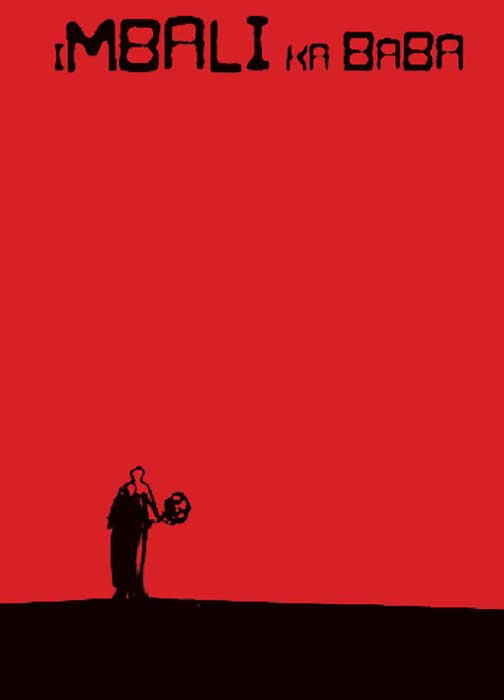
Director Mlingane Dube has faced a similar fate, and with nearly no funds his short Zulu film, iMbali KaBaba is currently in post-production. Inspired by a web article on the  Screen Africa website about “Using short films to build brand and audience,” and he is challenging the industry in an attempt to do that. The short was made with Artistry Media, Red Fox Pictures and Crimson Fire.

Filming on the scenic KwaZulu-Natal North coast, producing a film more on favours than budget, and sourcing talent from the UKZN drama department, Dube says: “It really has been a game of blessings and curses.” He adds that “the hard part is that it’s far from over. Being newcomers to the game of film-making as a business, marketing and distribution is proving to be a back-breaking challenge as our quest is to use this film to build a brand and an audience.”

iMbali KaBaba is the story of Mbali, a teenage girl from Tugela Mouth, KZN, where the film was shot. She longs for what she deems a perfect family. Dube, of Artistry Media says “This film is driven by the theme of strong women, black females all over rural South Africa that have been tried and tested by a variety of challenges in which they come out victorious more often than not. The story is an important one, an inspirational one that will educate people to challenge societal norms. It’s a theme that South Africa is familiar with yet is still hungry for.”

Producer Stephen Wiggill of Red Fox Pictures says that “as usual there was no budget, so we tried to get it done as cheaply as possible.” No crew were paid and all the gear was sponsored by Red Fox Pictures. “So that leaves food and fuel and incidental production costs. These costs were paid by the executive producers and came to the estimated figure of R5 000 with the idea of getting students of film to make their own films and tell their own stories and ultimately help them to get funding in the future.”

The short was filmed using a Panasonic GH4 and a Ronin M Gimbal. Dube says they filmed for three days after a day of rehearsals, because with the scarce resources they needed to move fast.

Wiggill says “The usual filming challenges always abound but one thing that can be improved for us is logistics, I think everyone involved should be completely independent no matter where your locations are. Indie is not for divas. I think there are a number of potentially good film people out there that are willing to support themselves during the production and bring something to the shoot. These are the people that we look for, those who relieve us of some of the challenges. Maybe that’s why it’s called Independent Filmmaking. Having said that I think the real challenge on any (indie) film is getting people to say yes and then commit and deliver knowing that the only reward is the film itself. So if you wanna get into film, say yes and start adding value.”

The score was composed by Free State musician, John Mofokeng, who played every song in the film. “This is only his second project where he’s worked as a film composer and I think it’s safe to say the bug has bitten,” adds Dube.

Editing is being done using Premiere Pro, DaVinci Resolve and Photoshop. Dube wants this film to reach the people that it’s about, “a film for not your average movie goer to finally see their image and life portrayed on screen.”

It will be entered into local film festivals, and Dube has approached Kasi Movie Nights to help them take the film to community halls and schools in remote KZN. “We’ve had an informal chat with the KZN film commission about funding the community screenings and they expressed interest.” They hope to take the film on a tour starting in KZN as of early 2017.

Tiffen launches Variable Viewing Filter

Responding to the demands of cinematographers and lighting professionals worldwide, Tiffen has launched its new Variable Viewing Filter (VVF), incorporating Tiffen’s award-winning Variable ND filter, offering indexed 2-8 stops and with the unique ability to easily add any 49mm ring filter from their vast range.

The VVF allows the user to add additional Neutral Density filters to increase the stop range, UV Filters and Polarizers, or even special FX and diffusion filters for pre-visualization of a scene without the need to reposition the camera.

This is a great tool for Gaffers and Directors of Photography to spot strong lights or keep track of the sun moving in and out of cloud cover when used with additional ND or UV Filters.

The filter is manufactured to Tiffen’s high specification and features a classic eyecup and a one inch handle with a quick release lanyard.

Early orders have been shipped already to ARRI Rental and Panavision and are available immediately from stock.

Balancing lighting by eye is a matter of experience. Decisions can be aided through the use of contrast viewing filters. The VVF is the latest addition to Tiffen’s Viewing Filter range, designed to handicap the eye, with its much greater range of apparent densities, to resemble the range of the various types of situation. These contrast viewing filters can be used to judge relative highlight and shadow densities.

Tiffen’s Filter expert Eren Ibrahim is at Camerimage Film Festival in Poland 12 to 19 November with the new VVF as well as other filters from the Tiffen range.

For further information visit the Tiffen website.

- Advertisement -
- Advertisement -
- Advertisement -

Pin It on Pinterest