


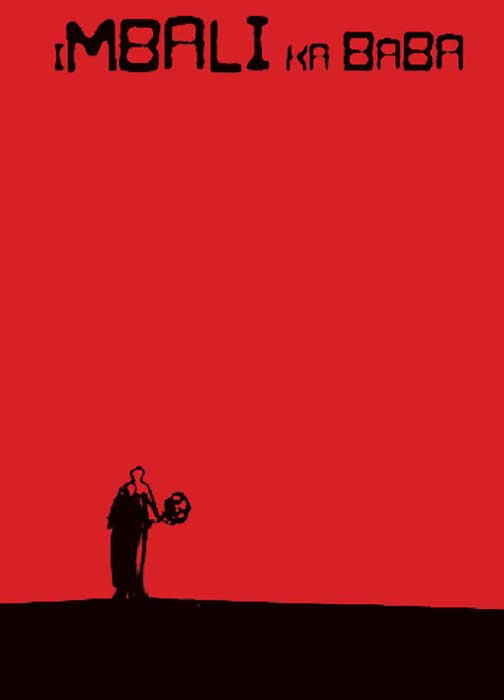
Local filmmakers too often face a stalemate when it comes to the funding of their films, yet this hasn’t deterred a great number of films, but are these films being noticed, are they capable of competing in a billion dollar industry?
Director Mlingane Dube has faced a similar fate, and with nearly no funds his short Zulu film, iMbali KaBaba is currently in post-production. Inspired by a web article on the Screen Africa website about “Using short films to build brand and audience,” and he is challenging the industry in an attempt to do that. The short was made with Artistry Media, Red Fox Pictures and Crimson Fire.
Filming on the scenic KwaZulu-Natal North coast, producing a film more on favours than budget, and sourcing talent from the UKZN drama department, Dube says: “It really has been a game of blessings and curses.” He adds that “the hard part is that it’s far from over. Being newcomers to the game of film-making as a business, marketing and distribution is proving to be a back-breaking challenge as our quest is to use this film to build a brand and an audience.”
iMbali KaBaba is the story of Mbali, a teenage girl from Tugela Mouth, KZN, where the film was shot. She longs for what she deems a perfect family. Dube, of Artistry Media says “This film is driven by the theme of strong women, black females all over rural South Africa that have been tried and tested by a variety of challenges in which they come out victorious more often than not. The story is an important one, an inspirational one that will educate people to challenge societal norms. It’s a theme that South Africa is familiar with yet is still hungry for.”
Producer Stephen Wiggill of Red Fox Pictures says that “as usual there was no budget, so we tried to get it done as cheaply as possible.” No crew were paid and all the gear was sponsored by Red Fox Pictures. “So that leaves food and fuel and incidental production costs. These costs were paid by the executive producers and came to the estimated figure of R5 000 with the idea of getting students of film to make their own films and tell their own stories and ultimately help them to get funding in the future.”
The short was filmed using a Panasonic GH4 and a Ronin M Gimbal. Dube says they filmed for three days after a day of rehearsals, because with the scarce resources they needed to move fast.
Wiggill says “The usual filming challenges always abound but one thing that can be improved for us is logistics, I think everyone involved should be completely independent no matter where your locations are. Indie is not for divas. I think there are a number of potentially good film people out there that are willing to support themselves during the production and bring something to the shoot. These are the people that we look for, those who relieve us of some of the challenges. Maybe that’s why it’s called Independent Filmmaking. Having said that I think the real challenge on any (indie) film is getting people to say yes and then commit and deliver knowing that the only reward is the film itself. So if you wanna get into film, say yes and start adding value.”
The score was composed by Free State musician, John Mofokeng, who played every song in the film. “This is only his second project where he’s worked as a film composer and I think it’s safe to say the bug has bitten,” adds Dube.
Editing is being done using Premiere Pro, DaVinci Resolve and Photoshop. Dube wants this film to reach the people that it’s about, “a film for not your average movie goer to finally see their image and life portrayed on screen.”
It will be entered into local film festivals, and Dube has approached Kasi Movie Nights to help them take the film to community halls and schools in remote KZN. “We’ve had an informal chat with the KZN film commission about funding the community screenings and they expressed interest.” They hope to take the film on a tour starting in KZN as of early 2017.
