


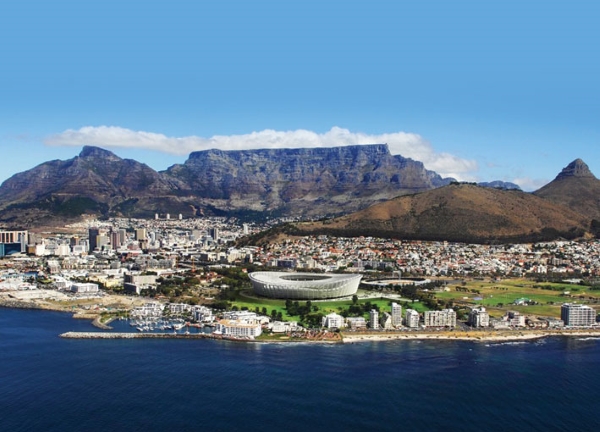
It’s no secret that Cape Town and the Western Cape as a whole are experiencing a severe drought – the worst in 400 years. Level 6b restrictions have been implemented in order to ensure that water consumption is reduced to a level where Day Zero can be avoided.
The film and media sector remain a significant job creator for the Cape’s economy, and despite the drought – the show must go on!
In an attempt to support the production sector in sustaining itself during the drought whilst still conserving water, the Western Cape’s Film and Media Promotion Unit, in collaboration with the City of Cape Town and the Western Cape Government, hosted a “think tank session” where advice on how to save water was shared.
Monica Rorvik, head of the Film and Media Promotion Unit said: “Cape Town and the Western Cape are open for business. We are working with the industry to assist them in becoming water resilient during this drought.”
Several heads of major Cape Town-based companies within the industry shared on how their businesses are already taking steps to save water.
Genevieve Hofmeyr, co-founder and managing director of Moonlighting Films said: “Film businesses in Cape Town and the Western Cape are adapting to the new normal. Our international cast and crew are living like locals and cutting their water footprint. Where potable water is required for a scene, it is imported from the Cape Overberg and then re-used in our greywater systems, but these scenes are being cut to the minimum.”
Byron De Carvalho, director of film catering company Shesha added: “Shesha has a plan to save 145 000 litres of water. We are going to erect water cooler drums, which makes use of water from springs outside of Cape Town. An average shoot uses up to 480 plastic bottles of water a day, so this intervention will drastically save water. We are also installing an air-water converter, which will be used to run our kitchen, and will use plastic, biodegradable plates and cutlery to reduce washing requirements. Our chefs will in addition cut out high water-using dishes from the menu, and grey water will be used to clean floors.”
Leading consultant to the film industry, Rudi Riek concluded: “Our Industry has been world leaders on many fronts and our ability as an industry to deal with crisis situations is well known. We are encouraged by the incredible measures our suppliers and production companies are already taking in order to save water. Along with our partners in the City and Wesgro, with the support of our suppliers, we will be rolling out new guidelines that all companies must adhere to in our efforts to ensure all productions are water neutral or as close to it as possible.”
