


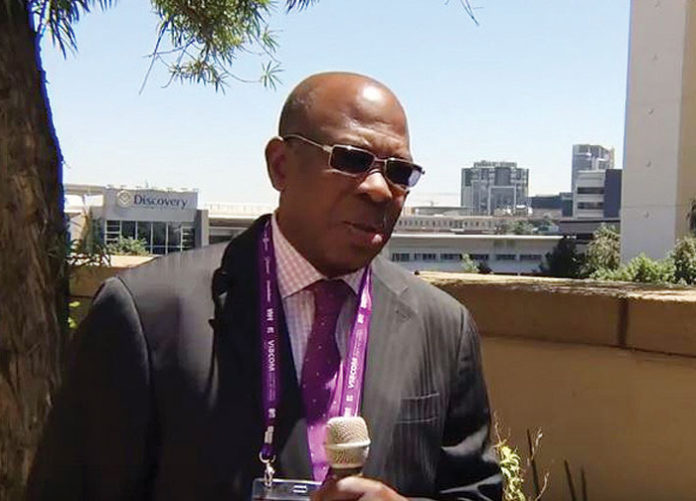
On the second day of DISCOP Africa Johannesburg, GoTel Communications managing director and CEO, John Chiahemen, delivered a keynote presentation titled ‘Africa making its own news – telling a different story to the world’.
Over the past two decades, and even before, a key challenge facing African news broadcasting organisations has been the struggle to tell the continent’s diverse stories to a global audience. For the longest time, the tale of news in Africa has been that of war, famine and poverty, but that is slowly changing. African news organisations are setting out to tell their own stories to the world, stories that reflect the numerous different African realities that often go unheard.
Chiahemen approached the topic by examining trends and changes that have occurred over the past few decades, resulting in a transformation in the way we consume and share news – and fundamentally impacting the practice of news gathering.
Traditional media versus social media
For hundreds of years, traditional media channels were the only source of news for the public. Chiahemen referred to the Great Depression of 1929, explaining that when the depression occurred, newspapers and radio were the main sources of information for people who wished to keep abreast of developments taking place at the time.
The rise of social media over the past decade has vastly diversified sources of information, causing the integrity and quality of news to suffer. Referring to the financial crash of 2008, Chiahemen explained that when global financial services firm Lehman Brothers went bankrupt, images of staff leaving their offices appeared on social media within a matter of minutes. Social media platforms are now used in almost every corner of the globe, allowing any individual, with an internet connection or a smartphone to disseminate and share information.
“The difference between 1929 and 2008 is that the media in 1929 was the traditional media as we know it,” Chiahemen said. “You knew who the editor of the newspaper was, you knew where the newsroom was and you could hold people accountable for what they published or broadcast, but that has changed now. You can’t always know the source of information, it’s so fragmented, sources are unclear and blurred, and verification is very difficult.”
The top three social media players that have contributed to this change are:
- Facebook, with 1.01 billion daily users and over 50 million subscribers in Africa alone. The average Facebook subscriber has about 130 friends.
- Twitter, with 100 million daily users, 320 million regular users, and about 1 billion registered users. Chiahemen noted that 77% of Twitter accounts are registered to users outside the United States.
- YouTube, which was founded in 2005, has over 1 billion viewers today.
Perhaps the most noteworthy trend that has developed as a result of these social media giants is that the way in which we consume news has changed; we no longer just receive news, there is a conversation that now goes on among the consumers of information resulting in traffic between the broadcasters and the audience, and among the audience themselves. “This is a growing trend that has a serious impact on the way news is broadcast and diluted,” said Chiahemen.
Faces of news
Another significant change that has taken place over the past few decades – particularly in Africa – is that the faces of news have changed. “The people we have associated with news in Africa… over the past two decades have changed,” he said. For years on end, the faces the world associated with African news were individuals who were known for immoral and unscrupulous doings rather than good, these include Idi Amin, former Ugandan president; Mobutu Sese Seko, former dictator of Zaire; Jean-Bédel Bokassa, the self-crowned emperor of the Central African Republic (CAR) until he was ousted in 1979; Charles Taylor, former Liberian president and warlord who played a major role in the Sierra Leone conflict; and Muammar Gaddafi, former leader of Libya.
The faces of news in Africa are altering to reflect the positive movements that the continent is making: “Now we are more likely to recognise the likes of Aliko Dangote, Africa’s richest man, from Nigeria; Lupita Nyong’o, Oscar winning actress from Kenya; and Patrice Motsepe, South African mining magnate… These are now the faces of news in Africa and they represent what this continent aspires to be: to be at the centre of the global economy. This is a continent that is raring to go, the youth of this continent is excelling in all spheres whether it’s music from Nigeria, or cinema from South Africa, Nigeria and the Francophone countries, the continent is truly on the move.”
Key challenges
The African continent is still to a large extent underdeveloped, meaning that the key resources required to efficiently run a news network are often unavailable. Resources such as satellite and broadband infrastructure, power supply, studio infrastructure and workforce training are exceptionally sparse in some countries in Africa.
Chiahemen says that if we can overcome the challenges that running a network in Africa entails, then we can tell our own story, from our continent, to the rest of the world.
Telling our own stories
This is the background from which African news organisations are emerging, but the future looks promising, says Chiahemen, adding that African news networks need to “tell the story that has not been told” – a story about the cultural diversity and splendour of our continent.
“One of the challenges of producing news that the world cares about is that you need to be there,” says Chiahemen “…and that is our advantage.”


