


The torrent of news headlines in South Africa would have us believe we might be on the brink of civil unrest – a recurring paralysis-of-fear-narrative that is pervasive in our country. Nkandla, Marikana, State Capture, the Esidimeni deaths, the SASSA grants crisis, are enough to make even the most optimistic among us question the meaning of existence.
Doom and gloom narratives are not unique to South Africa, or the rest of our continent. Tune onto CNN for ‘disaster central’ AKA ‘if it bleeds, it leads.’ This sentiment is echoed in the work of Peter Diamandis, author of Abundance: The Future Is Better Than You Think (2012). Diamandis would turn our attention to signs of evolutionary accomplishment all around us. Looking at “the hard facts, the science and engineering, the social trends and economic forces that are rapidly transforming our world (Diamandis 2012).” He argues that in the 21st century the standard of living has improved dramatically with increased life expectancy, decreased infant mortality, and access to basic education, technology, and water borne sewerage; our lives are vastly better than in previous centuries.
But what bearing does this have on the lives of us living in the developing world? After all, Peter Diamandis, along with his peers, Ray Kurzweil, Mark Zuckerberg and Elon Musk are voices from the Global North – the developed world. What relevance does this have for us living in the Global South, with our own unique set of problems and socio-political challenges? Looking at this from a globalised perspective, in today’s hyper connected world, problem solving in the Global North has dramatic impact on the Global South, as we witnessed in the global economic crisis of 2008. What happens here, impacts there, and vice versa. Global pandemics have no borders. We are not as far apart as we might think. Isn’t everything connected in the age of fast fibre? We could argue for a new vantage point of the Human family through the lens of postmodern Ubuntu – ‘I am because we are’ – now has a cybernetic dimension. Boundaries between ‘us’ and ‘them’ are increasingly faint. In a globalised world of mobility and transnationalism, our borders are more porous than ever before. We are all global citizens. Geographic boundaries no longer begin and end on the traces of maps. In the same way, boundaries of the human body do not begin and end at the skin. Cyborg anthropologist, Amber Case says in her viral Tedtalk, “we are all cyborgs now.” Case rejects the Hollywood imposed imagery conjured up in the mind that a cyborg should resemble RoboCop or Terminator. These popular culture science fiction films distort the representation of the cyborg as innately masculine, which alienates women from identifying with this exhilarating fantasy of possibility. The scientific definition of the term ‘Cyborg’ was coined in 1961 in a Cybernetics space travel essay by Kline and Clynes describing this evolutionary, transhuman phenomena as: “The Cyborg deliberately incorporates exogenous (external) components extending the self-regulatory control function of the organism in order to adapt it to new environments.”
Case argues that we are cyborg every time we “look at a computer screen or use a cell phone device.” We are a “button clicking” and “screen staring” species with peculiar digital rituals and cultures. 21st century humans spend vast amounts of time intersecting with machines. If you have ever lost your smart phone, you will know the sense of panic, deprivation and disorientation this causes. This is because the smart phone has become an extension of the self. The ubiquitous smart phone has changed our lives in exponential ways. The exponential premise of Diamandis’ book, Abundance (2012) is based on Moore’s Law – the rule of thumb in the technology industry which shows how the processor chip – the basic component that enables computing, doubles in speed every 18 months, while the price remains the same. Moore’s Law continues to be the yard stick for growth in exponential technology and shows no sign of slowing down. Counting exponentially means the data soon leaps off the graph: 1, 2, 4, 8, 16, 32, 64, 128, 256, 512… Think of the exponential leap from the cell phone to the smart phone. Remember when all a cell phone could do was SMS and call? Smartphones now empower the user with more access to information than Bill Clinton had 16 years ago. “Africa has skipped a technological generation, by-passing the landlines that stripe our Western skies for the wireless way. Mobile phone infiltration is growing exponentially, from two per cent in 2000, to 28 per cent in 2009, to 70 per cent in 2013 (Diamandis 2012).”
The smart phone has limitless applications now enabling emerging technologies like Virtual Reality to take centre stage as of 2016. Ryan Marfone describes in, The Real Reason Facebook Acquired Oculus Rift: How Virtual Reality Will Disrupt Everything And Why You Should Care (2016): “In 2016 an old trend has resurfaced in mainstream media, Virtual Reality (VR). Although this is not the first time that this trend has popped up in society, it has come back with great force and a bigger sense of realism due to other technological advancements such as smartphones and the high definition nature of these devices.” Marfone describes the purchase of Oculus Rift by Facebook for $2 billion in 2014 as a precursor to the impact of Virtual Reality on everything from education, immersive communication, tourism, events industries, military training and medicine.
Already companies like Deep VR, operating in Johannesburg, are revolutionising ways in which customers connect to brands. This spells massive disruption for the advertising industry. On the horizon, a Fourth Transformation awaits according to Scoble and Israel in their book, The Fourth Transformation: How Augmented Reality & Artificial Intelligence Will Change Everything (2017). Scoble and Israel conclude that the various waves of the Digital Revolution ignite exponential transformation where start-up companies experience meteoric success; while great companies like Kodak, succumb to bankruptcy overnight. Scoble and Israel predict that by 2020, we will migrate from our smart phones to smart glasses where VR, Augmented Reality (AR) and Mixed Reality (MR) applications merge. These disruptive technologies are set to become as ubiquitous as the laptop and mobile phone. But where does this leave us as media practitioners in the Global South? Are we forever to see ourselves ‘developing’ – not there yet? We think not. The Comaroffs offer a counter narrative in Theory from The South, Or How Euro-America is Evolving Towards Africa (2012).
“What if we subvert the epistemic scaffolding on which western enlightenment thought is erected? What if we posit that, in the present moment, it is the global south that affords privileged insight into the workings of the world at large? Euromodernist narratives of the past two centuries – which has the south tracking behind the curve of Universal History, always in deficit, always playing catch up – there is good reason to think the opposite: that given the unpredictable, under-determined dialectic of capitalism-and-modernity in the here and now, it is the south in which radically new assemblages of capital and labour are taking shape, thus to pre-figure the global north (Comaroff and Comaroff 2012).”
In this call to rethink our world view and embrace an inverted world view of Africa where we start to see “old margins becoming new frontiers” and “the global north becoming more like the south (Comaroff and Comaroff 2012)” we begin to fathom our agency, to insert ourselves into the global narrative. As computer scientist, Alan Kay said in 1971 – the best way to predict the future is to invent it. Education has always been about the project of self-transformation. Education empowers us to reinvent ourselves on a lifelong basis. At AFDA PRO we are now inventing the Cyborg filmmaker who emerges from Science Fiction, specifically from Afrofuturism, from Africa. This is the construction of the cinematic/story telling voice from the Global South.
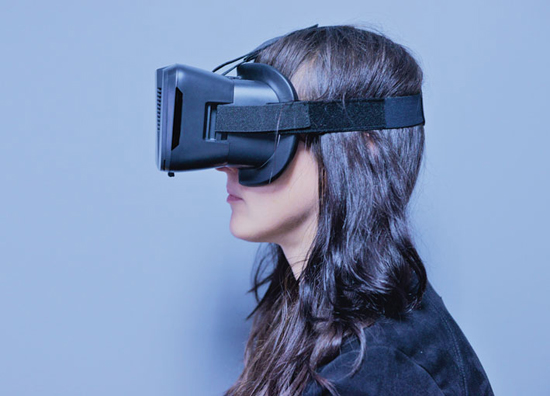
As technology converges exponentially in media production driven by the Digital Revolution, so the Cyborg filmmaker becomes a nexus of converging skills accumulation for media production. In so doing, the Cyborg disrupts the boundary between human and machine because the tools of filmmaking are extensions of the cyborg self. The Afrofuturist Cyborg inserts itself into the global Virtual Reality narrative by splicing technology into the story telling self. The Virtual Reality camera rig with its multiple eyes, multiplies the possibility of new ways of seeing. The Virtual Reality head set becomes a Cyborg cyclops eye – a new mode of perception of the world around us. We must become biologically blind before we can see anew in the cyber world – immersed in a new sight of new worlds. Why, because it matters which Worlds get to create those new Worlds. Viewed through the cyclops prism of the Virtual Reality headset, we let go of global orientation rooted in cultural hegemony and turn the world on its head, resisting the dominant narratives of the Global North. So the Afrofuturist Cyborg inserts itself into the global narrative of Virtual Reality cinema. Emerging from Haraway’s Cyborg Manifesto, the Cyborg is an intersection of human and machine. The human being does not end or begin at the skin. The skin is permeated by machine. The human being transcends its flesh by fusing with machine identity. By harnessing the tools of the Digital Revolution we transcend our race, our gender and our species. We splice the self with technology to form new identities, to tell new stories, to create new worlds of immersive story, to disrupt reality, to disrupt the human being, to become Cyborg filmmakers.
By Shmerah Passchier, AFDA PRO knowledge curator


