


Few creators of film or television content in Africa’s various markets would deny that the local market for homegrown content is severely limited in terms of paying audiences, distribution channels and revenue generation. It is essential that international markets are tapped. However, these are numerous and often daunting. Screen Africa offers a guide to some of the world’s essential festivals and markets.
The world of international festivals and markets for the film and television industry is a multifarious one that is by no means as straightforward as it may appear. While it is certainly a big step forward in a filmmaker’s career to have a film accepted into a festival – any festival – it’s possible that the festival in question may not be the best platform for a given work. By the same token, it is no use spending your energy trying to sell an idea for an uncompleted screenplay at a market that is primarily concerned with catalogues of completed work, or for an independent producer to attend a market that is actually meant for sales agents with extensive catalogues.
French film producer Lucas Rosant, who has considerable experience at various markets and festivals, says that the fundamental point to consider when choosing a market is to “…be sure that it is a market (or territory) that suits the catalogue, film or project – either in terms of the audience (for example, comedy does not travel well due to cultural and language issues), genre (some markets are highly specialised in this regard), tastes and identity (world cinema versus commercial versus art house).”
While there is no fool-proof method to choose the right market, it helps to do extensive research into the nature and preferences of each one before making the decision to go there. “While you should never rely entirely on the internet,” Rosant says, “going through the respective websites of all the festivals and markets is very helpful. Look at their programming and delegate lists over the past few years – which films were screened, which directors were discovered or awarded? How do these past films relate to yours? Are there similarities?
Rosant offers some general pointers: “I would say that, in terms of cinema, some markets are hard to avoid and become annual ‘musts’ – like Cannes or Berlin. Any others you attend would depend on your interests – target territories, genres and so on, and which part of the business you are in. Sales agents tend to travel far more than producers, for example. But I should emphasise that, whichever ones you choose, you should attend two or three regularly every year. This is the only way to build that all-important network, gather information and make your business stronger.”
While the kind of content you are able to sell depends entirely upon the market, the buyers and their respective audiences, there is one important trend to take into account as things currently stand. According to Mayenzeke Baza and Pascal Schmitz of the Association for Transformation in Film and Television (ATFT), the market for feature films is shrinking rapidly and any African content owner looking to make successful sales overseas would be wise to avoid the format and opt for long-form instead.
“Unless you have a really exceptional feature film,” Baza explains, “buyers won’t really be interested. What they want is TV content – scripted or unscripted – that has potential to fill a programming slot for several months. From the seller’s point of view, you’re getting the same deal for one episode of your show as you would for one feature film, so it generates better revenue and is more worth your time.”
Below is a quick guide to the major events on the international film festival and content market calendars. Many thanks to Mayenzeke Baza and Pascal Schmitz of the ATFT for contributing their extensive market experience to help create the event summaries that follow. This is by no means an exhaustive list but the events listed are the most notable ones or those most relevant to African content buyers and sellers. JANUARY/ FEBRUARY
Sundance Film Festival
Where: Utah, USA
Focuses: US independent cinema is the main focus but a selection of international independent films is also featured. Predominantly arthouse – both dramatic and documentary films.
Business/ presentation style: No formal market, generally only films selected for the festival are under discussion. Relatively small attendance with industry insiders accessible on an informal basis. Foreign filmmakers are unlikely to sell films or secure partnerships or distribution here unless they have a film in the festival.
NATPE (National Association of Television Program Executives) Market and Conference Miami
Where: Miami, Florida, USA
Focuses: Television content from and for the North, South and Central American markets, open to global buyers and sellers.
Business/ presentation style/ strategies: A formal, exhibition-style content market. African content sellers should note the large contingent of Latin American TV representatives who are always on the lookout for new dramas and reality formats. The rule of thumb for foreign content is that Mexican buyers are the ‘gatekeepers’ to the rest of the Spanish-American market, and it is best to sell to them first.
Göteborg Film Festival
Where: Gothenburg, Sweden
Focuses: There is an emphasis on films from the Nordic region (Sweden, Denmark, Norway, Iceland, Finland) with a ‘Five Continents’ section dedicated to a selection of films from across the globe.
Business/ presentation style/ strategies: The festival is attended by both the public and industry professionals and is the key showcase and meeting point for the Nordic film industry and its products. An industry event, the Nordic Film Market, runs alongside the festival. The focus here is the sale of Nordic cinematic content and there are few opportunities to sell content from elsewhere unless your film is included in the programme.
International Film Festival Rotterdam/ Rotterdam CineMart
Where: Rotterdam, Netherlands
Focuses: European art cinema, co-production
Business/ presentation style/ strategies: The CineMart is a platform for the development of new cinematic projects, not for the sale and distribution of completed work. Filmmakers submit their projects to the selection panel prior to the event. If selected, they attend the Mart to pitch to potential funders, co-production partners, etc. There is little point attending the Mart unless you have a film in the festival or Mart programmes.
Realscreen Summit
Where: Washington DC, USA
Focus: International documentary and reality content.
Business/ presentation style/ strategies: Realscreen offers both formal and informal platforms for networking, meeting potential production partners, and the sale and purchase of content. Meetings can be arranged through the organisers of the summit itself. It is advisable to have either a full slate of well-presented completed content or a well-planned pitch for a proposed project.
Kidscreen Summit
Where: Miami, Florida, USA
Focus: TV content for children.
Business/ presentation style/ strategies: Much like Realscreen, Kidscreen is a specialised event offering formal market and networking facilities, as well as a conference to keep practitioners up to date on latest industry developments. Meetings with international broadcasters and networks can be scheduled. Well-planned sales and pitching strategies are a must.
Berlinale/ European Film Mart (EFM)
Where: Berlin, Germany
Focus: Festival favours arthouse content, while the Film Market is less prescriptive – here all manner of cinema (and increasingly TV) content can be bought and sold.
Business/ presentation style/ strategies: Berlin marks the start of the European production cycle. Here, deals are set in motion, which will be concluded a few months later at Cannes, before the summer production window opens. EFM is the most extensive market for film in Europe, where a broad range of deals are initiated, from high-end, studio-driven co-production agreements to distribution deals on niche product. Buyers for most content can be found here but prior research is essential in order to sell on target.
MARCH
South by Southwest Film Conference (SXSW)
Where: Austin, Texas, USA
Focus: The event has a focus on American film but is increasingly open to international content.
Business/ presentation style/ strategies: SXSW is very similar in feel to Sundance and Tribeca. There are no formal market structures but industry players are available on a more informal basis. One thing to bear in mind: this event takes place prior to the announcement of the Cannes Film Festival programme. As a result, buyers are holding back on their budgets until they see what will be available at Cannes. Don’t expect any immediate sales or deals.
APRIL
MIPTV
Where: Cannes, France
Focus: TV content for and from the global market; includes MIPDOC and MIPFormats.
Business/ presentation style/ strategies: Although based in France, MIPTV is a truly global market, with buyers and sellers from anywhere in the world able to meet one another. Although readymade content can be sold here there is also an emphasis on pre-sales, co-production and development.
Tribeca Film Festival
Where: New York City
Focus: International dramatic and documentary cinema.
Business/ presentation style/ strategies: Tribeca is in the same vein as Sundance and Toronto, although more accessible to the public than the former and smaller than the latter. It is very much a festival – rather than a market – opportunities for deal-making are generally of an informal nature. A benefit for content sellers is that the festival takes place after the announcement of the Cannes programme. Buyers therefore have a good idea of what funds they have left to play with.
MAY
Cannes Film Festival
Where: Cannes, France
Focus: High-end, cinematic content with an arthouse bias, but increasingly featuring more big-budget, commercial work.
Business/ presentation style/ strategies: The world’s biggest film festival is where the northern hemisphere’s festival cycle wraps up before the summer shooting period. A large market takes place alongside the festival, as broad in scope as EFM and separate from the festival programme. Cannes is an ideal launchpad for new filmmaking talent. It also offers two highly beneficial programmes for producers: the Producers’ Network and the Producers’ Workshop. These offer workshops, talks and networking opportunities. The ATFT takes delegations of around 15 producers to these programmes each year.
JUNE/ JULY
DISCOP Africa Abidjan
Where: Abidjan, Côte d’Ivoire
Focus: Television content for the francophone African market
Business/ presentation style/ strategies: An exhibition style market on a smaller scale than the Johannesburg event, which takes place later in the year. Content sellers from around the world set up stands to present catalogues of work that is either made for the francophone market or can be repurposed for it. Co-production and pre-sale agreements are also made.
Durban International Film Festival/ Durban FilmMart
Where: Durban, South Africa
Focus: International cinema with an emphasis on work from South Africa and elsewhere on the continent.
Business/ presentation style/ strategies: The festival takes its cue from Cannes and Berlin in emphasising arthouse films, although it has recently begun to include work with more commercial appeal. The DFM is modelled on Rotterdam’s CineMart, and is not so much a platform for content sales as for co-production partnerships, development and pre-sales.
AUGUST/ SEPTEMBER
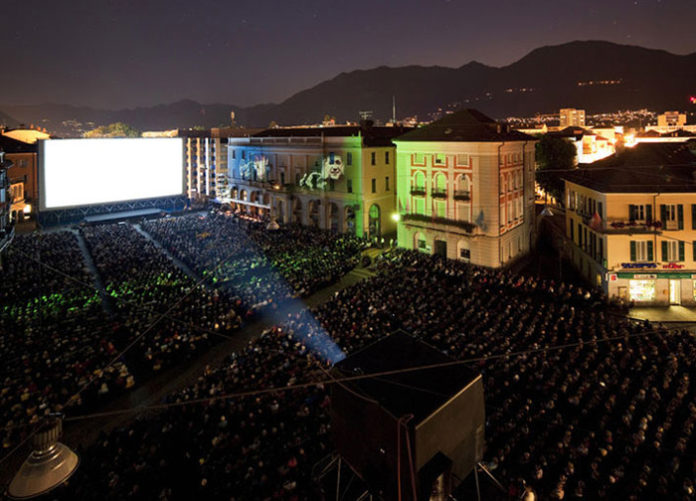
Locarno Film Festival
Where: Locarno, Switzerland
Focus: International cinema.
Business/ presentation style/ strategies: Perhaps the most attractive part of Locarno for Africa’s filmmakers is the Open Doors Co-Production Lab. Focusing on a specific region each year, Open Doors selects projects for funding and co-production from among several applicants. Previous focus regions have included southern Africa and the Maghreb region.
Venice Film Festival
Where: Venice, Italy
Focus: International cinema with an emphasis on Italian films.
Business/ presentation style/ strategies: Venice, along with Cannes and Berlin, forms the ‘Big Three’ of international film festivals. Like the other two festivals, it includes a substantial market element and can be approached in much the same way. The Final Cut programme offers partnership and support opportunities to filmmakers from Africa and the Levant.
Toronto International Film Festival (September)
Where: Toronto, Canada
Focus: International cinema with a North American emphasis
Business/ presentation style/ strategies: North America’s biggest film festival is extremely comprehensive in terms of its content selection. Films from all over the world are screened but the approach is unique: there are sub-sections of the festival for films from particular regions. The festival is well attended by the general public and it does not have the kinds of formal industry programmes one would find at Cannes or EFM. Sales agents, distributors, funders and studio executives are in attendance but meetings with them generally have to be scheduled privately as there is no exhibition or official meeting space.
OCTOBER/ NOVEMBER
MIPCOM
Where: Cannes, France
Focus: A broad range of global entertainment content across all major visual media, including cinema and TV.
Business/ presentation style/ strategies: Probably the world’s biggest content market – an exhibition-style setup. Since many markets are represented here, it is vital that content sellers and buyers do their research and determine which exhibitors/ potential buyers are best suited to the content they are offering or looking to buy.
DISCOP Africa Johannesburg
Where: Johannesburg, South Africa
Focus: Television content for the South African market and other (predominantly English-speaking) African markets.
Business/ presentation style/ strategies: An exhibition-style event similar to the Abidjan one but on a much larger scale.
American Film Market
Where: Santa Monica, California
Focus: International film markets.
Business/ presentation style/ strategies: AFM is on a par with the likes of Cannes or EFM but there is no festival element and the event is very business-oriented. Although based in the US, it is very much a global market. It is essential that sellers have a catalogue of ready-made content. This is not so much a market for pre-sales or production partnerships.


