Home Authors Posts by Contributor

Contributor

14001 POSTS 0 JOBS

Jobs by Contributor:


IABM releases supply trends report

0

IABM, the international trade association for suppliers of broadcast and media technology, has just released the first of its new format Supply Trends Reports. Covering the six months to December 2017, the Supply Trends Report combines actual financial data on the broadcast and media supply sector drawn from public and private sources with survey evidence from members on current trends, issues and sentiment.

Analysis of the data is carried out by IABM’s in-house analysts, led by lead analyst, Lorenzo Zanni, and gives an authoritative overview of the performance of, and outlook for, the broadcast and media technology supply sector. Following is a headline summary of the Report’s findings. The full report may be reviewed by IABM members here, and a short blog that discusses the wider industry picture, including end-users, can be found here.

Year-on-year sales in the broadcast and media technology market grew by 1.2 percent in December 2017, with SMEs’ performance improving at a faster rate than large companies for the first time in several years. But while sales improved slightly, profit growth continued to slow, running at 75.9 percent of the December 2016 level. The continuing shift in buyers’ preferences for software running in generic IT technology, their increased concern for efficiency and a highly competitive market are all continuing to exert pressure on selling prices, with margins reducing despite vendors decreasing expenditure on R&D, recruitment, sales, marketing and shows.

The transition to software (including the cloud) is well underway, though hardware remains the primary source of both revenues and profits for most suppliers – with profits in sharp decline as noted above. However, some respondents who said their primary source of revenues is hardware also said that their primary source of profits is now software, which generally carries higher margins than hardware.

Unsurprisingly given the Supply Trends Report’s findings on profitability, the IABM confidence ratio, which reflects business sentiment looking forward to the next year, declined from a fairly robust 7.4 mid-2017 to a less optimistic 5.6 in December 2017; this is relatively low by historical standards. Companies that primarily rely on software revenues were however significantly more confident than those primarily relying on hardware revenues – reflecting the now long-standing transition of technology buyers from hardware to software.

The Report also reflects the continuing difficulty for companies in recruiting staff with both the broadcast and IT skillsets needed today.

“Although some suppliers are going through difficult times at present, there are reasons to remain positive about the future of media technology,” said Peter White, CEO, IABM. “2018 is a ‘spike’ year with plenty of event-related spending guaranteeing growth and opportunities for many – particularly with SMPTE ST2110 now published and giving end-users the confidence to move forward with their IP plans.

“Adoption of emerging technologies will continue to rise, driving more growth for those suppliers that have invested in them. In the longer term, technology spending will continue to grow as traditional technology users try to keep up with the volatile nature of online video, leaving a plethora of opportunities for suppliers,” White concluded.

New one-day broadcast industry event by Broadcast Solutions

0

German system integrator Broadcast Solutions GmbH, together with local partner Tadeusz Gawenda from SKULL, will host a Broadcast Innovation Day in Warsaw on 19 March 2018.

With several additional companies joining the event, Broadcast Solutions will offer the Polish broadcast community insights into the latest trends in Live-TV production and an event for networking. With lectures, product presentations and panel discussions the one-day event will be the place-to-be for the Polish broadcasting industry.

Companies, joining the event will be Grass Valley, Riedel, ChyronHego, EVS, IHSE as well as Twenty4Seven. The Warsaw edition will follow on the successful format of the Broadcast Innovation Days with a mixture of lectures, panel discussions, an exhibition area as well as hands-on demonstrations, plus a guided tour through an OB-Van, recently built for a Broadcast Solutions’ customer.

With this diversified programme visitors will have the chance to learn about Remote Production, IP-technology, HDR and 4K/UHD as well as wireless and satellite communication and innovative broadcast workflows.

Lectures will be addressing topics such as:

  • The latest OB-Van and Broadcast Facilities – Case Studies and Company Information, Peter Jakobsson, Broadcast Solutions GmbH
  • Meeting the Challenges of 4K UHD Acquisition and Transmission, Klaus Weber, Grass Valley
  • RIEDEL MicroN IP and BOLERO, SMTPE 2110 Solutions for shared IP Environments, Jürgen Diniz-Malleck, Riedel
  • Future developments in IP-based broadcasting, Rainer Kampe/Igor Smierzewski, Broadcast Solutions
  • The wireless (R)evolution – from point-to-point connections to IP-based Mesh Networks, Sandro Glanzer, Broadcast Solutions

The full programme and registration are available on their website.

Full data of the Broadcast Innovation Day Warsaw:

  • Date: March, 19
  • Time: 09h00 to 17h00
  • Location: Olympic Center of the Polish Olympic Committee, 4 Wybrzeże Gdyńskie Street, 01-531 Warsaw, Poland

More information about Broadcast Solutions is available here.

Imfura trailer

Rwandan short film Imfura, from director Samuel Ishimwe, competed at the 2018 Berlin International Film Festival and won the Silver Bear Jury Prize. This marks the first time a short film from Rwanda competed at the festival.

The film follows Gisa, a young man who travels to the village of his mother, who disappeared in the genocide. He wants to comprehend, to remember, but is instead forced to choose a side in a fight over an inheritance, a shell of a house.

Canon introduces new EOS 2000D and 4000D cameras

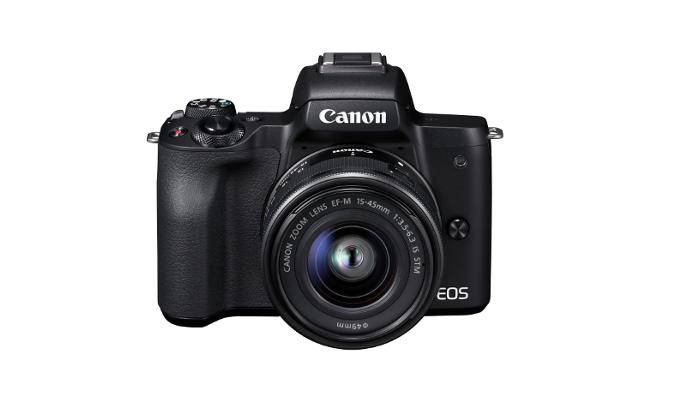
Canon Europe has launched the EOS 2000D and EOS 4000D, Canon’s latest entry-level DSLR cameras. With a wide range of practical and easy to use features, these new cameras cater to the storytelling needs of individuals taking their first steps into interchangeable lens photography and those wanting to create superbly detailed DSLR quality pictures and cinematic Full HD movies with ease.

The newest additions to Canon’s entry-level DSLR range, the EOS 2000D and EOS 4000D have been designed for people who seek out new experiences and want to share their adventures seamlessly to social media. The cameras’ powerful combination of APS-C sensor technology, DIGIC 4+ image processor, seamless Wi-Fi connectivity and straightforward in-camera feature guides enable stories to be captured and shared with highly detailed photos and Full HD movies.

With the EOS 2000D featuring a new 24.1 Megapixel APS-C sensor, and the EOS 4000D using an 18 Megapixel APS-C sensor, each camera allows for compelling storytelling with superb control over depth of field for beautifully blurred image backgrounds. Shooting rich, atmospheric photos during night-time adventures is also made possible with both models capable of low light shooting up to ISO 6400, expandable to ISO 12800.

The DIGIC 4+ image processor, used in both models, powers Canon’s Scene Intelligent Auto mode, enabling simple point and shoot photography with superb image results, as it automatically optimises every shot. The fast and responsive DIGIC 4+ image processor enables the Full HD video capabilities in both models, breathing cinematic life into captured memories.

In addition to a rear mounted LCD screen (7.5 cm on the EOS 2000D and 6.8 cm on the EOS 4000D), both cameras feature a centrally mounted optical viewfinder, providing a distinctly authentic photography experience and allowing stories to be told just as they were experienced with the naked eye. Decisive moments in unfolding stories can be captured with responsive and precise nine point auto focus and continuous shooting at 3.0 frames per second.

Both cameras are Wi-Fi enabled for seamless smartphone connectivity via the Canon Camera Connect app (iOS and Android), enabling adventurers to rapidly shoot and share their content on social media whilst on the move. New images can be conveniently backed up to Canon’s free cloud storage service, irista, via a Wi-Fi connection, ensuring stories and memories shared are never lost.

These processes are made even easier for the EOS 2000D with the inclusion of Near Field Communication (NFC), which can establish a Wi-Fi connection to a smartphone by simply tapping the device on the camera (available on compatible Android devices).

Both models include simple in-camera feature guides, perfect for those looking to improve their storytelling potential as they upgrade from a smartphone. Both cameras include six image settings outside of basic auto modes and a variety of creative filters, enabling experimentation with manual control and the artistic freedom to tell dynamic and vibrant stories. Those embarking on their first DSLR adventure will also benefit from the Canon Photo Companion app, which provides the necessary tips on getting the best out of the cameras.

The EOS 2000D and EOS 4000D’s excellent battery life delivers approximately 500 pictures, or one hour 30 minutes and one hour 15 minutes of HD video respectively, allowing for peace of mind during extended outdoor adventures and the freedom to explore

Both DSLR models are compatible with over 80 Canon EF and EF-S lenses and range of accessories, giving beginners the greatest choice of systems as they grow and develop their photography skills. The new cameras will be sold as a body only option or with a selection of lens kit options, including an 18-55mm f/3.5-5.6 IS II lens.

Canon’s latest entry-level DSLR cameras offer a fantastic gateway to the joys of interchangeable lens photography. The Canon EOS 2000D and Canon EOS 4000D provide an easy and reliable shooting experience that enable users to capture detailed images and sharp Full HD video. As people step-up from their smartphone and expand their creativity, Canon’s new DSLR cameras will intuitively capture superbly detailed professional-looking images, time after time.


iflix partners with Safaricom in Kenya

0

iflix, a leading entertainment service for emerging markets, recently announced a partnership with Safaricom to give the firms’ customers up to 60 days of unlimited access to iflix’s service with thousands of the world’s best TV shows, movies and more on every device they own.

Customers who register on iflix on 19 March 2018, will enjoy the maximum 60-day entitlement. With over 220 studio and distributor partnerships worldwide, iflix offers subscribers the most extensive selection of iconic, critically-acclaimed TV series and fan-favourite films both internationally and locally available, including hit titles such as The Big Bang Theory, Suits, The Flash, Arrow, Hercules, Mission Impossible, and more. As well as Bollywood hits ABCD, Chennai Express, Phantom, and PK.

On the African front, iflix offers such Nollywood titles as Head Gone, Jenifa’s Diary, The Visit, Bukas and Joints and much more. Local fan favourites include Mchungaji, Beneath the lies, Keep Moving, Dear Mother, For the love of her Son, Inner Beauty, Blood Ties and iflix Originals to be announced.

Safaricom director for Consumer Business, Sylvia Mulinge, said: “iflix has done an exceptional job in spearheading the entertainment revolution in emerging markets globally. What distinguishes iflix is its constant innovation and commitment to offering its customers an exceptional and entertaining digital experience, which is at the heart of what Safaricom stands for. We believe this partnership will go a long way in meeting the entertainment needs of our customers.”

iflix co-founder and Group CEO, Mark Britt said: “Today is an important milestone for iflix. We are thrilled to make our world-class service available in Kenya and partner with Safaricom, one of the country’s leading communications services provider for our launch. iflix is passionate about local consumers in Kenya. We are committed to offering them the largest selection of entertainment programming, entirely on their terms through a personalised and localised service, to stream or download on any device of their choice.”

iflix head of East Africa, Paul Coogan added: “We are incredibly excited to bring iflix’s world-class service to Kenya. With the largest selection of the best TV shows and movies from all over the world, iflix is primed to revolutionise the way we as Kenyans consume entertainment. We have a deep understanding of Kenyan consumers and look forward to partnering with Safaricom to deliver on this. Our service in Kenya is for a Kenyan audience! From content selection to marketing, the customer is at the core of everything we do.”

Currently available in 25 markets across Asia, MENA, and sub-Saharan Africa, iflix offers consumers a vast library of top Hollywood, regional, and local TV shows and movies including many first-run exclusives and award-winning programmes, each subscription allows users to access the service on up to five devices, including phones, laptops, tablets, and television sets, for viewing wherever, whenever.

For new subscribers, iflix offers a complimentary one-month trial with full access to its service, features and content, with no credit cards or payment details required. To register, visit the iflix website.


From the producer’s mouth: Thierry Cassuto

Legendary Both Worlds producer, Thierry Cassuto chats to Screen Africa about his journey as a producer…

How did you come to find yourself working in film and TV? Was it always the plan?

No, not at the very beginning. I initially studied literature and went to work for a book publisher. Back then, in the 80s, French book publishers, especially those that specialised in art and nice coffee table books, thought they would be forced to evolve or disappear, as video cassettes were now the hottest thing in the market. My employer decided they needed someone young to take them into the ‘video’ business and, along with the Guild of Publishers, they came up with some money to send me to study in the US. I managed to add to that a scholarship from the Ministry of Foreign Affairs, and off I went to Boston University to study for a Master of Science in Broadcasting.

Upon my return to France, I started to work as a production manager on TV and film projects, then handled international distribution for a television company before I got hired as director of Programming for the largest French cable TV operator. I created the popular arts and entertainment channel Paris Premiere before joining the team that would launch the M6 channel, today one of the largest broadcasting groups in France and in Europe. After a few years, I decided to create my own independent production company, TVTV, and we managed to get at least one regular TV show on each of the seven networks. After selling my company in 1997, I decided I was ready for a new adventure and I moved to South Africa along with my family – where we’ve been happy and busy for 20 years now! So, no, it wasn’t always the plan – but film and TV have been in my life for the last 35 years.

You’ve found your niche producing comedy. What drew you to the genre and what challenges does it present?

While in France, I was presented with the opportunity to produce the Montreux Comedy Festival for television, featuring some of the best local and international TV comedians, which my company did for several years. And before that, when I was running programming at M6, we bought the rights to the UK satirical puppet show Spitting Image, which we also tried to adapt for the French market. We didn’t have enough money back then so we passed, and Canal Plus ended up doing their own version, Les Guignols. When I came to South Africa, in 1997, ZANEWS was the first project I developed. It took over 10 years to get a pilot commissioned by the SABC. And then you know the story… Every writer and every actor will tell you that comedy is more challenging than drama. Comedy is so hard to nail! For a producer, creating a successful comedy show is one of the more satisfying professional experiences. Convincing the broadcaster or the distributor that the show’s going to be funny and popular is already quite a challenge, as many will rule out the genre altogether on the basis of previous programmes that tanked. That never happens with drama. Ruling out comedy because the previous comedy show a channel tried didn’t do well is like saying I’m never going to eat bread again because the last piece I ate was stale! In film and TV you always have to try new stuff, and fail until you succeed. Now if comedy is challenging, imagine how difficult it is to do satire, especially in a conservative TV country like South Africa… But we’ve succeeded, with ZANEWS’s Puppet Nation (25 SAFTAs and two Emmy Awards nominations), Point of Order (SAFTA 2017) and now Parlement Parlement on kykNET. Hopefully the next one will also tickle the country’s funny bone.

As someone who I’m certain has mentored many in the industry, who were/are your mentors? Why them?

My key mentors were French, and probably unknown here in South Africa. But there is one person whose incredibly successful career, finding and developing new talent, and building a very successful small comedy empire in the US, has inspired me – that is Lorne Michaels, the producer of Saturday Night Live, 30 Rock and many other powerful and long-lasting comedy franchises. I hear the man is not the easiest or friendliest of producers (but then a bad rep often comes with the title) but he certainly is the TV comedy czar in the US!

What has been the biggest challenge in your career to date?

I had to produce the first day on air of M6, the French TV channel, which was going to broadcast live for most of the day from various locations, with music acts and star interviews, with only a week of prep.

What has been your career highlight(s) to date?

See above. That I managed to pull it off!

What advice do you have for young people wanting to follow in your career footsteps?

Don’t. Create your own path. In our business, footsteps get blown off very quickly by the winds of technology, new narratives and styles. To be a producer, you must first immerse yourself in all aspects of film and programme making, to know how to plan, to budget and to manage teams. But if you want to be a creative producer, who can speak head to head with writers, directors and cast, and come up with ideas that will impress, then I’d say read, read and read more. Go to art galleries, go to plays and concerts, learn about design. Watch good, classic movies and good TV. Then the ideas will flow, and if you work at them hard enough, you might develop projects that you can shop around. And maybe one of them, one in ten if you’re lucky, will convince a jaded TV executive or a film financier that your idea is worth trying.

Three people, dead or alive, that you would love to work with on a production?

  1. Donald Trump. That would mean he’d be out of the White House. And I’d fire his @ss immediately.
  2. John Belushi. The funniest and craziest man once alive.
  3. Djimon Hounsou. He’s attached to our next big international project, which is not a comedy at all.

If you weren’t working in film and television what would you be doing? 

I’d run a French beach restaurant on a South African surf spot. Or vice versa.

What can we expect next from Both Worlds?

More comedy on kykNET, Showmax and StarTimes. A musical gameshow. A big international drama series with Israeli and French partners. And very funny, angry, hungry puppets looking for a new TV home!

Africanews annual audiences up to 6.3 million

0

Findings of the latest Africascope 2017* survey show the impressive performance of Africanews with annual audience in French-speaking Africa constantly growing at +19 per cent compared to 2016.

The survey conducted in eight countries**, also reveals that Africanews’ awareness is now 45 per cent up 6 points from 2016. This growth is captured by a weekly audience of 3.2 million viewers.

To measure TV audiences and awareness ratings, Africanews relied on Kantar TNS’ expertise through its Africascope survey conducted in 8 French-speaking Africa countries and 9 capital cities representing more than 18 million individuals, aged 15 and above.

According to the survey, Africanews’ audience is young and more affluent than the average of the target population. The majority of its audience are men, who account for 64% of Africanews’ viewers in these eight countries.

Africascope also highlights the strong TV audience in all countries surveyed, with an average 90% of people aged 15 and over watching television daily, which amounts to 16.4 million viewers.

Outstanding rates for Africanews in Congo Brazzaville and Gabon

Barely two years after its launch, Africanews is widely acclaimed in Congo Brazzaville where awareness of the channel reaches 78 per cent.

Since its launch, Gabon has been very receptive of the new Pan-African and multilingual news outlet and the awareness rate remains exceptional at 68 per cent.

In the Democratic Republic of Congo and Cameroon, Africanews also enjoys strong awareness levels of 50 per cent and 46 per cent respectively.

Elsewhere in French-speaking Africa, the awareness of Africanews continues to see a steady growth. 40 per cent of respondents have heard of the channel in Ivory Coast, 35 per cent in Senegal, Burkina Faso, 33 per cent and 29 per cent in Mali.

Michael Peters, CEO of Euronews and President of Africanews:”Since its launch, Africanews, as the first pan-African and multilingual media outlet, has been offering to its viewers, innovative and qualitative content produced by Africans and broadcast from our headquarters in Pointe-Noire, Congo. This dedicated offer to a rising continent has resonated with local people who year after year renew their confidence for access to a relevant, credible and independent information.”

*Africascope 2017 (January-December) in 8 countries.

**Countries surveyed: Burkina Faso (Ouagadougou), Cameroon (Douala and Yaoundé), Congo (Brazzaville), Democratic Republic of Congo (Kinshasa), Gabon (Libreville), Ivory Coast (Abidjan), Mali (Bamako) and Senegal (Dakar).

Harmonic announces VOS Software Cluster

0

Harmonic recently announced the next evolution of its award-winning VOS offerings, addressing the need for increased agility, adaptability and state-of-the-art technology for OTT and IPTV deployments.

VOS SW Cluster is a comprehensive software application that embeds market-leading media processing, including ingest, playout, compression, encryption, packaging and origin, and supports both cloud and bare metal compute environments. Highly adaptive and responsive to user needs, the VOS SW Cluster solution can be used by video content and service providers of any size and on any platform for the origination and delivery of IPTV and OTT services. The VOS SW Cluster solution has already been successfully deployed by a leading telecommunications service provider in the Asia-Pacific region.

“Being successful in today’s media environment is highly dependent upon how quickly you can adapt,” said Tim Warren, senior vice president and chief technology officer, video business, at Harmonic. “The VOS SW Cluster offering expands upon the flexibility and agility of our award-winning VOS Cloud media processing application, enabling operators to be even more nimble in using datacentre resources. With the VOS SW Cluster solution, video content and service providers can handle every step of the media processing chain using datacentres, the cloud, or both to launch services faster and deliver high-quality IPTV and OTT content on every screen.”

As an infrastructure-independent media processing application, the VOS SW Cluster offering makes it easy for operators to switch between bare metal datacentre computing (e.g., off-the-shelf IT), public clouds (e.g., AWS, Microsoft Azure) and private clouds. Having an elastic and always up-to-date media workflow enables operators to launch services faster, scale seamlessly with operational efficiency, and ensure consistent functionality across all deployment environments. With a simple intent-driven user interface, operators have more time to focus on service innovation and test new service offerings. The VOS SW Cluster application enables operators to keep pace with the latest OTT workflows, including live publishing to social media online platforms, streaming VOD from live and file sources, ground-breaking Ultra-HD OTT with HDR, and low-latency delivery via the CMAF specification.

The VOS SW Cluster solution joins Harmonic’s ground-breaking VOS family, which helps video content and service providers succeed in the quickly evolving OTT market by leveraging the latest advancements in software and cloud technology. The VOS family also includes VOS 360 media processing SaaS, which utilises the VOS SW Cluster solution, and VOS Engine, an advanced container-based software module. The VOS 360 offering is part of a growing line of SaaS offerings hosted, maintained and monitored by Harmonic that deliver the company’s market-leading media processing and delivery technologies as a service.

Further information about Harmonic and the company’s solutions is available at on their website.

Ojukokoro to headline Nollywood 3.0 event in America

0

The programme, Nollywood 3.0 will debut with the feature film, Ojukokoro (Greed) at the Metrograph in New York on 13 April 2018.  Metrograph, located at No. 7 Ludlow Street in the heart of the Lower East Side, is a unique experience for seeing prestigious films. From exclusive premieres to rare archival print screenings, book signings and events. Metrograph offers experiences for a wide spectrum of audiences, attracting diverse communities all drawn to the excitement of cinema and the magic of having a place to celebrate it.

Combining the two unlikely genres of comedy and thriller, Ojukokoro tells the story of an attempted robbery that goes very wrong from three contradictory points of view. The film’s director is Dare Olaitan – an obvious Akira Kurosawa fan, who is also an economics and business management major who studied in the United States and sees the New York City premiere of Ojukokoro as the next phase for Nigerian filmmakers.

“We can produce films that entertain international and domestic audiences and New York is our chance to show that,” said Olaitan.

The first time feature filmmaker and his producer, Olufemi D. Ogunsanwo will be present for the Q&A following the screening.

“Nollywood 3.0 represents what we were missing back in the 90’s: a pipeline,” says Marlin Adams, a KJM3 partner.

Ojukokoro stars Wale Ojo, Ali Nuhu, Linda Ejiofor, Somkele Idahlama, Tope Tedela, Seun Ajayi, Hafiz Oyetoro (Saka), Zainab Balogun and Charles Etubiebi. It tells the story of what happens when a cash-strapped manager in a money laundering petrol station, decides to rob the petrol station that employed him.

View the Ojukokoro trailer.

The importance of the gaffer in an ever-changing film world

0

The word gaffer in the old English dictionary is described as the ‘foreman of the docks’, which when broken down is probably the best way to describe the position of a gaffer on a film set. It is, in my humble gaffer’s opinion, certainly one of the most important roles on a film set. As the foreman of the lighting department per se, the gaffer’s role is not only highly technical and creative, but becomes one of management and planning as well. And alongside the other technical HOD’s to ensure that the sets are safe.

I will start with the management side. The lighting department on large feature films can often crew up to 20 or more people, all with different and really unique tasks. The gaffer along with his/her best boy (right hand man) need to manage and co-ordinate all these people which often includes other units, such as pre-rigging and de-rigging teams; bringing in dimmer operators and additional crew for specific days or tasks, and the day to day management of people’s times (and overtime). Additionally, we have to make sure the team runs smoothly and each person knows his or her role.

Equipment management is also very important. The gaffer and best boy will be responsible for not only the everyday use of very expensive and technical equipment, but also need to plan the delivery and returning of additional equipment as and when it is required. If the lighting equipment is not managed correctly it can be become really expensive, and over the duration of a long feature can blow a budget completely.

Another very interesting element of the role of a gaffer is the planning and setting up of sets and locations that are still coming up on the film’s shooting schedule. I normally employ a rigging gaffer, who in the ideal world needs to have a similar creative and technical thought process and style to me. On the bigger films, I often need to hand over lighting plans to my rigging gaffer, and only get to see the setup very near to the shoot day, so I rely on his creative and technical input. Having said all this, I think it’s important to say how integral it is to have a really strong team around you as a gaffer. My preferred rigging gaffer, Danny Smart and myself had spent a lot of time discussing a huge  set on Maze Runner 3: The Death Cure – a feature I gaffered last year in Cape Town – where we needed to light about 5.5km of a tunnel that had no existing lighting in it. We had a really strong unique idea, and it worked very well on our many test days, I only got to see the final setup when we walked into the tunnel on the day of the shoot. I can’t lie, I had a few anxious moments! This is a great example of lighting team work, as well as how the ideas and the desired look come from a brief from the Director Of Photography (DoP) to myself, to my rigging gaffer, and eventually on to the screen.

Besides the management of people and equipment, the gaffer’s role becomes mostly about being able to both technically and creatively make the vision of the DoP become a reality. The DoP and gaffer will discuss at great lengths what the look and feel of the film should be based on the DoP’s vision. Breaking it down into specific scenes and moments in the film; the gaffer needs to know and propose which particular piece/s of equipment and which specific lights are right for creating each look at all times. Often very detailed and specific lighting plans need to be drawn up, costs worked out and then put into motion; this also becomes part of the gaffer’s tasks. Included in this, is working out how much power will be required and how this will be achieved with portable generators. On Maze Runner we had up to 18 generators running at one time on some of the larger night scenes filmed all around the city, you have to try imagine the planning that goes into that size setup, it’s no wonder my hair is grey at my age.

The difficulty with knowing what lighting unit is correct for each application is the fact that so many new LED units are coming onto the market all the time. A gaffer needs to stay on top of the development of new products, as well as trusting the older more proven lighting units. A very good example of this was the introduction of the Arri SkyPanel range of LED units. A large studio set up a few years back would have required the rigging of many many Tungsten lights (space lights for this example), in order to create an ambience in the studio. These Tungsten lights worked really well but needed huge amounts of power, and also were very costly to colour correct. When I designed the lighting for Mad Max Fury Road at Cape Town Studios, we never had access to SkyPanels, so I used a couple hundred space lights (around 650) and over 1 000 PAR Cans – the diesel costs to run the ±2500kilowat of generator power alone was bigger than the complete budget of some feature films.  Today the space lights could very easily be replaced by SkyPanels, which need radically less power and are fully dimmable and colour controlled through any DMX lighting Control system, it’s a game changer! In essence, it allows the gaffer to stand at the DoP’s side and adjust the light levels at the push of a slider, or even on a cellphone.

Battery-operated, dimmable LED units are also becoming really handy and a quick safe alternative to some bigger setups for car interiors for example. In some cases it is no longer necessary to have cumbersome portable generators mounted to the roofs of cars, we can now use these newer efficient LED units. Not only do they save money and time they also are more versatile and a lot simpler to use in these and other setups.

Another very important element to the modern era of filmmaking is the CGI element. A huge amount of Green/Blue screen work is now the norm on most feature films. So as a gaffer I have had to expand my knowledge in this area. Lighting becomes very important when using green screens, not only lighting the green screens themselves, which can become a massive task on its own – imagine lighting a green screen 120 x 20m evenly, at night, to an exposure value of F4 for example, but also knowing how the CGI elements will effect what the final images look like. Lots of planning goes into these green screen setups, and in my experience it is always a collaboration between the DoP, visual FX supervisors and gaffer.

I love what I do and I love being a gaffer, no day is the same and no film has the same challenges as then next. One needs to embrace the modern era and when combined with the tried and tested older ideas, we can really start creating some amazing visuals. Technology is not only simplifying what I do but also allowing me more scope to do more, quicker and more efficiently, and push the boundaries of my creativity.

- Advertisement -
- Advertisement -
- Advertisement -

Pin It on Pinterest