Home Authors Posts by Contributor

Contributor

14001 POSTS 0 JOBS

Jobs by Contributor:


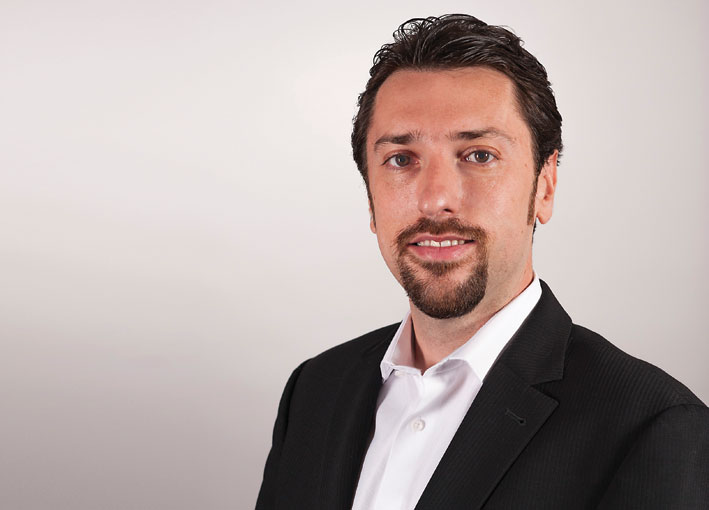
OTT growth, collaboration and a new era of pay-TV delivery by Steeve Huin

0

A media landscape where consumers can watch movies, TV programmes and sports at any time, through any device they want, is the new reality around the world.

Global OTT revenues have been estimated by some to reach $65 billion by 2021. As mentioned in my previous article for Screen Africa on 360 security, a report from Digital TV Research has predicted that OTT revenues in sub-Saharan Africa alone will reach US$640 million by 2022.

For operators, getting OTT services and content to as many screens as possible and as quickly as possible is the key to winning customers. But they face challenges in ensuring that consumers can receive premium content securely, and with the best possible user experience.

Meanwhile, pure OTT services like Netflix, which launched in South Africa in January 2016 as part of a global expansion which saw it launch in 130 countries around the world, have taken advantage of this consumer demand for OTT content. However, the market dynamic between pay-TV service providers and OTT service providers – unyielding adversaries only a couple of years ago – is evolving.

Collaboration, content and control

Many operators today are looking for ways to collaborate with services like Netflix or even non-traditional TV platforms. It’s clear by now that we are not living in an “either/or” scenario. Collaboration, or at least strategic co-existence is often a practical and efficient way to enhance the overall user experience, which is a key differentiator in today’s competitive market.

With so much content on offer globally, it has become difficult for one operator alone to satisfy all the content demands of consumers, which is perhaps signalled by an estimated levelling of global pay-TV revenues and even subscriber decline in some markets. The Global Pay TV Revenue Forecasts report from Digital TV Research estimates that global pay-TV revenues will peak at just over $202 billion this year, but declined slightly to just under $200 billion by 2022. However, the same report estimates that pay-TV revenues Sub-Saharan Africa will surge by 57 per cent (up by $2.40 billion to $6.59 billion) between 2016 and 2022.

Whether looking at a global or regional viewpoint, there is no denying that increasing choice is changing consumer habits and demands. To meet these evolving needs, the winning approach for operators is to offer a hybrid set-top box (STB) with linear TV and OTT services – be it their own or from partners such as Netflix. This way the operator controls the HDMI 1 and gets consumers to come to their platform for all their content needs.

New content delivery platforms

Set-top box platforms have evolved over the past few years from closed environments using proprietary middleware to increasingly open environments, such as Linux, RDK and Android. While open environments cause some concerns among operators regarding control and security, they create many business benefits that outweigh these concerns.

On the far end of the “open spectrum” is Android TV, an excellent option for operators who want to launch a hybrid set-top box quickly, with low development and operational costs. By leveraging built-in features of Android TV, operators can add their broadcast service in six to nine months, or shorter if they leverage a pre-integrated solution from a security partner. Besides the cost and time advantages, they give consumers instant access to thousands of OTT and other apps in the Google Play Store. Android TV allows operators to future proof the STB and expand business opportunities beyond media. Securing this open platform requires careful planning, but it is well worth the work for the benefits Android TV offers.

Effort-free sign-on to reach new subscribers

However, what if the consumer is on the fence about your broadcast service? How can you make the sign-on process easier and cheaper? One is to embed CA directly into TVs, as Irdeto has recently done in partnership with home and professional appliance manufacturer, Vestel. With pre-integrated pay-TV security capabilities within a TV, consumers can now have the best of both worlds – instant access to their favourite pay-TV service, on the big screen without extra equipment. For operators this has the potential to make subscriber acquisition easier, by providing consumers with frictionless instant-access pay-TV services on a new TV that they purchase.

It’s clear that broadcast services will remain extremely important in the pay-TV market in sub-Saharan Africa for the foreseeable future, but demand is increasing for OTT content across unmanaged devices as well. As they look at collaboration or just co-existence with OTT players, operators must ensure they have an effective hybrid strategy to delivering premium content to their customers securely, whether through the STB, unmanaged devices or direct through the TV.

Afri Health TV added up to satellite channels in Ethiopia

0

Afri Health TV which was established to air medical TV show productions is now starting a 24-hour transmission. The production will start in Amharic, but the company has planned to encompass English and French languages both to attract African spectators in the long run. Afri Health TV geographically covers Ethiopia, Eritrea, Kenya, Sudan, Somalia, Malawi, Tanzania, some parts of central Africa, South Africa and the Middle East.

Owned by AFRI Health Trading Plc, it is a health-centred educational broadcaster and is founded by utmost medical professionals, media practitioners and investors. So far Dimtseweyane, Ethiopian News Network (ENN), Fana Broadcasting Corporate, Walta Information Centre and Arki Broadcasting Services secured a license from the Ethiopian Broadcasting Authority (EBA).

The new satellite channel chooses Ethiopia and other African countries as its target viewers. AFRI Health is operating from its headquarters in Dubai, United Arab Emirates (UAE). It has opened a branch office and production studio in Addis Ababa. AFRI Health vision is to create awareness, transfer knowledge/skill on preventive health and empower the community to manage their health status creating a resilient and capacitated society to safeguard their health.

SMPTE launches virtual course on SMPTE ST 2110

Educational programme will provide insights into how newly published standards suite supports live production, playout, and other applications in the IP realm.

SMPTE, the organisation whose standards work has supported a century of advances in entertainment technology and whose membership spans the globe, recently announced that in March 2018, the Society will offer “Understanding SMPTE ST 2110: Live Production of Professional Media Over Managed IP Networks,” an educational programme focused on SMPTE ST 2110. Led by SMPTE Fellow Thomas Bause Mason, this SMPTE Virtual Classroom course will provide attendees with the knowledge they need to help their companies make the most of SMPTE ST 2110, a critical enabler of fully internet protocol (IP)-based operations.

“Every day it becomes increasingly important that engineers and technologists understand how IP can be implemented in their professional media-creation facilities to ensure interoperability between all ST 2110-compliant equipment,” said SMPTE president Matthew Goldman, senior vice president of technology, TV and media at Ericsson. “SMPTE ST 2110 documents provide broadcasters, producers, and professional media technology suppliers with the tools that are essential to working in the IP realm, and SMPTE’s new virtual course will describe how best to use those tools.”

The first documents in the SMPTE ST 2110 standards suite have been published (see the original announcement here and they are now available in the SMPTE digital library at library.smpte.org. The new standards are essential to working with media over IP networks in real-time, and they are fundamental to the industry’s migration to all-IP operations. The impact of SMPTE ST 2110 goes beyond just replacing serial digital interface (SDI) with IP; the standards suite provides media professionals with the flexibility to develop and implement a whole new set of applications that leverage information technology (IT) protocols and infrastructure. Media organisations and technology suppliers have embraced SMPTE ST 2110, and products that support the standards suite are already on the market.

“SMPTE volunteers have accomplished a great deal in publishing the first SMPTE ST 2110 standards, and this is a perfect time for the Society’s experts to educate the broader industry about how to take full advantage of the standards suite,” said SMPTE Education vice president Richard Welsh, who is also the CEO of Sundog Media Toolkit. “The new ‘Understanding SMPTE ST 2110′ course offers participants the details they need, from the organisation that published the standards. It’s an excellent opportunity for those who wish to get ahead of the curve in adopting IP-based media technologies and workflows.”

SMPTE ST 2110 specifies the carriage, synchronisation, and description of separate elementary essence streams over managed professional IP networks in real-time for live production, playout, and other professional media applications. Making it possible to separately route and break away the essence streams — audio, video, and ancillary data — SMPTE ST 2110 simplifies, for example, the addition of captions, subtitles, and teletext, as well as tasks such as the processing of multiple audio languages and types. SMPTE ST 2110 standards are video-format-agnostic and support ultra-high-definition (UHD), high-dynamic-range (HDR), and other new and emerging formats.

Bause Mason, whose extensive engineering experience includes the development of patented media technologies and in-depth involvement in standards creation while serving in roles with West German Television (WDR), Cologne Broadcasting Center (CBC), Ascent Media, and NBCUniversal in Los Angeles, is currently the owner and managing director of Open Media Consulting. While at NBCUniversal, he was the company’s lead on the Video Services Forum (VSF) TR03/TR04 and SMPTE ST 2110 standardisation effort. Mason also has chaired the North American Broadcasters Association (NABA) Media over IP (MoIP) Subcommittee; organised the MoIP Workshop — presented by the Alliance for IP Media Solutions (AIMS), NABA, SMPTE, and VSF — that promoted the use of SMPTE ST 2110; and chaired SMPTE Studio Group on Flow Management in Professional Media Networks.

Leading this new SMPTE Virtual Course, Bause Mason will guide participants in exploring SMPTE ST 2110 and its tremendous potential. He will delve into elements including video, audio, and data encapsulation; identification and synchronisation; and traffic shaping.

The course assumes a basic understanding of IP and associated terminology. The SMPTE Virtual Courses “Introduction to Networks,” “Routing and Switching Essentials,” and the “Essentials of IP Media Transport for Broadcasters: Moving Real-Time Video and Audio over Packet Networks” are not required to register for “Understanding SMPTE ST 2110.” However, these courses enable a deeper understanding of IP, internetworking, and many essential concepts that are referenced in the ST 2110 suite of standards and are recommended prior to enrolling in “Understanding ST 2110.”

SMPTE Virtual Classroom courses are offered online and available to participants around the world. During these “blended learning” courses, participants engage in independent study and weekly, one-hour instructor-led coaching sessions that assist them in understanding more complex topics and activities. These live coaching sessions are recorded for on-demand viewing by those unable to attend, and instructors also provide timely responses to participant questions posed through the course’s online discussion forum. Each virtual course offering has a specific start date, specific stop date, and weekly learning goals. Successful completion of these courses is determined by participants’ completion of course activities and by graded assessments.

Registration, details, and the full schedule of SMPTE Virtual Classroom courses for 2018, including SMPTE’s “Introduction to Networks,” “Routing and Switching Essentials,” “Essentials of IP Media Transport for Broadcasters,” and the new “Understanding SMPTE ST 2110: Live Production of Professional Media Over Managed IP Networks,” are available at www.smpte.org/courses.

More information about SMPTE ST 2110 standards is available at www.smpte.org/st-2110.

Further information about SMPTE and its standards work is available at www.smpte.org.

Vuzu Amp to become 1Magic

0

DStv Premium customers will say hello to 1Magic on Monday 29 January 2018, DStv Channel 103!

The channel will become the entertainment destination of choice for audiences who enjoy gripping local dramas, telenovelas, reality shows, movies and are also looking for the best in international reality, drama and movies.

Leading the charge will be the channel’s flagship new telenovela, The River, which boasts South African acting talent. Starting on Monday 29 January, it is spearheaded by a formidable cast made up of seasoned actors, Sindi Dlathu, Hlomhla Dandala, Moshidi Motshegwa, and newcomer, Larona Moagi. The River is about the deadly result that comes about when the greedy world of society’s upper crust collides with that of ordinary common folk. Driven by the themes of love across social classes, greed and a community fighting to survive, it’s a show that can’t be missed.

VUZU AMP audiences should not panic because 1Magic will still be serving a mix of compelling, relevant and entertaining international programmes like The Fixer, How To Get Away with Murder, The Real Housewives, Power and later on in the year, latest seasons of Ballers, Queen Sugar and Insecure.

On Friday 2 February, viewers should look out for a new chic urban drama Unmarried, which unpacks themes of love, urban hustle and bustle, and the daily challenges faced by young urban couples in trying to juggle life and aspirations. The drama boasts a stellar cast of South African household names such as Fezile Makhanya, Thembisa Mdoda, Renate Stuurman amongst others.

“In line with our vision to be the best African storytellers in the world, M-Net has identified a need to invest in more local entertainment for our viewers, in the premium segment. 1Magic will fill a viewing gap by combining new and exclusive local shows with international content,” says Nkateko Mabaso, the GM for M-Net South Africa.

1Magic DStv Channel 103, will be unveiled on Monday 29 January 2018 and will be available to DStv Premium customers.


Samsung Galaxy brand advert wins Clio Awards

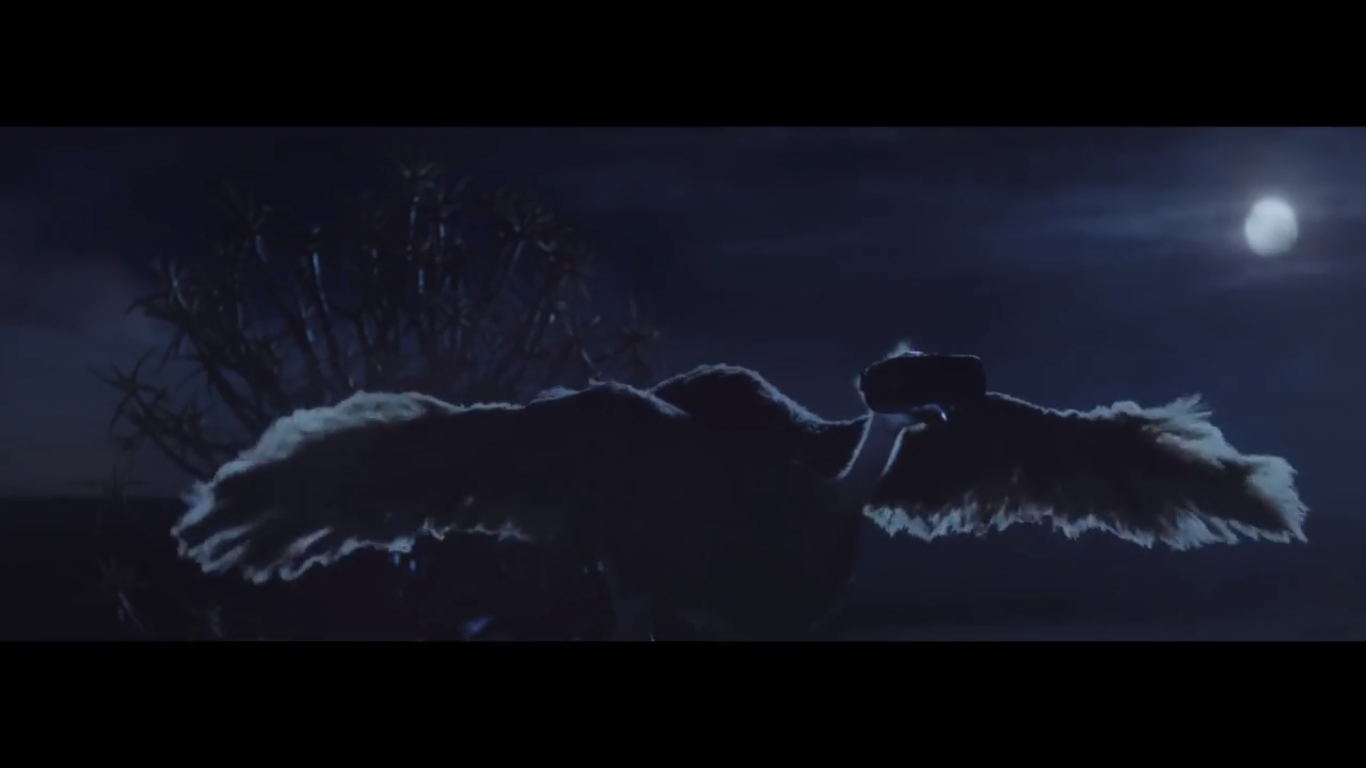
Samsung’s Ostrich television commercial, which was filmed in South Africa, won awards in seven categories at this year’s prestigious Clio Awards, including one gold in the short film category (1-5 min), four silvers in direction, cinematography, animation and visual effects and two bronze places for editing and music.

Celebrating its 58th year, the Clio Awards is one of the top three advertising award festivals along with the Cannes Lions International Festival of Creativity and the New York Festival. It is judged by an international panel of advertising professionals and showcases work that pushes the boundaries and establishes new precedents.

The commercial tells a story about an ostrich who learns to fly after donning a Samsung Gear VR headset and launching a virtual flight simulator. The campaign taps into the basic human urge to push beyond what is normal and demonstrates the company’s commitment to providing products and services that allow people to break boundaries and do the incredible.

“The Ostrich, which has now won awards at both the Cannes Lions and the Clio Awards, is an emotional piece that conveys Samsung’s commitment to defying barriers and making the impossible, possible,” said Justin Hume, marketing director at Samsung South Africa.

In June of this year, Ostrich took home three gold awards at the Cannes Lions International Festival of Creativity under the film craft category for best direction, animation, and visual effects. This golden hat-trick was complemented by four additional silver and bronze awards, bringing the final tally to seven awards at Cannes.

“As a customer-centric brand, we continue to focus our efforts on creating real value for consumers by enabling them to do the impossible and this commercial is a great example of this,” concludes Hume.

View the Ostrich commercial below:

Why and how to protect the local film and advertising industry

0


By Bobby Amm, executive officer, the Commercial Producers Association 

There are about 44.4 million black people in South Africa, 6 million of whom are middle class (a figure that has tripled in the last 12 years). Black high-net-worth individuals (HNWIs) have also increased by 179% since 2007, while white HNWIs have declined by 42%.

Why is this relevant? Because black consumers are more influential than ever. Their collective buying power is staggering compared to other racial groups. And it’s growing.

But, despite this, there is a persistent lack of insight and investment into the melting pot of South African consumers by marketers – particularly through the use of foreign-owned advertising agencies and production companies that don’t understand the market.

Impact on local industry

Considering that our industry has the power to impact millions of lives, it pays to be mindful of the needs of those lives. And not just financially. As the Association for Communication and Advertising says, advertising “is an intrusive form of communication to which over 40m South Africans are subjected every day. For a relatively small industry, its influence is disproportionate to its size, [so] making it a truly South African industry is imperative.”

In other words: there’s a good chance that we owe it to the people to whom we’re exposing our content to make their lives better. And we can only do that if we’re invested in their interests. After all, how can locals be expected to pay for the products we’re selling them, if the economy can’t provide them with the reliable income required to buy those products?

Choosing an international agency or production house rather than a local one can:

  • Cripple transformation: SA agencies can’t get a foot in the door because clients are more impressed by big-name agencies and their scorecards.
  • Crush entrepreneurial spirit: Who wants to open a start-up when they’re competing with huge organisations with unlimited resources?
  • Inhibit the supply chain: International companies are often large enough to manipulate market forces.
  • Promote mass production: This lowers industry standards across the board.

Where the problems lie

The issue is possibly exacerbated by a general lack of understanding among clients, who may not ask questions about who owns an agency or why it matters. (Plus, some global groups own as many as 13 agencies in SA, so even clients who have some understanding may assume SA ownership.)

Local agencies and production houses may also be to blame, as it’s possible that not enough is being done to inform the local market of the benefits of keeping projects local. Nor do we do enough work to grow and develop home-grown South African players.

Why transformation?

 The biggest advantage to commissioning local business is that the industry is kept healthy and functioning optimally. This means that local companies can offer:

  • better value,
  • more creativity,
  • more innovative solutions, and
  • contributions to the local economy.

 But transforming the industry has to be a collective effort that goes beyond BEE points. This is because, based on the stats we’ve seen, local home-grown marketing and advertising don’t just make economic sense – they make business sense.

 Making local (more) lekker

In an ideal world, clients would ask if an agency is locally owned before engaging it further. But changing consumer behaviour is easier said than done. A more constructive approach would be to look at ourselves. Specifically, I believe that we should:

  1. Work together

Locally owned agencies and production companies should consider collectively launching a campaign that educates clients on the importance of supporting local business.

  1. Reward local business

Together, we should find a way to recognise and reward clients who go local.

  1. Employ & grow local talent

Who knows the consumer better than the consumers themselves? We should employ and develop talent that has insight into the people we’re marketing to.

  1. Partner with smaller agencies

This is one way to make a smaller voice heard – by making it louder. We should join forces with other smaller agencies wherever possible.

  1. Drive transformation

Think, speak, and behave in a way that positively drives local investment and empowerment.

  1. Grow local influencers

Find the South African voices that are already being heard and give them a loudspeaker. The more they’re heard, and the more local companies are celebrated, the more recognition the South African industry will get.

A healthy, thriving advertising and production industry enables greater advancement, creativity and growth… not just for ourselves, but for other industries too. As it happens, local really is lekker. For everyone.


DEOD brings US Entertainment Studios shows to SA

Internet TV service Digital Entertainment on Demand (DEOD), by Discover Digital, is bringing a range of entertaining new programmes to South Africa through a content partnership with Los Angeles-based Entertainment Studios.

Taryn Uhlmann, executive head: Content at Discover Digital, says the Entertainment Studios programmes to be launched on DEOD include a mix of stand-up comedy, shorter form comedies, sitcoms, daytime and reality TV series and courtroom reality programmes to extend DEOD’s overall offering and market reach.

Founded by popular US comedian Byron Allen in 1993, Entertainment Studios is a fully integrated global media production and distribution company with eight HD networks, dozens of first-run syndicated shows, over 5 000 hours of HD programming, a film distribution company and a podcast network.

Among the content coming to SA via DEOD will be: ES.TV, a ‘VIP view of Tinseltown tidbits’ offering behind-the-scenes celebrity interviews and movie news; Comedy Jam and Comics Unleashed, featuring the hottest talent in comedy; the sitcoms Mr. Box Office and The First Family; and Cars.tv for auto enthusiasts, further expanding DEOD’s motoring programming.

“These programmes have done very well in the US environment. We feel much of the Entertainment Studios content has never before been brought to South Africa, and the fact that many of the programmes are shorter form and easy content to ‘dip in and out of’ on the go, means they should resonate well with viewers who are concerned about data or are simply looking for light entertainment on the move,” says Uhlmann.

Freely Available Global News and Inspiring Programming

In addition to Entertainment Studios, Discover Digital has extended its TV channel offering for local viewers. The company has acquired two new international news channels, the German Deuche Welle, Turkish TRT World and three Inspirational channels including GODTV, Sonlife and Inspiration TV. For a richer customer experience, Discover Digital has created a freely accessible OTT TV zone on DEOD. These channels, in addition to existing DEOD channels France 24, Russia Today and Al Jazeera, are all part of a new free TV Channel section and are available to customers on DEOD.TV, without the need to register.

The free TV zone provides a curated platform of free-to-air news and inspiration-themed channels, allowing Discover Digital to not only demonstrate their various VOD tech products such as the Electronic Program Guide on a live service, but also gather customer feedback and insights and in turn provide customers with easy access to world news and inspiring content on a single platform.

Discover Digital MD, Stephen Watson, says: “The free-to-air News channels, providing global perspectives on breaking news, business, economics and culture, are available on the go and in one place on the ‘TV in your pocket’ ensuring audiences stay abreast of current affairs without skipping a beat, while the inspiration-themed channels offer a mix of gospel, religious, motivational and educational programming. We believe it is a fundamental right for people to have access to free global news and we also have a drive to make premium content easily available and accessible to all, and this move speaks to both these core principles”

The Free TV section will further offer viewers one-stop access to leading channels, with the advantage of Discover Digital’s local CDNs and Adaptive Bit Rate technology, which enables excellent quality streaming to any device.

“The latest enhancements to the Discover Digital solutions suite and the company’s DEOD service are in line with the company’s ongoing quest to drive innovation in on-demand entertainment across Africa,” says Watson.

The new content bolsters DEOD’s already varied mix of movies, series, sport and news. “DEOD seeks to offer quality and desirable content not readily or otherwise available in South Africa or across Africa. DEOD is not only looking at offering titles that are already familiar to our audiences but also offering a selection of alternatives that appeal to a broader audience,” says Uhlmann.

Inside Africa explores the cultural importance of the Rieldans in SA

0

This week on Inside Africa, CNN International heads to South Africa’s western and northern Cape to follow the stomping feet of the men, women and children who are bringing back an energetic expression of culture and creativity, the Riel. Rieldans is a folk dance that has evolved from South Africa’s most ancient cultures. Almost forgotten in the last century, the Riel is experiencing a revival. The programme meets Benjamin Bok, a cultural activist who is helping restore the dance’s popularity by travelling to remote towns and schools promoting a dancing competition.

Bok heads to the Elizabethfontein Primary School in the Cederberg Mountains. This is a Rielschool; a place where teachers and pupils embrace the dance and incorporate it into many of their lessons. Mariette Kotze is the Rieldans leader at Elizabethfontein and she explains to the programme how teaching the Riel has transformed the school and their local community: “It changed the whole school’s set up, it transformed our children. It brought the community closer and our little children blossomed because Riel is in their souls. Riel is in the soul of the people.”

Elders from the community are encouraged to come into the classroom and help teach. Kotze explains how this came about: “This is a dance handed down from generation to generation. The moment [the children] started dancing, the parents said: ‘No, teacher, that’s not how you do it. Let me show you how to dance the Riel.’ So that is how the community came closer to the school.”

Riel dancers act out scenes from everyday life in the stories they dance out in the thick layer of red sand covering the dance area, which is kicked up into the air as they move, creating dust. The Riel is also a method of courtship for teenage dancers; Kotze explains: “In the riel, if you throw down your hat, then you are wooing a girl. The moment a man dances round you and throws his hat down, the girl knows he’s trying to woo you.”

The cultural significance of this dance is explained to the programme by Captain John Cornelius Witbooi, chief of the Griqua-Nama tribe: “This is much more important than just fun for the simple reason that we, here in South Africa, lost our culture as a result of apartheid and colonialism.”

Peter Takelo, a cultural activist, explains how the heritage of the dance is reflected in its movements: “The Rieldans is about stories because our forefathers were storytellers and through the Rieldans we are trying to tell those stories… One of the more important things is as the child hits the dust, he tastes the dust. It is as if he is talking to his ancestors because he is coming to thank them for the Riel he is doing.”

Rieldans champion Anisha Kotze further outlines the theme of identity when describing the importance of reviving the dance: “The Rieldance died out and nobody [practised] anymore. Then the AKTV breathed new life into the riel, brought back our culture and started the competition.” The competition has been a success, Bok explains: “Twelve years ago, this competition was initiated by the AKTV and it’s still growing. This year, we have about 103 [people] participating alone, but there’s more groups in the western Cape mostly.”

The revival of the Riel has also benefited local industry. During practise, the children wear special red dancing shoes made in the small hamlet of Wupperthal. The programme meets Gerhard Faroa, one of the shoemakers at the factory whose families have been making the same shoes since 1833. Faroa tells the programme that he is grateful to have a source of income: “The Riel has helped us a lot, it’s made us famous. But even in Wupperthal there is very little work – the community struggles financially. Many folk are subsistence farmers and they have to grow their own vegetables for use at home and for the people who live in poverty.”

The show airs at the following times:

Monday, 11 December at 0630 SAST

Tuesday, 12 December at 0330 SAST

GatesAir innovators win accolades at 1st annual NewBay Media Awards

GatesAir, a global leader in wireless, over-the-air content delivery solutions for radio and TV broadcasters, is proud to announce that two longtime company innovators, Keyur Parikh and Joe Seccia, were named winners of the first annual NewBay Media Industry Innovator Awards. Keyur and Joe have been honoured with awards by NewBay Media publications Radio World and TV Technology, respectively.

NewBay’s Industry Innovator Award winners are selected by a panel of experts and evaluated on their professional achievements, technical and business innovations and continuing influence within their industries. All winners will be featured in a special digital edition of the respective magazines.

Keyur Parikh, director of Intraplex products, leverages his strong TCP/IP networking background for new IP product development initiatives at GatesAir, and is responsible for many company innovations that further the possibilities of IP transport. His new award-winning IP Link MPXp cuts the bandwidth for digital AES192 transport in half while supporting FM MPX composite transport within the same compact device. Other innovations under Keyur’s watch include the industry’s first implementation of the Opus codec; the development of LiveLook, the industry’s first solution to analyse and troubleshoot end-to-end IP network performance; and the continued development of legacy STL solutions including HD Link, GatesAir’s rock-solid 950 KHz microwave STL system.

Since joining GatesAir in 1990, Joe Seccia has helped shape the advanced broadcast transmission standards and technology enabling several major DTV transitions, including ATSC 1.0 and ATSC 3.0. Joe, who today manages market and product development strategy, TV transmission for GatesAir, has been the principal architect behind the design and development of key GatesAir products that advance the possibilities of over-the-air TV. He recently led the R&D engineering team to develop the IP-native Maxiva XTE exciter, which provides a seamless migration path to ATSC 3.0 and IP distribution. Joe has also consulted with several pioneering broadcasters to enable several historic DTV firsts, including the world’s first baseball game broadcast in HD over 8-VSB by WHD-TV and WETA-TV. Internationally, Joe was instrumental in making DTV a reality in Brazil, including the first ISDB-Tb broadcasts in São Paulo.

“It’s a pleasure to honour those who make such a difference in their industries — innovating in technology and business while also inspiring others,” said NewBay Broadcast & Video Group vice president & group publisher Eric Trabb. “The awards are designed to shine a spotlight on the people behind the companies and technologies on which our industries depend. We offer a heartfelt ‘thank you’ for their contributions, and wish them continued success.”

“Keyur and Joe are just two of many innovators at GatesAir laser-focused on furthering the possibilities of wireless, over-the-air content delivery,” said Rich Redmond, chief product officer, GatesAir. “We are proud that their many accomplishments have been recognised through these awards, and cherish the invaluable leadership and vision they provide to GatesAir and the broadcast industry at large.”

A wave of surf films for the Labia Theatre

The Wavescape Surf & Ocean Festival is screening a record 32 films at the Labia this year, running from Thursday, 7 December until Sunday, 10 December 2017, many of which are premieres. Bunker77, the crazy story of Clark Gable’s son Bunker Speckels – the heir to a massive fortune who became one of surfing’s most infamous characters as he blasted his way across the world blowing his fortune while surfing  – will be having its African premiere.

There is also the screening of the film Proximity – a series of conversations between the world’s top surfers. Proximity is the latest in the Taylor Steele stable, starring Kelly, John John, Rasta, Stephanie Gilmore, Albee Layer and Craig Andersen.

Nathan Oldfield’s film Church of the Open Sky will also be another highlight, while I am African is a soulful film about a soulful Moroccan who dreams of surfing Skeleton Bay in Namibia and travels the lengths of Africa to do it.

A quick list of all the films at the Festival includes: Proximity, The Jump, Biarritz Surf Gang, Given, Optimist, Paradigm Lost,  Sea Wolf, Blue Road, Bezerke, Week up West, I am African, and Scarlet’s Tale and the shorts are A Million Waves, Awen, Woza, Shape qui Rit, Masa, The Edge of North, Sea Lone, Secret Waves, Welcome to Raglan, Night Rose,The Scramble Gamble, Left in Lagos, Blackboy, Visit and Zion’s Gate.

To see the programme, synopses and trailers, go to the Wavescape website. Tickets for the Festival can be bought on Quicket.


- Advertisement -
- Advertisement -
- Advertisement -

Pin It on Pinterest