Home Authors Posts by Contributor

Contributor

14001 POSTS 0 JOBS

Jobs by Contributor:


Fujifilm/Fujinon’s MK zoom lens series honoured in several best-of lists

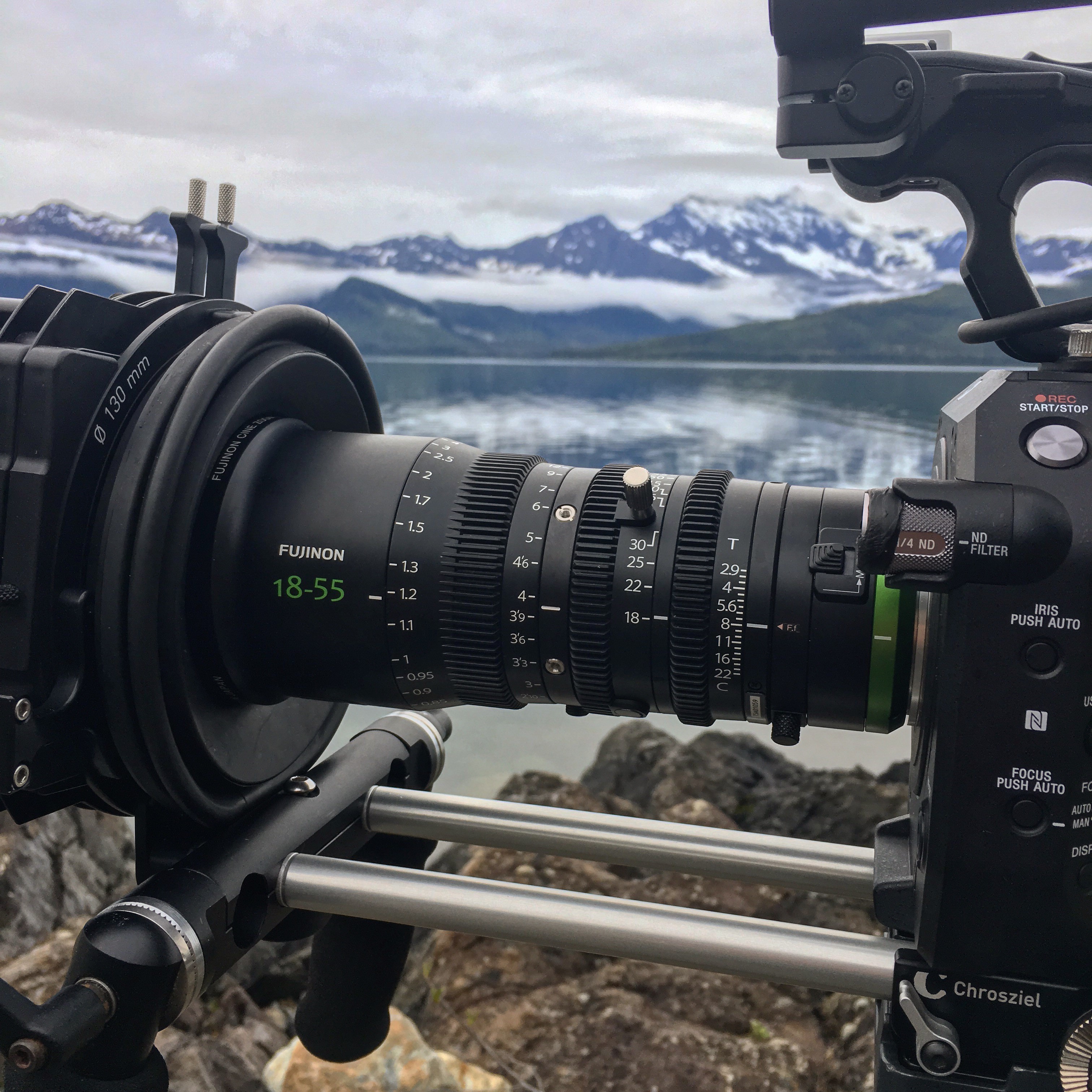
Since their launch in February 2017, the MK Series of zoom lenses from the Optical Devices Division of Fujifilm have received numerous accolades from noted industry websites, publications and cinematographers thanks to the lens’ lightweight, professional zoom performance and price point. Among those recognising the Fujinon MK18-55mm and MK50-135mm T2.9 zoom are: No Film School (Best New Lenses of 2017); Pro Moviemaker (Launch of the Year); Philip Bloom (Best Video/Cinema Lens); Newsshooter (Best Cinema Lens); and The Camera Store (Best New Lenses of 2017).

MK lenses are currently designed for E-mount cameras with the Super 35mm/APS-C sensor and boast advanced optical performance, ultra-compact and lightweight design. With a combined focal length range of 18mm-135mm in the Super 35mm format, the first two MK lenses (the MK18-55mm and 50-135mm) cover the most frequently used range utilised by emerging cinematographers. The series offers fast lenses with T2.9 speed across the entire zoom range, enabling a shallow depth-of-field.

In its Best New Lenses of 2017 rundown, No Film School writes, “Both the MK18-55mm and MK50-135mm zoom lenses have been favourably reviewed and for good reason. The T2.9 lenses are lightweight, have a favourable image quality over Sigma glass, minimise chromatic aberration, and are very fast. But you don’t have to take our word for it.”

Readers of Pro Moviemaker voted the MK Series, Launch of the Year as part of the publication’s 2017 Gear of the Year Awards. Representatives from the Optical Devices Division of Fujifilm will receive this award during a ceremony held at the British Society of Cinematographers (BSC) Expo 2018 in London in early February.

In his Best Gear of 2017 blog, DP Philip Bloom awarded the MK Series, Best Video/Cinema Lens. View footage shot by Bloom in Gran Canaria using an MK18-55mm T2.9 lens and Sony FS7, FS5 and A7S II cameras here and watch behind-the-scenes with Bloom and his MK18-55mm here.

Matt Allard of Newshooter.com named the MK Series the Best Cinema Lens of 2017, stating, “With a growing need for lower cost, high-performance cinema lenses, Fujinon answered the call with the announcement of the MK zooms. At just 980g, with parfocal performance, and almost no focus breathing they are certainly not rehoused still lenses trying to be cinema lenses…The MK zooms offer exceptional performance and value for the money.”

The MK 18-55mm Series received a nod from Canadian photo and video equipment dealer, The Camera Store, as one of its Best New Lenses of 2017 on its YouTube channel, The Camera Store TV. Camera store video specialist and show host Jordan Drake notes the zoom’s compact size and lightweight, stating that the lens is “parfocal, breathing corrected, and an unbelievable video lens…this thing is stunning.”

Fujinon MK lenses are purpose-built for the operator. Only one matte box and one filter size are needed between the lenses. Time-saving features include a macro function that allows for a broader range of close-up shooting, and gears for the three rings are positioned in the exact same place, which eliminates the need to re-position accessories when switching lenses. The MK18-55mm is currently available for $3,799, and the Fujinon MK50-135mm T2.9 is available for $3,999.

In other award news this year, Fujinon’s 4K Cine Zoom lenses – the Cabrio and Premier Series – were awarded an Engineering Emmy for “providing imagery in television” by the Television Academy. The introduction of Fujinon’s Cabrio and Premier series of cinema zoom lenses brought about the ability to cover Super 35mm imagers and efficiently shoot the full gamut of television production without sacrificing image quality.


How Nigeria can succeed in digital migration – EutelSat boss

What can African countries in general and Nigeria in particular, do to meet up with the digital switch-over?

As you know, digital migration is something that has been around for more than a decade. I remember I did my first workshop on digital migration where we started discussing with private companies as well as governments, how satellite and terrestrial infrastructure can be combined to achieve a smoother, more cost-effective transmission based on some experiences that we had from other regions of the world. We are here ten years later; we still face some challenges on digital migration especially in Africa and some parts of America. We haven’t made too much progress; most of the digital migration initiatives that we see on the continent are driven by private companies like Startimes, Multichoice etc. but overall, the continent is still far behind the target. Africa is far behind and Eutelsat is very experienced in spotting government as well as private companies in rollout on digital migration in the continent, we have a lot of experience to help and to foster digital migration.

What can African countries do to meet the deadline on digital migration this time around?

I think at the end of the day African countries have to think about the combination of infrastructure; there are countries in Africa that are thinking about it already.

If you combine infrastructures, terrestrial, mobile, satellite, you can be faster in achieving the objectives of digital migration. Also, it will reach everyone in the country which is also one of the objectives. When you switch off TV signals, you have to make sure that not only essential population receive TV programmes, because terrestrial networks haven’t been put in place. To sum it, I think if countries focus on combining different infrastructures, digital migration can be achieved faster and in a cost-effective way.

Beyond the infrastructures, most African countries blame lack of funding and regulation as two key factors dragging them behind. How can they overcome these?

I agree again that digital migration is a very costly exercise because the networks need to be operated. I think every country has its budget for different projects and I believe that the budget of the country can be used in a different way instead of trying to operate terrestrial infrastructure only which is just a costly phase. I believe that by combining infrastructures, it saves them a lot of money and allows them to roll out a bit faster.

On the other hand, when you talk about regulating issues, I also don’t believe that this is the main reason why digital migration has been put back in the African continent.

 With your vast experience travelling around Africa and meeting with regulators and governments, why have African governments failed to combine both satellite and terrestrial?

We have to look at it region by region because there are African countries governments that are using satellite already. Private companies start with digital terrestrial. Look at Startimes for example; they have been here for a while. It is a private initiative but they also get funding from the government. In Africa, private companies started first; whereas in Europe, the government started first then private companies compliment them.

The question is: how do we close the remaining gap?  Because in all the markets where the private companies are active on the terrestrial side, you don’t have 100 percent coverage. Startimes, Multichoice and others have dual offer; they offer both digital and satellite. By having these two offers, they guarantee for themselves that anyone in the country can receive an offer from Startimes, Multichoice etc. because its either you are on satellite or on terrestrial and whichever one you are, you can choose between one of the two. But, these offers very often lack national channels. In addition to that, it is always a paid-for service (channels only) which in most cases is not in the interest of the government because public TV is expected to be viewed for free. The remaining gap to be covered is how to provide the people that are enjoying the national, private and public channels in that country without paying for it; that needs to be solved.

What is the average duration of complete digital switch-over?

It depends really on the size of the country, how quickly you can upgrade the networks and then switch over. For example, it took 6 years in Italy, 5 years in Germany; I would say it depends on the country size and its geographical challenges, but between one to five year or thereabout, it should be completed. There are countries in Europe which are small in size; it took them only six months. A country like Nigeria which is huge can take years.

With your experience in Kenya, Zimbabwe and so on what are the challenges for broadcast operators who will need to migrate their own analogue infrastructures to digital?

I guess if you look at the opportunities, it will allow channels that are only regional to become nationwide. Also, thinking about advertising revenue, there is more competition among the channels, as revenue will increase because smaller channels which do not have access to the revenue will now have access to it.

I would say there are opportunities and challenges that digital migration will bring. Nigeria is one of the countries in Africa with a lot of channels; there aren’t many markets across Africa and digital migration allows these channels to operate across nations.

How much can African countries like Nigeria save by adopting satellite for DSO projects?

I don’t know how much the Nigerian government has planned to spend for acquiring terrestrial networks so it is a difficult question for me to answer. I could only make assumptions which I don’t want to do. Again, maybe if you have more insights on the costs of Nigeria operating the terrestrial’s network, I can give you a rough idea about cost.

 Do you actually have some interface for the Nigerian digital switch-over project, especially with the government?

We know stakeholders in Nigeria and we know the landscape.

In what areas can you play a major role going forward to see that Nigeria actually meets its DSO deadline?

First of all, we need to be actively involved in the DSO process in Nigeria and we know the players. If there is any interest of the stakeholders of Nigeria to work with us, we are open to having discussions with them. Certainly, we can share our experience from other countries; we can consider how to help Nigeria in the different processes.

Post-digital switch-over, what are the opportunities available to the public?

The opportunities of digital migration include the availability of new contents, better sound quality, and new contents production, as digitisation process brings more contents.

What are the opportunities available for the telecom companies that will likely make use of the digital spectrum?

First of all, I’m not sure if the entire satellite spectrum will be allocated to the telcos after the digital migration. The telcos will get their share but again it depends on a country by country basis. How much spectrum will be allocated to the telcos or to other areas like broadcasting? I guess when you talk about telcos, one opportunity that it brings is that we hopefully get better, more reliable data quality which is still one of the big challenges we face all across Africa. Mobile operators will use the spectrum to improve on the availability of quality data. But again, even if it is allocated to the telecom operators, the operators may still have to decide how they will use this. But, the opportunity is to increase the quality of data.

What’s your advice for stakeholders in Africa especially Nigeria to meet up with the DSO deadline?

My advice would be: think about combining infrastructures; use the facilities that different infrastructures have, combine infrastructures and use the best of infrastructures because this will help you to achieve digital migration within the time frame at reasonable cost. In addition to that, you will reach everyone in your country.


AMAA 2018 call for entries

0

The countdown to the 14th Africa Movie Academy Awards has begun and the Africa Film Academy invites filmmakers to submit their feature, short, animation and documentary works for consideration in nearly 30 categories of the awards.

The deadline for all submissions is 30 January 2018 and the late entry deadline is on 14 February 2018.

Submission is on Film Freeway and in any of the AMAA offices across the continent.

Nominations will be announced on April 2018, while the 14th Edition of the AMAA will be held on 2 June 2018 and televised globally. Only films produced and released between June 2016 and January 2018 may be entered for this celebration of African cinema.

The Africa Movie Academy Awards was founded in 2005. Mostly held annually in Nigeria, the AMAA is, without doubt, the most prestigious and glamorous African entertainment industry event of its kind on the continent. Evolving from a one-day event – televised live – to an annually chronicled African event; the AMAA is now an established engagement platform for filmmakers, industry professionals and all creative industry stakeholders.

The primary aim of the AMAA is to facilitate the development and the showcasing of the social relevance of African film and cinema.

The awards are presented to recognise and honour excellence in professional filmmaking in the African film industry and the African Diaspora.

Over the years, the award presentation has been attended by numerous international media representatives, Hollywood celebrities, Nigerian politicians, other African politicians, journalists, film industry professionals, and actors and actresses from across Africa.

The 2017 African Movie Academy Awards took place on 15 July 2017 at the Eko Hotels Convention Centre in Lagos State, Nigeria. The exciting and glitzy event was hosted by notable Nollywood actress Nse Ikpe Etim.

Awards were presented in about 30 categories, including Best Animation, Best Diaspora Feature, Best Africa Film in the Diaspora and Best Diaspora Short Film Awards, inclusive of Caribbean Shorts and Caribbean Features, Achievement in Make-Up, Achievement in Production Design, and Achievement in Editing, Achievement in Screenplay, Best Actor and Actress in a Supporting Role, and more.

The award for Best African Actor of the year went to Jahwar Soudani for his lead role in the Tunisian movie Last of Us, while the Congolese born actress, Vero Tshanda, won the Best Actress for her lead role in the Senegalese movie, Félicité by Allan Gomis.

Félicité emerged the biggest winner of the night and won the AMAA 2017 Best Film and lots more. Other winners included Akin Omotoso, who won the best director award; Nkem Owoh who received the Lifetime Achievement Award; and 76 which won the Lagos State Best Nigerian film award.

The Best Diaspora Short was a joint award and the award was presented to the short films titled,  90 Days (USA) and Kbela (Brazil).

Disney’s Queen of Katwe won the award for Achievement in Costume Design and the Best Young/ Promising Actor award, which went to Medina Molanga.

Filmmakers must ensure that for the 2018 edition of the award, each completed entry form must be accompanied by all the supporting materials listed on the submission forms, including the synopsis of the film, the list of credits, marketing stills of the film, filmographies of the directors and producers, copies of the film in 3DVDS or a hard drive plus a compulsory online submission via Vimeo/WeTransfer and proof of the right to submit. All films must also indicate the year of copyright.

Importantly, the Africa Film Academy will not accept any film that exceeds the 120-minute run as a feature or a short film that is longer than 40 minutes.

International submissions can be made HERE and all other submissions can be made via the AMAA website. To stay up to date with the latest information regarding the 14th African Movie Academy Awards or for nomination submissions, visit the African Movie Academy Awards website.

Alternatively, email info@ama-awards.com or submission@ama-awards.com.


TV license fees to extend to mobile consumers in Ghana

The director-general of the Ghana Broadcasting Corporation (GBC), Dr Akuffo Annor-Ntow, expects the collection of TV licenses to extend to persons who consume content via mobile devices and applications.

Speaking to Citi News following the setting up of a special TV Licence Court to deal with TV license fee defaulters, he said: “ultimately, the laws will extend to those who consume that content on that mobile applications.”

“The fact that you are consuming it on a mobile application doesn’t mean the content is not being paid for or is not being generated by somebody. Once it is being generated, it has to be paid for.” For now, the GBC is “focusing on those who own television sets and use television sets [for the license collection],” Dr Annor-Ntow noted.

Content vs TV ownership

The reintroduction of the license has been met with concerns over whether the levy is for TV ownership or the content produced by the state broadcaster.

In an attempt to clear the air, Dr Annor-Ntow explained that the license is to cover content and not ownership of TV sets.

“You aren’t paying for the television set. You are paying for the content. So the principle is that the public service broadcaster will be generating content and that content is useful and to the extent that it is mandatory to provide that service, the public funds it. So it is not the television set that you are paying for. You are paying for the content.”

But this will be viewed as contradictory by some given the TV Licence online portal FAQs note that the levy is “for installing and using a television receiving set and not for content or programmes.”

TV licenses in other countries

A comparison with other countries indicates that the licence is levied on persons who own TV sets.

In South Africa for example, its Broadcasting Act notes that any person or entity with a TV set is to pay the license irrespective of whether a television set in one’s possession is used or not.

South Africa also defines a TV set as “any device designed or adapted to be capable of receiving a broadcast television signal. That includes a PC fitted with a TV tuner card or a videocassette recorder (VCR) connected to a monitor or TV screen.”

In the UK, any person who watches or records live TV programmes on any channel, including downloads or watching BBC programmes on the iPlayer, has to be covered by a TV Licence. This includes tablets, mobile phones and other portable devices with streaming capabilities.

Implications of Special TV license court

Following the setting up of the special court, it is expected that defaulting TV owners or operators will be prosecuted per Section 1(a) of the TV licensing Act 1966 (NLCD 89).

It says, “Any person who contravenes any provision of this law or regulation shall be guilty of an offence and shall be liable on conviction to a fine or to imprisonment for a term not exceeding one year.”

GBC officially reintroduced the collection of the TV Licence fees in 2015 after years of putting it on hold due to non-payments.

Domestic TV users are to pay between GH¢36 and GH¢60 for one or more TV sets in a household while TV set repairers and sales outlets are to pay an annual sum of between GHc60 to GHc240.

Commercial TV operators are to pay GHc36 per annum for each TV set.

70 per cent of digital migration completed in Burkina Faso

On December 28, 70 per cent of the population of Burkina Faso switched to digital terrestrial television (DTT). The infrastructure installed for the project was commissioned by Sherif Sy, the high representative of the Head of State. At the moment, fourteen channels are accessible via DTT signals.

According to Rémi Fulgence Dandjinou, Burkinabe’s Minister of Communication, “the transition to TNT is a revolution that concretises the right to information for all”. The project, which is still not completed, required an investment of 45 billion CFA francs.

Currently, migration is 70 per cent complete and TNT covers twenty out of thirty planned cities. The remaining cities are expected to switch to digital television in the coming months and work should be fully completed in February 2018.

African movie star Van Vicker opens School of Arts in Liberia

More than 25 young Liberian students are expected to start enrollment this month at the Van Vicker School of Arts in the country.

Van Vicker, who is widely known by the stage name Rash, opened the first postwar performing arts school in the country.
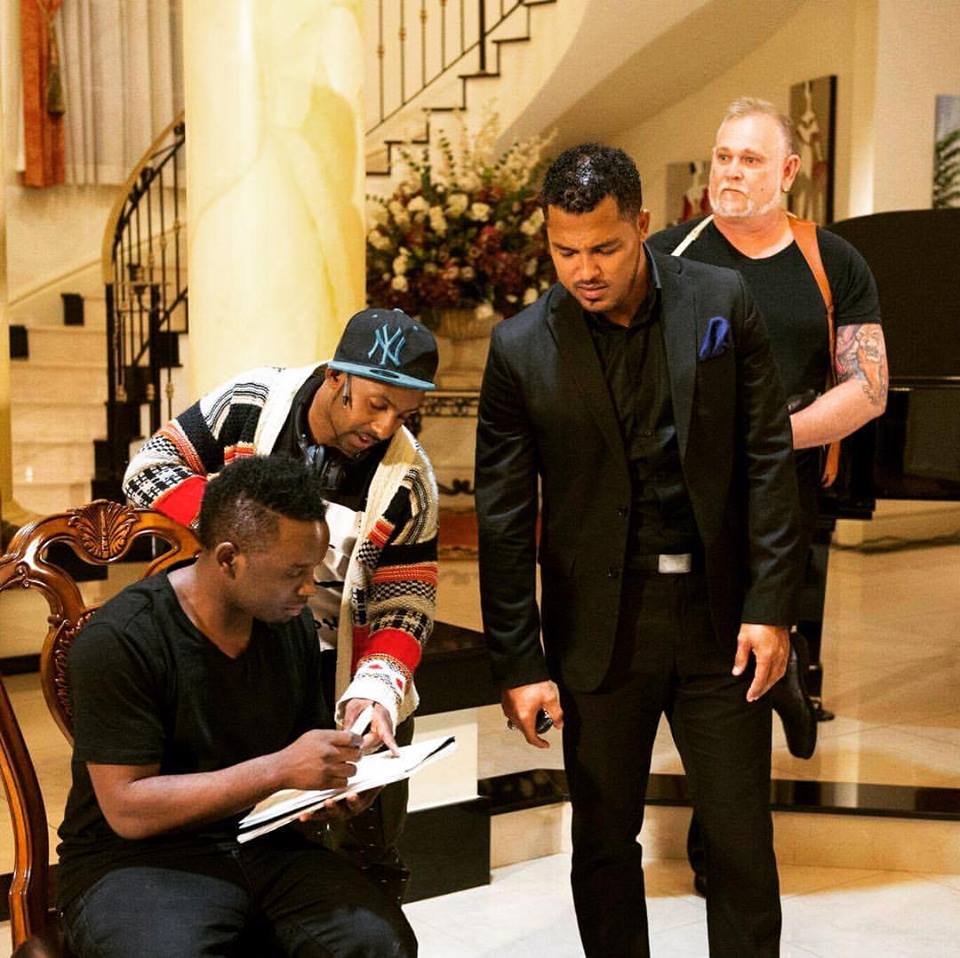
Rash, who is a Ghanaian-based Liberian film producer, director and actor, spoke to journalists recently.

The school, located on Benson Street in Central Monrovia, comes at a time when most talented Liberian filmmakers and musicians are eager to acquire knowledge about their arts in order for them to produce works that will be easily accepted outside their local market.

Speaking to journalists at the school Vicker said the school will fully begin operating this month.

According to him, it will focus on educating artists with practical hands-on experience in film and performing arts.

He stated that his desire to introduce such a school for mainly young Liberians is to give back to the country and bring to life the passion of people, who are interested in the arts industry.
“The school is dedicated to providing an outlet for inspiring Liberian musicians and filmmakers and an opportunity to learn skills about their arts. Liberia has talents; most of those with the talents, lack the skills. I decided to open this work as my way of helping to promote and develop their talents.”

“The teaching staff will comprise of an educated body of filmmakers, dancers and actors who will fly into Liberia from abroad, to provide industry-driven training to the students,” he added.

Vicker said at the end of the school semester, “Students will put out major productions aimed at addressing solutions for national healing.”

“For me, it is more of a social responsibility. It is so beautiful to have people, who have succeeded in a particular sector, willing to give back and help upcoming individuals, who are interested in their arts,” Vicker said.

Rash, who is an award-winning actor, noted that the mission of the school among others is to educate artists and future artists with practical, hands-on experiences in fine and performing arts, film/stage, and music (voice coaching, piano, guitar, drums and lesson, spiritual, ballet, tap, modern jazz, hip-hop, African, etc.).

The drama instructor, Ms Sharyn Shields, said drama has been a part of her life and is expected to allow teenagers to define their real selves.

Ms Shields, who is the author of Dr Seuss, is hopeful that the lesson will make an impact on her students’ lives; adding: “I love the performing arts.”

Global Digital Broadcast and Cinematography Cameras Market Growth by 2022

The reports include global Digital Broadcast and Cinematography Cameras market drivers, challenges, constraints, opportunities, investment potential, leading technologies, future guidelines, Digital Broadcast and Cinematography Cameras industry player profile, regulatory ecosystem and plans. The report also delivers market size forecasts for Digital Broadcast and Cinematography Cameras market. The forecasts are further mentioned in the top segment of Digital Broadcast and Cinematography Cameras market. This report lists out some of the major key trends that are expected to influence the overall Digital Broadcast and Cinematography Cameras market development and also presents market statistics to study predominant market trends. In this report, Digital Broadcast and Cinematography Cameras market is segmented on the basis of application, type, end use and regions. In addition, the report presents detailed information regarding major revenue generating regions of Digital Broadcast and Cinematography Cameras market.

The report profiles some of the major players in present in Digital Broadcast and Cinematography Cameras market. The detailed evaluation of key players is available in this report. This report global Digital Broadcast and Cinematography Cameras market sheds light on how these companies are targeting the emerging markets of different regions. Latest strategic mergers, procurements, partnerships and collaborations happening in Digital Broadcast and Cinematography Cameras market have been included in the report. The bottom-up approach is applied to evaluate the total market estimates, on the basis of end-use Digital Broadcast and Cinematography Cameras industry and region.

Enquire for Digital Broadcast and Cinematography Cameras report here: http://emarketresearch.us/global-digital-broadcast-cinematography-cameras-market/#Inquiry-Before-Buying

The Digital Broadcast and Cinematography Cameras market report is categorized on the basis of distinct geographical segments, leading manufacturers, various applications and different types.

Leading players involved in the Global Digital Broadcast and Cinematography Cameras market include ARRI, Hitachi, Red.com, Sony, Canon, Grass Valley, Blackmagic Design Pty, Silicon Imaging, JVC, Panasonic and Aaton Digital SA.

Type-wise analysis divides global Digital Broadcast and Cinematography Cameras market into  4K, 2K and 8K.

Application wise analysis classifies the Global Digital Broadcast and Cinematography Cameras market into  Live Production, News & Broadcast Production and Cinematography.

Major developments, supply chain statistics of Digital Broadcast and Cinematography Cameras and recent market activities will help existing market players as well as new entrants in devising Digital Broadcast and Cinematography Cameras market business strategies and to achieve their intended business objectives. The report is an accurate and quality research study on Digital Broadcast and Cinematography Cameras market. This report is established on the information and interviews conducted with Digital Broadcast and Cinematography Cameras manufacturers and their consumers with demand-side research. The amalgam of checks and balances combined with involving the players in the industry offers a clear and accurate picture of the entire Digital Broadcast and Cinematography Cameras market.

Access full report details HERE

Global Digital Broadcast and Cinematography Cameras industry research report covers following data points:

Chapter 1: In this chapter, the Digital Broadcast and Cinematography Cameras market overview, objective, product definition, classification, cost, share and Digital Broadcast and Cinematography Cameras growth rate from 2012-2022 is covered. The Digital Broadcast and Cinematography Cameras market segmentation, product type, and major producing regions along with their growth rate, market drivers, Digital Broadcast and Cinematography Cameras market dynamics, constraints and growth opportunities are covered in this segment.

Chapter 2: This chapter covers, Digital Broadcast and Cinematography Cameras industry upstream raw material, major Digital Broadcast and Cinematography Cameras business players, production cost, labour cost, downstream consumer analysis and market channel analysis.

Chapter 3 and Chapter 4: These chapters provide Digital Broadcast and Cinematography Cameras market study based on product type, manufacturer, application and region. Under these segments, Digital Broadcast and Cinematography Cameras market share, growth type, downstream buyer’s application and market overview presented in detail.

Chapter 5 and Chapter 6: The Digital Broadcast and Cinematography Cameras market briefs and focuses on regions like North America, Middle East & Africa, Japan, China, Europe and South America. key details related to consumption volume, Digital Broadcast and Cinematography Cameras import/export details, gross surplus analysis (2012-2017) and production capacity are briefed in this report.

Chapter 7 and Chapter 8: This section conducts SWOT analysis and Digital Broadcast and Cinematography Cameras market status of these regions. All the leading players in Digital Broadcast and Cinematography Cameras, their competitive profile information, market share, product description, target consumers and market positioning are covered.

Chapter 9 and Chapter 10: This segment covers global Digital Broadcast and Cinematography Cameras market forecast, size, share, value, volume by application and type. Additionally, The Digital Broadcast and Cinematography Cameras information referring to the key segments like consumption and market size forecast is covered in this report.

Chapter 11, 12 and 13: This segment interprets the feasibility study, which will characterize the Digital Broadcast and Cinematography Cameras investment scope, industry hurdles, treasured research findings, appendix, data sources and discussion guide.

The Digital Broadcast and Cinematography Cameras report analyses the supply, sales, production and market status comprehensively and also carries out SWOT analysis.


New locally produced TV show hosted by psychic medium Cindy Kruger, coming to FOX Life in 2018

0

FOX Networks Group has announced that a brand new, locally produced entertainment show will hit the FOX Life schedule in March 2018. In an amazing collaboration with much-loved psychic medium Cindy Kruger, Spirit was born, and ordinary people from all walks-of-life have an opportunity to be a part of the show. Born with an amazing talent, Cindy recounts that she tried for years to suppress it until she embraced it and started connecting with what she describes as angels and offering healing through her readings. The show, which begins production in January 2018 will be driven by a mixture of celebrity and ordinary people readings.

Born in Kwa-Zulu Natal, and never feeling fulfilled despite a successful corporate career, Cindy Kruger realized that she had been born with a unique gift: she is a psychic medium. For as long as she can remember, Cindy has been able to connect with angels and people that have passed on to the other side. She had suppressed the gift because she did not know how to handle it, but soon realized that she could channel it in service of others. Cindy then discovered her purpose in life was to help bring comfort, love, support and messages from people who have left us, to people on Earth, in order to help them live their best lives. Cindy’s readings and messages have helped many people who have suffered loss or disappointment, find purpose, direction in life, and a renewed sense of positive energy.

Cindy is already well known for making guest appearances on various radio stations across South Africa, including Power FM, Radio Today and Lotus FM and now she’s ready to use her intuitive abilities to provide more insights into peoples’ lives across the continent. The show will feature celebrities across the African diaspora as well as ordinary folk. Confirmed thus far to appear on Spirit are Anita Erskine, Denrele,  Pappy Kojo, Navy Kenzo, Kim Jayde, iFANI and Rozanne McKenzie, with more clearing their diaries. Not only will show guests be offered clarity on certain life events, they’ll  also get insights into their concerns and worries, find closure and perhaps even connect with lost loved ones.

You too could be a guest on the show and have a session with Cindy. All you need to do is send an-mail to entries@foxlifespirit.tv between 20 December 2017 and 15 January 2018 and explain why you would  like a reading with her. If your submission is selected, you will be contacted by the producers, regarding the next steps.


Ikegami presents latest camera and image processing technology at CABSAT 2018

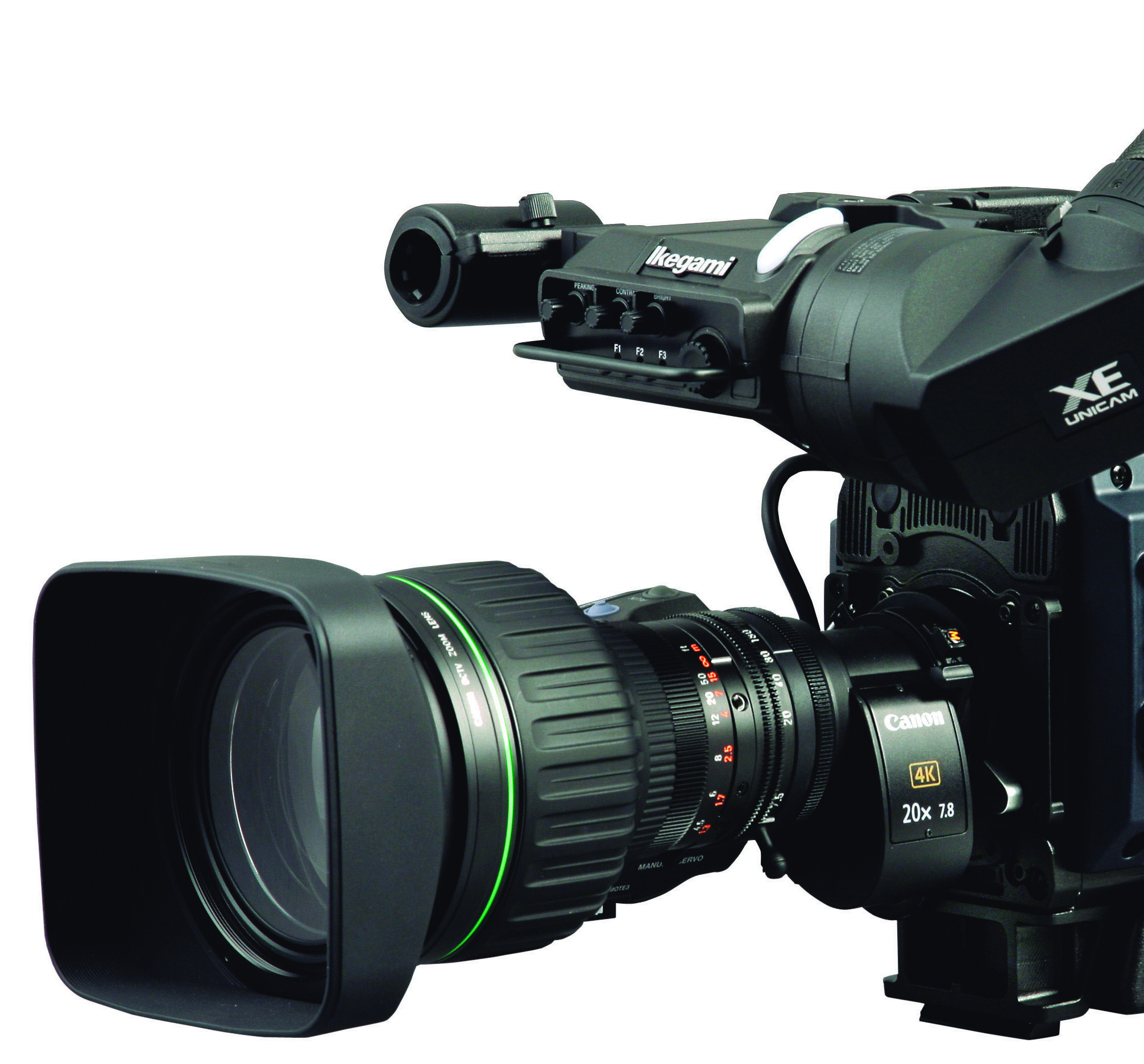
Ikegami, a leading manufacturer of specialised cameras, image processing and transmission equipment, will bring its latest broadcast product line at CABSAT 2018, taking place from 14 to 16 January at the Dubai World Trade Centre, UAE.

The UHK-430 is a 4K portable camera system employing three newly-developed 4K-native 2/3 inch CMOS sensors which provide full 3840 x 2160 ultra-high definition resolution, plus the depth of field required for studio and outdoor production. The camera is equipped with a B4 bayonet mount compatible with 2/3 inch HD lenses. An optional SE-U430 expander accommodates large studio or OB lenses. Visitors will also be able to see the Ikegami UHK-430 camera on the Canon and Fujifilm stands.

Ikegami’s Unicam HD camera series, the HDK-73, offers the HDR compatibility that is now so important to the market. The camera, which features F13 (1080i50) high sensitivity 2/3-inch CMOS sensors with exceptional picture quality in either 1080i or 720p, has a HLG hybrid log gamma for HDR picture origination. This feature means it is now possible to shoot a scene with high dynamic range without losing gradation in the highlights.

Currently in its research and development stage, visitors to Ikegami’s stand will be the first to experience the HQLM-3125X, Ikegami’s first HDR monitor. The latest addition to Ikegami’s product line up adheres to the industry standard for 4K resolution, boasting 4096×2160 10bit, allowing 4K content creators to work with ease. Other highlights include 1000nits brightness and a 1,000,000:1 contrast ratio.

Also on display is Ikegami’s 4K monitor HQLM-3120W. This monitor is equipped with two channels of 12G-SDI input as standard for efficient configuration with 4K equipment such as cameras and switchers.

In addition, two new monitors in Ikegami’s HD 60 series – the HLM-1760WR and the HLM-960WR which were launched at IBC 2017 – will also be available to view. The HLM-1760WR is a space-saving and affordable 17 inch video monitor with low power consumption, wide critical viewing angle, excellent brightness and contrast, fast response time and faithful colour reproduction. Employing an LED-backlight Full HD (1920×1080) panel, it incorporates multi-format SDI, 3G-SDI, HDMI (HDCP) and VBS inputs as standard. The HLM-960WR is a multi-format 9-inch monitor with a full HD (1920×1080) LCD panel and LED backlight, and a 3G-SDI input as standard.

The HDL-45E is a 3CCD multi-purpose HDTV Camera achieving superb picture quality, high stability and excellent reliability with the incorporation of Ikegami’s cutting edge digital technology. With its compact one-piece form, this camera is ideal for applications such as a weather camera, news flash camera or POV camera. The camera provides superior poctures with the newly developed 2/3 inch 2.3 Megapixel AIT CCD, digital processing LSI (ASIC) and the latest 14-bit A/D Converters.


How to choose the right display for your broadcast application, by Bazile Peter

0

Changes in the broadcast industry are bringing far-reaching repercussions. In particular, studios, control rooms and production houses alike are all seeking ways to streamline processes, adapt workflows and work in a faster and more intuitive way. This has given rise to a number of trends across the industry. But should equipment designers and manufacturers be swayed by these when choosing display technology?

One of the most noticeable shifts over the past few years has been the move towards the style of technology we now take for granted in our everyday lives; for example, consumer-style touchscreen controls. Replacing analogue switches and dials with capacitive touch functionality not only creates a more seamless finish to the product, it replicates our smartphones and tablets and is, therefore, more intuitive to use. There are other advantages too; replacing push buttons or rotary dials with touchscreen controls can save on space and actually simplify the manufacture of the product.

However, the end product will be used in a complex environment and design engineers must choose wisely. Some touchscreens have the potential for electromagnetic interference from other internal components and the resulting noise may lead to false touches. On a mission-critical device such as a replay and highlight system for live sports broadcasting or an audio transmitter for live news, this could have serious consequences.

While we’ve become used to touchscreens, relatively high-quality cameras on our smartphones have raised the bar when it comes to image quality. As a result, equipment manufacturers are striving to offer stunning optics with wide viewing angles.  There’s also a growing demand for higher resolution displays and, in some cases such as in component displays used in colour grading equipment, displays that are 4K-ready.

The knock-on effect is a shift from monochrome to full-colour displays in equipment as small as a 1U rack. This progress is not without its challenge; for example, when it comes to ensuring that the display is bright enough and contrast high enough across a wide range of viewing angles.

However, while the displays and touchscreens used in consumer technology are rarely expected to last more than a few years, those used in broadcasting need to be considerably more hard-wearing. So design engineers must bear this in mind when selecting the substrates to be used for cover lenses, as well as considering solutions such as optical bonding which can increase strength and reduce the potential for damage from dust or moisture behind the lens.

Future-proofing investments

But if broadcast equipment is to last, it also needs to be designed with future changes in mind. While it’s not possible to anticipate every trend, factoring in emerging developments, such as the growing adoption of 4K, will help extend its life.

It’s also becoming increasingly fashionable to use displays and touchscreen on air. For example, in-studio video walls are popular, while many broadcasters are also looking at how presenters and reporters can use displays to show graphics and visualise data.

When it comes to video walls, an important consideration is how to make the matching of displays as seamless as possible. This means ensuring any gaps between display panels are invisible and that the optical performance of each display is consistent, so there are no obvious visual differences between them. The growing use of 4K is important here too. Even though it is not currently mainstream, it’s vital to ensure that the displays won’t need to be replaced when the capability is more widely-used.

From control equipment through to live broadcast and even post-production, broadcasters are increasingly looking for all-in-one solutions featuring integrated displays rather than remote monitors. Naturally, the considerations for such a solution depend entirely on the environment in which it will be used as well as its function.

However, important factors to consider include how far from eye-level the display will be viewed? What kind of ambient light is the display likely to be used in? How often will the display be used? Is full colour necessary and is any kind of touch functionality or haptic feedback needed?

The need to customise

Many equipment manufacturers are being forced to shorten their product development cycles to match the acceleration of requirements, standards and technologies. As a result of this continual change, many end users are encountering new challenges that don’t yet have off-the-shelf solutions.

In these cases, selecting the right display technology lies in working in close partnership with specialists to develop a solution that draws on the right combination of technologies to meet specific needs. For instance, this could be the option to integrate haptic feedback technology, i.e. vibrations to signal a touchscreen button has been pressed, into Touch Sensors, which can be tailored to suit your project requirements.

- Advertisement -
- Advertisement -
- Advertisement -

Pin It on Pinterest