Home Authors Posts by Canon Press

Canon Press

30 POSTS 0 JOBS
Canon Inc. is a Japanese multinational corporation specializing in the manufacture of imaging and optical products, including cameras, camcorders, photocopiers, steppers, computer printers and medical equipment.

Canon launches pioneering new EOS R System

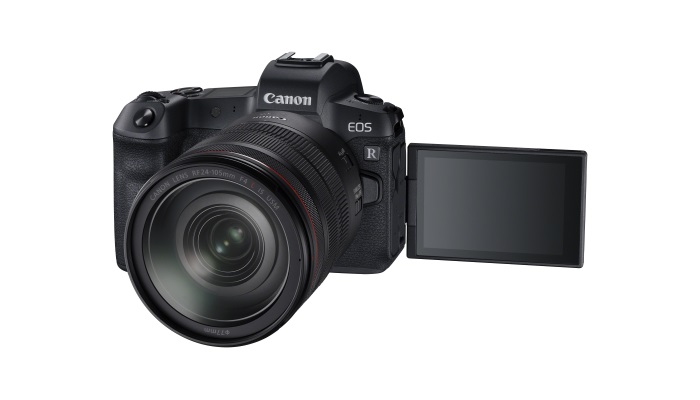
Canon Europe, a world leader in imaging solutions, has launched its pioneering EOS R System. Over thirty years on from the original, era-defining EOS launch, the bold, new EOS R System will once again expand photographic and filmmaking possibilities in countless ways. The new RF lens mount has been engineered with the perfect blend of optical, mechanical and electronic design to capture unique moments in previously impossible ways.

A pioneering lens mount, built from the best of EOS legacy
Since its inception in 1987, the EOS System – including Cinema EOS – has grown into the most recognised imaging system in the world. Today’s introduction takes the EOS platform to new heights, incorporating the best from the existing system, with even greater levels of performance, lens design possibilities and creative flexibility. The new RF mount has been built on the strengths of the existing EF mount and is the result of detailed research by Canon engineers, who have designed an impressive optical system with a flange back distance of 20mm and a wide 54mm diameter lens mount – allowing for even greater freedom when designing lenses. The new mount’s 12-pin connection enables enhanced communication and power transmission between the lens and camera body, further enhancing lens design options, resulting in higher image quality and enhanced usability.

Yuichi Ishizuka, president and CEO, Canon Europe, Middle East & Africa, commented: “When we launched the EOS System 30 years ago, we sent a clear message that the future of photography was here. Now, as one of the most iconic imaging systems in the world, our commitment remains. Canon will continue to invest in the unrivalled EOS world with cameras, lenses and accessories that set new heights in image quality, optical excellence and performance, all while satisfying the ever-evolving needs and demands of its customers.”

Exceptional quality in every detail 
Built from the ground up, the new System has been reengineered with invaluable input during the System’s development from professional and enthusiast photographers and filmmakers. The EOS R System with RF mount and Dual Pixel CMOS AF delivers unrivalled optical excellence, the world’s fastest autofocus and faster communication between camera and lens. Features that are synonymous with EOS – fast performance, superb ergonomics and superior, uncompromising, image quality – remain at the heart of the EOS R System.

Featuring innovative technology for photography and filmmaking alike, the EOS R System allows all users to shoot and film in extremely low light with accurate focusing, thanks to Dual Pixel CMOS AF. Small and discreet, the EOS R System gives flexibility, plus the advantage of silent shooting. It also offers the highest standard of movie output from any Canon EOS System camera, outside of the Cinema EOS range, enabling filmmakers to take their storytelling to the next level in 4K with output in 10-bit over HDMI. The whole system has refined handling and enhanced ergonomics, including an electronic viewfinder and extensive customisation, allowing the user to the focus on the subject rather than the camera.

A system designed with lenses at its core   
The EOS R System inherits all the existing system advantages, importantly full compatibility with existing EF and EF-S lenses and accessories, when using one of three newly-developed lens adapters, expanding the boundaries of image capture. Canon has today also launched four new lenses, compatible with the EOS R System – the RF 28-70mm f/2L USM, RF 50mm f/1.2L USM, RF 24-105mm f/4L IS USM and RF 35mm f/1.8 MACRO IS STM. Building on Canon’s lens heritage, these high-performance lenses will push forward the frontiers of creative capture thanks to the new cutting-edge optics and advanced image processing for both stills and video. Additionally, users of existing Canon EOS full frame or APS-C DSLR cameras can enjoy the EOS R System with their existing EF and EF-S lenses thanks to the adapters, while retaining the same performance as when used on a DSLR, as well as access to EOS accessories and Speedlite flashes.

Adding to the full frame family
Adding to the EOS full frame line-up, Canon has today unveiled the first camera body to carry the EOS R name and RF lens mount – setting the new standard for the camera of tomorrow. With the world’s fastest autofocus, it is also the world’s first camera with the ability to focus in light conditions as low as -6EV and totally silent shooting, providing stunning quality results every time. The EOS R redefines photo and video performance with unrivalled image quality, state-of-the art connectivity, refined ergonomics and responsive handling.

Further expanding the existing EOS System, Canon today also launches the EF-M 32mm f/1.4 STM – a new 32mm lens for the EOS M mirrorless system – and the EF 400mm f/2.8L IS III USM and EF 600mm f/4L IS III USM, two revolutionary, lightweight professional super telephoto lenses for the EF System.


5G: A paradigm shift in the role of the Internet of Things

By Michelle Janse van Vuuren, marketing director at Canon SA

In just a couple of years, the fifth-generation mobile network will be commercially available, promising better connections, faster speeds and lower latency, for those living in a hyper connected world. It’s processing power, for example, has the potential to move us to the ‘haptic web’, the vision of an internet world where the single touch of a sensor can be felt and intercepted by a computer running in the cloud.

5G is more than the next step in the evolution of connection however. It’s lightning fast speed, greater bandwidth and improved up-time have the potential to transform industries. With most countries aiming for full commercialisation by 2020, this connectivity has the potential to transform how businesses operate, from how they manage daily communications to smarter business applications and organic growth opportunities. It means a quasi-intelligent device or sensor-based system will soon be able to port previously onboard controlling intelligence to a cloud-born computer ecosystem. Imagine printers, televisions, fridge freezers and coffee machines all integrated into a global mesh network, able to instantly charge for services based on customer choices and consumption. 5G will be transformative for businesses in every sense of the word—and it’s got product designers brimming with anticipation of a new era in communications.

Evolution of everyday tech in a post-5G suburban life

Faster speed, lower latency, and greater capacity could enable on-the-go, ultra-high-definition video, virtual reality, and other advanced applications. Even simple business applications such as conference calling have the potential to be made-over.

As it is, the bandwidth needed to support this type of technology has only become commercially viable in the past five years and has had limited geographic coverage.  But in the future, access to greater speeds, mobility and capacity will see this evolve even further, and we should expect a mass adoption of virtual reality technologies, both in the boardroom and outside it, which allow remote users to see and interact with each other as if they are in the same room.

But this isn’t everything. Outside of the office, 5G will be used in the future proliferation of smart cities, as well as self-driving vehicles and auto-piloted drone swarms with the potential to build new structures without scaffolding.  Faster connectivity will allow for the continuous connection that offers the potential for cars and robots to “talk” to each other and the streets; to influence how much streetlighting is provided for example. You could receive messaging from your local city council on the best quality air route into a city based on traffic conditions at any particular time of the day. And in healthcare, 5G will enable a host of new innovations such as remote robotic surgery and personalised medicine based on data from wearable health trackers. The ability to monitor health in this way could well have a major impact on the insurance sector, with the price of premiums dictated by customer lifestyles. The industrial-scale transfer of sensitive data to pervasive ecosystems means that IoT security will be a source of major investment in coming years.

A new 5G cloud

While 5G networks will become increasingly important in keeping up with rising demand for connected devices, it will also provide the bandwidth and latency needed to improve enterprise cloud services. In the future, it’s likely that cloud technology will become stable enough to replace traditional data centers all together. This reliance on the cloud will also mean that manufacturers no longer need to include the processing elements and memory storage found in today’s devices – so hardware is destined to get more and more compact. The cost efficiencies for businesses could be huge, especially as devices will not have to undergo continual updates to keep pace.

The everywhere SIM

While many businesses connect to the Internet via WiFi, it’s not without its problems. Next generation technology will soon enable 5G SIMs, meaning that IoT devices, from home security systems to smart mattresses, can connect without having to rely on WiFi. This will mark a new standard in device connectivity as businesses will be able to put a SIM in hardware that does not traditionally require one – cameras, laptops and printers for example – and be able to operate them straight away. The initial stages of this technology are already being seen, with ASUS launching its first eSIM tablet in February this year. As adoption becomes more widespread, the functionality of hardware will change once again, giving technology companies more reason to take a minimalist approach.

As well as practical improvements, eSIMs promise greater security and flexibility for increasingly mobile workforces, allowing for seamless connectivity wherever you’re working from. This will eventually mean that one user can operate across several different profiles at the same time, all using one device.

Conclusion

Not only does 5G promise to boost efficiency and unleash the potential of automation, but it will also enable us to explore developing technologies such as virtual reality and augmented reality, which could lead to unparalleled levels of disruption. Set to reinvent the future of consumer-life and business, 5G promises to become the backbone of a hyper connected and hyper mobile world, responsible for a new wave of exciting innovation. Whether it’s an SME or international conglomerate, a self-driving car or AI in hospitals, access to fast speeds and low latency has the potential to see improvements at every level – from how businesses communicate, and how they connect with customers, to how everyday life is run across cities and public sectors.


Canon awarded gold rating from EcoVadis for sustainability

Canon, a global provider of imaging technologies and services, recently announced it has been awarded the EcoVadis gold rating, for a fourth consecutive year, which positions the company within the top five per cent for sustainability performance.

To decide company ratings, the EcoVadis CSR analysis system assesses 21 criteria across four themes of environment, fair labour practices, ethics/fair business practices and supply chain. Canon submitted data relating to CSR practices across its businesses to support these themes.

“We are thrilled to have been awarded a gold rating from EcoVadis, further demonstrating why our customers and partners can trust in our sustainability credentials,” commented Stuart Poore, EMEA director of Sustainability and Government Affairs. “Sustainability is at the heart of what we do and by delivering environmental benefits through our people and products, we are powerfully demonstrating commitment to our philosophy of Kyosei: living and working together for the common good.”

Canon’s commitment to sustainability spans across responsible business, society and the environment. It continues to monitor and assess its environmental impact to identify ways to improve its sustainability performance across all areas of the business.


Canon works to help young people tell their stories

Canon’s commitment to help the youth to harness the power of positive visual storytelling to drive change, is exposing young people to learning opportunities they wouldn’t otherwise have had. Through its Young People Programme, Canon provides coaching and tools to empower young people to bring their stories to life and make their voices heard on topics that are important to them.

Canon’s Miraisha initiative – which aims to promote job opportunities in Africa by offering workshops to aspiring photographers, videographers and filmmakers – has seen over 3 000 participants taking part in training sessions since its inception three years ago. In South Africa, the Wild Shots Outreach programme forms part of this Young People Programme intiative and is helping to educate underprivileged children in the art of wildlife photography and its impact on conservation.

Children who participate in the Wild Shots Outreach programme near the Kruger National Park, are being trained to use the functionality of Canon EOS 1300D cameras and their confidence in their visual storytelling skills is growing. The students are taught photography in a series of practical workshops before going on a game drive to put what they have learned into practice. For many of them, this is the first time that they have ever had the opportunity to see their wildlife heritage, despite living on the edge of the Kruger National Park.

“We are thrilled with the EOS 1300D cameras from Canon. The children love experimenting with the great functionality and the results have been fantastic. It is certainly rewarding to be able to teach our young learners using updated camera technologies,” says Mike Kendrick who founded and manages the Wild Shots Outreach programme.

Wild Shots has been running the Outreach Programme for two and a half years and so far has reached 366 students through 40 courses. Learners have also has the opportunity to attend the Wild Shots Conference and an exhibition of their photographic work has been created to showcase the best images and stories behind the images.

Aligned with the Young People Programme, Canon SA also works with schools and clubs to inculcate a passion for photography and develop skills amongst the country’s youth.

The company assists schools to establish photography clubs for the benefit of their learners and where possible, also provides equipment such as cameras and printers for club members to use.

At Hartebeespoort High School in the North West, which was the first school in the province to benefit from this programme, youngsters got to use their skills to capture the action of the inter- high school athletics. “It was heartening to see the members of the photography club using their newfound skills and get to grips with their equipment to document the day’s activity. The feedback from the youngsters and the smiles on their faces said it all.

“The Young People Programme is about personal journeys and helping the youth to engage with the world around them. By improving their confidence and developing their skills in visual storytelling, we can help more young people to reach their potential and make a positive impact on the world. From wildlife and conservation to sport, we can open their eyes to the opportunities available to them to tell their stories, drive change and even generate an income, with photography,” says Michelle Janse van Vuuren, marketing director at Canon SA.

Stuart Poore, director of Sustainability and Government Affairs at Canon Europe comments; “The Young People Programme is one of several sustainability projects Canon Europe is currently running in the EMEA region that deliver social and environmental benefits through our people and products, demonstrating our commitment to our corporate philosophy of Kyosei: living and working together for the common good. We hope this programme will help us grow the positive power of imaging technology and services whilst amplifying the voice of young people in developing the United Nations’ SDGs.”

For more information visit www.canon.co.za or follow Canon on Facebook, Twitter, Instagram or LinkedIn

Ditch the smartphone and go mirrorless

The digital age has seen average people become content publishers. With the help of social media; vlogs and blogs have become their outlets for creative expression. The food they eat, the places they go, the people they meet, and lives unfolding are their subject matter.

For some, photography is a serious passion – and perhaps becoming a source of income. They are more discerning about their art form and want more creative freedom. They are ready to move on from their smartphones and smaller compact cameras as their go-to devices for image capture. They visit workshops and forums for information on new trends in their trade, they have designs for turning pro, and they expect more from their tools.
They see good equipment as a must for successful creative work. Image quality, flexibility for photo editing, compatibility with their existing equipment, functionality and the availability of a wide range of compatible extras are on their list of “wants” from a camera -enter the Canon EOS M range.

“These hit that sweet spot for those on the edge of going pro and the photo-loving consumer seeking creative self-fulfillment and a better way to express their unique style. If you’re a photographer who works on the move or a photo enthusiast who lives to share life as it happens, Canon’s compact mirrorless cameras, the EOS M range, can empower real creative freedom,” says Abri Kriegler, product manager at Canon SA.

According to Kriegler, Canon’s EOS M cameras are fully-featured members of the EOS family, and feature all the best technologies and functions of Canon’s DSLRs. Yet, they are compact and flexible. They can be carried anywhere to shoot things that are inaccessible for classic DSLRs.

“After all, great stories are happening all around us at every moment. You need a camera that’s there as life unfolds and as the good stories happen,” he says.
Unlike a DSLR, which uses a mirror to reflect light into a viewfinder, mirrorless cameras do not contain a mirror or an optical viewfinder. This makes them generally smaller than DSLRs. Also, instead of looking through the lens to compose an image via the viewfinder, mirrorless cameras lets you preview your shot from a screen on the back of your camera – much like a smartphone. Despite the differences in design, it is still possible to be creative with lenses.

In essence, these mirrorless cameras distil the best of Canon compacts and DSLRs to deliver superb quality photos and movies that are packed with detail, colour and atmosphere.

“With EOS M you will be surprised how your photos will change. They have a range of effective and easy-to-use functions that will put you steps ahead of other photographers. Our extra lenses and genuine accessories will open up a world of possibility,” says Kriegler.
Ready to take the next step and start exploring your creative potential? There is an EOS M camera to suit you.

“Choosing your perfect shooting companion really depends on where you are with your photography and where you want to go,” continues Kriegler.

The EOS M100 for instance is the ideal step up from a smartphone or compact camera. It not only offers superb quality results and the creative flexibility of interchangeable lenses but also lets you shoot selfies with ease using the large tilting touchscreen and enjoy point and shoot simplicity if you need it. This compact camera features creative filters and wireless connectivity, allowing you to shoot stunning images and upload straight to social media in just a few seconds.

If you are ready to take your photography further or simply want a high performance, all-purpose camera, then your choice is between the small, portable EOS M6 and the technology rich EOS 800D. Small and compact with DSLR-like handling, the EOS M6 combines powerful performance and excellent quality with portability. The EOS 800D has an advanced 19-point AF system that makes it easy to track fast moving objects, such as when shooting sports, portraits or landscapes. Plus, there’s a vari-angle touchscreen that’s great for shooting movies from different perspectives.

In the EOS M5 and the EOS 80D you’ll discover state-of-the-art features that give you more control and speed, including fast AF systems and sustained 7 fps continuous shooting, plus new levels of performance and quality that will take your photography and videography to new heights. Highly responsive and versatile, the EOS 80D excels at sports, portraiture, landscape, street, travel and low light photography.

Not sure which EOS fits your life or work style? Try out the nifty “camera selector” HERE.

For more information visit the Canon website or follow Canon on Facebook, Twitter, Instagram or LinkedIn.

New camera, new glass

SCREEN AFRICA EXCLUSIVE:

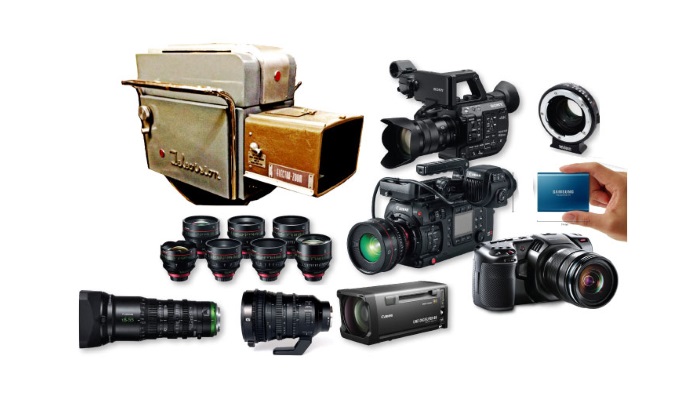
Over the years technical advances and electronic development in manufacture has produced some pretty amazing cameras. From the first three pickup tube colour cameras of the early 1950’s, to today’s high-tech full-frame sensors, the camera is essentially only as good as the glass in front of it. There are thousands of different lenses out there but none has had as bigger impact in the film and television industry than the zoom lens.

Almost 60 years ago, American inventor turned cinematographer Joseph Bailey Walker’s ever active mind developed the Electra-Zoom Lens for RCA, which became standard equipment for TV cameramen the world over back in the 1960’s. Whilst zoom lenses had been used in the cinematic field since the 1920’s, it wasn’t until Walker’s invention hit the scene that zoom lenses became an essential part of television production. His lens, as the name suggests, has a small electric motor that was used to drive two moving components, a front negative element that moved rapidly whilst the rear positive element moved slowly in the opposite direction giving the system a focal length range from 52mm to 152mm at f3. Much has changed over time when you compare Walker’s Electra-Zoom Lens with Canon’s new UHD-DIGISUPER 66, for example, which possesses a focal length range of 9mm to 600mm, and features a built-in 2x extender that allows users to double the zoom range capabilities of the lens – up to 1200mm on the telephoto end.

New lens technology was a big highlight of NAB 2018 and the search for ‘that ideal piece of glass’ was at the top of the list for many of the visiting buyers. There were three standout cameras at NAB, all due for release later in the year. Three different price categories but each one feature-filled and all with amazing lens choices to get the best out of what the cameras are offering.

SONY FS5 Mark II

Sony’s new FS5 Mark II camera (also released at NAB 2018) has the same sensor as the original FS5 but Sony has taken the colour science from the Sony Venice to provide better skin tones and a more cinematic look. You would be spoilt for choice when deciding on a lens suitable for this piece of kit. Starting with Fujinons 18-55mm T2.9, a Cabrio Sony E-Mount Cinema Zoom Lens, it’s a lightweight and compact alternative to other lenses on the market, while still keeping 4K Cabrio quality in an affordable package. The lens is colour matched to other Fujinon lenses such as the HK, ZK, and XK series, which enables smooth intercutting between lenses. The 85mm front enables use with many cine-style matte boxes via use of optional step up rings (rings not included). The lens is lightweight for a cinema zoom that holds focus and aperture throughout the focal length range. It is designed for camera’s with a Sony E-mount, so it has a short flange focal distance, but the lens allows for flange focal distance adjustment so you can fine tune it to the camera you are using the lens on.

Another suitable lens for the FS5 Mark II is the Canon 18-80mm T4.4. Based on Canon’s heritage in optical design and performance, the CN-E18-80mm T4.4 L IS KAS S produces exceptionally high quality images. Those using the lens, such as documentary filmmakers, will benefit from the incredible servo performance which is incorporated on the lens’s body, enabling precise digital zoom operations. Users are able to achieve maximum speed and responsiveness with seamless switching between auto and manual focusing and zoom. For those using a shoulder-style rig or shooting hand-held in demanding positions, the dedicated zoom grip is a perfect accessory – the grip simply attaches to the side of the lens, offering simple integration and zoom management.

Of course many will choose the bespoke lens from Sony itself,  the E PZ 18-110 mm f/4 G OSS Lens. This powered zoom lens delivers optimum performance in Super 35 mm applications, starting at 18 mm wide-angle and extending through an impressive 6.1x zoom range with a constant F4 maximum aperture. The G Lens optical performance delivers image quality that is suitable for 4K throughout the zoom range.

Sony PXW-FS5M2 4K release date is later in the year at a price of US$4749 (body only).

Blackmagic Pocket Cinema Camera 4K

After years of asking for a successor to the original Blackmagic Pocket Cinema Camera, Blackmagic have finally given the fans what they’ve been asking for. The Pocket Cinema Camera 4K looks a lot different to the original (it’s definitely bigger in size) and although it might not fit inside your pocket it is still a compact size. The Aussies over at Blackmagic have clearly been listening to what their customers have been wanting as this camera is packed full of some impressive features. The Pocket Cinema Camera 4K shoots at 60fps in 4K and at 120fps in 1080p and has a dynamic range of 13 stops. Slow motion can be recorded in both 12-bit CineDNG Raw and 10-bit Apple ProRes 422 HQ. Blackmagic have really made a point of focusing on the low light capabilities of this camera with ISO range of 400 – 25,600. Users can load LUTs on to the camera and even plug in a USB-C drive to record directly on to, of note is Samsung’s new T5 USB-C solid state drive, it’s tiny but packs a punch when it comes to speed. Here’s another way Blackmagic’s camera stands out from most interchangeable-lens cameras. When you buy a Nikon, Canon, Sony, Olympus, Panasonic or Pentax camera, you are committed to that company’s lens mount. So, if you buy a Canon camera, you can only use lenses that fit a Canon mount. Likewise for Nikon, Sony and Pentax. Olympus and Panasonic use the same Micro 4/3rds mount, so they’re compatible with each other, but not the others. According to Blackmagic, the Pocket Cinema Camera 4K is compatible with all MFT-mount lenses, which is “extremely flexible and allows for different lens adapters so customers can also use PL, C, EF and other types of lenses from manufacturers such as Canon, Nikon, Pentax, Leica and even Panavision.” In most other cases, a manufacturer introducing a new camera doesn’t say that it’s compatible with other manufacturers’ lenses via an adapter. That’s because such adapters generally come with compromises, such as fewer autofocus options. US manufacturer Metabone have exclusively designed a  Nikon-G/F to Micro-4/3 mount for the Blackmagic Pocket Cinema Camera called the Speed Booster, much to the excitement of many creative directors who love their Nikon lenses.

The new Blackmagic Pocket Cinema Camera is supposed to launch later this year for US$1,295 (body only).

Canon C700 FF

Canon has been in the television and video industry for a long time but hasn’t been able to provide a top-tier offering to match the likes of Sony Venice or Arri Alexa – until now that is. The Canon C700 FF (full frame) is their latest offering with brand new sensor technology built in. The C700FF sensor is a different size to the flagship Canon 5D camera, it isn’t as tall but it is wider (38mm x 20mm). This beast of a camera shoots in 5.9K at 60 frames per second and offers 15 stops of dynamic range. As with some of the other Canon cine cameras, the C700FF also comes with a built in 10-stop ND filter. Canon has greatly expanded their EF Cinema Lens offerings. The lineup—which includes the Prime, Zoom, Compact Zoom, CINE-SERVO and COMPACT-SERVO series of lenses—has become very popular for a wide range of users. With the introduction of the CN-E20mm T1.5 L F lens, the lineup now boasts a total of 21 lens models. This expansive line of lenses provides cinematographers with even more options to choose from, which can support enhanced content creation for a variety of uses and shooting scenarios. The trend with a lot of new cameras that allow internal 4K recording is that they use CF 2.0 cards for storage and that is true for this camera too. The C700 FF embodies a choice of two high-performance codecs for on-board recording –Canon XF-AVC or Apple ProRes. Like other cameras in the 4K Cinema EOS family, the EOS C700 FF uses CFast cards to capture 4K / UHD or 2K / HD. Despite the US$33,000 (body only) price tag, the C700 FF is one of the cheaper full-frame cinema cameras on the market.

No matter how cost effective or expensive the camera, the lens industry has always worked hard to provide us with a wide range of suitable glass fit for any filming requirement, and some credit must go to Joseph Bailey Walker who held no less than 20 patents on various camera-related inventions, including the Double Exposure System, the Duomar Lens for both motion picture and television cameras, and the Electra Zoom Lens. Cheers Mr. Walker!

Canon celebrates six accolades at 2018 TIPA Awards

Canon Europe recently announced that it has been awarded six accolades by the Technical Image Press Association (TIPA). Representing 30 industry magazines from 15 countries across five continents, it is one of the world’s leading photo imaging and press associations. Canon was first commended by TIPA in 1991, and 2018 marks the 24th year it has been recognised for technical innovations in the photography industry.  The prestigious panel meets annually to discuss the latest imaging products, and consider a range of criteria including innovation, use of leading-edge technology, design and overall product quality, to select and acknowledge the very best products across the industry.

Four Canon cameras, one lens and a world leading flash have been recognised as industry-leading this year and were specifically accredited with meeting the diverse image shooting and video production requirements for all customer types and technical capabilities.

The following products have been awarded TIPA accolades:

  • Best DSLR Enthusiast: Canon EOS 200D
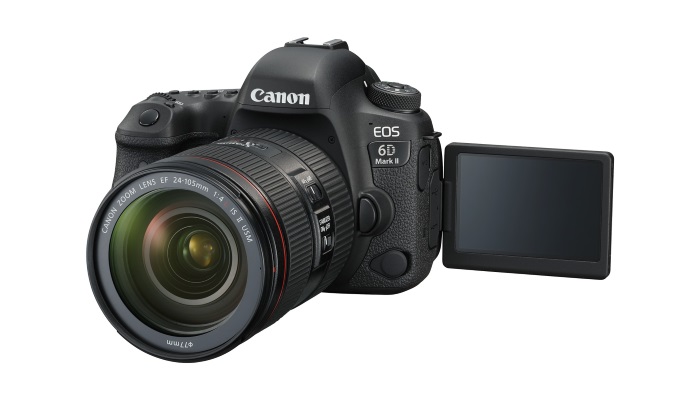
  • Best Full-Frame DSLR Expert: Canon EOS 6D Mark II
  • Best Mirrorless CSC Enthusiast: Canon EOS M50
  • Best Professional Compact Camera: Canon PowerShot G1X Mark III
  • Best Photo Innovation: Canon Speedlite 470EX-AI
  • Best DSLR Prime Lens: Canon EF 85mm f/1.4L IS USM

Lee Bonniface, marketing director, Canon Europe says: “We are extremely proud to be recognised and awarded with six prestigious TIPA awards. This global recognition highlights Canon’s ongoing commitment to creating the highest quality industry-leading products, so to meet our customer’s expectations, interests and technical capabilities. We are committed to continually developing new and innovative products that are trusted by our customers, photographers and videographers around the world, so that they can continue to tell and capture memorable stories.”

In honouring Canon’s award-winning products, the TIPA judging panel offered the following citations:

Best DSLR Enthusiast: Canon EOS 200D

If size is a decisive matter in choosing an interchangeable lens camera, Canon’s EOS 200D gives little ground to its mirrorless rivals. This very affordable and ultra-compact DSLR, available in kit form with an EF-S 18-55mm lens, incorporates an upgraded 24.2MP APS-C CMOS sensor with Dual Pixel CMOS AF. With both optical viewfinder and 3-inch Vari-Angle touchscreen LCD, the EOS 200D delivers up to 5 fps shooting, a nine-point AF system, a pop-up flash (plus hotshoe), and easy sharing on social media sites with built-in Wi-Fi, NFC, and Bluetooth connectivity. With both JPEG and RAW still capture capability, plus 1080/60p video, the camera offers a host of AF, exposure, scene, and auto-bracketing modes.

Best Full-Frame DSLR Expert: Canon EOS 6D Mark II

A full frame, full-featured DSLR aimed at enthusiasts, as well as pros who seek a second compact and lightweight body, the full-frame EOS 6D Mark II includes an all-new 26.2MP sensor with Dual Pixel CMOS AF technology that aids AF during live view and movie shooting. The camera has a normal ISO range of 100-40,000, and up to ISO 25,600 when shooting full HD 60p video. It can deliver up to 6.5 fps when using the optical finder and 4 fps when working with the 3-inch, fully articulating Vari-Angle touchscreen LCD. The EOS 6D Mark II features several connectivity options, with Wi-Fi, NFC and Bluetooth, plus there’s a built-in GPS. Focusing is fast and reliable thanks to up the optical viewfinder’s 45 cross-type AF points.

Best Mirrorless CSC Enthusiast: Canon EOS M50

4K video in an entry-level camera, characterised as affording an easy path from a smartphone to using a real live camera and all the potential creative image-making that entails, the Canon EOS M50 sports a 24.1MP APS-C CMOS sensor, with improved Dual Pixel CMOS AF and a built-in EVF. The M50 delivers quality images in low light conditions and can record 4K video, as well as HD at 120p. The body is small and lightweight, with a Vari-Angle touchscreen LCD. When it comes to sharing and connectivity, an important part of encouraging smartphone photographers to convert, the EOS M50 has Wi-Fi, NFC, and Bluetooth, plus the capability to automatically transfer images to a smartphone as they are taken.

 Best Professional Compact Camera: Canon G1X Mark III

A compact for professionals and enthusiasts alike, pros and advanced photographers often seek a “second camera” that will meet their quality expectations while being lightweight, portable, and perfect for travel. The G1X Mark III meets these criteria with a 24.2MP APS-C CMOS sensor with Dual Pixel CMOS AF, a 3-inch Vari-Angle touchscreen LCD, a 2.36 million dot OLED EVF, Full HD video, optical image stabilisation, and an integral 2472mm (equivalent) lens. The camera can deliver up to 7 fps shooting rate, ISO range is ISO 100-25,600 and is both dust and moisture resistant. USB charging capability adds another versatile convenience factor for on-the-go photographers.

 Best Photo Innovation: Canon Speedlite 470EX-AI

The Canon Speedlite 470EX-AI automatically pivots to create an optimal angle of bounce for portrait photography by using a pre-flash to initially calculate flash-to-subject distance, then the distance to the ceiling, and finally moves the flash angle to the correct position. This shift adjusts to vertical or horizontal camera position and includes an AF assist with coverage from 14mm and 24mm to 105mm focal lengths. In all, the Speedlite is a major step forward to helping beginners achieve better results, and may also be adopted by wedding and event photographers as an additional tool.

Best DSLR Prime Lens: Canon EF 85mm f/1.4L IS USM

A fast, versatile professional lens with Image Stabilisation, ideal for studio and location portrait, candid and nature photography. The EF 85mm f/1.4L is Canon’s first 85mm prime L-Series lens to incorporate Image Stabilisation that delivers up to 4 stops of compensation, which adds low-light capability to handheld image capture. This dust and water-resistant lens has a 9-bladed circular aperture for beautiful bokeh effects, especially when utilising its 0.85m (2.79 ft) minimum focusing distance at wide apertures. AF is fast and responsive due to “Ring USM” technology and rear group focusing. The lens is composed of 14 elements in 10 groups and delivers corner-to-corner sharpness aided by a moulded glass aspherical lens and Canon’s anti-reflective Coating technology.

The 2018 TIPA World Awards ceremony will take place at Photokina in Cologne, Germany on Wednesday, 26 September 2018.

For more information visit the Canon website or follow Canon on Facebook, Twitter, Instagram or LinkedIn.

Canon appoints new president and CEO for EMEA

Canon EMEA, a global provider of imaging technologies and services, has announced Yuichi Ishizuka as the new president and CEO for Canon Europe, Middle East and Africa (EMEA), succeeding Rokus van Iperen who is retiring after six years in the role.

Rokus van Iperen, outgoing EMEA CEO and senior managing executive officer, Canon Inc., was appointed president and CEO of Canon Europe in 2012 following a distinguished career at Océ NV. Initially tasked with ensuring a smooth integration of Océ into the Canon business, he successfully presided over several other significant acquisitions to enable the company’s digitisation strategy. He is also credited with building a solutions focused portfolio and establishing the foundation of new businesses in high growth areas such as network visual solutions (NVS).

Yuichi Ishizuka, previously president and COO for Canon USA, assumed his new responsibilities as president and CEO of Canon EMEA effective from 1 April. He takes over an organisation that has operations in 120 countries, employs approximately 18,000 people and contributes about a quarter of Canon’s global revenues annually.

Ishizuka, who is also a managing executive officer of Canon Inc., is tasked with bolstering and growing existing core businesses whilst capitalising on the brand’s imaging expertise in new areas such as NVS, industrial equipment and commercial printing. He brings a wealth of expertise and international experience from other regions having held senior positions across Canon’s portfolio of businesses in North, Central and South America, as well as Japan. His new role will be his first appointment in Europe.

“Canon is a clear leader in consumer and business imaging with millions of customers throughout EMEA, a region where we celebrated our 60th anniversary of operations last year,” says Ishizuka. “I am honoured to be leading this team through the next phase of innovation and growth at what is a very exciting and dynamic time for the company.”


Canon’s interchangeable-lens digital cameras maintain No. 1 share of global market

Canon’s interchangeable-lens digital cameras (digital SLR and compact-system cameras) have maintained the No. 1 share of the global market for 15 consecutive years1, from 2003 to 2017.

Canon develops the key components featured in its interchangeable-lens cameras—CMOS image sensors, image processors and interchangeable lenses—in the pursuit of “Speed, Comfort and High Image Quality, the core concept of the EOS series.” The company effectively responds to the needs of a wide range of users through its extensive line-up of cameras, catering to all levels of photography from beginner to professional and a total2 of 93 EF series interchangeable lenses.

In 2003, the dawn of digital SLR cameras, Canon introduced its breakthrough EOS 300D digital camera. This groundbreaking camera, which was competitively priced and featured a compact, lightweight design, captured the top share of the global market and set the stage for growth in the digital SLR market. Since then, Canon has continued to launch a range of groundbreaking products, including the professional-model EOS-1D series and the EOS 5D series, which paved the way for digital SLR video recording. The company has further bolstered the EOS line-up by continuing to introduce new products including accessories, interchangeable lenses and the EOS M series of compact-system cameras. During 2017, Canon introduced the EOS 6D Mark II as part of an impressive line-up of interchangeable-lens camera products3 that supported the company’s achievement of a 15th consecutive year at the top of the global market.

Canon will continue to refine its diverse imaging technologies based on its core optical technology, combining still-image, video and network capabilities to expand and create an even stronger EOS System that meets the needs of increasingly diverse users to promote the spread of photo and video culture. What’s more, thanks to advances in imaging technology, Canon is opening-up new expressive avenues, where texture, three-dimensionality and a sense of realism can be recreated in both still images and videos, to support appealing imaging experiences.

Footnotes:

1 Based on a Canon survey.

2 Includes two EF lens extenders and fourteen EF Cinema Lenses (as of March 28, 2018).

3 A total of six digital ILC cameras were released in EMEA in 2017: The EOS 77D, EOS 800D and EOS M6, EOS 200D, EOS 6D Mark II and the EOS M100.

Canon launches ARCUS Global Inc.

Canon, world-leader in imaging solutions, recently announced a new Video Cloud IoT as a Service business based in California called ARCUS Global Inc. Owned by Canon Europe and built on the intellectual property, technology and expertise of Canon Group company, Milestone Systems, ARCUS Global Inc. will address the significant unmet global market demand from large enterprises for Video Cloud IoT as a Service for security and business optimisation.

Rokus van Iperen, President & CEO, Canon Europe, Middle East & Africa, said: “We have identified Network Visual Solutions (NVS) as a key pillar of Canon’s future growth and have already made important steps in this space including the acquisitions of Milestone Systems and Axis Communications. Our investment in ARCUS Global Inc. is the latest demonstration of our commitment and strategy to strengthen our position in this rapidly developing market.’

Lars Thinggaard, President & CEO, Milestone Systems, said: “We are proud to deliver the technology and know-how that ARCUS Global Inc. will use as their foundation. The spin-off allows us to continue to grow Milestone’s leadership position within on premise and private cloud video management solutions, where we continue to increase our investments.’

Lars Nordenlund Friis, CEO of ARCUS Global Inc., said: “We are excited to launch our new company today and to introduce Video Cloud IoT as a Service not currently offered to the global enterprise market. We have a clear competitive advantage by drawing on the strengths of Milestone Systems and partnering with global leaders in public cloud infrastructure and IT technology. To maximise that advantage, we’re basing ourselves in California and we are now on a major recruitment drive to bring new highly-skilled employees into the business.’

The new company will target an addressable global public cloud video management services market that is estimated to be worth between $10 & $20 billion by 2021*.

For more information visit the ARCUS Global website.

- Advertisement -
- Advertisement -
- Advertisement -

Pin It on Pinterest