


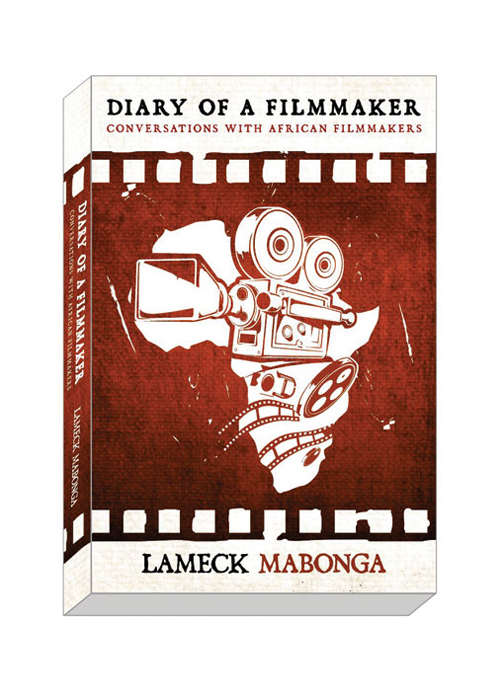
South African filmmaker, camera operator and sound recordist Lameck Mabonga
recently launched a self-published book intended to offer aspirant filmmakers a
guide to all aspects of Africa’s film industry, by way of a series of conversations
with established industry professionals, from producers to cinematographers,
directors, editors and actors.
Titled Diary of A Filmmaker – Conversations with African Filmmakers the book was
four years in the making and is intended as “a powerful toolkit designed to educate
and equip filmmakers in Africa and beyond. This is a conversational journey with
real life moments from people who have made a name for themselves in the
industry and their work has followed them and inspired many, some of them
without attending film school.’
Mabonga, whose own career has developed through a combination of formal
education (at AFDA), self-teaching and on-the-job experience, noted early on that
there were no decent books available that could introduce newcomers to the
specifics of Africa’s film and television industries. “There are a lot of American
books and they are all theory,’ Mabonga explains. “I envisioned a book that is very
practical and simple. If you are passionate about writing, you can go through the
chapter on scriptwriting and at the end of that, you should have an idea of how to
put a script together. No one can teach you how to write – you either have it or you
don’t – but the book offers the essential guidelines on how to go about it’
The concept of the book was modeled on the self-help books of Napoleon Hill.
Writing from the 1930s to the 1960s, Hill published several guides to success and
wealth creation, drawn from interviews with some of America’s self-made
millionaires. Inspired by this concept, Mabonga, spent a number of years
interviewing successful film industry personalities to try and find out how they
achieved success in their particular fields. Among the interviewees were actor/
writer Jonathan Pienaar, cinematographer David Forbes, director Adze Ugah,
producer Harriet Gavshon and actor Jamie Bartlett, to name a few.
Among the topics covered by the book are:
- Scriptwriting – from concept to screenplay, including the proper industry standard
format - Keys to engaging and relevant storytelling
- The skills and challenges involved with selling scripts to broadcasters and
investors - The importance of performance
- The art of cinematography – the basics of telling a story using light and
images - Some survival tips to sustain oneself in the industry
- The power of networking on set
- Financial management
“The most important thing I have learned from the experience of writing the book is
that, as a filmmaker, you are always a student of life,’ Mabonga concludes. “No
matter how much you learn, how much you think you know, always humble yourself
and always be prepared to learn something new.’
Diary of a Filmmaker can be pre-ordered on the dedicated website here.
By Warren Holden


