


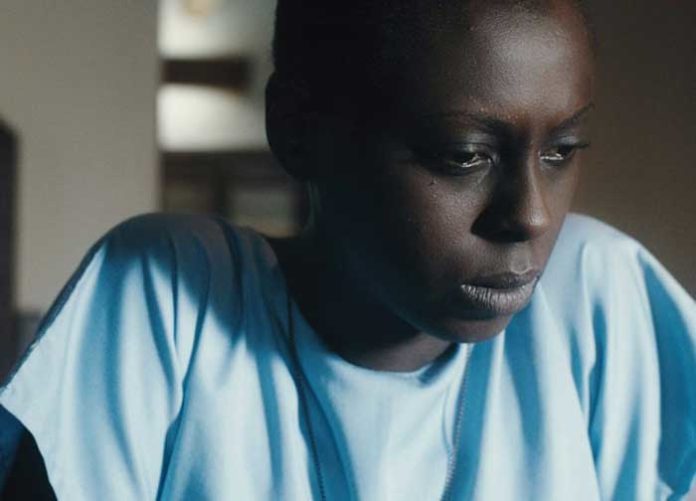
Directed by multi-talented creative Mbithi Masya, Kati Kati, a film that explores the universal themes of loss and forgiveness, had its world premiere at the 2016 Toronto International Film Festival (TIFF) where it won the International Federation of Film Critics (FIPRESCI) award for the Discovery programme.
A member of the alternative house/funk/disco ensemble, Just A Band, Masya says that although he grew up a cinephile, it had never really occurred to him that he could or would be a filmmaker. But, it was his experience with Just A Band that paved a path for him in filmmaking: “My work as a member of the art collective, Just A Band, really opened up my mind to all the creative possibilities possible through film. From working on the group’s music videos, concert visuals, video art exhibition, it felt like a natural step to move into long form storytelling.”
Kati Kati is Masya’s debut feature film and is produced through One Fine Day Films – an enterprise started by German filmmaker Tom Tykwer (Run Lola Run, Cloud Atlas) and his wife, producer Marie Steinmann-Tykwer, to nurture and promote emerging filmmakers in Kenya – along with the company’s Kenyan producing partners Ginger Ink. “The film is a part of a special Master Class initiative by One Fine Day Films and Ginger Ink Films, created to give African filmmakers a chance to create cinema and have their voices heard in spaces they might not usually be heard in. I was contacted by the producers of this initiative, and asked if I would like to develop a film project for them,” Masya explains.
Kati Kati follows Kaleche, a young woman who one day wakes up in the middle of the wilderness with a complete loss of memory – including her identity. Lost and confused, she makes her way to a lodge in the middle of the vast open space, called Kati Kati. There she meets a miscellaneous group of residents who reveal to her that she is in fact dead. Among the lodge’s occupants is group leader Thoma, a functioning alcoholic and Kati Kati’s longest standing resident. Soon Kaleche and Thoma strike up an intense friendship and her forgotten past begins to unravel, as does Thoma.
Masya says that the film’s premise came to be as a result of his own sorrow while dealing with a personal loss: “Sarika Lakhani, one of the executive producers on the film, contacted me to work on the project at a time when I was grieving the loss of a close friend. And the film’s ideas were born from the meditations and thoughts I was having at the time concerning my own life and how I had been living up to that point.”
From that foundation, Masya and his co-writer Mugambi Nthiga developed the story and wrote the screenplay while receiving guidance from some of the mentors afforded to them through the project. “Our biggest challenge was time as we had about three and a half months to get the screenplay done. And as luck would have it, we had a revelation four days to shooting and ended up rewriting two thirds of the script the weekend before we left for set,” he comments.
The film was shot over three weeks in February of 2015, at a single location – the Galana Crocodile Camp – a lodge on the banks of the Galana River of Kenya in the Tsavo National Park. Masya says that the small production crew boarded at the camp for the entire period of the shoot which provided them with the opportunity to come together as a team and bond. “We had our own little Kati Kati experience,” he quips.
Primary shooting was carried out by DOP Andrew Mungai using an ARRI Alexa Plus, selected for its flexibility when working in natural light and high contrast exterior scenes, as the crew travelled with a very limited lighting and grip package. The visual aesthetic and feel of Kati Kati was developed with the ethereal in mind. The filmmaker wanted it to feel “otherworldly and claustrophobic,” using this to inform the majority of the film’s set ups. “And then we worked in the grading suite to push the colour of the film to a place that was colder and slightly alien,” Masya adds.
Masya says that thus far the reception to his debut feature has far exceeded any expectations he may have had for it. “I had no hopes but the film has already done way more than I could ever have dreamed and hoped for. Winning the FIPRESCI award as a first time filmmaker at TIFF is a definite highlight. Right now, my only hope is that as many people as possible see it.”
Kati Kati was picked up for world sales by Germany’s Rushlake Media. And for now, it keeps travelling through the festival circuit. “And I hope audiences will get to see it in a cinema near them,” concludes Masya.
Credits:
- Director: Mbithi Masya
- Writer: Mbithi Masya and Mugambi Nthiga
- Producer: Sarika Lakhani, Ginger Wilson, Katja Lebedjewa and Tom Tykwer
- Cinematographer: Andrew Mungai
- Editor: Louizah Wanjiku
- Casting: Kamau Wa Ndung’u
- Production designer: Emmanuel Mraby
- Costume designer: Ayako Bertolli
- Makeup by Valary Mdeizi
- Original music score: Sean Peevers and Ibrahim Sidede
