Home Authors Posts by Triggerfish Animation Studios Press

Triggerfish Animation Studios Press

33 POSTS 0 JOBS
Triggerfish Animation is Africa's leading character animation studio & the producers of 'Adventures in Zambezia' & 'Khumba'.

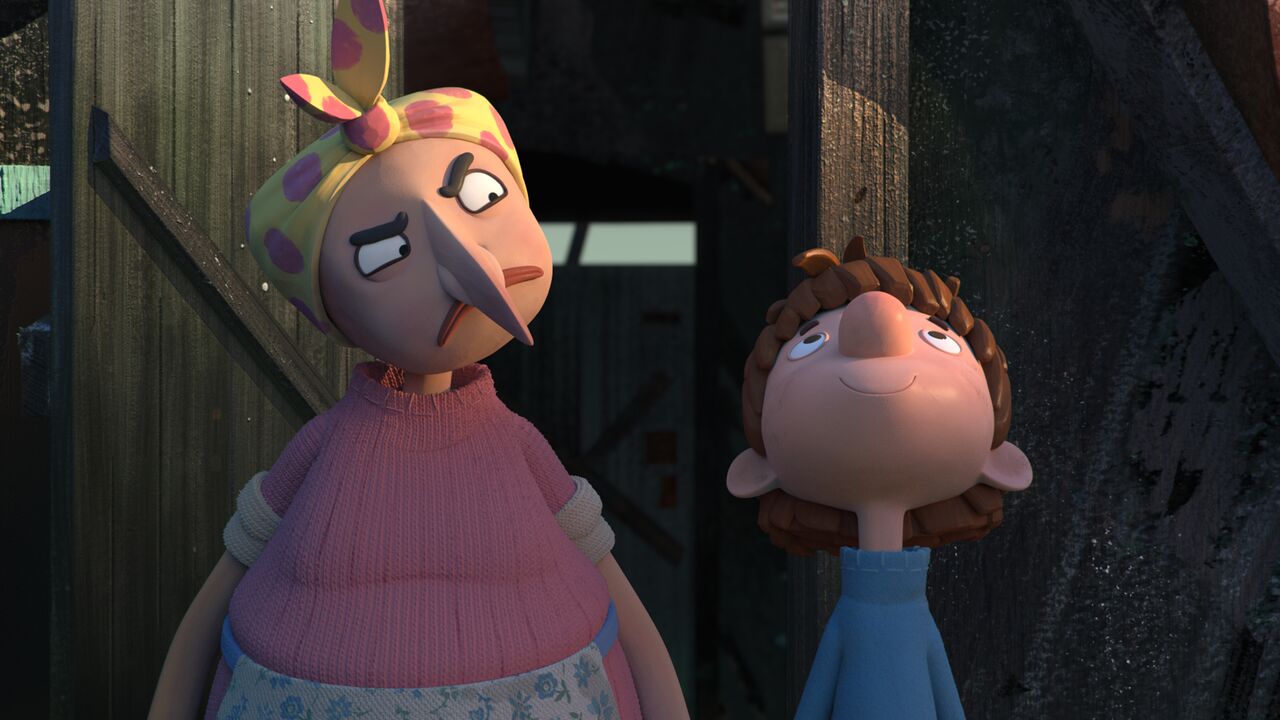
Revolting Rhymes’ animators anticipating Tuesday’s Oscar nominations


Revolting Rhymes is one of 10 animated short films shortlisted for an Oscar, selected from 63 qualifying films. The five finalists will be announced this Tuesday, 23 January 2018, with the awards scheduled for 4 March 2018 in Los Angeles. Other African-linked projects shortlisted include South Africa and Senegal’s foreign film entries, The Wound and Felicite, as well as Jane, set in Tanzania, in the documentary category;  the Ghana-set Kayayo in short documentaries; and the Kenyan-set Watu Wote in short films.

Directed by Jakob Schuh (Oscar-nominated for The Gruffalo) and Jan Lachauer (Oscar-nominated for Room on the Broom) and co-directed by Bin Han To, produced by Martin Pope and Michael Rose, Revolting Rhymes is an adaptation of Roald Dahl and Quentin Blake’s classic book of surprising fairy tales. It’s voiced by a stellar cast that includes Dominic West (The Affair) as The Wolf; Rose Leslie (Game of Thrones) as Red Riding Hood; and Gemma Chan (Humans) as Snow White.

Produced by Magic Light Pictures, Revolting Rhymes was animated at Magic Light’s Berlin studio and Cape Town’s Triggerfish.  The film has already won 9 major international awards: the Cristal at Annecy in France, the world’s premiere animation festival; Best Animation at the BAFTA Children’s Awards; 2 awards at the European Animation Awards; Best Animated Short at TIFF Kids; Best Animation at the World Banff Media Festival in Canada; Best Storytelling at Shanghai International Film and TV Festival in China; the Children’s Jury prize at the Chicago International Children’s Film Festival and the Audience Award at Filmfest Munchen.

Revolting Rhymes is also nominated for a prestigious Annie Award on 3 February 2018 in Los Angeles; a British Animation Award on 15 March in London; and an International Emmy Kids Award, which will be presented in April 2018.

“When we started Triggerfish 21 years ago, there was no animation industry in South Africa, so it’s amazing to have worked on a film which is now on the Oscar shortlist, for directors whose work we’ve always admired,” says Triggerfish CEO Stuart Forrest. “This shows again that African animation is now among the best in the world and we hope it will inspire many more people across the continent to consider animation as a career path.”

Magic Light Pictures’ third collaboration with Triggerfish, The Highway Rat, premiered on BBC One this Christmas, reaching over 7.7m viewers. An adaptation of Julia Donaldson and Axel Scheffler’s bestseller, The Highway Rat is a swashbuckling tale of bandits and biscuits the whole family will enjoy. David Tennant (Doctor Who, Broadchurch) leads an impressive cast in the title role.

Stick Man, Magic Light Pictures’ previous Donaldson/Scheffler production animated at Triggerfish, also premiered on BBC One on Christmas Day in 2015, before going on to win critical praise and a raft of global industry awards including the Annecy Crystal and a BAFTA nomination.

Watch the Revolting Rhymes trailer.

Watch an excerpt from The Highway Rat.


Triggerfish wins first BAFTA from second nomination in two years

Revolting Rhymes won Best Animation at the BAFTA Children’s Awards held
on 26 November, beating off strong competition from The Amazing World of
Gumball, Shaun the Sheep
and We’re Going On A Bear Hunt.

Produced by Magic Light Pictures, Revolting Rhymes was animated at Magic
Light’s Berlin studio and Cape Town’s Triggerfish.

“It’s an amazing honour to win at Britain’s most prestigious awards,’ says Triggerfish
CEO Stuart Forrest. “We’re so proud of the team. This was the second year in a row
that we’ve been nominated for our work with Magic Light, so winning is further proof
that Africa is producing some of the best animation in the world.’

Revolting Rhymes is also nominated for three European Animation Awards on
8 December 2017 and Best Animation at the International Emmy Kids Awards, which
will be presented in April 2018. The two-part special has already won the Cristal for
Best TV Production at Annecy in France, the world’s premiere animation festival; Best
Animated Short at TIFF Kids; Best Animation at the World Banff Media Festival in
Canada; Best Storytelling at Shanghai International Film and TV Festival in China; and
the Children’s Jury prize at the Chicago International Children’s Film Festival.

Directed by Jakob Schuh (The Gruffalo) and Jan Lachauer (Room on the
Broom
) and co-directed by Bin Han To, Revolting Rhymes is an adaptation of
Roald Dahl and Quentin Blake’s classic book of surprising fairytales. It’s voiced by a
stellar cast that includes Dominic West (The Affair) as The Wolf; Rose Leslie
(Game of Thrones) as Red Riding Hood; and Gemma Chan (Humans)
as Snow White.

Magic Light Pictures’ third collaboration with Triggerfish, The Highway Rat, is
coming to BBC One this Christmas.

Watch the Revolting Rhymes trailer:

Triggerfish partners with CAKE for Mama K’s Super 4 animated series

Leading kids’ entertainment specialist CAKE has announced its partnership with South Africa’s Triggerfish Animation Studios to co-produce comedy action series Mama K’s Super 4.

Triggerfish, whose credits include features Adventures in Zambezia and Khumba as well as Stick Man and Revolting Rhymes, will partner with CAKE to further develop, finance and produce the 26 x 22 minute 2D animated series, with CAKE ultimately leading the international roll out and distribution.

Aimed at 6-11 year olds, Mama K’s Super 4 is set in Lusaka, where four teenage girls are recruited by former secret agent Mama K to help her save the world. Fighting rich and powerful opponents with limited resources means Mama K’s Super 4 will have to be smart and resourceful in a show in which taking down the bad guys and turning in your homework is all in a day’s work!

Created by Zambian writer Malenga Mulendema, Mama K’s Super 4 pays comic homage to the superhero genre and draws visual inspiration from retro 90’s RnB and hip hop girl groups.

“We have been admiring Triggerfish’s work for some time now and are delighted to have been invited to join Mama K’s Super 4, a unique and entertaining project which brings a fresh look and approach to a classic action cartoon format,” says Tom van Waveren, CAKE CEO and creative director.

“Mama K’s Super 4 stood out among hundreds of TV shows that we reviewed during the Triggerfish Story Lab, a continent-wide call for animated projects,’ says Triggerfish’s head of development, Anthony Silverston. “In her pitch, Malenga said that, growing up, she’d never seen herself reflected on screen in an animated show, and with CAKE, we’re glad to have found a bold partner who has embraced her vision for a show centred on four innovative African girls.”

You think you know the Triggerfish story? You don’t. The real one’s much more gory

Triggerfish Animation is 21 years old this year. The Cape Town animation studio has established itself as one of the leading feature film exporters in the emerging markets, with nine million cinema tickets sold globally and overall viewership of their feature films in the hundreds of millions. CEO Stuart Forrest looks back on the fairy tale highs and nightmare lows of building one of the world’s most successful platforms for packaging and exporting African creative excellence.

At the time I joined in 2003 as a junior stop-frame animator, Triggerfish was a small stop-frame studio run by Jacquie Trowell and Emma Kaye, which had just been awarded two seasons of animation for Sesame Street. The Sesame Street project had given Triggerfish an international credibility unprecedented in the South African animation landscape, so when an opportunity came along for me to become a partner, I jumped at it.

I borrowed money from friends, family and banks, and myself and colleague James Middleton became co-owners of Triggerfish. James brought his technical expertise and helped convert the studio from film-based production to full digital. But it became clear that the stop-frame landscape had dried up in SA, and for a year we couldn’t find any work at all.

While waiting for the phone to ring, I started a website called Animation SA to build a database of all the animation professionals in South Africa. In those days there wasn’t much of an animation industry at all, but within months we had over a thousand members, which was much higher than anyone had anticipated.

After a painful year of paying overheads on the studio rental, and getting deeper into personal debt, we were forced to liquidate most of our equipment and cancel our studio lease. The original owners of Triggerfish resigned. I produced a new commission for Sesame Street from my living room and kitchen, but the income could barely support the production costs.

So when I was offered a job working for another animation studio directing a TV special, I grabbed the opportunity and Triggerfish became dormant. The TV special ran into its own problems, and I was fired from my role there, along with the head of production, Mike Buckland.  Mike was an extraordinary computer generated (CG) animator and a genius at problem-solving and building teams.

With another animator, Anthony Silverston, the three of us decided to revive Triggerfish and relaunch it as a CG company.  Anthony had recently won a national competition for his feature script, Khumba, and had a deep passion and great instinct for story craft.  Most of all, the four partners (including James) shared a commitment to excellence at all costs.

Feature films

The owners of the TV special (which was called Zambezia) wanted to keep working with us to get it produced as a feature film – provided we could raise the money – so we found ourselves with a shell company, and a teaser with a first draft of a feature script but no funding.

Our new CG department started producing a series of commissioned 10 to 30 minute films, which helped us to develop a CG pipeline and earned enough money to support my fulltime job – raising money for Zambezia.  Even though the budget we were looking for was miniscule compared to the US animated movies, raising money was hard for a small studio from Africa who had no experience in producing feature-length animation, and even less in international film distribution.

Looking for a partner who could bring credibility, I spoke to Michael Rose, who produced some of my favourite films, including Chicken Run and Wallace and Gromit.  Michael was supportive and gave script notes, but wasn’t able to commit to a role on the film.

After about two years of hustle, we found a sales agent, CMG, who agreed to pre-sell the movie to distributors – an essential part of the funding process, which gives investors comfort that the film can recoup its budget.

We did very well on the presales and CMG introduced us to gap financiers who provided the budget shortfall (at a price!).  With the IDC, NFVF, DTI and the gap – plus major fee deferments from us – we were fully funded.

It was an exhilarating time, even as we faced considerable scaling issues – we grew from eight to 80 people in two months.  The Animation SA website proved to be a terrific asset – within days we had over six hundred job applications for the film. We hired and hired and hired – technical people, production designers, receptionist, riggers, animators… it was a huge undertaking.  We built our dream animation studio, handpicking the best talent in the country.

We had lots of fun making the movie, crafting the story points in endless workshops, designing the sets and characters and working with Hollywood celebrities – living the dream!  The team came from all over South Africa and had extraordinary skill despite their very shallow experience levels.

Making an animated feature film is logistically insane.  The director had to make 36 000 approvals to move the 1 503 shots through all eight departments – not counting reworking and story changes.  Each animator created an average of 1.3 seconds of final animation per day. At full capacity, we had to line up 680 hours of work every day for the crew to be working optimally.  At times we had people drawing storyboards at night for animation the next day, and the director, Wayne Thornley, had to deal with notes from producers, investors and distributors, as well as a ridiculously low budget and a generally inexperienced crew.

Somehow, the picture was finished and the thrilling finale was mixing the sound and orchestra at Skywalker Sound in San Francisco – spotting Brad Bird and David Fincher in the canteen, and having George Lucas wander around the corridors visiting his Oscars.

Shortly after starting Zambezia, we got our second feature funded. Khumba was a big improvement technically as the team was more experienced and they were getting better and better.  Triggerfish was gaining momentum, attracting the best artists in the country and building a reputation for delivering production value far beyond budget expectations.

After the Los Angeles premier, Zambezia got picked up by Sony in all available English-speaking territories – a first-class distributor.  The first cinema release was Russia, where it opened at number two and earned $5.8 million at box office – more than the entire budget.  It was dubbed into 25 languages and released theatrically around the world, smashing records for a South African-owned film since The Gods Must Be Crazy!  We were thrilled.

Realising we had a financial weakness, and in preparation for the deluge of money we thought we’d be receiving, we signed up a fifth partner with a financial background, Jean-Michel Koenig, an accountant poet with a film finance background and an ambitious vision for the company.

Khumba finished at last, and our team was up to 107 people, all deeply talented, experienced and tightly efficient after two feature productions together. Khumba premiered in competition at Annecy to a standing ovation. We got press on CNN, BBC, Forbes and all the major media.  William Morris Endeavor (WME) – the Beverly Hills superagency who represent Oprah and Charlize and half of Hollywood – contacted us and we got signed up.  After years of singular, focused effort, we’d achieved international recognition.  WME introduced us to some of the key people in Hollywood. Everything was going to be easier from here.

After Khumba 

During production of Zambezia and Khumba, we’d been trying to write a third script, but we’d been so busy with the films that it wasn’t ready for production and we hadn’t even begun the process of raising the funding.

So we had to let everyone go.  This was the hardest thing in the world to do – not just for the impact on the personal lives of the crew, but for the fact that we would have to start again after everyone had worked so hard to become a super-efficient team.

We borrowed development funding to write the next script and keep the lights on.  We were broke again and getting deeper in debt.  Again, we had no work for nearly a year, this time while carrying the overheads of keeping the facilities going.

We went out to potential investors, trying to raise money for Triggerfish so that we could develop more scripts and build out the company’s vision.  But despite our success, we discovered that the six-year feature film turnaround time and the high risk made the investment hard to sell.

Khumba finished its release around the world, but despite doing exceptionally well in certain territories, it had to compete with an increasing number of studio animated films and Disney’s smash hit Frozen, which just wouldn’t let go of the cinemas.

Then we had the crushing news that our largest distributor on Khumba went bankrupt, which meant we lost nearly half our expected income.

We also discovered how “Hollywood accounting” works – exorbitant expenses outweigh reported earnings, so that distributors drastically reduce payments to the producer, meaning that, despite both film’s worldwide success, to date we’ve not earned anything from the release of these films.

After a year, we found ourselves back at square one, with mounting debt and no work, and I had to sell my house to survive.  I had to decide whether it would be better to shed the overhead of running a company, let go of our expensive lease and aging equipment and move operations back home, or hang in there a while longer.

New Partnerships 

Just as things were looking at their worst, Michael Rose – who’d seen Khumba at Annecy – asked for Triggerfish to quote on Stick Man – a 26-minute short film for BBC’s Christmas programming, produced by Magic Light Pictures.

We pulled the team back together (with some shiny new recruits) and produced an exquisite short film that went on to win awards around the world, including best TV production in the world at the Annecy Animation festival. It was nominated for a BAFTA and recently collected four Kidscreen awards – including Best TV special. 

After Stick Man, we collaborated with Magic Light Pictures on more BBC Christmas specials, including Roald Dahl’s Revolting Rhymes, and are currently in production on Highway Rat.

We still had to deal with our lack of original scripts to put into production, so we put together a programme that partnered with the DTI, DSTV and Disney to find the best animation writers on the continent – which we called The Story Lab.   Although the funding later collapsed – which brought considerable challenges and heartache with it – the program has been a huge success and we now have a network of 1 300 writers from 30 different countries on the continent, and we’re in full development on four TV series and four feature films from this group – some of them with high-profile distribution partners already in place.

This year we’re launching Animate Africa, a new programme to find the best directors and animators on the continent, and find ways for them to make their films. I don’t know where it will end up, but I’m excited to take the next journey. I’ve worked with incredibly talented people, and I’m meeting more talented people all the time. It’s our vision to connect our networks and production experience to the top creators on the continent, to produce films and TV series that will show that our country and continent is bursting with talent and is ready to bring our stories to the world.

Over the next 20 years Triggerfish intends to produce 15 more feature films, each one better than the one before.  If we can keep our focus and intent, there’s no reason we can’t one day produce a film that stands shoulder-to-shoulder with the best animated feature films, and establish ourselves as the leading independent animation studio in the world.

By Stuart Forrest, CEO, Triggerfish Animation

A great idea is nothing without a well-crafted pitch

As co-producer of Adventures in Zambezia, Khumba, and most recently the Triggerfish Story Lab, I have had the privilege of being front and centre as I have watched the South African animation industry grow.

Based on what I have seen abroad, there is a genuine increase in demand for fresh and diverse content at international TV and film markets. As Africans, this is our competitive advantage, which will differentiate us from the rest of the world and breathe fresh life into our animation industry.

Since launching the Story Lab, I have seen more than 1 500 unique project pitches, projects that African creators believe would be great animated feature films or TV series. This experience has taught me that while our creators have some very unique stories to share, there are still some things we could learn about presenting our projects (and ourselves) in a more succinct but impactful manner to the international buying audience. Here are some things I have learnt along the way.

You have a great idea?

Well, that’s the easy part. Everybody has an idea. The tough part is following through on that idea and creating a concept that stands out in a crowd.

So, before you put in months and even years of work, test the idea. You will be too close to your material to make any kind of objective analysis of its potential. It’s not whether you think your script is great, but whether other people do. Especially people who are in a position to offer you a deal.

Before sending off or pitching your concept or script:

Have your concept or script read by people whose opinions you respect. Do they genuinely respond to the concept and do they want to know more? If you have a script, offer it to a mix of acquaintances – young, old, male and female. Other writers are a great place to start.

Weigh all feedback before making changes.  Keep in mind everyone will have an opinion about your concept or script.  But if 80 per cent of your readers think a certain character is flat and lifeless, chances are that character is flat and lifeless.

Hold nothing sacred. The issue isn’t whether or not you like what you’ve written, but if other people see the potential of investing in the project.

Know who the project is for and what the ideal platform is. Understanding your core audience and the platform for your project is very much a part of development of the show. Don’t develop the project in a vacuum. Know the best home for your project and what the potential development consumer strategy may be.

Pitch perfect

You have spent a lot of time on your concept or script, so don’t blow it by being unprepared or winging it when it comes time to pitch your unique idea. Development executives hear hundreds of ideas a day, often preceded by “I have a good idea, and the world needs to see it.” While this may be true, you are not defending your art, you are selling it. Be clear on why you created these characters and this world. What makes them interesting? Why would an audience want to watch them? These are questions you should already know the answers to well before going in.

Who do you want to pitch to?  

Knowing this upfront will help you more clearly craft a pitch to suit this audience, possibly even saving you a lot of disappointment and hard-earned cash.

Typically potential partners include executives from broadcasters (e.g. Disney Channel), distributors and licensors (e.g. Freemantle Media) or producing partners (e.g. Magic Light Pictures). Be sure to do your homework. Don’t expect a response from someone if their vision is different to yours; find the right potential partners. To best capture their attention, you need to know what kind of movies/TV series this partner produces/distributes/broadcasts and who their audience is.

Some partners want to see the merchandising and licensing potential of a project from development, while others are looking for an artist to get behind on a unique comedy series.

Pitching opportunities

There are more than 250 international animation festivals and markets each year, with opportunities to pitch projects and enter competitions.

Apply online. Get nominated as a finalist to pitch. Get on a jet plane and go to the festival. Expect to pitch your project to a panel of experienced judges, made up of producers, distributors and financers, who take part in these pitching sessions to spot innovative and interesting projects.

There are other pitching opportunities at festivals. Once you have booked your ticket, start doing some research and find out which executives will be attending, then start reaching out to them via email.

  • Pre-arranged meetings are essential. You can’t simply arrive at their booth and request a meeting. Most executive’s schedules are full before they even arrive at the festival.
  • Speed pitching sessions. You need to sign up for these. You will be notified when and where. Typically you will be given a five-minute slot to pitch. Do these as many times as you can!
  • Informal events and networking opportunities. These have been created to bring people together with the potential of talking projects, industry and more. Smile, relax and enjoy these events. Don’t see this as an opportunity to pitch to complete strangers without some informal conversations. Don’t be desperate!

Know your projects audience. Your pitch needs to clearly show that you know who your audience is and how this project is a perfect fit.

Pitch your key points: concept, story and characters. That’s it. Anything more than that you are probably overselling your idea and possibly losing your audience. For TV series, pitch the project title and logline with the series synopsis and some episode ideas. If you have time and/or budget to explore the visual style for your concept, include one or two really great images in your pitch.

For a feature film, pitch the project title, the logline and the synopsis. A film poster or cover image would help your pitch, but this is not essential. Your pitch should be under five minutes. You want to make sure you capture their attention immediately and get to the point shortly after.

Do I need pitch materials?

Depending on the nature of the pitch, have something to share, whether a leave behind or at least get a business card so you can follow up afterwards.

  • A digital presentation. In a formal pitching session, you will be required to create a digital presentation to share with the judges and audience. This could be as simple as a PowerPoint or you could show videos, audio clips or other materials to maximise your pitch.
  • A one-pager. Successful informal and formal meetings would be enhanced with a leave-behind. Executives don’t want to carry massive pitch bibles around but if they really like your project, they will want a reminder.

A double-sided A5 leave-behind is ideal. Make sure the copy, visuals and design is succinct and clear.

Get a copy editor to help you ensure the words capture the tone and that the idea leaps off the page.

  • A pitch bible. This is typically only created if you have budget and time for visual and script development, as this process could take more than six months. The bible is made up of the synopsis, characters, friends and foes. The world will also be explored visually to a degree. You will need to also include at least six springboard ideas for potential episodes so that potential partners can get a sense of what a first season could look like.

Getting a potential partner interested is just the beginning. Expect months of negotiations, more development, and a lot of soul-searching to make sure your goals are aligned with potential partners.

By Vanessa Sinden, Triggerfish Animation Studios

South African animation up for BAFTA

Stick Man, Triggerfish Animation Studios’ collaboration with Oscar-nominated UK production company Magic Light Pictures, is one of four nominees for Best Animation at the British Academy of Film and Television Arts (BAFTA) Children’s Awards.

Directed by London-based Jeroen Jaspaert and co-directed by South African Daniel Snaddon, Stick Man is up against Cartoon Network’s The Amazing World of Gumball, Aardman Animations’ Shaun The Sheep: The Farmer’s Llamas, and Disney’s Counterfeit Cat.

Animated in Cape Town, Stick Man is an adaptation of 2015’s number one bestselling backlist picture book, by Julia Donaldson and Axel Scheffler (The Gruffalo).

“Stick Man lives in the family tree with his Stick Lady Love and their stick children three,’ until he’s taken further and further away from home on an epic adventure across the seasons. He runs from a playful dog, gets thrown in a river, escapes from a swan’s nest, and even ends up on top of a fire, as he tries to get back to his family in time for Christmas.

Martin Freeman (The Hobbit) voices Stick Man, with Hugh Bonneville (Downton Abbey) as Santa, Jennifer Saunders (Absolutely Fabulous) as the narrator, and Rob Brydon, Sally Hawkins and Russell Tovey completing the all-star voice cast.

The BAFTA nomination is just the latest accolade for the 26-minute short film, which has won seven international awards on three continents so far, including the Cristal for a TV Production at the world’s leading animation festival, Annecy.

Stick Man premiered on BBC One last Christmas to nearly 10m viewers. Triggerfish is finishing off its second BBC One Christmas collaboration with Magic Light Pictures, Roald Dahl’s Revolting Rhymes, and is underway on a third, The Highway Rat, another Donaldson/Scheffler adaptation.

Triggerfish to animate Julia Donaldson and Axel Scheffler book

Triggerfish Animation Studios is animating an adaptation of The Highway Rat, a 2011 children’s book by the UK’s number one picture book author/illustrator team, Julia Donaldson and Axel Scheffler.

Set to premiere on BBC One for Christmas 2017, the half-hour animated special is the tale of a greedy rat who tyrannises animals along the highway, as he steals their food at every opportunity: clover from a rabbit, nuts from a squirrel, and a leaf from some ants. He even steals his own horse’s hay. However, what he really craves are cakes and all things sugary, and it’s his sweet tooth that finally leads him to a sticky outcome.

The Highway Rat is being produced by Michael Rose and Martin Pope of Magic Light Pictures, the Oscar-nominated and BAFTA-winning production and brand building company.

This will be Triggerfish’s third BBC One Christmas collaboration with Magic Light Pictures in three years, building on the success of last year’s Donaldson/Scheffler adaptation, Stick Man, and this year’s eagerly-anticipated adaptation of Roald Dahl’s Revolting Rhymes.

On BBC One last Christmas, 9.3m viewers watched Stick Man, which had an overall 41% audience share and was the fourth highest rated programme of the day. Stick Man became 2015’s number one bestselling backlist picture book and fourth bestselling picture book overall, while the animated adaptation won critical praise and a raft of global industry awards, including:

• the Cristal for a TV Production at the Annecy Animation Festival, France
• the Magnolia Award for Best Animation at the Shanghai TV Festival, China
• Rockie Award for Animation at the Banff Word Media Festival, Canada
• Audience Choice Award & Best Animated Film at the Singapore International Children’s Film Festival
• Best Voice Performance for Martin Freeman, British Animation Awards

Stick Man director Jeroen Jaspaert will again helm The Highway Rat, which marks the fifth adaptation by Magic Light Pictures of a Donaldson/Scheffler children’s book, after Oscar-nominees The Gruffalo and Room On The Broom, and Annecy winners The Gruffalo’s Child and Stick Man.

Michael Rose, co-founder, Magic Light Pictures, says: “We’re delighted to be working with Triggerfish again on our next Donaldson/Scheffler title for BBC One, a swashbuckling tale of bandits and biscuits for all the family to enjoy. Triggerfish produce work of the highest quality and we’ve had a great experience with them on both Stick Man and Revolting Rhymes.’

The Walt Disney Company licenses Triggerfish Story Lab short

Triggerfish Animation Studios is releasing A Dogshow with Cat, a South African animation short that has been licensed by The Walt Disney Company.

A Dogshow with Cat is the first animation to come from last year’s Triggerfish Story Lab, established by Triggerfish with the support of South Africa’s Department of Trade and Industry and The Walt Disney Company.

The Story Lab’s continent-wide search for animated African stories received nearly 1400 entries from 30 countries across the continent. Triggerfish selected four features and four TV series for development, after input from Disney and the likes of Aardman’s Oscar-nominated co-founder Peter Lord and The Lion King writer Jonathan Roberts.

A Dogshow with Cat is a teaser for Mike Scott’s series of the same name, which is set in the South African outback and is about the madcap antics of a sophisticated dog and his best friend, a feral, obsessive-compulsive cat.

The three-minute short is part of Disney XD FC (#DisneyXDFC), a series of football-themed shorts commissioned from leading animation talent across Europe, Africa, Latin America and the United States. A Dogshow with Cat is the only short included from Africa.

Scott is best known for his animated music videos for South African DJ duo Goldfish, which have over 17 million views on YouTube.

A Dogshow with Cat is Mike’s second collaboration with Triggerfish, following on from Moosebox, which was part of the 2013-2014 Nickelodeon International Animated Shorts Programme.

Triggerfish Story Lab selects eight finalists

With support from the Department of Trade and Industry as well as the Walt Disney
Company, Triggerfish Animation Studios’ Story Lab initiative aims to develop African
storytellers to produce animated content for an international audience.

“Stories are the lifeblood of our business,’ says Anthony Silverston‚ who heads
development at Triggerfish. “We know that there are many writers/directors on the
African continent with talent who have not had the opportunities to create stories
for the world market. Our aim is two-fold: to identify exceptional talent and to
provide them with the right opportunities and support through our network and
infrastructure – with the ultimate aim of going into production. We have a long-term
vision to create a slate of original feature films and to expand into television series
production.’

After launching in July 2015, the initiative garnered 1 378 entries from 30 African
countries and produced a shortlist of 35 feature film and TV series projects. The
selected project creators then attended a two week masterclass in Cape Town
hosted by Orion Ross‚ vice president of Animation & Digital Content for Disney
Channels Europe, Middle East and Africa; and Pilar Alessandra, a Hollywood
screenwriting instructor and expert in pitching and story analysis. In December
2015 the final eight projects were announced.
Silverston comments: “Picking the final projects was extremely difficult because
there were a lot of factors to consider and our experts – both international and local
– all had quite varied feedback. I think this pointed to the fact that there were a lot
of worthy submissions, any of which could credibly be developed into a successful
project. I’m excited by the final slate and I’m still hoping that there are ways for us
to remain involved in the development of the other projects too.’

The final feature film participants are: Ian Tucker (South Africa) for Dropped;
Wanuri Kahiu and Nnedi Okorafor (Kenya/Nigeria) for The Camel Racer; Naseem
Hoosen (South Africa) for The Wild Waste; and Kay Carmichael (South Africa) for
Lights. The final TV series participants are: Malenga Mulendema (Zambia) for KC’s
Super 4; Mike Scott (South Africa) for Bru and Boegie; Lucy Heavens (South Africa)
for Wormholes; and Marc Dey and Kelly Dillon (South Africa) for Ninja Princess.

For 28-year old participant Naseem Hoosen the Story Lab process has felt like
coming home: “So often creative people can be guarded about sharing our ideas
(often rightfully so) but the Story Lab helped break down so many of those
barriers.’

Hoosen believes his project, The Wild Waste, made the final cut because the story
is accessible and speaks to his personal experiences growing up in South Africa.
“There’s a strong afro-futurism influence in there and I think it offers the animators
a chance to do something original and beautiful,’ he says.
TV Series finalist Mike Scott, a 33-year-old seasoned animator, says the Story Lab
is a fitting platform to take his project Bru & Boegie, which has been in
development for about 13 years, to the next level. “I’ve been punting my own work
for about 10 years now and this is a major opportunity to give an IP a great chance
at becoming a fully-fledged TV show or movie.’

Silverston says Triggerfish is aiming to have initial story pitches ready for the
Annecy International Animated Film Festival and then move into the next phase of
development, but notes that the development of the features will take some time.
“We’re likely to be working on the scripts for the next couple of years. In February
we’re all getting together in Los Angeles for two weeks to workshop the projects
with Disney experts,’ he comments.

By Carly Barnes

Triggerfish Artists short nominated for Writers Guild Muse Award

The Case of the Disappearing Daddy, a Triggerfish Artists short film,
has been nominated in the Animation/Web Series category at The Writers’ Guild of
South Africa’s third annual Muse Awards.

Directed by Kane Croudace, the animated short was made at Triggerfish over just
one weekend in 2014 for the 48 Hour Film Project. The Case of the
Disappearing Daddy
won Best Sound Design, was named Second Runner Up
overall, and received five other 48 Hour Film Project nominations, including Best
Writing.

Julia Smuts Louw led the writing team, which included Miro Kolenic, Candice
Johannes, Tom Kleinenberg, and Anthony Silverston, as well as voice actors Jason
Cope and Sarah-Jane Scott. They were limited not just by time, but also by the 48
Hour Film Project’s constraints: they had to write a family film and include a wet
sponge as a prop; a character Adriaan or Amy Stemmet, a detective; and the line “I
thought it was you.’

Undaunted, the team devised a charming detective story about little Amy, whose
daddy goes missing during bath time. The four-minute short film went on to screen
at Shnit International Short Film Festival in 2015.

“Congratulations to all the writers,’ says Triggerfish CEO Stuart Forrest. “The
Writers’ Guild nomination is a remarkable achievement considering the time
pressures they were under.’

Forrest adds that part of Triggerfish’s mission is to create a platform for artists.
“We are constantly looking for ways to develop and promote the amazing talent
here, from hosting exhibitions to supporting their involvement in initiatives like The
48 Hour Film Project. Julia went on to be shortlisted for our Story Lab initiative with
The Walt Disney Company last year, out of nearly 1400 entries from 30 countries,
so we’re very proud of how she continues to develop her craft.’

Winners will be announced at The Muse Awards at the Soweto Theatre on 2 April
2016.

Watch The Case of the Disappearing Daddy here.

- Advertisement -
- Advertisement -
- Advertisement -

Pin It on Pinterest