Home Authors Posts by Jasco Press

Jasco Press

29 POSTS 0 JOBS
Jasco is a South Africa, JSE-listed company that delivers Smart Technologies across multiple disciplines such as telecommunications, Information Technology, Energy and Industry. By leveraging synergies between these disciplines, Jasco is able to deliver complete end-to-end solutions.

Jasco introduces the Leyard LED MultiTouch Video Wall

Jasco Broadcast has announced local availability of Leyard’s LED MultiTouch Video Wall, the industry’s very first completely seamless touch-enabled LED video wall. It is available in three sizes: 108-inch, 151-inch and 196-inch; and features up to 32 simultaneous touch points. This revolutionary new technology changes the game for professional broadcasters, and opens up numerous other collaborative possibilities across broadcasting, corporate applications and even within educational institutions.

“Thanks to patent-pending Leyard Pliable LED Touch Surface (PLTS) technology, these new video walls are not only smooth, seamless and lightweight, they are also highly durable. With up to 32 simultaneous touch points, multiple users can interact individually at the same time, without their experience being affected by what anybody else is doing. Aside from professional broadcasting studios, where the video walls can be used to enhance live productions such as sportscasting and weather forecasting, these video walls can also be applied in a corporate setting or at events to take customer presentations to the next level. There are also many possibilities for educational institutions to leverage the potential of these screens for interactive collaboration applications,” says Paul Divall MD at Jasco Intelligent Technologies.

One of the most important advancements of the Leyard LED MultiTouch Video Wall is the fact that it is completely seamless across the entire expanse of the screen, which offers enhanced visual performance with uniform colour and brightness. The anti-glare surface also eliminates distracting reflections, and the PLTS technology ensures the screen has no parallax effect, meaning that images remain consistent and true across the entire video wall both in direct and off-axis viewing.

“The Leyard LED MultiTouch Interactive Video Wall represents the latest in global broadcasting display innovation, offering a sleek look and unparalleled quality along with a dynamic, interactive multi-user experience. We are proud to be able to bring leading-edge international technology to the southern African market, ensuring local broadcasters and other users can access best of breed solutions to compete on a global scale,” Divall concludes.

Visit the Jasco Broadcast Solutions stand (G27) at Mediatech 2017. 

Jasco debuts Avid’s latest tech innovations to Southern Africa – think cloud, think free software

NAB 2017 has just played out with global media technology provider Avid® announcing some ground-breaking advances. It has extended its MediaCentral® Platform into the cloud, is showcasing end-to-end 4K IP workflows, and has launched Media Composer®_First, a free version of the industry-standard video editing system. The good news is that Jasco is bringing Avid’s comprehensive tools and workflow solutions to create, distribute and optimise media to Southern Africa.

“Our team is fresh from NAB and excited about what these changes mean for Avid and the local media and broadcasting sector,” says Paul Divall of Jasco Broadcast. “Jasco is now in its 20th year of partnership with Avid, and what we are seeing this year is exactly what our clients need and have been asking for.”

“We are in the midst of great change in the local industry – digital technologies bring changes in demand, as well as new ways to create, produce and distribute media. However, margins are no bigger, compelling studios and production houses have to do more with less. That means working differently by leveraging the advantages digital brings. It enables the use of digital processes and delivers capabilities to innovate, differentiate offerings and access new business models. Avid’s advances are tailored to help users leverage the best of digital and our Jasco Broadcast team is geared to support users as they explore and adopt these newly released features.”

What are the key changes?

Avid’s MediaCentral Platform goes into the cloud

Four years into its Avid Everywhere strategy, Avid has achieved what it set out to do by extending its MediaCentral Platform – the industry’s most open, tightly integrated and efficient platform designed for media – into the cloud. That’s full-scale media production in the cloud!

With this strategy, openness triumphs – with remote collaboration, individuals, creative teams, and media enterprises can work smarter, faster and more easily, contributing to any production from anywhere, while workflows are bridged and integrated.

Avid has selected Microsoft Azure as its preferred cloud-hosting platform for the openness, global scale, high-level services and unique hybrid cloud strategy the platform offers, as well as its focus on security, privacy, compliance and transparency. Avid is making the shift easy with a flexible approach to licensing, deployment and commercial options. It also leaves the door open for companies to select their own cloud host.

Says Divall: “With rapid technological advancements making it feasible to pass professional audio and video signals over standard IP networks, in 2017 we expect to see more exploration and transition to a unified environment for file-based and live media workflows based on IP.

“South Africa needs to keep pace with global advances. IP workflows give media companies greater flexibility and agility, while lowering costs and paving the way for the adoption of new formats like UHD. However, we know the transition to cloud will be a journey, which is why Avid is making it possible for media organisations to transition to the cloud at their own pace with the MediaCentral Platform serving as an onramp.”

The core components of Avid MediaCentral in the cloud include:

  • Hosted Applications—With cloud-enabled Avid client applications, software can be licensed to run on premises, in a private cloud data center, and in the public cloud for deployment flexibility and increased utilisation.
  • Avid MediaCentral_Cloud UX— This new web-based application offers a completely redesigned and highly responsive user experience for the MediaCentral Platform, making it super-fast and intuitive for anyone to search, browse, access, edit, collaborate, and publish content from any workstation, laptop, or mobile device.
  • Cloud-enabled Media Suite—Avid Media Suite applications, including Interplay®_Production, Interplay_MAM, iNEWS®, and Social Media Hub, as well as Maestro™ and 4Designer, are being cloud-enabled with license options to run on-premises, in a private data center, and in the public cloud.
  • Cloud Media Services—To give MediaCentral Platform users even greater efficiency, Avid is introducing new media services, including:
  • Unified Avid Dialogue Search™ service uses exclusive phonetic indexing technology to enable keyword searches that span diverse libraries of content
  • Avid Illuminate™ automatically verifies captions, video description, and languages in content for fast and accurate broadcast compliance and quality assurance
  • Infrastructure on Demand—The new MediaCentral Infrastructure Management Layer enables organisations to scale resources, add new capabilities, and optimise their storage, computing power, and bandwidth across their entire enterprise.
  • Cloud-enabled Connectivity Toolkit—With its open architecture and Connectivity Toolkit APIs, MediaCentral makes it easy to connect third-party Alliance Partner tools, technologies, and services to the platform to streamline workflows.
  • Flexible Licensing Options—For greater business agility, Avid is now offering Enterprise Agreements with flexible Enterprise Licensing, enabling media organisations to enjoy economies of scale by aggregating spend across departments and sites.

Media Composer_First – it’s free!

Media Composer_First is a free version of Avid’s video editing toolset. It’s comprehensive and simple to use, has many of the same features and functionality that Media Composer editors rely on, in a new powerful, streamlined interface. It offers four video tracks, eight audio tracks and a host of built-in visual effects, transitions, colour correction pre-sets and titling templates, enabling users to quickly cut layers of video, dialog, music and sound effects and merge them to produce professional-quality video content. Media Composer_First also allows easy sharing with one-click publishing to popular social media channels, including YouTube, Vimeo and Facebook.

Says Divall: “Access to this free version of its toolset is a big boost for Avid in terms of onboarding new users, especially new entrants to the industry and learners. By introducing a new generation of media professionals to the market-leading features of its toolset from day one, Avid will broaden its reach and market share.”

Avid NEXIS® – media storage in real-time 

Avid NEXIS is Avid’s storage platform for media. With the latest software release, Avid NEXIS and Avid NEXIS_PRO systems provide faster, more efficient and reliable workflows and enhance performance and bandwidth capacity for real-time media production, including highly intensive professional post-production and broadcast environments, as well as independent editors, audio post pros, and smaller post-production houses. It also introduces new collaborative shared storage workflows for professional audio production as well as end-to-end 4K process and solution support. Furthermore, the suite supports a variety of additional editing solutions.

What the Southern African market can look forward to?

  • The cloud-enabled version of Avid’s MediaCentral Platform is available immediately with licensing to accommodate phased migration of capabilities and features to the cloud.
  • The free Media Composer_First software can be downloaded online with specific features being release in June. To be notified when it’s available for download, visit the Avid website.
  • The Avid NEXIS storage platform advances are available via software updates.

Says Divall: “We know our clients across South Africa and the continent are seriously reconsidering their business models and strategies at present and the release of these new features are very likely to act as a catalyst for transformation. The Jasco Broadcast team is committed to staying on top of these new features and advances as they become available, assisting our clients to capitalise on the rapid changes occurring in this sector.”

Digital video archiving – keeping up with today’s broadcast demands

“In this changing world of broadcasting, storage is the foundation upon which the broadcast facility is built. Cost-effective storage management, archival, and retrieval services create the framework for an efficient system.”

Broadcasters and video producers across the world are moving to computer-based platforms. As they do, access to any content, anytime, anywhere, is becoming a critical success factor. As growth of digital video data explodes, the introduction of digital asset archives is fuelling the IT and broadcast convergence. It brings increased automation, greater efficiency, global access, and sharing of content.

There are numerous factors pushing broadcasters to go digital. Digital content is growing, computing devices are getting faster and more powerful, and bandwidth is getting cheaper and more plentiful. Consumers expect more. They want content – video and audio – faster and in the format of their choice. Within broadcasting organisations, production staff want simultaneous access to video and audio material, all stored in different formats, for production and other functions. At the same time, broadcasters need to archive material and make it accessible for reuse by other players (from educational institutions to video-on-demand players) to maximise usage and increase revenues.

For broadcasters to keep pace with these demands, they must provide much more content across distributed networks, faster, and at a reasonable cost. In addition, the information must be delivered in such a way that it becomes much more powerful for users and is accessible anytime, anywhere. The evolution of broadcast facilities over the last two decades have helped lay the groundwork.

Storage – the foundation

In this changing world of broadcasting, storage is the foundation upon which the broadcast facility is built. Cost-effective storage management, archival, and retrieval services create the framework for an efficient system.

Traditional approaches are cumbersome. To view an archived piece of material in a broadcast facility, users had to somehow identify the tape or reel on which the material resided, manually remove it from a shelf, and transport it to a viewing suite that contains the appropriate format playback device, such as a VTR or film projector. They then had to watch the entire tape or reel to locate the material they were seeking. It’s a long, tedious process using valuable equipment, people, and space.

The advantages of a digital asset archive over traditional processes and technologies are significant:

  • Multimedia material stored digitally is not prone to generational loss due to copying, and no quality check is required.
  • Archival storage is ideal for computerised and robotic systems, with metadata making it easy to find files.
  • Networking of video servers and archives allows data to be interchanged rapidly and without any quality loss.
  • Interfaces to other systems allow automation benefits to extend to other areas.
  • Interoperability with different video devices enables sharing of content from multiple sources.

Video server and automation – a winning combination

A video server and automation system bring the two worlds together. The video server, a storage and playout device, is one of the most revolutionary devices to enter the broadcast arena. It can hold many hours of video and audio content – including digital, tape-based, motion picture and photographic film formats – to be played out on demand. The video servers provide high-bandwidth, high-speed network connections to other servers, editing systems, and playout and production devices. They also allow archive system management data to be exchanged with other systems via a robust API.

The video server is controlled by an automation system, which controls the ingest, storage and play out of programmes and commercials.

From ingest to playout

Ingest is an application or a function provided by the video server. Material is brought into the video server from sources such as video tape, satellite video feeds, data tape or wide area data networks. Capture, digitisation, and compression of the material is performed at ingest. Once converted to a digital format and compressed, the material will stay in this format throughout its stay in the video server and the data tape library. When the material is played out to air, it is converted back to baseband video and audio by the codecs in the video server and sent to the transmitter.

Advanced automated storage and playout systems employ a hierarchy of storage technologies to store multimedia files and associated information. Online storage is the mission-critical storage for play-to-air material. It holds several hours of spots and programmes that are scheduled to be played out during the day. Near-line automated tape libraries are the primary medium for archival storage. This is much less expensive than storing the same amount of information on disk-based storage, making it economical for storing the bulk of the material.

Archive management software enables automation and efficiencies. An archive manager is a middleware software application that bridges the gap between disk-based storage and the automated tape library. Its purpose is to provide an interface—or more accurately, an abstraction layer—between the video server and the automated tape library’s tape drives and robotics. It not only provides much-needed connectivity but also media management in the form of a database to keep track of the contents of the data tapes and the bins inside the library. It is very important that the archive manager be compatible with many automation systems and video servers.

The way forward

Integrating digital storage with legacy video applications and devices is allowing any content to be accessible anytime, anywhere in the broadcast facility. Even as technology advances and disk capacity grows and becomes increasingly affordable, so will data tape capacity and tape transport data rates. For the foreseeable future, broadcasters’ data architecture will remain the same: video server caches with data tape library archival storage. Both disk and data tape storage will continue to provide a solid foundation for many years to come.

By Paul Divall, managing director, Jasco Intelligent Technologies

Digitising archived broadcast footage – creating additional value

As we replace manual and paper-based processes and methods with technological innovations and automated processes, the digital age is rapidly permeating every aspect of our world.  Books, documents, sound recordings and the like are being converted for electronic storage, which is beneficial from a preservation and retrieval perspective. One such industry that can benefit from digitisation is the broadcast industry, particularly with regard to archived footage.

It’s easy to imagine warehouses and storage rooms filled with thousands of reels of broadcast recordings, taking up space, gathering dust and costing money. These physical repositories pose a risk and can easily be destroyed and lost forever. If not destroyed by fire or flood, these reels of film and tape will eventually degrade over time until they are no longer usable. By converting broadcast footage into a digital format now, broadcasters will be able to store archived footage safely and easily. In addition to being able to retrieve archived footage quickly, there are a number of other benefits that broadcasters will realise, through the digitisation of their historical footage.

It’s time to digitise the past

Southern African broadcasters host a sizeable collection of audio visual content that has specific value to our culture, society and history that has been built up as part of a mandate to document, preserve and conserve the audio-visual content for the purposes of informing, educating and developing our culture. These collections, particularly the 1-inch and U-matic tape formats, have suffered serious deterioration. Analogue media carriers and playback machines are now outdated, so reliability and maintenance thereof is becoming a major issue. Moreover, Video Tape Recorders (VTRs) are no longer in production and as such, there is a decline in the availability of spare parts or skilled technicians to service them. As a result, it is becoming increasingly important to digitally reproduce these creative and historic assets in order to preserve them for future generations to use, before it’s too late.

Television broadcasters are faced with two sets of demands when it comes to their archived footage. One demand is being made from within their own organisation where there is a need to archive their output and mine previous outputs as a source for re-runs or to create a free library of footage. This type of demand is echoed by other broadcast companies and production organisations that are looking for such footage. The other demand comes in from those who wish to service or capitalise on the demand for archival TV. This can be, for example, teachers or historians and online television distributors like ShowMax and Netflix, looking to capitalise on old programming. Where the broadcaster is a public one, the argument has been made that archived material belongs to the public, because they paid for it. By digitising this content, broadcasters can make it available (on a free or pay-per-use basis) and can showcase the diversity of material that they hold, making it available to researchers and consumers in a convenient form.

It’s time to reduce the cost of your archive

By transferring to a digital archive this will reduce facility costs and space requirements significantly, allowing for optimised workflows in a file-based environment. In order to keep a tape media archive for the next 10 years and beyond, the recommendations from SMTPE and the tape manufacturers is to maintain constant cold temperature and humidity requirements, which mirror the requirements of datacentres. As the data density of analogue media is low, the space and cost of maintaining the archives becomes increasingly expensive while availability of playback machines and spare parts are increasingly limited. Transferring the archive into digital format will reduce costs of the overall facility including temperature control, a reduction in space requirements whilst optimising workflow and access in a file-based environment.

It’s time to monetise the past

Once historical tapes or reels (as the case may be) and their associated metadata have been digitised, it becomes quick and easy to search for a specific broadcast, which is particularly useful in live streaming scenarios. For example, a spectacular goal from a memorable sporting match could be retrieved and inserted into a current live match.  As previously mentioned, digitised broadcasts could also provide a new revenue generation stream where this archived footage could be sold to other broadcasters and production houses. Every TV user is now accustomed to storing and retrieving programmes at home and this has been the case since VHS recorders became common in the 1980s, which generates an increased presumption that old shows and broadcasts must be available somewhere. Entire TV channels are built on the belief that archival material can find an audience well after its original broadcast and DVD releases of old shows continue to grow. It’s time for broadcasters to monetise these opportunities as new channels such as YouTube or Over the Top (OTT) services provide new demand for content and new ways to engage with audiences. Archival content is a unique asset, which could differentiate broadcasters from their competitors and reconnect them with their viewership.

How technology can help 

It’s time for broadcasters to put in place a solution to efficiently and effectively promote tapeless workflows from beginning to end, as well as a preservation solution that can work archived physical footage for storage in a digital file based server system. Technology exists that makes it possible to undertake large-scale mass preservation and digitisation and migration of audio, video and film archives, automating as much of the process as possible to eliminate the opportunity for human error.  This migration/digitisation is done in conjunction with restoration and treatment remedies to ensure that the digital footage is a faithful replication of analogue. Once audio visual content has been electronically converted, there are technologies that offer access solutions that are either automated or offer assisted indexation, metadata management and documentation based on open standards for interoperability. Such solutions are secure and sustainable, effectively hosting, preserving and storing for access and enabling monetisation with media distribution partners. Digitisation partners are able to train broadcast staff on how to operate and manage these solutions in order to maximise productivity and potential for additional revenue. In short, the time for broadcasters to digitise their historical broadcasts and recording is now. Not only will it simplify their processes and allow broadcasters to finally retire outdated playback technology, it will open up new potential revenue streams, and bring to light previously unconsidered opportunities for education and research as well.

By Paul Divall, Managing Director, Intelligent Technologies – The Jasco Group

Rupert Dalton celebrates 20-year milestone with Jasco Group

Jasco, a provider of end-to-end, best-of breed solutions across the ICT value chain, with a footprint across South Africa, would like to congratulate Rupert Dalton on reaching his 20-year milestone with the group and take this opportunity to commend him on his effort and contributions to the broadcast industry over the last 40 years.

Dalton’s nickname “Mr Sony” was earned through his love for the brand and a career that has seen him become a Sony advocate since working with the products from the word go. He got his start at Tedelex in 1975 as a technician fixing television sets.  Today he is the sales executive the rest of the Jasco staff turn to when they need to put broadcast solutions together for customers. His dedication and commitment to the industry shines through in everything he does. He is one of Jasco’s most well-liked members and is respected by all who have had the pleasure of working with him.

Described as a professional man who likes to have fun when the time is right, Dalton’s fondness of the phrase “never send a boy to do a man’s job” is well-documented. Most notably, he never shies away from a challenge. Such loyalty is rare and Jasco extends its thanks to Rupert Dalton for being a genuine asset to the company and wishes him and his family all the best and a speedy recovery through these trying times.

Jasco reveals local availability of Planar Transparent OLED display

Jasco recently announced the availability of the Planar LookThru Organic Light Emitting Diode (OLED) transparent display to the local market off the back of its recent distribution partnership with manufacturer, Leyard. The Planar LookThru OLED transparent display is pioneering technology that uses OLED technology to eliminate the need for a backlight or enclosure.

The Planar LookThru OLED transparent display allows users to view video content, digital images and text on a virtually frameless glass display with 45 per cent light transmissivity, while designers are now empowered to overlay digital content onto real objects or scenes positioned behind the glass.

“This transparent OLED display product allows marketers to create display experiences that were not possible previously. In so doing, it revolutionises the practice of storytelling by providing new surfaces for communication with a futuristic aesthetic that appeals to multiple industries and applications,’ says Paul Divall, managing director of Jasco Broadcast Solutions.

The 55-inch Planar LookThru OLED transparent display is self-emissive with brilliant picture quality, exceptional contrast and wide viewing angles. It is ideal for a broad range of applications including retail, corporate and museum settings, or integrated into any environment in which glass is used including room dividers and conference halls.

This display is available in two mechanical configurations – a model for table-top or ceiling-mounted installations as well as a model for flush-mounted installations and can be used in both portrait and landscape mode or tiled to create large, eye-catching video wall arrangements.

With optional touch screen interactivity that offers 32 simultaneous touch points, a brilliant picture quality in a large viewing size, the Planar LookThru OLED transparent display features proprietary Extended Ruggedness and Optics (ERO) technology to deliver a surface that is highly durable to withstand the rigours of high-traffic environments and interaction. Furthermore, the Planar LookThru OLED display comes with standard digital inputs including HDMI and DisplayPort, and can be fully controlled by using RS-232, LAN, Crestron and other control systems.

It is compatible with sources ranging from PCs and players to consumer video devices that rely on High-bandwidth Digital Content Protection (HDCP) compliance. “This is ground-breaking display technology that has application in many areas, with many functions. With the addition of touch interaction, these displays can be used to create incredible installation pieces and with these displays, glass can have all the benefits of interactive digital signage while allowing consumers to see the product or scenes behind the display,’ concludes Divall.

Jasco delivers Avid’s NEXIS software defined storage platform for media to the African market

Jasco recently announced the launch of Avid’s NEXIS software defined storage platform to the local market including sub-Saharan countries.

Avid NEXIS is the first software-defined storage platform for media, delivering dynamic virtualisation, adaptive protection and media-savvy collaboration so media organisations of all sizes can accelerate production and increase efficiency.

The solution is the industry’s first and only software-defined storage platform specifically designed for storing and managing media. Avid NEXIS enables fully virtualised storage so media organisations can adjust storage capacity mid-project, without disrupting workflows.

Powered by the Avid MediaCentral Platform, Avid NEXIS delivers unrivalled media storage flexibility, scalability and control for both Avid-based and third-party workflows. It has been designed to serve the smallest production teams as powerfully as the largest media enterprises and is the only storage platform built with the flexibility to grow with customers at every stage of their business – fulfilling a key tenet of Avid Everywhere.

Says Paul Divall, Managing Director of Broadcast Solutions at the Jasco Group: “We are excited to deliver this ground-breaking new software-defined storage platform to the local market which was launched at the NAB event held in Las Vegas earlier this year. At the event, it was honoured with TV Technology’s Best of Show Award and is resolving a number of challenges for broadcasters.”

“The software-defined storage architecture of Avid NEXIS is what allows customers to select components that meet their current needs, and easily expand storage capacity and bandwidth as their business grows. Avid NEXIS is also the only scale-out storage solution that enables customers to dynamically tune the system to ensure that high-priority workflows always have the capacity, performance and data protection levels they require. Customers can give critical projects maximum performance, while throttling back on less critical workflows. This ability lets teams react quickly to changes, adjusting performance and protection levels to match the needs of a project at any stage in the workflow.”

The unique modularity of Avid NEXIS enables teams to mix and match storage engines and elastically scale capacity from as little as 20TB to over 1.4PB in a single system, without any interruption in service or down time. All Avid NEXIS systems are powered by the Avid NEXIS – FS file system, so customers experience consistent performance, reliability and protection, regardless of configuration size.

“Avid created the category of real-time collaborative shared storage and media networking with Avid ISIS and Unity, and now with Avid NEXIS, we have reimagined the possibilities of shared storage for media production,” says Avid Chairman, President and CEO, Louis Hernandez Jr. “Avid NEXIS provides dynamic virtualisation, adaptive protection, and media-savvy collaboration so media professionals and creative teams can share and access media assets reliably from anywhere without overinvesting in infrastructure. Leveraging the power of the Avid MediaCentral Platform, Avid NEXIS provides customers the reliability they need today, the scalability for tomorrow, and the technology to take media production to the next level.”

Thanks to the openness of Avid MediaCentral Platform, Avid NEXIS works with all top media creation applications, including Media Composer, Pro Tools, Apple Final Cut Pro, Adobe Premiere Pro, Grass Valley EDIUS, and many more. Production teams can quickly access a shared pool of virtualised storage resources, which dramatically increases their efficiency.

The Avid NEXIS family includes several new storage engine options, designed to meet any scalability and density requirement. As the newest Avid shared storage solution, Avid NEXIS provides an easy transition path for existing users of Avid ISIS and Avid Unity shared storage solutions.

INFO BOX:

Avid Nexis range

  • Avid NEXIS – E4 – High-density integrated storage engine
  • Avid NEXIS – E2 – Small-footprint integrated storage engine
  • System director appliance – Increases Avid NEXIS scale and redundancy
  • Media pack – Pack of 10 drives with 20 TB or 60 TB of storage
  • Redundant controller – High-availability option for Avid NEXIS systems
  • Avid NEXIS – PRO – Professional-class integrated storage engine (successor to ISIS – 1000, providing an easy upgrade path for ISIS – 1000 customers)

Jasco implements broadcast learning studio at UFS

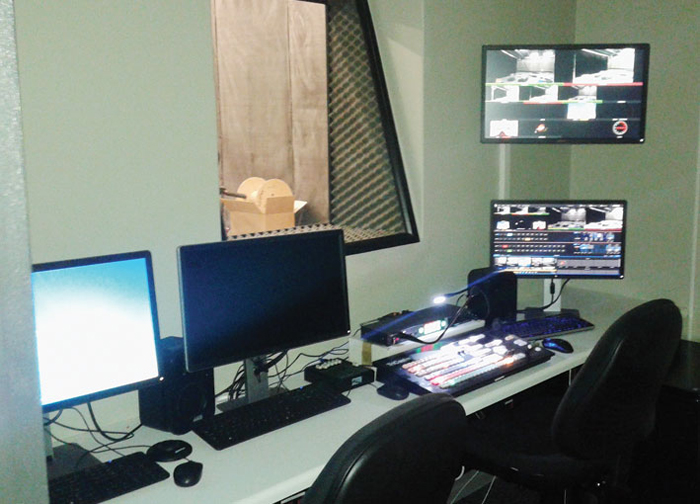
Jasco Broadcast Solutions has implemented a broadcast learning studio at the University of the Free State (UFS) for its film and media students, rivalling any commercial operation.

The studio provides the UFS’ arts, media, drama and film students with access to the latest equipment and technology in a broadcast working environment that is rapidly changing.

Says Dr Pieter Venter of UFS’ film and visual media school: “This investment was driven by the need to provide a broader platform of opportunity to UFS students. With the emergence of digital technology, industries are converging and the lines between theatre, film, television, media, marketing and agency outputs are blurred. Even though these sectors and disciplines are now more integrated, their roles are also more specialised.

“The 80m2 studio provides a ‘black box’ for our students to gain practical skills – from creating sitcoms to studio work or radio broadcasting. The studio will initially be tightly coupled with film and media honours studies, allowing students to produce a short film from start to finish, manage lighting, sound, editing and more. However, it will also be used by undergraduate students specialising in particular aspects of media production in their third year.”

The UFS Film and Media centre comprises a stage, a studio, video and audio control rooms, as well as a ‘cine’ hall for screenings. The equipment supplied by Jasco Broadcast Solutions includes four Sony PXW-X160 cameras for in-studio work; Shure audio equipment (microphones); Manfrotto tripods; a NewTek Tricaster Video Switcher for the control room; a Soundcraft Audio Mixer with JBL speakers for the audio control room; and a Panasonic Video Projector with a 7.1 Dolby surround processor with JBL speakers for the viewing room.

The UFS has also acquired four Sony HXR-NX3 Video cameras with accessories for field work.

“The studio was completed in August 2015 and as such, we are still in the development stage. Students are just getting to grips with the equipment yet we are already seeing much higher standards in terms of output,” says Dr Venter.

Jasco Broadcast Solutions played an important role in the specification of equipment. Adds Dr Venter: “The co-operation of the Jasco team was outstanding. They brought all their working knowledge – expertise and experience gained with large and small commercial broadcasters in South Africa – to the project, helping us identify exactly what we require in terms of functionality while also gearing us to scale up or extend our capabilities in the future.

“Jasco’s commitment and willingness to go the extra mile ensured a smooth implementation. We now have a strong foundation in place to support the re-alignment of our media, drama and related courses to accommodate new developments in the industry,” says Paul Divall, Managing Director of Broadcast Solutions at the Jasco Group.

“It’s been a privilege to help the UFS design and set up its Film and Media Centre, assisting to nurture a new pool of broadcast skills for the industry. It will provide students with a practical head start in an industry that is becoming increasingly important as digital takes hold and more people consume visual media in every aspect of their daily lives.

“Jasco’s 20 years’ experience with leading brands and technologies stood us in good stead with the design and commissioning of the UFS centre. We look forward to a long relationship with the UFS as it helps to develop new talent for the local industry.”

Leyard appoints Jasco as regional systems integrator for Southern Africa

Leyard Europe, a leading global technology provider of LED displays, has appointed Jasco as its regional systems integrator (SI) for Southern Africa. The appointment will assist Leyard to expand into a new geographical region and further grow its market share. In addition, it will enable Jasco to extend its offering with the inclusion of LED displays, complementing their existing solutions. The partnership will also provide broadcasters in the region with access to professional, tailored LED display solutions.

“Leyard’s technology addresses a need in our own product portfolio, and enables us to cater to a growing requirement for broadcasters to upgrade to LED screens within the Southern African market…’ says Paul Divall, managing director for Jasco Broadcast Solutions.

Jasco will engage with customers to determine their individual requirements, and then design systems in partnership with Leyard. Jasco will also be responsible for installation, commissioning and support of the systems, as well as integrating the displays into the greater broadcast studio solution.

“While our initial focus will be on the broadcasting sector, which is aligned to Leyard’s target market, Jasco also has access to the wider corporate market within the region. We will therefore be exploring corporate applications for these LED displays in future, assisting to broaden the application for Leyard’s solutions and further grow their market share in Southern Africa. We look forward to a successful and mutually beneficial partnership,’ Divall concludes.

For more information visit the Jasco website.

Jasco reports strong interim results

Jasco Electronics Holdings Limited (Jasco) has announced results for the six months ended 31 December 2015. The operational performance of the group improved significantly against difficult market conditions, with all businesses contributing to profits. Strong order book and prudent cost management delivered operating profit growth of 290%. The Carrier and Intelligent Technologies businesses – representing 58% of the group’s revenue – delivered strong results and management’s focus on the Enterprise business resulted in its return to profitability. The investment in M-TEC remains classified as “held-for-sale’, with the 51% investment therefore not equity accounted. The final suspensive condition of formal approval from the Competition Commission is expected during the next few months.

Commenting on the results, Jasco’s CEO, Pete da Silva, said, “We are extremely pleased with the improvement in results, especially against the tough market conditions. We have focused on driving sales, with our order book up 24% from December 2014 and a focus on cost cutting resulting in 6% cost savings. The majority of our businesses delivered strong results, with all businesses now profitable, including the previously under-performing Enterprise.

“We continue to focus on a number of key initiatives to ensure continued improvement. Although the gearing ratio improved from 73.3% at June 2015 to 64.8% at December 2015, we want to see a further improvement, which is expected after receipt of the M-TEC sale proceeds. Enterprise is now profitable after strong action taken, but we will focus on the execution of large projects to achieve the required revenue. We remain focused on improving working capital. During the first six months, the main drive was on volume and profitability in the Carrier business, which necessitated a greater investment in working capital. This investment will translate into cash inflows in the second half. A close watch will remain on the inventory and accounts receivable levels in the group.’

- Advertisement -
- Advertisement -
- Advertisement -

Pin It on Pinterest