Home Authors Posts by Durban Film Office (DFO) Press

Durban Film Office (DFO) Press

41 POSTS 0 JOBS
Established in 2003, the Durban Film Office (DFO) is a Department of eThekwini Municipality’s Economic Development and Investment Promotion Unit, responsible for the promotion and development of the Film and Television Industry in the City of Durban.

Delegate registration opens for the 10th Durban FilmMart

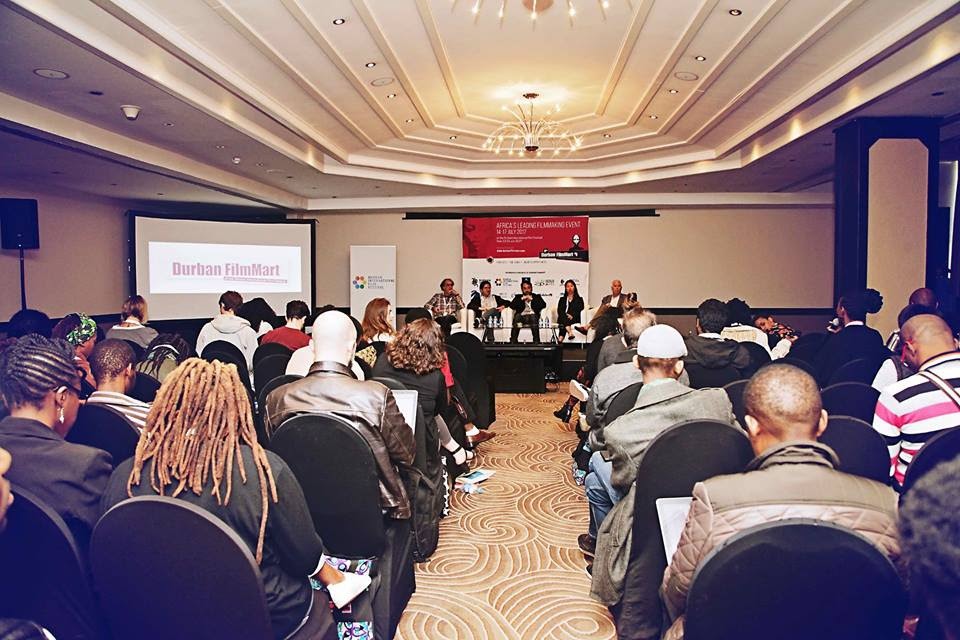
Delegate registration is now open for the 10th Durban FilmMart (DFM), which takes place from 19 to 22 July during the 40th Durban International Film Festival (DIFF).

The DFM is a joint programme of the Durban Film Office (DFO), the eThekwini Municipality’s industry development unit, and the DIFF, and aims to develop the African film industry, grow African content and network film practitioners.

Considered one of the most important film industry events on the continent, the DFM introduces three new programmes to further complement its co-production market, finance and industry development forums.

“The DFM is really excited to add new programmes in this year’s event, creatively curated by South African creative industries consultant Russel Hlongwane, and producer, curator and arts manager, Tiny Mungwe,” says Toni Monty head of the DFO and the DFM.  “Durban Does Docs is a two-day documentary conference, consisting of panel discussions, masterclasses and plenary presentations aimed to attract documentary filmmakers and scholars from the continent and around the world, who will unpack and discuss the state of the documentary in a global context.”

“We introduce the Creative Corner, a robust open space for emerging scriptwriters, actors, set designers and make-up artists, which will run over four days and will consist of script to live sessions, panel discussions around the creative elements of filmmaking such as editing, make-up, sound design and set design.”

“And then we welcome the Locations Africa Exhibition and Conference, a private sector initiative that focuses on film locations in an effort to re-ignite efforts to position Africa as a key filming destination which has all the necessary elements for inbound productions and local film projects. Key to this is economic transformation within the film sector.”

Locations Africa comprises of a comprehensive expo featuring film commissions and location representatives from South Africa and the continent; running concurrently to the expo is a full four-day programme of seminars, workshops and panel discussions that will delve into a myriad topics including location selection, marketing locations, servicing and facilities management, relationships between location scouts and management and many others.

“This is an ideal opportunity for African countries to market their locations on the continent but also to international producers and investors,” says Monty. ‘A welcome addition to the DFM and DIFF offering, Locations Africa will also provide producers, location scouts and location managers with a ‘one-stop-shop’ to see the many options Africa can provide for filmmakers.”

Adopting the theme Imagine Community, the DFM will use this year as a call for the recalibration of the film industry. According to the curators this provides the framework to build community within and across markets and across countries for the development of the industry on the continent.

The DFM’s forums, will consist of panel discussions, world cafe style engagements and the high level masterclasses focusing on relevant topics that reflect on and forecast African cinema both from an aesthetic and commercial point of view, the convergence of technology and filmmaking, diversity in filmmaking and women in filmmaking. Delegates can look forward to international, African and local cutting-edge speakers delivering perspectives shaping the international and local industry.

DFM delegates also have access to an industry lounge and exhibition, providing opportunities for networking sessions and to create meaningful business relationships across the globe.

Other elements of the DFM include the finance forum in which 20 pre-selected feature film and documentary projects from Africa pitch to potential sponsors, funders or partners, as well as the 12th Talents Durban, for pre-selected intermediate African filmmakers and within the DIFF the Isiphethu Hub programme for entry level and emerging filmmakers which is free to the public.

“We are expecting this year to be a bumper one, as we celebrate our 10th anniversary along with the DIFF’s 40th,” says Monty. “Our programmes are being consolidated and there has been a lot of creative input and film community support as we begin the lead up to this very significant moment in the history of film on the continent.”

Early bird registration is open until 28 June 2019. Early bird fees are R1300 (ZAR) for the four-day programme, which includes four day’s access to the DFM Industry Programme, access to DFM producers lounge and DFM networking events, 10 tickets to Durban International Film Festival screenings and company information published in the industry manual. After 28 June fees are R1600 for the full programme while daily passes are R450 each (the daily pass does not include tickets to DIFF screenings or access into the opening and closing events). All tickets exclude meals.
Visit the DFM website to register.

The Durban Film Office celebrates 15 years of moving the local film industry forward

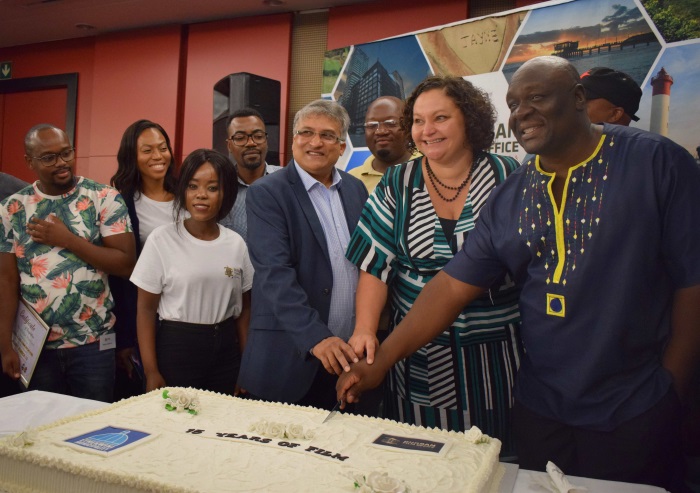
This year marks the 15-year anniversary of the establishment of the Durban Film Office (DFO), the eThekwini Municipality’s film industry development unit. To reflect on this important milestone, as well as report back on its achievements to date and to share its strategic vision and insights from consultations with local film industry representatives, the DFO hosted a stakeholder engagement at the ICC on 20 March.

In welcoming the stakeholders, the eThekwini Municipal Mayor, Councillor Gumede, said, “As we feel the effects of the Fourth Industrial Revolution on the global economy, and as we observe that the world is digitally dynamic, and ever-changing, creating new roles for people to be economically active in ways we have never imagined, it is vital that as a City we remain ahead of the game. As government we act as an enabler for economic development, and with the express goal to eradicate the triple-challenge of poverty, inequality and unemployment, we are mindful of the role that film plays in driving a particular economy and how film and the moving image feeds into this new digital economy. The Durban Film Office plays an important role in keeping our economic development hub in touch with the film industry, as well as being strategic about how filmmakers can be supported to ensure this City continues to strive to become a hub of film activity with endless possibilities of economic growth.”

“The film industry is not merely about the creative process and end product, there is an entire value chain that benefits from it: from locations and infrastructure, logistics and services, hospitality and catering, post production and distribution amongst other things,” said Toni Monty, Head of the Durban Film Office. “Then, as a by-product, films ‘sell’ the city as a tourism destination and/or a film production destination of choice. These economic drivers are what we are looking at harnessing going forward.”

The DFO was established in 2003 by the Ethekwini Municipality as a sector development office mandated to promote and support the development of the local film and television industry in Durban.  Since its inception, the DFO has spearheaded several developmental programmes to build capacity and awareness of the local industry – one of these being the Ethekwini Filmmakers Association (EFA) in 2011, after the DFO recognised the need to establish a collective voice for emerging Durban filmmakers and supported the association through various mediums, including workshops to aid them in their field of filmmaking.

A Micro Budget Film Fund was established in 2012 and was one of the first of its kind in South Africa aimed at bridging the gap between emerging and intermediate filmmaking. The fund provides emerging filmmakers with an opportunity to produce their first film within a mentoring environment. To date, the DFO has supported 25 micro-budget productions, and 12 films have been completed with others still in production.

The DFO also established its Development Fund, designed to assist intermediate and professional filmmakers to package film projects for the broader market and increase capacity to attract production funding from provincial and national funding agencies and private investors. To date, the programme has worked with eight projects, two of which are completed and the other six are still in development.

The DFO has, furthermore, developed a Location Scout Service to further incentivise local and foreign productions to scout Durban as a potential location for their next project. SCOUT is a programme to provide and develop local location scouts and expose young and previously-disadvantaged filmmakers to the business of location scouting and, eventually, full location management.

In 2009, the DFO established a highly-successful market access programme, the Durban FilmMart (DFM), in partnership with the Durban International Film Festival. The DFM is an African co-production market that aims to promote collaboration between Durban and the rest of South Africa, as well as between Durban and African and global markets.

The business model was the first of its kind in South Africa and Africa and has enjoyed tremendous support from important partners across Africa and the world, with a record attendance last year of 856 delegates. The market provides opportunities for emerging, intermediate and professional-level filmmakers, and this year celebrates its 10th edition in July 2019 alongside the celebration of 40 years of the Durban International Film Festival.

To date, the DFM has worked with more than 200 projects in development with countless success stories, such as Five Fingers For Marseilles, Alison, Inxeba (The Wound) and Train of Salt and Sugar (the latter two being official selections for Oscar consideration), among many others. “Two important additions to the DFM this year are the African Locations Expo and a content buyer’s programme, which we believe are going to be major drawcards for filmmakers.” The Festival and Market Support Policy is an additional market access programme that provides support to Durban filmmakers who have been invited to present completed works or projects in development at other markets and festivals.

Over the years, the DFO and DFM have also formed strong partnerships with “sister city” festivals in Nantes (3 Continent Festival) and the International Film Festival of Rotterdam; festivals and markets such as Berlinale, Hotdocs Canada, Caribbean Tales Canada, Sundance Film Festival (USA) and the International Documentary Festival of Amsterdam (Netherlands); and funding and investment agencies such as the National Film and Video Foundation, Westgro and Department of Trade and Industry. Going forward, Monty explained that the DFM has upcoming relations with the Motion Picture Association, and – in 2018 – a Memorandum of Understanding was signed between the DFO and the KZN Film Commission to ensure good intergovernmental cooperation and programme synergies.

A key focus of the strategy is to develop programmes to attract functioning production hubs into the city. “We supported the establishment of Stained Glass Productions studio in KwaMashu that produces the ‘most-watched’ SA TV soap, Uzalo, on home turf. To date, this production hub has contributed R190 million over three years to the local economy and employed over 600 locals across the value chain. We also have strong relations with Durban film producers VideoVision, who have invested in, produced and distributed countless South African films, including the current television drama Imbewu. Other TV shows include the highly-popular Nat Geo Series Snake City and the reality show eHostela. Encouraging additional productions hubs in Durban will go a long way towards stabilising the local industries’ growth path.”

Durban has also played host to many film productions that have gone on either to be box-office hits, or else snapped up for the international festival circuit, providing enabling environments for filmmakers to network and develop relationships globally. Successful films made in the city include Izulu Lami, Otello Burning, Keeping up with the Kandasamys (with a sequel about to be launched this year), White Wedding, the Spud series, More Than Just a Game and Deep End, which is currently on circuit in 26 cinemas around the country.

The DFO statistics viewed over 15 years illustrate the steady growth of the industry. Its permit office works with an average of 150 productions per annum, issuing in the region of 250 film permits annually. Since 2003, the Durban Film Office has assisted over 3000 productions to film in eThekwini locations, which has created employment to the tune of over 30 000 crew days over the last 15 years. These production activities contribute R329 million to the local economy annually. A key aspect of the strategy is to promote a service culture in the city and increase these numbers over the next five years.

Finally, going forward, and in consultation with the industry, the DFO has developed a Sector Strategy, which will essentially focus on four pillars.

“We need to grow the local business network through the design of programmes to encourage local film business formalisation, which will allow these businesses to access more opportunities,” explained Monty. “Another pillar is to encourage new market entrants, which we would achieve by the creation of a transformation and localisation policy, and – within this – further grow the existing content development and market access programmes. We also need to attract film and television hubs to the city through the creation of a policy to entice TV series production, which provides consistent opportunities for filmmakers. This will include a framework to promote ‘Digital Durban’, which will aim to attract post-production and visual effect opportunities. Finally, the DFO aims to grow a film service culture through a strong marketing approach to uncover, showcase and promote the services available in the city and to build a film service community and promote Durban as a Film-Friendly City.”

SA documentary selected to have its world premiere at Hot Docs in Canada

The much-anticipated feature documentary, Buddha in Africa by South African filmmaker, Nicole Schafer, has been selected for its world premiere at the 2019 Hot Docs Canadian International Festival (25 April – 5 May). The film will be presented in competition in the International Spectrum programme. The winner of the Hot Docs Best International Feature Documentary Award will qualify for consideration for the Academy Award for Best Documentary Feature.

Buddha in Africa follows the personal story of a teenager growing up in a Chinese Buddhist orphanage in Malawi and the challenges he faces between his African roots and Chinese upbringing. Against the backdrop of China’s global rise, the film provides a unique insight into Chinese soft power in Africa.

The project received the IDFA Most Promising Documentary Award when it was first pitched at the Durban FilmMart in 2011 and has since been awarded funding from several international funds including the IDFA Bertha Europe Fund in the Netherlands, Hot Docs-Blue Ice Group Doc Fund and the Alter Cine Foundation in Canada, Chicken & Egg Pictures in New York, the South African National Film and Video Foundation and the KwaZulu-Natal Film Commission.

In 2018, Buddha in Africa was selected to participate in the Cape Town International Film Festival and Market Works-in-Progress lab. It received the highest award, combining two weeks of Online by Monk and two weeks of Grading at Priest Post with the following motivation: “For its unique subject and its meticulous patient development, for the crossroad of important themes, and for the different worlds that have overlapped and met in tangible captivating characters, the jury chose to give the combined two prizes to the very promising Malawi set film project Buddha in Africa by Nicole Schafer.”

The film is an international co-production between Thinking Strings Media in South Africa and Momento Film in Sweden. Renowned Paris-based company CAT & Docs will be representing the film internationally. AfriDocs is the African broadcast partner.

“When I first came across this story, I was struck by how this orphanage was strangely reminiscent of the Christian missions during the colonial era;” says writer and director Nicole Schafer, “Only here African children have Chinese names and instead of learning about the West, they were learning about Chinese culture and history. I felt the orphanage would be the perfect metaphor to explore not only the impact of Chinese involvement in Africa, but also as a mirror for the legacy of Western colonialism that still exists on the African continent.”

“Buddha in Africa offers a new and unexpected insight into China’s presence in Africa through the lens of the Buddhist temple Amitofo Care Centre in Malawi,” explains co-producer, David Herdies of Momento Film. “It’s an interesting way to look at this new type of colonisation that is going on, but in a non-judgmental and human way.”

DFO joins important discussion on the African Film Market of the Future at EFM

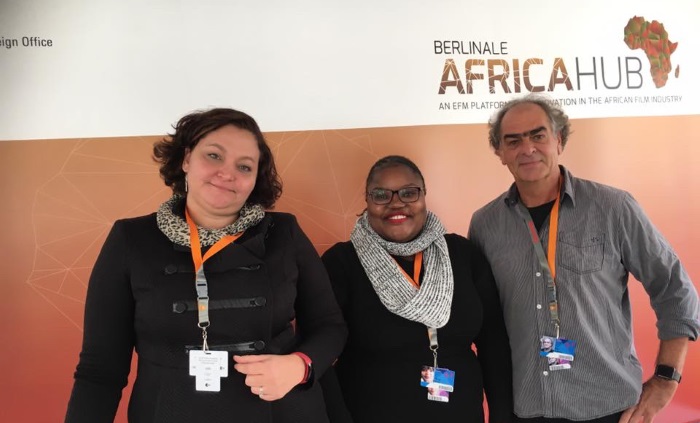
The eThekwini Municipality’s film industry unit, the Durban Film Office (DFO) will be attending this year’s European Film Market (EFM) to further strengthen African and international networks, partnerships and communication links for local filmmakers during this year’s iconic Berlinale International Film Festival, which begins this week.

The EFM, has for three years now, hosted the Berlinale Africa Hub, an initiative described as providing an “international forum for communication and networking for African filmmakers and creatives, as well as for filmmakers who are active on the continent, in particular in its sub-Saharan regions.”

Head of the DFO, Toni Monty explains, that the introduction of the Berlinale Africa Hub, has provided focussed opportunities for African filmmakers to gather, share ideas and links globally and across the Diaspora cementing relationships and connections vital for the development of film ideas and projects.

The DFO is a co-partner with the Durban International Film Festival, of the Durban FilmMart, a co-production market focussing on African content for film, which takes place in the City during July.

Monty will be representing the DFO and the DFM at the market, and besides showcasing of the City as a potential location for film production, will be taking meetings with filmmakers, as well as current and potential partners, funders and investors.

“Film markets are THE place where the business of film is actioned,” explains Monty. “It’s all about making connections, examining opportunities, being exposed to potential funders, investors, broadcasters, agents, distributors and the like, which play a vital role in ensuring a film goes from its initial idea to its end product.”

Significantly the DFO and DFM will be represented on an important panel: “The African Film Market of the Future” at the Hub. South African filmmaker and producer of the STEPS Generation Africa Project, Tiny Mungwe will moderate this session which features Toni Monty (DFO and DFM), SA producer Elias Ribeiro, who heads up the Cape Town FilmMart, Marc Berry, exhibition relations manager from Discop and Matthijs Wouter Knol, EFM Market Director.

The panelists will reflect on current trends in cinema, television and new media in their own experiences as conveners of key African gatherings as well as showcase their events as film markets, providing an understanding of each platform’s niche, foreseeable strategy and vision with a view to encourage industry attendance. They will get an opportunity to unpack how international gatherings like the Africa Hub can galvanise the continent, allowing for film professionals to connect despite historical restrictions within the continent, and discuss synergies, innovations and new opportunities in Africa, and its place in the Global Cinema space.

This is one of many important panels and events planned for the Hub which includes pop-up offices, various delegation presentations, networking sessions and meetings.

“The DFO is pleased to be attending the EFM, as it plays a key role in connecting African filmmakers to their peers and to the international film arena,” says Monty. “While our focus is on developing local filmmakers and African content, there is still a vital need to ensure that we continue to develop co-production opportunities, global distribution networks and attracts investors – and that is where these markets play a pivotal role in ensuring viable connections are made.”

39th Durban International Film Festival awards

The 39th Durban International Film Festival (DIFF) held its awards ceremony on Saturday, 28 July, at Suncoast CineCentre as filmmakers and film-lovers gathered to watch the official closing film Rafiki, directed by Wanuri Kahiu.

A total of 17 awards were given out at the ceremony:

Best Feature Film: The Reports on Sarah and Saleem, directed by Muayad Alayan and produced by Muayad Alayan, Rami Alayan, Hans de Wolf, Hanneke Niens, Rebekka Garrido, Rodrigo Iturralde, Georgina Gonzalez and Alejandro Duran. The award is accompanied by a cash prize of R50 000.

Best South African Feature Film: High Fantasy, directed by Jenna Bass and produced by David Horler and Steven Markovitz. The film received a cash prize of R25 000.

Best Documentary: New Moon, produced and directed by Philippa Ndisi-Hermann. The film received a cash prize of R25 000.

Best South African Documentary: Sisters of the Wilderness, directed by Karin Slater and produced by Ronit Shapiro. The award is accompanied by a cash prize of R25 000.

Best Direction: Constantin Popescu for Pororoca.

Best Cinematography: Liviu Marghidan for Pororoca.

Best Screenplay: Jennifer Fox for The Tale.

Best Actor: Bogdan Dumitrache for his role as Tudor in Pororoca, directed by Constantin Popescu.

Best Actress: Maisa Abd Elhadi for her role as Bisan in The Reports on Sarah and Saleem.

Best Editing: Anne Fabini, Alex Hall and Gary Level for The Tale.

Artistic Bravery: The award was won jointly by High Fantasy, directed by Jenna Bass, and Supa Modo, directed by  Likarion Wainaina.

Best South African Short Film: Stillborn, directed by Jahmil X. T. Qubeka and produced by Huanxi Media Group, Xstream Pictures and Yellowbone Entertainment. The film received a cash prize of R20 000 sponsored by the Gauteng Film Commission.

Best African Short Film: Aya, directed by Moufida Fedhila and produced by Appel d’Air Films. The film also received a cash prize of R20 000 sponsored by the Gauteng Film Commission.

Best Short Film: The Patience of Water (La Paciencia Del Agua), directed by Guillem Almirall. The film received a cash prize of R20 000 from the Gauteng Film Commission.

Audience Choice Award: The State Against Mandela and the Others, directed by Nicolas Champeaux and Gilles Porte, which received a cash prize of R25 000.

Amnesty International Durban Human Rights Award: Silas, directed by Anjali Nayar and Hawa Essuman, and produced by Appian Way, Big World Cinema and Ink & Pepper Productions.

Best Wavescape Film: Heavy Water, directed by Michael Oblowitz.

DIFF has recently been included as a Documentary Feature Qualifying Festival by the Academy of Motion Picture, Arts and Sciences, which means that both the winners of the Best Documentary, New Moon, and Best SA Documentary, Sisters of the Wilderness, will now automatically qualify for consideration for an Oscar nomination.

The Shorts jury included creative media education and development specialist Alicia Price and Leon Van Der Merwe of the Cape Town International Film Market and Festival. The fiction feature jurors were South African producer Bongiwe Selane, Nigerian actor Hakeem Kae Kazim and Nigerian actress Nse Ikpe-Etim. The documentary film jury included South African producer Uzanenkosi, Zimbabwean producer Nakai Matema, Nigerian filmmaker Mahmood Ali-Balogun and Berlin-based freelance filmmaker, writer and curator, Dorothee Wenner.

The 2018 edition of the Durban International Film Festival came to an end on 29 July and was part of a month-long feast of film in Durban, which included the BRICS Film festival and industry programmes, the Durban FilmMart, Isiphethu, Talents Durban, and the Nature Environment and Wildlife Film Congress.

DIFF’s Best International Doc and Best SA Doc winners now automatically qualify for Oscar consideration

Winners of the Best International Documentary and Best SA Documentary awards at the Durban International Film Festival (DIFF) will now automatically qualify for Oscar consideration.

The festival has been notified by the Academy of Motion Picture Arts and Sciences of this inclusion, which effectively means that the winning documentaries will be up for consideration for the 91st Academy Awards in 2019.

This year, the Academy established a Documentary Feature Qualifying Festival List, and the DIFF is one of 28 selected international festivals that will be have their winners up for consideration.

DIFF joins other prestigious festivals from around the globe including the Cannes International Film Festival, Berlinale International Film Festival, Sydney International Film Festival, Hot Docs Canadian International Film Festival, and IDFA – the International Documentary Film Festival Amsterdam.

The only other qualifying African festival is the Carthage Festival in Tunisia.

“We are delighted with this international recognition, and we are especially pleased for the film-makers that will benefit from the recognition that they will receive as a result,” says Lliane Loots of the University of KwaZulu-Natal. “The festival began 39 years ago as a means to expose South Africans to global stories, during the really dark days of Apartheid, where censorship and government policy, as well as hard-felt, yet very effective, cultural boycotts denied us access to international creative expression. It was also started as a means to offer cinema experiences in townships where people had very little access to ‘the media’ at large. So from these humble beginnings, we are really grateful to the Academy for providing this opportunity for the filmmakers who have films in the festival.”

The Durban International Film Festival is currently running at various venues in Durban until 29 July.

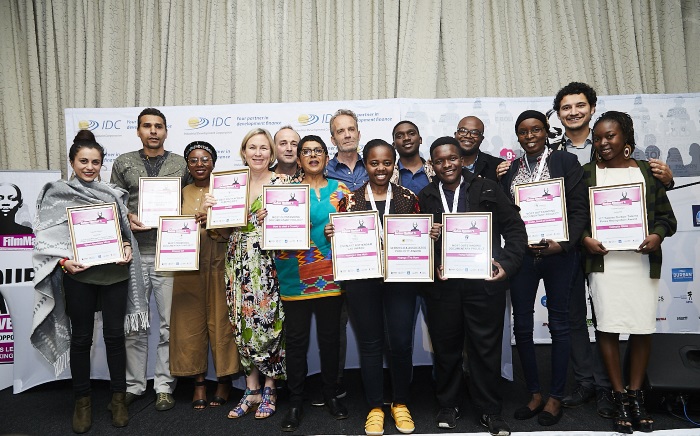
Durban FilmMart awards 2018

It’s been a bumper year for this year’s Durban FilmMart (DFM), the industry development programme of the eThekwini Municipality’s Durban Film Office (DFO) and Durban International Film Festival (DIFF), which ended with an awards ceremony at the Southern Sun Maharani Hotel in Durban, South Africa, on Monday, 23 July.

Speaking at the DFM awards ceremony, Toni Monty, head of the DFO and the Durban FilmMart, said, “As one of the most important, film industry events and film finance platforms on the continent, we are really pleased that we have grown the DFM substantially this year with 877 delegates attending. We had over 40 countries participating this year, of which 19 were from Africa. A total number of 52 projects were pitched to potential partners, financiers, filmmakers, producers, distributors and agents during countless meetings.”

Key to the value that the Durban FilmMart provides filmmakers are the many meetings and networking sessions that are held between delegates over the four days.

“The important work we do to enable filmmakers, would not be possible without our partners and sponsors,” said Monty, “And we would like to thank our partner markets, development organisations and funding bodies with deep gratitude.”

“The work we do at this mart supports the DIFF and DFO’s vision to dynamically grow the industry and bring African cinema to its own people and to global platforms.”

Eighteen official DFM film projects in development were presented at the Finance Forum through the sponsorship of the Industrial Development Corporation and the National Film and Video Foundation.

Supported by Berlinale Talents, the Goethe-Institut and the German Embassy and in cooperation with Fipresci, Durban Talents was able to host 16 young filmmakers, and three Talents Press.

“We hosted a number of scriptwriters’ labs including Jumpstart which is supported by Produire au Sud, France and the Realness Script Writing Residency. Hot Docs Canada, mentored 11 documentary projects in development and six CineFam Africa television series projects were mentored by Caribbean Tales, Canada.”

“We recognise the important role that the eThekwini Municipality, the principal funder of the DFM plays in its success,” continued Monty. “The city’s involvement actively enables the economic growth of the industry, and we thank them for this.”

The DFM hosted a number of delegations this year including the in-bound delegation through the Department of Trade and Industry, the BRICS Film Festival delegation through the Department of Arts and Culture. Special thanks must go to the Canadian High Commission and US Embassy and the French Institute (IFAS), NFVF and KZN Film Commission for their support in bringing in delegates.

The Awards/Grants:

  • The International Documentary Film Festival of Amsterdam (IDFA) awarded the most promising documentary project at the DFM, Cheese Girl (South Africa), produced by Batana Vundla, Marion Isaacs and directedby Milisuthando Bongela, with an opportunity to attend the  IDFA Forum, one of the top gatherings for documentary filmmakers, producers, commissioning editors, funds, private financiers and other documentary filmmakers in Europe, in November.
  • The broadcast stream, Afridocs, that flights African and other international documentaries across 49 countries of sub-Saharan Africa on a weekly basis, gave a €2500 award, funded by the Bertha Foundation, to Zinder, The Seeds of Violence (Niger), produced by Clara Vuillermoz, Ousmane Samassekou and directed by Aicha Macky.
  • The CineMart Award, sponsored by the co-production market of the International Film Festival Rotterdam, went to the fiction project, Nyanga/The Horn (Zimbabwe), produced by Sue-Ellen Chitunya, Brett Michael Innes and directoed by Brett Michael Innes. The project is given an opportunity to attend the Rotterdam Lab, a five-day training and networking event for producers from all over the world.
  • Produire au Sud of Festival des 3 Continents (Nantes) awarded the fiction film Porta-Retrato (Mozambique), produced by Aldino Languana, Osvaldo Lupini Bambamba and directed by Orlando Mabasso Jr., an opportunity to attend its developmental workshop programme, PAS, where they will be given tools, expertise, and opportunities to develop European networks.
  • Videovision Entertainment awarded the “Best South African Film Project” to Snake (South Africa), produced by Paul Egan, Stanford Gibson and Mustapha Hendricks and directed by Meg Rickards. They receive a prize valued at R75 000, which guarantees its release once it is completed. The prize also includes marketing and distribution support from Videovision Entertainment.
  • Versfeld & Associates, publicity consultants awarded Nyanga/The Horn (Zimbabwe), produced by Sue-Ellen Chitunya, Brett Michael Innes and director by Brett Michael Innes, the development of a press kit.
  • Sørfond awarded the project How to Steal a Country, produced by Rehad Desai and Zivia Desai and directed by Mark Kaplan, with an opportunity to pitch at the Sørfond Pitching Forum in Oslo later this year.
  • CineFAM-Africa Incubator Accelerator Programme award to pitch at the Caribbean Tales Film Festival in Toronto, went to The Summit Club by Layla Swart


New awards this year include:

  • Hot Docs Blue Ice Award – a cash prize of 2000 Candian Dollars went to the documentary project The Master’s Plan, produced by Hanne Phlypo and directed by Yuri Ceuninck.
  • 11th Talents Durban “Talents Press” Recognition Award went to Cornelia Glele.
  • Durban FilmMart Award for the Durban Talents project selected as a project for DFM 2019 went to When Shadows Move by Aliki Saragas.

The DFM ended last night, but the Durban International Film Festival continues until 29 July. There is a free industry programmer – Isiphethu – happening opposite the Southern Sun Garden Court Marine Parade with seminars and workshops for the public and emerging filmmakers, as well as free screenings at various venues.

DFM 2018: Durban FilmMart keeps getting bigger and better

The 2018 Durban FilmMart (DFM), currently taking place alongside the 39th Durban International Film Festival at the Elangeni Hotel in Durban, KwaZulu-Natal, has seen a substantial increase in numbers in its ninth edition. Toni Monty, head of the Durban Film Office (DFO), beamed when sharing that numbers are up once again this year for Africa’s premier film market.

The Durban International Film Festival (DIFF), in partnership with the eThekwini Municipality’s Durban Film Office, has for nine years presented this imperative hub for filmmakers from across the African continent and abroad with a specific aim at growing the African film industry.

In recent years projects coming out of the DFM have been gaining more international recognition at premium festivals and awards shows than ever before: “That is, I believe, due to how we have structured the mart,” says Monty. “We have created a global network of partners that are very interested in African content, that work with us throughout the year to identify new talents and that is where the magic lies.”

With this in mind, the DFO have implemented interesting programmes and incubators, with the help of its international partners, in order to further that growth going forward. One such initiative is the CaribbeanTales’ CineFAM programme: “We started the CineFAM Africa incubator last year on serialised content. It’s in its second year and we’ve got six projects incubated this year as well as two Canadian broadcasters that have come out to work with them. We’re going to be looking at the applicability and accessibility of the treaty in terms of serialised content and how we can increase co-production between Africa and Canada in the realm of serialised content.”

Monty shared that when developing the conference strand at this year’s DFM, the focus was as always on key areas of development for the African film industry. However, this year saw the introduction of new discussions targeted at tackling important issues currently affecting the global film industry. “First and foremost we have a focus on co-production as it is a co-production market. We have a focus on financing film in Africa… we also wanted to look at South Africa and Africa being an emerging market. We wanted to look at sustainability for filmmakers…” Monty comments, “But aside from that there were some very important issue that we wanted  to bring into the discussions; the focus on women in film and transformation, as well as the #MeToo discussion – supported by SWIFT – are conversations we will continue with in years to come. We want to create stronger support for women both in front of and behind the camera.”

This year the DFM conference also touched on other topics that have arisen from recent public debate currently surrounding the industry: “We had a session titled ‘Are There Any Sacred Cows in Filmmaking’ where we looked at the issues and concerns around cultural appropriation in filmmaking… It is an incredibly important discussion, not just for filmmaking but for South Africans and Africans as a whole, and it’s something that we never really address because it’s a difficult conversation to have. We do hope to continue that thread over the next few editions.”

Additionally, Monty made note of the Isiphethu hub – launched this year in partnership with Durban Tourism – which is DIFF’s open industry programme, running for four days, aimed at introducing entry level, emerging and micro-budget filmmakers, as well as interested members of the public, to the inner-workings of the world of cinema. “DFM is a professional level market and whilst we have many emerging filmmakers in the Durban FilmMart, with Isiphethu, we wanted to create a place where entry-level filmmakers can feel at home and call it their own,” she comments.

Next year is a milestone year for the Durban FilmMart as it will be turning 10. “Next year will be 10 years of Durban FilmMart, it will be 40 years of DIFF. We have already started planning for 2019 and we certainly do plan on having a major celebration – so definitely watch this space! Ten years of DFM means it’s time to take it to the next level so we will certainly be bringing in some new aspects to the Durban FilmMart.”

Durban Tourism partners with DFM and DIFF to support emerging filmmakers

“Durban is a cocktail of cultures,” says Sbusiso Zondi, Durban Tourism’s passionate senior manager of marketing and communication, and with the aim to capture and project just that, the organisation has partnered with the 9th Durban FilmMart (DFM) and the 39th Durban International Film Festival (DIFF) to introduce a new open industry platform, called Isiphethu.

Running parallel to the DFM and taking place over four days, beginning Monday, 23 July, Isiphethu – supported by experts and visiting speakers to DFM 2018 – is DIFF’s open industry programme aimed at introducing entry level, emerging and micro-budget filmmakers, as well as interested members of the public, to the inner-workings of the world of cinema.

Zondi says it was a ‘no-brainer’ for Durban Tourism when it came to partnering with DFM and DIFF, as film – and films coming out of Durban in particular – has proven to be an exceptional tool in increasing tourism in Durban. “As Durban Tourism, we’ve said: ‘Let’s invest in the imaging market, let’s partner with those capturing Durban – its people, its essence and its culture. Let’s talk to young filmmakers and the guy who’s just bought a camera and is passionate about film… and teach them how to capture the essence of Durban and package it for the international market’.”

In addition to the industry programme, Durban Tourism has partnered with National Geographic and the Discovery Channel to launch a film competition aimed at emerging filmmakers. The competition will run from 23 July and the winner will be announced on 24 September. The winner will be awarded a one to two week incubation opportunity at Discovery in the UK where they will be mentored while developing and producing a 60-second commercial aimed at increasing tourism in Durban.

“One of the ultimate goals in supporting this initiative is because we want Durban to be a creative hub for filmmaking,” Zondi adds. “Let’s support emerging filmmakers because as Durban Tourism and the Durban Film Office, it is part of our mandate to aid economic development.”

Follow Durban FilmMart and Durban International Film Festival on Twitter, Instagram and Facebook to keep up with all the action.

DFM 2018: How to unlock up to $2 billion of annual box office revenues in Africa

If Africa were to follow China’s example and broadly invest in cinema infrastructure, it could achieve annual box office revenues of $1.5 to $2 billion; with Nigeria and South Africa accounting for as much as $500 million. This is one of the main findings of the 2018 Framing the Shot: Key Trends In African Film report, which was conducted by founder of 234 Media, Dayo Ogunyemi, in partnership with the Goethe-Institut and with support from the German Federal Foreign Office. Launched at the Durban International Film Festival (DIFF) 2018, the study aims to fill the substantial gap in information and analysis about the fast-changing film industry in sub-Saharan Africa.
 
Framing the Shot particularly recommends improving access to finance, incubating film-specific business skills and capacity and developing effective distribution. Says the report’s author, Ogunyemi: “For too long, Africa’s film industry has been the subject of many anecdotes and much supposition; the absence of credible, comprehensive data has led to wasted resources and lost opportunities which the continent can scarcely afford […] If African countries do not plan, invest and collaborate today, the trade deficit around content consumption will widen and the opportunity to shape the tastes and preferences of future generations of Africans will be lost.”
 
The Framing the Shot report catalogues and analyses the major opportunities and challenges that Africa’s film industries face through four substantive parts:
  • A survey of African filmmakers and general analysis of the African film landscape
  • Country studies of Africa’s two largest film industries: Nigeria and South Africa
  • Case studies of three African films from development through completion; a comparison of the commercial performance of an African and a European film; as well as lessons drawn from the diaspora — specifically in the context of African-American film.
  • Conclusions on African film in the global industry context and recommendations on priority steps to address the main opportunities and challenges identified
Says Noemie Njangiru, Culture and Development coordinator at the Goethe-Institut: “There are two reasons behind our investment in reliable information about the continent’s film industries: Firstly, the sector has a huge potential to contribute to economic growth and create employment opportunities. Secondly, we believe that strong film industries and better conditions for pan-African collaborations can contribute to undoing stereotypes, particularly in the context of the Western gaze on ‘Africa’.”
 
Taking a closer look at the South African film industry, the report suggests extending the current “generous incentive system that is primarily centered on production […] to the post-completion value-chain — sales, marketing and distribution.” The study continues: “For filmmakers and audiences that continue to endure the historical disadvantages meted out under apartheid, more must be done. Cinema infrastructure must be extended to under-served townships in order to unlock latent spending power on film. One of the most promising ways in which South Africa can do this is to support entrepreneurs and SMEs to close the gaps in distribution capacity and the deficits in exhibition infrastructure in townships and rural areas.”
 
Meet Dayo Ogunyemi at DIFF and DFM:
  • Distribution: Debunking the Myths – Understanding the Exploitation Value Chain
– Sunday, 22 July / 14:00 – 15:00 / Suite 5
 
 
- Advertisement -
- Advertisement -
- Advertisement -

Pin It on Pinterest