Home Authors Posts by AVID Press

AVID Press

29 POSTS 0 JOBS
Through Avid Everywhere, Avid delivers the industry's most open, innovative and comprehensive media platform connecting content creation with collaboration, asset protection, distribution and consumption for the most listened to, most watched and most loved media in the world—from the most prestigious and award-winning feature films, music recordings, and television shows, to live concerts and news broadcasts.

Marquis Broadcast’s disaster recovery tool protects against catastrophic data loss

With the rise in crypto-ransomware attacks in recent years, companies need to make certain they run scheduled backups of their data, in order to keep both media project data and critical business operations safe. However, when infected by crypto-ransomware, the backups themselves can also become infected, which often renders the whole backup strategy useless. Luckily, Marquis Broadcast’s Workspace Backup system avoids this problem. It analyses and copies Avid workspaces and projects to Tier 2 storage and the cloud and will never backup any media that has become encrypted, ensuring valuable media files remain intact.

Crypto-ransomware is a harmful program that encrypts files on a computer or mobile device in order to extort money. It works by encrypting the contents of a file so that it’s impossible to read, then threatens users via prominently-displayed messages for money in exchange for the decryption key needed to restore the files. Recently, crypto-ransomware has taken down large broadcasters and production companies in the US and Europe, with the loss of months and months of Avid projects and associated media. Workspace Backup from Marquis Broadcast would have prevented this disaster, since the system won’t just blindly backup media files but will instead look for changes and not allow the newly encrypted media files to be added into the backup.

Workspace Backup is a powerful disaster recovery and business continuity tool, designed specifically to protect Avid shared storage systems. It uses detailed analytics of Avid workspaces to ensure the highest levels of integrity of a backup, ensuring the most crucial projects can be immediately and individually recovered to production in any location that can see the backup.

Workspace Backup first runs low-level analytics to examine and characterise every byte of data held within the source Avid workspaces, so it’s able to check the data structure and report if something is wrong before it’s too late. It then backs up the content of the workspaces, before copying all the projects that use media in those workspaces. Finally, those projects are analysed and any other assets that are linked to them are also backed up. Thereafter, any subsequent backups replicate changes in the source workspaces and capture new versions of the projects. Workspace Backup is ideal for use to take daily backups of Avid work-in-progress, safeguarding companies from data loss from crypto-ransomware, drive failure or if files are deleted by mistake. Workspace Backup is also Avid-certified, operating seamlessly within the Avid environment and ensuring the integrity of the media backup.

Avid helps HBO to innovate post-production for programme promotions

0

Avid, a leading technology provider that powers the media and entertainment industry, has announced that it is helping HBO to re-define the promotional content finishing workflows that serve all of the network’s distribution outlets.

HBO’s innovative approach includes unlimited on-demand licenses for Avid Media Composer nonlinear editing systems. It allows the network’s production engineering group to scale editing resources up and down on a moment’s notice to address end-user demand from marketing, sports, documentary and home entertainment to create their promotions and market their programming with greater agility and speed. HBO’s virtualised Media Composer deployment integrates with its Avid NEXIS® storage resources.

“Our production engineering group supports hundreds of clients who create promotions and packages to drive the success of HBO’s growing offerings, so we’ve established an efficient, on-demand resource that corresponds to the elastic needs of the operation,” said Stefan Petrat, senior vice president of Media Technology at HBO. “As needed, we can spin up our Media Composer seats and have hundreds of editors working on promotional pieces for all HBO distribution outlets. When that push is over, we can immediately spool down our excess systems.”

“HBO’s production engineering group is taking an inventive approach toward unlocking new gains in post-production performance, and Avid is very pleased to support their vision with the virtualisation of Media Composer,” said Jeff Rosica, CEO and president, Avid. “It’s exciting to see world-class customers like HBO successfully rethinking and reimagining the sheer scale of their workflows with Avid tools and solutions.”

Learn more by reading Avid’s customer story about HBO at https://www.avid.com/customer-stories/hbo.

Avid introduces all-new Media Composer

Avid recently announced that Media Composer, its flagship video editing system, has been redesigned and reimagined for today’s – and tomorrow’s – generation of media makers. Unveiled at Connect 2019, the all-new Media Composer 2019 was in the spotlight at the NAB Show 2019 in Avid’s booth.

With Media Composer 2019, aspiring and professional editors, freelancers and journalists will be inspired to work more creatively by taking advantage of a new user experience, a next generation Avid media engine with distributed processing, finishing and delivering capabilities, a customisable role-based user interface for large teams, and so much more.
“After receiving input from hundreds of editors and teams across the media industry, and knowing where the industry is headed, we reimagined Media Composer, the product that created the nonlinear video editing category and remains the gold standard,” said Jeff Rosica, CEO and President at Avid.

“Media Composer 2019 is both evolutionary and revolutionary. It maintains what longtime users know and love while giving them more of what they need today—and what they will need tomorrow.”

Media Composer 2019 With Media Composer 2019, an editor can go from first cut to delivery without ever leaving the application. Whether they are a professional editor, freelancer or someone just starting out, Media Composer 2019 inspires creative storytelling.

• New User Experience – makers can work at the speed of creativity with a paneled interface that reduces clutter, reimagined bins to find media faster, and task-based workspaces showing only what the user wants and needs to see.
• Next Generation Avid Media Engine – puts more power at a user’s fingertips with features, such as native OP1A, support for more video and audio streams, Live Timeline and background rendering, and a distributed processing add-on option to shorten turnaround times and speed up post production.
• New Finishing and Delivery Workflows – Now, users can create and deliver higher-quality content with editing, effects, color, audio, and finishing tools without leaving Media Composer. Whether working in 8K, 16K, or HDR, Media Composer’s new built-in 32-bit full float color pipeline can handle it. Additionally, Avid has been working with OTT content providers to help establish future industry standards.
• Customisable Toolset – built for large production teams, the new Media Composer | Enterprise provides administrative control to customise the interface for any role in the organisation, whether the user is a craft editor, assistant, logger or journalist. It also offers unparalleled security to lock down content, reducing the chances of unauthorised leaks of sensitive media.

Media Composer | Enterprise 2019
The Media Composer family adds Media Composer | Enterprise for post-production, broadcast, media education and other larger production teams. Media Composer | Enterprise is the industry’s first role-specific video editing and finishing solution. Large production teams now have the ability to customise the interface and tailor workspaces for different job roles, providing end users access only to the tools and functions they need. This capability gives teams better focus so they can complete jobs faster and
with fewer mistakes. Media Composer | Enterprise also integrates with Editorial Management 2019 to deliver collaborative workflow innovation for post production and enables creative teams to stay in sync.

Media Composer | Distributed Processing
Avid also announced Media Composer | Distributed Processing, an add-on option that shortens turnaround times and accelerates post production by sharing the media processing load. Tasks that previously took hours can now be done in minutes, strengthening post facilities’ competitive edge while delivering high-quality programming. Media Composer | Distributed Processing also offloads complex processing tasks when working in today’s emerging high resolution and HDR media-rich worlds.

Avid announces VENUE | S6L

0

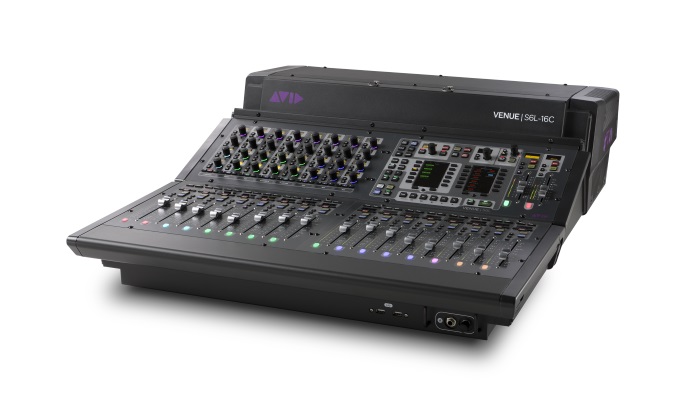
Avid®, a leading technology provider that powers the media and entertainment industry, announced the immediate availability of its Avid VENUE™ | S6L-16C control surface, part of the expanded Avid VENUE | S6L unified live sound platform. This new S6L system component gives users the most compact, portable and affordable control surface with the same power and functionality as the largest VENUE | S6L consoles, providing sound companies and performance venues with greater flexibility to configure the perfect system to meet any production, space or budget requirement. Avid has also released VENUE 6.1 software, which introduces numerous enhancements, including redundant Pro Tools recording, as well as the new free VENUE | Function Pad iOS app that enables users to remotely control their S6L snapshots and events.

The fully modular Avid VENUE | S6L delivers exceptional functionality for a wide range of applications including front-of-house, monitor, broadcast, and theater. Avid VENUE | S6L is the industry’s only live sound platform that offers 100% software, hardware and show file compatibility, enabling engineers to scale systems up or down to meet their changing requirements for control, processing, and I/O. Because the VENUE | S6L platform features the same VENUE software and workflows across every model, engineers are presented with an identical user experience regardless of system configuration, allowing them to focus on helping their artist to deliver the best performance possible.

Avid VENUE | S6L-16C

Avid’s VENUE | S6L unified live sound platform gives sound companies and performance venues greater flexibility to configure the perfect system to meet any production, space or budget requirement. The new VENUE | S6L-16C, which is now shipping, is the most compact and affordable control surface of the S6L unified live sound platform, providing powerful performance and proven S6L workflows in a highly portable, streamlined package.

Featuring 16 faders and 32 assignable knobs, S6L-16C is ideal for corporate events and any live application where space is tight. Users can configure a new system—or scale down an existing setup—and bring the incredible sound, performance, and efficiency of S6L to the smallest venues.

Avid VENUE 6.1 software

The latest VENUE software gives users easy and quick access to a host of parameters and views with just a single touch, increasing efficiency. New VENUE software features include:

  • 128 tracks of redundant Pro Tools recording per system over Ethernet AVB.
  • One-touch access to any channel with the Attention on Fader soft key.
  • Custom encoder layouts with the Encoder Assign feature.
  • Expanded view of Aux Sends in the VENUE software for fast access and better visibility into all aux assignments and statuses.
  • VCAs Trim Aux Sends function that enables users to quickly trim or boost multiple Aux Send levels of different mix groups, such as all drums or background vocals, with a single fader while in Sends on Faders

Remote control of S6L functions with Avid VENUE | Function Pad

The new free Avid VENUE | Function Pad iOS app provides users with wireless remote control of S6L’s powerful function switches, allowing engineers and sound designers to organise, navigate, and trigger their VENUE snapshots and events from anywhere in the performance venue using their iPhone or iPad. By displaying all available function switch assignments in a grid of tiles that can be customised for easy navigation, users simply tap a tile to trigger anything from Pro Tools recording and playback, to theatre cues and other events. Users can even connect multiple iOS devices running the VENUE | Function Pad app to a single S6L system simultaneously to support a variety of front of house, monitor, and collaborative live production workflows.


Avid welcomes media tech veteran to helm Global Customer Solutions and Services

Avid, a leading technology provider that powers the media and entertainment industry, has appointed highly-accomplished media technology services expert Kathy-Anne McManus as senior vice president of Global Customer Solutions and Services. With more than 30 years of experience in providing services, support and education to creative individuals, teams and large media enterprises, McManus returns to the company to establish a service strategy to further optimise customers’ and users’ experience and success with Avid tools and solutions.

McManus’s previous roles with Avid included VP of Worldwide Professional Services and director of Services for Asia Pacific. Prior to rejoining Avid in January 2019, McManus held senior leadership roles in the services and support organisations of several media technology providers including Adobe, Amdocs and Ericsson and telecommunications operator Telstra. She entered the media industry as an editor and producer for major Australian broadcast television networks Seven and Nine.

“We’re fortunate that our search for the best available talent in media technology services has resulted in KAM’s return to Avid,” said Jeff Rosica, Avid CEO & President. “She’s done a lot of work in our customers’ community and knows how to navigate our landscape, so I anticipate we’ll make rapid progress in evolving our offerings.” 

“Avid customers and users count on us to help them deliver their best work so they can delight their audiences everywhere. In turn, it’s our responsibility to deliver a service experience that delights our customers,” said McManus. “I’m excited to get to work with the team on a strategy that will further elevate customer success with our tools and solutions today, and position them for their future through advanced approaches, such as SaaS, for more effective service delivery.”

Avid unveils Sibelius 2019

Avid, a leading technology provider that powers the media and entertainment industry, today announced the immediate availability of Sibelius 2019, the world’s best-selling music notation software. Sibelius 2019 introduces powerful new capabilities that enable faster, more creative workflows while limiting time consuming tasks that detract from the creative process.

Sibelius is the industry standard in music notation software and is used by award-winning artists on the world’s most celebrated compositions. Available from the product family including Sibelius | First, Sibelius and Sibelius | Ultimate, Sibelius 2019 delivers exciting features that improve review workflows and score navigation and composition—igniting creativity and collaboration for everyone from students and aspiring music creatives to professional musicians, composers and orchestrators. New in Sibelius 2019:

  • Review Mode to grant limited access to scores – Available for Sibelius | Ultimate, Review Mode allows users to grant limited access to view, navigate, copy passages, and play back scores without risking accidental changes. Copyists and composers can safely review a score before orchestrating the music or teachers can check a student’s notation to grade their work without making any unintended changes.
  • Instant play back when navigating a score – Using the Go-To-Bar and Go-To-Page functions (or the Timeline in Sibelius | Ultimate), users can navigate to any location in a score and immediately start playback. This enables users to quickly hear and compare passages to keep music creation and arranging momentum moving smoothly.

“From film scoring stages, concert halls, to classrooms, Sibelius is the industry’s most used and trusted software for music notation,” said Rob D’Amico, Director, Audio Solutions Marketing at Avid. “Throughout 2018, our regular releases for Sibelius have provided new features and enhancements to accelerate composing and arranging so users can quickly and easily write and publish beautiful scores. Sibelius 2019 expands upon our vision to provide our community of award-winning composers, educators, students and enthusiasts with the tools they need to collaborate and create compelling content.”

Avid Pro Tools now includes UVI Falcon

Avid®, a leading technology provider that powers the media and entertainment industry, has announced an alliance with software instrument developer UVI to deliver powerful virtual instruments and an exclusive sound library to all Pro Tools users. UVI’s acclaimed hybrid virtual instrument Falcon and the exclusive Plugsound Avid Edition sound library (a combined $498 value) are now included with Pro Tools® and Pro Tools | Ultimate at no additional cost. The free UVI Workstation 3 plug-in and the exclusive Plugsound Avid Edition sound library is available for Pro Tools | First users.

The creative experience of Pro Tools is more intuitive and immediate, with numerous features introduced in the latest release designed to enable fast and fluid creativity. With UVI’s virtual instruments, music creators and sound designers now have more choices from which to draw inspiration and create their own sound.

UVI develops software instruments, effects, and sound libraries that give musicians and audio professionals unique, expressive tools to create their sound. With UVI Falcon, users can generate sounds quickly with drag-and-drop ease and design complex patches with a multitude of modifiable parameters—including 15 state-of-the-art oscillators, over 80 effects, modulation generators, a scriptable event processor, and more.  Available on the Avid Marketplace, both Falcon and the UVI Workstation can be augmented with high-quality expansion sound libraries.

These sound libraries are included with the following Pro Tools tiers:

  • Plugsound Avid Edition (included with all Pro Tools tiers) – a fantastic-sounding 2.6 GB sample library that is exclusive to Avid — loaded with keyboard sounds, synthesised sounds, drums and percussion, fretted instruments, and more.
  • Falcon Factory Sounds (included with Pro Tools & Pro Tools | Ultimate only) – a high-quality, versatile library developed by some of the world’s most well-known and respected sound designers –– from classic synths, percussion, and physical modeling, to sample-driven, multi-granular soundscapes and multi-oscillator hybrids.

“UVI’s Falcon is one of the most extensive and thorough hybrid virtual instruments I’ve tried,” said composer and pianist Greg Spero (Tiny Room Studios), who creates with UVI Falcon in Pro Tools | Ultimate. “I could write a whole album using entirely UVI sounds.”

“UVI Falcon together with Pro Tools provides artists a unique combination of versatility and clarity of sound to deliver unmatched capabilities and lightning fast results, allowing artists to create new music quickly,” said Thomas Joussot, UVI Partner & Artist Relations. “The ability to use UVI Falcon’s unique functions together with Pro Tools is a winning combination and is sure to unlock new levels in the imagination of what is truly possible.”

“For musical artists, the ability to quickly bring ideas from their imagination into the track is vital to success,” said Rob D’Amico, Director, Market Solutions | Pro Audio at Avid. “Avid is continuously advancing Pro Tools’ music creation capabilities and this partnership with UVI will give users another gateway to tap into their creativity, allowing them to take whatever sound they hear in their minds and quickly make it a reality. The possibilities are endless.”

Avid Maestro brings dynamic creative capabilities to Medi1 TV Morocco

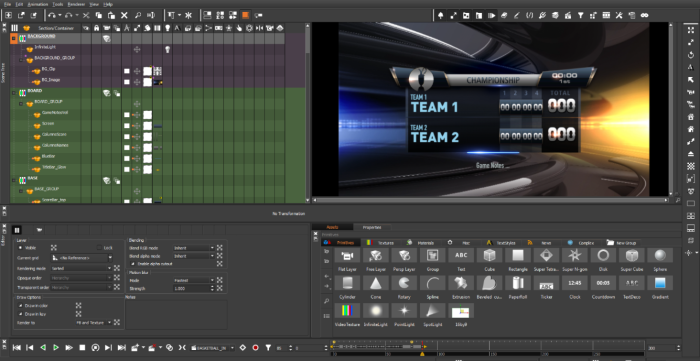
Avid, a leading technology provider that powers the media and entertainment industry, has announced that Medi1 TV Morocco, the Morocco-based, private free-to-air news channel, has integrated Avid Maestro graphics solutions to advance workflow productivity, content quality, and grow audience share. Leveraging Maestro™ l Designer to create compelling 2D and 3D graphics and Maestro l PowerWall to drive on-set monitors of any size and resolution, Medi1 TV can develop and deliver higher-quality, more dynamic news programming efficiently while reducing operational costs in an increasingly competitive market.

Medi1 TV produces compelling newscasts, talk shows and documentaries on current affairs, business and financial markets, and sports in both Arabic and French. To meet growing competitive market pressures, the broadcaster looked to increase production and content quality and deliver to audiences higher-value news programming as cost effectively as possible. 

“We needed to modernise our existing news workflow, as well as take advantage of state-of-the-art creative tools now on the market,” said Hicham Abderahim, head of Creative Department at Medi 1 TV Morocco. “With Avid Maestro graphics solutions, we’re no longer limited by outdated tools and can deliver highly compelling news content. Efficiency also is key to our operation and, thanks to our new Avid workflow, we’re able to expand our news footprint.”

Medi1 TV’s teams rely on Maestro | Designer to create dynamic real-time graphics across its news programming with greater efficiency, supported by Avid’s underlying HDVG4 graphics rendering platform. Maestro | Powerwall makes it easy for the channel to present, manage, and control rich media across its multi-resolution studio displays. It also uses Avid’s industry-standard video editing software Media Composer®, digital audio software Pro Tools®, and Avid NEXIS® shared storage.

“The news broadcasting industry is inherently competitive and extraordinarily fast paced,” said Ray Thompson, Director – Broadcast and Media Solutions Marketing at Avid. “Avid Maestro graphics solutions enable competitive newsrooms to create dynamic graphics to engage new viewers leveraging Maestro l PowerWall to drive in studio displays of any size and resolution offering Medi1TV the ability to easily update and change the look and feel of the broadcast easily and cost effectively.”

The role of MAM and storage in redefining news storytelling

By Dave Colantuoni, senior director of product management, Avid.

SCREEN AFRICA EXCLUSIVE: The way we tell stories has itself become the story. It’s a well-known fact that media consumption has changed dramatically. But storytelling is also undergoing a radical transformation. Alongside the proliferation of content platforms, including OTT channels, has come an explosion of content creation. Literally.

Late last year, Netflix predicted it would spend between US$7 billion and US$8 billion on content in 2018. Now it’s estimated that the streaming giant will spend US$12 to US$13 billion on its programming this year. And mainstream players are jumping into the market. HBO and CBS were among the first major networks to make digital forays with HBO Go and CBS All Access. ESPN Plus is now up and running and Disney is slated to debut its own streaming service in 2019. The speed at which content is created and its quality will be critical in differentiating streaming media companies from one another.

The sheer amount of content being created and the multitude of ways that media is being experienced creates production and distribution pressures—from the need for greater production speed and mobility to more intelligent ways of finding and managing assets. Further, media organisations must accommodate international versioning issues, including language captioning.

NEW CAPABILITIES AND ALTERED WORKFLOWS

As these forces exert pressure, technology providers are rushing to keep pace, innovating to deliver scalable, flexible and intelligent architectures to meet the new demands. Ecosystems capable of scaling and managing assets logically and flexibly, together with sophisticated storage technology are addressing the challenges of our ubiquitous ‘always-on’ live environment, enabling content production and distribution from anywhere to anywhere, and on virtually any device.

Perhaps nowhere are the needs—and the strides made to meet them—more evident than in the 24/7 news environment. For journalists, it’s about making workflows faster and easier and removing bottlenecks. Journalists can now be more autonomous and productive in the field, able to search, access and create content, send packages where needed, and get video on air and online faster—all from their laptops. News workflows must also integrate with web, mobile, and social platforms, while enabling all stakeholders to view footage in a browser, and comment on it or log it as needed. Quantum leaps for broadcast workflows.

There are also profound business benefits. For media companies of all kinds, highly integrated ecosystems that include sophisticated MAM systems and shared storage deliver tangible advantages. In addition to resource and cost efficiencies, increased productivity, and higher-quality content, functionalities like integrated metadata sharing help companies expand their assets and leverage content across brands, critical to staying competitive in today’s cost-driven broadcast environment.

Many of the tools that facilitate this new collaboration, speed and mobility are remarkably easy to deploy and use but underneath the hood lie some sophisticated technologies.

A COMMON INTERFACE 

A common, easy-to-use interface built on a web browser is needed to enable necessary stakeholders to easily access, view and even contribute to content. It must be an extremely lightweight and quick-to-launch client that can be used in a web browser anywhere with very little training. It should also seamlessly connect to a data center housing storage and the servers that run the infrastructure or to cloud or hybrid environments. The ability to move from on-premise to hybrid to cloud provides the portable capability so critical to today’s speed-driven, remote and highly integrated workflows.

Users can share content easily and communicate with each other about stories from anywhere in real time. Aggregating social media feeds, logging as content is being acquired, or cutting together a story based on assets on shared virtualised storage or a MAM system can all be achieved on the same interface. And news producers, for example, can log on to see content available and push or pull content to and from production systems within their station group.

RULES AND ROLES

It’s also critical for the interface to be applicable to roles in an organisation. An administrator should be able to assign user interfaces based on their tasks. A logger, for example, will see only the log functionality, or an editor only the clips they need. That sort of flexible interface is crucial. It’s not helpful for a logger to see social media feeds or have the ability to send content out to social media on a finished news story. So, an interface must have ease of use, flexibility and scalability built in.

APPS AS SERVICES

The ability to quickly and efficiently search all different storage mechanisms, both in the cloud and in on-premise, archive or nearline storage, is essential to retrieve assets quickly. A particular clip may be archived or parked temporarily on nearline, or on your online storage. The best search mechanics allow you to find and retrieve content quickly and easily regardless of its location.

Within this integrated infrastructure, accessing media functions is as simple as selecting the desired app, switching on the modules needed, and customising the workflow with the required media services and partner connectors. Apps that cover everything from searching and browsing media, researching data and social media feeds, logging, editing, review and approval, publishing and more—all accessed from the common interface for a consistent and unified user experience.

NEW SEARCH FRONTIERS

Software-defined storage architecture is designed to accommodate the shift to the cloud while supporting on-premise and hybrid workflows. On-demand access to a shared pool of centralised storage can be quickly provisioned, repurposed and tailored to each workspace’s capacity.

With storage, the faster it goes, the more expensive it is. An integrated ecosystem with a sophisticated MAM system can move assets where they should be at a given time, so you can avoid purchasing more production storage. A ‘‘media-aware’ system keeps assets close when needed, nearline when appropriate then further away to archive. It’s also a game changer amid increasingly sophisticated services and workflows like cognitive services.

If you have millions of assets, you’ll need to do some very sophisticated searching, which is possible by linking together all storage. But that’s just the beginning. Through services like phonetic indexing, indexing the spoken word of ingested content, you can search on phenomes, or just the voice of what was being said. Or use it to complement a metadata search. There are a wide range of services that can be tied together as your infrastructure gets more sophisticated.

It’s possible, for example, to upload content to a cloud computing platform like Microsoft Azure or Amazon Web Services and use AI-driven cognitive service capabilities to create metadata that’s searchable within your ecosystem. Functions like speech-to-text, facial recognition and character or image recognition become searchable metadata.

BETTER ASSET MONETISATION

All of this technology really drives toward a fundamental benefit: the best use and monetisation of assets. Most intelligently and economically storing assets and enabling users to easily access and manipulate those assets, wherever they are, lies at the heart of these systems. More advanced AI-driven metadata search can uncover content you might not even know you have, opening up new media and revenue opportunities.

The way we tell stories is evolving but the content is always the star. We need to make the most of it – knowing how to find it, where to store it, and how it can work for us.


AI – ready for primetime?

Written by Tim Claman, CTO and VP of Product Management at Avid

SCREEN AFRICA EXCLUSIVE: In technology circles worldwide, artificial intelligence (AI) is a dominant topic of reflection, research and increasingly, implementation. AI is delivering real value in several areas of the media production and distribution chain, but applications are limited presently. Other areas are showing tremendous potential and are now being explored. While it’s only a matter of time before the technology and our collective expertise overcomes current limitations, it’s interesting to note where we are now and where we’re heading.

ENHANCING CONTENT DISCOVERY 

The most obvious application of AI today is around automated metadata extraction or content “indexing”. The process of taking content, applying an algorithm to derive time-based metadata that is then registered in an asset management system is greatly enhancing content discoverability. For example, an algorithm that converts speech to text aligns each word in the text to markers within the content, making it possible to locate where a certain word or phrase is spoken.

It’s also possible to index content to find voice signatures that identify where a certain speaker is speaking. Now you have two layers of time-based metadata that allow fine-grained searching. You can keep adding layers or “strata” that enable even more detailed searching. For example, you may want to search for any time a particular public figure said certain words within a specific time frame. AI algorithms are so advanced they can do more than identify faces – they can infer the mood of each person at any given time. As you apply more AI algorithms to a content library, you add more strata of time-based metadata, enabling increasingly sophisticated searching, while automating a time-intensive task that’s difficult and prohibitively expensive to achieve with humans.

Perhaps even more valuable is the ability to discover valuable content long after it has been archived. Often, we don’t know in advance what content will be significant. AI can help uncover valuable assets that are hiding in plain sight within a content library. With enough metadata strata you can triangulate in to find content you may not even know you have.

Often confused with speech-to-text but operating differently, phonetic search has extraordinary promise. A time-based indexing algorithm can convert text into phonemes that take you right to specific locations within a piece of content. The end result is that you can conduct keyword searches on libraries never before transcribed. The ability to find clips/content phonetically works extremely well and is in products now on the market.

AUTOMATING QUALITY CONTROL 

Another significant AI use case is automated quality control (QC). AI-driven QC solutions can churn through a library of clips at one keystroke and analyse a broad range of quality parameters. It can show, for example, whether a programme master that is targeted for French audiences actually has French language audio tracks, eliminating the need for someone to watch an entire show track by track to know that it’s the right version all the way through – a tremendous time and resource savings.

AI can also be used to ensure the accuracy of closed captions. Without AI, manual caption checks are required. Sometimes captions are wrong in the programme master or aren’t in sync with the audio. AI quality control can confirm not only that captions are there but also that they’re correct. Some QC solutions can even make needed timing corrections.

An application at the nation’s leading over-the-top media services provider shows precisely how this type of QC is implemented. One of their brand differentiators is quality. So, the company runs all content through a gauntlet of automated QC services, such as audio levels and visual clarity, identifying whether a host of criteria are met to ensure the highest quality standards.

A NEW MEDIA SUPPLY CHAIN   

In addition to enabling better search and quality control capabilities, AI is also being used for operational business intelligence. In the pre-digital days, the media supply chain was extremely disconnected, with all steps of the process separated by physical media such as tapes. Today’s workflows are much more integrated and hold tremendous potential for operational efficiency.

But an understanding of the process is critical. To optimise your efficiency, you must track what people are doing and how they’re doing it in ways that inform the operational view of the media supply chain. With this kind of business intelligence, you can see where your pipeline is bogging down. Where are the choke points? Is it a lack of ingest capacity? Or if 30 per cent of time in edit suites is taken up by rendering, it may be time to offload editing to a render farm.

Through an integrated AI-enhanced media production platform, it’s possible to measure all operations. How many people are using the system? How many are working on a specific project? Where are the technical bottlenecks and so on? For the most part, this kind of data has been impossible to collect and analyse. Until now, media workflows have largely been a black box. But as media organisations seek to do more with less, more transparency into day-to-day operations is critical to garner operational metrics. AI can provide deep business intelligence to optimise production workflows.

AUDIENCE ANALYTICS 

It’s clearly an advantage to have intelligence and analytics about your audience and their viewing habits to inform business decisions. Beyond the production stages in the supply chain, AI has perhaps even more potential for optimising content distribution. AI can provide insights about consumption patterns that are impossible to glean otherwise. You can see the potential for news outlets and broadcasts. As news has become a 24/7 web and social phenomenon, news organisations and journalists need to know what’s trending and what news is breaking. Understanding events in the broader world context can influence how stories are assigned and prioritised. Today, specialised cloud-based service providers use algorithms to comb the web and synthesise trends, tracking information that may be relevant to a news topic from different information sources as they unfold. This data can be dynamically updated and available to journalists in a dashboard view, for example. AI that informs the creative process by analysing downstream consumption patterns presents extremely powerful application possibilities.

MOVING FORWARD 

The major challenge for more widespread AI adoption is not developing the algorithms, it’s how best to use and integrate them. As we add more and more AI capabilities, how do we harness the power they hold in a way that gives tangible business benefits? How do we make the user experience elegant in light of growing dimensions of data?  These are questions that will be addressed as the technology progresses and implementations evolve.

In short, AI is an area that’s ripe for innovation. Business models are still immature as companies assess how best to productise AI so it makes business sense both for users and providers. In the end, the closer we to get to the craft of storytelling the more of a human endeavour it becomes. AI is a tool that assists with storytelling. It doesn’t replace it.

By Tim Claman

- Advertisement -
- Advertisement -
- Advertisement -

Pin It on Pinterest