


The industry has seen huge technical changes over the past decade; the change from film to digital, the development of new technology and the introduction of LED’s to name but a few. These changes along with the impressive number of international commercials, television series and features that have been made in South Africa have influenced and shaped our local film lighting industry immensely. One just needs to look at the amount of gear available in SA, to realise our industry has grown rapidly, we can now service the biggest movies being made across the globe.
Many people say that lighting for the digital medium has become easier and smaller – that you need less lighting for digital, for me this is not the case. Digital cameras are light sensitive and unforgiving. Therefore, in both available light situations (day exterior) and artificial lighting set ups a lot more care needs to be taken to control and mould the light. The contrast ratios are extreme. Large textiles, 60 by 60-foot frame with a silk or grid cloth for example, are being used more and more to control the sun and create contrast.
It is very common to use large butterfly frames rigged to Manitou’s or flown on construction cranes. These kinds of rigs were not often used in the past, but with the influence of big movies and large budgets these massive setups are becoming very common. In my experience, it is not unusual to have up to ten lifting machines on a set at one time all rigged with various lighting tools, from large butterfly frames to a bank of large HMI’s, and green/blue screens.
The biggest change in terms of equipment that I have seen, has been the introduction of the new age HMI as well as the faceted par technology. A small 1.8kw faceted par that can run on a single 16-amp local point of supply has the same output (if not a bit more) than the older 4kw HMI’S, and the 9kw pars are as efficient as a 18kw Fresnel fixture. This helps in reducing the size of the generators needed to run some sets.
Another very important factor is the quality of the globes being made, the colour and life span of a globe these days is vastly improved. I was told many years ago that a Short arc bulb i.e. HMI bulb would gain 1° kelvin for every hour it burnt, I think it was more like 10° kelvin for every hour, the globes now are just so much better, and as a gaffer it is much easier to match a whole bunch of lamps’ colour temperatures.
LED technology is also becoming a real part of everyday lighting set ups, from Bi-colour panels to the various celebs, silks and LED kinos now available, it’s hard to imagine lighting a film without an artillery of these fixtures in the trucks. Almost all the good LED units available are dimmable, bi-colour and able to run on very efficient small batteries. I never imagined that in my career I would be able to run a couple of great quality LED units in an interior car for example, for up to five hours on a single v lock battery, or that I could gaffer tape a 2 x 2 foot flexible LED unit to the inside of a computer screen. These lights are small, lightweight, and very efficient.
LED is also becoming very popular in large studio setups, replacing the older tungsten units. This has huge advantages, not only do you have a huge saving on the power requirements, but less dimmers are required and one instantly has full dimmer and colour control. An example of this is on Mad Max: Fury Road where we had a huge studio set up and wanted a very large controlled top light source. We rigged a couple hundred space lights over a number of days, this of course is all possible, but I needed massive amount of dimmers and generators (and a very large diesel bill) to run them all, and as we know once you start dimming Tungstens you lose colour temperature so we spent loads of time and money colour correcting the space lights with lighting correction gels. It was a really amazing set up but it cost a small fortune. The same kind of set up could now be done with the with RGB colour corrected led units (e.g. ARRI skypanels) and have full control with no loss of colour temperature and use a much smaller power supply, saving both time and money.
I am a great fan of fluorescent lighting, and now that almost all the kinoflo or Filmgear flow bank units are DMX compatible, it allows me to use these units in many different applications. I love to use a large amount of Image 80 for large soft light sources at night. They are light weight compared to the older soft light units, use nearly no power and by mixing daylight and tungsten tubes in each unit and running them through a DMX controller you have full control, and can easily colour mix the units. I will often rig twenty or thirty units on a big construction crane for a moon source at night, and run the whole rig on a 32-amp power supply and have full control of each individual unit or the entire rig as a whole.
One really important element in film lighting now, is the relationship between production design and practical lighting. With digital cameras and the ability to change the colour timing on set, and later in post-production, so many more practical light sources have become usable. Very often sets will be entirely lit by practical lighting, the green cast of fluorescents for example can be removed easily, so a large location with piles of old fluorescents could in some instances light itself. Correcting any additional lights needed in this has become much simpler and safer (we also have the luxury of very good monitors on set) so you always have a good reference as to what the pictures are looking like, you not waiting for the film stock to be processed before realising the lamps don’t match in colour.
Lighting set ups are getting bigger, the fixtures available are smaller but more efficient and the LED technology is only getting going…the future is looking very bright indeed!
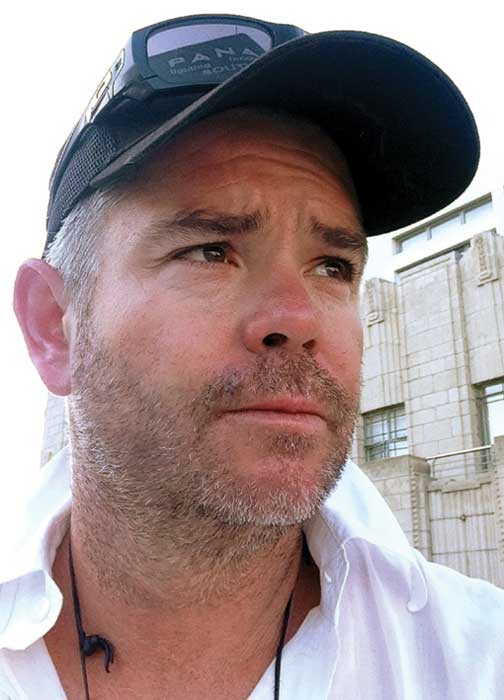
By Oliver Wilter, gaffer
