


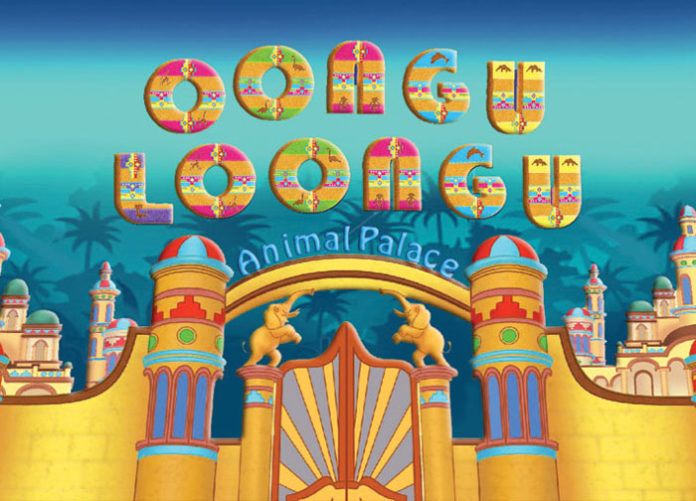
Created by Cape Town-based studio Oomph! Animation, Oongu Loongu is a magical animal sanctuary and rehabilitation centre for rescued, injured and endangered animals, with the goal of reintroducing them back into the wild, owned and run in similar fashion to Willy Wonka’s Chocolate Factory by the eccentric childlike veterinarian, Papa Joe.
Each episode revolves around the animal and environmental cases undertaken by Zak, a gifted 10- year-old orphan assisted by his two best friends; Boomba, a delusional Hollywood pygmy bear, and Poley, a puberty stricken humanoid Lion, with an array of antagonists challenging their objectives, most notably, Papa Joe’s granddaughter, Shirlee, an ingenious six-year-old socialite aided by her genetically enhanced pet Pekingese dog, Tysin.
The show is designed as a 52 x 11” 2D animated children’s comedy series with an educational twist, incorporating factual animal and environmental issues into the story arcs.
Background and Conception
Oomph was funded by the NFVF in late 2013 to create a visual marketing kit for an animated TV Series in the form of a five minute animated promo, storyboard, treatment, pilot script, character bible and a full season (52 x 11’) episode synopses.
Even though they were granted the maximum amount for the TV Concepts Development Fund of R200 000, it was always going to be an ambitious task to achieve the expected milestone deliverables (as set out in the contract), as an animation budget and production schedule are severely different, (and far more expensive) to that of a live film project, for which this fund (and its allocated budget) was specifically designed.
As a newly launched studio, with very limited resources and no sign of any potential work contracts in place (at the time), Oomph, formed by animation veteran Carmen Randall and producer Tariq Khan, seized this opportunity and devised various shortcuts to work within the budgetary constraints by enforcing reduced salary rates, mutli-tasking, training and employing junior creatives (to work under senior supervision), and making use of their personal affiliation to ‘boutique’ post-production studios’ willingness to accommodate us with discounted rates.
Pre-Production
When conceptualising the characters and the show itself, one also has to view the show as a marketable product; can these characters work (visually) on multiple platforms: as a toy, video game, t-shirt, smartphone app etc … not only to capitalise on licensing and merchandising, but more so to justify the costs of producing a completed series with a viable marketing and distribution plan in place to present to your potential investors, who’ll most likely view an animated product as a high risk investment.
Randall and Khan conceptualised the show and its characters, with Carmen designing them visually, first as rough sketches on paper, then into Adobe Flash CS 5 (Designed & Rigged) into its final form. They incorporated all possible marketing objectives as well as in-depth character traits, enabling the characters and the overall controlling concept and idea to work within multiple story arcs and mediums.
The next step was the script, a challenging prospect, as writing for animation is an acquired skillset (not yet mastered in SA), but also the format: “How do we write a script for a five-minute promo to sell as an 11 min format? Is it a trailer, or a mini-pilot? How do we showcase the main characters as well as presenting an overall tone and feel of the show to interest potential buyers?”
They opted to write a completed 22-minute pilot script (two 11-minute scripts for a 22-min slot), as there was far too much information to process in an eleven-minute episode, after which they would animate a few selected scenes (rather than random abstract visuals) in a five-minute promo, capable of achieving the primary objective of telling a story and thus, selling the characters and the show.
Production and Post-production:
In theory, if pre-production is completed efficiently with the animatic perfectly timed, the animation process should be a breeze. While Oomph’s junior animator handled all the prop animation and design efficiently, the lead animator had a far more tedious task to achieve in that of brilliantly executing the technical animation aspect which, due to the shortened production period, drew attention away from the character/performance animation aspect, forcing Randall to return to the animation chair herself, which diverted more focus towards the animation quality over the direction of the piece.
Market Attendance
After visual effects, final mix, edit and packaging, with all NFVF milestones being delivered and approved, Oomph was ready to attend the markets after this four-month long project. In March 2014 they headed to the Rio Content Market (Brazil) as part of the SA Delegation, empowered by the ATFT (Association for Transformation in Film and Television), being the only member representing animation.
The aim at Rio was to secure a co-production with a Brazilian counterpart, as their primary and most profitable platform are their pay-per-view networks, which house the most prominent Brazilian channels, and more relevant to us, their rendition (Latin American) of globally recognised channels (Fox, Cartoon Network, Disney etc… ) all of which had an enforced percentage quota requirement for Brazilian produced content, with international co-productions also qualifying.
It made as much sense as it didn’t, (the idea) of going via ‘the back door’ into (for instance) Cartoon Network (Latin America) as part of a Brazilian co-production, while the local pay-per-view network, DStv houses many international kids content channels (including Cartoon Network), yet they don’t acquire or commission any South African produced content for these channels.
The main challenge of an international co-production, in the context of what we’re trying to achieve, is the question of I.P ownership as well as whose project gets produced, not to mention the increase in production costs and time schedule. Whoever owns the majority I.P. retains the majority control and stands to benefit more financially.
One of many lessons learnt in Rio, was that having the support of any local broadcaster is a huge advantage, as it solidifies your project’s and studio’s credibility going into any market. Oomph! successfully secured a letter of intent from eTV for Oongu Loongu.
Fast forward to MIPJunior and MIPCOM (October 2014), where Oongu Loongu was selected as one of five projects from the entire MIPJunior catalog for the MIPJunior International Pitch, a first for any South African studio. Whether they won the pitch or not was irrelevant to them, Khan emphasises, the international recognition of being selected among the world’s best and most prolific studios’ projects was a massive achievement.
