


The decision to introduce a 90 per cent local content quota at the South African Broadcasting Corporation (SABC) is here to stay, and to be rolled out across all its broadcasting platforms. In the beginning of May, the SABC’s 18 radio stations began implementing a 90 per cent quotient in their respective music programming. Has this local quota thrown light on a number of grey areas in the industry?
This was a welcome decision, increasing regulations on radio for public broadcasting from 40 per cent and commercial broadcasting from 25 per cent. Arts and culture minister, Nathi Mthethwa expressed his support of the increase, “Local content develops, protects and promotes our national identity, culture and character. Local content broadcasting is an important element in the economy, as it determines market share. The more local content is used by broadcasters and other users the more the owners of the content receive financial benefit.”
The SABC stated that as a public service broadcaster it has a mandate to reflect the country’s heritage and culture to the South African public. Another key mandate for the broadcaster is to ensure that it develops and nurtures South African talent, through the broadcasting of local content. “The SABC took this conscious decision to raise local music content up to 90 per cent of its airplay, as the public service broadcaster believes it has a responsibility to contribute to South Africans who take pride in their music and stories,” says SABC spokesperson Kaizer Kganyago. “The corporation is not apologetic about this stance, as for many years artists in these respective industries have complained about being marginalised,” he adds.
Kganyago says that the SABC has not faced any challenges in implementing this decision and that they had received positive responses from government, music and television industry stakeholders and the public at large around the decision. “We are further encouraged by the positive response from some of our investors,” he confirms.
The SABC agreed that through focussing 90 per cent of airwaves on local music content, artists in both television and radio would reap the benefits of royalties more than ever before. “The SABC takes the restoration of human dignity very seriously as it is one of the organisation’s core values and we believe that this move will contribute to achieving that,” said Kganyago. “This decision will also assist in the creation of job opportunities.”
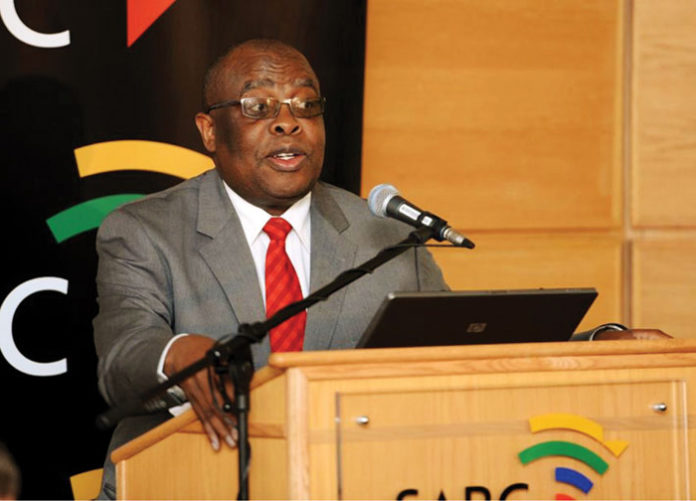
At the end of May SABC COO Hlaudi Motsoeneng, addressing content producers at the corporation’s offices in Johannesburg, confirmed that its 90 per cent local content quota will be adopted by the broadcaster’s TV channels.
As of July 2016 there will be an increase in local content offering on television aiming at 90 per cent. Motsoeneng said that the broadcaster’s commercial television channel, SABC3, would have an 80 per cent local content policy and other channels would increase to 90 per cent. Previous local content on SABC1 was at 75 per cent, SABC2 was at 65 per cent and SABC3 at 40 per cent. Motsoeneng did not state how this increase would happen. “We have given instructions, the how is not my business. From 1 July we should see a different SABC. I think it’s achievable, we are going to get rid of content that is no longer working for SABC,” he adds.
At the announcement Motsoeneng spoke of plans to revamp its television channels and to source more local content. He says, “This is the opportunity for South Africans. If we don’t have good quality content and good music, this is the time for people to grab this opportunity to produce that quality that we’re talking about.”
The SABC awarded more than 60 content producers and new talent contracts. The new talent is expected to produce content for the corporations’ television channels. Motsoeneng says this move will help empower young people and create jobs.
The SABC says it has put aside R600 million to boost its 90 per cent quota increase. This figure is based on the public broadcaster’s decision to go into business with local producers and celebrities including Khanyi Mbau, Somizi Mhlongo, and Arthur Mafokate, to assist in the success of this local content rise. A large part of this plan hinges on entertainment personalities. The SABC has vowed to continue to unleash new talent and broadcast more local content.
Motsoeneng adds that this local content facelift further ensures that billions of Rands won’t escape the country. “I can tell you, the bulk of money goes outside instead of staying here and we have created that opportunity within the SABC.”
As for its announcement of new language based channels, the SABC will launch Nguni, Afrikaans, English and Sesotho channels when DTT is launched. The SABC is planning on bringing in over 32 producers and 27 up-and-coming producers who will be the force behind the revamp.
Motsoeneng reaffirms: “You need to give us quality content, you need to give us the content that will be able to attract the audience and if you don’t attract the audience there is no reason why the SABC will keep such content in our platform.” He adds that it is also important for Venda and other language soapies to be created.
The SABC does include Africa in its local content. “As South Africans we cannot isolate ourselves from our fellow African countries. Many of our artists have collaborations with other African artists and for us that is local,” confirms Kganyago.
So, from now onwards, the SABC is nearly 90 per cent local. This could mean positive growth for the industry, an opportunity for digital platforms to increase traffic, and an opportunity to creatively promote international acts performing in SA.
Will it, however, see SABC viewership increase or decline as viewers switch to other channels that are focussed on giving viewers what they want, irrespective of who produces it? Only time will tell as we see how the SABC implements this increase.
