Home Authors Posts by Warren Holden

Warren Holden

14 POSTS 0 JOBS

Studios: the best of times, the worst of times

Trying to gauge the current state of the South African studio facilities sector can be tricky. On the one hand there are signs of the recession that is plaguing the industry at large. On the other hand a number of facilities have also taken some expansive measures. So where does the sector stand?

At a current estimate, there are around 30 film and/or TV production studios operating around South Africa, mostly in Johannesburg and Cape Town. The majority of these are long-standing facilities that have not seen much change in their business over the past year. There are some, such as Sasani Studios in Highlands North, Johannesburg, that have expanded or upgraded their facilities in the past year. There are also newer, smaller facilities entering the fray, bringing competitive rates and a touch of diversity.

On the whole the outlook expressed by the operators of these studios is guardedly optimistic. Three trends present themselves. On the one hand, there is talk of complete contraction as funding dries up, leading to studios having to accept lower fees or let their production spaces stand empty. On the other hand, there is a second trend, which indicates that an increase in business is expected as the demand for content continues to rise. This will mean more work but the lower fees problem will remain. A third trend, already an entrenched part of some studios’ business models, while others are only adopting it now, is that the weak rand will result in a considerable increase in outlay which can really only be covered by raising foreign currency revenues, ie. marketing to foreign production units as well as – or perhaps, rather than –  local ones.

Increased demand… is it enough?

Eileen Sandrock, CEO of Sasani Studios, describes the studio market over the past year as ‘volatile’. “While there has been a lot of interest from the market, budgets are tight, and a number of new studio complexes are emerging which are giving us a healthy run for our money,” she says. The emergence of new players, in combination with shrinking budgets, may lead to studio facilities being in the same boat as several other sectors in the industry, most notably post-production, where the work continues to come in but lower budgets and increased competition means lower revenues all around.

However, in Sasani’s case, the outlook must have been sufficiently bright to encourage expansion. After the company’s oldest sound stage burnt down in September 2014, it was decided, not only to rebuild the facility, but to do so in style. The new Stage 5 is an impressive space to say the least. Currently being used for production of the music competition show The Voice, the state-of-the-art building can accommodate productions on a large scale. It is currently complete with 12 Grass Valley HDX cameras, a 16-camera capacity control room, Soundcraft Vi3000 digital audio mixing desk, 32 audio channels and 12 video channels, collaborative editing on a shared storage system, flawlessly designed and installed soundproofing, production offices, green rooms, dressing rooms and space – lots of it.

The ideal situation for any facility is to source long-term clients, ensuring that studio spaces remain occupied for months, even years. This approach has worked well for Sasani, which hosts a good number of the country’s major soap operas, and for the likes of Telemedia, in Rivonia, Johannesburg which, according to national sales manager Quentin Barkhuizen, kept the majority of its studio spaces occupied for much of last year. Barkhuizen agrees that increased demand for content should lead to steady business for studios.

Trevor Stonebank, acting head of facilities at Urban Brew Studios, is less reserved in his positive forecast for 2016 than Sandrock and Barkhuizen. “This year started with a bang,” he says. “A period that was relatively slow in past years has really been booming for us, with some good long-format prospects, as well as our ventures into the African market with some of our licensed shows. We are really looking forward to a good year ahead.”

Stonebank notes that the booking of long-form productions has its pros and cons. “It is a challenge as one has to weigh up the costs and benefits of removing the studio from sellable inventory for a while, versus the financial stability and the impact it will have of remarketing the space once the long format production has left. At present urbanWorx has a good mix across genres. We do tend to tailor-make each budget to a client’s needs as the broadcasters seem to be really putting pressure on production houses to produce at lower and lower cost per minute.”

While all the comments from Sandrock, Barkhuizen and Stonebank point to the securing of long-term, long-form clients as a saving grace of the studios business, Stonebank’s remarks also touch on another vital survival measure for South African facilities – sourcing business outside of our borders.

Looking abroad

Aside from shrinking funds within the South African industry, one of the biggest challenges to face the industry in the past year has been the devaluing of the rand. “The exchange rate is the biggest challenge to us at present,” Stonebank says. “One day you can place an order and a few days later the price has increased by 30% or more due to the exchange rate fluctuation. The majority of the new technology that we require is not kept in stock here in SA, so we have to put ourselves at the mercy of the exchange rate fluctuations whenever making new purchases.”

Quentin Haffern of Realtime Pictures echoes this sentiment. Haffern recently took the risk of constructing an upgraded, state-of-the-art studio at his base of operations in Linden, Johannesburg. The decision to do so rested on the decreasing returns experienced in the post-production sector, which had previously made up the larger part of his business, despite studio directing being his first love. It was as the building project neared completion, at the end of 2015, that the rand took its notorious nosedive, driving up the costs of the essential gear he needed.

Haffern’s proposed solution to the problem is to try and ensure that a sizeable part of Realtime’s future business comes from abroad – and in hard currency. “Budgets here are just not enough,” he says. “I need to make sure that a good part of my business comes from offshore to cover the unavoidable costs we experience in running a studio.”

Perhaps easier said than done but well within the realms of possibility. South Africa is already a favoured destination for international film and TV creators and the low costs and high standards of production here – relative to the US and Europe – will continue to make it attractive. Facilities such as Cape Town Film Studios and Waterfront Studios have been basing their business on the servicing of offshore productions for a long time already.

With the double-edged sword of increased demand and decreasing budgets, the pros and cons of the weak rand and the mixed blessings of booking long-term studio ‘tenants’, the fortunes of the studio sector – like much of the rest of the industry – are hard to forecast. This truly could be both the best and worst of times.

Post-production sector discusses its challenges at Screen Africa roundtable

On 12 November 2015, Screen Africa hosted a roundtable discussion for
practitioners in Johannesburg’s post-production sector, to discuss some of the
problems facing editors, colourists, final mixers and effects facilities in the country
and, by extension, the film and television industry as a whole.

The event was very well attended, with around 40 representatives of the sector
taking time out of their busy year-end schedules to attend.

Over the past year, Screen Africa staff, through their regular interactions with post-
production artists and technicians, had picked up on a number of common
challenges facing the sector. These could partially be reduced to two major
questions: firstly, the rising trend among major advertising agencies to bring post-
production work in-house; and secondly, a tendency, observed by many in the
post-production sector, for producers to allocate a disproportionately small
percentage of a project’s overall budget to post. During the discussion, these were
touched and expanded upon, with several other points added.

Some of the major points to emerge from the discussion are as follows:

  • Post-production artists and technicians are price takers, ie. they are forced to
    accept whatever prices are dictated by production budgets, rather than their
    preferred asking rates.
  • There is a feeling that the work of post-production is undervalued in the industry
    at large and post-production operatives have been inclined not to assert their value,
    usually as a result of economic necessity – as work gets scarcer and competition
    gets stiffer.
  • From the point of view of post-production people there is a lack of uniformity in
    standards across the sector. At one end is the “lone operator with a laptop’ business
    model and on the other is the large-scale post house offering the full value chain
    from offline to final mix and grading. This results in a broad range of differentiating
    factors in terms of operation costs, skills, expertise and quality. This differentiation
    does not seem to translate to the demand side of the market, however, as is shown
    by post-production’s “price taker’ status. To many producers the only differentiator
    is price, meaning that, to use a car analogy, post-production services are expected
    to deliver a Ferrari for the price of a Toyota.
  • There are concerns about the future and transformation of the industry. Hundreds
    of graduates come out of training institutions every year. Where do they go? What
    are they being taught? Are they equipped to fill the industry’s skills demands?

Some possible answers raised to these problems are as follows:

  • The industry is changing and so there is no question of finding ways to restore and
    maintain the old status quo. New workflows and new business models must be
    devised.
  • Some post facilities have found partial solutions to reduced revenue by expanding
    and diversifying their service offerings.
  • Quality differentiation needs to be re-asserted. As with any industry, there are
    product tiers and you get what you pay for. If you are on a limited budget you can
    get the best relative to what you are able to pay but you can’t expect the “premium
    offering’.
  • Post-production and other parts of the industry should interact more closely with
    the training sector. Training institutions need to know what the labour demands of
    the industry are and cater to them.
  • The most pervasive opinion was that collective action is needed – the existence of
    some sort of body that can facilitate collective bargaining and that actually has
    teeth. This would require all members to know the value of their work and to assert
    it, while still understanding the realities of budget limitations in the industry.

The problems raised are not easily solved and would require a great deal of further
discussion and collective effort but there was a general sense – expressed by many
attendees – that the gathering was a useful forum to express ideas, inspire
collaboration and come up with solutions.

Screen Africa will host a follow-up discussion in the first quarter of 2016 to focus on
possible solutions and open up the conversation to other disciplines within the
industry.

By Warren Holden

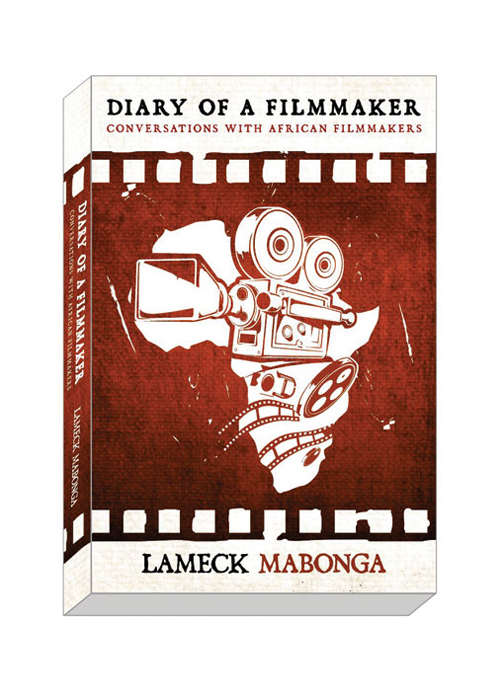
SA cinematographer writes filmmakers’ handbook

South African filmmaker, camera operator and sound recordist Lameck Mabonga
recently launched a self-published book intended to offer aspirant filmmakers a
guide to all aspects of Africa’s film industry, by way of a series of conversations
with established industry professionals, from producers to cinematographers,
directors, editors and actors.

Titled Diary of A Filmmaker – Conversations with African Filmmakers the book was
four years in the making and is intended as “a powerful toolkit designed to educate
and equip filmmakers in Africa and beyond. This is a conversational journey with
real life moments from people who have made a name for themselves in the
industry and their work has followed them and inspired many, some of them
without attending film school.’

Mabonga, whose own career has developed through a combination of formal
education (at AFDA), self-teaching and on-the-job experience, noted early on that
there were no decent books available that could introduce newcomers to the
specifics of Africa’s film and television industries. “There are a lot of American
books and they are all theory,’ Mabonga explains. “I envisioned a book that is very
practical and simple. If you are passionate about writing, you can go through the
chapter on scriptwriting and at the end of that, you should have an idea of how to
put a script together. No one can teach you how to write – you either have it or you
don’t – but the book offers the essential guidelines on how to go about it’

The concept of the book was modeled on the self-help books of Napoleon Hill.
Writing from the 1930s to the 1960s, Hill published several guides to success and
wealth creation, drawn from interviews with some of America’s self-made
millionaires. Inspired by this concept, Mabonga, spent a number of years
interviewing successful film industry personalities to try and find out how they
achieved success in their particular fields. Among the interviewees were actor/
writer Jonathan Pienaar, cinematographer David Forbes, director Adze Ugah,
producer Harriet Gavshon and actor Jamie Bartlett, to name a few.

Among the topics covered by the book are:

  • Scriptwriting – from concept to screenplay, including the proper industry standard
    format
  • Keys to engaging and relevant storytelling
  • The skills and challenges involved with selling scripts to broadcasters and
    investors
  • The importance of performance
  • The art of cinematography – the basics of telling a story using light and
    images
  • Some survival tips to sustain oneself in the industry
  • The power of networking on set
  • Financial management

“The most important thing I have learned from the experience of writing the book is
that, as a filmmaker, you are always a student of life,’ Mabonga concludes. “No
matter how much you learn, how much you think you know, always humble yourself
and always be prepared to learn something new.’

Diary of a Filmmaker can be pre-ordered on the dedicated website here.

By Warren Holden

Sony’s 3D splash at IBC

SCREEN AFRICA reports from IBC, the premier technology trade show for the broadcast and content production industries.

With its stand in a brand new venue at IBC and sporting a futuristic design, Sony Europe presented its latest product releases to the global media on 10 September, prefaced by a 3D demo of various types of content, including a concert performed by the late, great Jimi Hendrix.

That Sony is so focused on 3D comes as no surprise to Screen Africa readers who will know that during the recent FIFA World Cup, Sony partnered with Host Broadcast Services to cover 25 matches in 3D.

Marketing director of Sony Europe David Bush described 2010 as “the year of 3D’
and said that Sony was very proud to be involved in all areas of 3D – production, exhibition, 3DTV and 3D game consoles. Said Bush: “3D is a huge opportunity not only for Sony but for the entire creative industry. However, this format is all about content.  Sony is committed to compelling and comfortable 3D images. 3D is a new art form but there is a huge responsibility on 3D manufacturers and content producers.  At Sony Basingstoke we are developing a 3D centre of excellence for technicians, content producers and cameramen.’

Bush acknowledged that Sony was at the beginning of a long journey into 3D and that the manufacturer was proud to have built the world’s first ever 3D outside broadcast (OB) van.

Sony Europe’s audiovisual media director Olivier Bovis commented that 3D was becoming part of Sony’s DNA.  He highlighted Sony’s 3D box which was beta tested at the World Cup and refined based on feedback from clients.

“The 3D box now has additional features including 2D to 3D conversion, picture stitching and 2D and 3D graphics insertion,’ continued Bovis. “Our brand new production switcher, the MVS-8000X, which was introduced at NAB this year, now has the added functionality of accommodating 3D over single connectivity.

“We are releasing two models of 3D monitors which were used as prototypes during the World Cup. These are the LMD-2451TD and the LMD-4251TD. Sony is also launching the world’s first 3D editing solution, the Vegas 10, which boasts integrated native 3D workflow.’

In closing Bovis showed the prototype or Sony’s 3D camcorder, the MPE-200.

For more on Sony’s latest products see the October issue of Screen Africa.

- Advertisement -
- Advertisement -
- Advertisement -

Pin It on Pinterest