Home Authors Posts by Gezzy S Sibisi

Gezzy S Sibisi

129 POSTS 0 JOBS
Gezzy S. Sibisi is a senior journalist at Screen Africa. She is experienced in print, broadcast and digital media. Her portfolio of work includes working as a lifestyle reporter as well as contributing business and education articles to The Times, Sowetan, and Daily Dispatch publications. As a freelancer, she has worked on content development for corporate newsletters, community newspapers, blogs and educational websites.

No such thing as Easy Money

With the high cost of living and countless expenses, most South Africans are drowning in debt and are therefore quick to jump at any opportunity to relieve themselves of their financial woes, even if it means dragging other people into false dreams of quick riches to double their rewards – this is how pyramid schemes are formed.

Easy Money is a television drama series inspired by real-life stories of now-infamous pyramid schemes, seeking to answer the question: Why do we fall for pyramid schemes?

On 6 September 2016, the South African Reserve Bank launched a national campaign in a bid to raise awareness regarding illegal deposit-taking schemes; emphasising to South African citizens the old adage that if it seems too good to be true, then it probably is – even if it comes from a trusted neighbour, friend or family member.

“Easy Money tells the story of, Khosi Seane, a school teacher who enjoys a good standing in the community and takes great pride in her charitable deeds. She reluctantly moves from her Mondeor home at the insistence of her middle management car-dealer husband Justice into the southern Johannesburg suburb of Bassonia,” shares producer Viva Liles-Wilkin.

“The move puts financial strain on the family, and when Justice has a car accident, they find themselves in a crisis situation. Their apparently affluent neighbour Dipuo and her charming business associate Leano offer a solution, inviting Khosi to join their investment club and make quick cash by buying into Pharaoh Investments. The cunning pyramid scheme structure lures Khosi deeper and deeper in with the attraction of easy money and the promise of solving all her financial struggles but the reality is she has helped steal the savings of people in her community.”

The series is narrated by Khosi Seane’s (Xoli Zondi) twelve year old son, Moagi (Paballo Khoza), depicting not only the actions of the culprits and victims of these scams but also reflecting on how the victim’s families are affected.

The 12-part series also takes us through the highs and lows of partaking in such schemes as we witness Seane, a once dignified and outstanding citizen in her community, lose her way.

“The series is a universal story of how the allure of money can make individuals do atrocious things, lose their moral compass and compromise their integrity when faced with the promise of easy money,” Liles-Wilkin says.

While pyramids schemes nowadays have evolved and take place in many forms including travelling vouchers, health products and cosmetic merchandise; Easy Money chose to study the cash-based model which requests payment upfront to become a member, and recruiting your friends to move up the various levels.

“The problem is that pay-outs can only happen as long as each member is recruiting new members. Very quickly the market becomes saturated, new investors become impossible to find, and the bottom falls out. A few people at the top get very rich, and a lot of people below them lose everything,” says Liles-Wilkin.

“Of course if you get in at the beginning, this can be extremely lucrative. But it’s only a matter of time before there are no more Peters left to pay Paul and the whole thing comes crashing down, as pyramid schemes implode,” she adds.

In 2016 the National Consumer Commission (NCC) investigated nine companies that had raised suspicions of being possible pyramid schemes after a tip-off by the Reserve Bank. One of these schemes turned out to be the Sergey Mavrodi MMM scam which collapsed in April last year, leaving many citizens losing their investments, with some losing more than R150 000 in savings.

In the Easy Money series, one such mastermind is Mister Eddy. He presents himself as a legal attorney overseeing Pharaoh Investments. David Denis plays this sly character that is seemingly soft-spoken at first but later reveals his ruthless side when confronted and will remove any threat to his business without a second thought.

“Easy Money departs from a straight drama as we wanted to shift the tone of the show from serious drama to something with a lighter touch, more sassy, slightly tongue in cheek, irreverent, playful. The subject matter of pyramid schemes and lost values is heavy subject matter but we wanted to lean to a darkly comedic style while still keeping it personal and dramatic. A bit morally ambiguous and fun to watch implode,” says Liles-Wilkin.

In the research stage of the series, Liles-Wilkin and her team got to speak to members of such schemes as well as attorneys involved in the prosecution of those who commit financial crimes.

“What we found eye opening about our research was just how many people have been involved in or affected by the promises of get-rich quick schemes. Mothers, aunts, uncles, daughters, so many people had a story to tell of either themselves or someone close to them being involved in schemes or MLM companies. Also resonant was the feeling of failure and betrayal among those that had lost savings and security due to their investment gambles,” shares Liles-Wilkin.

Easy Money was shot on the Canon C100 camera at various locations in and around Johannesburg including Bassonia, Soweto, Braamfontein and Mondeor.

The series will air on e.tv from 12 September 2017 at 21h30. A second season will follow in January 2018 with 14 episodes.

“We hope that audiences will watch the series as a cautionary tale. We want them to be entertained and enjoy the ride but also find a lesson in the story about working towards your aspirations and goals without losing your way in the greed of material possessions,” Liles-Wilkin advises.

TECH CHECK

EQUIPMENT

  • Camera: Canon C100


KEY CREW:

Production company: Quizzical Pictures

Producer: Viva Liles-Wilkin

Directors: Zolani Phakade and Andre Odendaal

DOP: Trevor Brown

Moviez – a new local website for cinema lovers

0

“We hope our next big feature will be the ability to purchase tickets on the site. We believe that users will love the ability to not only see the showtimes but to complete the purchase right there, making the process extremely convenient for audiences.”

Our world is full of glitches that require the right entrepreneur to come along and see great business potential in…

“I work in an area that has three Ster-Kinekor cinemas, a Nu Metro, a CineCentre, and a @movies cinema all within a 7km radius. We love movies and go quite often, but every time we wanted to go, we had to open four tabs in a web browser to see all the showtimes at the different cinema chains as well as going to Metacritic to see reviews and metadata on the films we were interested in.”

“Now it’s all right there in one spot on moviez.co.za,” says Ryan Haidarian, co-founder of Forefront Media Group which recently set up a comprehensive film website for avid movie-goers, curbing the time wasted on multiple cinema sites.

The one-stop shop features all the main cinema chains in South Africa including Ster-Kinekor, Nu Metro, casino-based cinemas under @Movies as well as the Cine Centre chain.

On the homepage there are five tab options which include: Now Showing, Opening This Week, Coming Soon, Family Zone and Top Rated. These are also found under the Movie menu section and are accompanied by a list of movies catered to each category.

So far the list includes international and local commercial movies showing nationwide, however through time and future improvements Haidarian would like to also feature independent cinemas.

“It’s definitely on the list of future features for our site – we’d love to have the Bioscope and The Labia and other independent cinemas have their showtimes displayed on moviez.co.za but right now they don’t have an API or feed to give us that our system can pull the data from automatically,” he comments.

Haidarian confirms that the process undergone to get these feeds from commercial cinemas has also not been an easy task.

“It’s been a long and challenging process as we’ve gone through six development teams. There have been numerous technical challenges with all of the different feeds that we get from the different cinema chains and consolidating those into one seamless one that our site runs off.”

Clicking on any of the listed films takes the user to the specific movie page which includes the film’s poster, a trailer, synopsis and other metadata. This page also includes a list of reviews received which can be clicked to access detailed reviews. There is also a rate card regarding the film via a specialised metacritic system.

“We use a rating system from metacritic that ranks all of the top films currently on circuit based on the scores that are given from global reviewers. Each film on our site that has been reviewed internationally has a rating associated with it that users can see in either a green, yellow or red box with a score between 0-100. These scores are also ranked from highest to lowest on the Top Rated page – in this way users can quickly go to that section of the site to see how each film currently on circuit ranks with reviewers, helping them make a decision on which film to watch,” explains Haidarian.

At the bottom of each movie page are the showtimes for the day as well as notification on which cinema is closest to the user at that very moment. The geo-location is also available immediately when you log on to the website. Users can let the site auto-detect their current location and view a list of cinemas based on their proximity, or enter the location that they will be visiting later.

Another option is that users can just select their preferred mall and see all the showtimes of that specific location, or rather select a film and let the auto-detector give you the cinema and latest showtime. Specialised cinema screening formats such as 2D, 3D, 4D and IMAX are also available options on the site.

More details on the functionality of the website can be found on the tutorial section of the website.

Moviez had a soft launch three months ago and has seen its users increase by 50 per cent each month confirms Haidarian. “We’ve been relying on users to spread the site via word of mouth and hope to see the site continue its growth trajectory,” he adds.

Moviez has a subscription newsletter which comes out before the end of each week regarding any updates and special offers at various cinemas for that weekend.

“The subscription list along with our social media platforms on Facebook, Instagram and Twitter are where we let our users know about new releases, special offers, ticket giveaways, etc.,” Haidarian shares.

More improvements and developments are envisioned for the site in the near future. However while the site is still in beta, users are urged to leave their suggestions and comments regarding any problems encountered on the site.

“We hope our next big feature will be the ability to purchase tickets on the site. We believe that users will love the ability to not only see the showtimes but to complete the purchase right there, making the process extremely convenient for audiences,” Haidarian concludes.

Women in advertising chair a transformation and upliftment affair

0

Transformation within the creative industry starts with formulating the proper channels, beginning with the mentorship stage, and working towards creating valuable partnerships that will ultimately cultivate you within your leadership roles, allowing you to uplift others as well.

Simone Bosman has gone full circle, from her days of working as a PA for a Cape Town production house, to partnering with film and ad industry female powerhouses – Melina McDonald and Lorraine Smit – to establish Molo Sana Films.

“Through the years I have been fortunate to have direct mentorship and guidance under my then HOD’s who were Jeni Cole, Nicola Martin, Janet Sender, Cindy Gabriel, Debbie Dannheisser and now my business partners Melina McDonald and Lorraine Smit of Darling Films,’ shares Bosman.

Recently Bosman decided to take on and initiate another project, when she, together with other influential industry women – TBWA Hunt Lascaris’ executive creative director Jenny Glover and FCB Africa’s creative director Suhana Gordhan – launched their first Open Chair event.

“The inspiration for the event was largely goaded by the fact that our SA advertising and marketing industry lacked a platform wherein women (young and senior) can come together to share their experiences and help each other. All three of us were fortunate enough to have worked with and been mentored by strong industry women in our careers. However there are large amounts of younger women who do not have that access as there are very few women on the top.’

Open Chair was established with the aim of occupying the empty chairs in the industry with more women leaders. Keynote speaker at the first Open Chair was head of Facebook Africa, Nunu Ntsingila-Njeke, who presented the attending ladies with startling and thought-provoking figures which state that only 3 per cent of females are leading the advertising industry despite the fact that 70 to 80 per cent of the purchasing power lies with women. That is not enough, said Ntshingila-Njeke; we need to ensure that women continue to grow.

“We were honoured to have our first event opened by the mother of advertising, Nunu Ntshingila-Njeke who shared valuable insights about the role of women in our industry and urged us as women to start advocating for more women to be groomed into senior positions,’ comments Bosman.

While mentor, Fran Luckin was celebrated for making history as the first South African woman to serve as a Jury President at Cannes Lions. Co-founder of Open Chair and “Chair Aunty’ of the Loeries, Suhana Gordhan took the time to thank the other mentors for their attendance which included Dani Heyns, Mukondi Ralushayi, Nkagbiseng Motau, Lorraine Smit, Melina McDonald, Kirsten Leeuw, Jana Hamman, Vanessa Maselwa, Neo Segola, Thithi Nteta, Mariana O’Kelly, Masego Motsogi and Gugu Nkabinde.

Speaking on the inclusion of more female figures Bosman expands: “It was imperative to include more senior females from our industry so as to show the scale and magnitude of women doing great things already. The three of us are not the only industry leaders; there are many more women who have paved the way for us to be here today.’

It was also clear that there was a need for such an initiative as the call for young and eager individuals who were either interning or would like to grow into the industry was greatly received. “We received an overwhelming response from the younger women to attend and it was a clear indication that they are yearning for mentorship,’ says Bosman.

“Younger women should not back down from their ideas and should never be intimidated by their seniors but rather see their views as a challenge to excel,’ she also advised.

The event included a “speed dating’ session whereby leaders in the industry sat down as mentors with juniors and aspiring creatives for 9-minutes rotating in an attempt to offer these hopefuls the motivation and encouragement they need to one day reach the hot seat.

“The feedback has been overwhelming and heart-warming. We definitely will host more events in the near future so that we can keep the relationship growing,’ says Bosman.

Bosman also shared that she and her co-founders at Open Chair would like to see to it that the initiative becomes an institution for all women across the continent to access and exchange information and opportunities, and that hopefully this drive will cross over to other industries.

“By simply allowing access for younger ladies to engage with senior women gave them the encouraging boost to not be afraid to work towards a bigger goal. That they too, have the power to be the next CEO. We just need to support each other all the way up,’ Bosman concludes.

by Gezzy S. Sibisi

Aquafresh and Mafikizolo collaborate on new music video

0

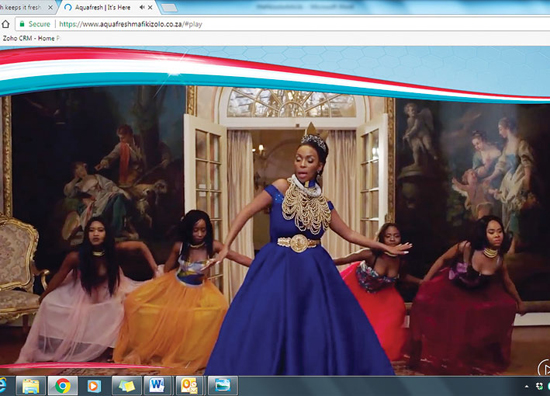
Unconventional pairing can work when done through a “fresh’ approach as seen in this collaboration on Mafikizolo’s latest music video for the song Love Potion, with toothpaste brand Aquafresh.

“Aquafresh had just launched their new variant of Extreme Clean: Lasting Fresh. We were looking for content that would demonstrate “freshness that lasts’ and what could be more fresh than one of South Africa’s most loved bands dropping their latest music video?’ shares Angie Hattingh, creative director from the design and creative digital agency, Havas Boondoggle.

Mafikizolo which is an afro-pop duo consisting of Theo Kgosinkwe and Nhlanhla Nciza, has been able to sustain themselves in the entertainment industry by constantly evolving their sound and style sense through the years in order to stay relevant. After three years of being out of the game, the band wanted to make a stellar comeback with the title track, Love Potion from their new album.

Aquafresh is an optimistic, vibrant brand says Hattingh, and with the help of their marketing manager, Refilwe Ralefeta, who has a strong vision for the brand, the creative team at Havas Boondoggle sees more room for col-laboration between Mafikizolo and Aquafresh.

“Aquafresh is a well-loved, family brand. Mafikizolo are a rare breed in the music industry in that they have a very strongly positive image that resonates across ages. They, like Aquafresh, are a household brand loved by millions,’ affirms Hattingh.

The partnership deal includes an Aquafresh-Mafikizolo website where the Love Potion music video can be viewed exclusively. “We wanted to create a place for Aquafresh fans to experience fresh Mafikizolo content while learning about Aquafresh Extreme Clean Lasting Fresh. Music videos released on exclusive platforms have become quite popular over the past year internationally and we wanted to experiment with the same thinking,’ informs Hattingh.

The site also includes exclusive behind-the-scenes videos, downloadable autographed wallpapers and competitions where viewers can win Aquafresh hampers.

“Mafikizolo had the vision to make the video like a fairy-tale…something like beauty and the beast… just without the beast! Together we wanted to weave Afro-futurist aesthetics and West African dance with baroque interior design,’ says director Garth von Glehn.

Mafikizolo also wanted to fuse the idea of a fashion film/music video and looked into von Glehn’s fashion portfolio for inspiration.

The look and feel they wanted to achieve is “regal afro-futurist,’ explains von Glehn. “We just mashed up a few different eras for this video. 1600’s French/Italian Baroque meets current day Masai and a touch of somewhere in the future.’

In the video, Nciza and Kgosinkwe play the Queen and King persona with their loyal servants serving, pampering and entertaining them.

In another scene, Nciza is seen being given an ornate gift box with an Aquafresh toothpaste in it. The rest of the film is a showcase of the beautiful Masai garments worn by guests and servants as they feast and dance the night away.

Wardrobe and styling duties were done by Lufuno Sathekge and her team. Together they made every item of clothing in the video apart from Nciza’s dresses, informs von Glehn.

“It was kind of outrageous. I went into the wardrobe room at one point and there was a tailor straight up conjuring new pieces on a sewing machine while we shot!’ he exclaims.

Celebrity make-up artist Nthato Mashishi did Nciza’s looks and plays a cameo role in the video as well.

The video was shot on the Alexa mini at 1/50th second. This was the first time that von Glehn has attempted to shoot in this aspect ratio as he is used to shooting in shutter speeds, he shares.

Lighting set-ups were kept simple for the shoot with HMIs and some diffusion frames used to keep the source close and soft, von Glehn explains.

Von Glehn’s production company, Flourish and Multiply handled all post-production duties.

Aquafresh officially launched the Extreme Clean Lasting Fresh toothpaste on 20 July 2017, and Mafikizolo are said to release their album before the end of September this year.

TECH CHECK:

EQUIPMENT:
• Camera: Arri Alexa Mini

KEY CREW:
Director: Garth von Glehn
DP: Karl Schmidt of Green Haus Films
Choreographer: @litchi_hov
Stylist: Lufuno Sathekge
Makeup & Styling: Nthato Mashishi

by Gezzy S. Sibisi

A pan-African silent tale in A Hotel Called Memory

0

In the Silent Era the art of storytelling and cinematography lay in the visual interpretation of the narrative; while a new age and sound have come to replace some of the old filmic elements, the “tone poem’ still has a place in modern storytelling, by giving new life to deep-rooted cinematic aesthetics of evoking the senses with poetic imagery.

“I have always liked films with no dialogue, or long passages where you as an audience member are truly enjoying the visual aspects and following the story and filling in the blanks. I always loved those and always wanted to make one.’

“Alain Gomis’ Tey is a good example. Although there is some dialogue in that film there are long passages that are silent and it’s just beautiful,’ says Akin Omotoso, director of the first pan-African silent film titled, A Hotel Called Memory.

While media reports have referred to the film as an “experimental project’, Omotoso affirms that it is a tone poem. ‘It’s about the mood and the experience. I really wanted the audience to have a lyrical and visual experience,’ he says.

The story is based on a divorcee named Lola played by Nigerian actress, Nse Ikpe-Etim. The film takes us on her journey from Lagos, where she separates from her husband, and as she seeks solace through her travels to Zanzibar.

Nigerian actress Kemi Lala Akindoju plays Lola’s friend Tokunbo, while South African actresses, Mmabatho Montsho and Nomzamo Mbatha play Ayanda and Tina respectively. Although Lola never meets Ayanda and Tina, her story is somehow affected by them.

“This all comes back to the story written by Branwen Okpako. She placed the characters in those environments: Zanzibar, Lagos, and Cape Town. And we thought it would be exciting to explore these spaces.’

Nigerian veteran actress and film producer, Ego Boyo had previously worked with Omotoso on a six-year project which never materialised. This however did not deter the filmmakers from wanting to collaborate again in the future. Consequently, A Hotel Called Memory soon became the ideal project and story for them to take on together.

“She trusted the team. Not too many producers would allow a crew of five people and a thirteen page outline to go off and shoot in three different countries,’ shares Omotoso.

In 2015 the film crew started shooting and went to Zanzibar for a week. They then took a few months off before heading to Cape Town for two weeks.

“We wanted it to be very organic and natural. With the DP, Rob Wilson, we used natural light so we could get in and out of spaces quickly. People panic when they see big light trucks; we didn’t want that so the production was very mobile. We would put the actors in real environments and we would film, just observing and reacting as they reacted to what was happening around them,’ Omotoso explains.

After the Cape Town shoot, Omotoso asked for a few months off to complete his film Vaya, before they could go on and do their final shoot in Lagos.

The film was shot using a Sony A7S camera on a 45mm swing shift with tilt lenses. “To achieve what we wanted Rob used the Sony A7S because of how it reacts to natural light and also it’s excellent in low light conditions,’ remarks Omotoso.
Post-production was done by Ladies and Gentlemen Film with Marc Baleiza as post-production supervisor and Kimberly Hobbs as the colourist.

“The film is 60 minutes long. The sound design took a while because we had to find the right tone for the film, so it’s a combination of reality – the sounds of the different countries – and great expressionist sounds and lots of silence,’ says Omotoso.

A Hotel Called Memory
has since had its international premiere at the 6th Annual Blackstar Film Festival, which only Boyo attended. After the film was showcased at the festival, there was a discussion session whereby the audience could ask Omotoso questions via Skype.

“The response was positive. People remarked how beautiful the film looked, the feeling of experiencing the story, lots of questions about the process. How the actors were directed, how the story came to be shot in the different countries,’ shares Omotoso.

The film also won an Audience Award at the festival for Favourite Experimental Film which Omotoso views as a great affirmation for the film.

A Hotel Called Memory will have its African premiere at the 7th Lights, Camera, Africa Film Festival which runs from 29 September to 1 October 2017 at the Federal Palace Hotel in Victoria Island, Lagos.

TECH CHECK:

EQUIPMENT
• Camera: Sony AS7

“To achieve what we wanted Rob used the Sony A7S because of how it reacts to natural light and also it’s excellent in low light conditions.’ – Akin Omotoso

KEY CREW:

Director: Akin Omotoso
Producer: Ego Boyo
Writer and editor: Branwen Okpako
Director of photography: Rob Wilson
Sound design: Guy Steer
Music: Joel Assaizky

by Gezzy S. Sibisi

A celebration of Zulu culture in contemporary Jozi settings

0

Queen Mkabayi ka Jama is one of South Africa’s most powerful female icons in the history of the Zulu nation; not only was she the paternal aunt to one of the greatest warriors of all time, Shaka Zulu, she also painted and influenced historical records as an adviser and influencer of the leadership ranks in the Zulu culture.

She is King brings this powerful historical figure into contemporary settings in a musical film that showcases Johannesburg as the Broadway of Africa.

The title of the film is meant to act as a catalyst for discussion says producers Nicola Rauch and Mpho Ramathuthu; a female duo who are passionately involved in scriptwriting activism and training through their company The Griot.

“First and foremost, we wanted a title that causes discussion and entices people to watch the film. Why is she King and not Queen? Why is she royal at all? Who is She?’ co-producer Nicola Rauch enthuses.

She is King is based on the journey of Khanyisile Khumalo, a young talented Zulu performer from kwaNongoma in KwaZulu-Natal (KZN), which is also the home of the Zulus and the place where Queen Mkabayi ka Jama’s grave is found.

The film follows young Khumalo as she leaves her home village of KZN and heads to the “big city’ in the hopes of pursing her dreams of reaching stardom under Johannesburg’s dazzling lights. She sets her heart on a musical audition in a great production based on the life story of Queen Mkabayi ka Jama and lands the life-changing role.

“I wanted to do a musical – I have always been a big fan – and the journey of a young person travelling from KZN to Johannesburg to seek their fortune/success is such a classic South African tale that I decided to use that story as the basic premise.’

She is King boasts a female cast made up of popular faces and young emerging talents including actresses Khanyi Mbau, Zoe Mthiyane, Mandisa Nduna, Gugu Zulu and Khabonina Qubeka – who is also the choreographer of the film.

Rauch affirms that the film has strong feminist themes – a young African woman really fighting to find her place, and her voice in the world. Therefore, she and her co-producer, Ramathuthu, wanted to explore a variety of characters that are representative of young South African women.

After penning their concept with a play on musical inspirations such as Smash and The Lion King, the pair decided to approach Gersh Kgamedi – a commercial director whom Rauch had worked with in the late 90s while making music and concert videos.

“I approached him after the first couple of drafts and with his deep love of music and massive knowledge; I knew he was the man for the job. He has also worked in commercials – among other things – for 20 years and I really wanted a high technical and aesthetic standard so he also checked that box,’ explains Rauch.

The two old pals then sought musical guidance and assistance from Vusi Khumalo. This included re-doing some classic 70s and 80s tunes as well as traditional Zulu melodies. “We have songs from Ladysmith Black Mambazo, Juluka, Brenda Fassie, Jabu Khanyile and various others that are performed by our cast,’ informs Rauch.
The film was shot on an Arri Alexa Classic with four weeks of principle photography taking place in June and July last year as well as three pick-up days in December and March this year.

She is King
is Kgamedi’s first feature film although he holds an honours degrees in drama and film. “She is King is a journey of self-discovery of our lead character, Khanyisile Khumalo. In this journey our character has to overcome a number of obstacles and a range of emotions, from elation, dejection, anger and so forth. It was important from the onset to visually establish a look and feel that captures the metamorphosis of our lead character’s journey from the rural plains of KwaZulu-Natal to the glitzy settings of Johannesburg, the city of gold. My overall approach was to treat the narrative in a photographic style that consists of vignettes and relevant montages designed to evoke a sense of pride throughout the characters’ journey,’ says Kgamedi. To best achieve this, he shares that he had to decide on which type of aspect ratio to use, “that would have an emotional impact for a viewer watching a musical film about a musical stage production.’ He explains: “The adoption of a particular aspect ratio became a thematic device that contributed to the visual storytelling of the film.’

When Khanyisile arrives in Johannesburg she is shy and reserved and is always in the background. “Visually it made sense to create deep staging for the scenes where Khanyi is in the background. Deep staging was also great because of the ensemble cast. For example in some scenes, we had the established cast members and the lead of the stage show in the foreground, with the chorus inhibiting the middle ground and background,’ explains Kgamedi.

Lighting also played an important element in the storytelling process and was used to convey and evoke emotions and to present the different character demeanours at play throughout the film. “To effectively capture our protagonist’s emotional journey, a combination of high-key and low-key lighting styles was used. The benefit of high-key lighting is that everything looks soft and innocent and the scenes look more magical and glowing. However high-key lighting in She is King does not have blown out whites and highlights. There are some shadow areas in the mid-tones but the shadows are soft. With low-key lighting, the shadows created a more contrasted look,’ Kgamedi expands.

As expected with a musical, the film showcases an abundance of upbeat moments and action scenes which were filmed on a Steadicam rig dolly and/or crane. “Movement was a major consideration in making the frame interesting: the movement of the camera, the movement of actors in the frame etc. The camera was loosely, but expertly controlled to find beautiful compositions in quick evolving situations interwoven with a more considered, classical approach when the focus was on our lead characters…The mobile camera made for a designed and sophisticated narrative that looks fantastic and very cinematic, and fit the genre of storytelling perfectly,’ Kgamedi says.

She is King will open in local cinemas on 1 December 2017.

The Gauteng Film Commission has expressed support for the film through funding and in finding locations that best showcase Johannesburg. Other contributions to the film include the Department of Trade and Industry, the P&A campaign and Indigenous Films.

The film has since been sold internationally to Flourishing Films and locally to M-Net for Mzansi Magic. “It will be on the Mzansi Magic in late 2018 and I believe on (DStv) Box Office and Showmax after that,’ adds Rauch.

“The South Africans who have seen it are very excited. It is extremely fresh – that is what we strived for. We made it first and foremost for the local audience. Anything else is a bonus,’ Rauch concludes.

TECH CHECK:

EQUIPMENT
• Camera: Arri Alexa Classic

She is King was shot on the Arri Alexa Classic using a Steadicam dolly/crane

KEY CREW:

Director: Gersh Kgamedi
Producers: Nicola Rauch and Mpho Ramathuthu
DOP: Jonathan Kovel
Editor: Tanja Hagen
Sound Recordist: Richard Mohlari
Music Department: Vusi Khumalo

Award-winning Potato Potahto shot on the Sony FS7

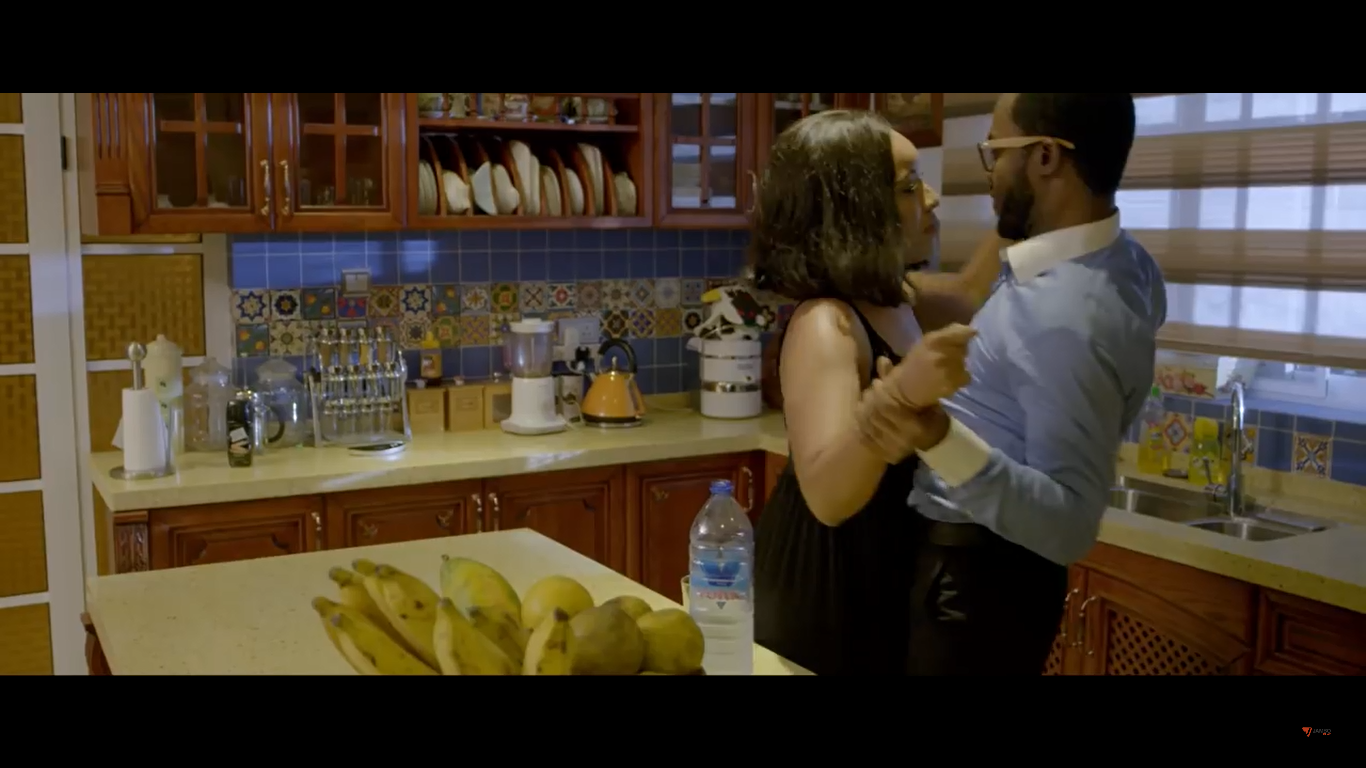
Director Shirley Frimpong-Manso is an award-winning Ghanaian director and CEO of Sparrow Productions alongside Ken Attoh. Their latest offering, Potato Potahto, is a vibrant, African romantic-comedy featuring Nigerian film actor, OC Ukeje (Tony) and Ghanaian actress, Joselyn Dumas (Lulu).

The film is set in Ghana which Frimpong-Manso says informed her choices in look and feel as well as cinematography: “I wanted a happy setting – colourful and alive – the costumes, music, locations, lighting and cinematography all embodied this look and feel,” she says.

Potato Potahto was shot in just two weeks on the Sony FS7 camera, which Frimpong-Manso says was selected for its high resolution images with good colour renditions. “We shot in 4k. This was important because I wanted the pictures crisp and enduring. Lighting, sound and the general tone had to be the same. Even though the topic of the film is divorce, I was determined the look and feel would have the opposite effect. So I went in for a yellowish hue depicting sunshine and promise. The set itself had to be alive so we chose one that had a story to tell on its own.”

Potato Potahto is a collaborative project between Swedish, French, British, Nigerian and Ghanaian film producers, with the aim of establishing global markets. “There is strength in numbers. You get different expertise coming together to work on one project which gives it legs for other opportunities,” affirms Frimpong-Manso.

AFDA’s new beginnings as JSE-listed institute under Curro subsidiary, Stadio Holdings

“We have been approached by several listed companies and financial equity companies to sell AFDA over the last seven years. Curro had indicated that they were interested in listing a Higher Education division… We met and decided to pursue a deal with them.” – Garth Holmes

Curro Holdings has recently added the South African School of Motion Picture Medium and Live Performance (AFDA) to its list of tertiary offerings. The Curro Schools brand first envisioned having a tertiary division after its successful execution and expansion of its nursery to high school targets in its classified schools.

Since then the JSE-listed education company has established Embury Colleges for teacher training in Durban, Midrand and Pretoria. However it was late last year that Curro shared its plans of expanding its tertiary education subsidiary and listing it separately from Curro Holdings.

“We have been approached by several listed companies and financial equity companies to sell AFDA over the last seven years. Curro had indicated that they were interested in listing a Higher Education division. A commercial broker approached us with the potential of meeting with Curro Holdings in late December last year. We met and decided to pursue a deal with them, which finally concluded six months later on 1 June 2017,” says Garth Holmes, co-founder and chairman of AFDA.

AFDA has been incorporated into the Curro Holdings’ wholly owned tertiary education subsidiary and also listed on the Johannesburg Stock Exchange (JSE) under Stadio Holdings. The school believes that this JSE-listing will give them more prominence, status and opportunities, which are currently limited.

“I believe that it gives the school a certain prominence and status which is different from its current prominence and status – it allows the public to participate in the success of the school and its expansion, and hopefully it allows us to develop the educational offer, the campus, faculty and facilities with each year,” Holmes shares.

“We will become part of a larger organisation and that financial clout will allow us to expand the business in a meaningful way. We believe that it will give the brand greater prominence and assurance for all its stakeholders – similarly we will be able to increase the employment opportunities for our management, staff and faculty members,” he adds.

AFDA is a private institution focused on the creative arts with specialised degrees and certificates in filmmaking, performance and design to name a few. However the institution recently decided to add two new degrees; the B. Comm in business innovation and the BcT in digital technology, both of which will form a triumvirate of the arts, business and technology. This will help broaden the school’s fields of interest whilst also equipping the young creatives with good business acumen and knowledge of modern technologies needed to sustain them in the creative economy. Furthermore, these new degrees coincide with AFDA’s new vision to optimise the vocational opportunities of content creation in businesses and technological innovations.

“The greatest challenge today lies in the exponential changes that we are experiencing as a society moving from an analogue to digital society and the attendant shifts in the way we access, produce, package, archive and distribute knowledge (audio – visual and text),” adds Holmes.

AFDA also hopes that this merger will help them further add more degrees and certificate courses to their offerings. “They (Curro) are acquisitive and have an excellent track record for expansion – AFDA would like to expand their current degree and certificate offers and Stadio, the new listed entity will allow us to capitalise the growth and minimalise the risk that has become increasingly more onerous for us as a private provider,” shares Holmes.

AFDA was founded in 1994 by Holmes and Bata Passchier and has grown from having just six students to now having five campuses in Johannesburg, Cape Town, Durban, and Port Elizabeth as well as in Botswana. The school now boasts 2 000 full-time students and many more part-timers.

Holmes says that the school is aimed at producing graduates who are creative, networked, collaborative, skilled and passionate. This, they do by providing customised and industry-related learning principles which are usually inspiring and thought-provoking for the students.

“We have the top people in the country (faculty) who together with the enthusiasm, talent and passion of the students allow us to constantly be a benchmark institution. We have a custom-made, market-related, project-led, collaborative and socialised learning system which makes learning challenging and stimulating – allowing students to identify, acknowledge and pursue their aptitudes and passions. It is a complex process which mimics industry as well as leading the new industry through its post graduate Honours and Masters Degree praxis.”

Holmes’ and Passchier’s vison of creating a world-class institution for the film, television and performance industries in the country spans over 23 years. AFDA students have been known to produce award-winning shows and performances that have earned recognition locally as well as internationally.

This year AFDA scooped 20 out of 46 nominations at the South African Film and Television Awards (SAFTAs) including Best Actress, Best Film, Best Director, Best Screenplay, Best Cinematographer, Best Editing, Best Sound Design, Best Costume, Make-up and Styling as well as the Youth Achievement award.

Alternative lifestyles explored on Counter Culture

“I have always been interested in the weird and wonderful, the things that people love doing and to find out why they do it. Counter Culture is a tribute to the lives so many people lead in SA and showcases the lifestyles, hobbies and obsessions of ordinary people” – Lucilla Blankenberg

As humans we are quick to judge the lifestyle choices of others without actually getting to know them, or what led them to pursue their unique path in life. A new show on SABC3, Counter Culture, offers the nosy neighbour a front row seat into the homes and playgrounds of their weird neighbours as it explores the alternative lifestyle choices and diverse co-cultures practiced in some South African communities.

“I have always been interested in the weird and wonderful, the things that people love doing and to find out why they do it. Counter Culture is a tribute to the lives so many people lead in SA and showcases the lifestyles, hobbies and obsessions of ordinary people,” says Lucilla Blankenberg, executive producer of the show.

Counter Culture is the brainchild of Blankenberg and her team at Community Media Trust (CMT), a non-profit media communications company that aims to empower and educate its viewers with thought-provoking content that opens the door for free discussions and sometimes heated debate. Previous CMT shows include the health documentary Siyayinqoba, as well as prime-time dramas Amaza and JAB.

Their latest production Counter Culture, takes the viewer on a journey of exploration as weekly characters that seem “normal” at first encounter, later challenge the status quo embracing their own sense of normality and invite us to peer into their ‘counter culture’.

“Counter Culture is all about acceptance, sharing and not judging anyone for their lifestyle or beliefs. ‘Anything goes, we don’t judge’. The series is light-hearted, quirky and entertaining and the characters are open and honest,” explains Blankenberg

Narrated by Zikhona Mda, the show follows nudists, cage fighting/martial artists, drag racers, pageant divas, swingers, bodybuilders, cosplay (comic fans), graffiti artists, witches, drag queens and many more as individuals let the viewers into their private spaces and lifestyle communities.

A CMT study on some of the show’s episodes and stories reveals the following findings:

Naturism

Doing things in the nude is becoming more popular as individuals seek to rid themselves of their daily constructs and revel in the liberation of their naturalness. According to the South African Naturist Federation (Sanfed) this lifestyle choice has been growing rapidly in South Africa, from 130 people in 2009 to more than 8 000 members currently. While public nudity in South Africa is not legal it is allowed within certain parameters and things are most certainly changing in response to this lifestyle choice.

Graffiti/Street Artists 

No other place is home to more captivating or inspiring graffiti than the District Six neighbourhood in Cape Town. You’ll come across images of Maasai people, imitations of contemporary African lifestyles, representations of South African political figures like Nelson Mandela or Steven Biko, and paintings dedicated to public awareness goals – like the protection of human rights, freedom or honour. Cape Town’s urban art makes a powerful statement in times of uncertainty and decay. Graffiti works are generally seen more as a burden than as a form of art, but the majority of Cape Town’s graffiti artworks deal with current issues, concerns and public sentiment – the things that matter.

Drag Queens

A drag queen is a person, usually male, who dresses in clothing of the opposite sex often for the purpose of entertainment or fashion. Drag has a rich cultural history and men have been performing on stage as women since the Ancient Greek tragedies with Shakespeare famously casting men as women. Making a crossover to mainstream entertainment and society there is still often a stigma attached. While drag is very much associated with gay men and gay culture, there are drag artists of all sexualities and gender identities. There are many kinds of drag artists and they vary greatly from professional performers to those who simply prefer clothing and makeup that is usually worn by the opposite sex in their culture.

Wicca

Modern witchcraft or Wicca has many negative connotations attached to it – people often assume it’s connected to Satanism but contrary to what many people believe; Wicca is a very peaceful, harmonious and balanced way of life which promotes oneness with the divine and all which exists. Most modern Wiccans are not spending their days casting spells, although that does form part of the religion, but the majority are just ordinary human beings, holding down normal jobs in finance or admin, raising their children. Wiccans believe that human kind is not superior to nature, the earth and its creatures but instead are simply one of the many parts, both seen and unseen that combine to make the whole.

Drifting/Drag Racing 

Illegal car racing on public highways is becoming an urban issue no matter where you are globally or in South Africa. Society presumes it is for delinquent ill-educated males who are trying to increase their status in their group or gang. One of our case studies dispels this stereotype as it involves someone from a good background and happens to be a woman who is also trying to change the illegal face of the sport.

Embracing diversity 

The 13-week show is produced and directed by Meesha Aboo and co-director Laddie Bosch with their crew of researchers. A variety of ‘counter cultures’ from all over the country were researched by the team, informs Blankenberg. This was followed by a selection process of what the team thought were the most interesting characters and scenarios to showcase to the viewer.

However even in a country where embracing diversity, tolerance and respect is part of the constitution, some lifestyle groups remain marginalised which as a result left some people uncomfortable with the thought of being publicised on the show. “As we are dealing with real people’s stories sometimes it was hard to find participants who were willing to reveal their lifestyles on camera but we persevered and through hard work and research we were able to find participants who were willing to help us tell their amazing stories,” Blankenberg shares.

The show strives to teach people to respect and understand the cultural beliefs of others, which they hope will lead to less conflict within our society and eventually eradicate the persecution of marginalised groups.

“I hope audiences enjoy learning and observing people who are different but still essentially the same as you and I, and take the time to listen to others and give some thought as to why they do what they do,” says Blankenberg

Each episode is 48 minutes long and lets the viewer understand the context and history associated with the specific ‘counter culture’ while also letting the characters show the world their way of life as well as their reasons for adopting their lifestyle choices.

The Cape Town-based company filmed most of their stories in Cape Town including its surroundings at Atlantis, Wellington and Stellenbosch however there were some stories that led them to travel as far as Gauteng and North West for interesting participants.

Counter Culture was shot on the Sony FS7 and OSMO cameras with snippets of the characters’ family archives also helping to tell the tales.

“We used a script format across the series and guided the directors and crew on style and script segments. It’s a documentary series about real life, so we used mainly natural light.”

CMT did all the production and post-production of the show headed by Laddie Bosch. “The series is post heavy because of the reality style of shooting and the length of each episode,” remarks Blankenberg.

“I think Counter Culture will resonate with South Africans because it’s about South Africans. It’s interesting and has never been done quite like this on SA television,” she concludes.

The show commenced on 30 July 2017 and airs on SABC3 every Sunday at 21h30.

TECH CHECK

EQUIPMENT

  • Camera: Sony FS7 and OSMO

Counter Culture was shot on the Sony FS7 and OSMO cameras with snippets of the characters’ family archives also helping to tell the tales.

KEY CREW

Executive Producer: Lucilla Blankenberg

Producer/Director: Meesha Aboo

Supervising Editor/Director: Laddie Bosch

Liyana – A Swazi story told through the voices of children

“We were honoured that the children were willing to share their stories with us. Throughout the filmmaking process we felt a lot of responsibility to do everything we could to do their stories justice.” – Aaron Kopp

Bittersweet memories and fond imaginations of a group of young orphans from the Kingdom of Swaziland tell the tale of the award-winning African animated documentary, Liyana.

“Liyana is a story born in the imaginations of five orphaned children in the Kingdom of Swaziland. The film follows the children: Zweli, Sibusiso, Phumlani, Mkhuleko and Nomcebo, as they collaborate to tell the original tale of Liyana, a fictional character whose early life bears remarkable similarities to their own. The world that the children imagine for Liyana is brought to life in an innovative style of animated artwork. This hybrid film weaves documentary scenes together with the animated adventure,” explains Amanda Kopp, the co-producer and co-director of the film.

Amanda’s husband, Aaron Kopp who was born and raised in Swaziland, has played with the idea of portraying his home country in its vast beauty and through its authentic stories for some time now. “Swaziland was a wonderful place to grow up in. I hope to be able to raise my children there some day. Swazi culture is beautiful and it was important for us to showcase that in a detailed and positive way. Growing up I did a lot of hiking, exploring, and swimming in rivers. I developed an appreciation for the natural beauty of the country. I was also very fortunate to attend Usutu Forest Primary School and Waterford Kamhlaba High School, where I had many teachers who invested in me and introduced me to art, literature and so many great stories from around the world,” shares Aaron.

While the filmmakers’ creative works have made them global citizens and award-wining artists in their specified fields of interest; the pair frequently visit Swaziland and the orphanage where they found the five young storytellers. Amanda and Aaron have grown to know these children individually as well as the stories that have brought them there.

“The children in our film live at Likhaya Limphlo Lensha, a very special place where they have loving moms and are very well taken care of. Sibusiso is an artist. He still draws all the time. He writes stories and creates comic books. We are so excited to see him develop his love for story and images. Of course each of the kids has their own interests and talents. Zweli loves history and politics, Mkhuleko wants to be an engineer. As they all go out into the world we are excited to see all the amazing stuff they will do. And we hope to start a college fund that audiences can support to ensure the kids have the opportunity to fulfil their potential,” informs Aaron.

Amanda and Aaron have in the past worked on documentaries; however Liyana is their first feature film as well as their first venture into the animation genre. As they set out on taking on this challenge, they decided to work with some of the creative industry’s greatest figures in various fields, including South African storyteller, Gcina Mhlophe.

“As anyone who has ever read her work, or seen her perform can tell you, Mama Gcina Mhlophe is brilliant! In pre-production I spent time reading about creative art therapies as well as traditional stories in Swaziland. It soon it became clear that the use of a fictional character, created by the children, could serve as a unique window into their memories and emotions, while still ensuring some privacy. As soon as we decided on this approach, we contacted Ms. Mhlophe. I first saw her on stage when I was a teenager and remember being transfixed by her performance. We knew she would be the perfect guide for the children in their creative process. She did a beautiful job of giving just the right combination of structure and freedom in their storytelling journey,” shares Aaron.

Mhlophe hosted storytelling workshops with the children aged between 10 and 12 years old. The children made sure not to be outdone by the acclaimed storyteller and were bursting with ideas and stories, and it showed in their screen interviews. “We have had the pleasure of knowing these kids for many years now, and so we had a pretty good idea of how they would do on camera. As we expected they let their imagination run wild. It was difficult to keep up with all of the ideas they had but Gcina Mhlophe was a huge help in guiding the children in their collaboration. And of course there was still a long process in post of cutting down the hours and hours we had of each kid describing their version of each scene. We easily have enough material for a couple more films!” remarks Amanda.

The children developed a female character known as Liyana which means “it’s raining” in siSwati. “The children decided to tell their story about Liyana, a young girl who was born during a rain storm. As the story they tell unfolds she becomes a kind of collective expression of all of the children’s own real-life backstories, and their dreams and fears about the future,” Amanda explains.

In the film Liyana’s world is turned upside down when her father contracts HIV and she loses both her parents. The orphaned character and her siblings then encounter another unfortunate event when their homestead is under attack – a scene inspired by a recent real-life robbery that the children experienced.

In the aftermath of this terrible ordeal, Liyana has to go on a dangerous pursuit to rescue her young twin brothers. However the journey into the wilderness is filled with occasional obstacles, moments of humour and uncertainty as Liyana and the family bull soldier on in their quest.

“At our premiere in LA someone asked the children why they chose a girl and their response was amazing. They described how in Swaziland the lives of young women can be especially difficult and so if she was a girl she would make a better hero because she would have more challenges to overcome,” Amanda shares.

“We were honoured that the children were willing to share their stories with us. Throughout the filmmaking process we felt a lot of responsibility to do everything we could to do their stories justice. They wouldn’t be where they are today if they hadn’t faced some serious challenges early in life, but just like any of us, they don’t want to be defined by the worst things that have happened to them. They want to be defined by their abilities and ambitions,” Aaron adds.

The film’s art director and animation artist, Shofela Coker was tasked with visually interpreting this Swazi story authentically while bringing the people and elements around Liyana to life. This involved sending Coker lots of reference items from Swaziland, affirms Aaron. This included images of people, towns, rural areas, plants, animals and various types of clothing and fabrics.

“Shof was born and raised in Nigeria. Of course, to start with this didn’t give him any special insight into the aesthetics of Swaziland, but it did give him an understanding and appreciation for the detail and specificity of different cultures and regions in Africa. I think if we had worked with someone who wasn’t African it would have been easy for them to slip into a generic, stereotypical ‘African aesthetic’. We wanted to create a film in which the Swazi people could see their beauty reflected. We are delighted to report that this seems to be the case. Several Swazi’s who have now seen the film have commented on just how ‘Swazi’ it is. One Swazi man told us, that Liyana’s grandmother in the film is THE perfect archetypal Swazi grandmother. As you can imagine we are thrilled by this kind of response!” exclaims Aaron.

“He (Coker) is incredibly talented and brought so much life and beauty to Liyana’s world. Shof worked his heart out for years for Liyana. We are all very proud of the result. He and his team created something really special,” he adds.

The music for the film was also developed through an extraordinary journey taken by South African composer, Phillip Miller. “He worked with a group of older traditional Swazi musicians called Bashayi Bengoma. They performed on traditional instruments such as the Makhoyane bow and the Stontolo. They were delightful. It was their first time working on a film score so it was all new. But they were champions. We also worked with a young up-and-coming vocalist in Swaziland, Nqobile Mamba. She impressed us at every step of the way. Philip also recorded with the amazing, Siya Makuzeni in South Africa. Philip took on our requests for a score filled with choral voices and traditional instruments used in unexpected ways, further than we dreamed. He also incorporated some cello pieces that are so beautiful one could weep,” shares Aaron.

Other contributors included Swazi producer, Sakheni Dlamini and British/Zimbabwean actress, Thandie Newton who is the film’s executive producer. “It’s been a total of around eight years in the creative process. We’re thankful that the story is one that stands the test of time. We have hundreds of hours of footage, but the bulk of the storytelling workshop and interviews took place over just a few weeks. It was a slow process to find the funding we needed, and animation is a very long process,” says Amanda.

Liyana was shot using the Sony EX-3 camera with the filmmakers working together with Coker and his team to ensure the animated and documentary scenes were combined seamlessly. “Each scene is based in real space and only realistic camera angles and movement were used. The characters are designed to be quite naturalistic, while the backgrounds are more painterly and impressionistic. We worked to unify the documentary and the animated scenes through creative transitions and colours that speak to each other,” explains Aaron.

“Our animated characters were sculpted in 3D software. Shof and his team painted the 2D layers of background and foreground in Photoshop. These layers were then composited in Adobe after effects where we added motion, particles and other effects to bring to life a ‘breathing painting’ sensibility,” he adds.

Editing was done by Aaron and Davis Coomb, while finishing and other post-production duties were handled by their company, Intaba Creative in partnership with Shine Global.

Amanda says that the young storytellers were excited to see their stories on screen for the first time: “They were naturally the audience that we most hoped would love the film, so we’re so glad they do. Zweli reacted with, ‘It’s more than amazing!’ And Phumlani remarked that the film made him, ‘feel like a hero,’ she shares.

The film had its international premiere at the Los Angeles Film Festival where it won the Documentary Award. “We had a sold out screening and were delighted when the characters in our film came on stage and were met with a standing ovation. To win the Documentary Award was great affirmation of the project we care about so deeply. We’re relieved and excited that the meaning behind the film is resonating so strongly with audiences,” Aaron shares.

The film was also showcased at the Durban International Film Festival (DIFF) where it was nominated in the Fiction category. The film went on to be awarded with the Artistic Bravery title at DIFF and received outstanding reviews at both festivals.

“We made Liyana for Africans to enjoy. While it’s appealing to a very broad audience, we know our film will hold a special place in the hearts of those who are from the region in which it takes place. This is especially true for Swaziland, but I think there is so much crossover with South Africa that will be meaningful to people. Elevating African voices and their perception in the world is our career mission. So connecting with the South African film industry is a big priority for us. Also, we have big plans for outreach and community engagement in Southern Africa, so being here allows us to connect with heads of organisations working in areas such as art, storytelling, HIV/AIDS, and orphaned children. We look forward to partnering with many in the future,” Aaron shares.

After the film’s festival circuit, the filmmakers want to bring Liyana back to Swaziland where it will be shown privately to the rest of the kids and house moms at Likhaya Lemphilo Lesha.

TECH CHECK

EQUIPMENT

  • Camera: Sony EX7

“Each scene is based in real space and only realistic camera angles and movement were used. The characters are designed to be quite naturalistic, while the backgrounds are more painterly and impressionistic. We worked to unify the documentary and the animated scenes through creative transitions and colours that speak to each other.”

KEY CREW

Directors: Aaron Kopp and Amanda Kopp

Producers: Amanda Kopp, Aaron Kopp, Sakheni Dlamini, Daniel Junge and Davis Combe

Executive Producers: Thandie Newton, Lisa Schejola Akin, Susan MacLaury and Albie Hecht

Animation Artwork: Shofela Coker

Original Score: Philip Miller

Editors: Aaron Kopp and Davis Coombe

- Advertisement -
- Advertisement -
- Advertisement -

Pin It on Pinterest