Home Authors Posts by Durban International Film Festival Press

Durban International Film Festival Press

74 POSTS 0 JOBS
Arguably the continent’s biggest film event, which attracts both film-lovers and industry representatives from across Africa and beyond, the DIFF is a ten day celebration of world class cinema.

DIFF announces Audience Choice Awards for 2016 edition

The Durban International Film Festival (DIFF) announced the Audience Choice Awards for the best DIFF film and the top Wavescape film at this year’s festival.

Under the DIFF banner, the film Nakom (Ghana/USA) took the honours. Directed by Kelly Daniela Norris and Trav Pittman, the feature tells a story of a Ghanaian medical student named Iddrisu, played by Jacob Ayanaba, whose life comes into a halt when his father dies unexpectedly. As the eldest son, he is called to return to his family homestead to bury his father, only to discover family tensions between his mother and his father’s ‘junior’ wife. The film shows a dramatic portrayal of the enduring conflict between the modern and the traditional in which Iddrisu wishes to move forward without betraying his upbringing. Nakom has been described as a window into a culture and language rarely shown on screen.

The Icelandic film No Country For Cold Men won the Audience Choice Award from the Wavescape Surf Film Festival at DIFF 2016. Directed by Ryan Mattick, the film is based on a kneeboarder, bodyboarder and surfer who goes on a surf trip to break free of the conflict among their ilk. The film challenges the notion of harmony in a humorous manner while taking a closer look at the surf society.

For more information visit the DIFF website.

Durban International Film Festival 2016 award winners

The Durban International Film Festival (DIFF) announced its award winners on the evening of 25 June at the closing ceremony of the festival’s 37th edition which took place at The Playhouse in Durban, prior to the screening of the closing film The Space in Between by Marina Abramovic from Brazil.

The award for the Best Feature Film went to The Violin Player directed by Bauddhayan Mukherji. The jury’s citation said: “A seductive and mysterious tale of a violin player’s mundane life and an interesting take on how chance encounters are almost predestined. By successfully weaving offbeat editing, brave cinematography, simple screenplay, honest direction and a lot of surprising elements, the film shows us that art, no matter how unimportant it may seem, can change people’s lives.’

The award for Best South African Feature Film went to Tess (a 2013 Durban FilmMart project), directed by Meg Rickards, which the jury described as “a measured and uncompromising debut feature.’

The Best Documentary award went to Martha and Niki directed by Tora Mkandawire Martens, which the jury described as “a visual feast that skilfully intertwines a profound reflection on (an) art form with the inner journey of two compelling characters.’ The jury made a special mention of Action Commandante, also a former Durban FilmMart project, by Nadine Cloete, for “its exceptional quality and commitment to its subject matter.’

The Best SA Documentary went to The Journeymen, directed by Sean Metelerkamp. The citation from the jurors said: “The Journeymen takes an unflinching look at who we are by holding up the proverbial mirror to South African society. The honesty, bravery and commitment of the film crew results in a mosaic picture of our country with warts and all. This is strong and uncompromising cinema that is simultaneously disturbing and life-affirming.’

Best Short Film went to Grandma’s Day (Dzie’n Babci) directed by Milosz Sakowski. The jury also made special mention in this category of the film Ave Maria directed by Basil Khalil.

The Best African Short Film award, which is supported by the Gauteng Film Commission, went to New Eyes directed by Hiwot Admasu.

eKhaya (Home), directed by Shubham Mehta won the Best South African Short Film award, which is also supported by the Gauteng Film Commission. The shorts jury also made special mention of two other films in this category – Amagugu directed by Ndududo Shandu and Discovery of Fire directed by Gerhard Pretorius.

The Best Actor award went to Mohsen Namjoo for his performance in Radio Dream, directed by Babak Jalali. The award for Best Actress went to Christia Visser for her role as Tess in Tess directed by Meg Rickards.

The awards for Best Direction went to Ciro Guerra for Embrace Of The Serpent, Best Cinematography to Chris Lotz for The Endless River and Best Screenplay went to Ciro Guerra and Thoedor Koch-Grunberg for Embrace of The Serpent.

A new award, Best Editing, sponsored by SAGE (South Africa Guild of Editors), went to Tess which was edited by Linda Man. The award for Artistic Bravery was given to Neon Bull directed by Gabriel Mascaro for its unique portrayal of a little-known community of Brazilian rodeo workers.

The Amnesty International Durban Human Rights award for the film that best reflects human rights issues, which comes with a cash prize donated by the Artists for the Human Rights Trust, went to Noma, directed by Pablo Pineda.

The international jury this year was made up of four jurors: Bianca Balbuena, an award-wining producer from the Philippines; Fibby Kioria, the programme director of Maisha Foundation, an initiative founded by Mira Nair to empower visionary filmmakers in Uganda, Kenya, Tanzania and Rwanda; Sherif Awad a film critic who currently works for the Luxor African Film Festival; and Trevor Steele Taylor a veteran of festivals in South Africa, having programmed for the Cape Town International Film Festival, the weekly Mail & Guardian Film Festival and DIFF, and is the curator for film at the National Arts Festival.

The South African feature film jury consisted of filmmakers Jahmil Qubeka and Melissa Parry, while the documentary jurors were filmmakers Rehad Desai, Omelga Mthiyane and Riaan Hendricks, and the short film jurors were filmmakers Neil Coppen and Sumayya Rawat.

The Amnesty Jury consisted of Coral Vinsen, Nonhlanha Mkhize, Betty Rawheath and Mark Povall.

37th Durban International Film Festival: Free Public Screenings

The 2016 Durban International Film Festival (DIFF), which takes place from 16 to 26 June, will host a series of free public screenings. DIFF will travel to Clermont, Kwangcolosi, Inanda, Umlazi, KwaMashu and the city centre, where people will have the opportunity to watch this year’s opening night film The Journeymen as well as the comedy Wonder Boy for President, starring Kagiso Lediga.

The Journeymen is a documentary filmed in 2014, the year in which South Africa celebrated 20 years of democracy and mourned Nelson Mandela’s death. The film chronicles the free-wheeling journey of three South African photographers (Sean Metelerkamp, Sipho Mpongo and Wikus De Wet) across the country as they explore the current state of South Africa with GoPro cameras strapped to their chests, feeling its pulse and asking the question: “Has Mandela’s vision of equality in a rainbow nation been achieved?’ The film answers this question with a kaleidoscopic set of responses that is disturbing, beautiful, thought-provoking and, more than anything, movingly surreal. The film shows the underlying demons of our troubled national soul but also its deep and profound beauty. Made with technology that is widely accessible, the film is also a vibrant call to arms for new modes of filmmaking and fresh approaches to narrative.

Directed by John Barker, Wonder Boy for President tells a story of Wonder Boy, a charismatic and authoritative young man from the Eastern Cape (played by master comedian Kagiso Lediga), who is coerced into running for president by two dubious and corrupt characters played by Ntosh Madlingozi and Tony Miyambo. Their aim is to mould him into a great politician and manufacture his down-fall at the right time, for the right price. It is a political satire that delves into political dynamics and the challenges that arise.

Programme:

*Both films will be screened each day*

Saturday, 18 June at 10h00 at Clermont Library

Monday, 20 June at 10hb00 at Wushwini Arts Centre at Kwangcolosi

Tuesday, 21 June at 10h00 at Ohlange Library, Inanda

Thursday, 23 June at 10h00 Umlazi W Library W

Friday, 24 June at 10h00 at Creative Arts College on Dr Pixley Kasema Street (West Street)

Saturday, 25 June at 10h00 at KwaMashu Ekhaya Multi Arts Centre (KCAP)

For more information visit the DIFF website.

DIFF introduces award for Best Editor

The South African Guild of Editors (SAGE) recently announced that the Durban International Film Festival (DIFF) has included an award for Best Editing. American Cinema Editors (ACE) has over a number of years campaigned for the inclusion of a Film Editing awards category at international film festivals.

In support of this initiative, SAGE consulted with the DIFF management team in early 2016 resulting in the implementation of an award for Best Editor at this year’s festival.

SAGE expressed appreciation for everyone’s contribution to this success—most notably the American Cinema Editors for their petition for editors’ recognition at top-tier international film festivals. Further support came from the American Motion Picture Editors Guild as well as several other international guilds and societies, presenting an unprecedented alliance for the recognition of the editor in the filmmaking process.

In addition, DIFF has included Melissa Parry S.A.G.E. as a judge on the South African jury, where she will be able to bring her considerable editing expertise to the judging process.

SAGE members’ contributions to the filmmaking process are recognised through the selection of their films at many international film festivals, including numerous films selected for DIFF.

The work of two SAGE editors will be recognised at this year’s festival:

Khalid Shamis S.A.G.E. – The Unseen and Action Commandant
Nikki Comninos S.A.G.E. – Timelines

SAGE has developed a close collaborative relationship with DIFF since 2012, aiming to further promote editors and the craft of editing at the festival. SAGE values the contribution DIFF makes to the local film industry.

SAGE says that advocating for editors’ recognition is an ongoing process and it urges members to consider ACE’s online petition for further recognition at other film festivals.

Durban International Film Festival 2016 programme

The 37th Durban International Film Festival (DIFF) will take place at 15 venues across the city of Durban and its outlying areas from 16 to 26 June.

In an exciting new move, the festival has added a number of new venues to further increase the footprint of the festival into areas that don’t usually have access to formal cinemas. The festival has also increased its presence on the commercial circuit, with Nu Metro Pavilion being added to its roster of venues.

The festival will kick off on the 40th anniversary of the Soweto Uprising (16 June 1976) with the world premiere of the South African documentary, The Journeymen, directed by Sean Metelerkamp and produced by Jolynn Minnaar.

Filmed in 2014, the year in which South Africa celebrated 20 years of democracy and mourned Nelson Mandela’s death, The Journeymen chronicles the experiences of three young South African photographers as they travel 24 000km in a motorhome through South Africa, with GoPro cameras strapped to their chests. From urban sprawls to dusty rural roads, the trio was driven by the question, “Has Mandela’s vision of equality in a rainbow nation been achieved?’ The film answers this with a kaleidoscopic set of responses that are disturbing, beautiful, thought-provoking and, more than anything, movingly surreal.

With just under half of all the films originating from Africa and South Africa, this year’s festival once again celebrates and honours the rich, ever-evolving language of African cinema. Of the 101 feature-length films to be shown at the festival, 50 are African films, including 17 fiction films and nine documentaries, while there are 24 South African films, including ten fiction films and 14 documentaries. Additionally, the festival’s programme will include more than 90 short films, the majority of which are African and South African.

Key titles from the continent’s ever-expanding film industry reflect the growing call for real freedom and authentic engagement with power and political narratives. The Revolution Won’t Be Televised, from Rama Thiaw, is a smart and insightful documentary that sheds light on political resistance in Senegal; Naked Reality, the latest film from provocative filmmaker Jean-Pierre Bekolo challenges the status quo and critical questions those in power; while Nakom is a haunting film about the conflict between tradition, modernity and love; Ghostland chronicles the loss of language and identity of indigenous Nambian people; and Nawara from Egypt’s Hala Khalil, is a biting social commentary on Egypt’s classist society. Then there is I Shot Bi Kidude, the long awaited feature film about African musical legend Bi Kidude by British filmmaker Andy Jones, and Independence from Mario Bastos chronicles the Angolan liberation struggle.

South African feature films include The Endless River, the latest film from South African auteur Oliver Hermanus; Kalushi, which chronicles the story of Solomon Mahlangu; the mockumentary Wonderboy for President starring Kagiso Lediga and directed by John Barker; and Tess from previous DIFF winner Meg Rickards, which follows the story of a sassy twenty year-old prostitute on the streets of Cape Town.

South African documentaries include Alison, a deeply personal account of a woman who endures unimaginable suffering but refuses to become a victim; Action Commandant, which tells the untold story of slain South African liberation fighter, Ashley Kriel; Lost Tongue, which introduces us to Helena Steenkamp, a San woman from the Kalahari who embarks on a mission to revive the endangered language of her people; and Nobody Died Laughing, a documentary about Pieter-Dirk Uys, one of South Africa’s most prolific writers, satirists and activists.

As well as the strong African Focus, other key areas include a focus on issues around indigenous rights and colonialism, a small programme of films that deal with HIV (given the fact that the World Aids Conference will be taking place in Durban two weeks after the festival ends), and a rich programme of films about dance and music.

This year’s edition also includes a country focus on Dutch cinema offering a cross-section of contemporary cinema curated by Gertan Zuilhof of the Rotterdam Film Festival, in recognition of the Dutch-South African co-production treaty. DIFF 2016 also includes a retrospective look at Portuguese-language African film in partnership with the Tri Continental Film Festival.

As has been the case for 37 years, the festival will also present an eclectic selection of film from around the world.

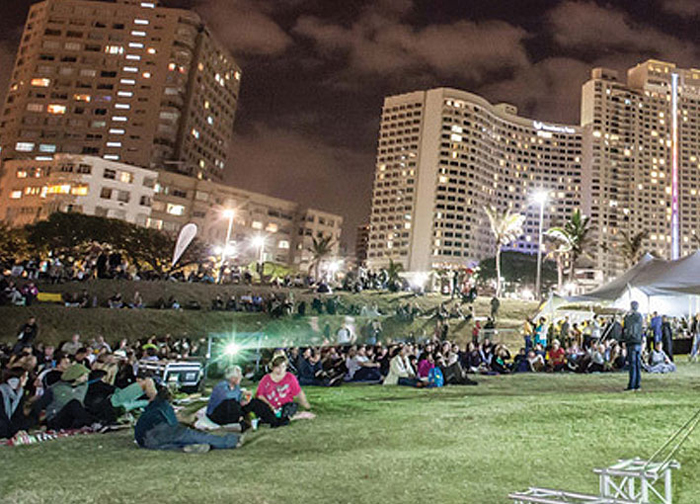
DIFF partners for the 11th year with Wavescape to present a feast of surfing cinema from around the world. Wavescape opens with a free outdoor screening at the Bay of Plenty Lawns on Sunday, 19 June, before locating to the new venue at Rivertown Beerhall from 20 to 26 June.

The 9th Talents Durban in co-operation with Berlinale Talents, brings together the creativity of 20 selected filmmakers from Africa, who will take part in a series of master classes, workshops and industry networking opportunities during the festival. Supported by German Embassy and Goethe-Institut, Talents Durban creates a space for filmmakers to hone their skills, develop collaborations and network with other future leaders of the film industry in Africa, and the world.

Now in its 7th year, the Durban FilmMart, a partnership project with the Durban Film Office, and supported by the City of Durban, is a film finance and co-production market presented in three strands – Finance Forum, Master Classes and the Africa in Focus seminars. Nineteen selected African projects (nine fiction features and ten documentaries) will hold one-on-one meetings with potential financiers, co-producers, and distributors in the Finance Forum. The DFM master class and networking programme is open to registered delegates only.

New venues this year include the Playhouse, Nu Metro (Westville Pavilion), Rivertown Beerhall and numerous outreach venues in Umlazi, Clermont and Inanda. Other venues include Ster Kinekor Musgrave, Ster Kinekor Cinema Nouveau, the Elizabeth Sneddon Theatre, the KZNSA Gallery, eKhaya MultiArts Centre, Luthuli Museum in Groutville and the Elangeni-Maharani Hotel, with festival hubs at the Elangeni-Maharani and the Playhouse.

Programme booklets with the full screening schedule and synopses of all the films will be available free at cinemas, and other public information outlets. For more info or for the full programme visit the DIFF website.

‘Visions of the future’ as DIFF appoints new manager

Upon entering its 37th year the Durban International Film Festival (DIFF) was looking for a young, inspired new face to represent the festival.

In March 2016 Sarah Dawson was appointed as festival manager to fulfil that role. Dawson is also the first woman to occupy this position since it was co-founded by Ros Sarkin in 1979. Dawson exudes this year’s festival theme: Visions of the Future.

Sharing her thoughts on this theme Dawson says: “We are experiencing a watershed moment, globally and locally, where the traditional narratives of the past are increasingly being forsaken in favour of new ideas, formations and stories.” She believes that “cinema is a tool for visualising realities beyond our own, an eye to see into the future.”

At DIFF 2016, roughly 200 fiction, documentary and short films will be presented over 10 days in venues across Durban. “We will be introducing new venues, refreshing our approach to audience development and will be making an exciting foray into virtual reality for the first time,” says Dawson.

New on the agenda is a “spotlight on music, rhythm and dance in films,” she adds. “Audiences can expect an emphasis on African film in the programme presenting films that were censored or banned under Apartheid, and we will bring to light some lesser known gems of Lusophone cinema,” comments Dawson. “In light of the signing of a co-production treaty with the Netherlands, we will also be presenting a country-specific focus on Dutch film.”

Over four decades DIFF has steadily grown into one of the largest film festivals on the continent. Dawson believes that the festival creates opportunities to build bridges and forge links that connect the industry on the continent to the world.

She encourages filmmakers to tell their stories using advancing available technology. “You shouldn’t wait for the permission or endorsement of a funder,” she says.  As a programmer Dawson is hungry for fresh views on the South African experience, “There is a notable lack of black female and LGBTQ voices in SA film. The only way it will change is if these voices are supported in taking command of their own stories.”

Deeply passionate about film Dawson brings to DIFF her cultured past. “My experience at other festivals and in journalism have been excellent training in exercising the ability to see film outside the lens of my own taste. Working at festivals such as Sheffield Doc/Fest and Africa in Motion have helped put in context the idiosyncrasies of screening films to audiences at home.” Dawson comes with a strong academic interest in film, with an MA (cum laude) in the theory of cinema, she also lectured in film history contributing to what she regards as a lifelong obsession with understanding film.

Dawson sees “a film programme as being like an eco-system, with a need to strive for a careful, responsive, living balance, in which all forms of filmmaking can thrive.”

Durban International Film Festival 2015 call for entries

The Durban International Film Festival (DIFF), which runs from 16 to 26 July 2015,
is calling for film submissions. The festival features films from around the world,
with a special focus on those from South Africa and Africa, and includes a local and
international awards component.

Requirements
• Films must be completed in 2014 and 2015
• Submissions will be accepted with either a DVD screener or an online
screener
• Submissions must be entered via the online
DIFF Visitor Page
. In order to submit a film, an account needs to be created if
this has not already been done in previous years.
• There is no charge for entries
• The deadline for all entries (short films, documentaries and feature fiction
films), including delivery of screeners, is 20 March 2015.

In addition to screenings the festival hosts an extensive seminar and workshop
programme featuring local and international filmmakers and industry professionals.
This includes the Talents Durban programme, in cooperation with Berlinale Talents,
which runs from 17 to 21 July. The Durban FilmMart, a film finance and co-production market in partnership with the Durban Film Office, runs alongside DIFF
from 17 to 20 July.

Climate change and movies which explore how people relate to the earth’s evolving
ecosystem are a focus of the 2015 program. Festival manager Peter Machen says,
“We are very excited about receiving a wealth of challenging and high quality films
from around the world. We also welcome engagement with current and potential
partners who support the development of cinema in Africa and beyond. Such
collaboration is a major part of the festival and helps to provide filmmakers and the
public with a programme of brilliant films and a solid development
programme.’

For more information visit the DIFF
website
or email diff@ukzn.ac.za.

Special Focus on UK Film at the 35th Durban International Film Festival

This year’s edition of the Durban International Film Festival (DIFF) sees a special
focus on British Cinema. Supported by the British Council and its Connect ZA
programme, the focus is part of the SA-UK Seasons 2014 & 2015 cultural season
taking place over the next two years.

In recognition of this season, DIFF presents a diverse snapshot of contemporary
British cinema – including the strangely compelling Lilting, which tells the
story of the triangular relationship between two gay men and one of their
mothers, ’71 which is set in Belfast at the beginning of The Troubles and
the highly endearing Frank, which chronicles the misadventures of a
band of outsider musicians.

Other features include How I Live Now, a post-apocalyptic tale set in
rural England in the wake of a nuclear bomb, and The Selfish Giant, a
Dickensian tale of two working class boys who live on the knife’s edge of
poverty and adolescence. Gone Too Far! offers a nuanced look at race in
contemporary Britain, while Only Lovers Left Alive is the UK-produced
downbeat vampire masterpiece from Jim Jarmusch.

British documentaries include InRealLife, which explores our relationship
with the internet and social networking technology, the real-life heist drama
Smash and Grab: The Story of the Pink Panthers, 20 000 Days on Earth,
which documents a fictitious day in the life of much-loved musician Nick Cave,
Coach Zoran and His African Tigers which tells of the birth of the South
Sudanese national soccer team, and the UK/SA co-production One
Humanity
, which documents the global anti-apartheid movement from the
perspective of the two tribute concerts to Nelson Mandela that took place in
London in 1988 and 1990.

In addition to this focus area in DIFF’s programming, the DIFF UK Focus also
includes free public screenings of British films, preceded by a programme of short
films from young South African filmmakers presented by the National Film and
Video Foundation. These screenings will take place on Friday 18 July, Saturday
19 July, Friday 25 July and Saturday 26 July on the Bay of Plenty lawns on
Durban’s Marine Parade.

Said Festival Manager, Peter Machen, “The collaboration between the British
Council, the NFVF and the Durban International Film Festival for DIFF 2014 will
help the festival to expand its festival base, attract diverse new audiences. The
beach screenings at the Bay of Plenty will help to make the festival more
inclusive by increasing the number of free screenings offered to the public. Set
against the gorgeous backdrop of Durban’s beachfront, the event will also do
much to infuse the festival with the spirit of freedom and the sharing of culture”

The Durban International Film Festival takes place from 17 – 27 July 2014. The
festival includes more than 200 theatrical screenings and a full seminar and
workshop programme, as well as the Wavescape Film Festival, the Wild Talk
Africa Film Festival, and various industry initiatives, including the 7th Talents
Durban (in cooperation with Talents Berlinale ) and the 5th Durban FilmMart co-
production market (in partnership with the Durban Film Office). For more
information go to www.durbanfilmfest.co.za

The UK Focus is supported by the British Council, while the beach screenings
form part of the British Council’s Connect ZA programme, and are presented in
conjunction with the National Film and Video Foundation.

The 35th Durban International Film Festival is organised by the Centre for
Creative Arts at the University of KwaZulu-Natal (a special project of the Deputy
Vice Chancellor of the College of Humanities, Professor Cheryl Potgieter) with
support from the National Film and Video Foundation, KwaZulu-Natal
Department of Economic Development & Tourism, KwaZulu-Natal Film
Commission, City of Durban, German Embassy, Goethe Institut, Industrial
Development Corporation, KwaZulu-Natal Department of Arts and Culture and
range of other valued partners.

Durban International Film Festival offers a cinematic smorgasbord

From 17 to 27 July, the Durban International Film Festival (DIFF) will present over 250 screenings in nine venues across the city. Aside from the 69 feature films, 60 documentaries, 57 short films and 19 surf films which make up its diverse film line-up, the festival offers workshops and seminars delivered by industry experts.

DIFF 2014 films will screen at: Suncoast Cinecentre, Ster Kinekor Musgrave, Gateway Cinema Nouveau, Elizabeth Sneddon Theatre, Ekhaya Multi-Arts Centre in KwaMashu, and the Tsogo Sun Elangeni Hotel. A special programme of screenings will also feature at: the Bay of Plenty Lawns, the KZNSA Gallery and the Luthuli Museum on the North Coast.

South African films will be a key festival focus, with many receiving their world premieres at DIFF. The festival opens with Hard to Get, a love story action film directed by Zee Ntuli, and features a number of high-profile local films such as the crime thriller Cold Harbour, reunion movie Between Friends, local dance film Hear Me Move, and Love the One you Love, which explores the diverse relationships of young South Africans.

Audiences can also look forward to Two Choices which offers a perspective of the afterlife, The Two of Us which features the turbulent relationship of a brother and sister, Icehorse, a mystery drama set in the Netherlands, sci-fi flick Young Ones, and French/South African co-production Zulu, which explores the scars that still exist in the new South Africa. The 1973 film Joe Bullet will also be presented as part of the Gravel Road legacy project, an initiative geared at restoring all-but-forgotten South African films.

Films from across the African continent will also feature at DIFF, by a number of artistically and politically courageous directors who boldly experiment with form and content. The Algerian revolution is recounted in Bloody Beans, Beti and Amare is an Ethiopian vampire film and Timbuktu tells of Timbuktu’s short-lived occupation by militant Islamic rebels. Other notable films include They Are the Dogs mockumentary, semi-autographical film Die
Welt
, Rwandan drama Imbabazi: The Pardon, award-winning crime drama Nairobi Half Life, the highly anticipated Half of a Yellow Sun and fact-inspired drama Difret.

DIFF 2014 boasts the largest selection of documentaries in its 35 year history and will screen compelling films from around the world as well as those within the 20 Years of Freedom special focus and Wild Talk segments. We Come as Friends examines the effect of neo-colonialism in newly independent South Sudan, a look at life in a Palestinian refugee camp in Lebanon features in A World Not Ours and Cairo Drive looks at contemporary Cairo and its radical traffic system. These Birds Walk features the story of a Pakistani orphanage and ambulance service, killings of citizens by American soldiers in Afghanistan is the focus in The Kill Team and Swaziland’s King Mswati III is the subject of The King and the People.

The Films That Made Me is a section of DIFF which is presented by an acclaimed South African director who screens five films that influenced his growth as a filmmaker. Khalo Matabane is the featured director this year and he will screen and discuss Krzysztof Kieślowski’s A Short Film About Killing (1988), Denys Arcand’s The Decline Of The American Empire (1986), Martin Scorsese’s Raging Bull (1980), Alfred Hitchcock”s Rear Window (1954) and Spike Lee’s Do The Right Thing (1989).

Films exploring sexuality and gender will also feature as part of the festival programme, in filmmaking styles as diverse as the sexuality they document. 52 Tuesdays accounts a female-to-male gender transition, a gay marital relationship is explored in Love is Strange, Qissa tells the story of a girl who is raised as a boy and Something Must Break tells the story a straight man who falls for a man transitioning to a woman.

Other sections of the festival not to be missed are World Cinema, which features a selection of compelling international films, the UK Focus, which offers audience an assortment of contemporary British films and Wavescape, which offers a spread of surfing cinema.

Tickets can be purchased from venues at prices ranging from R25 to R40 (R50 for 3D screenings), except at Luthuli Museum, Ekhaya, Elangeni Hotel and Bay of Plenty lawns, which are free of charge. The Short Film programme at the KZNSA Gallery costs R25.

Visit the DIFF website for the full screening schedule and more information.

Hard to Get opens Durban International Film Festival

Hard to Get, a feature film directed by Zee Ntuli and produced by Junaid Ahmed and Helena Spring, will open the 35th Durban International Film Festival (DIFF), which takes place from 17 to 27 July at the Tsogo Sun hotel on the Durban beachfront.

The film tells the story of a young philanderer from a small community who falls in love with a young and attractive thief. The young man, who soon finds himself in Joburg’s criminal underworld, realises he is out of his depth and needs to trust the thief.

Ntuli explains, “The criminal gauntlet parallels the emotional journey of TK and Skiets, providing a metaphor for how scary falling in love can be. Ultimately it is a hopeful story, one which carries the message that love is worth fighting for.’

Peter Machen, DIFF Festival Manager, adds, “I am very excited about Hard to Get. It’s a beautifully made film that works on every level and will satisfy commercial and art-house audiences alike. I also think that it’s going to make instant stars of its two leads Thishiwe Ziqubu and Pallance Dladla, who are both electrifying, as well as director Zee Ntuli, who is virtually guaranteed a bright future on the global filmmaking stage on the basis of this first feature.’

Ntuli studied at AFDA, the School Of Motion Picture Medium and Live Performance, and won the Best Film award in each of the four years of his studies. His work in the local film industry includes writing for the award-winning show Intersexions, working on Soul City and Mshika-shika as well as directing adverts and music videos. Though Hard to Get is his first feature, Ntuli has gained recognition for a number of his short films including winning the Best Fantasy Film award at the New York International Film Festival for his 24 minute short film, Bomlambo (Those Of The Water).

Hard to Get is the first of a number of films which feature the talent of previously marginalized black filmmakers in South Africa, produced by Ahmed and Spring.

Spring remarks, “Junaid and I are thrilled to be launching major new talent with Hard to Get. We are incredibly proud of the work that director Zee Ntuli, his team and cast, have delivered. There is already a great deal of buzz around the film and we have no doubt that a bright future awaits them.’

Machen concludes, “With the production team of Helena Spring and Junaid Ahmed behind the film, I have a strong suspicion that this is going to be the one that cracks open local audience’s desire to watch strong local film products. I have no doubt that audiences will walk out of the theatre electrified, and will be filled with excitement about the rest of the festival. All of this makes Hard To Get the perfect opening film for DIFF 2014.’

Visit the DIFF website (www.durbanfilmfestival.co.za) for more information.

- Advertisement -
- Advertisement -
- Advertisement -

Pin It on Pinterest