Home Authors Posts by Cera-Jane Catton

Cera-Jane Catton

316 POSTS 0 JOBS
Cera-Jane Catton is a writer and journalist with years of experience in community newspapers, blogging and freelance journalism. She has worked in a cache of capacities, often finding herself behind or in front of the cameras, intentionally and less so. She has been a stunt double in two Bollywood movies, has worked in various capacities on a number of natural history documentaries, and other international productions shot in South Africa. Cera is a former Screen Africa journalist.

Pendoring entries exceed all expectations

The advertising creatives responsible for the bumper crop of 444 Pendoring entries are striving for Pendoring awards. This is only the third time in Pendoring’s 21 years of existence that the number of entries is well over 400.

There are a high number of indigenous language entries, with Zulu leading the way, followed by Xhosa and Sotho. To stimulate and reward advertising in South Africa’s indigenous languages (excluding English) was precisely what motivated the Pendoring board to open its doors to all of these languages to compete on an equal footing this year.

It was a record year for Afrikaans entries. The large number of student entries is nearly double that of 2015. The categories Craft and Radio Communication drew the most entries from the agencies, while students mostly entered work in the Print Communication and Communication Design categories.

Franette Klerck, Pendoring GM, is pleased about the strong increase in entries. ‘It exceeded all of our expectations. I believe that Pendoring’s initiative to open its doors to all indigenous languages to compete on an equal footing definitely played a role. The industry reacted very positively to this step because it understands the importance of mother tongue advertising in reaching a specific target group.
“The enormous consumer market, which uses languages other than English as a home language, will hopefully inspire marketers to also focus on these languages in future in all their marketing communication.

“Pendoring’s sought-after gold and silver trophies, but especially the Prestige and Umpetha Awards, each comprising an overseas study tour worth R100 000, have undoubtedly also motivated creatives to enter the Awards,’ she emphasises.
Esmare Weideman, CEO of Media24, one of Pendoring’s platinum sponsors, is also excited about the news. “The great number of entries is proof that, in spite of the tough economy and a shift in consumers’ media usage, Afrikaans advertising is moving forward. Media owners know only too well that their markets react positively to the language of their hearts. It is encouraging that marketers also see it that way.’

Molefi Thulo, Ogilvy Johannesburg creative director who will be heading the judging panel this year says: “Being asked to be head of jury for Pendoring 2016 has been an incredible honour. Not only because Pendoring has been tenacious at pushing creativity that’s truly South African, but also because this year sees an astounding number of entries – at 444 the highest number since 2012.
“The message then is clear– there’s a love and a bright future for our indigenous languages. So when it comes to judging and awarding the entries, I’ll personally be looking for work that is innovative, inspiring, genuinely representing the language it’s in, and crafted to the highest standard. And I’m sure the esteemed panel of judges will join me in commending Pendoring for giving home-grown work a platform to shine.’

Richardt Strydom, content director at Breinstorm Brand Architects, former graphic design lecturer at Northwest University and specialist judge in the student section, says: “It is gladdening to see that students so eagerly jump at the opportunity and challenge of multilingualism. I believe the future of South African advertising lies in its diversity and unique specialist audiences. It is particularly pleasing to know that our young creatives can express our truly South African stories and brand experiences in a rich multilingualism and with unique visual material. I’m really looking forward to seeing what this year’s entries have to offer.’

Judging will take place from 7 to 9 September 2016 at Media Park in Auckland Park, Johannesburg.
The finalists will be announced on Friday, 16 September 2016 and the winners on 28 October 2016 at a gala event at Vodacom World in Midrand.
SSL audio production technology at IBC 2016

Solid State Logic (SSL), provider of advanced technology for creative audio professionals, will demonstrate the future of networked broadcast audio production at IBC 2016, to be held in Amsterdam between 9 and 12 September. Just one year on from the preview of System T at IBC 2015 SSL will be demonstrating a fully operational production system whilst the first collection of installations are already going on air.

Antony David, managing director of SSL said, “Since our 2015 preview System T has gained significant attention worldwide. With the first production units already shipped to a set of very high profile national, network, and new media broadcasters, this is a pivotal moment for a technology platform at the beginning of its life. The versatile and forward-thinking approach to broadcast audio production within System T enables broadcasters to plan for the future, and adapt in the future.’

SSL also announced that it will be hosting Audinate as a co-exhibitor at IBC 2016. “We are very pleased to be able to include Audinate within the SSL stand at this show; it demonstrates the importance of our relationship with them. The use of IP network technologies within broadcast production is fast becoming an accepted vision for the industry. Our adoption of Dante as the routing and I/O backbone for System T, and therefore one of the central elements of the technology platform has proven timely and wise. Dante is already a complete technology that includes the AES67 audio transport standard, and builds on this providing discoverability, and a control and configuration API that bring practical, and future proof interoperability to system design today.’

At IBC System T will be presented alongside the acclaimed SSL C10 HD Plus compact broadcast console, the SSL L300 live console, and SSL Network I/O.

System T
Designed from the ground up to provide the power to handle large-scale productions in a multi-platform delivery driven future, System T is a new fully networked broadcast audio production environment. A range of hardware and software control interfaces can be placed anywhere on a network with up to three consoles or control interfaces accessing a single or fully mirrored redundant pair of TempestTM processor “Engines’. Multiple engines can be used on a single network. Control interfaces and processing resource can be re-configured to suit daily requirements. Routing and I/O is Dante based with System T featuring Dante HC (High channel) connectivity. SSL’s expanding Network I/O range puts SSL audio quality Stageboxes and interfaces wherever they are required in a facility.

Networked I/O
The Dante AoIP network, integrating the AES67 transport standard, offers large-scale routing and remote control of a diverse range of Dante-compatible I/O devices. System scaling requires only additional networking switch capacity – not expensive proprietary routing hardware. This makes large-scale deployment extremely cost-effective. A 24-way, non-blocking Gigabit Ethernet switch, for example, offers the equivalent of a 12,000 x 12,000 TDM router at a fraction of the cost.

Proven SSL Network I/O products and bridging technologies (analogue, AES, MADI, SDI) mean that System T fits anywhere, including in existing traditional TDM-based routing infrastructures. This allows broadcasters to manage migration to network-based audio transport and routing without dismantling existing provision and without compromising on audio quality.

Networked Processing Engine
The Tempest processor Engine is the heart of System T and uses SSL’s patented Optimal Core Processing for real-time, 64-bit CPU-based, floating point mixing and processing. Tempest is the foundation of an advanced broadcast architecture that is built for purpose. Each processor Engine can handle up to 3072 inputs and outputs and provides 800 fully configurable processing paths, up to 192 mix busses, 800 EQs, 800 dynamics, and 400 delays. Multiple Tempest Engines can be connected anywhere on the network (including separate fire zones if required) and used as mirrored redundant pairs or as additional processing resources that can be allocated around the network to any System T control devices. Paths, processing, and routing can be dynamically allocated in real time without interrupting audio – a unique feature in a broadcast console.

Networked Control
A range of System T control interfaces can also be connected anywhere on the network and incorporate multi-touch and gesture-driven screen technology, hardware control, and intelligent, intuitive workflow. Broadcasters can specify configurations to suit almost any environment, from a large surface with dual operator / dual monitoring provision to remote hardware panels, to T-SOLSA (SSL’s remote on-line and off-line control application) run from a PC. The System T hardware panels and touch screen driven software environment benefit from nearly 30 years of SSL design research into TV production operation. The overall system architecture innovation of System T is matched by an extensive collection of new operational and processing developments.

Additional feature highlights include a large internal FX rack with its own dedicated DSP (plug-ins include: dialogue noise suppression, dynamic and tonal shaping, reverbs, analysers, and signal generators), enhanced Dialogue Automix with nested groups capability, bus-based mix-minus feeds, built-in KVM switching to bring external computer display and control to console touch screens, and much more.

For more information visit the SSL website.

Technicolor PostWorks creates colour for Cafe Society

Technicolor PostWorks New York completed the finishing on Cafe Society, Woody Allen’s first digital motion picture as a director, which was captured by legendary cinematographer Vittorio Storaro. The film opened the 2016 Cannes Film Festival and was released in the United States last month.

Set in the 1930s, the story charts the rise of the naive young Bobby Dorfman (played by Jesse Eisenberg) from his humble origins in the Bronx before seeking fame in Hollywood and returning to New York in triumph. Storaro, working with senior colourist Anthony Raffaele, created looks that reflected the major locations, each in need of a distinctive visual style, and the development of the main character as he navigates a world of dreams and artifice.

“When Woody Allen asked me to do Cafe Society, he had never done a digital capture before, but I knew that I had to jump completely into this new chance we had,’ said Vittorio Storaro. “I wanted to see images on set that would be very close to the final result and afterwards on dailies even closer, almost 90 per cent of that way to what we would see at the end – Anthony Raffaele with Baselight was able to offer that.’

Storaro wanted to keep a 16-bit 4K workflow throughout. Due to his previous experience with Baselight – on Majid Majidi’s Muhammad: The Messenger of God – and its ability to work in multiple new formats, Storaro was also insistent that Baselight was the ideal system for both the dailies and DI. The project was shot on Sony F55 and F65 cameras and graded using the ACES standard, with Baselight converting to XYZ to retain quality and to allow high dynamic range output to all the deliverables.

“A real plus of ACES is that you can achieve every colour and density you could ever want,’ said colourist Raffaele. “Vittorio always wants a crisp black level. But with digital projection you do not get the same quality black level as you do with print. The full support for ACES in Baselight enabled us to emulate film.’

Because Storaro insisted on the same colourist for dailies and finishing, Raffaele formed a close working relationship with on-set DIT Simone d’Archangelo, exchanging files and notes every day to ensure that what was seen on set was precisely what left the colour suite.

Raffaele made extensive use of Baselight’s layer functionality, including emulating the original Technicolor three-strip process and colour intensity to create strong key looks, identifying each location.

“The Bronx was supposed to be a softer palette. It was poor, lower toned, with muted contrast,’ Raffaele explained. “Los Angeles was more vibrant, new, golden with luminous glow, reflecting the fact that our main character is in a more uplifted place. The New York look was a merging of the two, bringing something back from LA, with a fresher look. Bobby Dorfman has changed his life and so the image is a cleaner colour palette, with more contrasts.’

He used a large part of the grading arsenal of Baselight, such as the DFuse tool to soften out skin, particularly to make the main female characters look more radiant and angelic. The Baselight layering tools helped him complete simple VFX jobs too, such as adding lights to a dawn scene and matting out unwanted objects.

Raffaele also pointed to Baselight’s ability to switch colour spaces readily, allowing him to create the final grade in HDR on HD and immediately apply it to the 4K raw footage inside ACES, then roll out the deliverables to multiple colour spaces.

“Anthony Raffaele is a wonderful colourist. He was with us from New York to Los Angeles, from the beginning to the end,’ said Storaro. “That’s something I’m used to doing in Italy and I really love it, to have the same colourist doing dailies and doing the DI as well, following the movie through its entire journey.’

Storaro had a clear vision of the complete movie, including references to classical painters and photographers, and he also had a very strong understanding of the technologies involved to achieve what he wanted. He went through the exact same process as shooting in celluloid.

“Vittorio is an absolute perfectionist. He’s extremely technical and a great storyteller. He is also the most collaborative cinematographer I’ve ever worked with,’ added Raffaele. “Plus he insisted on a Baselight grade – and that day the stars aligned for me.’

For more information visit the FilmLight website.

SGL introduces entry-level FlashNet lite archive at IBC 2016

SGL is announcing its new entry-level archive solution, FlashNet Lite, at IBC to be held in Amsterdam between 8 and 13 September 2016. FlashNet Lite includes SGL’s new user interface FlashNet Infinity.

FlashNet Lite comes in two configurations – FL Disk and FL Hybrid – providing customers with disk only content storage or a combination of disk and tape. The FlashNet Lite software runs on a single server node, and provides both the Infinity dashboard and key FlashNet tools including: integration with a wide range of partner solutions and storage devices; business storage rules; and partial file restore.

“At SGL we aim to provide archive solutions to fit the size and budget of every media company worldwide,’ explains Lee Sheppard, SGL’s director of product management. “FlashNet is the most accessible content storage management system available to the video industry and by launching FlashNet Lite with Infinity, we’re providing a sophisticated entry-level archive that includes many of FlashNet’s important features at a price point suited to smaller facilities.’

FlashNet Infinity, which delivers a sophisticated toolset for archive and restore functionality, system health, monitoring, analysis and more, will also be demonstrated throughout the show. Available as a free upgrade to all SGL FlashNet users covered by a current support contract who are running FlashNet 6.6 or later, FlashNet Infinity takes a novel approach to the management of archived assets. While FlashNet itself is optimised for enterprise-level archiving, with the capability for automatic fail-over and for distributed processing of very high levels of activity, Infinity is designed for high-performance search, monitoring and analysis.

Infinity is a web-based framework that runs dashboards containing one or more gadgets. Each gadget offers a tool, which for convenience are grouped into searching, monitoring, analysing and system administration categories by SGL. While some dashboards are pre-configured by SGL as system-defined, others can be created by the organisation or by the individual user by dragging and dropping gadgets. All dashboards can be modified to fit the organisation, depending on the access rights of a specific user.

SGL will also have a number of partner demonstrations on its stand throughout the show by Arvato Systems, Empress, Glookast, Marquis, Primestream and VSN, with more to be announced in the coming weeks.

For more information visit the SGL website.

Case Study: Jasco transitions Lesotho TV to ‘tapeless’ with Avid suite

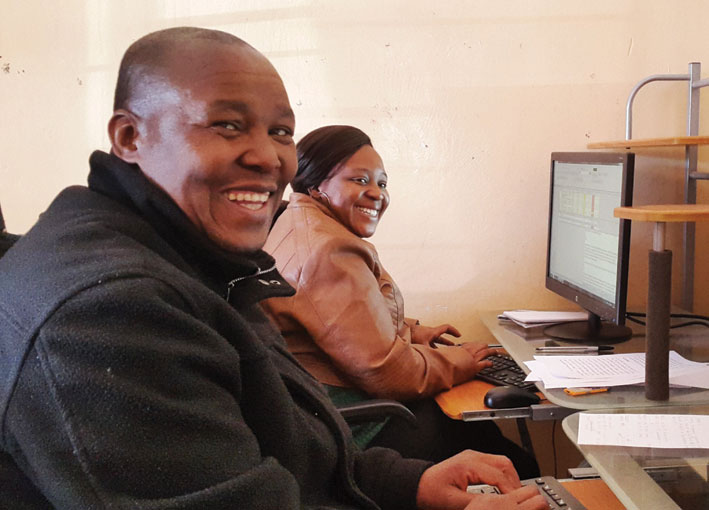
Jasco Broadcast Solutions has helped Lesotho TV (LTV) to go fully tapeless with an Avid production and post production suite.

The solution, which was fully commissioned by mid-July 2016, will improve the quality of the state-owned broadcaster’s outputs significantly, laying the foundation for expansion of its services as the country readies itself for Digital Terrestrial Television (DTT).

Jasco Broadcast Solutions designed and helped LTV commission the Avid solution. Says Hoosein Moolla, sales executive at Jasco Broadcast Solutions: “We are pleased to assist LTV with a solution that will help it to improve the quality of its services. The broadcaster provides an important communication and education medium for the nation. As DTT technology is rolled out, extending the reach of the broadcaster, the Avid suite will provide a strong backbone, enabling effective TV news gathering and delivery, as well as studio production.”

The solution incorporates Avid edit suites, a newsroom system, ingest and playout server, and central storage server. “This solution will provide LTV with the features and functionality a modern broadcaster needs,” says Refuoe Taoli of LTV. “With Jasco’s expertise and hands-on assistance, we have been able to move rapidly from acquiring to commissioning the system. We look forward to the improved quality of the broadcast material that will be possible with this system, as well as the greater working efficiency the Avid systems will provide us with.”

The new Avid system replaces a legacy solution that did not meet the growing needs of the broadcaster. Explains Taoli: “With disparate stand-alone systems in place, the production and post production processes were slow and the final output quality was poor. Digital footage had to be ingested into the edit suites for editing. The digital material then had to be put back onto tape and taken to the final control centre where the material was ingested into the broadcast server for broadcasting. That caused significant delays in production and loss of picture quality.”

LTV currently only broadcasts to the Lesotho capital, Maseru. However, with the implementation of DTT technology, the broadcaster’s reach will extend to up to 80% of the country’s two million people when the country expects to go digital in 2017.

LTV investigated available solutions and in 2015 was granted the budget to upgrade its systems. The tender was won by Jasco Broadcast Solutions.

“We selected Jasco Broadcast Solutions’ Avid proposal as we believe the Avid technology will provide us with the means to maximise our resources and efforts. In addition, Jasco has considerable experience in the delivery and implementation of solutions in the region,” says Taoli.

“We are pleased with the progress we have made and with the advice and assistance we have received from Jasco.”cer

Portrait of a metamorphic outreach programme

Chasing the Dragon is a promotional short about Surfshack Outreach in Muizenberg, where  local youths are pulled from the trenches of a life on tik by volunteers dedicated to transforming their lives. “This piece had a very personal appeal to me, I felt that I could deliver a level of honesty and insight into it that would complement its authenticity,” says director Siphiwe Myeza. 7Films partnered with Y&R and Surfshack to film Chasing the Dragon.

Throughout the short the voice-over and music create a relationship between the ocean and the drugs, and plays an integral part of the production.

“The VO marries intimately with the pacing of the cut and determined the amount of scenes we needed to have,” says Myeza. This project attracted his team because it allowed them to connect with a worthwhile cause and give back to the community by doing what they love.

The brief was to make a collection of three short films for Surfshack, and to make them all very different. Therefore three different 7Films directors partnered with three different DOPs to create three very different short films. Written by Patrick Robertson, “all the scripts are very inspiring and each narrative is gripping in its own respect, which made our job so much easier to marry the words with equally beautiful imagery,” describes Myeza.

The spot was shot in Muizenberg and Capricorn in Cape Town using the Arri Alexa Mini, which was chosen specifically for its smaller size and light weight. “We needed a camera which could accommodate the intricate and intimate circumstances of the shoot’s locations and schedule,” explains Myeza. “Coupled with an Angenieux Optimo 28-76mm, the combo proved highly effective giving us the versatility we needed moving between interior and exterior locations using only natural light.”

He says they chose to shoot exclusively in natural light as the harsh African summer sun would best portray the hard lives of the young men living in the township. It was filmed on 30 and 31 December 2015 and released on 30 June 2016.

Aiming to be entirely authentic, they decided to work with children of the target demographic. To find the balance between an unforced performance that was consistent and assertive in its delivery, Myeza says was no easy feat. “So it was important that we got as much footage as we could, it is like digging for gold.” Myeza says they adopted the same workshop process which was used in films such as City of God and Life of Pi. “The workshop required us to be patient, graceful and sensitive with the children. It not only challenged us and improved us, it did the same for the children,” he says.

Forming a relationship with the children through team building exercises and trust exercises they learnt how to be disciplined and this preparation paid off on set. “Through this process we were able to instil life skills that are reminiscent of the ethos of Surfshack. In this regard it is always fulfilling to build into the community and people’s lives through working together,” adds Myeza.

Shooting in a South African township comes with its own risks and challenges, Myeza explains. “With respect and courtesy, we were able to navigate through the streets of Capricorn township and connect with the community at large,” he says. “The community bought into the idea and fully supported what we aimed to accomplish. The community offered their co-operation and volunteered a hand where they could, which made the shoot so much more worthwhile. We hope that we have done them justice and raised awareness about the challenges that their youth and community face.”

Without a stunt team and water support Myeza says shooting the water and surfing scenes posed the greatest challenge. “We had a very small but multi-talented crew which helped a lot, but the ocean shots took a toll on us both physically and mentally.”

Media Film Services equipped them with all the equipment and underwater camera gear that allowed them to capture intimate shots of the young surfers as they ripped through the waves. “Surfing on its own is hard enough, carrying around a camera and trying to keep up with these talented surfers made us grateful that we took swimming lessons once upon a time,” adds Myeza.

He describes the team work and co-operation from the cast and crew as amazing. “They had to wake up early on New Year’s Eve and New Year’s Day,” says Myeza. Capturing the essence of Surfshack Outreach seemed effortless in this short. Myeza was able to depict: “The abyssal, dark and all-consuming drug world versus the robust, volatile and deep ocean. Mind blowing in their similarities, both are adrenaline pumping and somewhat euphoric, but the one takes lives and the other saves lives.” He explores this poetically in his piece. It beautifies the Surfshack Outreach slogan “The cure for addiction is another addiction.” By

Key crew:

  • Executive producer: Lourans van Rensburg
  • Producer: Nina van Rensburg.
  • Director: Siphiwe Myeza- Mhlambi
  • DOP: Kabeer Shaik
  • Editor: James O’Sullivan
  • Grade and online: Leon Liebenberg
  • Chief creative officer: Graham Lang
  • Writer: Patrick Robertson
  • Final mix: Gavin Kannemeyer

Key companies:

  • Production house: 7Films
  • Agency: Y&R
  • Post-production: Nova and CV Africa
  • Voice over recording studio: Big Leap
  • Voice over recording: Big Leap Recording Studio

Sustainable screenings shining from SA

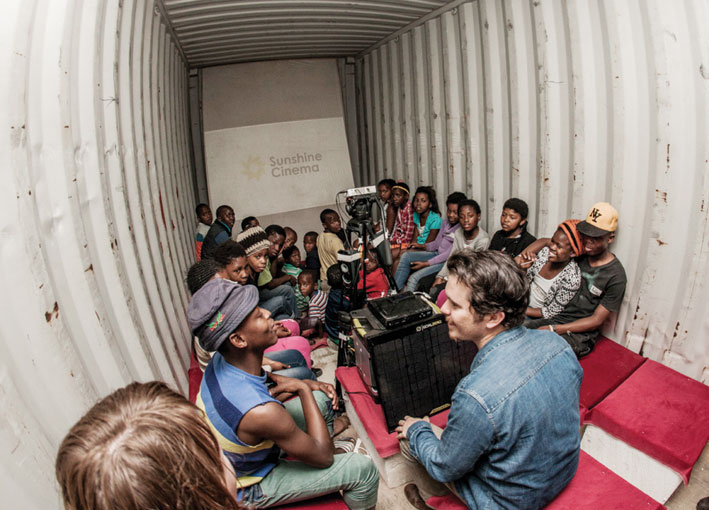
A sunshine driven media initiative addressing social and environmental challenges through short films has taken off from Cape Town. Sunshine Cinema is a mobile cinema that converts solar power to social impact. It also facilitates workshops and how-to videos through community engagement.

“Our aim is to connect change makers to wider networks, amplifying the voices of grassroots active citizens,” says Sydelle Willow Smith, researcher at Sunshine Cinema. “We celebrate local stories, educating, uplifting, inspiring and connecting people.”

Made up of a small team of storytellers, filmmakers and researchers who are passionate about creating an alternative distribution platform. “We believe in making our media screenings a soapbox for local voices to engage. We believe media can be used as a tool to activate social dialogue, which is why we also run media training workshops with active citizens at our screenings” explains Smith. In addition, they are shaking up the local media industry. “Our production company Makhulu is apprenticeship based. Our core team is comprised of passionate individuals, many who are from previously disadvantaged backgrounds that gain on the job training.” They run a scholarship partnership with SAE film school in Woodstock, Cape Town. A Sunshine Cinema full scholarship is awarded each year to an up-and-coming filmmaker. The 2016 Sunshine Cinema/SAE Scholarship recipient was Lufefe ‘Fez’ Figlan.

They run a pop-up cinema with their screen, sound and projector all using solar power and an inverter from their partners at MLT Power, a Cape Town solar manufacturer. “We screen to up to 200 people at a time. We also have a smaller cinema system that fits into a small pelican case, with micro projector, wireless speakers and a mini solar power and inverter which we use for smaller scale events for up to 50 viewers.”

During the International Aids Conference, held in Durban between 19 and 22 July 2016, Sunshine Cinema hosted a series of free film screenings in surrounding townships. Supported by the Open Society Foundations Public Health Program the films provided perspectives of youths from South Africa, Zambia and Tanzania facing the challenges of access to care and social stigmas. These events provided a platform for engagement and dialogue within communities that otherwise would not have access to the conference and challenged community members to consider how they may impact the fight against HIV and AIDS.

In 2016 Sunshine Cinema were the official satellite screening partner of The Encounters Documentary Film Festival hosting screenings in Khayelitsha and Langa.

Since 2013 they have screened to more than 6000 direct audience members in shipping containers, community halls, schools and various other pop up cinema locations. “We plan to continue building our alternative distribution platform,” says Smith.

They too are partners of the Zambia Festival of Action, the fifth annual festival took place in July in Livingstone. Run by Greenpop the festival is a learning project that teaches sustainability and active citizenship as they plant thousands of trees at schools and community farms in an area where deforestation is an issue.

Sunshine Cinema plan to partner with an international film festival focusing on African cinema to ensure more African cinema is seen on the continent.

Free streaming start up for Africa

On 19 August 2015, the dot com AfroLandTV was bought by Zimbabwe born Michael Maponga. AfroLandTV is a South African online streaming TV channel dedicated to showcasing paramount African content. It features independent South African and African films, shows and documentaries.

“The vision and mission is to grow the African film industry via online television and expand to creating quality original content,” says Maponga. Since the age of 10, Maponga has lived in Dallas, USA and he is a professional actor with more than 20 credits to his name, including starring alongside Hollywood actor Stephen Baldwin.

The concept of AfroLandTV came from a friend of Maponga’s, Ron Valderrama, the CEO of Stream Now Pro, a US streaming platform. “As an actor I’ve always wanted to give my talent back to my native land. Through AfroLandTV I aspire to give African filmmakers a platform to showcase their content. Most major distribution companies such as Netflix, Hulu etc, focus on westernised content. I want to give filmmakers in Africa a platform that builds a buzz around and centralises on South African and African content,” explains Maponga. “Our content includes extremely compelling and original stories that would otherwise go unnoticed without AfroLandTV. Our filmmakers won’t have to depend on third party distribution companies to showcase their content to audiences that are not relatable to African content.”

A modernised website was launched in May 2016 with the greatest challenge the company faced that of creating a user friendly website interface. Their web developing team is based in Zimbabwe, called Ennovate Systems, which is headed by Valentine Chonyera.

“We have faced numerous challenges bringing this vision to optimal life,” says Maponga. Contained by continuous research into web development, web applications and analytics. Marketing posed another challenge, “Being that this project is currently self-funded I’ve had to really break down my target audience (millennials age 18 to 34) and use the funding diligently,” says Maponga. AfroLandTV has an audience based predominantly in Africa, and a majority in South Africa.

Furthermore content is a challenge. “We have a set plan to increase our catalogue through local and international film festivals,” explains Maponga. He says that AfroLandTV is distinguished by their quality indie catalogue featuring content on the continent. The SABC’s 90 per cent local content quota makes them AfroLandTVs biggest competitor.

AfroLandTV aims to increase subscription numbers to 20 000 by the end of the year and expect to be creating original content by summer 2017. “We plan to work with local film producers to make this happen. By the end of 2017 we are aiming to have big studio films on our platform. Since we’re independent and self-funded at the moment, we’re looking for relevant partnerships with other organisations to form synergies for expansion,” explains Maponga. “The plan is for continuous growth and interface improvements on our website platform and mobile app.”

Support for the steaming service has been received from bloggers and independent media outlets in South Africa who have brought in a good amount of following. AfroLandTV have partnered with the South African digital broadcasting company StreamTV who launched a streaming channel android app at the end of July. AfroLandTV will be hosted on this app as a channel.

“We have reached thousands of people and we are continuously building a strong following. Social media has been our biggest audience driver so we’ll continue feeding the flame,” says Maponga. He plans to open a branch in South Africa. “This will make it easier to work with local filmmakers and productions,” he adds.

First film festival hits South Sudan

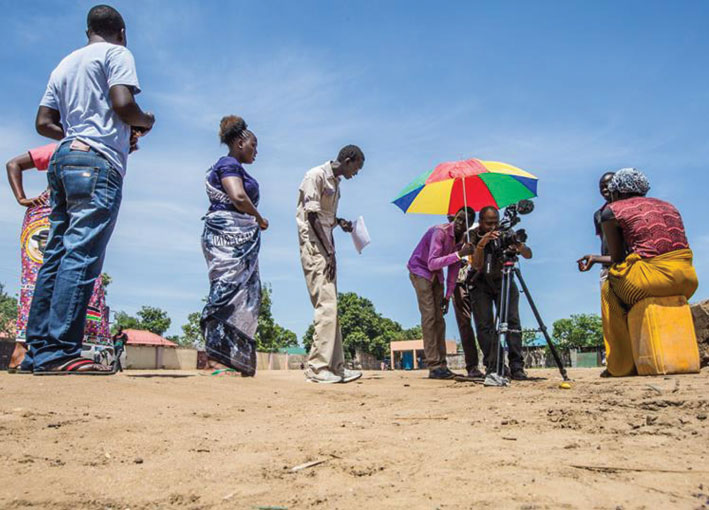
In a country that has been dwarfed by war, where there is not a single cinema nor a film industry, the Juba Film Festival began. In the world’s youngest nation, South Sudan’s first ever festival of its kind was held in the capital city, Juba, where local filmmakers armed with cameras, mics, and umbrellas are working to create one.

“Nobody, war or evil will stop us from enjoying our stories through the power of film. South Sudan has been like a battlefield, but we gained independence and there is a great need to share our own stories,” says the festival’s founder, Simon Bingo, an orphaned refugee turned local TV personality.

The festival was a dream made possible by a grant through Internews and USAID.  The hope is that it will kick-start a film industry in South Sudan. With support from donor agencies including the local German embassy, and the guidance of professional mentors from New York’s Barefoot Workshops and guerrilla filmmakers What Took You So Long. Bingo describes the project as a pop-up film school for young South Sudanese filmmakers. “There’s no infrastructure to learn about film here,” he explains. ”The festival is more than about showing movies; the goal is to build capacity to make movies.”

Pitching sessions and workshops were conducted with four outside mentors where four scripts were chosen from South Sudanese stories that were then made and edited and screened at the film festival. The Juba Film Festival culminated with screenings of these four movies and selected submissions on 7 July 2016, two days before the fifth anniversary of South Sudan’s independence. 40 films had been submitted for the festival. 30 were selected for screening during the festival which was held from 4 to 7 July 2016. 11 films were selected to compete for prizes.

“We have a diverse country with a lot of stories, it is important to find a platform to tell them,” says Bingo. He first fell in love with movies as a teenager, watching outdoor screenings in the Kakuma Refugee Camp in northern Kenya. He picked up camera skills after a stint with the NGO FilmAid and later won a scholarship to pursue a film degree in Nairobi. When he graduated in 2009, he moved back to Juba, just as his homeland was pushing for independence from Sudan. He found a job at the South Sudan TV network as a video editor, and later developed the Bingo Show, a weekly programme airing music videos.

“The film festival was very well received,” says Bingo. He describes the 900 seat theatre, the flagship venue used for the screenings, as being full for three days. As were the other venues, namely the French Institute open space, Youth Sports Centre and Juba Tukul. “Individual awards like best director, editor, camera, actress or actor and script etc. and cash prize for the best fiction and best documentary,” explains Bingo. “We also received ten international films produced about South Sudan.” Bingo describes the first of what he plans to make an annual festival as a creative, peaceful revolt, to diversify the pervasive stereotypes about the new nation in the foreign press.

By Cera-Jane Catton

Behind the scenes – workshops at ZIFF

Through the sharing of native narratives, the universal medium of storytelling allows people to better understand one another and greater appreciate diversities. Ensuring that limitations and lack of equipment are not a deterrent, filmmaker Steve Clack takes workshops around the world, to show how one can use what they have to tell their story to the world.

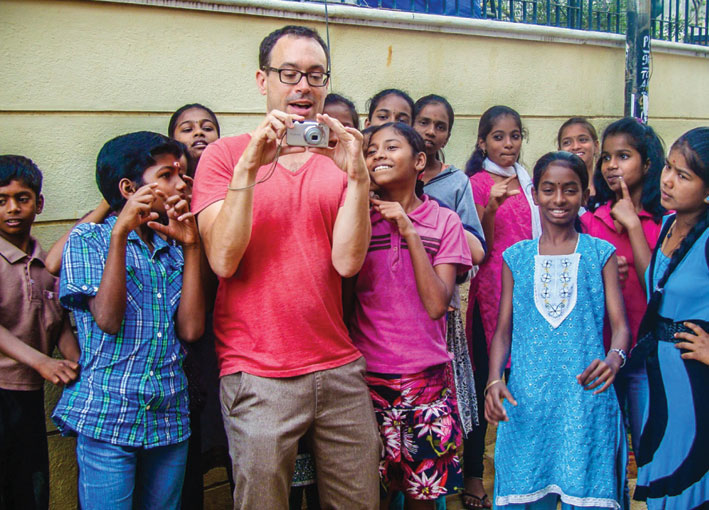
New York based Bent Marble offered a free documentary filmmaking workshop to Zanzibar International Film Festival (ZIFF) groups. Founder Clack says his company offers courses that foster multicultural understanding through empowering people to create their own digital stories with the resources they already possess. Bent Marble focus on locations and communities that don’t normally have access to training in filmmaking and the digital arts.

“The workshops at ZIFF were a great success,” says Clack. His workshop focuses on training in how to make a documentary, including all stages of pre-production, production, and post-production. “I was extremely impressed with the initiative participants showed, the depth and breadth of the topics they chose, and the extent to which they helped each other through this challenging process,” he adds.

Clack says a unique challenge at the ZIFF workshops was that there were many participants who did not speak English. “To date I have always taught workshops in languages in which I am fluent (English, Spanish, and Indonesian), and this marked the first time that we needed to enlist the help of a translator, who was only available for the first two days. With the translator’s assistance we got through day one, which was a big day of film idea development and production skills training. And on subsequent days, specific students who were fluent in English and Swahili helped their fellows and their instructor, by providing on-the-spot translation when needed. It was truly a beautiful thing how much we helped each other and how well it worked.”

Clack says the final films produced in the workshops were impressive, “and definitely among the best that have been produced by any workshop group I’ve facilitated to date,” and these new works were shown on the big screen at ZIFF on the final night.

Facing mostly fiscal challenges Clack funds the workshops himself and collaborates with initiatives within the country they seek to serve, namely Livity Africa in Johannesburg SA and Art for Social Change in Kampala, Uganda. “To date I have taught around 14 complete workshop series, as well as several topic specific master classes in editing, sound recording, and documentary camera work in different countries including Russia, Indonesia, the Philippines, India, Uganda, Tanzania, South Africa, and Colombia. And I plan on taking our workshops to West Africa over the coming months,” says Clack.

Besides using the technological resources workshop participants already possess, Clack strives to take advantage of the vast experience and know-how that already exists in each workshop. “Our group at ZIFF had folks who were highly skilled in areas such as sound recording and design, and video editing. And these participants were extremely generous in sharing what they knew to help their fellow filmmakers in the workshops,” says Clack.

Hollywood based veteran cinematographer Barry Braverman led a camera and visual storytelling workshop at ZIFF. “The hunger for knowledge in this part of the world never ceases to amaze me as my students demonstrate an eagerness to learn and practise the fundamental lessons of good visual storytelling and effective camera operation,” he says. Besides offering cinematography courses at ZIFF for four years, he has done them in 29 countries around the world.

“You can’t just bring your skills in and apply them, because they don’t have resources and so you have to adjust your methods to accommodate the conditions,” Braverman explains. “The thing about Zanzibar is that there is a lot of light out there but little indoors, and so one of the things is to use very simple solutions to complex problems.” The use of mirrors and passive lighting was his solution. “When you go on the streets its very bright and it’s also very dark in the same scene and they are using SLR cameras to do video, which are not video cameras and they do not have the ability to capture a lot of detail both in the highlights and in the shadows at the same time, so that’s why I taught them to shoot late in the day when the sun is off the buildings and out of the alleys, then it looks great,” he says. Without a sophisticated camera Braverman says it is best to adjust and shoot early morning or late in the day. “The biggest problem is not technical. As you saw from the festival, audiences will accept all kinds of problems technically if they are engaged in the story. So story always takes priority. That’s why even in the camera class, it is all about story,” confirms Braverman.

Clack hopes to return and turn his former students into workshop facilitators themselves. He also hopes to improve fundraising so he can continue offering free workshops around the world, “as well as eventually have not one, but preferably three or four workshop facilitators travelling the globe, helping people make and share their stories in the modern form of the ancient art of storytelling that is filmmaking,” says Clack.

- Advertisement -
- Advertisement -
- Advertisement -

Pin It on Pinterest