Home Authors Posts by Cera-Jane Catton

Cera-Jane Catton

316 POSTS 0 JOBS
Cera-Jane Catton is a writer and journalist with years of experience in community newspapers, blogging and freelance journalism. She has worked in a cache of capacities, often finding herself behind or in front of the cameras, intentionally and less so. She has been a stunt double in two Bollywood movies, has worked in various capacities on a number of natural history documentaries, and other international productions shot in South Africa. Cera is a former Screen Africa journalist.

Behind the scenes on Behind the Scenes

The Earth Touch web series Behind The Scenes (BTS) looks just there, behind the scenes on the company’s wildlife documentaries. Sharing their insider filmmaking secrets in an ebullient how-to series, from sussing out equipment in action to the tricks in the sound room; tips on the ground to the cutting room. The six-part series offers practical guidelines, in a droll and expedient manner, to make the most of your footage.

Stephen Embleton, news network and online manager at Earth Touch says “This is a fun series to make and put out for people to get a better sense of what goes into natural history filmmaking (and filmmaking in general).

And for them to have a better appreciation for the work on our screens.” The series has received close to half a million views with a good public response. “Generally comments and feedback have been ‘mind blowing, didn’t know how they did this,’ and so we are motivated to reveal more behind the scenes,” says Embleton.

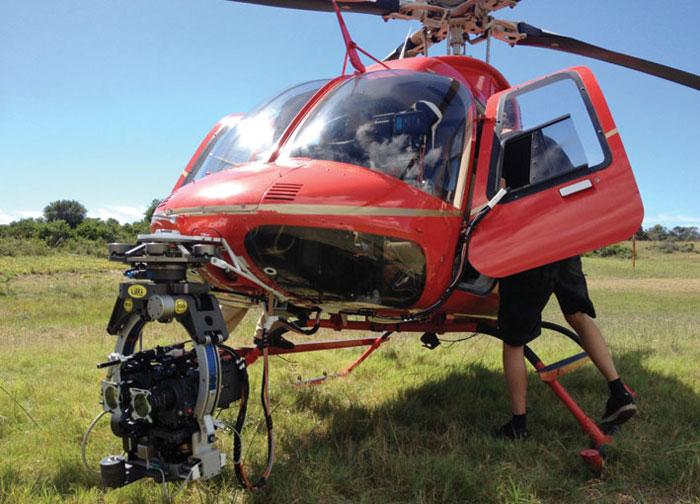
The first in the series is 3D Rigs At 3000ft, a behind-the-scenes look at a film shoot using a Jet Ranger rigged with gyroscopic stabilised 3D cameras.

Embleton says the brief was to film BTS while the crew provide a variety of aerials above KwaZulu-Natal from the mountain ranges of the Drakensberg to the estuaries of the coastline. They filmed to as far afield as Hluhluwe and Sodwana Bay. It was to be rough and ready, behind-the-scenes in the field. For this episode Earth Touch worked with Visual Impact and Rocksolid Remotes. As with most of the series the vibe is handmade, drawn and informal; in other words, simple to understand and fun to watch.

For this episode they shot on two Arri Alexa cameras, Canon 5D DSLR, using a Libra mount stabiliser. They used no lighting techniques, in the belief that natural light was essential. Edited in Final Cut Pro, custom 3D parallax software by Visual Impact. The key crew involved in the production and post-production included: Embleton on camera, directing and post-edit; Bill Olmsted on heli; Stefan Nell on 3D rig, Brad Maloney on Libra, Shaun de Ponte assisting on convergence;  David Birch on final mix, Adriaan Landman on graphics and Benjamin Hewett on production.

The episode covers all aspects of filming in 3D, “To educate people on the technology and what is involved in surviving a helicopter that is possibly at capacity over extreme conditions,” explains Embleton.

The second webisode is Drone Testing: Going underwater with hippos, where they show the BTS of a submarine drone rig being constructed, while in the field in the Okavango. This is another rough and ready BTS filmed between Durban and Botswana using nothing but natural lighting. The cameras used on this BTS were a GoPro to film the drone and DSLR for behind-the-scenes. It was completed in Final Cut Pro.

The key crew involved in the production and post-production were: Bartjan Hooft on the drone build and BTS filming, and edit; Barry Skinstad as underwater cameraman; Grant Brokensha as underwater cameraman; Chris Stear as underwater cameraman and camera assistant; Richard Boltar as dive operator and boat skipper; Embleton on edit, Birch on final mix, Landman on graffics, and Hewett on production.

Effectively Earth Touch teams built a drone to show audiences what Africa’s most dangerous animals get up to underwater, and apparently that was not as easy as they thought it would be. “Navigation via remote, watching crew fine tune the drone and not let water damage the expensive gear inside, get up close to hippos in the Delta, getting the final shot,” says Embleton, was no easy feat.

The third in the series is Filming Underwater with an iPhone, in which Earth Touch film crew test out the iPhone’s aquatic filming capabilities. Diving into the sea at Sodwana Bay to get the lowdown on the Patima iPhone 4S underwater housing, and they also give a few tips and tricks for setting up your phone, tackling challenging lighting conditions or no lighting underwater, and then the dos and don’ts of filming ocean life on an iPhone.

The next and fourth in the series is Making Of: iPhone Films where Earth Touch crew make a nature documentary with an iPhone. From setting up, to equipment rundowns and a few cheats in between, the webinar describes how one can make the smallest subjects come to life with a phone.

The fifth in the series is Holey Foley where audiences get to go backstage behind the soundproof doors and into the world of Earth Touch’s audio experts as they perform the finicky art of Foley. They show exactly what it takes to enhance or recreate nature’s diverse sounds and bring a wildlife documentary to life.

The final and sixth in the series is High-speed Camera 101 where an Earth Touch cameraman shows you how to get the best out of a high-speed camera as he travels to a tiny island colonised by birds to show you the magic of the Phantom.

“We are always looking at other aspects of filmmaking that we can feature,” says Embleton. “Because we are currently working on VR 360 content, we think this will be one of the next to be featured.” There may be six in the series for now, but there will certainly be more behind-the-scenes to follow.

FILM DIRECTOR SPEAK: Kosta Kalarytis

Kosta Kalarytis began his career as a cartoonist and illustrator working for the Mail and Guardian during the late 90s. It was his lifelong passion for film that led to a stint in the animation and television industry, where he specialised in producing promos and movie trailers. He has since directed feature films and documentaries under his production company One Man Band, including Mules, a hard hitting exposé on drug mules in South Africa, and most recently the feature film Dora’s Peace.

WHAT IS YOUR BACKGROUND AND HOW HAS THIS SHAPED YOU AS A DIRECTOR?

I was very passionate about film from a young age so I was always looking for ways to get a foothold in the film industry. With the advent of new technology things changed dramatically and I saw an opportunity to make the leap from cartoons to animation. After a few years of doing animation I made the jump to editing where I specialised in producing promos and movie trailers for television. While working there, I met a fellow colleague, Andrew Herold, who harboured ambitions as a screenwriter. Due to our shared passion for film, we decided to develop our first feature film and after a few years of raising finance, I jumped into the deep end and directed my first feature film, The Company You Keep in 2003.

The film starred a few Hollywood actors as well as some locals and although it was set on the Texas Mexican border, it was shot in SA. Having no experience on set whatsoever it was a difficult shoot for me and let’s just say that I paid my school fees on that movie. It took me awhile to recover from that shoot and I spent many years editing other people’s feature films until I was ready to direct again.

That experience shaped me as a director because it made me become more focused and thus a more confident filmmaker. I realised that you need to prepare well and to oversee every aspect of the production but at the same time collaborate with other artists in order to get your vision across.I also have a strong visual sense due to my artistic background and being a film buff helps as it allows me to draw inspiration from other movies.

DESCRIBE THE MOMENT YOU DECIDED YOU WANTED TO BECOME A DIRECTOR?

At the age of about five years old, watching a Sergio Leone spaghetti western in a dingy cinema in Vanderbijlpark where I was born. Of course I didn’t know what a film director was at that time but the strong visual sense of Leone’s films together with Ennio Morricone’s soundtrack made a lasting impression on me.

WHERE DO YOU FIND INSPIRATION?

I’m inspired by other filmmakers including some of my all-time favourite directors like Leone, Peckinpah, Scorsese, the Coen brothers, Paul Thomas Anderson and most recently Nicolas Winding Refn.

DO YOU HAVE ANY MENTORS?

Yes, plenty. Leone, Peckinpah, Scorsese…LOL.

WHO IN THE INDUSTRY WOULD YOU REALLY LIKE TO WORK WITH?

I’m really looking forward to working with a multitude of local talent both in front and behind the camera, especially our actors who I don’t think are given enough credit.

WHAT ARE YOUR PERSONAL CAREER MILESTONES?

Growing up in a small town and finding work in Johannesburg at a young age as an illustrator and cartoonist was a career milestone for me. It gave me the confidence to pursue my creative goals, which finally resulted in a career in the film industry and the production of Dora’s Peace, a film that I’m immensely proud of.

WHICH PROJECTS ARE YOU CURRENTLY INVOLVED IN?

I have two completed screenplays that I’m developing together with my friend and screenwriter, Andrew Herold, who also wrote Dora’s Peace.

DO YOU PREFER FILMING OR ILLUSTRATING?

I enjoy illustrating and filming equally and because I storyboard a lot on my films it is part of the filmmaking process, so I have the best of both worlds.

WHAT HAS BEEN YOUR FUNNIEST MOMENT ON SET?

Well I have a great sense of humour and it’s better to laugh than cry, especially on a film set when you’re supposed to lead by example. But if I had to choose the most recent one, it would be on the set of Dora’s Peace when one of the villains (who shall remain nameless) was chasing our heroine with a large gun when his pants fell off, but then he twisted his ankle and couldn’t walk anymore and we started losing the light and then it wasn’t so funny anymore.

IF YOU COULD HAVE ANY FILMMAKER SUPERPOWER, WHAT WOULD IT BE?

The ability to win the lotto every week so I can have funds to make countless movies until the day I die.

WHAT ARE YOUR LEAST FAVOURITE PARTS OF THE JOB?

Eating those awful assorted biscuits and drinking that terrible coffee every day when shooting. I heard they were drinking Chivas and eating Beluga caviar on the set of The Avengers, which was shot partly in Joburg the same time as Dora’s Peace, so until our actors start wearing spandex…

IF YOU COULD PRODUCE AN AFRICAN VERSION OF A HOLLYWOOD CLASSIC, WHAT WOULD IT BE?

Taxi Driver. Imagine the chaos.

WHEN YOU’RE NOT BUSY DIRECTING HOW DO YOU SPEND YOUR DOWN TIME?

Well I was a bachelor for 45 years so it was always movies, movies, movies, until I recently married and had a kid so now it’s Teletubbies, Barney, dirty nappies and a few less movies.

WHAT OR WHERE IS YOUR HAPPY PLACE?

In the cinema and with my crazy, beautiful family.

Louder than words

New Balance (NB) has launched their first global lifestyle creative platform: ‘Numbers speak louder than words.’ Fashioning a fully integrated creative space for NB Lifestyle by fusing together the digital and physical worlds with a shared passion for ingenuity. The first of four SA commercials features the fresh photographer, Dean Petersen from Cape Town.

Samantha Wentzel, producer at King James agency, says the campaign pays tribute to New Balance’s unique model numbers of their shoes, and building on that the role numbers play in one’s life, from birth dates, anniversaries and milestones to the date your business went public. “The new campaign reflects the aspiring creative community that New Balance lifestyle appeals to, a group of people who are constantly improving, creating and thinking about the next thing.”

Built around the principal that numbers speak louder than words, Wentzel says that while their task was to follow the global template, they wanted to create content videos that were uniquely South African, showcasing the New Balance lifestyle range in an SA context.

“We wanted the video to be an authentic representation of who Dean is and what he does. Dean’s life is all about movement and the video had to reflect his adventurous spirit,” explains Wentzel.

The video was shot in and around Cape Town, starting at Disa Park and moving to Salt River station, then the urban skate park and ending at Llandudno beach. This was all done in one day.

First Pencil producer Brenda Wilson says that the difficulty in a documentary is portraying the subject as precisely as possible. The video was shot on two Sony a7s’ – one for following Petersen around and one for the time-lapse shots. Justine Calverley, the director, made use of jump cuts, ramps and reverses, and pillar boxing in the final edit. The video features many of Petersen’s pictures.

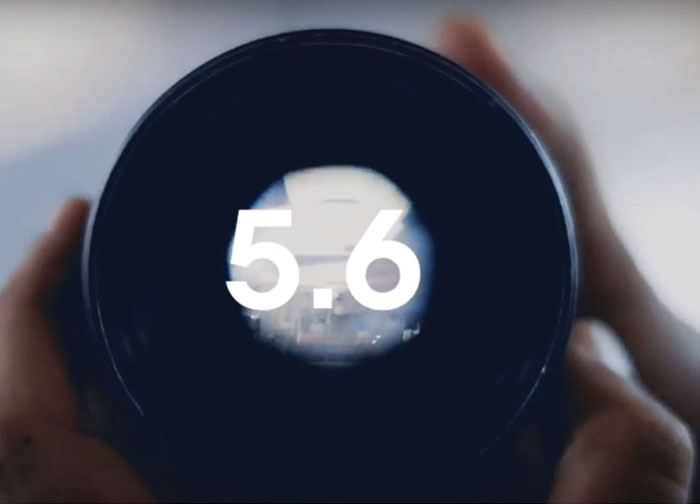
“The only fun thing we managed to chuck in was a shot through a lens to illustrate how an aperture works,” describes Wilson. She says moving between that many locations in one day was a real challenge, but through planning and scouting ahead of time it was made possible.  “We moved around with a skeleton crew and just shot and shot and shot,” she says. Adding: “Our models were all such good sports and so was Dean, what a champ.  Right at the end of the day we even had Dean’s mom and her dog on set; it was probably the cutest thing ever and we’re pretty sad it never made it into the cut.”

Shooting both the sunrise and sunset from two completely different parts of Cape Town in a day, starting in the city and moving to the beach was an experience for the filmmakers involved. The music was sourced by the editor Xander Van Der Westhuizen, using a track from his colleague Joni Blud. Nic Apostoli of Comfort and Fame did the grade and colour correction.

The campaign serves to celebrate this year’s anniversaries of the brand: sneaker models 580, 999 and 995 will turn 20 and 30, respectively. The brand will also celebrate its 110th year in 2016.

Key crew and companies involved:

  • Editor: Xander Van Der Westhuizen
  • Director: Justine Puren Calverley
  • Producer: Brenda Wilson
  • Grade: Nic Apostoli
  • DOP: Pierre De Villiers
  • Art Director: Moe Kakana
  • Copy Writer: Marcelle du Plessis
  • Creative Directors: Mike Wilson and Cameron Watson
  • Production Company: First Pencil
  • Agency: King James
  • Post production company: Upstairs Post

Hip hop heads back to the hood

Producer Dave Thompson has worked with artists Alicia Keys, Avril Lavigne, Bob Dylan, Britney Spears, Bruce Springsteen, Christina Aguilera, David Bowie, Elvis Presley, Guns ‘n Roses, Jay Z, Nirvana, Pink, Puff Daddy, R Kelly, Toni Braxton, Usher, Whitney Houston and most recently Coopay, a South African artist who has just released the music video for their debut single ‘Trigger Happy Chappy’. Thompson is the co-owner of Boom Studios, a South African record label breaking the mould and nurturing up-and-coming talent. During his 41-year music career he has conceptualised and coordinated promotional and marketing campaigns for the aforementioned artists.

“It’s common practice for the artists themselves to pitch ideas which invariably are either way too expensive or impractical – the trick is trying to find an effective compromise – having an artist deliver a convincing performance for a video concept that they’re not convinced about in the first place is a recipe for disaster,” explains Thompson. So effectively the brief for this music video started with him outlining that he wanted to stay away from the usual hip hop video clichés about expensive cars, clubs, mansion swimming pools and girls in bikinis. “In addition I asked if they could find a way to incorporate the re-cycling and scrap metal collectors that drag their trolleys across the city each day – in other words some imagery far removed from the world of bling.”

The video was produced by Johannesburg based The Moving Billboard Picture Company. It was shot around the Johannesburg CBD: Faraday Taxi rank, Jeppestown, Newtown and the peripheral areas, a site near the old gas works, an area near a refuse dump in Doornfontein and a location near Malvern at the eastern end of Commissioner and Jules Street. DOP Dan Teffo shot the video on a Sony FS7.

“The idea was to use elements that weren’t part of the usual hip-hop culture, which were then refined into a workable storyboard by the director Noma Khumalo, Coopay and team,” says Thompson.

Director Khumalo says that Coopay too was looking for a video that would transcend the stereotype about hip hop musicians, one that would allow him to be portrayed as a guy on the streets. “I took the title and created contrasting images of the bling lifestyle – showing him as a beggar, a taxi driver, a vagrant recycler and shop owner,” she explains.

A passion project, Khumalo says the video was a play on the title ‘Trigger Happy’ and looks at people finding various triggers for their happiness despite their environment and circumstances.

She says budget was an obstacle, second to shooting in downtown Johannesburg. “Now, elitism aside, downtown is a nightmare if you aren’t prepared. So traffic, spectators and the works were an issue but as filmmakers we are by nature problem solvers. There is one scene we shot where the occupants refused to vacate the area and we ended up incorporating them into the sequence,” describes Khumalo.

Using an element of realism, Khumalo explains that they shot at specific times of day in selected locations to achieve the kind of light needed. “This gave us a more naturalistic feel that still allowed a fair amount of latitude in post. Joburg colour temps differ throughout the day, we started at 3h00 and shot into the afternoon,” says Khumalo. She says the locations further restricted their use of light and they used small fillers and poly bounces, using the natural ambient light as much as they could.

Edited by Bruce McLaren Lyall, the video certainly transcends all hip hop traditions. It furthermore makes the streets of Jozi stand out as cool parts of the hood. “Music is expressing life with all the boring parts cut out,” says Coopay, and his video certainly does turn the mundane into the mood.

Merry go music

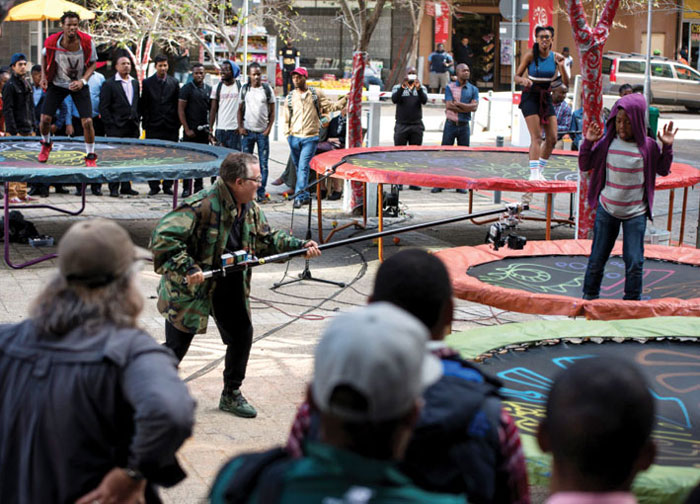
KFC initiates the return of “It’s Finger Lickin’ Good” in its latest TVC featuring the song ‘Good Vibrations’, which turns Church Square in Cape Town’s CBD into an alfresco orchestra.

In the commercial, the various features of a playground are turned into musical instruments, with each swing, jump and skip supplying a beat or a note in an improvised, orchestrated rendition of the Beach Boys classic.

KFC and Ogilvy & Mather Johannesburg asked director Keith Rose at Velocity Films to create a TVC that evokes the taste of KFC in a unique and unexpected way. “This advert should celebrate the moments in life that unite us all. It features a full adult size themed play park where families are enjoying a picnic with fun, games and fairground entertainment, including roundabouts and hopscotch,” explains Shannon Gloyne, producer at Velocity.

She describes how in the commercial a group of friends craft the elements of the park to produce upbeat music as the people of the park bring the song to life.

It was Rose’s vision to remove the park from the more traditional green, leafy park environment and to situate it in an urban, inner city area embracing the everyday grit of life, and so, it was built in the CBD.

“We see a mundane environment transported in an unexpected but deliberate fashion. We open on a group of friends rigging up the last pieces of equipment and getting into position, together they begin the core of their musical track. The narrative from here is simple, we encounter different groups of people emerging to partake in this event. The musical symphony builds towards a heart-warming ending,” says Gloyne.

“We avoided the use of primary colour throughout as this would create a childlike impression which would distract from our bold and authentic vision of a reinvented environment appealing to an older market,” adds Gloyne.  The layout of the park is designed to create the impression of a stage band where each element plays its part. “The gritty qualities we see in street life ultimately provide us with a point of difference,” Gloyne explains.

In order to maximise shooting time they shot with five cameras, each on a different rig, making use of crane platforms, rooftops, polecams and Ronin rigs, as well as handheld shooting. Gloyne explains that Church Square is surrounded by high-rise buildings and therefore they did not have access to much natural lighting. “Huge reflectors were placed on a rooftop of one of the adjacent buildings and light was bounced down to the square.  This lighting was further enhanced during the post-production process,” she says.

In order to build up the city environment in the background, additional buildings were added in during post-production.  “It was also necessary to rotoscope a few of the camera crew out of the top shots,” adds Gloyne.

Filming took place over two days at the end of May 2016. The design and manufacture of the park was undertaken by Mary Minty at Artichoke and the stylist was Sylvia van Heerden.  Saki Bergh at Left Post Production was the editor and the online VFX were done by Keno Naidoo, Michael Naidoo and Giulio Galinos at Left Post Production. Terry Simpson at Black Ginger was the colourist. Final mix and sound design was completed with Dave Harris at Freq’ncy.

The biggest challenge of the production was finding a track which would be able to work to the beat and percussion created by the musical instruments as developed in the park, and, adds Gloyne, a song which everyone agreed on. “Numerous international and local music searches were undertaken. Once narrowed down to a handful of song options, music rights were investigated, and this was then followed by briefing a group of international and local music producers who compiled pilots,” says Gloyne.

After an intensive four-month period, they were able to narrow it down to one pilot. The musician, Markus Wormstorm of Honeymoon Studios, then worked very closely with the director and editor to compile numerous offline edits. “It was tricky; as you changed the music, you had to change the picture, and vice versa. It was difficult to get the pictures to feel good without having finalised music but with repeated music or picture sessions we eventually had a client approved commercial the day of material submission.”

Animation turns tune to fantasy

WONDERboom have released the first single from their latest album, Great Escape. The band needs no introduction and the song is exactly why they have been an SA treasure for twenty years.

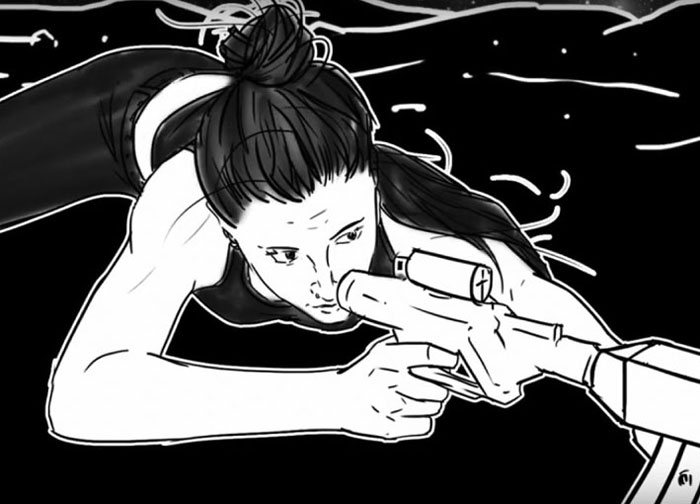
The animated music video for Great Escape is a sci-fi fairy tale about escaping evil with the one you love. “The video depicts two lovers/heroes stuck on an alien planet who break free and escape through the galaxy. Action and chase ensues until the twist at the end,” explains WONDERboom frontman Cito.

He says Roger Adrian Williams at Rog Kreativ presented the band with just the right treatment for the project. “Classic comic book with Sin-City-style animation to real images. Black and white to give it a vintage yet timeless feel,” he describes. Director, editor and animator, Williams had the vision and the skills to conceptualise, illustrate, direct and edit the video.

“We were basically looking to make a video in a way we’ve never done before,” says Cito. The band especially enjoyed not featuring in the video the whole time. “The song’s sound inspired images of adventure and escape,” adds Cito.

Williams says “The brief was for an animated music video, centred on some sort of escape or adventure to visualise the song. We played with many ideas: escaping from some sort of confinement, a prison, war zone, whorehouse, hostage situation… Eventually we decided to go with an epic escape from an alien planet.”

The production team consisted of Wiliams and Eleanor Barkes taking the project from concept to execution, including pre and post-production, direction and animation.

The band scenes were filmed using a green screen at Phoenix Studios in Johannesburg. Shot in 12 hours in February 2016. The heroes were shot in Cape Town.

“It was fun for us to do some acting and not just the usual musical performance stuff,” says Cito. His 19-year-old son acted as the villain aliens that they had to fight against. “So, it was lank fun beating each other up. Using my mic as some hardcore mace-type weapon was silly but appealed to my child inside. It was also cool skateboarding around the studio,” describes Cito.

“The whole story acts as a metaphor for the lyrics of the song, which touches upon ideas of solidarity, love, internal and external conflicts and fighting for what you believe in,” explains Williams. He says they wanted to create a slick, yet classic look and feel for the space adventure, without going very futuristic or over the top with the outer space elements. “We then developed a black and white, illustrated style which had elements of old frame-by-frame or cel animation, rich textures and areas where we composited the live footage of the band, making them morph in and out of their illustrated forms while battling aliens and assisting their friends on their journey,” describes Williams.

The video was shot entirely on a Canon DSLRs 7D, 70D and 550D, using prime lenses only, as well as a Sony action camera. “It was all done in studio, and we managed to keep the equipment down to a minimum to get the shots that we needed for the animation,” explains Williams. He says the animation was done at eight frames per second, combining a line drawing illustration style with the green screen footage. “We wanted to give it all a somewhat old-school stop-motion feel, and also really wanted the illustrations of the band and the lead characters to work hard in creating the overall look of the video. It meant creating hundreds of illustrations on an extremely tight deadline. It was then all put together using Photoshop and After Effects.”

Williams describes the biggest challenge as creating the illustrations for the animated sequences. “The slightly lower frame rate of the stop-motion style made the workload a little lighter in that eight illustrations per second were needed, as opposed to 24. It meant working very methodically in creating the line drawings separately, re-doing them in colour (B/W), and then compositing and animating them in the compositions. This had to be done for every shot of every scene,” explains Williams.

“Filming the fighting and surfing scenes with the band was fun. It was amazing how hey effortlessly brought their own unique style and moves to the action, whether it was using martial arts moves on aliens or using skateboards to simulate the hoverboard chase through outer space,” says Williams.

WONDERboom guitarist Martin Schofield says “Making a good video on no budget, with one main man, we laughed and laughed at ourselves trying to act and Williams being an international martial arts champ had us doing flying kicks, punches and generally being violent with each other, which we don’t normally do.”

The new album is due for release by Sheer Music in October. The video was released on 13 July 2016.

Making movies no matter the hurdle

How not to let a lack of funding hold you back, and make a film on 10 grand? The Blackmagician shot an indie feature film titled Killjoy for R18 000 and their latest offering, the short black comedy film You really outdid yourself this time didn’t you, fool, with R10 000 was completed in May 2016.

The Blackmagician intends to create groundbreaking material for the South African audience while building up for an international market, something they have been doing since it was established in 2013. A Johannesburg film studio that produces “gritty and unapologetic films set to celebrate contemporary culture,” according to one of its founders Babili Maseko. He and cofounder Owethu Njotina, both straight out of film school, had a passion for film making and a desire to create their own films and tell their stories through their own voices, which inspired the launch of The Blackmagician.

Sans resources from funding to lighting, they instead decided to make a film that looked like it was deliberately shot in that style, with inspiration also being drawn from gangster films.

You really outdid yourself this time didn’t you, fool, is about Mandla Sithole (Olis Mavuso) a young naive boxer who gets knocked out in the fourth round of an underground prize fight, which leads to him needing to escape a vicious gun toting loan shark, Msunukanyoko (Luthuli Dlamini) who loaned him money to train for the fight he just lost, all while trying to fix his collapsing relationship with his pregnant girlfriend, Mandisa (Tumi Malefo).

The film stars award winning South African actor, Luthuli Dlamini. Practically pro bono Dlamini’s participation emphasises the camaraderie in the growing film industry and the need for more entrepreneurs to start studios and make films and grow the trade.

Maseko says he was inspired for this film in a photo shoot he did about a white couple who could not get jobs in the new South Africa because of their age. They were in their late 40s. “There was this particular scene that really inspired the film, here the women refuses to let her husband into the house after another unsuccessful job hunting day. He’s standing out there trying to figure out what is going on with her and it starts to rain. She’s just looking at him through the glass door not letting him in,” says Maseko.

Maseko wanted filming to be done in December 2015 but delays meant they shot in March 2016. “Which was a good thing really, because we were able to plan and cast the film properly, had we shot in December we wouldn’t have an actor of Luthuli Dlamini’s calibre to be in the film.” The film was shot over 14 days at The Blackmagician studio in the Joburg CBD.

“The film was fairly easy to cast; we used our colleagues at The Madhouse which is an art residence programme within The Blackmagician Studios. We decided, since we have these actors and actresses in the residence programme, why not use them? We partnered them with other actors who are working in the film and television industry like Luthuli Dlamini, Olis Mavuso (The Madhouse art residence programme recruit) and Tumi Malefo.” Maseko says the only casting headache was finding the villain but Dlamini agreed to take an almost 100 per cent pay cut.

The film was shot in full HD using a Panasonic GH2 and some old lenses.

Maseko is a writer, director and cinematographer. Born in Swaziland, he moved to Johannesburg to begin his creative studies. He has a diploma in Film and TV production which he obtained at City Varsity School of creative arts. Co-founder Njotina is a South African writer, film reviewer and director. He studied film and TV production techniques at City Varsity School of Media And Creative Arts, and majored in scriptwriting and directing. He writes about moral issues, social standards and the complexities of human behaviour, genres that he repeatedly works on are gangster, crime and comedy.

SA featuring at TIFF 2016

One SA film will feature at the Toronto International Film Festival (TIFF) and one SA filmmaker will attend the TIFF talent lab. Taking place between 8 and 16 September 2016, TIFF is universally regarded as a vital platform for filmmakers to launch their careers.

The South African film Vaya has been selected to have its world premiere at TIFF. Vaya is the story of small-towners engrossed by the dangerous world of big city Johannesburg and Soweto. The film stars SA talent and was produced with Akin Omotoso, Rethabile Molatela Mothobi, Harriet Perlman, Robbie Thorpe and Ronnie Apteker with Kabelo Thathe as cinematographer.

“The film is a culmination of eight years of passion, dedication and the commitment to tell a unique South African story that resonates with the public. We’re thrilled to present our work to TIFF audiences, but most importantly we cannot wait for our South African consumers to see it. We anticipate that the film will hit local cinemas in 2017,” says director Omotoso, chairperson of the Independent Producers Organisation.

Zamo Mkhwanazi is one of only 10 international filmmakers who have been selected to participate in the TIFF talent lab this year. Held annually during the festival, the lab is an artistic development programme. It provides 20 young directors and screenwriters with an intensive learning experience that seeks to further develop their creativity, artistic process, and voice.

Mkhwanazi is a filmmaker working between South Africa and Switzerland. She has written more than a hundred hours of aired television on over twenty-five television shows. She is currently developing her first feature, Laundry, a film based on her family’s experiences during apartheid in the 1960s.

Along with Vaya, Nigerian flick 93 Days will premiere at TIFF, both films hail from the Johannesburg post production facility Ladies & Gentlemen Films. They specialise in colour grading, online and deliverables. Final colour finishing is completed on the latest Baselight TWO, supporting 4K and 6K workflows. Their colour suite includes Barco 2K projection and a Doremi digital cinema server, allowing full testing and colour matching for seamless integration between grading suite and cinema.

They have had their hands on the box office hits Tell Me Sweet Something which debuted in the US at the Pan African Film Festival, joined by Ayanda and Happiness Is A Four-Letter Word which is screening at Berlinale.

Managing director at Ladies & Gentlemen Films, Marc Baleiza, has been involved in the local and international film and television industries for 14 years. He says, “We are delighted with the announcement of Vaya’s Toronto selection, it is a testament to the vision of the writers, director and producers who have been developing this for several years. We have been privileged to work on this important film based on true events. It is part of an exciting new wave of South African films and we relish the opportunity to showcase Vaya to an international audience.”

The Nigerian film 93 Days will too have its world premiere in Toronto and will be released in Nigeria in September 2016. The film stars Danny Glover who has previously worked with director, Steve Gukas and was attracted to the script, penned by Paul S Rowlston. The film is about the outbreak of Ebola in Nigeria and the efforts of the government and the world health organisation to curb its spread.

Baleiza was approached by Gukas to work on his film 93 Days. He says, “At Ladies & Gentlemen we believe in the long term success of our local industry. To that extent, we have worked with both established and aspiring filmmakers.” Adding that “Every project is a challenge to raise the bar and elevate what we do. We have had a phenomenal year so far, and are looking forward to putting out more phenomenal films in the near future.”

Ross Video introduces PIVOTCam at IBC 2016

Concilium Technologies, Ross Video’s partner in South Africa, attended the launch of PIVOTCam-20, their new budget sensitive robotic all-in-one camera system at IBC 2016. http://www.ibc.org/ The PIVOTCam-20 PTZF camera system brings stellar image capture and repeatable, silent camera moves at a remarkably low price.

Based on the latest CMOS image sensor technology, the PIVOTCam-20 incorporates high quality Olympus 20x zoom optics with fast, silent and accurate robotics to offer high performance and accuracy in a wide range of lighting conditions.
The PIVOTCam-20 has incredibly low signal to noise at 74dB, and can resolve spectacular images in very low lighting conditions. It’s the perfect companion for Broadcast POV, Education, Corporate, Event, House of Worship production, and especially for Ross assembly production control systems.

This camera provides full 1080P HD and includes 128 preset settings with full control over Pan, Tilt, Zoom and Focus. Everything is fully controlled via Ross’ vison mixers, as well via their DashBoard control platform.

PIVOTCam provides affordable, high performance image capture. A production system that combines the Carbonite Black Solo vision mixer, 3 PIVOTCam cameras, and XPression still graphics, is available at an amazing affordable price. PIVOTCam offers ground- breaking value and performance for all sorts of applications.

PIVOTCam can be combined with ACID Cameras, Robotics, Vision Mixers, Graphics Systems and more from Ross to meet the needs of the most challenging production.

SGL’s FlashNet archive system is fully integrated with Sony’s Media Backbone Navigatorx

SGL announced that its FlashNet archive system is fully integrated with Sony’s new Media Backbone NavigatorX MAM solution at IBC 2016, held in Amsterdam between 9 and 13 September 2016. SGL FlashNet combined with Media Backbone NavigatorX is a perfect fit for small to medium-sized production environments.

Media Backbone NavigatorX orchestrates all phases of the content workflow from ingest, catalogue and editing to review, approvals and distribution, with the archive provided by SGL FlashNet. Uniquely flexible and fully scalable, it’s ideal for single-seat users and larger workgroups alike. It provides both online and offline shelf management of content using Optical Disc Archive media, which is highly durable and ideal for long-term content preservation.

SGL FlashNet, which is also fully integrated with Sony’s Optical Disc Archive system, allows users to store valuable media safely with ease. This powerful combination opens up a world of workflow possibilities from disaster recovery to the management of archive material over disparate geographic areas. SGL’s experience of managing multiple storage devices within production environments means that Sony’s Optical Disc Archive, which is designed for a combination of nearline, long-term, deep archive and DR purposes, can sit anywhere within the workflow, not simply as an “end of process’ archive. As well storing to Sony’s Optical Disc Archive, Media Backbone NavigatorX in conjunction with FlashNet, can send and restore content to and from the cloud.

“Sony Professional Solutions America’s (PSA) is integrating Media Backbone NavigatorX with SGL FlashNet for a US National Broadcast Customer. The combination of a powerful, flexible, extensible but easy for end users to operate Media Backbone NavigatorX Content Management and Workflow System are being integrated to SGL FlashNet and offering production and post-production archival workflows. SGL’s FlashNet supports Generation 2 Optical Disc Archive drives and media as well as the Optical Disc Archive PetaSite Library offering higher storage densities, greater throughput and a 100 year archival life span for today’s demanding media production and archival workflows,’ explains Ted Shikuma, Senior Solutions Architect, Sony Professional Solutions Americas (PSA). “Sony PSA is looking forward to offering an integrated solution with Sony Media Backbone NavigatorX, SGL FlashNet, Sony Optical Disc Archive Generation 2 and Sony MCS Ci Cloud Platform to our PSA customers.’

“We’ve been partnering Sony for a number of years and are excited to announce this latest integration with Media Backbone NavigatorX at IBC 2016,’ explains Lee Sheppard, SGL’s Director of Product Management. “The combined solution provides sports, news and media companies worldwide with a competitive MAM and archive solution fully tailored to meet the requirements of production environments. We look forward to announcing our first joint customer later in the year.’

For more information visit the SGL website.

- Advertisement -
- Advertisement -
- Advertisement -

Pin It on Pinterest