


“What is a rhino without its horn, you ask. It’s one with a real chance of survival.”
It is well known that Africa’s black and white rhino are being wiped out at an alarming rate for their horn, which has as much nutrition as your finger nails. This lucrative horn has damned our rhino to be more valuable dead than alive, while poaching and restrictions leave them precariously close to extension.
The Isuzu Rhino Dehorning Project took place in June at the Blue Canyon Conservancy near Hoedspruit, in Limpopo Province. During the last six years close to 6 000 rhinos have been killed in South Africa and this year alone the number of rhinos killed is soon to peak 1 000. These figures exclude orphaned rhino calves who don’t survive without their mothers. At this rate, SA could be without rhinos in a decade.
Isuzu were instrumental in Operation Rachel in Mozambique in 1995, in which their vehicles enabled the Mozambique Police and SAPS to recover illegal arms after the civil war. Cat Lindsay, producer at Velocity Films, explains the brief from Isuzu to incorporate their Rhino Dehorning Project into their latest TVC. “They have similarly assisted in the war on rhino poaching by offering their 4×4’s as tools to enable the de-horning teams to remove the horns of rhino’s to protect their lives. We needed to document this project,” she says.
This anti-poaching initiative is sponsored by General Motors under the banner of Isuzu and in partnership with the non-profit Nkombe Rhino. They involved the local community by making them aware of the plight of the rhino.
In the video we see rangers track and dart the rhino from the air. A fleet of Isuzu KB 300 4×4 Double Cabs are used as support vehicles in the operation to track and dart the rhinos. Once darted a team, including wildlife veterinarian Dr Pete Rogers and Janelle Goodrich, from ProVet Wildlife Services, dehorn the creature and dye what remains. As we see the rhino wake up with two purple dots on his nose where his horns once stood we hear the line: “What is a rhino without its horn, you ask. It’s one with a real chance of survival.”
The documentary style one-minute film is hard hitting, emotive and real.
Filming was done using two Sony PXW-FS7 High Speed Cameras. “We needed to be very flexible and to move incredibly quickly. We spent a week in the conservancy and needed reliable, low-cost cameras that could work in very tough conditions and deliver quality images,” explains Lindsay. “We had limited space and a very small crew so compact cameras and equipment were important.”
Lighting was done using two Digital Sputnik Light Kits. “We used natural and available lighting for all of the exterior shots and used these very compact and battery operated lights for interiors,” describes Lindsay. “Again, it was a space issue and also we couldn’t transport generators or fuel to any of the places we filmed,” she adds.
The sound design was completed by Louis Enslin at Produce Sound and the music was by James Asher. Post-production took place at Left Post Production, edited by Julian Redpath, Grade and Online in Flame with Keno Naidoo.
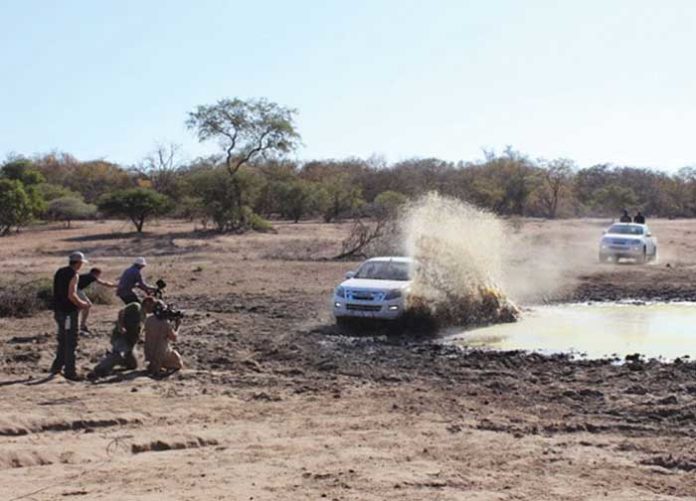
The rhino project was filmed on location from 6 to 10 June 2016 and it was first flighted in September 2016. Lindsay says the major challenge was filming without being able to set up or pre-empt any of the rhino shots. “We also used the game rangers from the conservancy as our cast so nobody had any experience of being in front of camera and Rob needed to direct a number of scenes with believable performances, such as the opening sequence with the poachers,” she adds. Lindsay describes filming as filled with interesting moments, from carrying a rhino horn around that’s worth a few million Rands, catering out of the back of a vehicle at dusk, listening to lions roar not too far away, driving like rally racers through thick bush once a rhino had been spotted and darted, clinging to equipment and being shredded by thorn bushes.
“Nothing could compare to the humility and overwhelming sense of urgency that one feels when one is surrounded by a dedicated team of animal lovers, pushing on the side of a two tonne rhino who needs to stay relatively still while you saw off his precious horn,” Lindsay shares. “Knowing that you are just one of a handful of people who’ve touched such an incredible creature. Wondering if our children’s children will ever see one for real.” By Cera-Jane Catton
Key crew:
- Director & DOP: Rob Malpage
- Producer: Cat Lindsay
- 2nd Camera Operator: Marc Rowlston
- Art Director: Margaux Du Preez
- Focus Puller: John Papas
- DIT & VT: Tim Watson
- Key Grip: Tyler Geldenhuys
- Camera Assistant: Marco Goncalves
- Offline Editor: Julian Redpath
- Grade & Online: Keno Naidoo
- Sound Engineer: Louis Enslin
