


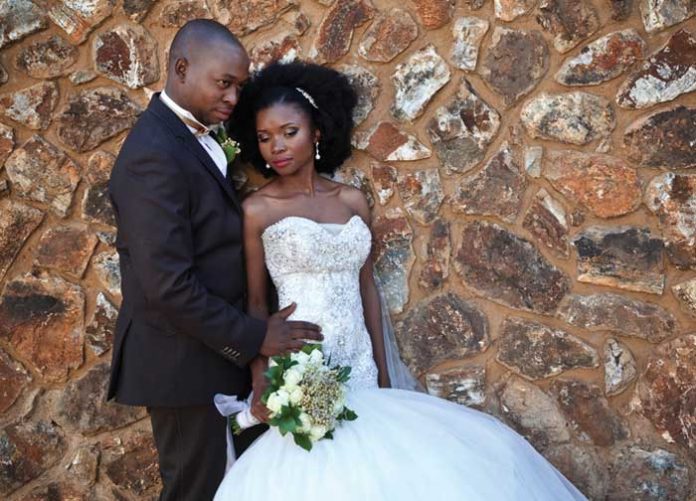
The local version of Married at First Sight (MAFS) has been commissioned by A+E for Lifetime Africa, and Oxyg3n Media has brought the show to life in South Africa.
“We had an overwhelming response to our call for entries with close to 300 singletons all wanting to take part in the series,” says Rebecca Fuller-Campbell, executive producer and content specialist at Oxyg3n Media.
MAFS is a social experiment that is proving to be a rating hit around the world, having been licensed to more than 25 territories. Their aspiring singles put their hearts in the hands of a team of experts to select a partner for effectively an arranged marriage. Three couples then meet for the first time at the altar. After the wedding and honeymoon, the married couples move in together and start their new lives. Cameras document every moment as experts analyse the relationships until six weeks later when the couples have to make a decision to stay together or file for divorce.
The producers select a number of specialist experts who will work with the individuals before, during and after the filming process. For the South African version, these include: Neo Tshireletso Pule – a counselling psychologist; Dr Shingai Mutambirwa – a recognised sexologist; Paula Quinsee – relationship specialist; and financial expert, Winnie Kunene. Unique to SA, Fuller-Campbell explains that the SA series is the first to include a financial adviser. Considering 40 per cent of all marriages fail for money concerns, it is an expert that surely the rest of the world will incorporate.
Pre-production in this format takes a lot longer than filming, it began in May 2016, where over a five month period specialists narrowed down the finalists. The process is rigorous as this is a legal marriage and the production teams are not simply casting an entertainment show. Fuller-Campbell says there are interviews with all the specialists, blood tests, sexual health tests and myriad matching techniques and assessments before final selection takes place. Participants, despite agreeing to be on a reality show, are taking part in a social experiment.
The series was shot on location around the country; with finalists from Cape Town, Pretoria and Johannesburg. The location includes the couples homes and work as well as the 1Life offices and sponsored wedding venues: Chez Charlene Wedding Venue; Midrand Conference Centre; and Pheasant Hill Wedding Venue.
MAFS SA was shot from September through to the end of November 2016. It was filmed using a Sony A7S Mark II, shot in 2K and delivered in HD. “The decision was made to shoot the entire series on the Sony A7S II, and it was a good one,” says DOP Chris Corbett. “The camera would capture a natural image for the day to day run and gun shooting, problem free, and could be pushed to its limits for shooting the high-end look to the weddings that we wanted to achieve.”
A cinematographer with a drama background, shooting the weddings for MAFS with a similar high-key lighting approach was to prove an interesting experiment and process for Corbett. He explains, “You don’t have actors who can hit a mark in perfectly engineered light, or are able to call cut and readjust your set up for a close up on an emotional mother-in-law. Yet the approach that we wanted to follow was to ramp up production value as much as possible and have our audience transported into a scene from a film, but where real life was unfolding.” With previous seasons of the series as references, Corbett wants South Africa to have the best-looking syndication of the programme that has ever been seen.
In order to achieve this, Corbett says he took the approach of treating the weddings like their own mini feature films. Furthermore he acknowledged and aimed to solve the challenges in prep. “We recce’d our sites and took the time to design lighting plans that would work first time. We needed each of the venues to feel natural, and the lighting design was to mirror that. We needed to make a handful of HMIs and Kino-Flos work for 20, 30, 40 characters,” he says.
Approaching each environment pragmatically meant that Corbett would move in hours before the weddings were to take place, set up according to their lighting plans and tweak thoroughly. “We had to allow four different operators to shoot in any direction; enough Sony A7S Mark II’s to cover the moments that we needed to without anyone missing a beat. From ceremony to reception, we had to strike our lights, and hustle to the next locale, the luxury of pre-lighting the reception venues was not one we had,” Corbett describes.
“We motivated the sun, stuck our big HMI’s through exterior window sources and filled in the gaps through clever placement of Kino-Flo’s. Some of the practical lights were tweaked to allow for a better filmic quality, but for the most part we wanted to build the lighting from the ground up,” explains Corbett.
The reception venues were shot at night, and presented their own set of challenges. “Creating moon-lit sources through softening 4k, 2.5k and 1.2k HMI bounce off soft-sided silver polly boards and adjusting with appropriate scrim and CTB gels meant that we could ensure a massive silver-blue exterior key source that would allow the operators on the night to shoot against it in any direction and still capture a quality image. Warm sources in the interiors from the heavily diffused Kino’s meant that our participants were glowing in the already beautiful wedding venues,” says Corbett.
The series was edited in Adobe Premiere Pro and Adobe After Effects. Fuller-Campbell explains that they used the graphic elements produced for the international format. This was the case with the music, 50 per cent was in line with the format created for MAFS and the remainder was sourced from Audio Network.
A romantic at heart, Fuller-Campbell says “It was emotional interviewing people putting themselves out there to find love, and heart breaking that we couldn’t help them all.”
