


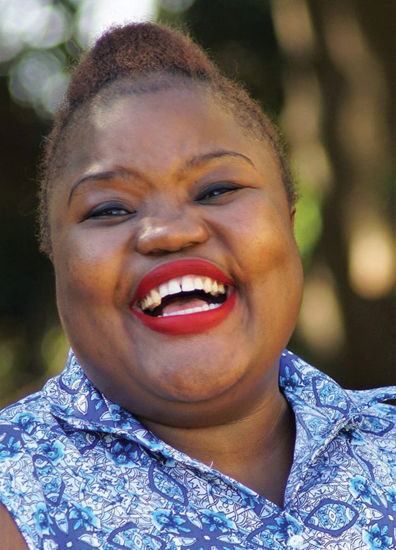
“I want to build on the past success of DIFF and bring on board some new collaboration that will see the festival showcase more African productions to a larger international audience.” – Chipo Zhou
Turning the spotlight on women making great strides within the film industry, the Durban International Film Festival (DIFF) recently announced the appointment of Chipo Zhou as the festival’s new manager.
“After such a vigorous search, we are grateful that we finally found a rounded candidate of her calibre, with whom the festival is bound to have a refreshed face. We welcome Chipo to the Centre for Creative Arts (CCA) team and we are confident that she will steer the festival to a better future,” said director of the CCA, David wa Maahlamela in a press statement.
It’s no secret that DIFF has, in the previous year, made headlines within the local film industry for the wrong reasons as much publicised internal disputes led to the resignation of the 2016 DIFF manager, Sarah Dawson. Despite this, Zimbabwean-born Zhou has boldly accepted her role in the hot seat and is confident in overseeing her vision which includes giving a voice to women within the film industry.
“I started acting in a local soapie and this inevitably led to my involvement with International Images Film Festival for Women (IIFF) and the Women Filmmakers of Zimbabwe (Wofz) which exposed me to a different kind of woman, a voiceless woman. It was in that moment that I decided that no woman should ever be without a voice and if I can help contribute to that in any way, then I would certainly give it my best,” says Zhou.
Zhou has fortunately had a great headstart in being moulded by powerful voices and striving leaders throughout her life. Her father, who is a teacher of English literature, imparted the narrative seed in her through African folklores and books by sterling female authors such as Tsitsi Dangarembga, Yvonne Vera and Jane Austen. “His love for storytelling inspired my love for literature, which eventually steered me to filmmaking,” she said.
Other positive female influences include her mother’s business acumen as well as her love for education and current affairs which inspired Zhou’s love for film research. Her headmistress from school Miss Dumbuchena, who later held the role of Ambassador for Zimbabwe, played a pivotal role in young Zhou’s school career through her valued leadership and encouragement.
Zhou holds a B.A Honours Motion Picture Medium degree (cum laude) from AFDA, and is currently completing her MFA Motion Picture Medium. She has been passionately involved in woman advocacy through film festivals around the world, including being the assistant festival director of IIFF and steering the gender wheel in her home country as a board member of Wofz for five years.
“A lot has been done to bring women to the fore and that can be seen by the work that organisations like SWIFT and WIFT have done to significantly increase the number of women-led films over the years. As with any system born from traditions that have been cultivated over centuries, the battle is far from being accomplished. What is unique about the film industry is that the platform allows for a global audience and any voice we give to the struggle of women empowerment in any industry is a strong voice. The importance of our role cannot be undermined and I’m glad to say that this year DIFF has a special focus on women, and some of the stories coming out of this are very powerful and will hopefully inspire and motivate others to action,” said Zhou.
Zhou has also made positive leaps in order to diversify her knowledge by thriving in other complementary roles such as coordinating the South African Communication Association (SACOMM) conference as well as being a media consultant for DERT-SA, an NGO servicing issues of human rights and education within Southern Africa.
“Working with academics who write papers and very often review the work of filmmakers, was an important learning curve for me, in placing what their role is within the industry, something I found very often overlooked and taken for granted. Operating within the human rights community gives you access to the human face of some stories that are made as well as potential audiences for these stories that may not have previously been exposed to the film industry. It has unquestionably expanded my world view and has contributed immensely to my current vision for the future of DIFF,” she says.
DIFF has been a long-standing annual calendar event in the African film industry and this year’s edition is scheduled to take place from 13 to 23 July at venues in and around Durban. Zhou and her team believe that they have a solid team and support system to see to it that the festival becomes a phenomenal experience and a great success.
“I am a fresh face with a new, creative and industrious young team working with me. That in itself is quite significant in that we are a clean slate. This year will be ‘DIFFerent’, we would like to reinvent what it is to be a film festival within our African context and so it will be interesting to see what this process will bring about over the next few DIFF editions. The advantage is that DIFF is already on the international calendar, the challenge we are enthralled to be tackling is to see it grow beyond being the biggest in Africa and see talent that is coming through our programmes attain international recognition and advancement.”
DIFF is organised by the University of KwaZulu Natal’s Centre for Creative Arts in partnership with the Durban Film Office, eThekwini Municipality, National Film and Video Foundation, KwaZulu-Natal Film Commission and other valued funders and partners.
Zhou’s appointment will also be announced to the international fraternity as she attends the 70th Festival de Cannes in Paris, France next month. This will be her first international appearance promoting the DIFF brand and she is excited to utilise the opportunity to elevate the image of the festival and enrich her vision.
“I want to build on the past success of DIFF and bring on board some new collaboration that will see the festival showcase more African productions to a larger international audience. We are fortunate to be placed in an environment with so much potential for further development and as a female in the industry, I hope to contribute to creating a future, in which it will no longer be necessary to point out that I am a woman,” Zhou concluded.
